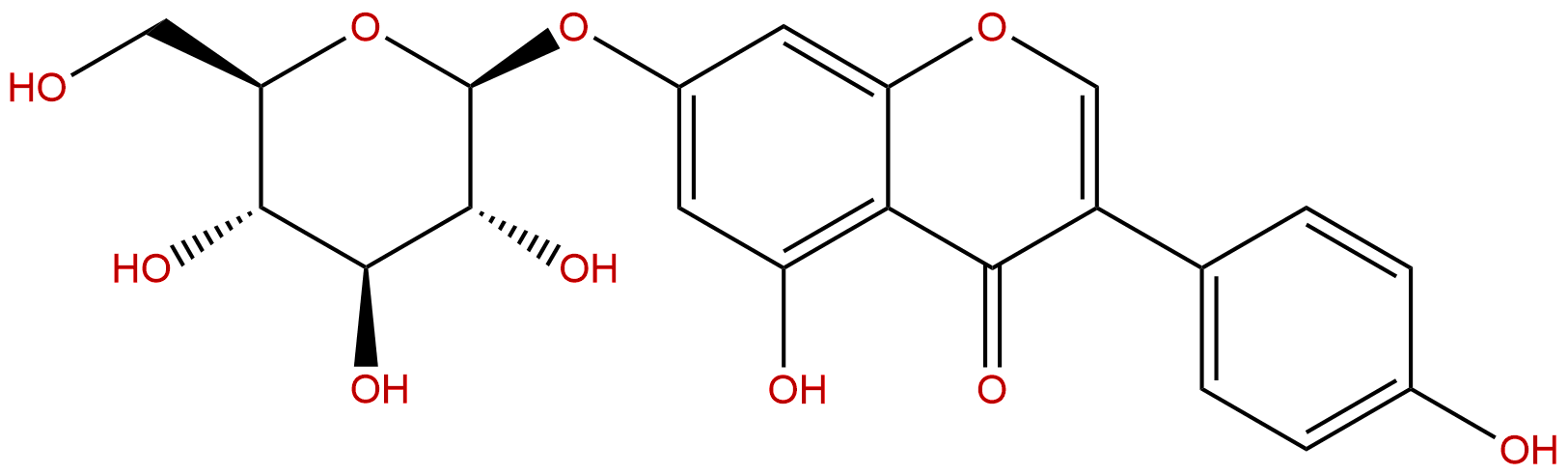


Product name: Genistin
Synonym name: Genistein 7-glucoside; Genistoside
Catalogue No.: BP0635
Cas No.: 529-59-9
Formula: C21H20O10
Mol Weight: 432.381
Botanical Source: Genista spp., Lupinus spp. and a number of other spp. in the Leguminosae subfamily Papilionoideae. Also in wood of Prunus aequinoctalis, Prunus avium and Prunus nipponica
Physical Description: Powder
Type of Compound: Flavonoids
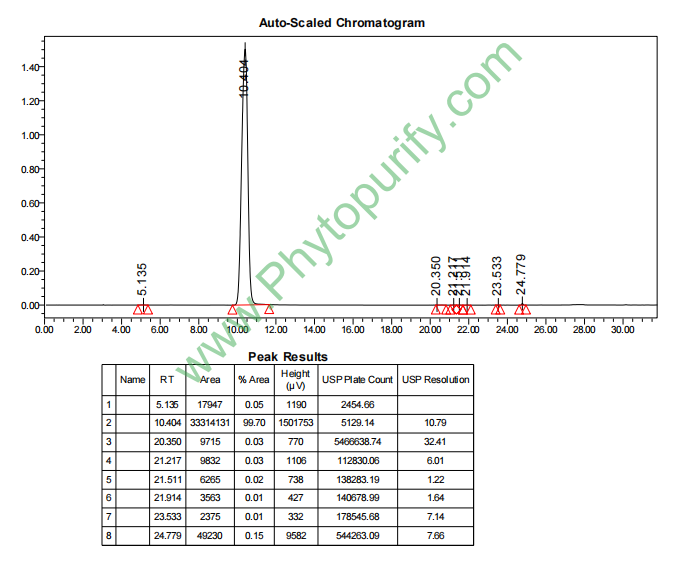
Purity: 95%~99%
Analysis Method: HPLC-DAD or/and HPLC-ELSD
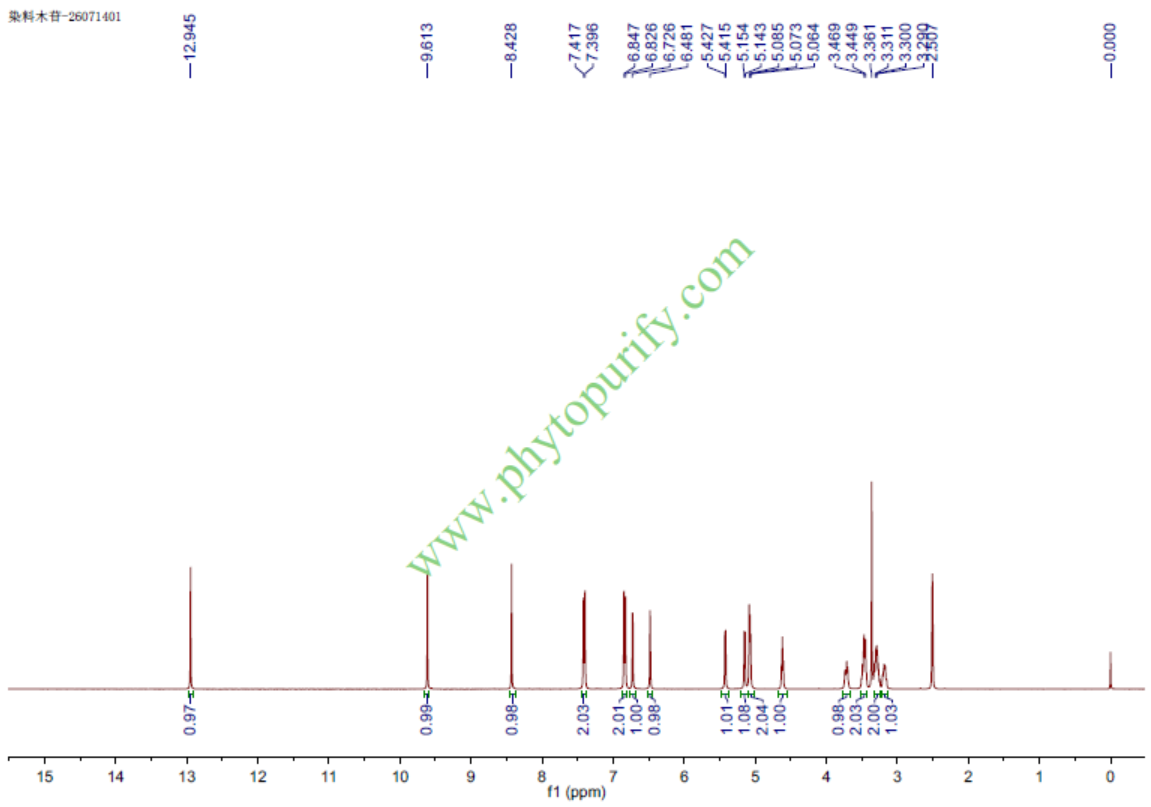
Identification Method: Mass, NMR
Packing: Brown vial or HDPE plastic bottle
Storage: Store in a well closed container, protected from air and light. Put into refrigerate or freeze for long term storage.
Whenever possible, you should prepare and use solutions on the same day. However, if you need to make up stock solutions in advance, we recommend that you store the solution as aliquots in tightly sealed vials at -20℃. Generally, these will be useable for up to two weeks.
The product could be supplied from milligrams to grams, up to kilograms
Inquire for bulk scale.
Descriptions:
Genistin and daidzin are among the major isoflavonoids in soybeans and soy products,
genistin has antioxidant activity and anticarcinogenic properties, can inhibit UV light-induced plasmid DNA damage and cell growth in human melanoma cells.[1]
Genistein and genistin inhibit cell proliferation by disrupting the cell cycle, which is strongly associated with the arrest induction of either G1 or G2/M phase and may induce apoptosis, speculates that both genistein and genistin may prove useful as anticancer drugs and that the combination of genistein and genistin may have further anticancer activity.[2]
Dietary genistin can stimulate growth of estrogen-dependent breast cancer tumors similar to that observed with genistein.[3]
Genistin and daidzin have preventive effects on bone loss in ovariectomized rats fed a calcium-deficient diet.[4]
References:
[1] Russo A, Cardile V, Lombardo L, et al. J Nut Biochem, 2006, 17(2):103-8.
[2] Choi E J, Kim T, Lee M S. Life Sci, 2007, 80(15):1403-8.
[3] Allred C D, Ju Y H, Allred K F, et al. Carcinogenesis, 2001, 22(10):1667-73.
[4] Ishida H, Uesugi T, Hirai K, et al. Biol Pharml Bull, 1998, 21(1):62-6.
[5] Suo Z R, Qin H Y, Li-Cheng D U.Chinese J Pharm Anal, 2009,29(10):1662-4.
HPLC of Genistin
HNMR of Genistin
Storage conditions:Short-term storage at 2~8℃, long-term storage at -20 ~ -80℃
170.0500
.0999
.0876
1.2174
.5753
.3169
Low
82.3540
3.8331
Yes
No
No
No
Yes
No
1.2
Yes
Yes
Yes
Yes
Osteoporosis is a systemic bone disease characterized by reduced bone mass, destruction of bone microstructure, and increased bone fragility. It has become a major public health issue worldwide, especially for postmenopausal women and elderly populations. The pathological core lies in the imbalance of bone remodeling, where the bone resorption mediated by osteoclasts exceeds the bone formation dominated by osteoblasts. At present, mainstream drug treatments such as bisphosphonates, selective estrogen receptor modulators (SERMs), and receptor activator of nuclear factor kappa B ligand (RANKL) inhibitors are effective, but long-term use often accompanies side effects such as mandibular necrosis, atypical femoral fractures, and cardiovascular risks, limiting their widespread application. Therefore, exploring efficient and low toxicity anti osteoporosis candidate drugs from natural products has always been an important direction in drug development.
Isoflavones, as a type of phytoestrogens widely present in leguminous plants, have attracted much attention in the field of bone health due to their structural similarity to endogenous estrogen 17 β - estradiol. They can bind to estrogen receptors (ER) and exert selective estrogen regulatory effects. Genistin, also known as genistein 7-O - β - D-glucoside, is one of its main glycoside forms and the primary form of soy isoflavones in plants and many dietary supplements. Early research focused on the potent biological activity of its glycoside form, genistein, which is often considered a precursor compound. However, in recent years, more and more evidence has shown that genistein itself has unique bioavailability and pharmacological activity, especially in regulating bone metabolism balance, demonstrating multi-target and multi pathway intervention potential. It provides a new natural candidate molecule for the prevention and treatment of osteoporosis by regulating the ER α signaling pathway and affecting the expression of key factors related to osteogenesis and osteoclastogenesis. This article aims to provide a systematic review of the chemical properties, plant sources, anti osteoporosis and other related pharmacological activities, mechanisms of action, pharmacological evaluation of dye lignin, and prospects for its clinical application prospects.
Dye wood glycoside, chemical name 5,7-dihydroxy-3- (4-hydroxyphenyl) -4H-1-benzopyran-4-one-7- β - D-glucoside, CAS number 529-59-9. Its molecular formula is C21H20O10 and its molecular weight is 432.3810 Da.
Structurally, genistein is composed of a aglycone (genistein) and a glucose group connected by a β - glycosidic bond at position C-7. This glycosylation modification significantly alters its physicochemical properties. Compared to lipophilic glycoside lignin (with lower LogP value), the LogP value of genistein is about 0.0999, indicating its enhanced hydrophilicity. Its topological polar surface area (TPSA) is as high as 170.0500 Å ², which is mainly attributed to the abundant hydroxyl groups and oxygen atoms on the sugar ring in the molecule, further confirming its strong polarity. The theoretical water solubility is about 1.2174 mg/mL, indicating a moderate to lower solubility in water, but good solubility in polar solvents (such as methanol, ethanol, DMSO) and hot water. These properties determine its absorption, distribution, and metabolic characteristics in organisms: typically, the oral bioavailability of glycosides is lower than that of aglycones, as they need to be hydrolyzed into aglycones by β - glucosidase in the gut or epithelial cells before they can be effectively absorbed.
The chemical stability of dye lignin is acceptable under ambient temperature and light avoidance conditions, but it is sensitive to light, heat, and extreme pH environments, and may undergo glycosidic bond cleavage, oxidation, or isomerization reactions. Its blood-brain barrier permeability is predicted to be 'low', which is consistent with its higher polarity and molecular weight, suggesting that its direct effects on the central nervous system may be limited. In the preliminary safety evaluation, its Ames test value is 1.2 (usually considered negative if the ratio is less than 2), indicating no significant mutagenicity under the test conditions. In addition, existing data indicate that it has no significant hERG potassium channel inhibitory activity, suggesting a low risk of causing QT interval prolongation in the heart, providing preliminary cardiac safety evidence for subsequent development.
Dye lignin is mainly rich in leguminous plants, especially in soybeans(Glycine max)Its products (such as soybean meal, soybean meal, lobster sauce, soybean milk) are the most abundant, and are one of the highest content components of soybean isoflavones, usually accounting for more than 50% of the total isoflavones. In addition, in kudzu root(Pueraria lobata)Red clover(Trifolium pratense)Alfalfa(Medicago sativa)It is also widely present in plants. The content of dye lignin in plants is significantly affected by variety, growing region, climatic conditions, harvesting season, and processing methods (such as fermentation and cooking). For example, microbial enzymes in the fermentation process (such as making natto and miso) can effectively hydrolyze glycosidic bonds, converting genistein into lignin.
Solvent extraction is commonly used to extract dye lignin from plant materials. Methanol, ethanol, acetone, or their mixed solutions with water are commonly used extraction solvents. In order to improve extraction efficiency, modern extraction techniques have been widely applied:
1. Ultrasound assisted extraction The use of ultrasonic cavitation effect to destroy plant cell walls, accelerate solvent penetration and target component dissolution, has the advantages of short time, high efficiency, and low temperature.
2. Microwave assisted extraction Microwave heating rapidly increases the temperature and pressure inside cells, leading to cell rupture and promoting the release of target components, which is also highly efficient and energy-saving.
3. Supercritical fluid extraction Supercritical CO ₂ is mainly used, but due to its weak polarity, the direct extraction effect of highly polar dye lignin is limited. It is often necessary to add entrainers (such as ethanol) to improve the yield. The advantage of this method lies in the absence of solvent residue, low operating temperature, and good protection of thermosensitive components.
After filtration and concentration, the crude extract needs to be further purified to obtain high-purity dye lignin. Conventional purification methods include:
- Macroporous resin adsorption method The selective adsorption and desorption of isoflavone compounds using resins is a commonly used method for industrial preparation, such as AB-8, D101 and other types of resins with good adsorption performance for dye lignin.
- Column chromatography: Use silica gel, polyamide or dextran gel (such as Sephadex LH-20) and other fillers for separation, which can achieve fine purification on a laboratory scale.
- Preparation type high-performance liquid chromatography method: is the most effective method for obtaining high-purity monomeric compounds, but it has a high cost and is suitable for standard preparation.
The pharmacological activity research of genistein has expanded from the initial phytoestrogenic effect to multiple fields, and its core activity is closely related to regulating metabolic balance, cell proliferation, and apoptosis.
1. Anti osteoporosis activity
This is currently the most extensively studied and promising pharmacological activity of genistein. Numerous in vitro and in vivo studies have shown that genistein can bidirectionally regulate bone metabolism:
- Promote osteogenic differentiation and bone formation In osteoblast models such as MC3T3-E1 and hFOB1.19, genistein significantly enhances cell proliferation, alkaline phosphatase (ALP) activity, mineralization nodule formation, and upregulates key osteogenic transcription factors RUNX2 and SP7(Osterix) And late stage biomarkers BGLAP (Osteocalcin)、COL1A1 (type I collagen alpha 1 chain) The expression. These effects are partially achieved by activating estrogen receptors, particularly ESR1/ERα)Mediated by signaling pathways.
- Inhibition of osteoclastogenesis and bone resorption In the osteoclast differentiation system induced by macrophage colony-stimulating factor (M-CSF) and RANKL, genistein can inhibit osteoclast precursor cell fusion, tartrate resistant acid phosphatase (TRAP) activity, and the formation of bone resorption pits. The mechanism involves downregulating key factors for osteoclast differentiation, such as NFATc1, and may be upregulated TNFRSF11B (OPG, osteoprotegerin)——An endogenous RANKL bait receptor is used to block the RANKL/RANK signaling pathway. In addition, regarding CTSK (Cathepsin K) The inhibition of osteoclast specific enzyme expression directly weakens its bone degradation ability.
- Regulating bone metabolism related factors Dye lignin can also affect SOST (sclerosing protein)——The expression of an osteogenic inhibitory factor secreted by bone cells, and VDR (Vitamin D Receptor) Signal indirectly promotes bone formation. Correct MMP9 (matrix metalloproteinase-9) Inhibition helps maintain the integrity of bone matrix.
2. Anti breast cancer activity
As described, dye lignin is regulated by ERαSignal pathway, inhibiting the growth of estrogen dependent breast cancer cells (such as MCF-7) and inducing their apoptosis. Its function may involve changes in the expression of cell cycle arrest (such as G2/M phase arrest) and apoptosis related proteins (such as increased Bax/Bcl-2 ratio and caspase-3 activation). It is worth noting that as a plant estrogen, its regulation of ER has tissue selectivity and may exhibit anti estrogenic effects in breast tissue, which is different from traditional estrogens.
3. Anti fat generation effect
Dye lignin is described as an effective "anti fat generator". Research has shown that it can inhibit the differentiation of preadipocytes (such as 3T3-L1) and reduce lipid accumulation. The mechanism may be related to the regulation of key transcription factors for adipogenesis, such as peroxisome proliferator activated receptor gamma (PPAR gamma), CCAAT/enhancer binding protein alpha (C/EBP alpha), as well as the activation of the AMP activated protein kinase (AMPK) pathway. This activity may be intrinsically related to its anti osteoporosis effect, as obesity and osteoporosis often occur together, and fat and bone metabolism share certain regulatory pathways.
4. Other activities
In addition, the study also suggests that genistein has potential benefits such as antioxidant, anti-inflammatory, improvement of vascular endothelial function, and neuroprotection, which together constitute its comprehensive protective potential against chronic metabolic diseases.
The pharmacological effects of genistein, especially its anti osteoporosis effect, are a networked process involving multiple targets and pathways. The core mechanism can be summarized as follows:
1. Estrogen receptor (ESR1/ER α) dependent pathway
As a plant estrogen, the classic target of genistein is the estrogen receptor. Compared with endogenous estrogen, its affinity for ER β is slightly higher than that for ER α, but in bone tissue, signals mediated by ER α are crucial for maintaining bone mass. After binding to ER, the receptor dimerizes and is transported to the nucleus, where it acts as a transcription factor and binds to the estrogen response element (ERE) in the promoter region of the target gene, directly regulating gene transcription. In osteoblasts, this leads to RUNX2、SP7、BGLAP、COL1A1 Upregulation of osteogenic genes. Meanwhile, it can also rapidly activate downstream signals through membrane ER or non genomic pathways, such as the PI3K/Akt and MAPK/ERK pathways, which further promote the survival, proliferation, and differentiation of osteoblasts.
2. Regulation of RANKL/RANK/OPG systems
The key regulatory axis of bone resorption. Dye lignin can upregulate in osteoblasts/stromal cells TNFRSF11B(OPG) The expression of RANKL may also be downregulated. OPG, as a soluble receptor, competitively binds to RANKL, preventing it from binding to the receptor RANK on osteoclast precursor cells, thereby effectively inhibiting the differentiation, activation, and survival of osteoclasts. This is one of the core molecular mechanisms by which it inhibits bone resorption.
3. Factors affecting osteogenic osteoclast coupling
- SOST (sclerosing protein)Secreted by bone cells, it is a potent inhibitor of the classic osteogenic signaling pathway Wnt/β - catenin. Research has shown that genistein may downregulate the expression of SOST, relieve its inhibition of the Wnt pathway, and promote osteoblast activity.
- VDR (Vitamin D Receptor)Dye lignin may synergistically regulate calcium and phosphorus metabolism and bone turnover by interacting with VDR or affecting its signal transduction.
- MMP9 and CTSK Both are key enzymes involved in the degradation of bone matrix by osteoclasts. Dye wood glycoside indirectly downregulates osteoclast differentiation core transcription factor NFATc1 by inhibiting it MMP9 and CTSK The expression directly weakens the bone resorption function of osteoclasts.
4. Cross dialogue of intracellular signaling pathways
Dye lignin can also activate energy and metabolic sensor pathways such as AMPK and SIRT1. The activation of these pathways not only inhibits fat production, but also indirectly promotes bone formation and inhibits bone resorption by affecting the activity of RUNX2, regulating oxidative stress and inflammatory states. For example, AMPK activation can inhibit osteoclast differentiation and enhance osteoblast function.
In summary, genistein directly acts on the nuclear receptor ER, regulates the balance of key cytokines (OPG/RANKL), affects specific enzymes (CTSK, MMP9) and key transcription factors (RUNX2, SP7, NFATc1), and integrates multiple intracellular signaling pathways to construct a multidimensional action network that synergistically promotes bone formation and inhibits bone resorption.
Despite its broad activity, the drug like and pharmacokinetic (PK) properties of genistein are key factors determining its successful development as a drug.
Analysis of drug properties parameters According to the provided parameters, the molecular weight of dye lignin (432.38) is slightly higher than the upper limit of 500 Da recommended by Lipinski's "Five Rules", but its LogP (0.0999) shows good hydrophilicity, and the number of hydrogen bond donors/acceptors conforms to the rules. A higher TPSA (170.05) may affect its cell membrane permeability, which is consistent with the observed lower oral bioavailability. The water solubility is still acceptable, which is beneficial for the development of formulations. The absence of hERG inhibition and Ames mutagenicity negativity are important early safety advantages.
Pharmacokinetic characteristics:
- absorb After oral administration, the absorption of genistein itself in the upper small intestine is poor. Its main absorption form is the hydrolysis of β - glucosidase secreted by gut microbiota (such as bifidobacteria, lactobacilli, eukaryotes, etc.) in the ileum and colon, producing glycoside dye lignin, which has enhanced lipid solubility and is absorbed through passive diffusion. Therefore, individual differences in gut microbiota are the main factor leading to significant variations in oral bioavailability (usually less than 10%).
- distribution The absorbed dye lignin undergoes rapid II phase binding reactions (glucuronidation and sulfation) in the liver, forming various metabolites. The prototype dye lignan and its metabolites have a high binding rate with plasma proteins. Its low blood-brain barrier permeability limits its distribution in the central nervous system, but favors concentration in peripheral target organs such as bones and mammary glands.
- Metabolism The liver is the main metabolic site, involved in a wide range of phase I (such as CYP450 enzyme system) and phase II metabolism. The activity of metabolites may be altered or weakened. The existence of hepatic intestinal circulation prolongs its duration of action in the body.
- excretion Mainly excreted through the kidneys with urine, with some entering feces through bile.
Formulation strategy To improve its bioavailability, researchers are exploring various strategies: 1)Structural modification Preparation of prodrugs or similar substances to improve lipid solubility and stability; 2)New drug delivery system Such as nanoparticles, liposomes, microemulsions, solid dispersions, etc., to enhance their solubility, protect them from premature hydrolysis by intestinal enzymes, promote lymphatic absorption or targeted delivery; 3)Co administration strategy: Used in combination with β - glucosidase inhibitors or specific probiotics to regulate their optimal hydrolysis sites and rates in the intestine.
As a natural and multi-target bone metabolism regulator, genistein has broad clinical application prospects in the prevention and treatment of osteoporosis, especially for postmenopausal women and elderly patients who are intolerant or contraindicated to traditional drugs.
Potential application directions:
1. Primary prevention and adjuvant treatment of osteoporosis Can be used as a dietary supplement or functional food ingredient for early intervention in people with bone loss, delaying the progression of osteoporosis. It can also be used in combination with low-dose conventional drugs to achieve synergistic effects and reduce side effects.
2. Management of bone loss associated with breast cancer For patients with breast cancer who receive aromatase inhibitor treatment, severe bone loss often occurs. Genistein has dual potential of anti breast cancer and anti osteoporosis, which may provide an integrated treatment strategy for such patients.
3. Bone health maintenance in metabolic syndrome: In view of the decline in bone quality associated with metabolic diseases such as obesity and diabetes, genistein has a unique advantage in its dual role of anti adipogenesis and promoting bone formation.
4. Functional modification of bone repair materials Loading dye lignin into bone implants or tissue engineering scaffolds to achieve local sustained release, promote bone integration around the implant, and be used for repair after orthopedic surgery.
Challenges and Future Prospects:
1. Bioavailability bottleneck This is the biggest obstacle to its clinical translation. Future research needs to focus on the development of efficient and safe delivery systems, as well as the production of novel derivatives with high activity and bioavailability through synthetic biology or fermentation engineering.
2. Deep analysis of the mechanism of action More precise clarification is needed on its selectivity for different tissue ER subtypes in complex in vivo environments, its specific effects on the interaction and dialogue of various cells (osteoblasts, osteoclasts, bone cells, immune cells) in the bone microenvironment, and the safety of its "estrogen like" effects in long-term applications, especially its potential impact on the breast and endometrium, which still requires large-scale long-term clinical research evaluation.
3. Upgrading clinical evidence At present, most research is still at the stage of cell and animal models, and there is a serious lack of high-quality, large sample, long-term follow-up randomized controlled clinical trials (RCTs). Rigorous clinical studies need to be designed to clarify the effective dosage, treatment duration, optimal population, and long-term safety.
4. Personalized application Given that its metabolism is highly dependent on gut microbiota, personalized nutrition or medication guidance for genistein may be achieved in the future by detecting individual microbiota characteristics.
Dye lignan, as an important member of the soy isoflavone family, has gradually evolved from a common dietary component to a natural lead compound with clear anti osteoporosis and multiple pharmacological activities. It precisely regulates multiple key targets (such as ESR1, RUNX2, OPG, SOST, etc.) in the processes of osteogenesis and osteoclastogenesis through estrogen receptor dependent and non dependent pathways, demonstrating the unique advantage of multi pathway synergistic regulation of bone metabolism balance. Despite facing the common challenge of low oral bioavailability in terms of drug efficacy, with the development of modern pharmacy, materials science, and molecular biology technologies, it is expected to break through this bottleneck through new delivery systems, structural optimization, and combination therapy strategies. In the future, in-depth basic research to reveal its complex networked mechanism, as well as rigorous clinical translational studies to confirm its efficacy and safety, will be the key to promoting the transformation of genistein from the "dining table" to the "medicine cabinet" and becoming a new choice for the prevention and treatment of osteoporosis and other related diseases. In the pursuit of bone health and disease treatment, natural products represented by genistein will continue to provide valuable inspiration and resources for modern drug development.
