


Synonym name: Phytolaccagenin 3-glucoside
Catalogue No.: BP0563
Cas No.: 89808-50-4
Formula: C37H58O12
Mol Weight: 694.859
Botanical Source: Phytolacca esculenta and Phytolacca thyrsiflora
Purity: 95%~99%
Analysis Method: HPLC-DAD or/and HPLC-ELSD
Identification Method: Mass, NMR
Packing: Brown vial or HDPE plastic bottle
Can be supplied from milligrams to grams.
For Reference Standard and R&D, Not for Human Use Directly.
Inquire for bulk scale.
HPLC of Esculentoside D
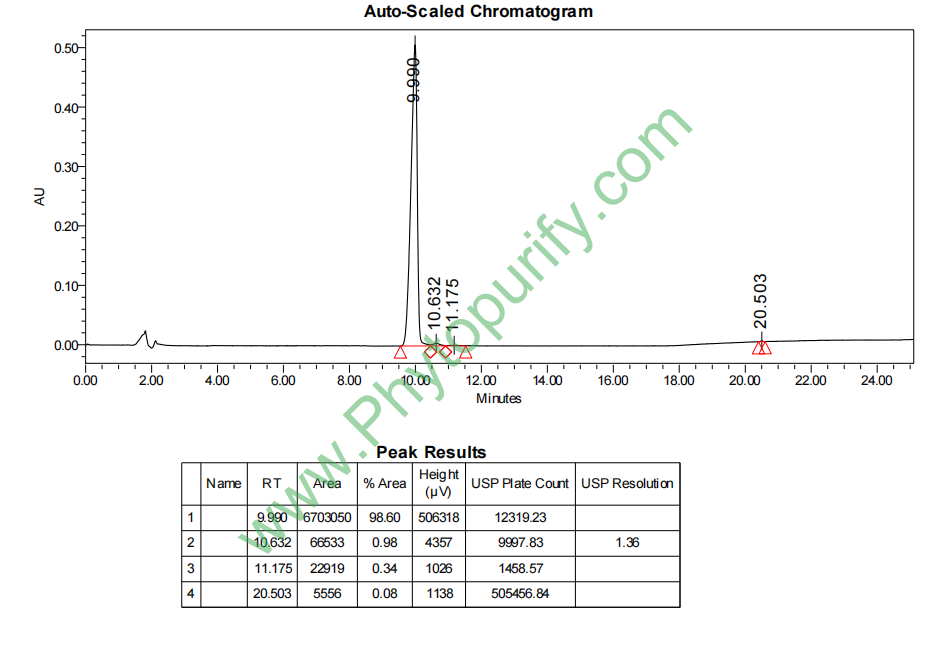
Storage conditions:Short-term storage at 2~8℃, long-term storage at -20 ~ -80℃
205.8600
No
Unknown
Unknown
Unknown
Unknown
No
Unknown
Unknown
Natural products, as an important source of drug discovery and development, play an irreplaceable role in the history of human disease prevention and treatment. Among them, saponin compounds have always been a hot topic in medicinal chemistry and pharmacology research due to their structural diversity and wide range of biological activities. Esculentoside D (EsD), CAS number 89808-50-4, is derived from the traditional Chinese medicine of Shanglu(Phytolacca acinosa Roxb. or Phytolacca esculenta A triterpenoid saponin monomer isolated from Van Houtte. Shanglu, as a traditional medicinal herb with the functions of dispelling water, reducing swelling, detoxifying and dispersing nodules, has a long history of clinical application, but its toxicity is also significant, which limits its wide application. Therefore, isolating and identifying its active monomer components, clarifying its pharmacological effects and toxicity mechanisms, is the key to achieving its modern development.
In recent years, with the deepening of separation and purification technology and molecular pharmacology research, the potential pharmacological activities of Shanglu saponin D, as one of the important active ingredients in Shanglu, such as anti-inflammatory, immune regulation, anti-tumor, etc., have gradually been revealed, showing good research value and development prospects. This article aims to systematically review the chemical structure, plant origin, pharmacological activity, mechanism of action, pharmacological evaluation, and clinical application prospects of Shanglu saponin D, in order to provide comprehensive scientific references for the in-depth research and potential drug development of this compound.
Shanglu saponin D belongs to the oleane type pentacyclic triterpenoid saponin. Its molecular formula is C36H54O12 and its molecular weight is 670.8000. Its basic skeleton is oleanolic acid, with a disaccharide chain composed of glucuronic acid and arabinose connected at the C-3 position. The specific sugar linkage sequence is: oleanolic acid-3-O - β - D-glucuronic acid - (1 → 2) - α - L-arabinose. This specific glycosylation modification has a decisive impact on its water solubility, spatial conformation, and biological activity.
From the analysis of physical and chemical properties, the saponin D molecule of Shanglu contains 12 hydrogen bond acceptors (TPSA of 205.8600 Å ²), indicating its strong polarity and ability to form intermolecular hydrogen bonds, which is consistent with its solubility in water or polar solvents. However, as a saponin compound, its amphiphilic structure (hydrophilic sugar chains and hydrophobic aglycones) also allows it to exhibit surface activity in aqueous solutions and may form micelles. The specific melting point, optical rotation and other parameters need to be determined according to specific experimental conditions. In terms of stability, saponin compounds are usually sensitive to acids, bases, and enzymes (such as glycosidases), and their structures may undergo hydrolysis or transformation during extraction, storage, and in vivo metabolism.
The main source of Shanglu saponin D is from plants in the Shanglu genus of the Shanglu family, among which the Chinese Shanglu is one of them(Phytolacca acinosa)The American Commercial Land(Phytolacca americana)The root content is relatively abundant. As a traditional medicinal plant, Shanglu root contains various structurally similar saponin components, such as Shanglu saponins A, B, D, E, G, etc., forming a complex mixture system.
The efficient and specific extraction and isolation of saponins D from plant materials is the basis for studying their activity. The conventional extraction process usually includes the following steps:
1. Preprocessing and Extraction Crush the dried roots of Shanglu and first use low polarity solvents such as petroleum ether or ethyl acetate for degreasing treatment to remove fat soluble impurities. Subsequently, methanol, ethanol, or high concentration ethanol aqueous solution (such as 70% -95%) is used for reflux extraction or ultrasound assisted extraction to fully dissolve the saponin components.
2. Preliminary enrichment The extract obtained by vacuum concentration of the extract is often suspended in water and subjected to gradient extraction with solvents such as petroleum ether, ethyl acetate, and n-butanol in sequence. Shanglu saponin D is mainly enriched in the n-butanol extraction site.
3. Separation and purification The components of n-butanol are complex and require further separation using various modern chromatographic techniques. Usually, silica gel column chromatography is used for crude separation, followed by gradient elution using chloroform methanol water systems with different ratios. Subsequently, repeated purification was carried out in combination with reversed-phase silica gel column chromatography (such as ODS, using methanol water or acetonitrile water as mobile phase), dextran gel column chromatography (such as Sephadex LH-20), and high-performance liquid chromatography (HPLC, especially preparative HPLC), to finally obtain high-purity phytolacoside D monomer. Structural identification involves the comprehensive use of techniques such as nuclear magnetic resonance (NMR, including 1H-NMR, 13C-NMR, 2D-NMR), mass spectrometry (MS), and infrared spectroscopy (IR).
In recent years, some new extraction techniques such as microwave-assisted extraction and supercritical fluid extraction have also been explored for the extraction of total saponins from Shanglu, but their selectivity and economy for single component EsD still need to be evaluated.
Numerous in vitro and in vivo pharmacological studies have shown that Shanglu saponin D has multiple biological activities, among which anti-inflammatory and immunomodulatory effects are the most prominent.
anti-inflammatory effect This is the most extensively studied activity of Shanglu saponin D. EsD exhibits significant anti-inflammatory effects in various animal models of acute and chronic inflammation. For example, in mouse ear xylene induced inflammation models and rat toe swelling models induced by carrageenan or egg white, EsD can effectively inhibit the degree of swelling at the inflamed site. In a mouse model of acute lung injury induced by lipopolysaccharide (LPS), EsD pretreatment significantly reduced lung tissue edema, inflammatory cell infiltration, and alveolar structural damage. Its anti-inflammatory effect is often comparable or slightly weaker than the positive drugs dexamethasone or indomethacin, but it exhibits different characteristics of action.
Immune regulatory effect EsD exhibits bidirectional regulatory effects on the immune system. Under conditions of excessive immune activation, such as delayed type hypersensitivity (DTH) models or autoimmune disease models (such as adjuvant arthritis rats), EsD can inhibit excessive immune responses and alleviate tissue damage. Its mechanism involves inhibiting the excessive activation and proliferation of T lymphocytes (especially Th1 and Th17 cells), regulating the balance of pro-inflammatory/anti-inflammatory cytokines. On the other hand, in a state of immune dysfunction, EsD may also exhibit some potential for immune enhancement, but there is limited research on this topic.
antitumor activity: Preliminary studies show that EsD can inhibit the proliferation of many tumor cell lines (such as breast cancer MCF-7, liver cancer HepG2, lung cancer A549, etc.), and can induce apoptosis and cell cycle arrest (such as G0/G1 phase arrest). In animal transplant tumor models, EsD also showed a certain tumor growth inhibitory effect. Its anti-tumor activity may be related to multiple effects such as anti-inflammatory, induction of apoptosis, and inhibition of angiogenesis.
Other activities Some studies have also reported potential activities of EsD, such as pain relief, anti fibrosis (such as pulmonary fibrosis, liver fibrosis), and organ protection (such as reducing kidney damage caused by sepsis), but these studies are still in the preliminary stage and require more evidence to support them.
It is worth noting that the total extract of Shanglu has clear toxicity (especially gastrointestinal irritation and neurotoxicity), but as a monomer, EsD's toxicity has been significantly reduced compared to the total extract. However, its security window still requires systematic evaluation.
The pharmacological effects of Shanglu saponin D are closely related to its intervention in multiple key inflammatory and immune signaling pathways. The main mechanisms of action and potential molecular targets revealed by current research include:
Inhibition of nuclear factor kappa B (NF - κ B) signaling pathway This is one of the core mechanisms by which EsD exerts anti-inflammatory effects. NF - κ B is a key transcription factor that regulates the expression of numerous pro-inflammatory factors (such as TNF - α, IL-1 β, IL-6), chemokines, and enzymes (such as COX-2, iNOS). Research has shown that EsD can inhibit the phosphorylation and degradation of I κ B α protein induced by LPS and other stimuli, thereby preventing the nuclear translocation of NF - κ B p65 subunit and ultimately downregulating the gene expression and protein synthesis of downstream inflammatory mediators.
Regulating the mitogen activated protein kinase (MAPK) pathway The MAPK family (including ERK, JNK, p38) plays an important role in cellular stress, inflammation, and proliferation responses. EsD has been shown to inhibit LPS induced phosphorylation activation of p38 and JNK in macrophages, but its effects on the ERK pathway have been reported differently. By inhibiting p38/JNK signaling, EsD can further suppress the activity of transcription factors such as AP-1, synergistically inhibiting inflammatory responses.
Intervention of NOD like receptor protein 3 (NLRP3) inflammasome activation The excessive activation of NLRP3 inflammasome is associated with various chronic inflammatory diseases. The latest research shows that EsD can inhibit the assembly and activation of NLRP3 inflammasomes, reduce caspase-1 cleavage, and downstream maturation and release of IL-1 β and IL-18, which may be a new mechanism for its treatment of gouty arthritis, metabolic inflammation and other diseases.
Regulating immune cell function and cytokine network EsD can affect the polarization of macrophages, inhibit their differentiation into pro-inflammatory M1 type, and may promote their transformation into anti-inflammatory M2 type. At the same time, it can regulate the proportion of T lymphocyte subsets, inhibit the differentiation of pro-inflammatory Th1 and Th17 cells and the production of related factors (IFN - γ, IL-17), and may promote the function of regulatory T cells (Treg) or increase the level of anti-inflammatory factor IL-10.
Other potential targets This also includes inhibiting the expression of cyclooxygenase-2 (COX-2) and inducible nitric oxide synthase (iNOS), clearing reactive oxygen species (ROS), etc. In terms of anti-tumor effects, its mechanism may involve inducing endogenous or exogenous apoptotic pathways, regulating the Bcl-2/Bax ratio, and inhibiting PI3K/Akt survival signaling.
Despite the aforementioned findings, it is currently unclear whether Shanglu saponin D has direct high affinity protein targets (such as membrane receptors and enzyme active centers), and its role is more manifested in multi-target regulation of multiple signaling nodes.
Based on its physicochemical parameters and limited preclinical data, a preliminary analysis of the pharmacological properties of Shanglu saponin D can be conducted
Preliminary analysis of drug properties Based on its molecular weight (670.8) and TPSA (205.86 Å ²), EsD meets some of the criteria in the Rule of Five (the number of hydrogen bond donors may exceed the standard, which needs to be calculated), indicating that its oral bioavailability may face challenges. The larger polarity and number of hydrogen bond receptors may lead to poor transmembrane permeability, which is consistent with its predicted inability to cross the blood-brain barrier (BBB). The balance between its water solubility and fat solubility requires further confirmation through experimental data.
Pharmacokinetics (PK)There are relatively few reports on the systematic pharmacokinetic studies of EsD. As a saponin compound, it may face the following problems after oral administration:a) Absorption High polarity, poor intestinal permeability; Easy to be hydrolyzed by gut microbiota, the sugar chain is cleaved to generate lipophilic aglycones (such as Shanglu saponin), which may undergo fundamental changes in absorption and activity.b) Distribution Difficult to penetrate the blood-brain barrier, mainly distributed in the blood and tissues rich in blood vessels.c) Metabolism The liver may be its main metabolic site, and phase I (oxidation, reduction) and phase II (glucuronidation, sulfation) reactions may occur. The specific metabolic pathways of the prototype drug and its metabolites are still unclear.d) Excretion May be excreted through bile and/or kidneys. The key PK parameters such as absolute bioavailability, half-life, and distribution volume urgently need to be determined through standardized animal experiments (rats, dogs, etc.).
Preliminary evaluation of safety The drug properties parameters show that its liver toxicity, cardiac toxicity, hERG inhibition potential, and genetic toxicity (Ames test) are all "unknown", which is a key data gap that must be filled for its drug development. Although the toxicity of EsD monomers is lower than that of total extracts from Shanglu, a systematic preclinical safety evaluation is still needed for acute toxicity, long-term toxicity, and reproductive toxicity. Special attention should be paid to the potential hemolytic activity of saponin compounds (although some saponins can be reduced by structural modification), as well as their potential irritation to gastrointestinal mucosa.
Pharmaceutical considerations To improve its oral bioavailability, advanced formulation technologies such as phospholipid complexes, cyclodextrin inclusion complexes, nanoemulsions, solid dispersions, or liposomes may be required. For indications for local administration (such as skin inflammation, local injection for arthritis), the difficulty of developing formulations may be relatively low.
The multi-target anti-inflammatory and immune regulatory properties of Shanglu saponin D provide a theoretical basis for its application in various disease fields, but its clinical application still faces opportunities and challenges.
Potential clinical application directions:
1. Inflammatory and autoimmune diseases This is the most promising direction. Including rheumatoid arthritis, psoriasis, inflammatory bowel disease (such as ulcerative colitis), atopic dermatitis, gouty arthritis, etc. EsD regulates Th17/Treg balance by inhibiting pathways such as NF - κ B and NLRP3, which may provide new treatment options for these chronic and recurrent diseases, especially for patients with poor or intolerant responses to existing biologics or immunosuppressants.
2. Organ fibrosis Based on its preliminary evidence of anti-inflammatory and fibroblast activation inhibition, EsD may have value in the treatment of pulmonary fibrosis, liver fibrosis, and renal fibrosis.
3. neoadjuvant therapy Its anti-tumor activity is currently in the basic research stage, and the efficacy of using it alone may be limited. In the future, it may be possible to explore its combination with chemotherapy drugs, utilizing its anti-inflammatory and immunomodulatory effects to improve the tumor microenvironment, enhance chemotherapy sensitivity, or alleviate chemotherapy related inflammatory damage.
4. Acute inflammatory injury The rapid anti-inflammatory effect of EsD may help control excessive inflammation storms in early stages of diseases such as acute lung injury, acute kidney injury, sepsis, etc.
Challenges faced and future research directions:
1. In depth mechanism research Chemical biology methods such as affinity fishing, molecular docking, and kinetic simulations need to be used to identify its direct target and elucidate the precise network of its "multi-target" effects.
2. Optimization of drug properties in the system Comprehensively evaluate its ADMET (absorption, distribution, metabolism, excretion, toxicity) properties. Based on its structure, carry out reasonable medicinal chemical modifications (such as glycosylation modification, glycoside modification) to improve its pharmacokinetic properties (such as increasing oral bioavailability, prolonging half-life) and reduce potential toxicity.
3. Preclinical development Complete standardized pharmacological evaluations (on animal models closer to human diseases), pharmacokinetic studies, and comprehensive toxicological evaluations to clarify the safe and effective dosage range.
4. Formulation development Develop stable, efficient, and controllable formulations for different indications and administration routes.
5. Explore combination therapy Studying the synergistic effect of EsD with existing standard therapeutic drugs may help reduce their respective dosages, minimize side effects, and improve efficacy.
Shanglu saponin D, as an active triterpenoid saponin monomer isolated from the traditional Chinese medicine Shanglu, has become a promising candidate molecule in natural product pharmacology research due to its significant anti-inflammatory, immune regulatory, and potential anti-tumor pharmacological activities. The study of its mechanism of action has delved into key signaling pathways such as NF - κ B, MAPK, and NLRP3, revealing its multi-target regulatory characteristics. However, its poor drug like prediction (such as difficulty in oral absorption), unclear systemic pharmacokinetic characteristics, and completely missing preclinical safety data constitute the main bottlenecks for its transformation into innovative drugs.
Future research should adhere to the concept of "translational medicine", while deepening the exploration of mechanisms, vigorously strengthening the evaluation and optimization of drug properties. Improving its physicochemical and pharmacokinetic properties through strategies such as structural modification and formulation innovation, and establishing its safety profile through systematic toxicology research, is the only way to promote the transition of Shanglu saponin D from laboratory to clinical practice. The study of Shanglu saponin D not only contributes to the development of new anti-inflammatory and immune drugs, but also provides a valuable example for safe and effective innovative drug research and development based on traditional toxic Chinese medicine active monomers.
