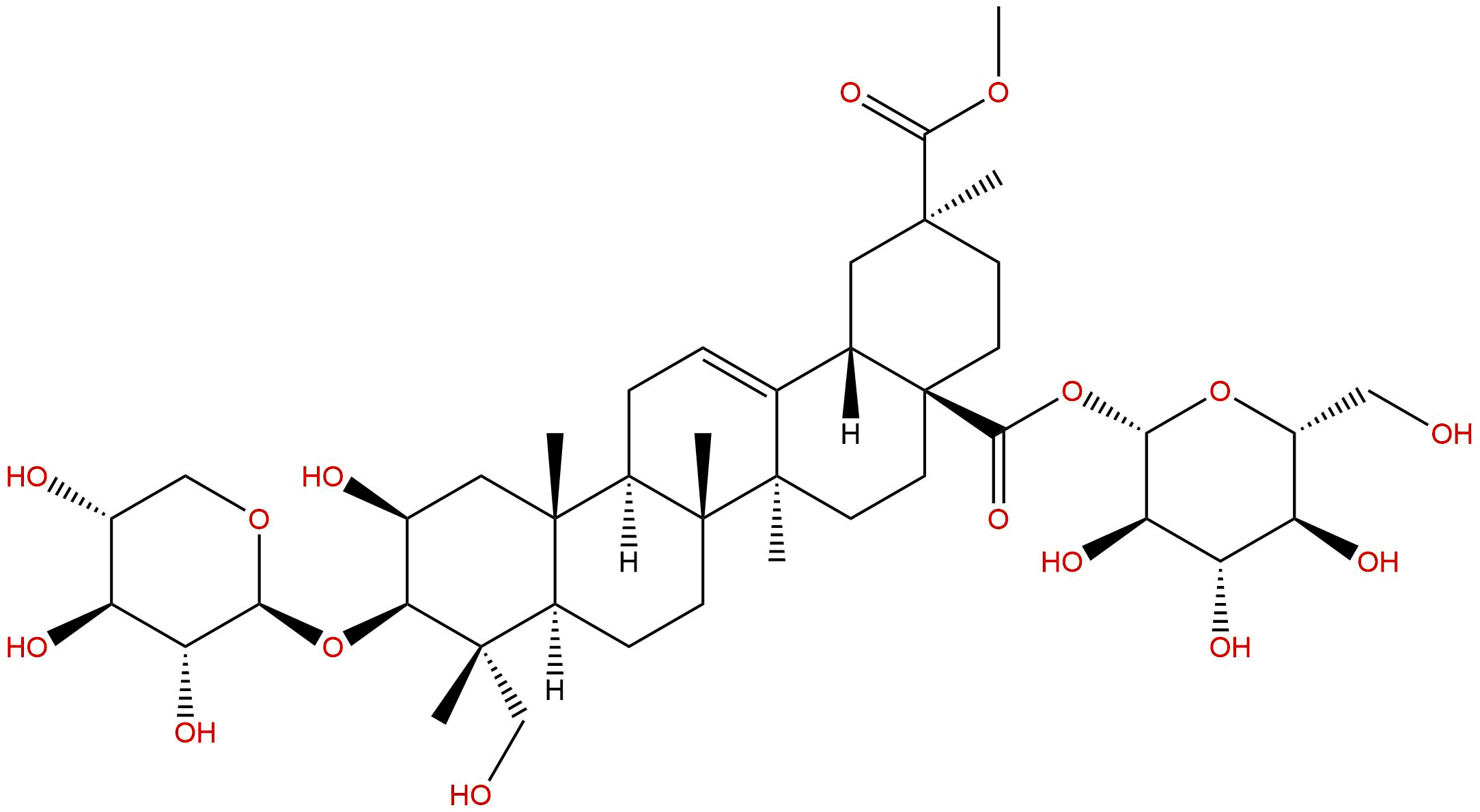


Product name: Esculentoside S
Synonym name:
Catalogue No.: BP5458
Cas No.: 156031-83-3
Formula: C42H66O16
Mol Weight: 826.974
Botanical Source:
Type of Compound: Triterpenoids
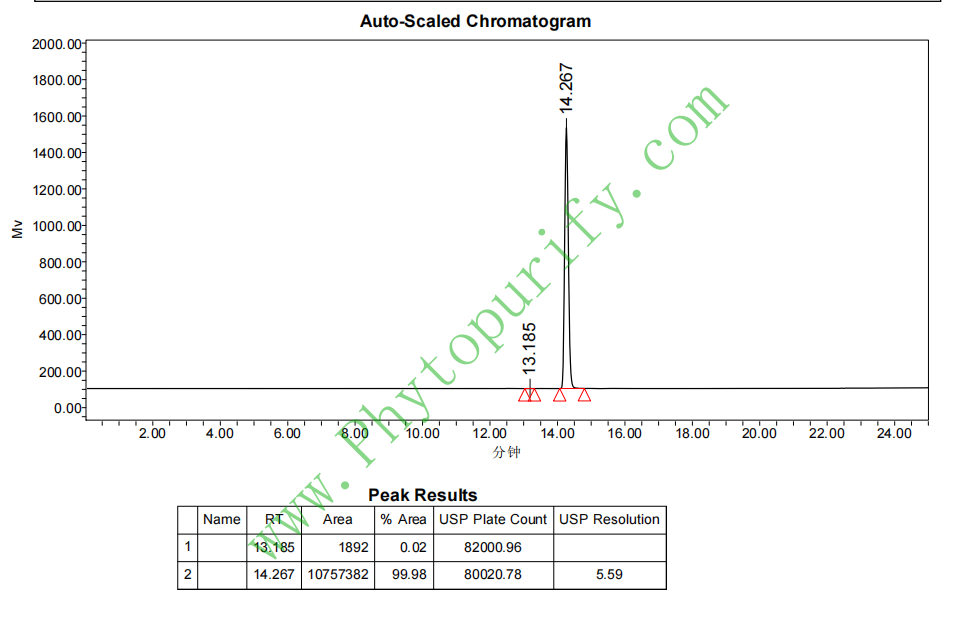
Purity: 95%~99%
Analysis Method: HPLC-DAD or/and HPLC-ELSD
Identification Method: Mass, NMR
Packing: Brown vial or HDPE plastic bottle
Storage: Store in a well closed container, protected from air and light. Put into refrigerate or freeze for long term storage.
Whenever possible, you should prepare and use solutions on the same day. However, if you need to make up stock solutions in advance, we recommend that you store the solution as aliquots in tightly sealed vials at -20℃. Generally, these will be useable for up to two weeks.
The product could be supplied from milligrams to grams
Inquire for bulk scale.
For Reference Standard and R&D, Not for Human Use Directly.
HPLC of Esculentoside S
Storage conditions:Short-term storage at 2~8℃, long-term storage at -20 ~ -80℃
269.8300
Natural products, as an important source of drug discovery, play an irreplaceable role in the history of human fight against diseases. Saponins, as a class of secondary metabolites widely present in the plant kingdom, have attracted much attention due to their structural diversity and significant biological activity. Esculentoside S (ES-S) is derived from the plant of the family Celastraceae, Celastraceae(Phytolacca acinosa Roxb. and the American Commercial Land(Phytolacca americana L. A triterpenoid saponin compound was isolated from the compound, with a CAS number of 156031-83-3. Since its first report in the 1990s, ES-S has gradually become a hot molecule in natural product chemistry and pharmacology research due to its unique chemical structure and extensive pharmacological activity.
Shanglu, as a traditional Chinese medicinal herb, has the effects of promoting diuresis, reducing swelling, promoting diuresis, detoxifying and dispersing nodules. It is used in clinical Chinese medicine to treat conditions such as edema, ascites, and abscesses. Modern pharmacological research has shown that extracts from Shanglu have various biological activities such as anti-inflammatory, immune regulation, anti-tumor, and antiviral effects. With the advancement of separation and purification technology and the application of activity oriented separation strategies, researchers have identified dozens of saponin components from Shanglu, among which ES-S stands out due to its significant anti-inflammatory activity and relatively low cytotoxicity.
In recent years, research on ES-S has gradually deepened from the initial chemical characterization to the molecular mechanism level. Research has found that ES-S exerts anti-inflammatory, immunosuppressive, anti-tumor, and organ protective effects by regulating multiple signaling pathways, especially in inflammation related disease models such as acute lung injury, glomerulonephritis, and rheumatoid arthritis, demonstrating good therapeutic potential. This article will provide a systematic review of the research progress of ES-S from the aspects of chemical structure, plant origin, pharmacological activity, mechanism of action, medicinal evaluation, and clinical application prospects, in order to provide reference for the in-depth development and transformation application of this natural product.
Shanglu saponin S belongs to the oleanane type pentacyclic triterpenoid saponin, and its aglycone is Phytolacagenic acid. From the perspective of structural features, the parent nucleus of ES-S contains a pentacyclic triterpenoid skeleton, where the A and B rings are hexagonal rings, the C ring is a pentagonal ring, and the D and E rings are hexagonal and pentagonal rings, respectively. This skeleton structure gives the molecule a certain degree of rigidity. The typical structural features of disaccharide chain saponins are formed by connecting sugar chains at positions C-3 and C-28, respectively. Specifically, the sugar chain at position C-3 is composed of glucose and xylose, while the sugar chain at position C-28 contains monosaccharide units such as glucose, xylose, and arabinose. This complex glycosylation pattern not only increases the hydrophilicity of the molecule, but also has a significant impact on its biological activity and pharmacokinetic behavior.
From the perspective of physical and chemical properties, the molecular formula of ES-S is C ₄₂ H ₆₆ O ₁₇, with a molecular weight of 826.96 Da, making it a natural product with medium molecular weight. The topological polar surface area (TPSA) of ES-S is 269.83 Å ², which is significantly higher than the conventional threshold for oral medication (TPSA<140 Å ² is generally considered favorable for oral absorption), suggesting that ES-S may have poor membrane permeability and oral bioavailability. ES-S is a white or off white amorphous powder that is soluble in polar organic solvents such as methanol, ethanol, and dimethyl sulfoxide. It is slightly soluble in water, but its solubility is improved in hot water or alkaline aqueous solutions. Its chemical properties are relatively stable, but under strong acid or alkali conditions, glycosidic bond hydrolysis may occur, leading to sugar chain breakage and loss of activity.
It is worth noting that the sugar chain structure of ES-S is crucial for its biological activity. Research has shown that although fully deglycosylated aglycones (such as gallic acid) retain some activity, their anti-inflammatory effects are significantly lower than those of intact ES-S molecules, indicating that sugar chains play a critical role in the interaction between molecules and targets. In addition, there are multiple hydroxyl and carboxyl functional groups in ES-S molecules, which not only participate in hydrogen bonding formation, but also may undergo structural modification through derivatization reactions such as esterification and glycosylation, providing a chemical space for pharmaceutical chemists to optimize their pharmacological properties.
ES-S is mainly derived from plants of the Caryophyllaceae family, among which the Caryophyllaceae is the main source(Phytolacca acinosa Roxb. and the American Commercial Land(Phytolacca americana L. The content is most abundant in the roots and stems of the plant. The commercial land originated from Asian countries such as China, Japan, and India, while the American commercial land originated from North America and has been widely introduced to various parts of the world. The two plants have a high degree of similarity in chemical composition, but the content of ES-S in the commercial land is usually slightly higher than that in the American commercial land. In addition, in other species of the genus Shanglu, such as Phytolacca dodecandra、Phytolacca rivinoides ES-S was also detected in the sample, but at a lower concentration.
From the perspective of plant parts, ES-S is mainly enriched in the rhizomes, followed by the stems and leaves, with extremely low levels in the fruits. This distribution pattern is highly consistent with the traditional medicinal parts (roots) of Shanglu. It is worth noting that the content of ES-S is influenced by various factors, including plant growth years, harvest season, and production environment. Research has shown that the ES-S content is highest in the roots of three-year old Shanglu, and samples harvested in autumn have higher levels than those harvested in spring, which may be related to seasonal changes in plant secondary metabolism.
In terms of extraction methods, traditional solvent extraction remains the main means of obtaining ES-S. Due to the moderate polarity of ES-S, methanol or ethanol is usually used as the extraction solvent, supplemented by heating reflux or ultrasound assistance to improve extraction efficiency. The typical extraction process is as follows: after crushing the dried roots of Platycodon grandiflorus, reflux extraction is carried out 2-3 times with 70% -80% ethanol at 60-70 ℃ for 2 hours each time. The extracted liquids are combined and concentrated under reduced pressure to obtain the crude extract. After defatting with petroleum ether, the crude extract was extracted with saturated n-butanol to obtain a total saponin enriched component.
Further separation and purification usually adopt a strategy of combining multiple chromatographic techniques. Macroporous adsorption resins (such as D101 and AB-8) are commonly used for initial separation, and most impurities such as sugars and pigments can be removed by gradient ethanol elution to obtain crude saponins. Subsequently, silica gel column chromatography was used to separate multiple saponin components using chloroform methanol water (65:35:10, lower layer) as the mobile phase. For the precise purification of ES-S, reverse phase high performance liquid chromatography (RP-HPLC) is the most effective method, usually using a C18 chromatographic column and acetonitrile water (containing 0.1% formic acid) as the mobile phase for isocratic or gradient elution, to obtain ES-S purity of over 98%.
In recent years, high-speed countercurrent chromatography (HSCCC) and preparative liquid chromatography techniques have also been applied to the separation of ES-S. These methods have the advantages of high sample recovery and fast separation speed, and are particularly suitable for large-scale preparation. In addition, new separation technologies such as molecular imprinting and supercritical fluid extraction are also being explored, which are expected to further improve the extraction efficiency and purity of ES-S.
The most noteworthy pharmacological activity of ES-S is its anti-inflammatory effect. Numerous in vitro and in vivo experiments have confirmed that ES-S can significantly inhibit inflammatory responses in various inflammatory models. In a macrophage model stimulated by lipopolysaccharide (LPS), ES-S (1-10 μ M) dose dependently inhibits the production of nitric oxide (NO), prostaglandin E ₂ (PGE ₂), as well as pro-inflammatory cytokines such as tumor necrosis factor - α (TNF - α), interleukin-1 β (IL-1 β), and interleukin-6 (IL-6). In animal models, ES-S (5-20 mg/kg, intraperitoneal injection) significantly reduced carrageenan induced foot swelling in rats, increased intra-abdominal capillary permeability induced by acetic acid in mice, and xylene induced ear swelling in mice.
Of particular note is that ES-S exhibits significant protective effects in acute lung injury (ALI) models. After pretreatment with ES-S (10 mg/kg, intraperitoneal injection) in LPS induced ALI mice, the infiltration of inflammatory cells, protein exudation, and levels of pro-inflammatory factors in bronchoalveolar lavage fluid were significantly reduced, and the pathological damage to lung tissue was significantly alleviated. In addition, in the model of glomerulonephritis, ES-S can reduce proteinuria, decrease serum creatinine and urea nitrogen levels, inhibit mesangial cell proliferation and matrix deposition, suggesting its therapeutic potential in renal inflammatory diseases.
ES-S has a bidirectional regulatory effect on the immune system. On the one hand, ES-S exhibits immunosuppressive effects in overactivated immune responses. In the T cell activation model, ES-S (5-20 μ M) inhibits T cell proliferation and IL-2 production induced by anti-CD3/CD28 antibodies, and induces apoptosis of activated T cells. In autoimmune disease models, ES-S can alleviate joint swelling and bone destruction in collagen induced arthritis (CIA) mice, and reduce serum levels of anti collagen antibodies. On the other hand, in a state of immune deficiency, ES-S can enhance immune function. Research has shown that ES-S can promote the proliferation of mouse spleen lymphocytes, enhance the killing activity of natural killer (NK) cells, and increase the antibody production level in cyclophosphamide induced immunosuppressed mice.
ES-S has inhibitory effects on proliferation and induces apoptosis in various tumor cell lines. In vitro experiments showed that ES-S showed varying degrees of cytotoxicity to liver cancer cells (HepG2, SMMC-7721), lung cancer cells (A549), breast cancer cells (MCF-7), and colon cancer cells (HT-29), and the IC ₀ value was generally within the range of 10-50 μ M. It is worth noting that ES-S exhibits significantly lower toxicity to normal cells (such as human liver cell L02 and human embryonic kidney cell HEK293) compared to tumor cells, demonstrating a certain degree of selectivity. Mechanism studies have shown that ES-S induces tumor cell apoptosis through the mitochondrial pathway, including a decrease in mitochondrial membrane potential, release of cytochrome c, and activation of caspase-3/9. In addition, ES-S can also block the cell cycle in the G ₀/G ₁ phase, inhibiting the migration and invasion ability of tumor cells.
In addition to the aforementioned activities, ES-S has also shown potential in liver protection, kidney protection, and myocardial protection. In the acute liver injury model induced by carbon tetrachloride, ES-S pretreatment can reduce serum transaminase levels, alleviate liver cell necrosis and steatosis, and its mechanism is related to antioxidant and anti-inflammatory effects. In the ischemia-reperfusion injury model, ES-S can reduce myocardial infarction area, inhibit myocardial cell apoptosis, and improve cardiac function. These findings suggest that ES-S may have a multi organ protective effect and warrant further research.
The molecular mechanism of ES-S anti-inflammatory effect involves the regulation of multiple signaling pathways. Among them, the nuclear factor kappa B (NF - κ B) signaling pathway is one of the most critical targets. Research has shown that ES-S can inhibit the phosphorylation and degradation of I κ B α, thereby preventing the nuclear translocation of NF - κ B p65 subunit, reducing its binding activity with DNA, and ultimately downregulating the expression of downstream pro-inflammatory genes. In addition, ES-S can also inhibit the mitogen activated protein kinase (MAPK) signaling pathway, including phosphorylation of p38, JNK, and ERK, whose activation is closely related to the production of inflammatory factors.
TLR4 is a key pattern recognition receptor that recognizes LPS and plays a central role in LPS induced inflammatory responses. ES-S has been found to directly bind to the extracellular domain of TLR4, blocking the interaction between LPS and TLR4/MD2 complex, thereby inhibiting downstream MyD88- and TRIF dependent signaling pathways. Molecular docking and surface plasmon resonance experiments have confirmed that the binding site between ES-S and TLR4 is located near the LPS binding pocket, and stable binding is achieved through hydrogen bonding and hydrophobic interactions. This direct targeting provides a molecular basis for the anti-inflammatory activity of ES-S.
Oxidative stress is closely related to inflammatory response, and ES-S also plays an important role in antioxidant function. Research has found that ES-S can activate the nuclear factor E2 related factor 2 (Nrf2) signaling pathway, promote nuclear translocation of Nrf2, and enhance downstream gene expression driven by antioxidant response elements (ARE), including heme oxygenase-1 (HO-1), quinone oxidoreductase 1 (NQO1), etc. The upregulation of these antioxidant enzymes helps to clear reactive oxygen species (ROS), alleviate oxidative stress damage, and indirectly inhibit inflammatory responses.
In terms of anti-tumor mechanisms, ES-S induces tumor cell death through multiple pathways. In addition to the classical mitochondrial apoptosis pathway, ES-S can also activate endoplasmic reticulum stress response, upregulate protein expression such as CHOP and GRP78, leading to cell apoptosis. In addition, the regulatory role of ES-S on autophagy has also received attention. In liver cancer cells, ES-S can induce enhanced autophagy flow, while inhibiting autophagy can enhance ES-S cytotoxicity, suggesting that autophagy may be activated as a protective mechanism. These findings provide a theoretical basis for combination therapy strategies.
Recent studies have revealed the regulatory role of ES-S at the epigenetic level. ES-S has been found to inhibit the activity of histone deacetylase (HDAC), particularly HDAC1 and HDAC3, thereby altering chromatin structure and affecting the expression of inflammation related genes. In addition, ES-S can also regulate the expression profile of microRNAs, such as upregulating anti-inflammatory miRNAs such as miR-146a and miR-155, which play an important role in the fine regulation of inflammatory responses.
Based on Lipinski's five rules and Veber's rules, ES-S was evaluated for drug like properties. Its molecular weight (826.96 Da) far exceeded the threshold of 500 Da, and its TPSA (269.83 Å ²) was significantly higher than the recommended upper limit of 140 Å ². The number of hydrogen bond donors (about 12) and acceptors (about 17) exceeded the conventional range. These parameters suggest that the oral bioavailability of ES-S may be poor, and it belongs to a typical "non class drug" molecule. However, many active ingredients in natural products do not fully comply with drug like rules, and effective drug delivery can still be achieved through appropriate formulation techniques or structural modifications.
At present, there is relatively limited systematic research on the pharmacokinetics of ES-S, but preliminary information has been provided by existing studies. In rats, after intraperitoneal injection of ES-S, the plasma concentration time curve conforms to a two compartment model, with a distribution half-life (t ₁/₂ α) of about 0.5 hours and an elimination half-life (t ₁/₂ β) of about 4-6 hours, indicating that it is eliminated quickly in vivo. After oral administration, the absolute bioavailability of ES-S is extremely low (<5%), which is consistent with the predicted physicochemical properties. Organizational distribution studies have shown that ES-S is mainly distributed in the liver, kidneys, and lungs, which is consistent with the rich blood flow perfusion of these organs and the targeted sites of ES-S.
In terms of metabolism, ES-S mainly undergoes glycosidic bond hydrolysis and glucuronic acid binding reactions in the liver. The gut microbiota also plays an important role in the metabolism of ES-S by converting it into secondary glycosides or aglycones, which may have different biological activities. The main excretion pathway is bile excretion, with a small amount excreted through the kidneys.
To improve the pharmacokinetic properties of ES-S, researchers have explored various formulation strategies. Liposomal encapsulation can significantly improve the solubility and bioavailability of ES-S, and PEGylated liposomes can also prolong its in vivo circulation time. Nanoemulsion and solid dispersion technology have also been applied to the oral delivery of ES-S, and preliminary results show that their oral bioavailability can be increased by 3-5 times. In addition, the formation of phospholipid complexes can enhance the lipid solubility of ES-S and improve its transmembrane transport ability.
In terms of structural modification, the modification of ES-S sugar chains is the most direct strategy. By selectively hydrolyzing some sugar groups, derivatives with reduced molecular weight while maintaining activity can be obtained. Pre drug design is also a feasible approach, such as esterifying carboxyl groups or phosphorylating hydroxyl groups, which can improve membrane permeability and release the active drug through enzymatic interpretation in vivo. However, structural modifications need to be carried out with caution to avoid damaging key pharmacophores.
Preliminary toxicity studies have shown that ES-S has good safety within the therapeutic dose range (5-20 mg/kg, intraperitoneal injection). The acute toxicity test on mice showed that the LD50 of ES-S is about 200 mg/kg (intraperitoneal injection), with a wide safety window. In the subacute toxicity experiment, no significant liver and kidney function damage or hematological abnormalities were observed after continuous administration for 28 days. However, high doses (>50 mg/kg) can cause gastrointestinal irritation symptoms, which may be related to the surface activity of saponin compounds. The research on long-term toxicity, reproductive toxicity, and genetic toxicity still needs to be improved.
Based on the significant anti-inflammatory activity of ES-S and its targeting effect on the TLR4 signaling pathway, its application prospects in inflammatory diseases are the most extensive. At present, there is a lack of specific therapeutic drugs for critical illnesses such as acute lung injury and acute respiratory distress syndrome (ARDS). ES-S is expected to become a candidate therapeutic drug for these diseases by inhibiting excessive inflammatory reactions and protecting lung epithelial barrier function. In addition, the immunomodulatory effect of ES-S has also shown therapeutic potential in chronic inflammatory diseases such as rheumatoid arthritis, glomerulonephritis, and inflammatory bowel disease.
The inhibitory effect of ES-S on various tumor cells and its relatively low normal cytotoxicity make it a potential candidate molecule for adjuvant therapy of tumors. When used in combination with chemotherapy drugs, ES-S may exert a synergistic effect by enhancing chemotherapy sensitivity, reducing inflammation and organ damage caused by chemotherapy. For example, the combination of ES-S and cisplatin showed synergistic anti-tumor effects in lung cancer models, while reducing the nephrotoxicity of cisplatin. In addition, the regulatory effect of ES-S on the tumor microenvironment, such as inhibiting M2 polarization of tumor associated macrophages, also deserves further exploration.
The inhibitory effect of ES-S on T cell activation and its regulation of Th1/Th2 balance make it promising for application in autoimmune diseases. The therapeutic effect of ES-S is being evaluated in disease models such as systemic lupus erythematosus and multiple sclerosis. It is worth noting that the immunosuppressive activity of ES-S is relatively mild, which may avoid the serious infection risk caused by traditional immunosuppressants, providing a safety advantage for its clinical application.
Although ES-S exhibits various pharmacological activities, it still faces many challenges from laboratory research to clinical translation. Firstly, low oral bioavailability is the biggest bottleneck, requiring the development of efficient delivery systems or the design of derivatives with better biological activity. Secondly, the mechanism of action of ES-S has not been fully elucidated, especially its direct targets in vivo, which still need to be further confirmed through chemical and biological methods. Thirdly, current research is mostly limited to cellular and animal levels, lacking systematic preclinical pharmacology and toxicology evaluations. Finally, the large-scale preparation process of ES-S needs to be optimized to meet the needs of subsequent research and development.
Future research should focus on the following directions: (1) using medicinal chemical methods to optimize the structure of ES-S and improve its drug properties; (2) Develop new nano delivery systems to improve their pharmacokinetic properties; (3) Systematically elucidate its molecular targets and action network through omics techniques and chemical biology methods; (4) Conduct a systematic preclinical safety evaluation to lay the foundation for clinical trials; (5) Explore the synergistic effects of ES-S with other drugs and develop combination therapy plans.
Shanglu saponin S, as a representative active ingredient in Shanglu, occupies an important position in the field of natural product research due to its unique chemical structure and extensive pharmacological activity. From anti-inflammatory and immune regulation to anti-tumor and organ protection, ES-S exhibits multi-target and multi pathway action characteristics, which are consistent with the traditional Chinese medicine's "multi-component, multi-target" action characteristics. Despite inherent deficiencies in drug development, these obstacles are expected to be gradually overcome through interventions in modern medicinal chemistry and pharmacology.
With the continuous deepening of understanding of the mechanism of action of ES-S and the continuous advancement of formulation technology, we have reason to believe that this natural product has the potential to move from the laboratory to clinical practice, providing new options for the treatment of inflammatory diseases, tumors, and autoimmune diseases. At the same time, the research on ES-S also provides reference ideas and methods for the development of other saponin natural products, promoting the development of natural product drug discovery. Under the global trend of "returning to nature" in drug development, the research value and application prospects of Shanglu saponin S deserve continuous attention.
