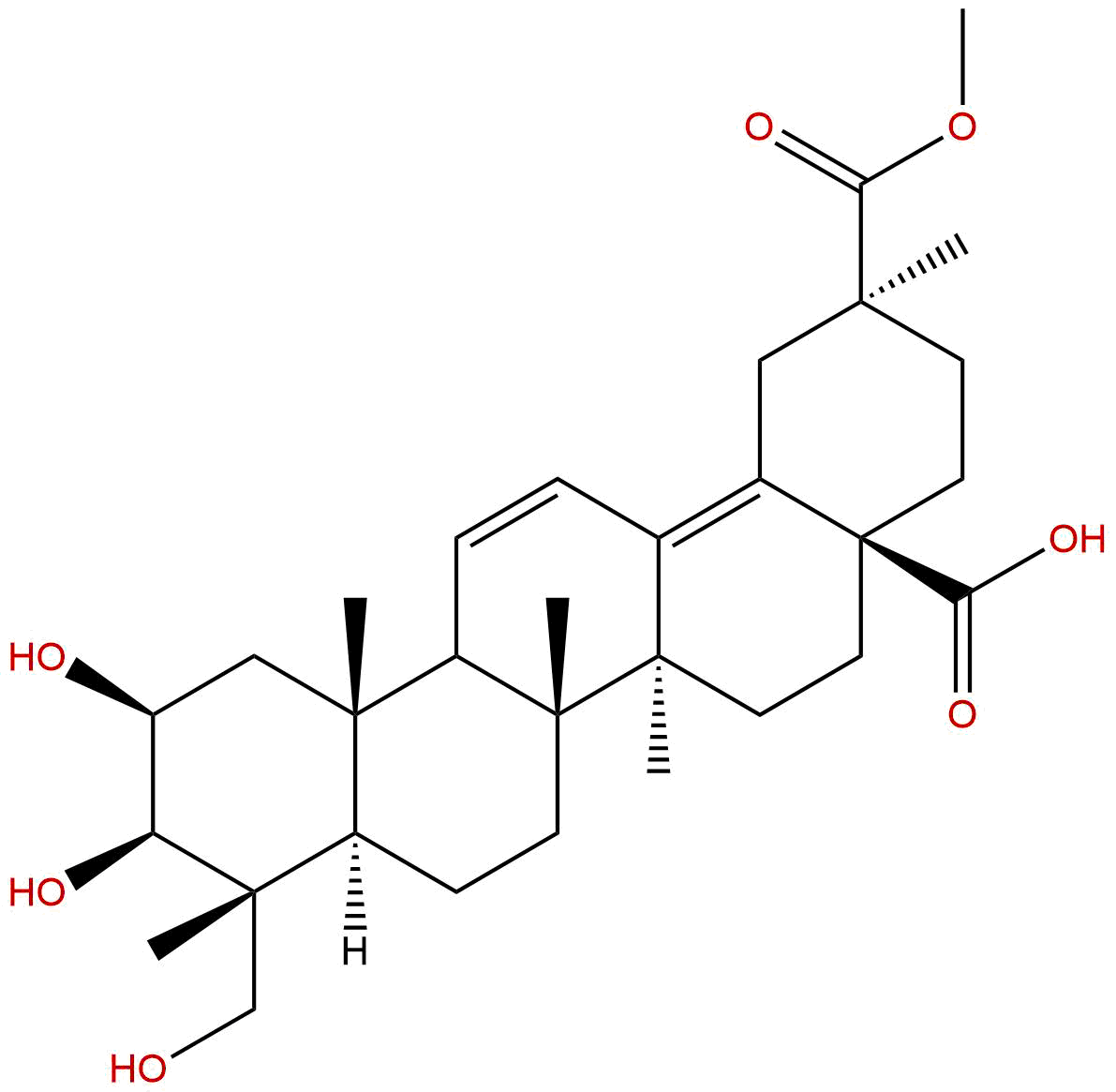


Product name: Ethyl Jaligonic acid B
Synonym name:
Catalogue No.: BP2292
Cas No.:
Formula: C31H46O7
Mol Weight: 530.702
Botanical Source: Phytolaccae radix
Type of Compound: Triterpenoids
Purity: 95%~99%
Analysis Method: HPLC-DAD or/and HPLC-ELSD
Identification Method: Mass, NMR
Packing: Brown vial or HDPE plastic bottle
Storage: Store in a well closed container, protected from air and light. Put into refrigerate or freeze for long term storage.
Whenever possible, you should prepare and use solutions on the same day. However, if you need to make up stock solutions in advance, we recommend that you store the solution as aliquots in tightly sealed vials at -20℃. Generally, these will be useable for up to two weeks.
The product could be supplied from milligrams to grams
Inquire for bulk scale.
For Reference Standard and R&D, Not for Human Use Directly.
Storage conditions:Short-term storage at 2~8℃, long-term storage at -20 ~ -80℃
null
null
null
Ethyl Jaligonic acid B is a traditional medicinal plant derived from the plant Phytophthora infestans(Phytolacca americana)Natural compounds obtained through separation. Although its chemical structure is not fully understood and basic data such as CAS number, precise molecular formula, and molecular weight are currently lacking, based on its derivative form named "Jaligonic acid B", it is likely to belong to triterpenoid acids or their ester derivatives. This type of compound is commonly found in the plant kingdom, especially in plants of the genus Celestia, and is often associated with various biological activities. At present, the compound has been included in the professional natural product database (as shown in product number BP2292), indicating that it has entered the field of researchers. However, its detailed pharmacological activity, target of action, and potential for drug development are still in the preliminary exploration stage. This article aims to systematically review existing information and combine knowledge of natural product chemistry and pharmacology to scientifically evaluate and prospect the prospects of methyl gallate B, providing a professional popular science reference for researchers in related fields.
Due to the lack of precise molecular formula and molecular weight data for methyl gallate B, we can only make reasonable speculations based on its name and source. The parent nucleus name "Jaligonic acid B" suggests that it may be an organic acid with a specific carbon skeleton, while "Ethyl ester" indicates that it is an ethylated derivative of the acid. In natural product chemistry, esterification is a common structural modification that can often alter the lipid solubility and bioavailability of the original compound.
If we refer to similar triterpenoid acid compounds reported in Shanglu (such as Shanglu acid, jaligonic acid, etc.), we can infer that methyl gallate B may have a polycyclic triterpenoid skeleton, with functional groups such as carboxyl (esterified) and multiple hydroxyl groups. The molecular weight of such structures is usually between 400-600 Da. Its physical and chemical properties largely depend on the specific type and position of substituents.
Analysis of key pharmacological parameters (based on inference of similar compounds):
* Lipid water partition coefficient (LogP): Triterpenoid acid substances usually have moderate LogP values. Proto acid has strong hydrophilicity due to its carboxyl group content (LogP may be low). After ethylation, the carboxyl group is masked, and the lipophilicity of the compound significantly increases. The LogP value is expected to increase, which may facilitate its penetration into the cell membrane.
* Topological Polarity Surface Area (TPSA): It depends on the number of polar groups such as hydroxyl and ester bonds in the molecule. For polyhydroxytriterpenoid esters, TPSA may be at a moderate level (approximately 80-120 Å ²), which can affect their membrane permeability and oral absorption.
* Preliminary evaluation of Lipinski's Rule of Five: Based on the speculated molecular weight (possibly close to 500 Da) and structural complexity, it may comply with or slightly exceed the five principles (such as molecular weight may be greater than 500, and the number of hydrogen bond donors/acceptors needs to be determined based on the specific structure). Ethylation is usually used to improve lipid solubility and oral bioavailability, and is a common "prodrug" strategy in pharmaceutical chemistry.
Summary: Methyl gallate B is a natural ester compound whose structure needs to be fully elucidated. The ethyl ester structure suggests that researchers may aim to optimize the pharmacokinetic properties of its parent acid. The primary task of future research is to determine its absolute chemical structure and measure its key physicochemical parameters.
The only known plant source of methyl gallate B is Shanglu(Phytolacca americana L.)It belongs to the Phytolacaceae family. Shanglu is a perennial herbaceous plant native to North America and widely distributed in China, Europe, and other places. Its roots, fruits, and whole plant have a history of application in traditional medicine in both the East and the West.
Traditional Medicinal History:
* Application of Traditional Chinese Medicine: Shanglu (medicinal herb name: Shanglu root) is bitter and cold in nature; Toxic. Return to the meridians of the lungs, spleen, kidneys, and large intestine. The traditional effects include dispelling water and reducing swelling, promoting bowel movements, detoxifying and dispersing lumps. Commonly used for treating conditions such as edema, bloating, constipation, and inflammation. Due to its toxicity, oral administration is often reduced by vinegar or long-term decoction, and the dosage needs to be strictly controlled.
* Native American applications: Native Americans also used Shang Lu to treat rheumatism, skin diseases, and as an emetic and laxative.
* Modern understanding: Modern research has shown that the physiological activity and toxicity of Shanglu mainly stem from a series of bioactive components it is rich in, including Triterpenoid saponins (such as Shanglu saponins), polysaccharides, antiviral proteins (PAP), and various organic acids (such as Shanglu acid)These ingredients endow Shanglu with multiple pharmacological effects such as anti-inflammatory, immune regulation, antiviral, anti-tumor, and diuretic, while also causing side effects such as gastrointestinal irritation and neurotoxicity.
The significance of the source plant: The isolation of methyl gallate B from the plant Shanglu, which has clear pharmacological activity and toxicity, provides important background clues for its potential biological activity. It is likely to be a member of the secondary metabolite network in the body of Shanglu, and may be involved in mediating some of Shanglu's therapeutic effects or toxic reactions. Studying it will help to more accurately analyze the material basis of the dual nature of "drug toxicity" in Shanglu, and provide the possibility for refining and developing new drug lead compounds with low toxicity and high efficiency.
As of now, publicly available experimental data on the specific pharmacological activity of methyl gallate B is extremely limited, and there is no clear molecular target or related disease information included in the database. This is both a challenge and a vast research space. We can make reasonable scientific speculations and point out possible future research directions based on the known pharmacological lineage of its source plant, Shanglu, and the common activities of similar triterpenoid acid compounds.
Activity speculation based on plant background:
1. Anti inflammatory and immune regulatory activity: Shanglu saponins are one of the main components of Shanglu's anti-inflammatory effect, which can reduce the expression of pro-inflammatory factors such as TNF - α and IL-6 by inhibiting inflammatory signaling pathways such as NF - κ B and MAPK. As a natural product in homologous plants, methyl gallate B may also have similar anti-inflammatory potential, possibly acting on immune cells and regulating excessive immune responses. Future research can explore its effects on chronic inflammation models such as rheumatoid arthritis and inflammatory bowel disease.
2. Antitumor activity: Many triterpenoid compounds, such as derivatives of oleanolic acid and ursolic acid, have been shown to induce tumor cell apoptosis, inhibit proliferation, and resist angiogenesis. Shanglu extract also showed anti-tumor effects. Therefore, methyl glycolate B is worth screening for in vitro proliferation inhibition and apoptosis induction experiments in a variety of tumor cell lines (such as lung cancer, breast cancer, liver cancer). Its mechanism of action may involve mitochondrial pathways, death receptor pathways, or cell cycle arrest.
3. Diuretic and renal protective activity: This is directly related to the traditional efficacy of "chasing water and reducing swelling" in Shanglu. Its function may involve regulating renal ion channels (such as Na ⁺ - K ⁺ -2Cl ⁻ cotransporters), affecting glomerular filtration rate, or anti aldosterone effects. Whether methyl gallate B has specific diuretic or renal edema relieving activity is a direction worth verifying.
4. Antiviral activity: The Shanglu antiviral protein (PAP) is widely known. Some small molecule triterpenoids have also been reported to have inhibitory effects on virus entry or replication. The inhibitory activity of methyl gallate B on influenza virus, herpes virus, and even certain coronaviruses can be explored.
The entry point for studying the mechanism of action:
Due to the lack of known targets, mechanism research should start with phenotype screening:
* Step 1: Phenotype screening. Validate its basic activity in established disease models, such as LPS induced macrophage inflammation model and transplant tumor mouse model.
* Step 2: Target exploration. Using modern chemical biology techniques, such as Target stability of drug affinity reaction (DARTS)、Thermoproteomics analysis (TPP) or Proteomics Based on Active Probes (ABPP)Search for its direct binding protein within the cell.
* Step 3: Pathway verification. Verify whether it affects specific signaling pathways (such as PI3K/Akt, JAK/STAT, Wnt/β - catenin, and other common cancer or inflammation related pathways) through gene knockdown/overexpression, reporter gene experiments, and Western blotting detection of key protein phosphorylation levels.
Potential associations with related diseases:
Based on the above speculation, the disease areas that may be associated with future research on methyl gallate B include:
* Inflammatory and autoimmune diseases
* Multiple solid tumors and hematological tumors
* Edematous diseases (such as nephrotic syndrome, cirrhosis ascites)
* Viral infection
Important Note: All these speculations require rigorous experimental evidence to support them. At the same time, it must be highly valued Potential toxicity The research, particularly on the potential impacts on the gastrointestinal tract, liver, and nervous system, stems from the toxic background of its parent plant.
Drug efficacy assessment aims to predict the likelihood of a compound developing into an oral medication. Due to the lack of key parameters for methyl gallate B, we can only conduct theoretical evaluations and prospects based on the universal characteristics of triterpenoid esters and the rules of drug likeness.
Evaluation based on Lipinski's Rule of Five:
This rule is an empirical rule for evaluating the initial potential of oral active drugs. We conducted predictive analysis on methyl gallate B:
1. Molecular weight (MW): It is estimated to be around 500 Da.May approach or slightly exceed The ideal range is ≤ 500 Da.
2. Lipid water partition coefficient (LogP): Ethylation structure indicates its LogP value May be moderate or high(speculated to be between 2-5), meeting the requirement of ≤ 5, which is beneficial for membrane permeation.
3. Number of hydrogen bond donors (HBDs): It depends on the number of hydroxyl groups that have not been esterified in the structure. Triterpenes often contain multiple hydroxyl groups, but esterification may reduce free hydroxyl groups.Expected to be ≤ 5 However, structural confirmation is required.
4. Number of hydrogen bond acceptors (HBA): Including oxygen and hydroxyl oxygen in ester bonds.Maybe slightly more than 10 It may exceed the ideal range (≤ 10).
5. Number of rotatable keys: Triterpene skeletons have strong rigidity and usually do not have many rotatable bonds,May meet Requirement of ≤ 10.
Preliminary conclusion: Gallic acid B methyl ester Possible violation Two of the five principles (molecular weight may be slightly higher, and the number of hydrogen bond acceptors may be higher). But this does not necessarily mean that it has no potential as a drug. Many natural products, such as cyclosporine and tacrolimus, violate the Five Principles but are still successful drugs. This suggests that it may require special administration routes (such as injections) or structural optimization (such as further simplification of the structure, introduction of fluorine atoms, etc.) to improve its drug like properties.
Prediction of other key pharmacological parameters:
* Oral bioavailability (F%): Medium to low prediction. The higher molecular weight and polar surface area may limit its passive diffusion absorption. The first pass effect (ester bonds may be hydrolyzed by intestinal or hepatic esterases) is also an important influencing factor.
* Blood-brain barrier (BBB) penetrability: It is speculated that Low to moderate Moderate LogP is beneficial for penetration, but larger molecular weight and potential polarity can create obstacles. BBB penetration is not necessary unless its target is located in the central nervous system.
* Metabolic stability: The ester bond is a metabolic weakness that is easily hydrolyzed by esterases, which may lead to its rapid conversion into its original form acid (gallic acid B) in the body. This could be either an inactivation process or a prodrug activation mechanism, which requires specific research.
* Toxicity risk: This is the key and potential bottleneck of the evaluation. Compounds originating from Shanglu must undergo systematic toxicological screening, including acute toxicity, genetic toxicity, hepatotoxicity, nephrotoxicity, etc. Any significant toxicity will severely limit its development prospects.
Comprehensive Assessment: As a natural product lead compound, the chemical structure of methyl gallate B endows it with certain biological activity potential, but there are significant challenges in terms of drug properties, especially in terms of molecular size, metabolic stability, and potential toxicity. Its value is more likely to lie in serving as The starting point of pharmaceutical chemistry optimization Modifying its structure (such as preparing different ester and ether derivatives, simplifying the skeleton) to improve solubility, metabolic stability, and reduce toxicity while maintaining activity is a key path towards drug development.
Research Status:
At present, research on methyl gallate B is still in progress Very basic stage The main signs are:
1. Separated and registered: It has been isolated and numbered (BP2292) by natural product chemists from Shanglu, indicating that it has been identified and archived as an independent chemical entity.
2. Serious data loss: Its complete structural identification, comprehensive pharmacological activity screening, mechanism of action research, and pharmacokinetic/toxicological data are almost blank.
3. Research potential to be explored: Its value currently mainly relies on the rich biological activity background of its plant source (Shanglu) and the important pharmaceutical lead position of natural triterpenoids.
Future research directions and challenges:
1. Primary task - Structural verification: Using high-resolution mass spectrometry (HR-MS), nuclear magnetic resonance (NMR, including 1D and 2D spectra) and other techniques, thoroughly analyze and disclose its chemical structure, molecular formula, and molecular weight. This is the cornerstone of all subsequent research.
2. Systematic pharmacological activity screening: Conduct extensive screening among various target oriented and phenotype oriented assays to identify their core biological activities (anti-inflammatory, anti-tumor, or other), determine their half effective concentration (EC50/IC50), and evaluate their efficacy.
3. In depth exploration of the mechanism of action: Using the aforementioned chemical biology methods to identify its molecular targets and elucidate the cellular signaling pathways it regulates, explaining its pharmacological effects at the molecular level.
4. Optimization research on drug properties: This is the core step in pushing it from an "active compound" to a "drug candidate". Need to carry out:
* Preliminary ADMET assessment: Measure its physicochemical parameters (LogP, TPSA), in vitro metabolic stability (liver microsomal assay), and cytotoxicity (such as toxicity to the HepG2 liver cell line).
* Structure Activity Relationship (SAR) Study: Synthesize a series of structurally similar compounds or derivatives, test their activity changes, identify pharmacophores, and guide optimization.
* Pre drug design: If its parent acid is in the active form, other types of prodrugs (such as esters, amides) can be explored to improve absorption and targeting.
5. In vivo efficacy and safety verification: After obtaining promising in vitro data, it is necessary to validate its in vivo efficacy in appropriate animal disease models and conduct systematic non clinical safety evaluations.
Application prospects:
There are multiple possibilities for the future application prospects of methyl gallate B, but they all rely on breakthroughs in the basic research mentioned above:
* As a novel drug lead compound: If it exhibits unique and potent activity in specific fields such as combating drug-resistant bacteria and specific subtypes of cancer, it may become a valuable template for pharmaceutical chemists to optimize and ultimately develop new drugs with independent intellectual property rights.
* As a marker for quality control of traditional Chinese medicine Shanglu: If research finds that it is closely related to a certain pharmacological or toxic effect of Shanglu, it may develop into a quantitative or qualitative detection indicator for the quality control of Shanglu medicinal materials or their formulations.
* As a tool for molecular exploration of biological processes: If it can specifically act on a target that has not been fully studied, it can serve as a tool molecule for studying the function of that target in physiological and pathological processes.
Conclusion:
Methyl gallate B is like a raw stone that has just been collected and has not yet been cut and polished. It is hidden in the ancient medicinal land of Shanglu, implying its potential biological activity value. However, the journey from natural compounds to potential drugs is a long and challenging one that requires interdisciplinary collaboration and sustained investment in rigorous science. Currently, the most urgent task is to fill the huge gap in chemical and biological information. Only through solid basic research can we accurately determine the intrinsic value of this "raw stone" and decide whether to polish it into a brilliant gemstone or as a precious specimen for understanding nature. Continuing to pay attention to and explore it not only helps enrich the natural product chemistry treasure trove, but may also bring unexpected insights for future new drug research and development.
Disclaimers This article is based on limited information and scientific principles for speculation and popularization, and does not constitute any investment or medical advice. The specific properties and activities of compounds shall be subject to authoritative scientific research data officially published in the future.
Batch can search by a CAS number,one per line
