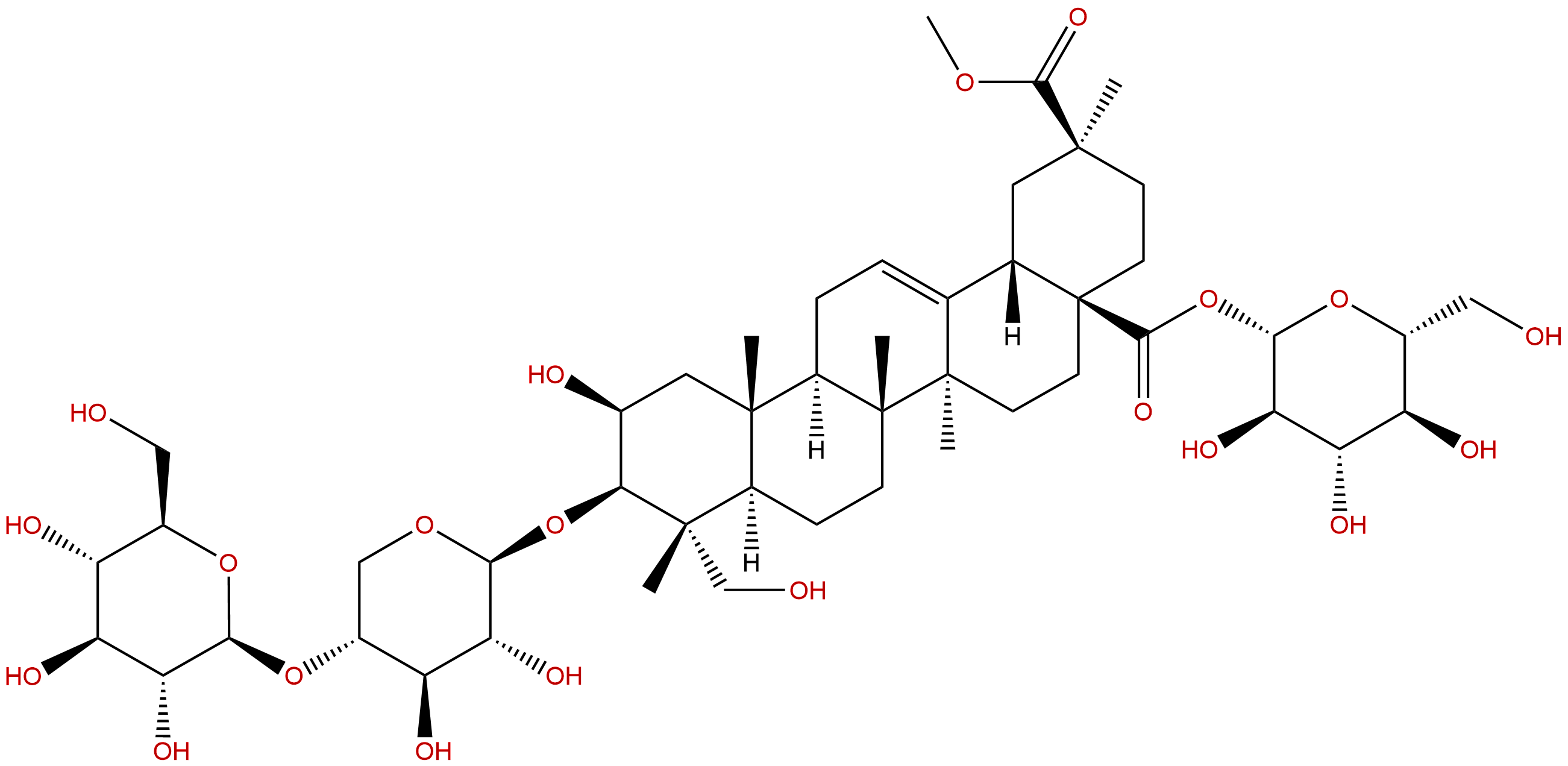


Product name: Esculentoside H
Synonym name:
Catalogue No.: BP3136
Cas No.: 66656-92-6
Formula: C48H76O21
Mol Weight: 989.115
Botanical Source:
Physical Description: Powder
Type of Compound: Triterpenoids
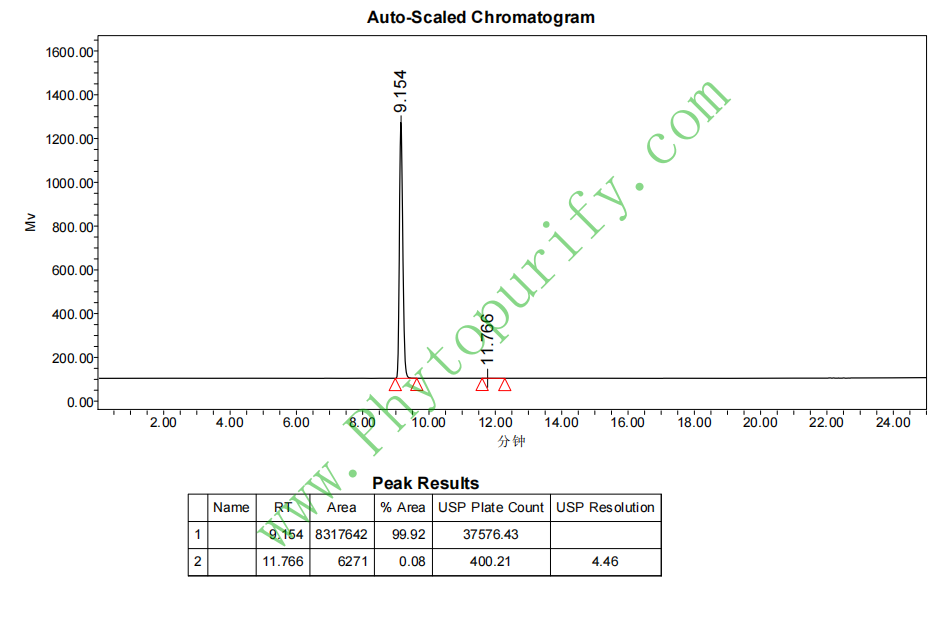
Purity: 95%~99%
Analysis Method: HPLC-DAD or/and HPLC-ELSD
Identification Method: Mass, NMR
Packing: Brown vial or HDPE plastic bottle
The product could be supplied from milligrams to grams. Inquire for bulk scale.
We provide solution to improve the water-solubility of compounds, thereby facilitating the variety of activity tests and clinic uses.
For Reference Standard and R&D, Not for Human Use Directly.
HPLC of Esculentoside H
Storage conditions:Short-term storage at 2~8℃, long-term storage at -20 ~ -80℃
341.5100
.9274
.9270
.2528
.5041
.3609
Low
64.7266
6.5546
No
No
No
No
No
No
0.0
Yes
No
No
Yes
Natural products, as an important source of drug discovery, play an irreplaceable role in the long history of human fight against diseases. Saponins have always been a hot topic in natural product pharmacology research due to their broad and significant biological activities. Esculentoside H (EsH), CAS number 66656-92-6, is derived from the traditional medicinal plant Esculentoside H(Phytolacca esculenta)A triterpenoid saponin isolated from the roots. Early research revealed its anti-tumor potential, particularly its activity related to regulating the release of tumor necrosis factor (TNF). With the deepening of research, the multi-target pharmacological effects of EsH in immune regulation, anti-inflammatory, and anti-tumor metastasis have gradually been revealed, especially in inhibiting the migration of colon cancer cells, showing a clear molecular mechanism by blocking the JNK1/2 and NF - κ B signaling pathways to downregulate the expression of matrix metalloproteinase-9 (MMP-9). In addition, its potential immunomodulatory effects involve multiple key targets such as TLR4, STAT3, TGF - β 1, providing broad prospects for its application in autoimmune diseases, inflammatory diseases, and tumor immunotherapy. This article aims to systematically review the chemical structure, plant origin, pharmacological activity, mechanism of action, pharmacological evaluation, and clinical application prospects of Shanglu saponin H, in order to provide comprehensive academic references for the in-depth research and development of this compound.
The molecular formula of Shanglu saponin H is C ₄₈ H ₇₆ O ₂ ₀, with a molecular weight of 989.1150 Da. Its chemical structure belongs to the oleane type pentacyclic triterpenoid saponin. The basic skeleton is oleanolic acid, which is usually connected to a sugar chain at the C-3 position, which is the key structural basis for its saponin properties. The specific sugar composition and connection mode determine its unique physicochemical properties and biological activity.
From the analysis of parameters related to drug properties, EsH exhibits typical characteristics of saponin compounds. The calculated lipid water partition coefficient (LogP) is 0.9274, indicating that the molecule has a certain degree of lipophilicity, but overall it still leans towards amphiphilicity. Its topological polar surface area (TPSA) is as high as 341.51 Å ², mainly attributed to the strong polarity brought by the abundant hydroxyl and sugar structures in the molecule. High TPSA values are usually associated with poor cell membrane permeability. The water solubility value is 0.2528 (unit may be mg/mL or logS, usually indicating slight solubility), which is consistent with the characteristics of most saponins forming micelles in water and having limited solubility. These physicochemical properties collectively determine its pharmacokinetic behavior: the blood-brain barrier permeability is predicted to be "low", which is consistent with its high polarity and high molecular weight characteristics, indicating that it may not be suitable for the treatment of central nervous system diseases. In terms of early safety indicators, existing data shows that the risk of hERG inhibition is "no", and the Ames test result is 0.0 (indicating no mutagenicity), which provides preliminary positive signals for its safety evaluation, but further in vitro and in vivo experimental verification is needed.
Shanglu saponin H mainly comes from plants of the Shanglu genus in the Shanglu family Shanglu(Phytolacca esculenta)Dry roots. As a traditional Chinese medicinal herb, Shanglu has a history of application in many Asian countries, but it should be noted that its original plant has certain toxicity and requires standardized processing. Plants of the same genus, such as the vertical sequence of Shanglu(P. americana)It also contains saponin components with similar structures, but there may be differences in the specific composition spectrum and content.
The extraction and separation of EsH from plant materials typically follow the conventional process of natural product chemistry. Firstly, medium polarity solvents such as methanol, ethanol, or aqueous ethanol are used for reflux extraction or ultrasound assisted extraction of the powder of Shanglu root to fully extract saponin components. Subsequently, crude extract was obtained by vacuum concentration. Crude extracts are often initially enriched by macroporous adsorption resin (such as D101, AB-8) column chromatography, followed by gradient elution with water and different concentrations of ethanol (such as 30%, 50%, 70%, 95%). Saponins are mostly concentrated in the elution sites of 50% -70% ethanol. After obtaining the saponin enrichment site, further modern chromatographic techniques such as normal phase silica gel column chromatography, reverse phase silica gel column chromatography (such as ODS, C18), and high performance liquid chromatography (HPLC) need to be used for repeated separation and purification. The preparation type HPLC, especially the combination of C18 chromatography column and acetonitrile water or methanol water system, is a key step in obtaining high-purity Shanglu saponin H monomer. The entire separation process needs to be monitored online or offline using thin-layer chromatography (TLC) or liquid chromatography-mass spectrometry (LC-MS) to ensure the tracking and identification of the target compound.
The pharmacological activity research of Shanglu saponin H mainly focuses on two fields: anti-tumor and immune regulation, and exhibits various biological effects.
1. Antitumor activity:
The anti-tumor activity of EsH was its earliest characteristic to receive attention. Research has shown that EsH has a growth inhibitory effect on various tumor cell lines. Its function is not limited to direct cytotoxicity, but is more prominent in inhibiting tumor invasion and metastasis. In colon cancer research, EsH can significantly inhibit the migration and invasion ability of cancer cells, which is closely related to its downregulation of matrix metalloproteinase-9 (MMP-9) expression. MMP-9 is the main enzyme that degrades the extracellular matrix and plays a crucial role in the process of tumor cells breaking through the basement membrane barrier and undergoing distant metastasis. In addition, EsH has been reported to induce apoptosis in certain tumor cells, and its mechanism may be related to the activation of mitochondrial pathways and endoplasmic reticulum stress pathways.
2. Immune regulation and anti-inflammatory activity:
This is another core area of pharmacological action of Shanglu saponin H. EsH exhibits complex bidirectional immune regulatory properties. EsH exhibits significant anti-inflammatory and immunosuppressive effects in various animal models of inflammation and autoimmune diseases.
* Anti inflammatory effect: EsH can effectively inhibit macrophage activation induced by stimuli such as lipopolysaccharide (LPS), reduce the production of nitric oxide (NO), prostaglandin E2 (PGE2), and pro-inflammatory cytokines (such as TNF - α, IL-1 β, IL-6).
* Immune regulatory effect: Its regulatory effect involves multiple links of innate immunity and adaptive immunity. It can affect the differentiation and function of T lymphocyte subsets. Research has shown that EsH may inhibit the differentiation and function of pro-inflammatory Th1 and Th17 cells by regulating related signaling pathways, while also promoting the production or function of regulatory T cells (Tregs), thereby restoring immune balance. This regulation of immune cell differentiation and function makes it potentially valuable in the treatment of autoimmune diseases such as rheumatoid arthritis, inflammatory bowel disease, and systemic lupus erythematosus.
3. Other activities:
Some studies also suggest that EsH may have hepatoprotective and anti fibrotic activities, but research in these areas is still in its early stages and requires more evidence to support it.
The multiple pharmacological activities of Shanglu saponin H stem from its precise intervention in multiple key signaling pathways within cells. The mechanism of its action network can be summarized as follows:
1. Inhibition of NF - κ B signaling pathway:
Nuclear factor kappa B (NF - κ B) is a core transcription factor that regulates inflammatory response, cell survival, proliferation, and invasion. EsH has been proven to effectively inhibit the activation of NF - κ B. The mechanism may include: inhibiting the phosphorylation and degradation of I κ B α, thereby preventing the nuclear translocation of NF - κ B p65 subunit; Or directly inhibit the transcriptional activity of p65. By blocking the NF - κ B pathway, EsH downstream can achieve multiple effects: in terms of anti-inflammatory effects, it reduces gene transcription of pro-inflammatory factors such as TNF - α, IL-6, IL-1 β, etc; In terms of anti-tumor effects, downregulating the expression of invasion and metastasis related genes such as MMP-9 and VEGF may induce the expression of apoptosis related proteins.
2. Inhibition of MAPK signaling pathway (especially JNK pathway):
The mitogen activated protein kinase (MAPK) pathway, including JNK, ERK, and p38, is crucial in stress response, inflammation, and cell migration. EsH has been specifically shown to inhibit the phosphorylation activation of c-Jun N-terminal kinase (JNK1/2). The activation of JNK pathway is closely related to the upregulation of MMP-9 expression. EsH exerts a synergistic effect by blocking JNK signaling and inhibiting the NF - κ B pathway, jointly strongly inhibiting the transcription and expression of MMP-9, which is one of its core molecular mechanisms for anti-tumor metastasis.
3. Regulating the JAK/STAT signaling pathway:
This pathway is the center of cytokine signaling transduction, especially playing a decisive role in immune cell differentiation. The inhibitory effect of EsH on STAT3 has been studied. The sustained activation of STAT3 is associated with tumor cell proliferation, survival, immune escape, and Th17 cell differentiation. Inhibition of STAT3 may mediate the anti-tumor and Th17 inhibitory effects of EsH. At the same time, its possible effects on STAT4 (a key transcription factor for Th1 differentiation) and IL-2 (T cell growth factor) signaling also constitute the mechanism basis for its regulation of Th1/Th2/Treg balance.
4. Targeting Toll like receptor 4 (TLR4) signaling:
TLR4 is a key pattern recognition receptor that recognizes LPS and initiates innate immune responses. Research has shown that EsH may inhibit the activation of MyD88/NF - κ B and TRIF/IRF3 pathways by interfering with the activation or downstream signaling of TLR4, thereby suppressing excessive inflammatory responses at the source.
5. Impact on TGF - β 1 signaling and immune tolerance:
Transforming Growth Factor - β 1 (TGF - β 1) is a multifunctional cytokine that regulates cell growth, differentiation, and immune tolerance. EsH may affect the differentiation and function of regulatory T cells (Tregs) by regulating the production or signaling of TGF - β 1. The signature transcription factor FOXP3 of Treg is essential for its function. The potential positive regulation of the Treg/FOXP3 axis by EsH may be one of its mechanisms for inducing immune tolerance and treating autoimmune diseases.
6. Other potential targets:
The effect of EsH on immune checkpoints and cytokines such as cytotoxic T lymphocyte associated antigen 4 (CTLA-4) and interferon - γ (IFN - γ) suggests its possible involvement in a more complex immune microenvironment regulatory network, providing theoretical clues for its combination with existing immunotherapy.
In summary, Shanglu saponin H acts on multiple key targets such as TLR4, JNK, NF - κ B, STAT3, TGF - β 1, forming a multi pathway and multi-target action network, jointly achieving its comprehensive pharmacological effects of anti-inflammatory, immune regulation, and anti-tumor metastasis.
Although Shanglu saponin H exhibits outstanding pharmacological activity, its drug like and pharmacokinetic properties are the key bottlenecks determining its successful development as a drug.
1. Physical and chemical properties, absorption, and distribution:
As mentioned earlier, the high molecular weight (>500 Da) and polar surface area (TPSA>140 Å ²) of EsH severely limit its ability to cross biofilms through passive diffusion, resulting in potentially extremely low oral bioavailability. Its slightly soluble nature also affects its dissolution and absorption in the gastrointestinal tract. The predicted blood-brain barrier permeability is low, which limits its application in central nervous system diseases. The distribution in the body may be more concentrated in organs with abundant blood flow, and due to the fact that saponin compounds often bind to plasma proteins, their free drug concentrations may be lower.
2. Metabolism and excretion:
Saponins are easily influenced by gut microbiota and liver metabolism in the body. The glycosyl portion is easily hydrolyzed by the glycosidase of intestinal bacteria to generate aglycones, and the activity and toxicity of aglycones may be significantly different from those of the original saponins, which increases the complexity and unpredictability of their metabolic processes in vivo. Liver metabolism may involve phase I (such as CYP450 enzyme system) and phase II (such as glucuronidation, sulfation) reactions. Its larger molecular weight and polarity also suggest that it may be mainly excreted through bile, with a relatively small proportion excreted through the kidneys.
3. Current research limitations and needs:
Currently, there is a significant lack of publicly available pharmacokinetic studies on the EsH system, including absolute bioavailability, half-life, tissue distribution, and identification of major metabolites. Although the negative predictions of Ames test and hERG inhibition are positive, comprehensive preclinical safety evaluations (such as acute toxicity, long-term toxicity, reproductive toxicity, etc.) have not been systematically reported. The hemolytic effect that it may cause as a saponin component also needs to be rigorously evaluated.
4. Prospects for formulation strategies:
In order to overcome its drug defects, future research needs to actively explore new drug delivery strategies. For example: development Prodrug To improve its lipid solubility and membrane permeability; Utilize Nano drug delivery system(such as liposomes, polymer micelles, nanoparticles) encapsulate EsH to improve its stability, prolong circulation time, and enhance targeted accumulation at tumor or inflammatory sites (EPR effect or active targeting); Or consider Non oral administration route For example, injection administration (but to address solubility and irritation issues) or local administration is used to treat skin or joint local diseases.
The multi-target mechanism of action of Shanglu saponin H has brought potential application prospects in multiple disease fields, but it also faces many challenges from laboratory to clinical practice.
Potential clinical application directions:
Challenges and future research directions:
Shanglu saponin H, as a natural triterpenoid saponin isolated from traditional medicinal plants, has become a valuable molecule in natural product pharmacology research due to its unique anti-tumor metastasis and multiple immune regulatory activities. It inhibits tumor migration by intervening in the JNK/NF - κ B/MMP-9 axis and affects immune cell function by regulating multiple signaling pathways such as TLR4, STAT, and TGF - β, exhibiting multi-target and multi pathway characteristics. These solid pharmacological mechanism studies have laid a scientific foundation for their application in the fields of tumors and autoimmune diseases. However, the challenges in drug development caused by its inherent physical and chemical property defects cannot be ignored. Future research needs to focus on solving absorption, distribution, metabolism, and other issues through drug chemical modification or advanced delivery technologies while deepening the understanding of mechanisms. Only by crossing the gap from active compounds to candidate drugs can Shanglu Saponin H potentially translate its enormous potential demonstrated in the laboratory into a truly beneficial clinical treatment option for patients, continuing the glorious chapter of natural products in modern medicine.
