| Catalog No | Package | Original Price | Price | Inventory | Quantity | Operating |
|---|---|---|---|---|---|---|
| BPF2784-5mg | 5mg | $350.00 | Sign in |
|


Storage conditions:Short-term storage at 2~8℃, long-term storage at -20 ~ -80℃
49.6900
3.2643
3.2578
.0679
4.7442
10.2547
High
90.9978
2.2201
No
No
No
No
Yes
Yes
0.6
Yes
Yes
Yes
No
Natural products, as an important source of drug discovery, play an irreplaceable role in the long history of human fight against diseases. Especially secondary metabolites derived from traditional medicinal plants, due to their structural diversity and unique biological activity, have always been a leading compound library for new drug development. Dendrobium genus(Dendrobium)Plants, as one of the largest genera in the Orchidaceae family, have approximately 1500 species worldwide, many of which are widely used in traditional medicine in Asia, particularly in China, Japan, and Southeast Asia. Dendrobium officinale has the effects of "nourishing the stomach, generating fluids, nourishing yin, and clearing heat" in traditional Chinese medicine theory. It is commonly used to treat diseases such as fever and fluid damage, dry mouth and thirst, and post illness deficiency heat. Modern pharmacological research has revealed that Dendrobium plants are rich in various chemical components, including alkaloids, stilbenes, dibenzyls, phenanthrenes, coumarins, and polysaccharides, and exhibit various pharmacological activities such as anti-tumor, anti-inflammatory, antioxidant, immune regulation, and neuroprotection.
In the complex chemical composition library of Dendrobium plants, phenanthrenes are a class of compounds with significant biological activity. Lusianthridin, As a typical 9,10-dihydrophenanthrene compound, it was first discovered in plants of the Dendrobium genus Dendrobium venustum Separation and identification in the middle. In recent years, with the deepening of research on the anti-tumor active ingredients of Dendrobium officinale, Lusianthridin has attracted widespread attention from researchers due to its unique ability to resist tumor cell migration and invasion, as well as its clear molecular mechanism of action. Unlike many anti-tumor compounds that directly induce cytotoxicity, Lusianthridin's action focuses on inhibiting the process of tumor metastasis, which makes it uniquely promising for drug development targeting the clinical challenge of tumor metastasis. This article aims to comprehensively review the chemical properties, plant sources, pharmacological activities, molecular mechanisms, pharmacological evaluation, and clinical application prospects of Lusianthridin, in order to provide a systematic scientific basis for further research and development of this natural product.
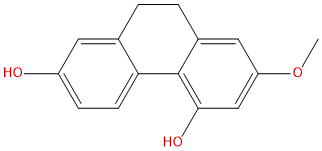
Lusianthridin belongs to the 9,10-dihydrophenanthrene class of compounds, and its core skeleton is composed of two benzene rings fused together through a five membered ring (with saturated carbon carbon bonds at positions 9,10). Specifically, its chemical structure is characterized by single bond connections at positions 9 and 10 of the phenanthrene ring (- CH ₂ - CH ₂ -), rather than double bonds in phenanthrene compounds. This structural difference endows 9,10-dihydrophenanthrene compounds with different chemical properties and biological activities compared to phenanthrene compounds. The molecular formula of Lusianthridin is C ₁₅ H ₁₄ O3, with a molecular weight of 242.2740 g/mol. Its structure usually contains substituents such as hydroxyl (- OH) and methoxy (- OCH ∝), and the presence of these functional groups is crucial for its polarity and biological activity. According to existing literature, the IUPAC naming of Lusianthridin typically involves precise description of the substituent positions on the phenanthrene ring, such as 2,7-dihydroxy-4-methoxy-9,10-dihydrophenanthrene, which is a common structural description.
In terms of physical and chemical properties, Lusianthridin exhibits typical lipophilic characteristics. The calculated oil-water partition coefficient (LogP) is 3.2643, indicating that the compound has a moderate degree of lipophilicity, which facilitates its penetration of cell membranes and interaction with membrane proteins or intracellular targets. The Topological Polar Surface Area (TPSA) is 49.6900 Å ², which is lower than the commonly recognized threshold for good oral absorption (approximately 140 Å ²), indicating its potential for oral absorption. However, its water solubility is only 0.0679 mg/mL, making it a poorly soluble compound, which may be one of the main challenges facing its in vivo bioavailability. In addition, the predicted results show that Lusianthridin has a high blood-brain barrier (BBB) penetration ability, which may have positive implications for the treatment of brain tumors or central nervous system diseases, but may also pose potential neurotoxic risks. It is worth noting that the inhibition prediction result of hERG (human Ether - à - go Related Gene) is negative, indicating a low risk of causing QT interval prolongation and arrhythmia in the heart, which is a favorable safety feature. The predicted result of Ames test is 0.6, indicating that it may have a certain genetic toxicity risk and requires strict toxicological evaluation in subsequent development.
Lusianthridin was originally derived from plants of the Dendrobium genus Dendrobium venustum Obtained through separation.Dendrobium venustum It is an epiphytic orchid plant distributed in Southeast Asia, known for its beautiful flowers. However, Lusianthridin is not limited to a single species. With the deepening of research, this compound has been discovered in various Dendrobium plants, such as Dendrobium nobile(Golden Hairpin Dendrobium)Dendrobium chrysotoxum(Drum Hammer Dendrobium)Dendrobium thyrsiflorum(Dendrobium officinale) and Dendrobium aphyllum Wait. This suggests that Lusianthridin may be a widely distributed secondary metabolite in the Dendrobium genus, and its content may vary significantly depending on species, growth environment, harvest season, and plant parts. Usually, the stem of Dendrobium is the traditional medicinal site and the main source for isolating this type of compound.
The extraction of Lusianthridin usually follows the classic process of natural product chemistry. Firstly, the dried dendrobium plant material (usually the stem) is crushed and then extracted using organic solvents. Due to the lipophilicity of Lusianthridin, commonly used extraction solvents include methanol, ethanol, or their aqueous solutions. For example, 95% ethanol or methanol reflux extraction is a commonly used method. After the extraction solution is concentrated under reduced pressure, crude extract is obtained. Subsequently, the crude extract was preliminarily separated by liquid-liquid extraction (using solvents of different polarities such as petroleum ether, ethyl acetate, n-butanol, etc.), and Lusianthridin is usually enriched in the moderately polar ethyl acetate extraction site.
Further separation and purification rely on various chromatographic techniques. Silica gel column chromatography is the most commonly used method, typically using gradient elution systems such as chloroform methanol or petroleum ether ethyl acetate. In addition, Sephadex LH-20 gel column chromatography is also commonly used for separation and further purification by molecular sieve effect and adsorption. For phenanthrene compounds with similar structures, high performance liquid chromatography (HPLC) or preparative thin layer chromatography (PTLC) is a key step in obtaining high-purity Lusianthridin. During the separation process, the target compound is often tracked by thin layer chromatography (TLC) combined with ultraviolet detection (254 nm or 365 nm) or specific color reagents (such as sulfuric acid ethanol solution). Finally, the isolated monomer compound was structurally identified using spectroscopic techniques such as nuclear magnetic resonance spectroscopy (NMR) and mass spectrometry (MS), confirming its identity as Lusianthridin.
The pharmacological activity research of Lusianthridin mainly focuses on the field of anti-tumor, especially its inhibitory effect on tumor cell migration and invasion, which distinguishes it from many traditional cytotoxic anti-tumor drugs.
Inhibit tumor cell migration and invasion This is the most prominent pharmacological activity of Lusianthridin. Several in vitro studies have shown that Lusianthridin can significantly inhibit the migration and invasion of many human cancer cells, including breast cancer (such as MDA-MB-231, MCF-7), lung cancer (such as A549), prostate cancer (such as PC-3), and liver cancer (such as HepG2) cell lines, at a non cytotoxic concentration. The Wound healing assay and Transwell chamber assay are classic methods for evaluating its anti migration and anti invasion abilities. The results showed that Lusianthridin treatment could reduce cell migration distance and the number of cells passing through the matrix gel in a concentration - and time-dependent manner. This discovery has significant clinical implications, as tumor metastasis is the leading cause of death in cancer patients, and Lusianthridin's ability to block the metastasis process without directly killing cells suggests that it may become a low toxicity candidate drug for anti metastasis.
Inducing cell apoptosis In addition to its anti migratory effect, some studies have also reported that Lusianthridin can induce tumor cell apoptosis at certain concentrations. For example, in breast cancer cells, Lusianthridin treatment can cause cell cycle arrest in G0/G1 phase, and up regulate the expression of pro apoptotic proteins (such as Bax), down regulate the expression of anti apoptotic proteins (such as Bcl-2), at the same time activate Caspase-3 and Caspase-9, and finally induce cell apoptosis through mitochondrial pathway (endogenous pathway). However, the concentration required to induce apoptosis is usually higher than that required to inhibit migration, indicating that its anti metastatic effect is its main pharmacological advantage.
Inhibit angiogenesis The growth and metastasis of tumors depend on the formation of new blood vessels. Research has shown that Lusianthridin can inhibit the expression and activity of hypoxia inducible factor-1 α (HIF-1 α). HIF-1 α is a key transcription factor for tumors to adapt to a low oxygen microenvironment, which can upregulate the expression of angiogenic factors such as vascular endothelial growth factor (VEGF). By inhibiting HIF-1 α, Lusianthridin may indirectly suppress tumor angiogenesis, thereby cutting off the tumor's nutritional supply, limiting its growth and metastasis.
Although anti-tumor activity is a research focus, Lusianthridin may also have other biological activities. Given that it originates from traditional medicinal plants, some preliminary studies have explored its anti-inflammatory and antioxidant activities. For example, it may exert anti-inflammatory and antioxidant effects by inhibiting the production of nitric oxide (NO) or clearing free radicals. However, there is relatively little research on these aspects, and their exact roles and mechanisms need further clarification.
The pharmacological activity of Lusianthridin, especially its anti migration effect, is achieved by regulating multiple key signaling pathways and molecular targets. The core mechanism can be summarized as: promoting the degradation of oncogene c-Myc by inhibiting the Src STAT3 signaling pathway.
Inhibition of Src kinase activity Src is a non receptor tyrosine kinase that is overexpressed or overactivated in various tumors, involved in regulating cell proliferation, migration, invasion, and angiogenesis. Lusianthridin can directly or indirectly inhibit the activity of Src kinase, manifested by a decrease in the phosphorylation level of Src protein at the Tyr416 site. Phosphorylation of Tyr416 is a hallmark of Src kinase activation.
Inhibit STAT3 signal STAT3 (Signal Transduction and Transcription Activation Factor 3) is an important downstream substrate of Src. Activated Src can phosphorylate the Tyr705 site of STAT3, causing dimerization and translocation into the nucleus, initiating transcription of downstream target genes. Lusianthridin inhibits Src activity, thereby suppressing the Tyr705 phosphorylation level of STAT3 and blocking its nuclear translocation and transcriptional activation functions. STAT3 is a key transcription factor that regulates cell survival, proliferation, migration, and immune suppression, and its sustained activation is a hallmark of many cancers.
Promote c-Myc degradation C-Myc is a powerful oncogenic transcription factor that regulates various cellular processes such as cell cycle, metabolism, protein synthesis, and apoptosis. The stability of c-Myc protein is strictly regulated. Research has found that Lusianthridin can significantly reduce the expression level of c-Myc protein by inhibiting the Src STAT3 signal. Mechanistically, this downregulation is not primarily achieved by inhibiting the transcription of c-Myc, but by accelerating its protein degradation. Specifically, Lusianthridin treatment can increase the phosphorylation of c-Myc protein at the Thr58 site, which is a signal for c-Myc recognition and degradation by the ubiquitin proteasome system. Therefore, Lusianthridin rapidly reduces the level of c-Myc in cells by promoting its ubiquitination degradation, thereby inhibiting its downstream migration and proliferation promoting functions.
In addition to the core Src-STAT3 c-Myc axis, Lusianthridin also affects other molecules and pathways associated with tumor metastasis.
Matrix metalloproteinases (MMPs)MMP-2 and MMP-9 are key enzymes that degrade extracellular matrix (ECM) and play a central role in tumor cell invasion and metastasis. Lusianthridin can downregulate the mRNA and protein expression levels of MMP-2 and MMP-9, and inhibit their enzyme activity. This may be achieved by inhibiting the transcriptional regulation of MMPs genes by STAT3 and c-Myc.
Apoptosis related proteins As mentioned earlier, Lusianthridin can regulate the expression of Bcl-2 family proteins, downregulate anti apoptotic proteins MCL1 and BCL2, upregulate pro apoptotic protein Bax, and activate the Caspase cascade reaction, inducing cell apoptosis.
Hypoxic signaling pathway Lusianthridin can inhibit the protein expression and transcriptional activity of HIF-1 α, thereby downregulating the expression of its target gene VEGF and exerting anti angiogenic effects. This may be achieved by inhibiting upstream pathways such as STAT3 or PI3K/Akt/mTOR.
Topoisomerase Lusianthridin is predicted to potentially interact with topoisomerases I (TOP1) and II α (TOP2A). Topoisomerases are essential enzymes for DNA replication and transcription, and are also targets of many chemotherapy drugs. Although direct evidence is limited, this prediction suggests that Lusianthridin may exert its anti-tumor activity by interfering with DNA topology.
Estrogen receptor and aromatase Lusianthridin is predicted to interact with estrogen receptor alpha (ESR1) and aromatase (CYP19A1). Aromatase is a key enzyme that converts androgen into estrogen and plays an important role in hormone dependent breast cancer. This suggests that Lusianthridin may have potential activity against hormone related tumors.
MAPK pathway Lusianthridin may also affect the activity of MAPK1 (ERK2). The MAPK pathway is a key pathway that regulates cell proliferation and differentiation, and there is extensive cross-talk between it and the Src STAT3 pathway.
In summary, the mechanism of action of Lusianthridin is multi-target and multi pathway, but its core lies in inhibiting the Src STAT3 signal to promote c-Myc degradation, thereby blocking a series of downstream effects related to migration, invasion, angiogenesis, and survival. This anti metastasis centered mode of action provides new ideas for the development of novel anti-tumor drugs.
Developing Lusianthridin from a natural product into a clinical drug requires a comprehensive evaluation of its pharmacological properties, including pharmacokinetic (ADME) characteristics and potential toxicity.
Based on the provided pharmacological parameters, a preliminary assessment of the class of Lusianthridin can be made:
At present, there is very limited experimental data on the pharmacokinetics of Lusianthridin in vivo. Based on its physicochemical properties and in vitro data, its pharmacokinetic characteristics can be inferred as follows:
In order to promote the preclinical development of Lusianthridin, there is an urgent need for systematic in vivo pharmacokinetic studies, including measuring its blood concentration time curves after oral and intravenous injection in rats or mice, calculating pharmacokinetic parameters (such as Cmax, Tmax, AUC, t1/2, CL, Vd), and identifying its main metabolites and excretion pathways.
The unique anti-tumor metastasis mechanism of Lusianthridin makes it have clear clinical application prospects in the field of tumor therapy, but it also faces many challenges.
Anti tumor metastasis therapy This is the most core potential application of Lusianthridin. For tumors with a high risk of metastasis (such as triple negative breast cancer, non-small cell lung cancer, melanoma, etc.), Lusianthridin or its derivatives can be used as an auxiliary treatment drug in combination with traditional chemotherapy, radiotherapy, or targeted therapy to prevent or delay the recurrence of tumor metastasis. Its low cytotoxicity makes it particularly suitable for long-term maintenance therapy to control the spread of small residual lesions.
Brain tumor treatment Due to its high BBB penetration, Lusianthridin has unique advantages in the treatment of primary brain tumors (such as glioblastoma) or brain metastases. Glioblastoma is highly invasive, and the presence of BBB prevents many chemotherapy drugs from effectively reaching the lesion. The anti migration and anti invasion properties of Lusianthridin may help inhibit the invasive growth of glioma cells.
Combination therapy strategy Lusianthridin can improve overall efficacy by synergizing with other drugs. For example, when used in combination with chemotherapy drugs that directly induce cytotoxicity, such as paclitaxel and cisplatin, it can kill tumor cells while inhibiting their migration and dissemination. Combined with immune checkpoint inhibitors (such as PD-1/PD-L1 antibodies), it may enhance the efficacy of immunotherapy by regulating the tumor microenvironment (such as inhibiting STAT3 mediated immune suppression).
Water solubility and bioavailability Low water solubility is the primary obstacle limiting the clinical translation of Lusianthridin. The future research focus should be on developing efficient drug delivery systems, such as:
Toxicological assessment The positive predictive result of Ames test is a serious warning signal. Comprehensive in vitro and in vivo toxicology studies must be conducted, including:
In depth analysis of the mechanism of action Although the Src-STAT3 c-Myc axis is the core mechanism, the direct molecular target of Lusianthridin (i.e. the protein it directly binds to) is not yet clear. Future research requires the identification of protein targets directly bound to them through techniques such as Drug Affinity Reaction Target Stability (DARTS), Cell Thermal Transition Analysis (CETSA), or Activity Based Proteomic Analysis (ABPP). This will provide a precise structural basis for drug design and optimization.
Research on Structural Optimization and Structure Performance Relationship Using Lusianthridin's 9,10-dihydrophenanthrene skeleton as a lead, a systematic structural modification was carried out to synthesize a series of derivatives and study their structure-activity relationship (SAR). The goal is to obtain candidate compounds with better water solubility, stronger activity, higher selectivity, and lower toxicity. For example, different substituents (such as halogens, amino groups, carboxyl groups, etc.) can be introduced at different positions, or the saturation degree of the ring can be changed.
Lusianthridin, as a natural 9,10-dihydrophenanthrene compound derived from Dendrobium plants, has emerged in the field of natural product pharmacology with its unique anti-tumor metastasis activity. Its mechanism of action by inhibiting the Src STAT3 signaling pathway, promoting the degradation of oncogene c-Myc, and thereby inhibiting tumor cell migration, invasion, and angiogenesis provides a highly valuable lead compound for the development of novel anti metastatic drugs. Despite its challenges in terms of physicochemical properties (especially water solubility) and potential genotoxicity, its excellent drug like parameters (such as low molecular weight, moderate LogP, and no risk of hERG inhibition) and unique pharmacological mode of action make it of significant research value and development potential. Future research should focus on addressing its water solubility challenges, elucidating its direct molecular targets, conducting comprehensive toxicological evaluations, and optimizing its structure based on its framework. With the deepening of research, Lusianthridin and its derivatives are expected to provide new solutions to the clinical challenge of tumor metastasis and may expand their applications in other disease fields. The in-depth study of Lusianthridin not only helps to reveal the scientific connotation of the traditional medicinal plant Dendrobium, but also provides valuable natural inspiration for the development of modern innovative drugs.
Batch can search by a CAS number,one per line
