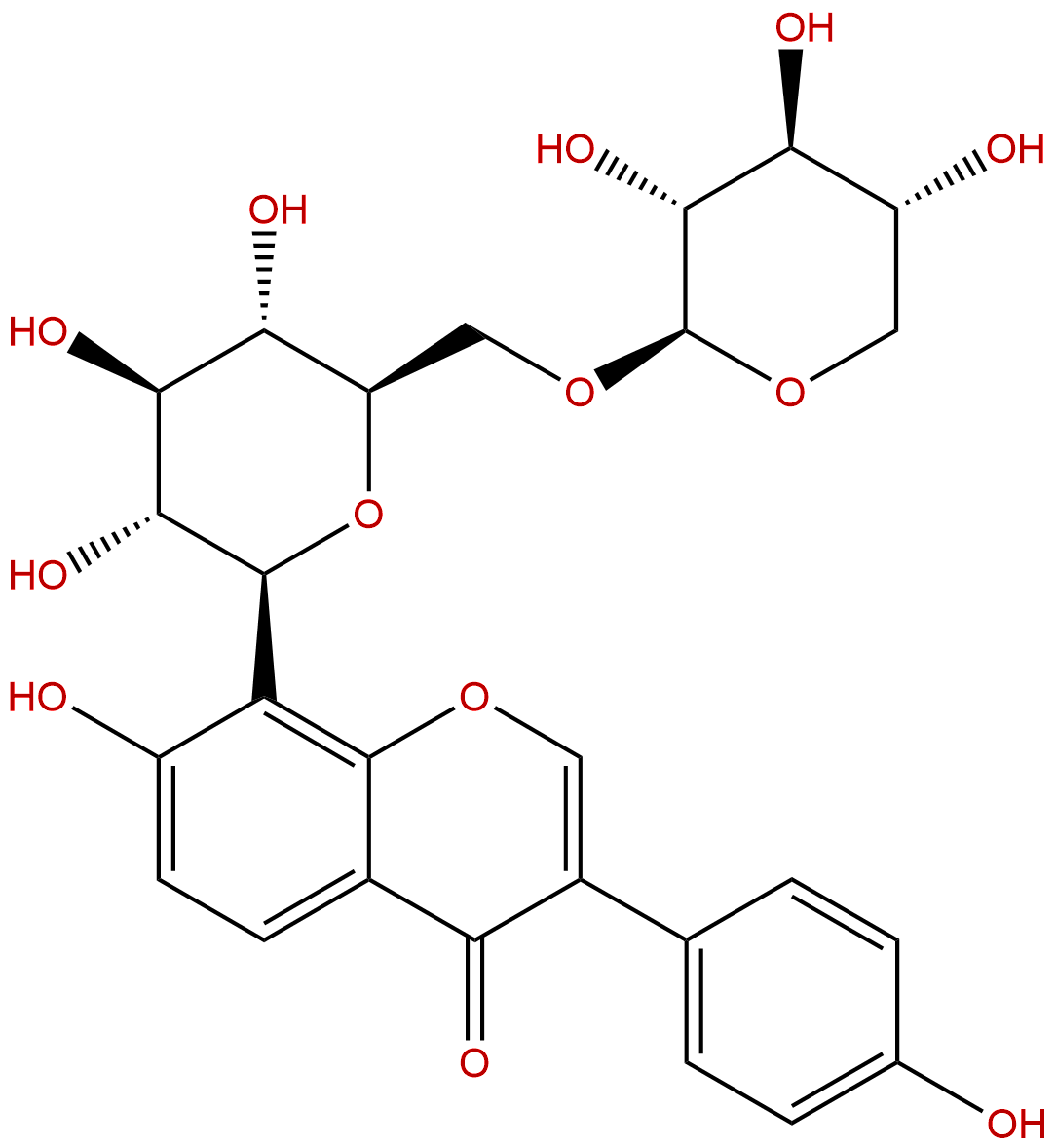


Product name: Puerarin 6''-O-xyloside
Synonym name:
Catalogue No.: BP3335
Cas No.: 114240-18-5
Formula: C26H28O13
Mol Weight: 548.497
Botanical Source:
Physical Description: Powder
Type of Compound: Flavonoids
Purity: 95%~99%
Analysis Method: HPLC-DAD or/and HPLC-ELSD
Identification Method: Mass, NMR
Packing: Brown vial or HDPE plastic bottle
The product could be supplied from milligrams to grams. Inquire for bulk scale.
We provide solution to improve the water-solubility of compounds, thereby facilitating the variety of activity tests and clinic uses.
For Reference Standard and R&D, Not for Human Use Directly.
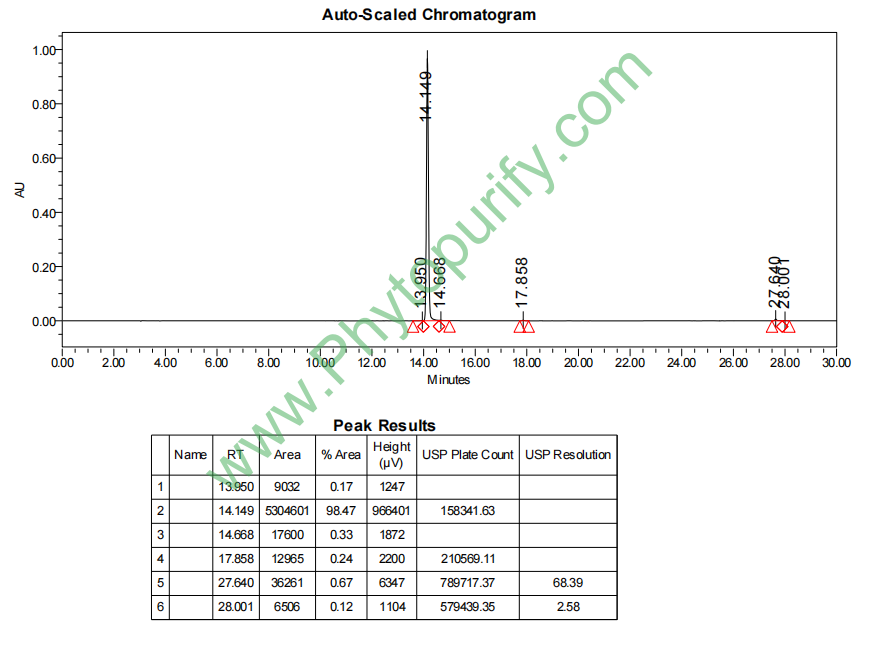
HPLC of Puerarin 6''-O-xyloside
Storage conditions:Short-term storage at 2~8℃, long-term storage at -20 ~ -80℃
219.7400
-.3568
-.3716
2.0258
.6423
.2145
Low
77.6623
4.6087
Yes
No
No
No
Yes
No
1.2
Yes
Yes
Yes
No
Hypertension is one of the main risk factors for the onset and death of cardiovascular and cerebrovascular diseases worldwide. Its pathological and physiological mechanisms are complex, involving multiple links such as neurological, endocrine, endothelial dysfunction, and metabolic abnormalities. Despite the wide variety of antihypertensive drugs available, some patients still face challenges such as insufficient efficacy, significant side effects, or inadequate protection of target organs. Therefore, searching for novel lead compounds with multi-target and multi pathway regulatory effects from natural products has always been an important direction in drug development. Isoflavones, as a natural active ingredient widely present in leguminous plants, have attracted much attention due to their diverse biological activities. Puerarin, as a characteristic isoflavone in traditional Chinese medicine Pueraria lobata, has been widely studied for its effects on improving cardiovascular function, antioxidation, and anti-inflammatory. As a glycosylated derivative of puerarin, puerarin -6 ″ - O-xyloside's unique structural modification endows it with a biological activity spectrum and mechanism of action distinct from the parent compound. Recent studies have shown that this compound not only inherits some beneficial properties of isoflavones, but also exhibits unique potential in regulating energy metabolism, neural regulation, and vascular function. Especially as a 5-HT2C receptor antagonist, it regulates lipid absorption by affecting the central vagus nerve pathway, providing new ideas for the prevention and treatment of metabolic hypertension and related cardiovascular metabolic diseases. This article aims to systematically review the chemical properties, plant sources, pharmacological activities, molecular mechanisms of action, medicinal properties, and application prospects of puerarin 6 ″ - O-xyloside in diseases such as hypertension.
Puerarin 6 "- O-xyloside, commonly known as Puerarin 6" - O-xyloside, has a CAS registration number of 114240-18-5. From a chemical structure perspective, this compound is a glycosylated derivative of Puerarin. The basic skeleton of puerarin is isoflavone-7-O-glucoside. And puerarin -6 "- O-xylose glycoside is further connected to a xylose unit through a glycosidic bond on the 6" hydroxyl group of the glucose group in puerarin molecule. Therefore, its molecular formula is C26H28O13 and its molecular weight is 548.4970 Da.
This structural change significantly affects its physicochemical properties. Firstly, the introduction of hydrophilic xylose groups further enhances the polarity of the molecule. The calculated topological polar surface area is as high as 219.7400 Å ², indicating the presence of numerous hydrogen bond donor and acceptor sites on the molecular surface. The LogP value of its lipid water partition coefficient is -0.3568, indicating that the compound has a high degree of hydrophilicity. The theoretically calculated water solubility value is 2.0258 mg/mL, confirming its good water solubility, which is beneficial for its dissolution and distribution in living organisms. However, high polarity and large TPSA also pose challenges to its transmembrane transport ability. Predicting its blood-brain barrier permeability as "low" means that its ability to enter the central nervous system in the form of prototype drugs is limited, and its observed central nervous system effects may be mediated through indirect mechanisms or active metabolites. In addition, preliminary pharmacological risk assessment showed that the compound had no significant inhibitory effect on hERG potassium channels at the tested concentration (hERG inhibition: No), indicating a low potential risk of arrhythmia. The Ames test result is 1.2, indicating that there is no significant mutagenicity under the experimental conditions, but further genetic toxicity studies are needed to confirm.
Puerarin 6 ″ - O-xyloside is mainly derived from the dried roots of the leguminous plant Pueraria lobata, also known as the traditional Chinese medicine Pueraria lobata. Kudzu root is a traditional Chinese medicinal herb in China, which has the effects of relieving muscle and fever, generating fluids and quenching thirst, penetrating rashes, promoting yang and stopping diarrhea. Kudzu root is rich in various flavonoids, among which puerarin has the highest content and is a marker for its quality control. Puerarin 6 ″ - O-xyloside, as a derivative of puerarin, has a relatively low content in Pueraria lobata and is a trace component. However, its unique activity makes it an important component of the basic research on the pharmacological effects of Pueraria lobata.
Efficient and specific extraction and isolation of puerarin 6 ″ - O-xyloside from complex plant matrices is a prerequisite for studying its activity. The commonly used extraction methods are similar to other isoflavone compounds.Solvent extraction method It is the most basic method, often using methanol, ethanol or their aqueous solutions as extraction solvents, and using heating reflux or ultrasound assisted extraction to improve extraction efficiency. Given its good hydrophilicity, a higher proportion of ethanol water system (such as 50% -70% ethanol) may have a better extraction effect on it.Macroporous adsorption resin method It is a commonly used technique for enriching and purifying isoflavones in Pueraria lobata. Using resin to selectively adsorb components with different polarities and molecular sizes, strong polar impurities such as polysaccharides and proteins are washed away with water first, and then gradient elution is performed with different concentrations of ethanol. Puerarin 6 ″ - O-xyloside is usually collected in the medium polarity elution site.Modern chromatographic separation technology It is the key to obtaining high-purity monomers. Preparation type high-performance liquid chromatography is the core method for final purification, often using a reverse phase C18 chromatography column with methanol water or acetonitrile water system as the mobile phase for elution, and monitored and collected by a UV detector (isoflavones have characteristic absorption at 250-280 nm). In addition, liquid-liquid distribution chromatography techniques such as high-speed countercurrent chromatography are also used for the preparation and separation of natural products due to their advantages of irreversible adsorption and high recovery rate.
Although the pharmacological activity research of puerarin -6 ″ - O-xyloside is not as in-depth as that of puerarin, existing evidence has revealed its significant biological activity in multiple aspects, especially in the field of cardiovascular metabolism.
The pharmacological effects of puerarin -6 ″ - O-xyloside stem from its interactions with multiple molecular targets, forming a multi-target regulatory network, especially in pathological processes related to hypertension.
Core regulators of energy metabolism and cellular homeostasis: AMPK and SIRT1 AMP activated protein kinase is an energy receptor in cells, and its activation (phosphorylation) can promote fatty acid oxidation, glucose uptake, inhibit synthetic metabolism, and improve insulin sensitivity. SIRT1 is a NAD+- dependent deacetylase involved in regulating cellular stress response, metabolism, aging, and inflammation. Puerarin 6 ″ - O-xyloside can activate the AMPK and SIRT1 pathways. These two pathways activate each other and work together to improve endothelial function, lower blood pressure, and combat insulin resistance by downregulating genes related to fat production, enhancing mitochondrial function, inhibiting oxidative stress and inflammation. This is one of the core mechanisms by which it exerts cardiovascular metabolic protection.
Key nodes of oxidative stress and inflammatory response: NF - κ B, TNF - α, and XDH Nuclear factor kappa B is a core transcription factor that regulates the expression of inflammatory factors. Puerarin 6 ″ - O-xyloside can inhibit the degradation of I κ B and the nuclear translocation of RELA subunits, thereby suppressing the activity of NF - κ B and reducing the production of pro-inflammatory cytokines such as TNF - α and IL-6. Meanwhile, it can also inhibit the activity of xanthine oxidase, reduce the production of reactive oxygen species and uric acid, and alleviate oxidative stress damage. Oxidative stress and inflammation are key factors leading to endothelial dysfunction and vascular remodeling, and inhibiting these pathways directly contributes to blood pressure reduction and vascular protection.
Neural and vascular tension regulation related targets: 5-HT2C receptor, TRPV1, EDNRA, and CHRNA7:
Hypoxia and adaptive response regulation: HIF1A Hypoxia inducible factor-1 alpha plays an important role in chronic hypoxia (such as sleep apnea related hypertension) and vascular disease. This compound may participate in vascular adaptive responses by regulating the stability or activity of HIF1A, affecting the expression of downstream vascular endothelial growth factors, etc.
Drug metabolizing enzyme: EPHX2 (soluble epoxide hydrolase)This enzyme is responsible for hydrolyzing endogenous cyclooxygenase, which has cardiovascular protective effects. Inhibition of sEH can increase the levels of EETs, thereby producing antihypertensive, anti-inflammatory, and endothelial protective effects. This compound may participate in this protective lipid mediated pathway by affecting sEH activity.
In summary, puerarin 6 ″ - O-xyloside forms a synergistic network by simultaneously acting on the AMPK/SIRT1 energy metabolism axis, NF - κ B/TNF inflammatory axis, 5-HT2C neural regulatory pathway, as well as vascular tension regulation targets such as TRPV1 and EDNRA, exerting anti hypertensive and cardiovascular protective effects from multiple aspects such as reducing peripheral vascular resistance, improving metabolic abnormalities, inhibiting chronic inflammation, and regulating autonomic nervous function.
Based on its physicochemical parameters and preliminary biological data, a preliminary evaluation was conducted on the pharmacological properties of puerarin -6 ″ - O-xyloside.
Advantage aspects:1. Good safety potential No hERG inhibition warning, preliminary Ames test negative, laying the foundation for its safety. two Good water solubility Good water solubility is beneficial for formulation development, especially for injectable formulations, and may improve oral bioavailability. three Multi-target effect The multi-target characteristics targeting the complex etiology of hypertension may bring comprehensive therapeutic effects.
Challenge aspect:1. Oral bioavailability may be low High polarity, high molecular weight, and high TPSA severely limit its passive transmembrane diffusion. After oral administration, it may face problems such as poor intestinal absorption and significant first pass effects, leading to low bioavailability. This is a common challenge faced by most glycosidic natural products. two Poor blood-brain barrier permeability It is predicted that it is difficult to directly enter the central nervous system, which seems to contradict its clear central mechanism of action of 5-HT2C receptors. One possible explanation is that it exerts central effects indirectly by acting on brain regions with incomplete blood-brain barrier (such as the posterior region) or by affecting peripheral central signaling (such as vagus nerve afferent signals). Or its active metabolites may have better brain entry ability. three Metabolism and stability As glycoside compounds, they are easily hydrolyzed by gut microbiota and glycosidase in the body, removing xylose or even glucose groups, and converting into puerarin or other metabolites. The true pharmacological substance basis in its body may be itself, its metabolites, or a combination of both. Therefore, detailed pharmacokinetic studies are crucial.
Prospects of Pharmacokinetic Research In the future, it is necessary to systematically study its absorption, distribution, metabolism, and excretion processes under different administration routes. The key points include: clarifying its absolute oral bioavailability; Identify its main metabolites and metabolic pathways (phase I and phase II); Examine its organizational distribution characteristics, especially whether it can achieve effective concentrations in target organs such as vascular walls, liver, and specific brain regions; Explore its interaction with gut microbiota. These studies will provide key basis for dosage form design (such as using absorption enhancers, developing prodrugs, preparing nano formulations or liposomes to enhance absorption and targeting) and the development of clinical dosing regimens.
The unique pharmacological mechanism of puerarin 6 ″ - O-xyloside provides broad prospects for its application in the following fields:
However, there are still many challenges to clinical application: firstly, a systematic preclinical pharmacological evaluation needs to be completed to confirm its efficacy and advantages in different hypertensive animal models. Secondly, it is necessary to overcome the bottleneck of drug development and solve its absorption and distribution problems through advanced formulation technology or prodrug strategies. Finally, strict safety evaluations and standardized clinical trials need to be conducted to verify its effectiveness and safety in the human body.
As a trace flavonoid glycoside discovered from traditional Chinese medicine Pueraria lobata, puerarin -6 ″ - O-xyloside exhibits unique potential in the prevention and treatment of cardiovascular metabolic diseases due to its unique 5-HT2C receptor antagonistic activity and ability to regulate multiple signaling pathways such as AMPK, SIRT1, NF - κ B. It builds a bridge connecting central nervous system regulation with peripheral metabolism and inflammation, providing a new multi-target intervention strategy for the treatment of metabolic syndrome with hypertension as the core. Although it has natural limitations in oral absorption and blood-brain barrier penetration, this is precisely the direction that modern pharmacy and medicinal chemistry can strive to break through. In the future, through interdisciplinary research and in-depth elucidation of its in vivo processes and pharmacological substance basis, as well as the use of new technologies for structural optimization and dosage form modification, puerarin 6 ″ - O-xyloside is expected to develop from a potential natural active molecule into a new type of drug for the treatment of metabolic hypertension and related diseases, and also provide useful references for the development of innovative drugs based on natural products.
