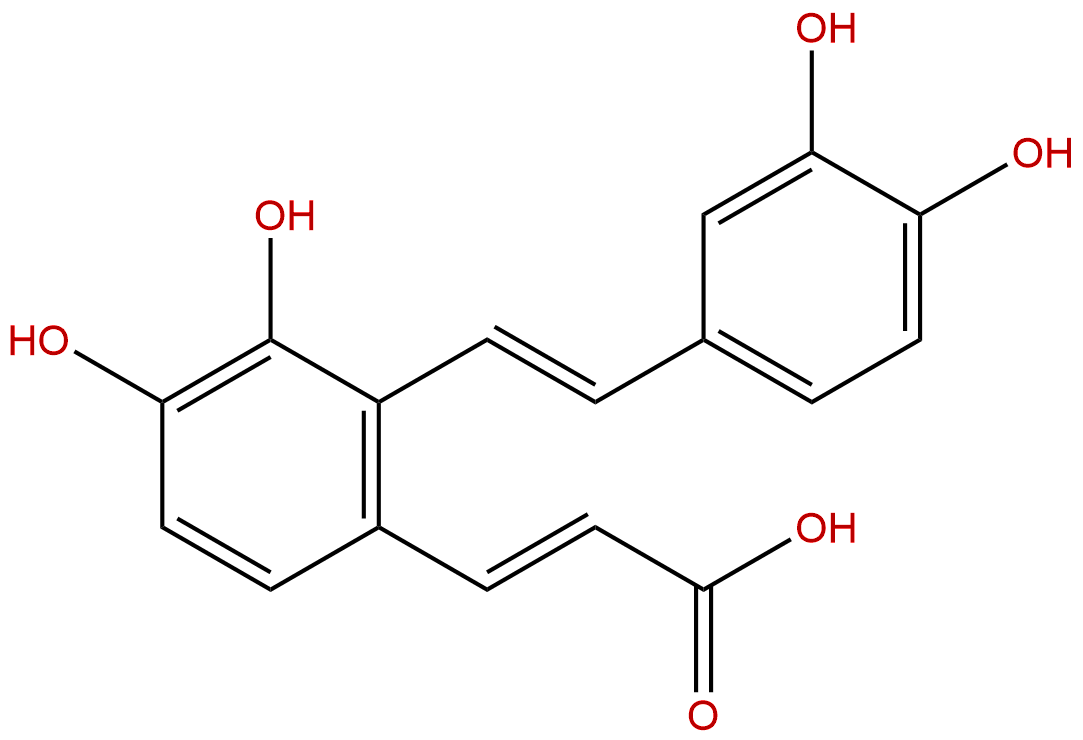


Product name: Salvianolic acid F
Synonym name:
Catalogue No.: BP3619
Cas No.: 158732-59-3
Formula: C17H14O6
Mol Weight: 314.293
Botanical Source:
Physical Description:
Type of Compound: Phenylpropanoids
Purity: 95%~99%
Analysis Method: HPLC-DAD or/and HPLC-ELSD
Identification Method: Mass, NMR
Packing: Brown vial or HDPE plastic bottle
The product could be supplied from milligrams to grams. Inquire for bulk scale.
We provide solution to improve the water-solubility of compounds, thereby facilitating the variety of activity tests and clinic uses.
For Reference Standard and R&D, Not for Human Use Directly.
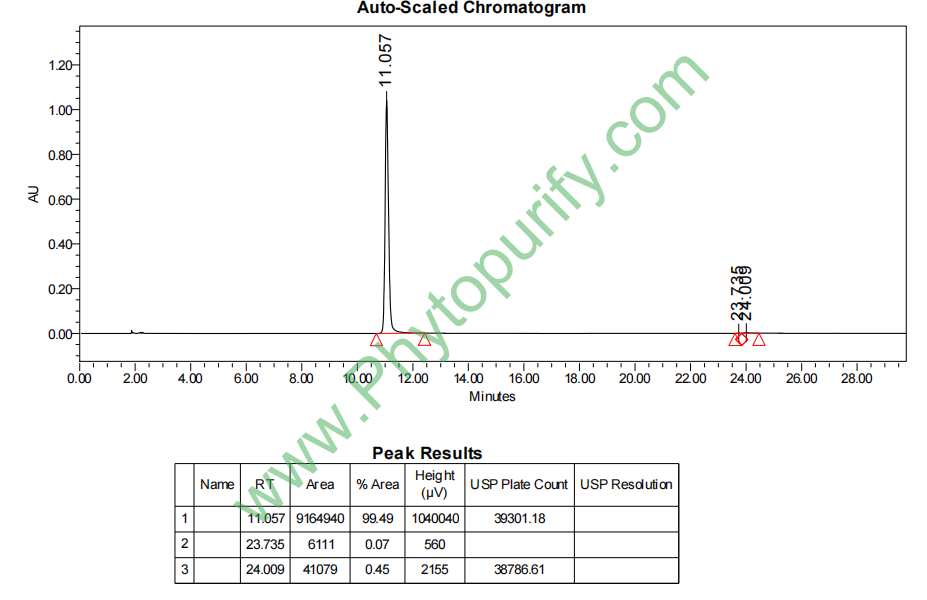
HPLC of Salvianolic acid F
Storage conditions:Short-term storage at 2~8℃, long-term storage at -20 ~ -80℃
118.2200
2.6209
-.0262
.1052
3.8292
1.4418
Low
90.2514
2.6214
No
Yes
No
No
Yes
No
0.6
Yes
Yes
Yes
Yes
Salvianolic acid F (Sal F) is a traditional medicinal plant derived from Salvia miltiorrhiza(Salvia miltiorrhiza)The natural phenolic acid compounds obtained through separation have a CAS number of 158732-59-3. As an important member of the water-soluble active ingredient family in Danshen, salvianolic acid F has attracted much attention in recent years due to its significant anti-tumor activity. The research background shows that salvianolic acid F not only inherits the traditional medicinal value of Danshen in cardiovascular and cerebrovascular protection, but also demonstrates inhibitory potential against various cancers in modern pharmacological research, especially in the field of refractory cancers driven by KRAS mutations, showing unique value.
Existing research has revealed that salvianolic acid F is a multi-target inhibitor, and its core mechanism of action includes specific inhibition of KRAS G12D mutant protein, as well as regulation of NF - κ B, MMP-9, and nitric oxide (NO) signaling pathways. At the cellular level, salvianolic acid F inhibits cancer cell proliferation, invasion, and migration through the EP300/PI3K/AKT signaling axis, and induces cell apoptosis. In animal models, it effectively inhibits the growth of KRAS dependent lung cancer cells through the PI3K/AKT pathway. These findings make salvianolic acid F a potential lead compound for studying malignant tumors such as KRAS G12D driven non-small cell lung cancer (NSCLC) and ovarian cancer. In addition, its derivatives have shown the ability to induce cell apoptosis by perturbing glutathione levels and activating caspase 6 in glioma research, further expanding its anti-cancer spectrum.
The molecular formula of salvianolic acid F is C ₁₇ H ₁₄ O ₆, with a molecular weight of 314.2930 g/mol, belonging to the class of phenolic acid compounds with medium molecular weight. Its SMILES structural formula is O=C (O)/C=C/c1ccc (O) c (O) c (O) c1/C=C/c1ccc (O) c (O) c1, revealing its core chemical characteristics: the molecule contains two benzene ring structures connected by unsaturated bonds, and carries multiple phenolic hydroxyl and carboxylic acid groups. This structure endows salvianolic acid F with the typical chemical properties of phenolic acid compounds.
From the analysis of pharmacological parameters, the topological polar surface area (TPSA) of salvianolic acid F is 118.2200 Å ², which is relatively high and mainly attributed to the multiple hydroxyl and carboxyl groups in the molecule. These polar groups provide abundant hydrogen bond donor and acceptor sites, but may also affect its transmembrane permeability. Its lipophilic water partition coefficient (LogP) is 2.6209 and LogD is -0.0262, indicating that the compound exhibits a certain degree of lipophilicity under physiological pH conditions, but overall tends to be hydrophilic. The water solubility is 0.1052 mg/mL, which belongs to the category of slight solubility, posing a challenge for its formulation development.
The molecular weight of 314.2930 g/mol meets the requirement of "molecular weight less than 500" in Lipinski's five rules. Based on the analysis of the number of hydrogen bond donors (phenolic hydroxyl and carboxyl groups) and hydrogen bond acceptors (oxygen atoms), salvianolic acid F basically conforms to the "Rule of Five", providing a chemical structural basis for its further drug development. However, the higher TPSA and relatively lower water solubility suggest that special attention should be paid to formulation strategies when optimizing its bioavailability.
The plant source of salvianolic acid F is single and clear, namely the Lamiaceae plant Salvia miltiorrhiza(Salvia miltiorrhiza)Also known as red ginseng or red ginseng. Danshen has a medicinal history of more than two thousand years in China, first recorded in the "Shennong Bencao Jing" and listed as a top grade. In traditional Chinese medicine theory, Danshen has a slightly cold nature, a bitter taste, and is associated with the heart and liver meridians. It has the effects of promoting blood circulation, removing blood stasis, relieving pain, clearing the heart and eliminating annoyance, cooling blood, and eliminating abscesses. It is commonly used to treat chest and abdominal pain, epigastric pain, disease accumulation, heat related pain, restlessness and insomnia, menstrual disorders, painful menstrual periods, and swollen and painful sores.
The medicinal parts of Salvia miltiorrhiza are mainly roots and rhizomes, and its active ingredients can be divided into two categories: lipophilic tanshinones (such as tanshinone IIA) and water-soluble salvianolic acids (such as salvianolic acids A, B, F, etc.). Danshensu acid F, as a member of the Danshensu acid family, is an important active ingredient in Danshen water extract. Traditionally, Danshen is often used in the form of decoction or compound preparations (such as Danshen Dripping Pills and Compound Danshen Tablets) for the prevention and treatment of cardiovascular diseases. Modern pharmacological research has confirmed that Danshen extract has multiple effects such as dilating coronary arteries, increasing coronary blood flow, improving microcirculation, anti platelet aggregation, anti thrombotic, antioxidant, and anti-inflammatory properties, which are closely related to its rich content of salvianolic acid components.
It is worth noting that although the content of salvianolic acid F in Danshen is relatively low compared to the main components such as salvianolic acid B, its unique chemical structure and biological activity make it a new focus of pharmacological research on Danshen. The cognitive shift from traditional "promoting blood circulation and removing blood stasis" to modern "multi-target anti-cancer" reflects the scientific exploration path of traditional Chinese medicine modernization research, from overall medicinal materials to specific active ingredients, and from traditional efficacy to modern molecular mechanisms.
The pharmacological activity of salvianolic acid F is extensive and complex, and its core value lies in its anti-tumor effect against various cancers, especially KRAS mutant cancers. The existing research has preliminarily outlined its multi-target and multi pathway action network.
4.1 Specific inhibition against KRAS G12D
KRAS gene mutation is one of the most common driving mutations in cancer, and G12D point mutation is particularly common in pancreatic cancer, colorectal cancer and non-small cell lung cancer. Traditionally, KRAS has been considered an "untreatable" target, but research on salvianolic acid F has brought new hope to this field. Experiments have shown that salvianolic acid F can specifically inhibit the activity of KRAS G12D mutant protein, thereby blocking its downstream signal transduction. In KRAS G12D driven non-small cell lung cancer and ovarian cancer models, salvianolic acid F significantly inhibits tumor cell growth and survival through this mechanism.
4.2 Multi target regulatory network
In addition to KRAS, salvianolic acid F also acts on multiple key targets, forming a synergistic anti-tumor effect:
- BCL2(B-cell lymphoma 2)As an important anti apoptotic protein, overexpression of BCL2 is one of the main mechanisms by which cancer cells resist apoptosis. Danshensu acid F can downregulate the expression of BCL2 or interfere with its function, thereby reducing the apoptosis threshold of cancer cells and promoting programmed cell death.
- HIF1A(Hypoxia-inducible factor 1-alpha)In the tumor microenvironment, hypoxia induces the expression of HIF1A, which in turn promotes angiogenesis, metabolic reprogramming, and metastasis. The inhibition of HIF1A by salvianolic acid F may weaken the adaptability and invasive ability of tumors.
- SIRT1(Sirtuin 1)As an NAD+- dependent deacetylase, SIRT1 is involved in the regulation of cellular metabolism, stress response, and aging. The regulation of SIRT1 by salvianolic acid F may affect the energy metabolism and survival signaling of cancer cells.
- NOS3(Nitric oxide synthase 3)The inhibition of NO production by endothelial nitric oxide synthase and salvianolic acid F may help regulate tumor vascular function and inflammatory microenvironment.
- SOD2(Superoxide dismutase 2)The regulation of mitochondrial antioxidant enzymes by salvianolic acid F may affect the oxidative stress balance of cancer cells.
4.3 Signal pathway intervention
The anticancer effect of salvianolic acid F is mainly achieved through the following signaling pathways:
- Inhibition of NF - κ B pathway NF - κ B is a key regulatory factor for inflammation and cell survival, and is continuously activated in various cancers. Danshensu acid F inhibits the nuclear translocation and transcriptional activity of NF - κ B, downregulates the expression of its target genes (such as MMP-9, BCL2, etc.), thereby suppressing inflammation driven tumor progression, invasion, and metastasis.
- Regulation of PI3K/AKT pathway PI3K/AKT is an important downstream effector pathway of KRAS, promoting cell growth, proliferation, and survival. Danshensu acid F inhibits the overactivation of this pathway through the EP300/PI3K/AKT axis, and has shown inhibitory effects on cancer cell growth, invasion, and migration in both in vitro and in vivo experiments.
- Induction of cell apoptosis By regulating BCL2 family proteins and activating the caspase cascade reaction (especially caspase 6), salvianolic acid F can directly induce apoptosis in cancer cells. Research on its derivatives also suggests that by disturbing intracellular glutathione levels, it may further enhance the pro apoptotic effect.
4.4 Association with Related Diseases
Although the existing data only lists "myocardial infarction" as a disease related to salvianolic acid F, this is highly consistent with the traditional use of its source plant Salvia miltiorrhiza. The cardiovascular protective effects of Danshen and its active ingredients (including salvianolic acids) have been widely confirmed, involving multiple aspects such as antiplatelet aggregation, antithrombotic formation, antioxidant stress, protection of vascular endothelial function, inhibition of myocardial cell apoptosis, and alleviation of ischemia-reperfusion injury. Danshensu acid F may play a protective role in the pathological process of myocardial infarction by regulating targets such as oxidative stress (SOD2), nitric oxide metabolism (NOS3), and cell survival signals (SIRT1, BCL2). This mechanism interpretation from "promoting blood circulation and removing blood stasis" to "multi-target regulation" is a model of modernization research in traditional Chinese medicine.
Based on the provided pharmacological parameters, we can conduct a systematic evaluation of the pharmacological potential of salvianolic acid F:
5.1 Lipinski Five Rule Compliance Analysis
- Molecular weight (MW):314.2930 g/mol, Far less than 500, in line.
- Lipid water partition coefficient (LogP)2.6209, less than 5, compliant.
- Hbond donor From the structural inference, phenolic hydroxyl and carboxyl groups provide approximately 4-5 hydrogen bond donors, slightly higher than the standard of "less than 5", but still within an acceptable range.
- Number of hydrogen bond acceptors The molecule contains 6 oxygen atoms and serves as a hydrogen bond acceptor, meeting the standard of "less than 10".
Overall, salvianolic acid F basically conforms to Lipinski's five rules and possesses the basic characteristics of a drug like molecule.
5.2 Absorption, distribution, metabolism, and excretion (ADME) characteristics
- Permeability Caco-2 cells have a permeability of 1.4418 × 10 ⁻⁶ cm/s and a Peff value of 3.8292, indicating moderate intestinal permeability, but may not be a highly permeable compound. The blood-brain barrier (BBB) penetration is "low", which is consistent with a higher TPSA (118.2200 Å ²), meaning it is not easily accessible to the central nervous system and may not be a major barrier for treating peripheral tumors or cardiovascular diseases, but delivery strategies need to be considered for brain tumors.
- distribution The plasma protein binding rate (PPB) is as high as 90.2514%, indicating that salvianolic acid F mainly binds to plasma proteins (such as albumin) in the blood, which affects its free drug concentration and tissue distribution, may prolong the half-life but reduce immediate biological activity.
- Water solubility:0.1052 mg/mL, Belonging to micro solubility, this may be one of the limiting factors for its oral bioavailability.
5.3 Preliminary Safety Assessment
- Genotoxicity The Ames test result is 0.6 (usually considered negative if it is less than 1.5 and there is no dose-response relationship), indicating that no significant mutagenicity was observed under the conditions of this experiment. However, the annotation of "chromosomal aberration" as "present" indicates that it may cause chromosomal damage in specific experiments, which requires further research to confirm its clinical relevance.
- cardiotoxicity HERG inhibition is' no ', which is a positive signal that reduces the potential risk of developing long QT syndrome and arrhythmia.
- Organ toxicity The data shows that it has an impact on serum alkaline phosphatase (Ser_LK), gamma glutamyltransferase (Ser_GGT), aspartate aminotransferase (Ser_ST), and alanine aminotransferase (Ser_LT) (marked as "Yes"), suggesting that it may have certain effects on liver function and needs to be focused on in subsequent toxicology studies.
- Allergy and phototoxicity Skin sensitization (Skid_Sens) is "Yes", indicating a potential risk of triggering skin allergic reactions; Respiratory sensitization (Resp_Sens) is "no"; Photo_tox is rated as' none '.
5.4 Comprehensive evaluation of drug properties
Danshensu acid F, as a natural product lead compound, exhibits good target activity and structural characteristics that basically conform to the rules of drug like substances. Its main advantages lie in its multi-target action and activity against refractory KRAS mutant cancer cells. However, its medicinal properties face some challenges: moderate to low permeability and water solubility may limit its oral absorption; High plasma protein binding rate affects free drug concentration; Potential hepatotoxicity and skin sensitization need to be carefully evaluated in preclinical development. Future structural optimization or formulation development (such as prodrugs, nano formulations, phospholipid complexes, etc.) may help improve their pharmacokinetic properties and safety.
Currently, research on salvianolic acid F is still in the preclinical stage, but encouraging experimental evidence has been accumulated. The research mainly focuses on the following aspects: 1) validation and mechanism deepening of its anti-tumor activity, especially its efficacy in KRAS mutant cancer models; 2) Analysis of multi-target mechanisms, including regulation of pathways such as NF - κ B and PI3K/AKT; 3) Research on the structure-activity relationship, with the aim of improving its potency, selectivity, and drug properties through structural modification; 4) Preliminary pharmacokinetic and toxicological evaluation.
Application Prospects:
1. As a lead compound for anticancer drugs The most direct application prospect of salvianolic acid F is to develop it as an anti-tumor drug, especially for the treatment of KRAS G12D mutant non-small cell lung cancer, ovarian cancer, pancreatic cancer, colorectal cancer and other malignant tumors that currently lack effective targeted therapy. Its multi-target characteristics may help overcome the resistance problem of single target drugs.
2. Combination therapy strategy Danshensu acid F may be used in combination with existing chemotherapy drugs, immune checkpoint inhibitors, or other targeted drugs to produce synergistic effects, improve efficacy, and reduce the risk of drug resistance.
3. Application of cardiovascular disease: Based on the traditional use of salvia miltiorrhiza, the plant from which salvianolic acid is derived, and the preliminary target correlation (such as myocardial infarction), salvianolic acid F is also worth further exploration in the field of cardiovascular disease prevention and treatment, especially for ischemic heart disease and atherosclerosis.
4. Structural optimization and new drug development By using it as the parent nucleus for structural modification, it is expected to obtain derivatives with stronger activity, higher selectivity, and better pharmacokinetic properties. The study of its derivatives in gliomas has shown potential in this direction.
Future research directions:
-Conduct a more systematic in vivo pharmacological evaluation, including efficacy validation in different animal models and patient derived xenograft tumor models.
-Conduct comprehensive preclinical pharmacokinetic, toxicological, and safety evaluations to clarify the treatment window and potential risks.
-Thoroughly explore the precise molecular mechanisms of its multi-target effects, especially the interaction network between each target.
-Explore advanced drug delivery systems to improve their water solubility, stability, and tumor targeting.
-Conduct research on the synergistic effect of salvianolic acid F with other anticancer drugs to provide a basis for clinical combination therapy.
In summary, as a natural product derived from traditional Chinese medicine, salvianolic acid F has become a valuable candidate molecule in the field of anti-cancer drug development due to its unique chemical structure and multi-target anti-tumor activity. Despite facing challenges in drug formulation, it is expected to develop into a new therapeutic drug for the treatment of refractory malignant tumors such as KRAS mutant cancer through the optimization of modern medicinal chemistry and formulation methods. It also provides an important example for the modernization of traditional Chinese medicine and the development of new natural product drugs.
