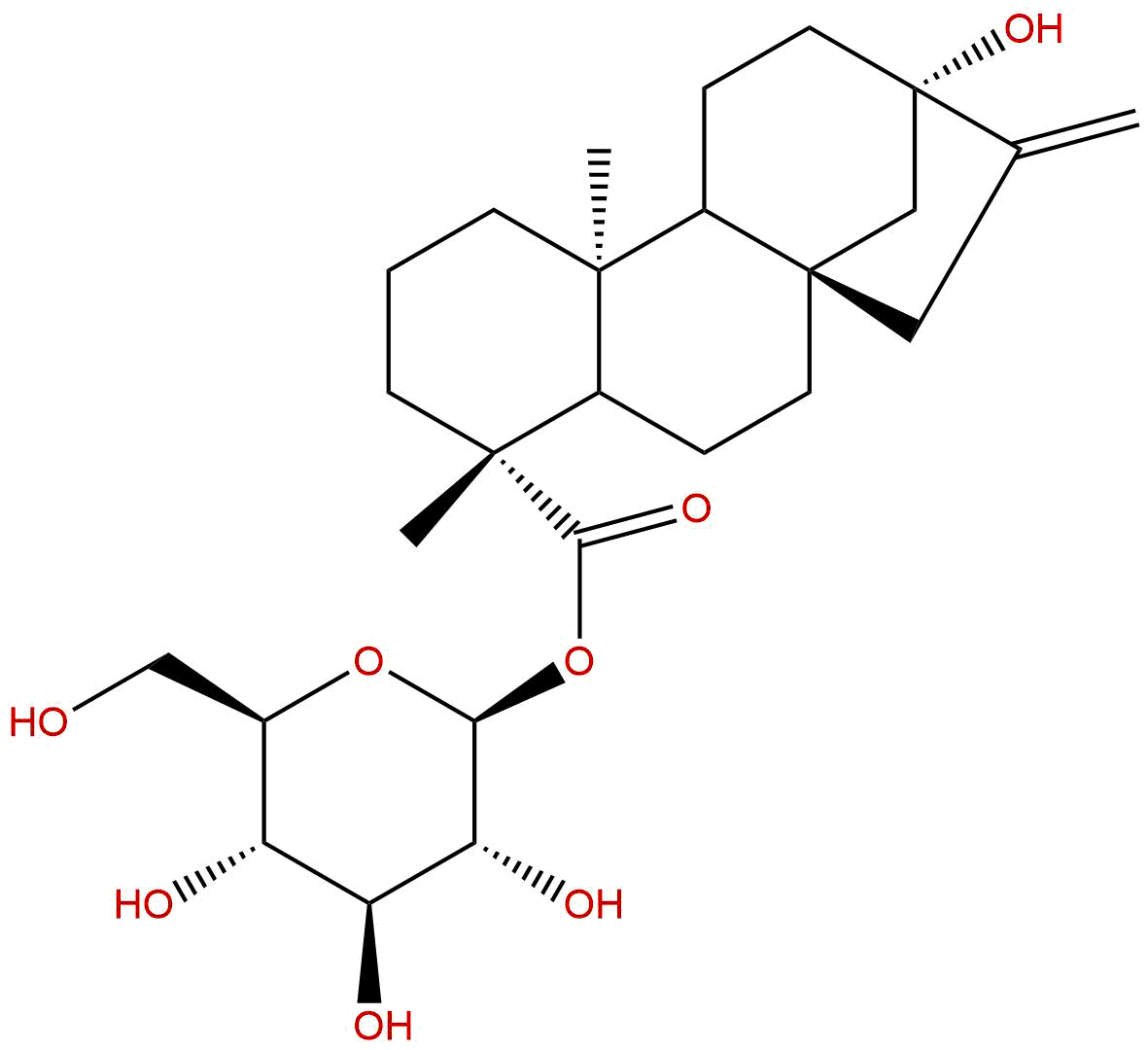


Product name: Steviol-19-O-Glucoside
Synonym name: 19-O-β-Glucopyranosyl steviol; 1185737-16-9
Catalogue No.: BP2032
Cas No.: 64977-89-5
Formula: C26H40O8
Mol Weight: 480.598
Botanical Source: Stevia rebaudiana (Bertoni) Hemsl.
Physical Description:
Type of Compound: Diterpenoids
Purity: 95%~99%
Analysis Method: HPLC-DAD or/and HPLC-ELSD
Identification Method: Mass, NMR
Packing: Brown vial or HDPE plastic bottle
Storage: Store in a well closed container, protected from air and light. Put into refrigerate or freeze for long term storage.
Whenever possible, you should prepare and use solutions on the same day. However, if you need to make up stock solutions in advance, we recommend that you store the solution as aliquots in tightly sealed vials at -20℃. Generally, these will be useable for up to two weeks.
The product could be supplied from milligrams to grams
Inquire for bulk scale.
For Reference Standard and R&D, Not for Human Use Directly.
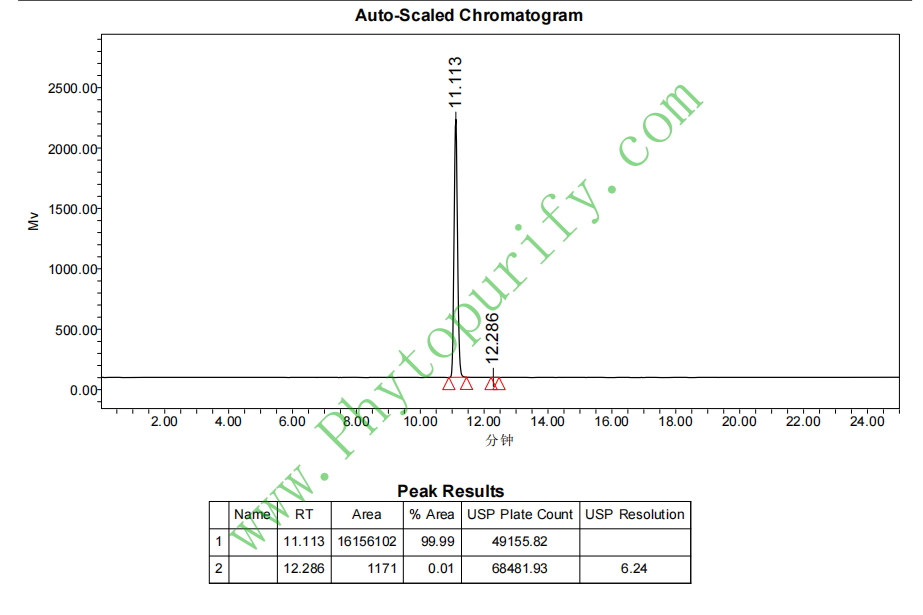
HPLC of Steviol-19-O-Glucoside
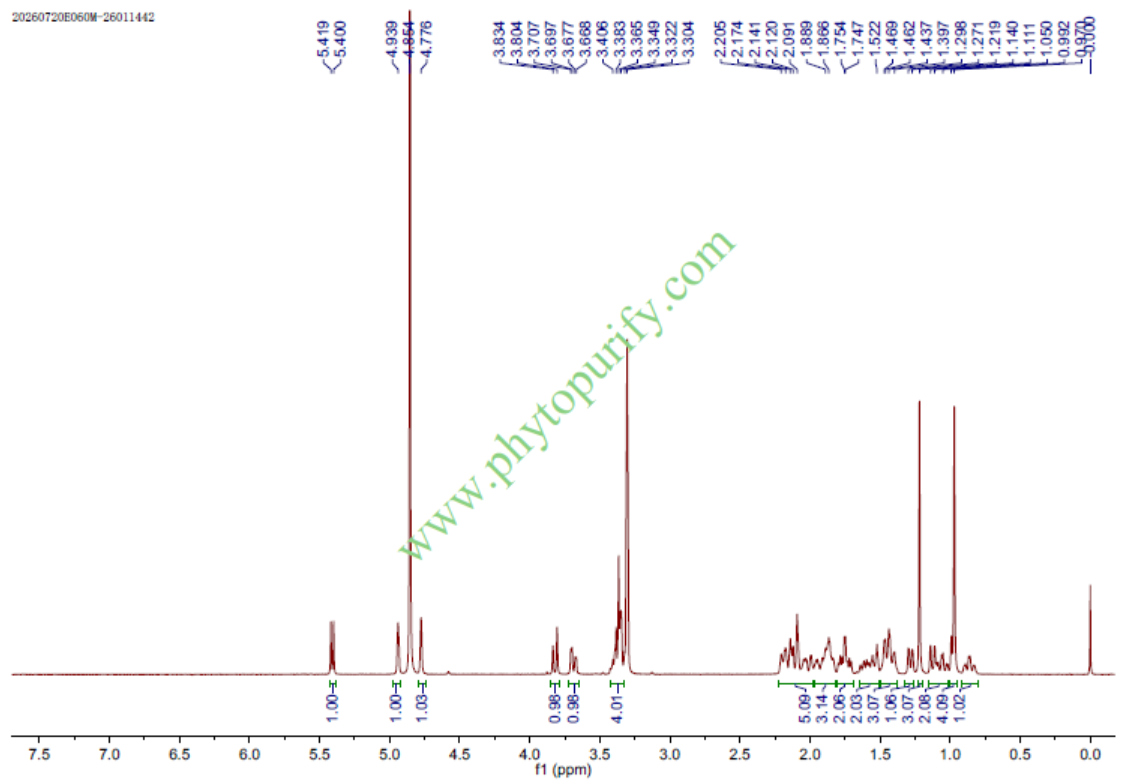
HNMR of Steviol-19-O-Glucoside
Storage conditions:Short-term storage at 2~8℃, long-term storage at -20 ~ -80℃
136.6800
1.3579
1.3578
.2420
.7135
.8698
Low
68.1855
6.1410
No
No
No
No
Yes
No
0.0
Yes
No
No
No
Natural products, as an important source of drug discovery, play an indispensable role in the long history of human fight against diseases. In recent years, with the global increase in incidence rate of metabolic diseases, especially Type 2 diabetes Mellitus (T2DM), finding safe and effective hypoglycemic active molecules from nature has become a hot area of drug research and development. Stevia(Stevia rebaudiana Bertoni, as a plant of the Asteraceae family native to South America, is renowned for its high sweetness and low calorie Steviol Glycosides (SGs) in its leaves. These diterpenoid glycosides, such as Stevioside and Rebaudioside A, have been widely used as natural sweeteners and their safety has been recognized by multiple regulatory agencies worldwide.
However, the biosynthetic pathway of steviol glycosides goes far beyond these terminal sweetener molecules. As key intermediates in this pathway, Steviol and its monoglycoside derivatives, such as Steviol-19-O-Glucoside, have long been regarded as metabolic nodes in the biosynthesis process rather than the main pharmacological active ingredients. Stevinol-19-glucoside is a monoglucuronic acid ester formed by the connection of one molecule of glucose to the C-19 carboxyl group of steviol alcohol catalyzed by uridine diphosphate glucosyltransferase (UGT). Its chemical structure determines that it retains both the hydrophobicity of the diterpene parent nucleus and a certain hydrophilicity due to the introduction of sugar groups, which lays the foundation for its unique biological activity.
In recent years, with the continuous deepening of pharmacological activity research on stevia and its metabolites, the biological functions of Steviol-19-G have gradually been revealed. Unlike steviol-19-G and its glycoside steviol, which mainly act as agonists of sweet taste receptors (T1R2/T1R3), Steviol-19-G and its glycoside steviol alcohol exhibit a more complex biological activity spectrum, especially in the field of metabolic regulation. Studies have confirmed that Steviol-19-G can play a role in anti diabetes, improving insulin resistance, and regulating glycolipid metabolism by activating AMP activated protein kinase (AMPK), regulating peroxisome proliferator activated receptor γ (PPAR γ), and influencing several key targets such as sodium glucose cotransporter 2 (SGLT2). These findings have transformed Steviol-19-G from a "metabolic intermediate" to a potentially valuable lead compound for development.
This review aims to systematically review the current research status of steviol-19-glucoside, from chemical structure, plant origin, pharmacological activity, molecular mechanism to pharmacological evaluation, comprehensively analyzing the scientific connotation and development potential of this natural product, in order to provide reference for subsequent basic research and clinical application transformation.
The chemical nature of steviol-19-glucoside belongs to the ent kaurene type diterpenoid compounds. Its core skeleton is steviol (ent-13-hydroxykaur-16-en-19-oic acid), which is a four ring diterpene structure composed of four isoprene units. It contains a fully hydrogenated phenanthrene ring (A, B, C rings) and a five membered ring (D ring), and has a characteristic exo methylene group (=CH ₂) at the C-16 position, a hydroxyl group (- OH) at the C-13 position, and a carboxyl group (- COOH) at the C-19 position. The specificity of Steviol-19-G lies in its C-19 carboxyl group being linked to a molecule of D-glucose via a β - glycosidic bond, forming 19-O - β - D-glucopyranoside. Its molecular formula is C ₂₆ H ₄₀ O ₈, and its molecular weight is 480.5980 g/mol.
From the perspective of physical and chemical properties, Steviol-19-G exhibits typical "glycosidic" characteristics. Its lipid water partition coefficient (LogP) is 1.3579, indicating that the molecule has a certain lipophilicity, but at the same time, it has good water solubility due to the presence of glucose groups (water solubility value 0.2420 mg/mL). This moderate hydrophilic lipophilic balance (HLB) allows for effective distribution between the aqueous and lipid phases, facilitating its absorption and transport in vivo. The topologically polar surface area (TPSA) is 136.6800 Å ², which is a relatively high value (usually considered unfavorable for oral absorption if TPSA>140 Å ²). This is mainly attributed to the multiple hydroxyl and carboxylate groups in the molecule, which are potential sites for hydrogen bonding and the key structural basis for their interaction with biological targets.
In terms of stability, as a glycoside, Steviol-19-G may undergo hydrolysis of its glycosidic bonds under acidic or specific enzyme action (such as β - glucosidase), releasing the glycoside steviol. This metabolic transformation is of great significance in the body, especially in the gastrointestinal tract, because the glycoside steviol itself also has significant biological activity, and its pharmacological spectrum differs from the glycoside form. In addition, the molecular structure of Steviol-19-G does not contain typical alkaline nitrogen atoms, so its pKa value is mainly determined by carboxylic acid esters and hydroxyl groups, and it mainly exists in neutral molecular form under physiological pH conditions. Its UV absorption characteristics mainly come from the double bonds in the diterpene skeleton, and the maximum absorption wavelength is usually around 200-210 nm.
The main natural source of steviol-19-glucoside is stevia(Stevia rebaudiana)The leaves. In the secondary metabolic pathway of stevia, steviol alcohol is a common precursor for the synthesis of all steviol glycosides (SGs). Specifically, the isopentenyl pyrophosphate (IPP) and dimethylallyl pyrophosphate (DMAPP) generated by the mevalonic acid pathway undergo a series of enzymatic reactions to form enantiomeric coumarinic acid, which then undergoes hydroxylation, oxidation, and other steps to produce steviol alcohol. Steviol undergoes continuous glycosylation modification at positions C-13 and C-19 under the catalysis of UGT enzymes such as UGT74G1, UGT76G1, etc., resulting in a series of mono -, di -, and multi glycosides. Steviol-19-G is the product of the first glycosylation of steviol-19-glucoside at the C-19 position.
In the plant body, the content of Steviol-19-G is usually much lower than the main sweet components such as steviol glycoside and rebaudin A. Its content is influenced by various factors, including stevia variety, growth stage, climatic conditions, soil composition, and harvesting time. Generally speaking, the concentration range of Steviol-19-G in stevia leaves is between 0.01% and 0.5% of dry weight, which is a trace component. However, it is precisely this trace component that is receiving increasing attention due to its unique pharmacological activity.
The extraction of Steviol-19-G usually follows the classic extraction process of steviol glycosides, but it needs to be optimized for its low content and high polarity. Traditional methods include:
1. Solvent extraction Extract dried and crushed stevia leaves using water or aqueous ethanol (such as 50-80% ethanol) under heating conditions (60-80 ℃). The water extraction method has low cost and high safety, but poor selectivity, and can simultaneously extract a large amount of pigments, proteins, and polysaccharides. The alcohol extraction method can more effectively extract glycoside components and reduce impurity leaching.
2. Purification and Enrichment The crude extract needs to undergo a series of purification steps. Common methods include:
* Flocculation and sedimentation Add coagulants such as lime milk, gelatin, or chitosan to remove large molecular impurities such as pectin and protein.
* membrane separation technology By using microfiltration, ultrafiltration, and nanofiltration membranes to perform graded separation based on molecular weight, pigments and high molecular impurities can be effectively removed, while achieving decolorization and concentration.
* Macroporous adsorption resin chromatography This is the most core technology for separating and purifying stevia glycosides. By passing the preprocessed extract through a macroporous resin column (such as AB-8, HPD-100, etc.) and utilizing the differences in adsorption capacity between different glycosides and the resin, gradient elution with different concentrations of ethanol (such as 10% -70%) can be performed to achieve preliminary separation of different components such as steviol glycoside, rebaudin A, and Steviol-19-G.
3. Efficient preparative chromatography Due to the low content of Steviol-19-G and its similar polarity to structurally similar compounds such as steviol-13-glucoside and steviol-13,19-diglucoside, it is difficult to obtain high-purity monomers using conventional methods. Therefore, the final high-purity separation usually relies on preparative high-performance liquid chromatography (Prep HPLC), using a reverse phase C18 column with acetonitrile water or methanol water system as the mobile phase, combined with differential refractive index detector (RID) or evaporative light scattering detector (ELSD) for separation and collection.
In recent years, some green and efficient extraction technologies have also been applied to the preparation of Steviol-19-G, such as microwave-assisted extraction, ultrasound assisted extraction, and supercritical fluid extraction. These methods can significantly shorten extraction time, improve extraction efficiency, and reduce the use of organic solvents.
The pharmacological activities of steviol-19-glucoside mainly focus on the field of metabolic diseases, especially its anti diabetes effect, and also shows potential in anti-inflammatory, antioxidant and other aspects.
This is the most highly regarded core pharmacological activity of Steviol-19-G. Multiple in vitro and in vivo studies have confirmed that Steviol-19-G and its metabolite steviol can improve glucose metabolism disorders through various pathways.
Chronic low-grade inflammation and oxidative stress are important driving factors for the occurrence and development of insulin resistance and T2DM. Steviol-19-G also exhibits certain activities in anti-inflammatory and antioxidant aspects.
Preliminary studies also suggest that Steviol-19-G may have anti hypertensive, anti-tumor, and hepatoprotective effects. For example, steviol alcohol has been reported to have vasodilatory effects, which may be achieved by activating high conductivity calcium activated potassium channels (BK_Ca channels). In terms of anti-tumor effects, some studies have shown that steviol and its derivatives can inhibit the proliferation of various cancer cells, but the specific mechanism and contribution of Steviol-19-G are still unclear.
The pharmacological effects of Steviol-19-G are the result of the synergistic action of multiple targets and pathways. Based on existing research, its core mechanism of action is mainly around energy metabolism and inflammation regulation, and the molecular targets involved are closely related to anti diabetes.
AMP activated protein kinase (AMPK) is a core sensor of cellular energy metabolism, known as the "energy switch". Steviol-19-G and its glycoside steviol have been proven to be effective activators of AMPK. The activation mechanism may include:
* Indirect activation By inhibiting mitochondrial respiratory chain complex I, the intracellular ATP level is slightly reduced, leading to an increase in the AMP/ATP ratio and conformational activation of AMPK.
* Activate directly May directly bind to the gamma subunit of AMPK, mimic the action of AMP, and promote its phosphorylation (Thr172 site).
Once AMPK is activated, it coordinates metabolism by phosphorylating multiple downstream target proteins:
* Promote glucose uptake Phosphorylation of TBC1D1/4 promotes the translocation of GLUT4 (SLC2A4) to the cell membrane and increases glucose uptake in skeletal muscle and adipocytes.
* Inhibit gluconeogenesis Phosphorylation and inhibition of transcription co activator CRTC2 and histone deacetylase HDACs lead to downregulation of the expression of key gluconeogenic enzymes PEPCK and G6Pase, reducing liver glucose output.
* Promote fatty acid oxidation Phosphorylation and inhibition of acetyl CoA carboxylase (ACC) reduce acetyl CoA levels, thereby relieving inhibition of carnitine palmitoyltransferase 1 (CPT1) and promoting the entry of fatty acids into mitochondria for beta oxidation.
* Regulating autophagy By phosphorylating ULK1 complex, the autophagy process is activated, which helps to clear damaged organelles and protein aggregates, and improve cellular stress.
Steviol-19-G can enhance insulin signaling and improve insulin resistance. Its targets include:
* IRS1/PI3K/AKT pathway Under insulin resistance, serine phosphorylation of insulin receptor substrate 1 (IRS1) increases, leading to a decrease in its binding ability to downstream PI3K. Steviol-19-G can inhibit serine phosphorylation of IRS1 (such as Ser307 site), restore its function, and enhance the activity of phosphatidylinositol 3-kinase (PIK3R1/PI3K), promoting the phosphorylation of downstream protein kinase B (AKT1). Activated AKT1 further promotes GLUT4 translocation and glycogen synthesis, while inhibiting gluconeogenesis.
* PPARγPeroxisome proliferator activated receptor gamma (PPARG) is a key nuclear receptor that regulates adipocyte differentiation, lipid metabolism, and insulin sensitivity. Steviol-19-G has been reported as a partial agonist of PPAR γ. Compared with complete agonists (such as thiazolidinediones), some agonists may prevent weight gain, water and sodium retention and other side effects while activating PPAR γ transcription activity. By activating PPAR γ, Steviol-19-G can promote the secretion of adiponectin, a fat factor with insulin sensitizing properties, in adipocytes.
To sum up, Steviol-19-G forms a synergistic network by activating AMPK, enhancing IRS 1/PI3K/AKT signal, partially activating PPAR γ, inhibiting SGLT2, and possibly inhibiting DPP4 and other targets, and plays an anti diabetes role from multiple dimensions such as promoting glucose utilization, inhibiting glucose production, increasing urinary glucose excretion, and improving insulin sensitivity.
To convert natural products into clinical drugs, a systematic evaluation of their drug like and pharmacokinetic properties (ADME) is necessary. Steviol-19-G has shown some advantages and challenges in this regard.
According to Lipinski's "Rule of Five", an orally active candidate drug should typically meet the following criteria: molecular weight<500, LogP<5, The number of hydrogen bond donors is less than 5, and the number of hydrogen bond acceptors is less than 10. The molecular weight of Steviol-19-G is 480.6 (<500) and the LogP is 1.36 (<5), which complies with the rules. But the number of hydrogen bond donors (- OH and - COOH, a total of 5) and acceptors (8 oxygen atoms) is close to or reaches the upper limit, and the TPSA is as high as 136.68 Å ², indicating that its oral absorption may be limited. In addition, the Ames test result was 0.0, indicating no significant mutagenicity; HERG inhibition prediction is' no ', indicating a low risk of cardiac toxicity. These preliminary toxicological evaluation results are encouraging.
The main challenge for the pharmacological development of Steviol-19-G lies in its Low oral bioavailability To enhance its development potential, the following strategies can be considered:
* Prodrug design Esterification or etherification modification of the hydroxyl group in Steviol-19-G molecule to enhance its lipophilicity and promote passive absorption. For example, preparing it into acetylated derivatives or amino acid esters.
* Formulation optimization Using nanotechnology (such as liposomes, solid lipid nanoparticles, polymer micelles) or self microemulsifying drug delivery systems (SMEDS) to encapsulate Steviol-19-G, improving its solubility and transmembrane transport capacity.
* Structural modification On the basis of maintaining its core pharmacophore (diterpene skeleton and C-13 hydroxyl group), replace or modify the sugar group at C-19 position to search for analogs with better oral absorption characteristics and stronger activity.
Based on its unique pharmacological effects and relatively low toxicity, steviol-19-glucoside has shown broad prospects in clinical translation, especially in the following fields:
The multi-target mechanism of action of Steviol-19-G makes it highly suitable for the treatment of complex metabolic syndrome. It can serve as:
* Auxiliary components of oral hypoglycemic drugs Combined use with metformin (primarily activating AMPK), SGLT2 inhibitors, or DPP-4 inhibitors may result in synergistic effects, reducing the dosage and side effects of a single drug.
* Functional foods or dietary supplements: Since Steviol-19-G is derived from stevia which is generally recognized as safe, Steviol-19-G has the potential to be developed as a health food raw material with hypoglycemic and insulin resistance improvement functions for the prevention and early intervention of high-risk groups of diabetes.
NAFLD is closely related to insulin resistance and lipid metabolism disorders. Steviol-19-G theoretically has a good improvement effect on NAFLD by activating AMPK to promote fatty acid oxidation, inhibit liver gluconeogenesis and lipid synthesis. Animal model studies have preliminarily confirmed the protective effect of steviol on NAFLD, and more clinical studies are needed in the future to validate the efficacy of Steviol-19-G.
By activating AMPK and regulating PPAR γ, Steviol-19-G may help increase energy expenditure, improve adipose tissue function, and assist in weight management. As a metabolite of natural sweetener stevia, it does not contain calories, which gives it a unique advantage in sugar metabolism management in obese populations.
Despite the promising future, research on Steviol-19-G is still in its early stages, and the following issues need to be addressed in the future:
1. In depth mechanism research It is necessary to use gene knockout/knock in animal models and advanced molecular biology techniques to accurately elucidate the direct binding mode and downstream signaling network of Steviol-19-G with targets such as AMPK, PPAR γ, SGLT2, etc.
2. Preclinical Pharmacology and Toxicology Systematic in vivo pharmacological studies are required, including the effects of long-term administration on blood glucose, blood lipids, body weight, and liver and kidney function. At the same time, conduct comprehensive toxicological evaluations (such as acute toxicity, chronic toxicity, reproductive toxicity) to confirm its safety.
3. Pharmacokinetic optimization Focus on addressing the issue of low oral bioavailability. Develop new prodrugs or delivery systems and conduct in-depth research on individual differences in gut microbiota metabolism to predict pharmacological responses in different populations.
4. Structure Activity Relationship (SAR) Study A series of Steviol-19-G derivatives were synthesized by the system, and the relationship between their activity and structure was compared to search for candidate compounds with stronger activity, higher selectivity, and better pharmacokinetic properties.
5. Clinical translational research After completing sufficient preclinical studies, rigorous randomized, double-blind, placebo-controlled clinical trials should be designed to evaluate their effectiveness and safety in T2DM patients.
Stevinol-19-glucoside, a natural product that has long been regarded as a "passerby" in the biosynthesis pathway of steviol glycosides, is emerging in the field of natural product drug development due to its unique chemical structure and multi-target pharmacological activity. By activating AMPK, regulating insulin signaling pathway, inhibiting SGLT2 and other key targets, it shows excellent potential for anti diabetes, improving insulin resistance and regulating metabolism. Its good preliminary safety data (low hERG inhibition risk, no mutagenicity) laid an important foundation for its further development.
However, from laboratory discovery to clinical application, Steviol-19-G still faces key challenges such as low oral bioavailability. Future research needs to focus on elucidating its intricate molecular mechanisms, optimizing its pharmacokinetic properties, and verifying its efficacy and safety through rigorous clinical studies. We have reason to believe that with the continuous deepening of research, this "leftover pearl" in the stevia family is expected to be developed into a new drug or functional health product for treating metabolic diseases, bringing new hope to billions of metabolic disorder patients worldwide. The in-depth exploration of natural products once again confirms the truth that "nature is the best chemist", and the story of Steviol-19-G is a vivid example of the perfect combination of modern medicinal chemistry and classical natural product chemistry.
