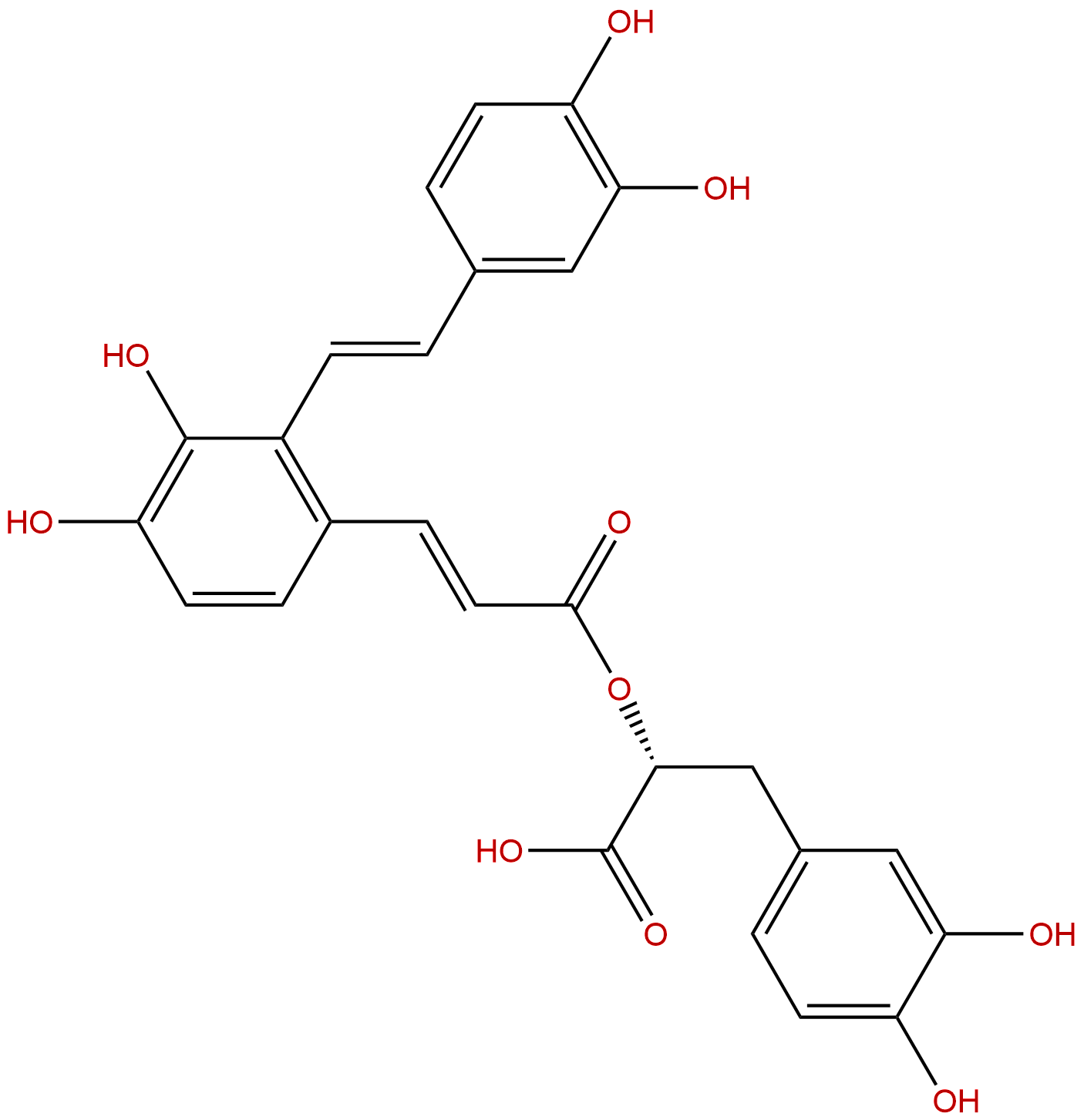


Product name: Salvianolic acid A
Synonym name:
Catalogue No.: BP1247
Cas No.: 96574-01-5
Formula: C26H22O10
Mol Weight: 494.452
Botanical Source: Salviae Miltiorrhizae Radix et Rhizoma
Physical Description:
Type of Compound: Stibene glucosides
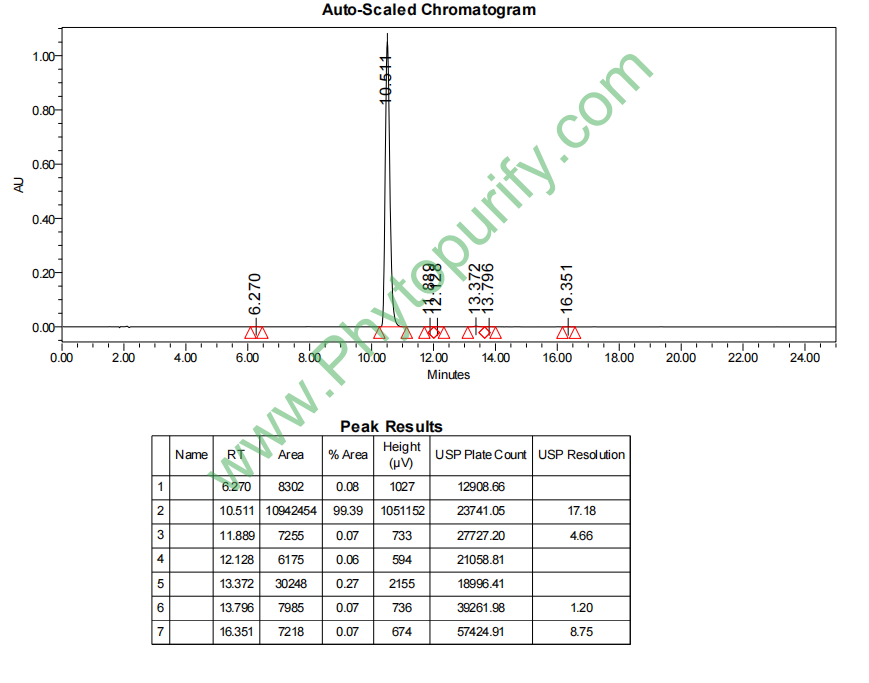
Purity: 95%~99%
Analysis Method: HPLC-DAD or/and HPLC-ELSD
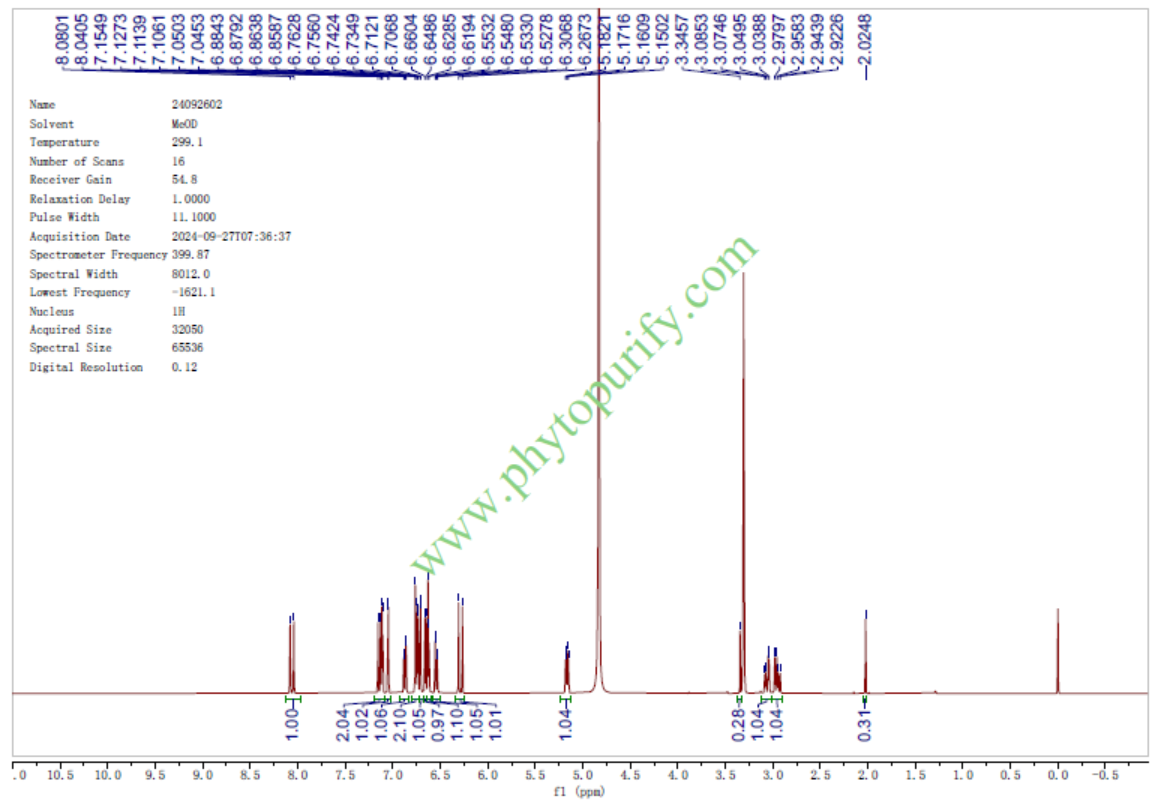
Identification Method: Mass, NMR
Packing: Brown vial or HDPE plastic bottle
Storage: Store in a well closed container, protected from air and light. Put into refrigerate or freeze for long term storage.
Whenever possible, you should prepare and use solutions on the same day. However, if you need to make up stock solutions in advance, we recommend that you store the solution as aliquots in tightly sealed vials at -20℃. Generally, these will be useable for up to two weeks.
The product could be supplied from milligrams to grams
Inquire for bulk scale.
Description:
Salvianolic acid A has antioxidant, hepatoprotective, antithrombotic effect, and antiplatelet actions. it also has a significant protective effect against isoproterenol-induced myocardial infarction; it activates the Nrf2/HO-1 axis in RPE cells and protects against oxidative stress via activation of Akt/mTORC1 signaling. Salvianolic acid A (oral) can significantly improve glucose metabolism and inhibit oxidative injury as well as protect against impaired vascular responsiveness in STZ-induced diabetic rats. It is a novel matrix metalloproteinase-9 inhibitor, can prevents cardiac remodeling in spontaneously hypertensive rats.
References:
Phytomedicine. 2014 Oct 15;21(12):1725-32.
Salvianolic acid A reverses paclitaxel resistance in human breast cancer MCF-7 cells via targeting the expression of transgelin 2 and attenuating PI3 K/Akt pathway.
Chemotherapy resistance represents a major problem for the treatment of patients with breast cancer and greatly restricts the use of first-line chemotherapeutics paclitaxel.
METHODS AND RESULTS:
The purpose of this study was to investigate the role of transgelin 2 in human breast cancer paclitaxel resistance cell line (MCF-7/PTX) and the reversal mechanism of Salvianolic acid A (SAA), a phenolic active compound extracted from Salvia miltiorrhiza. Western blotting and real-time quantitative polymerase chain reaction (qRT-PCR) indicated that transgelin 2 may mediate paclitaxel resistance by activating the phosphatidylinositol 3-kinase (PI3 K)/Akt signaling pathway to suppress MCF-7/PTX cells apoptosis. The reversal ability of SAA was confirmed by MTT assay and flow cytometry, with a superior 9.1-fold reversal index and enhancement of the apoptotic cytotoxicity induced by paclitaxel. In addition, SAA effectively prevented transgelin 2 and adenosine-triphosphate binding cassette transporter (ABC transporter) including P-glycoprotein (P-gp), multidrug resistance associated protein 1 (MRP1), and breast cancer resistance protein (BCRP) up-regulation and exhibited inhibitory effect on PI3 K/Akt signaling pathway in MCF-7/PTX cells. Taken together, SAA can reverse paclitaxel resistance through suppressing transgelin 2 expression by mechanisms involving attenuation of PI3 K/Akt pathway activation and ABC transporter up-regulation.
CONCLUSIONS:
These results not only provide insight into the potential application of SAA in reversing paclitaxel resistance, thus facilitating the sensitivity of breast cancer chemotherapy, but also highlight a potential role of transgelin 2 in the development of paclitaxel resistance in breast cancer.
J Ethnopharmacol. 2014 Sep 29;155(3):1589-96.Prevention of pulmonary fibrosis with salvianolic acid a by inducing fibroblast cell cycle arrest and promoting apoptosis.
Danshen (Salvia miltiorrhiza Bunge) is widely used in traditional Chinese medicine (TCM), often in combination with other herbs, to treat a diversity of ailments. More recent studies have focused on its possible roles in the treatment of respiratory diseases (pneumonia and pulmonary fibrosis) and found that it has pharmacological activity that protects pulmonary morphology and function. However, the mechanism underlying this activity has not yet been clarified.
METHODS AND RESULTS:
The purpose of this study was to investigate the anti-pulmonary fibrosis effects exerted by Salvianolic acid A (SAA), the ingredient responsible for the pharmacological activity of Danshen, and the underlying mechanisms. Bleomycin (BLM)-induced rat pulmonary fibrosis was used to evaluate the antifibrotic role of SAA, and fibroblast cells were used to study the mechanism involved. BLM-treated rats exhibited increased alveolar wall thickness and collagen deposition in lung tissues, but these pathologies were greatly attenuated by daily administration of SAA. We also found that SAA significantly inhibited the proliferation, adhesion and migration of fibroblasts in vitro. This was partly due to a strong induction of cell cycle arrest and apoptosis upon SAA treatment. Consistent with these phenotypes, we observed decreased expression of the cell cycle-related proteins cyclin D1, cyclin E1, and cyclin B1, and increased expression of p53 and p21 in SAA-treated cells. In addition, the anti-apoptotic Bcl-2 protein decreased in a dose-dependent manner, while cleaved caspase-3 protein increased upon SAA treatment.
CONCLUSIONS:
These results suggest that the alleviation of rat pulmonary fibrosis by SAA is due to the inhibition of fibroblast proliferation and induction of apoptosis, which occurs mainly through p53-dependent growth arrest and apoptosis. We suggest that SAA should be considered as a potential novel therapeutic agent for the treatment of fibrotic lung diseases.
HPLC of Salvianolic acid A
HNMR of Salvianolic acid A
Storage conditions:Short-term storage at 2~8℃, long-term storage at -20 ~ -80℃
Salvianolic acid A (CAS number: 96574-01-5) is a typical natural polyphenolic compound, mainly found in the traditional Chinese medicine Salvia miltiorrhiza. As one of the most important water-soluble active ingredients in Danshen, salvianolic acid A has attracted widespread attention in the field of prevention and treatment of cardiovascular and cerebrovascular diseases in recent years due to its significant antioxidant, anti-inflammatory, and vascular protective effects. Numerous studies have shown that salvianolic acid A not only protects the blood-brain barrier (BBB) by inhibiting matrix metalloproteinase-9 (MMP-9), but also exerts cardiovascular protection by regulating various molecular targets. This article will systematically review the chemical structure and physicochemical properties, plant sources and extraction methods, pharmacological activity and mechanism of action, pharmacological evaluation and pharmacokinetic characteristics of salvianolic acid A, and further explore its clinical application prospects and future development directions.
Danshensu acid A belongs to water-soluble phenolic acid compounds, with a molecular formula of C27H22O_11 and a molecular weight of 494.4520. Its structural feature is the presence of multiple phenolic hydroxyl and carboxyl groups, endowing it with excellent antioxidant activity. The LogP value of salvianolic acid A is 2.8617, indicating its moderate lipid solubility and favorable cell membrane permeability. However, its topological polar surface area (TPSA) is as high as 184.98 Å ², indicating its strong polarity and low water solubility (0.0737 mg/mL), which to some extent limits its oral bioavailability. Danshensu acid A has no inhibitory effect on hERG channels, and the Ames test result is 0.0, indicating a low risk of genetic toxicity and good safety. Its blood-brain barrier permeability is relatively low, which is in line with its pharmacological characteristics of protecting the blood-brain barrier function.
Danshensu acid A mainly exists in Salvia miltiorrhiza, a plant in the family Lamiaceae, especially concentrated in the roots. Danshen, as a traditional Chinese medicine, has always been used to treat cardiovascular and cerebrovascular diseases. The extraction and purification technology of its active ingredient salvianolic acid A is becoming increasingly mature.
Common extraction methods include water extraction, alcohol extraction, and ultrasound assisted extraction. The water extraction method is simple and in line with traditional Chinese medicine techniques, but the extraction efficiency is relatively low. The alcohol extraction method (such as ethanol or methanol) is widely used due to its ability to effectively dissolve polyphenolic substances. In recent years, the introduction of ultrasound assisted extraction and microwave-assisted extraction technologies has significantly improved the extraction rate and purity of salvianolic acid A.
During the purification process, liquid chromatography techniques (such as high-performance liquid chromatography (HPLC)) are often used for separation, combined with preparative column chromatography techniques to achieve high-purity salvianolic acid A. In addition, supercritical fluid extraction technology has also been explored for the green and efficient extraction of salvianolic acid A.
Danshensu acid A has multiple pharmacological activities, mainly including antioxidant, anti-inflammatory, antithrombotic, and blood-brain barrier protection functions.
Danshensu acid A contains abundant phenolic hydroxyl groups, which can effectively eliminate free radicals and alleviate oxidative stress damage. In vitro studies have shown that salvianolic acid A can inhibit the production of reactive oxygen species (ROS) and protect cells from oxidative damage. Its antioxidant capacity is superior to other salvianolic acid components, such as salvianolic acid B.
Inflammatory response plays a key role in the pathogenesis of various cardiovascular and cerebrovascular diseases. Danshensu acid A exerts significant anti-inflammatory effects by inhibiting the nuclear factor kappa B (NF - κ B) signaling pathway, reducing the expression of pro-inflammatory factors such as TNF - α, IL-1 β, and IL-6. In addition, salvianolic acid A can inhibit leukocyte adhesion induced by inflammatory mediators and alleviate endothelial damage.
The integrity of the blood-brain barrier is crucial for maintaining the homeostasis of the central nervous system. Research has found that salvianolic acid A protects neural function by inhibiting matrix metalloproteinase 9 (MMP-9) activity, reducing blood-brain barrier permeability, preventing inflammatory cells and harmful substances from entering brain tissue. In addition, the anti-inflammatory effect of salvianolic acid A further consolidates its protective effect on the blood-brain barrier.
Danshensu acid A exhibits multi-target and multi mechanism protective effects in the cardiovascular system. It can regulate vascular contraction and relaxation, inhibit platelet aggregation, suppress endothelial cell inflammation and apoptosis, promote angiogenesis, and improve myocardial ischemia-reperfusion injury. Animal model studies have shown that salvianolic acid A significantly reduces myocardial infarction area and improves cardiac function.
The pharmacological effects of salvianolic acid A involve multiple signaling pathways and key targets, mainly including:
Matrix metalloproteinase-9 (MMP-9)Danshensu acid A directly or indirectly inhibits MMP-9 activity, reduces extracellular matrix degradation, and maintains the integrity of the blood-brain barrier structure.
Selective Element P (SELP)Danshensu acid A regulates SELP expression, reduces adhesion between white blood cells and endothelial cells, and inhibits inflammatory cell infiltration.
Peroxisome proliferator activated receptor gamma (PPARG)Salvianolic acid A activates PPARG, regulates lipid metabolism and inflammatory reaction, and plays an anti atherosclerosis role.
Angiotensin converting enzyme (ACE)Danshensu acid A inhibits ACE activity, reduces the production of vasoconstrictors, and improves blood pressure regulation.
Protein kinase B (AKT1)Danshensu acid A activates the AKT1 signaling pathway, promoting cell survival and angiogenesis.
β 2 adrenergic receptor (ADRB2)Danshensu acid A regulates ADRB2 mediated myocardial function and improves cardiac contractility.
Voltage gated potassium channel (KCNH2)Danshensu acid A affects the function of KCNH2 channels, regulates the action potential of myocardial cells, and reduces the risk of arrhythmia.
Endothelial nitric oxide synthase (NOS3)Danshensu acid A promotes the expression and activity of NOS3, enhances the production of nitric oxide (NO), and improves vasodilation function.
Intercellular adhesion molecule 1 (ICAM1) and vascular cell adhesion molecule 1 (VCAM1)Danshensu acid A inhibits the expression of ICAM1 and VCAM1, reducing endothelial inflammation.
Sodium calcium exchange protein (SLC8A1)Danshensu acid A regulates SLC8A1 function and maintains calcium homeostasis in myocardial cells.
In summary, salvianolic acid A exhibits excellent pharmacological activity by regulating inflammation, oxidative stress, cell apoptosis, and vascular function in the cardiovascular and cerebrovascular systems through multi-target synergistic effects.
The pharmacological parameters of salvianolic acid A show that it has certain development potential, but there are also challenges. Its molecular weight is close to 500, which meets the upper limit of Lipinski's rule. The LogP value is moderate, which is beneficial for cell membrane penetration, but high TPSA and low water solubility limit its oral absorption. The blood-brain barrier permeability of salvianolic acid A is relatively low, which is consistent with its pharmacological effect of protecting the blood-brain barrier, but may pose limitations for the treatment of central nervous system diseases.
Danshensu acid A has no hERG channel inhibitory effect, indicating good cardiac safety. Ames test negative, low genetic toxicity risk, high safety.
In terms of pharmacokinetics, the bioavailability of salvianolic acid A is relatively low after oral administration, mainly due to its high polarity and first pass effect. The distribution in the body is mainly concentrated in the liver, kidneys, and cardiovascular tissues. The metabolic pathway mainly involves the metabolism of phenolic hydroxyl groups and glucuronic acid binding in the liver enzyme system. Excretion is mainly completed through the kidneys.
To overcome the limitations of bioavailability, researchers have attempted to optimize the pharmacokinetic properties of salvianolic acid A through strategies such as nanocarriers, liposome encapsulation, and structural modification in recent years.
The potential application value of salvianolic acid A in cardiovascular and cerebrovascular diseases is significant. Its multi-target and multi mechanism mode of action, especially its protection of the blood-brain barrier and anti-inflammatory and antioxidant capabilities, provides a new treatment approach for cerebrovascular diseases such as ischemic stroke and secondary injury after cerebral hemorrhage. At the same time, salvianolic acid A also showed good therapeutic potential for cardiovascular diseases such as myocardial ischemia, atherosclerosis, hypertension, etc.
At present, salvianolic acid A is still in the basic research and preclinical stage, lacking systematic clinical trial data. In the future, pharmacokinetic optimization should be strengthened, safety evaluation and multi center clinical trials should be conducted to verify its efficacy and safety. In addition, combining modern drug design with nanotechnology, the development of salvianolic acid A as a novel therapeutic drug for cardiovascular and cerebrovascular diseases has broad prospects.
Danshensu acid A, as an important active ingredient in Danshen, has shown great potential in the prevention and treatment of cardiovascular and cerebrovascular diseases due to its unique chemical structure and diverse pharmacological activities. It has become a hot topic in natural product pharmacology research by regulating multiple molecular targets, exerting multiple mechanisms such as anti-inflammatory, antioxidant, and blood-brain barrier protection. Despite the challenges of low bioavailability and drug resistance, with the advancement of drug delivery technology and structural optimization, salvianolic acid A is expected to become an important candidate drug for the treatment of cardiovascular and cerebrovascular diseases in the future. Future research should focus on its clinical translation and in-depth analysis of its mechanisms, in order to promote its clinical application process and achieve the successful transformation of natural products into clinical drugs.
