Introduction/Overview
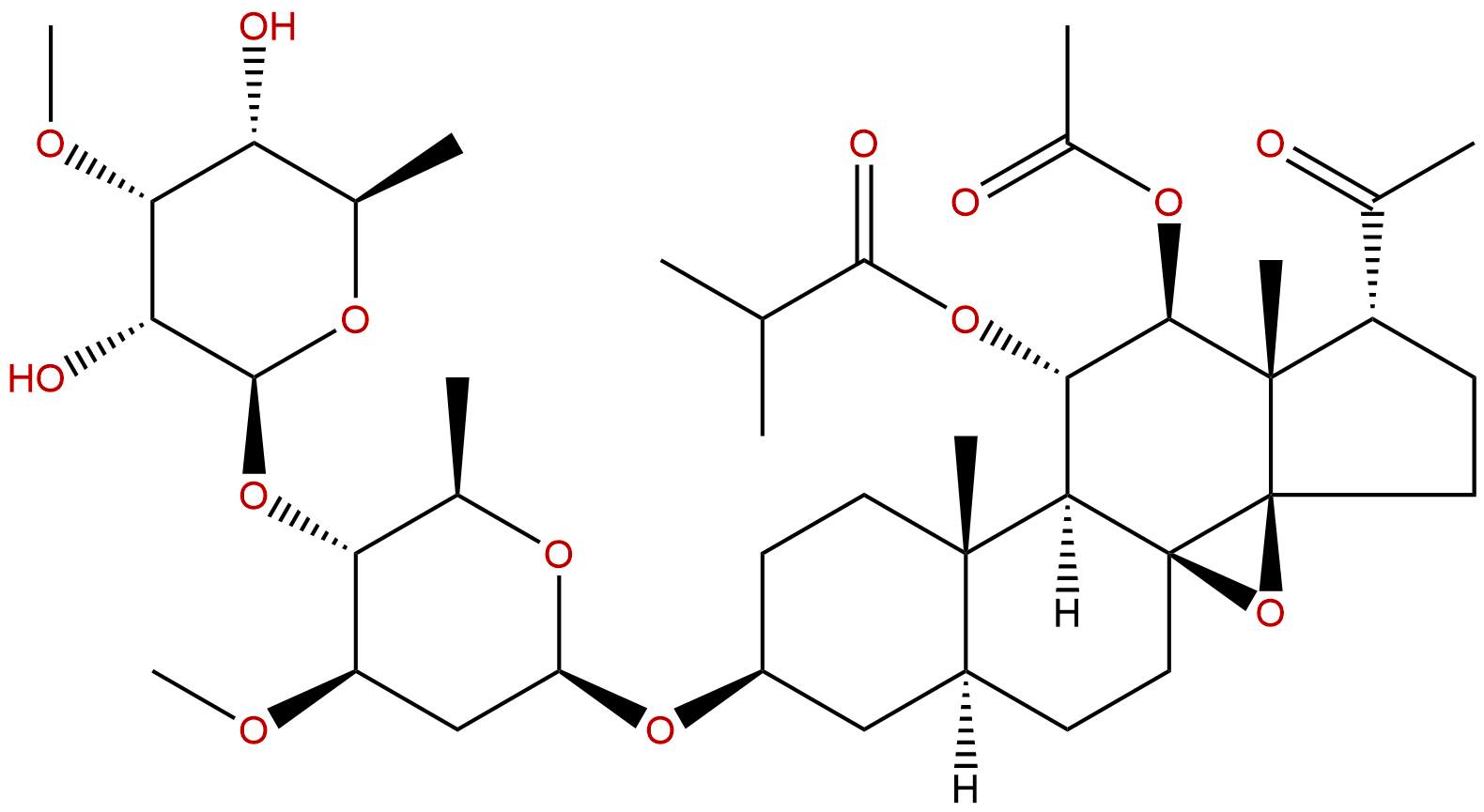
In the field of natural product chemistry and pharmacology research, Tongtongteng(Marsdenia tenacissima)The representative plants of the Asclepiadaceae family have attracted much attention due to their abundant C21 steroid compounds. These compounds have unique structures and diverse biological activities, especially showing great potential in anti-tumor applications. In recent years, with the advancement of separation and identification techniques, a series of structurally novel and highly active C21 steroid glycosides and their glycosides have been discovered one after another. Among them, compound 11-O-isobutyryl-12-O-acetyl passes through Tengganyuan B-3-O-Poria cocos disaccharide (Tenacigenin B, 3-O - β - Allopyranosyl - (1 → 4))- β-oleandropyranosyl-11-O-isobutyryl-12-O-acetyl-, CAS: 1260252-18-3) As an important active ingredient in Tongguan Vine, its multi-target and multi pathway anti-tumor pharmacological effects have gradually become a research hotspot. This compound not only inherits the basic biological activity framework of the C21 steroid nucleus, but also its acylation modifications at positions 11 and 12, as well as the 3-linked Poria cocos disaccharide group (β - pyranosyl - (1 → 4) - β - pyranosyl fructosyl), are more likely to have a profound impact on its biological activity, selectivity, and pharmacological properties. This article aims to systematically review the chemical structure, plant origin, pharmacological activity, mechanism of action, and pharmacological characteristics of this compound, in order to provide comprehensive scientific references for innovative drug development based on this natural product.
Chemical structure and physicochemical properties
The core compound of this review is a C21 steroidal saponin, whose systematic naming clearly reveals its complex structural characteristics. Its parent nucleus is Tenacigenin B, a pregnane derivative with a typical C21 steroid cyclopentane and phenanthrene skeleton.
structural characteristics:
1. Glycoside modification Isobutyryl and acetyl groups were introduced into the 11th and 12th hydroxyl groups of the aglycone, respectively. This acylation modification is a common "camouflage" strategy in natural products, which can significantly alter the lipid solubility, spatial conformation, and interaction mode with target proteins of the mother nucleus, usually related to enhancing activity or changing the target of action.
2. Sugar Chain Section A disaccharide chain called Poria cocos disaccharide is connected to the third hydroxyl group of the aglycone. The disaccharide is composed of one molecule of β - oleandropyranose and one molecule of β - allopyranose, which are linked by a (1 → 4) glycosidic bond to form 3-O - β - Allopyranosyl - (1 → 4) - β - oleandropyranosyl -. The presence of sugar chains has a decisive impact on the water solubility, cell membrane permeability, receptor recognition, and metabolic stability of compounds in vivo.
Physicochemical properties:
According to the provided pharmacological parameters, the molecular weight of this compound is 780.9490, which belongs to the category of medium to large molecules. The logarithmic (LogP) value of its lipid water partition coefficient is 2.9642, indicating that the compound has a certain lipophilicity but is not highly lipophilic, which is related to the presence of hydrophobic steroid nuclei, acyl groups, and hydrophilic sugar chains in its structure. The topologically polar surface area (TPSA) is as high as 178.0400 Å ², mainly attributed to the large number of oxygen atoms (from sugar units, acyl groups, and hydroxyl groups) in the molecule, indicating that it has more hydrogen bond donor and acceptor sites, which can affect its membrane permeability and solubility. The water solubility value is 0.0256 (usually measured in mg/mL or mol/L, which is not specified here but is low), confirming its poor solubility in aqueous media, which may be a potential limiting factor for its oral bioavailability. Based on LogP and TPSA, this compound meets a few of the Rules of Five, but has a molecular weight slightly over 500, indicating that it may belong to the category of natural products that exceed the Five Rules. These compounds are often absorbed or exert membrane surface effects through special transport mechanisms.
Plant sources and extraction methods
This compound is mainly derived from the traditional Chinese medicine Tongguan Vine(Marsdenia tenacissima (Roxb.) Moon), Its dried vine stems are called "Tongguan San" or "Tongguang San" in traditional Chinese medicine, commonly used to treat cough, asthma, sore throat, and certain tumor diseases.
Plant-based Guanguan Vine is widely distributed in Yunnan, Guangxi, Guizhou and other regions of China, as well as some parts of Southeast Asia. Its medicinal parts are mainly vine stems, which are rich in various C21 steroidal glycosides, triterpenoids, and flavonoids. 11-O-isobutyryl-12-O-acetyl Tongtengyuan B-3-O-Poria cocos disaccharide is one of the representative C21 steroidal saponins, often coexisting with other structurally similar homologs.
Extraction and Separation Methods:
1. Extract Solvent extraction method is usually used. After crushing the dried rattan stems, methanol, ethanol, or aqueous ethanol is commonly used for heating reflux extraction or ultrasound assisted extraction to fully extract polar components including the target compound. Sometimes the system solvent extraction method is also used, first degreasing with petroleum ether, and then sequentially extracting with ethyl acetate, n-butanol, etc. The target compounds are mostly enriched in the n-butanol fraction.
2. Separation and purification Due to the extremely complex composition of plant crude extracts, obtaining high-purity monomeric compounds requires multi-step chromatographic separation techniques. The standard process includes:
* Preliminary separation Large pore adsorption resin column chromatography (such as D101, AB-8 type) is commonly used, with water and different concentrations of ethanol gradient elution. The target compound is usually eluted in the medium to high concentration ethanol elution fraction.
* Fine separation: Further use silica gel column chromatography, reverse phase silica gel column chromatography (such as ODS, methanol water or acetonitrile water as mobile phase), dextran gel column chromatography (such as Sephadex LH-20), etc. for repeated separation.
* Final purification High performance liquid chromatography (HPLC), especially preparative or semi preparative reverse phase HPLC (C18 column), is currently the key step in obtaining chromatographically pure monomers. By optimizing the mobile phase (commonly used acetonitrile water or methanol water systems), effective separation of the compound and its structural analogues can be achieved.
3. appraisal The structural identification of compounds relies on various spectroscopic techniques. Nuclear magnetic resonance spectroscopy (¹ H NMR, ¹ ³ C NMR, 2D NMR such as HSQC, HMBC, COSY, NOESY) is used to determine the connection positions and sequences of carbon hydrogen frameworks and sugars, acyl substitution points, and stereoisomers. Mass spectrometry (ESI-MS, HR-ESI-MS) is used to determine molecular weight and molecular formula. Optical rotation, infrared spectroscopy, etc. can also provide auxiliary information.
Pharmacological activity research
The most notable pharmacological activity of this compound is its broad-spectrum and highly effective anti-tumor effect. Research has shown that it exhibits inhibitory activity on proliferation and induces apoptosis in various human tumor cell lines.
Core anti-tumor activity:
In vitro cell experiments have shown that the compound has significant cytotoxicity to lung cancer (such as A549), liver cancer (such as HepG2), breast cancer (such as MCF-7), colon cancer (such as HCT-116), ovarian cancer and other cancer cells, and its IC50 value is usually in the micromolar (μ M) or even submiolar level. Its anti-tumor effect is not limited to inhibiting cell growth, but is more prominent in inducing programmed cell death (apoptosis) in tumor cells. In addition, research suggests that it may have the potential to inhibit tumor cell migration and invasion, which is related to its impact on targets such as matrix metalloproteinases (MMPs).
Potential other activities:
Although existing research mainly focuses on anti-tumor effects, based on its parent nucleus structure (C21 steroid) and the traditional use of Tongguan vine, this compound may also have anti-inflammatory and immunomodulatory activities, but further experimental verification is needed.
Mechanism of action and molecular targets
The anti-tumor effect of this compound is not achieved through a single pathway, but exhibits the characteristics of multi-target and multi pathway synergistic intervention, which to some extent explains its broad-spectrum anti-tumor activity and potential to overcome drug resistance. According to the provided target information, its mechanism of action can be summarized as follows:
-
Regulating the apoptotic pathway to overcome apoptotic resistance This is one of its most core mechanisms of action.
- Targeting Bcl-2 family proteins This compound can downregulate the expression or interfere with the function of anti apoptotic proteins MCL1 and BCL2. MCL1 and BCL2 are key guardians of mitochondrial outer membrane integrity, and their inhibition leads to mitochondrial membrane potential collapse, cytochrome C release, activation of caspase cascade reaction, and induction of endogenous apoptosis. Especially for MCL1, it is of great significance for many tumor cells that rely on MCL1 for survival.
- Inhibition of STAT3 signaling pathway Signal transducer and activator of transcription factor 3 (STAT3) is an important oncogenic transcription factor. Continuously activated STAT3 can promote cell proliferation, inhibit apoptosis, and participate in immune escape. This compound can inhibit the phosphorylation (activation) of STAT3, thereby downregulating the expression of downstream genes related to proliferation (such as Cyclin D1) and survival (such as Survivor, Bcl xL), and synergistically promoting tumor cell apoptosis.
-
Inhibit tumor invasion and metastasis:
- Inhibition of matrix metalloproteinases This compound can downregulate the expression or activity of matrix metalloproteinase 2 (MMP2). MMP2 can degrade the main component of extracellular matrix (ECM), type IV collagen, and is a key enzyme for tumor cells to break through the basement membrane barrier and undergo invasion and metastasis. Inhibiting MMP2 helps to block local infiltration and distal spread of tumors.
- Affects HIF-1 α signal Hypoxia inducible factor-1 alpha (HIF1A) is stably expressed in the hypoxic microenvironment of tumors and can activate a series of genes that promote angiogenesis (such as VEGF), glycolysis, and invasion and metastasis. Inhibiting the HIF1A pathway can weaken the ability of tumors to adapt to harsh microenvironments and distant colonization.
-
Interference with DNA metabolism and cell cycle:
- Inhibition of Topoisomerase This compound may act on topoisomerase I (TOP1) and topoisomerase II alpha (TOP2A). These two enzymes are crucial in DNA replication, transcription, and chromosome separation, and are targets of various chemotherapy drugs such as irinotecan and etoposide. Inhibiting its activity can lead to the accumulation of DNA damage, triggering activation of cell cycle checkpoints and apoptosis.
- Affects MAPK signaling Mitogen activated protein kinase 1 (MAPK1, also known as ERK2) is a key effector molecule in the RAS/RAF/MEK/ERK pathway, and abnormal activation of this pathway is closely related to cell proliferation and survival. Intervention in this pathway can inhibit abnormal proliferation signals of tumor cells.
-
Intervention in hormone related pathways:
- Acting on estrogen receptors and aromatase This compound may have an impact on estrogen receptor alpha (ESR1) and aromatase (CYP19A1). Aromatase is the rate limiting enzyme for estrogen synthesis, and estrogen can promote the growth of some breast cancer by combining with ESR1. Interference with this axis may provide a mechanism basis for its treatment of hormone dependent breast cancer (such as ER positive breast cancer).
In summary, this compound forms a dense "attack network" by simultaneously attacking multiple key links of tumor cells, including survival (MCL1/BCL2/STAT3), proliferation (MAPK/STAT3), DNA integrity (TOP1/TOP2A), invasion ability (MMP2/HIF1A), and hormone dependent growth (ESR1/CYP19A1), thus efficiently inhibiting tumors.
Evaluation of drug properties and pharmacokinetics
Based on the provided preliminary pharmacological parameters and structural characteristics, a preliminary evaluation of the drug's pharmacological properties can be conducted.
Advantage:
1. Security potential The Ames test result is 0.0 (usually indicating no mutagenicity), indicating a low risk of genetic toxicity, which is an important safety basis for drug development. HERG inhibition is' no ', indicating that it may not inhibit cardiac potassium ion channels, reducing the risk of cardiac toxicity induced by tip twisting ventricular tachycardia, and having favorable safety features.
2. Target diversity The multi-target mechanism of action may bring synergistic therapeutic effects and may delay the development of drug resistance.
Challenges and limitations:
1. Solubility and permeability Low water solubility (0.0256) and high TPSA (178.04) may seriously affect its oral absorption (bioavailability). Low blood-brain barrier permeability means it is difficult to treat central nervous system tumors, but for peripheral tumors, this may reduce central nervous system side effects.
2. Pharmacokinetic (PK) prediction Although specific ADME (absorption, distribution, metabolism, excretion) data has not been provided, it can be inferred that its larger molecular weight and sugar chain structure may lead to poor oral absorption and significant first pass effects; Glycoside bonds may be hydrolyzed by gut microbiota or glycosidases in the body, resulting in low concentrations of the prototype drug; The steroid skeleton may be metabolized by the liver CYP450 enzyme system. Its LogP value (2.96) indicates a certain degree of lipophilicity, but the strong hydrophilicity of the sugar chain may make its overall distribution characteristics complex.
3. Pharmaceutical Science Challenge In order to improve its bioavailability, advanced drug delivery technologies such as nanocrystals, liposomes, polymer micelles, cyclodextrin inclusion complexes, etc. may be needed to improve solubility and stability, achieve targeted delivery or controlled release.
At present, there is still a lack of in vivo pharmacokinetic studies, toxicological evaluations (acute toxicity, long-term toxicity), and formulation studies on this compound system, which is a key data gap that must be filled before it can be transformed into a candidate drug.
Clinical application prospects and prospects
11-O-isobutyryl-12-O-acetyl Tongtengyuan B-3-O-Poria cocos disaccharide, as a natural compound with multi-target anti-tumor activity, has broad clinical application prospects, but the road ahead is long.
Potential application directions:
1. Lead compounds for anti-tumor drugs It is an excellent lead compound for developing novel multi-target anti-tumor drugs. It is especially suitable for the treatment of malignant tumors that are prone to drug resistance to a single target drug or have complex signal pathways, such as non-small cell lung cancer, triple negative breast cancer, liver cancer, etc.
2. Combination therapy strategy Due to its unique mechanism of action (such as targeting MCL1, STAT3), when used in combination with existing standard chemotherapy drugs (such as paclitaxel, platinum) or targeted drugs, it may produce synergistic effects, reduce their respective dosages and toxic side effects, and reverse tumor drug resistance.
3. Structural optimization and derivative development Using it as the parent nucleus for structural modifications (such as glycosylation, acyl substitution, and glycoside modification) is expected to optimize its drug properties. For example, improving water solubility and oral absorption by preparing prodrugs; By simplifying sugar chains or introducing specific functional groups, targeting and metabolic stability can be improved.
Future research focus:
1. In depth mechanism research It is necessary to use techniques such as gene knockout/knockdown, eutectic structure analysis, and chemical biology probes to accurately verify the direct interaction sites and patterns with the above-mentioned targets, and clarify the network relationships between multiple targets.
2. Systematic evaluation of drug properties Comprehensive preclinical pharmacokinetic studies (including the entire process of absorption, distribution, metabolism, and excretion), toxicology studies (safety pharmacology, genetic toxicity, reproductive toxicity, etc.), and formulation studies must be conducted.
3. In vivo efficacy verification Validate its anti-tumor efficacy and safety in more clinical animal models, such as human tumor xenograft PDX models and transgenic mouse models.
4. Exploring biosynthetic pathways Analyzing its biosynthetic pathway in Tongguan Vine, it is expected to achieve efficient and sustainable production in microorganisms or plant cells through synthetic biology methods, solving the problem of limited natural sources.
Conclusion
11-O-isobutyryl-12-O-acetyl Tongguan Tengganyuan B-3-O-Poria cocos disaccharide is a structurally novel and highly active C21 steroid saponin derived from the traditional Chinese medicine Tongguan Tengyuan. It exhibits strong multi-channel anti-tumor potential by synergistically acting on multiple key tumor related targets such as MCL1, BCL2, STAT3, MMP2, TOP1/2A, HIF1A, MAPK1, ESR1, and CYP19A1. Although it has shown good safety characteristics (no genetic toxicity, no hERG inhibition) in the initial pharmacological evaluation, poor water solubility and complex pharmacokinetic behavior are the main bottlenecks for its drug conversion. Future research needs to focus on clarifying its molecular mechanism in depth, and overcome its drug resistance barriers through structural optimization, formulation innovation, and systematic preclinical evaluation, in order to truly push this promising natural molecule into clinical applications and provide new weapons for tumor treatment. The study of this compound once again confirms the enormous value of searching for multi-target drug lead compounds from traditional medicinal plants.