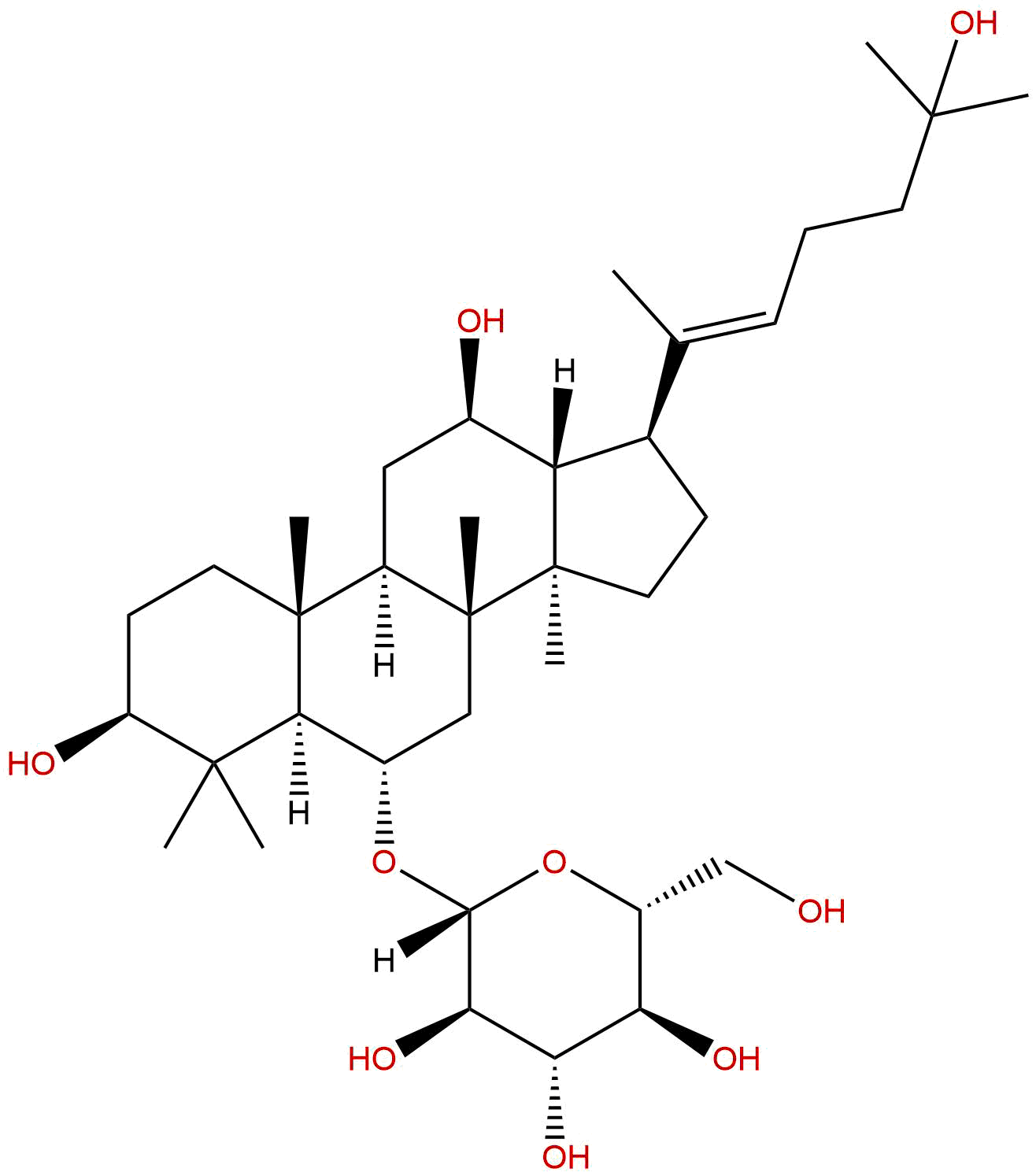


Product name: Pseudoginsenoside Rh1
Synonym name: Sanchinoside B1
Catalogue No.: BP5184
Cas No.: 97744-96-2
Formula: C36H62O9
Mol Weight: 638.883
Botanical Source: Ginseng Radix Et Rhizoma
Type of Compound: Triterpenoids
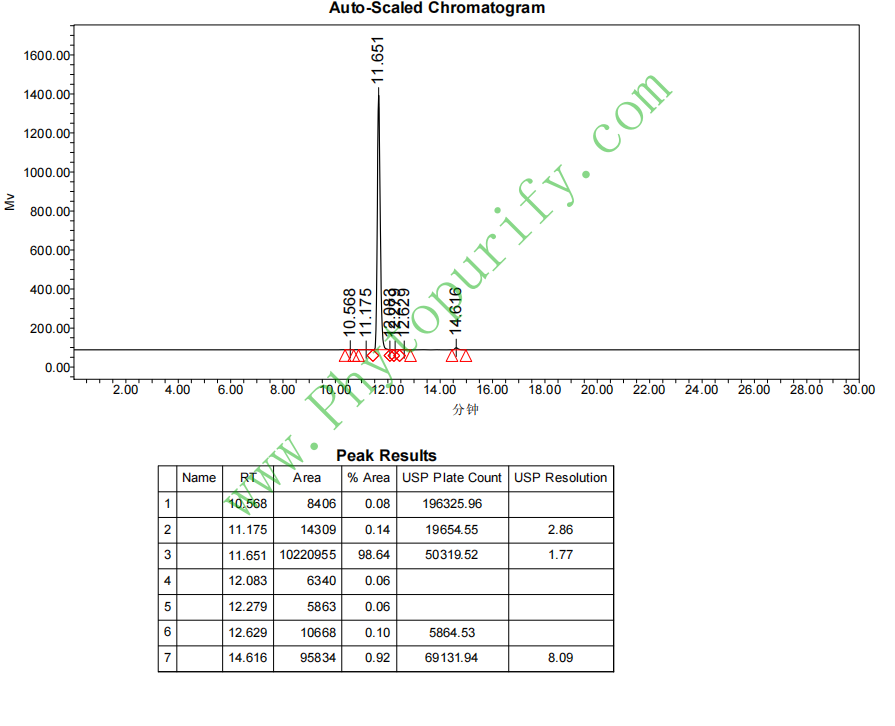
Purity: 95%~99%
Analysis Method: HPLC-DAD or/and HPLC-ELSD
Identification Method: Mass, NMR
Packing: Brown vial or HDPE plastic bottle
Storage: Store in a well closed container, protected from air and light. Put into refrigerate or freeze for long term storage.
Whenever possible, you should prepare and use solutions on the same day. However, if you need to make up stock solutions in advance, we recommend that you store the solution as aliquots in tightly sealed vials at -20℃. Generally, these will be useable for up to two weeks.
The product could be supplied from milligrams to grams
Inquire for bulk scale.
For Reference Standard and R&D, Not for Human Use Directly.
HPLC of Pseudoginsenoside Rh1
Storage conditions:Short-term storage at 2~8℃, long-term storage at -20 ~ -80℃
Pseudoginsenoside Rh1 is an important natural triterpenoid saponin compound mainly found in Panax ginseng and related plants. As a member of the ginsenoside family, Rh1 has received widespread attention in pharmacological research in recent years due to its unique chemical structure and diverse biological activities. A large number of studies have shown that the anthropomorphic ginsenoside Rh1 exhibits significant pharmacological effects in anti-tumor, anti-inflammatory, antioxidant, and immune regulation, especially in the field of tumor treatment, demonstrating good potential for application. This article will systematically review the chemical structure and physicochemical properties, plant sources and extraction methods, pharmacological activity and mechanism of action, pharmacological evaluation and pharmacokinetic characteristics of ginsenoside Rh1, and finally explore its clinical application prospects and future research directions.
The molecular formula of the anthropomorphic ginsenoside Rh1 is C36H62O9, with a molecular weight of 638.8830 and a CAS number of 97744-96-2. Its chemical structure belongs to the triterpenoid saponins of ginseng, with a core of a tetracyclic triterpenoid skeleton connected by multiple sugar residues. This structure endows it with strong lipophilicity and a certain degree of water solubility, with a LogP value of 3.4399, indicating that it has moderate lipophilicity and is conducive to membrane penetration. Its topological polar surface area (TPSA) is 160.07 Å ², reflecting its high number of polar groups, which may affect its bioavailability and pharmacokinetic behavior. Low water solubility (0.0141 mg/mL) suggests limited solubility in aqueous phase and may require improvement in bioavailability through formulation techniques. The low permeability of the blood-brain barrier indicates its limited role in the central nervous system. The hERG channel inhibition experiment was negative, indicating a low risk of cardiac toxicity. The Ames test result is 0.0, indicating no significant genetic toxicity.
The anthropomorphic ginsenoside Rh1 is mainly found in Panax ginseng and its variants such as Panax quinquefolius and Panax notoginseng. Its content is greatly affected by plant species, growth environment, harvesting time, and processing methods. Traditional extraction methods often use alcohol solvents (such as methanol and ethanol) for extraction, combined with hydrothermal extraction or ultrasound assisted extraction to improve extraction efficiency. After concentration, separation, and purification, the extract is usually separated and purified using high-performance liquid chromatography (HPLC), reverse phase chromatography, and silica gel column chromatography techniques. In recent years, supercritical CO2 extraction and membrane separation technologies have also been applied to the efficient extraction and purification of ginsenoside Rh1, in order to reduce the use of organic solvents, improve environmental friendliness and extraction purity.
The anthropomorphic ginsenoside Rh1 exhibits significant anti-tumor activity in various tumor models. In vitro experiments show that Rh1 can inhibit the proliferation and migration of many tumor cell lines, including breast cancer, lung cancer, liver cancer and colorectal cancer. Its anti-tumor mechanism involves cell cycle arrest, induction of cell apoptosis, and inhibition of tumor cell invasion. In vivo experiments, Rh1 significantly inhibits tumor growth, reduces metastasis rate, and has low toxic side effects, demonstrating good safety.
Rh1 has immunomodulatory and anti-inflammatory effects, and can inhibit the release of various inflammatory mediators such as TNF - α, IL-6, and NO. It reduces inflammation and oxidative stress by regulating the NF - κ B and MAPK signaling pathways, protecting tissues from inflammatory damage.
The anthropomorphic ginsenoside Rh1 has the ability to scavenge free radicals and reduce oxidative damage. Its antioxidant effect helps maintain intracellular redox balance, slow down cellular aging and tissue damage processes.
The anti-tumor effect of anthropomorphic ginsenoside Rh1 involves multiple molecular targets and signaling pathways:
The multiple regulation of these targets endows ginsenoside Rh1 with multi-target and multi pathway anti-tumor potential.
The pharmacological evaluation of anthropomorphic ginsenoside Rh1 shows that it has good safety and low toxicity. The LogP value is moderate, which is beneficial for cell membrane penetration, but its low water solubility limits its oral bioavailability. The low permeability of the blood-brain barrier suggests limited application in central nervous system diseases. The hERG channel inhibition experiment was negative, reducing the risk of cardiac toxicity. The Ames test has no mutagenicity, supporting its safety.
Pharmacokinetic studies have shown that Rh1 has a fast metabolism and clearance rate in vivo, mainly through the liver metabolic enzyme system for biotransformation. Its oral absorption is limited and its plasma half-life is short, indicating the need to improve its pharmacokinetic performance through drug formulation techniques such as nanocarriers and liposome encapsulation. In addition, the metabolites and biological activities of Rh1 have also become a hot topic in current research.
The anthropomorphic ginsenoside Rh1 has shown broad clinical application prospects due to its multi-target anti-tumor activity and good safety. In the future, it can be used as a single drug or in combination with existing chemotherapy drugs to enhance anti-tumor effects and reduce toxic side effects. In addition, the potential of Rh1 in anti-inflammatory, antioxidant, and immune regulation also provides possibilities for its application in chronic diseases, metabolic diseases, and immune related diseases.
However, the current clinical research on ginsenoside Rh1 is still in its early stages and lacks systematic clinical trial data. Future research should focus on pharmacokinetic optimization, formulation development, and clinical efficacy validation. At the same time, in-depth analysis of its mechanism of action and molecular targets can help to accurately design derivatives based on Rh1 structure, improve their efficacy and selectivity.
As a natural product with unique structure and diverse biological activities, the anthropomorphic ginsenoside Rh1 has shown great potential in the fields of anti-tumor and various disease treatments. Its multi-target mechanism of action and good safety provide important theoretical and practical basis for the development of new drugs. In the future, by optimizing extraction and purification processes, improving pharmacokinetic properties, and conducting systematic clinical research, the human ginsenoside Rh1 is expected to become an important breakthrough in the field of natural medicine, promoting the development of natural product pharmacology and precision medicine.
