Introduction/Overview
In the context of the integration of traditional medicine and modern pharmacology, natural products serve as an important treasure trove for new drug discovery, continuously providing novel and diverse lead compounds for human health. Eclipta prostrata (L.) L., also known as Eclipta alba (L.) Hassk, is a widely distributed plant in tropical and subtropical regions of the Asteraceae family. It has a long history of application in Ayurveda, traditional Chinese medicine, and various folk medical systems, and is often used to nourish the liver and kidneys, black hair, cool blood, and stop bleeding. Its multiple effects include anti-inflammatory, hepatoprotective, antioxidant, and immune regulation. The pharmacological activity of Houttuynia cordata is mainly attributed to its rich variety of chemical components, including coumarins, flavonoids, alkaloids, thiophenes, and triterpenoid saponins. Among them, triterpenoid saponins have attracted much attention due to their significant biological activity.
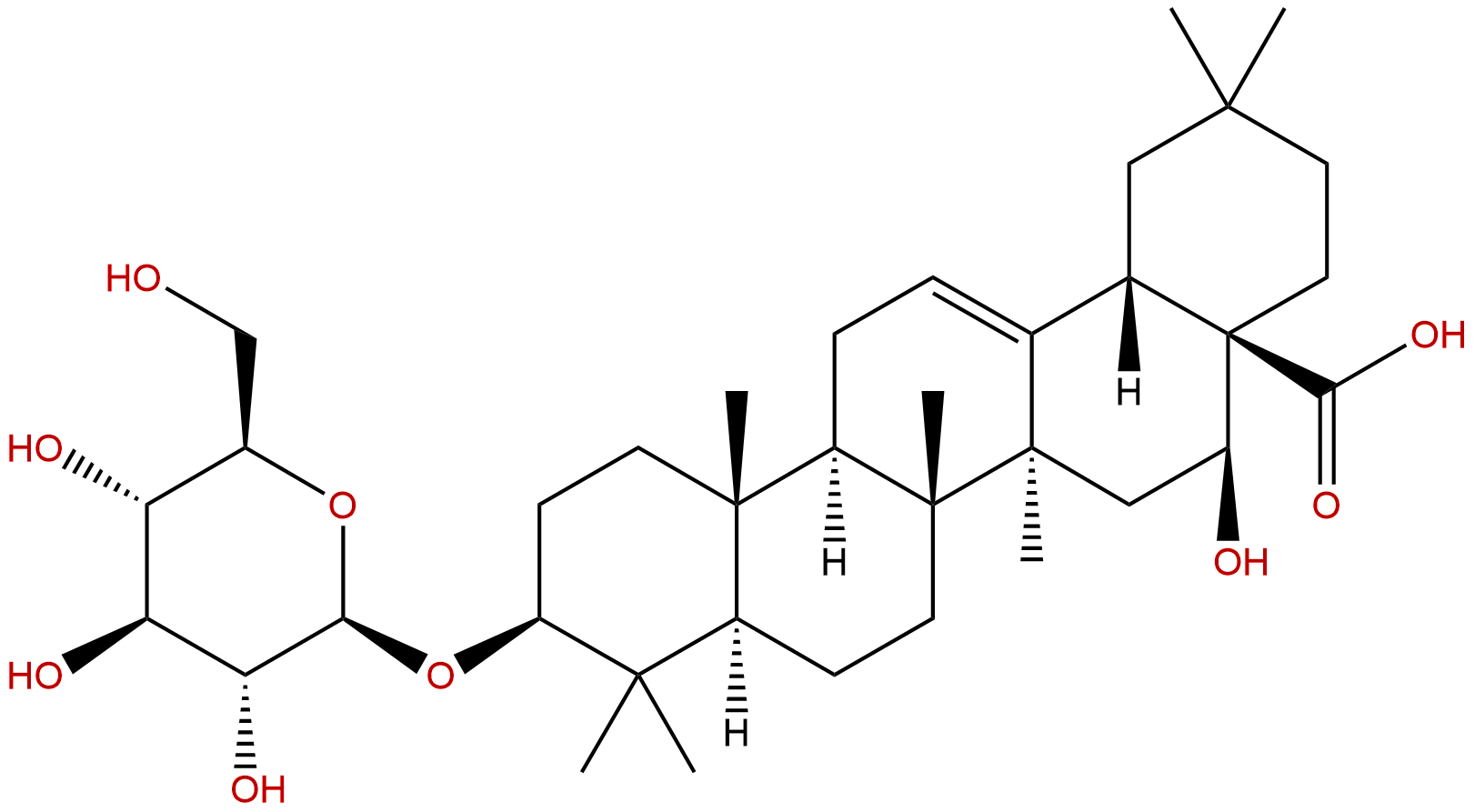
Ecliptaaponin D (CAS number: 206756-04-9) is a triterpenoid glucoside compound with important research value, which was isolated from the upper part of the Eclipta alba grassland. In recent years, with the deepening of research on the pathogenesis of mental and neurological disorders, especially depression, and the shortcomings of existing synthetic antidepressant drugs such as slow onset, limited efficacy, and obvious side effects, the search for new, multi-target, and low toxicity antidepressant lead compounds from natural products has become a research hotspot. Due to its potential antidepressant activity and related molecular target regulatory effects demonstrated in preliminary studies, drought lotus glycoside D is gradually emerging from the numerous active ingredients of drought lotus and becoming a promising research object in the field of natural product pharmacology. The purpose of this article is to systematically review the chemical structure, plant origin, pharmacological activity, particularly its antidepressant effect and related molecular mechanisms, and to provide a preliminary evaluation of its pharmacological properties, in order to provide comprehensive academic references for the in-depth research and future development of this compound.
Chemical structure and physicochemical properties
Ganlian glycoside D belongs to the oleanane type pentacyclic triterpenoid saponin. Its molecular formula is C~35~H~54~O~9~, with an accurate molecular weight of 634.8510. Structurally, its aglycone is a derivative of oleanolic acid. There is a sugar chain connected to the hydroxyl group at position C-3 of the aglycone, which is usually composed of monosaccharide units such as glucose (Glc) and glucuronic acid (GlcA). The specific sequence and position of sugar linkage are the key to distinguishing it from other drought lotus saponins (such as drought lotus glycosides A, B, C, etc.). This glycosylation modification significantly affects the polarity, solubility, and ability to interact with biological targets of compounds.
According to the provided pharmacological parameters, the lipid water partition coefficient (LogP) of salidroside D is 3.9363, indicating that the compound has a certain degree of lipophilicity. Its topological polar surface area (TPSA) is 156.9100 Å ², which is relatively large, mainly attributed to the polarity contribution of multiple hydroxyl groups in the molecule and ether bonds and hydroxyl groups in sugar units. The water solubility value is 0.0426 (usually measured in mg/mL or mol/L, not specified here, but the value is relatively small), indicating that salidroside D is a poorly soluble compound in water, which is consistent with its large LogP value and glycosidic structural characteristics. In drug development, such physicochemical properties often imply that their oral bioavailability may face challenges and may require optimization through formulation techniques (such as making nanocrystals, liposomes, solid dispersions, etc.) or structural modifications.
Plant sources and extraction methods
The main source of salidroside D is the aboveground part of Eclipta prolata (L.) L., a plant in the Asteraceae family. This plant has abundant resources and is distributed in China, India, Southeast Asia, South America and other places. To ensure the consistency of chemical composition and the reliability of activity research, it is crucial to use raw materials accurately identified by plant names.
The extraction and isolation of salidroside D from drought lotus usually follow the conventional process of natural product chemistry, which mainly includes the following steps:
1. Extract After crushing the dried parts of the dry lotus grassland, polar solvents such as methanol, ethanol, or aqueous ethanol are often used for impregnation, reflux, or ultrasound assisted extraction. These solvents can effectively extract polar and moderately polar components, including saponins.
2. Rough classification The extract is concentrated under reduced pressure to obtain a paste. The extract is often suspended in water and subjected to gradient extraction using organic solvents such as petroleum ether, ethyl acetate, and n-butanol in sequence. Due to the strong polarity brought by its glycoside structure, drought lotus glycoside D is mainly enriched in the n-butanol extraction site.
3. Separation and Purification The n-butanol fraction is further separated and purified using various chromatographic techniques. Silica gel column chromatography is commonly used for preliminary separation, with gradient elution using chloroform methanol or dichloromethane methanol systems in different ratios. Then, combined with reversed-phase silica gel column chromatography (such as ODS, C18), dextran gel column chromatography (such as Sephadex LH-20) and high performance liquid chromatography (HPLC, preparative or semi preparative), the target stream was repeatedly purified until a high-purity monomer compound of trolliside D was obtained. Structural identification involves the comprehensive use of spectroscopic methods such as nuclear magnetic resonance (NMR, including~1H-NMR,~13-C-NMR, 2D-NMR), mass spectrometry (MS), infrared spectroscopy (IR), etc., and comparison with literature data or reference standards for confirmation.
Pharmacological activity research
The overall pharmacological activity of Houttuynia cordata suggests that its components have the potential for multi-target action. As one of its main active saponins, Houttuynia cordata glycoside D, although its pharmacological research is still in its early stages, has shown various biological activities, among which antidepressant activity is currently the most concerned area.
-
Antidepressant activity This is the core focus of pharmacological research on salidroside D. In vivo pharmacological experiments are usually evaluated using classic depression models in mice or rats, such as forced swimming test (FST), tail suspension test (TST), and chronic unpredictable mild stress (CUMS) model. Preliminary studies have shown that after intervention with salidroside D, the immobility time of animals in FST and TST is significantly shortened, exhibiting behavioral effects similar to classical antidepressants. In the CUMS model, salidroside D can improve stress-induced depression like behaviors such as reduced sugar water preference and decreased spontaneous activity. These behavioral evidences provide fundamental support for its antidepressant effects.
-
Neuroprotection and related activities:
- anti-oxidative stress The pathological and physiological processes of depression are closely related to oxidative stress damage. Research has shown that salidroside D may alleviate oxidative damage to nerve cells by enhancing the activity of endogenous antioxidant enzymes such as superoxide dismutase (SOD) and glutathione peroxidase (GSH Px), reducing the levels of lipid peroxidation products such as malondialdehyde (MDA) in brain tissue.
- Anti neuroinflammation Microglia mediated neuroinflammation is another key link in the occurrence and development of depression. Drylotus glycoside D has been shown to inhibit excessive activation of microglia induced by lipopolysaccharides (LPS) and downregulate the expression of pro-inflammatory cytokines such as tumor necrosis factor - α (TNF - α), interleukin-1 β (IL-1 β), and interleukin-6 (IL-6). Its anti-inflammatory effect may complement its antidepressant effect.
- Hepatoprotective activity The traditional uses of Houttuynia cordata include protecting the liver. Research has shown that salidroside D has a protective effect on acute liver injury induced by carbon tetrachloride (CCl4~) or acetaminophen (APAP), through mechanisms involving inhibition of inflammatory response, alleviation of oxidative stress, and anti hepatocyte apoptosis. This suggests its potential for multi organ protection.
Mechanism of action and molecular targets
The antidepressant effect of drought lotus glycoside D is not achieved through a single pathway, but involves multi-target regulation of the monoamine neurotransmitter system, neurotrophic signaling pathway, neuroplasticity, and related enzyme system. This is in line with the characteristics of natural products with multi-component and multi-target effects, and also provides unique advantages for its development as a new type of antidepressant. According to existing research, its potential targets and mechanisms include:
-
Monoamine oxidase inhibition Drylotus glycoside D exhibits inhibitory potential on both monoamine oxidase A (MAOA) and monoamine oxidase B (MAOB). MAO is a key enzyme that degrades monoamine neurotransmitters such as serotonin (5-HT), norepinephrine (NE), and dopamine (DA). Inhibiting MAO activity can increase the concentration of these neurotransmitters in synaptic cleft, which is one of the mechanisms of action of classic antidepressants (such as MAOIs). The dual inhibition of MAOA and MAOB may have a broader regulatory effect on the monoaminergic system.
-
Regulation of monoamine neurotransmitter transporters Drylotus glycoside D may affect the function of serotonin transporter (SERT), encoded by the SLC6A4 gene. SERT is responsible for reuptake of 5-HT released into the synaptic cleft back into presynaptic neurons and is a target of selective serotonin reuptake inhibitors (SSRIs). Regulating SERT function may indirectly affect 5-HTergic neurotransmission.
-
Neurotransmitter receptor interaction Research suggests that salidroside D may interact with 5-hydroxytryptamine 1A receptor (HTR1A) and gamma aminobutyric acid type A receptor (GABRA1). HTR1A is an important 5-HT autoreceptor and alloreceptor involved in regulating emotions and anxiety, and is a target of some antidepressants such as tanshinone. GABA is the main inhibitory neurotransmitter in the central nervous system, and dysfunction of the GABAergic system is associated with anxiety and depression. Regulating these receptors may help restore the excitatory inhibitory balance.
-
Activation of neurotrophic signaling pathway This is a modern antidepressant theory related pathway that has received much attention in the mechanism of action of salidroside D. Research has shown that salidroside D can:
- Upregulation of brain-derived neurotrophic factor (BDNF)BDNF is crucial for the survival, differentiation, and synaptic plasticity of neurons. The levels of BDNF in the brain of patients with chronic stress and depression often decrease. Drylotus glycoside D can increase the expression of BDNF in brain regions such as hippocampus and prefrontal cortex.
- Activate cAMP response element binding protein (CREB)CREB is a key regulatory factor for BDNF transcription. Drylotus glycoside D may promote phosphorylation and activation of CREB (p-CREB) through upstream signals such as cAMP produced after activation of monoamine receptors.
- Inhibition of glycogen synthase kinase-3 β (GSK3 β)GSK3 β is a key negative regulator of the Wnt/β - catenin signaling pathway, and its excessive activation inhibits neural plasticity and cell survival. Drylotus glycoside D may promote the expression of neurotrophic and anti apoptotic genes by inhibiting the activity of GSK3 β and relieving its inhibition of β - catenin.
-
Other enzyme systems The potential impact on catechol-O-methyltransferase (COMT) is also worth paying attention to. COMT is another important enzyme that degrades catecholamine neurotransmitters such as DA and NE, especially in the prefrontal cortex. Regulating COMT activity may affect cognitive and emotional functions dependent on the prefrontal cortex.
In summary, drought lotus glycoside D may exert its antidepressant effect through a complex network of "inhibiting monoamine degradation (MAO/COMT) → increasing monoamine levels → activating receptors (such as HTR1A) and downstream signals (cAMP/CREB) → promoting BDNF expression → inhibiting GSK3 β → enhancing neural plasticity and cell survival".
Evaluation of drug properties and pharmacokinetics
Based on the provided calculation parameters and preliminary research, a preliminary analysis is conducted on the pharmacological properties of salidroside D
-
Preliminary assessment of drug properties The molecular weight of 634.85 is slightly higher than the commonly considered upper limit of the "Five Rules for Drug Types" (<500), but it is not an absolute limitation for natural products and their derivatives. The LogP value (3.94) indicates moderate lipophilicity, but the higher TPSA (156.91) and lower water solubility suggest that it belongs to Class II (low solubility and high osmotic) or Class IV (low solubility and low osmotic) compounds in the Biopharmaceutical Classification System (BCS), and oral absorption may be poor.
-
Absorption, distribution, metabolism, excretion (ADME) prediction:
- absorb The higher polarity and molecular weight may limit its passive transmembrane diffusion, but as a saponin, it may be partially absorbed through active transport or phagocytosis by intestinal epithelial cells, but its bioavailability is expected to be low.
- distribution Key parameters display it Low blood-brain barrier (BBB) permeability This is a major challenge for central nervous system (CNS) drugs. Although the systemic mechanisms of depression, such as inflammation and the HPA axis, are also important, directly targeting central targets such as MAO, SERT, and BDNF is crucial for achieving full therapeutic efficacy. In the future, it may be necessary to improve its brain delivery through structural modifications (such as preparing prodrugs, reducing polarity), the use of drug delivery systems (such as nanoparticles, liposomes), or the combination of BBB opening agents.
- Metabolism As a glycoside compound, salidroside D is likely to be first hydrolyzed by glycosidases in gut microbiota or epithelial cells in the body, producing aglycones (oleanolic acid derivatives) and glycosides. Glycosides may undergo further phase I (such as hydroxylation) and phase II (such as glucuronidation, sulfation) metabolism. Its metabolites may have activity or toxicity, and further research is needed.
- excretion The prototype drug and its metabolites may be mainly excreted through bile and kidneys.
-
Preliminary Safety Assessment:
- HERG inhibition The data shows' no ', which is a positive signal indicating that salidroside D may not inhibit hERG potassium channels at conventional test concentrations, reducing the potential risk of inducing QT interval prolongation and apical torsion type ventricular tachycardia.
- Genotoxicity The Ames test result is 0.0 (usually indicating no mutagenicity under testing conditions), which preliminarily suggests no genetic toxicity risk, but requires a more complete genetic toxicity test combination (such as micronucleus test, chromosome aberration test) for confirmation.
- The overall toxicity spectrum needs to be comprehensively evaluated through preclinical studies such as acute toxicity, subchronic toxicity, and reproductive toxicity of the system.
At present, there is still a lack of public reports on the pharmacokinetic studies of the D system of drought lotus glycosides, such as plasma concentration time curves, tissue distribution, absolute bioavailability, and identification of major metabolites. This is a key data gap that must be filled to promote its research and development.
Clinical application prospects and prospects
Dried lotus glycoside D, as a natural active ingredient derived from traditional medicinal plants, has shown unique application potential in the treatment of depression and other neurological related diseases.
-
As a novel antidepressant lead compound Its multi-target mechanism of action (monoamine system, neurotrophic pathway, anti-inflammatory and antioxidant) conforms to the trend of modern antidepressant drug development shifting from single target to multi-target synergistic intervention, and may have better therapeutic effects on refractory depression or depression subtypes accompanied by specific biomarkers (such as elevated inflammatory markers and low BDNF levels). Compared with existing synthetic drugs, it may have the potential to take effect faster and have fewer side effects (subject to experimental verification).
-
Combination therapy and complementary replacement therapy Dried lotus glycoside D or extract of dried lotus grass rich in this ingredient may be used as an adjuvant drug in combination with existing antidepressants in the future to enhance efficacy, reduce monotherapy dosage and side effects. Under the guidance of traditional Chinese medicine theory, compound formulas containing Houttuynia cordata (such as Er Zhi Wan) have been applied in the treatment of depression and related symptoms of liver and kidney yin deficiency type. Houttuynia cordata glycoside D may be one of the material bases for its action, providing an example for the combination of "ingredients target disease syndrome" research in the modernization and internationalization of traditional Chinese medicine.
-
Expansion of other potential indications Based on its antioxidant, anti neuroinflammatory, and neurotrophic effects, the research on salidroside D can be extended to other neurodegenerative diseases such as Alzheimer's disease and Parkinson's disease, as well as the protective treatment of central nervous system injuries such as ischemic stroke and traumatic brain injury. Its hepatoprotective activity also suggests its value in adjuvant therapy for liver disease.
-
Challenges faced and future research directions:
- Optimization of drug properties The primary solution is to address the issues of poor water solubility and low blood-brain barrier permeability. need to pass through Structural modification(such as derivatization of glycosides or glycosides to prepare prodrugs)Development of a new drug delivery system Improve strategies such as brain targeted nanomaterials, liposomes, and polymer micelles.
- In depth mechanism clarification It is necessary to use techniques such as molecular docking, surface plasmon resonance (SPR), gene knockout/knockdown cell or animal models to clarify their direct interactions and precise binding modes with the aforementioned targets (MAOA/B, GSK3 β, SLC6A4, etc.).
- Systematic pharmacokinetics and toxicology research Comprehensive preclinical ADME studies and systematic toxicological evaluations must be conducted to clarify its in vivo processes, safety window, and potential toxicity.
- clinical research After completing sufficient preclinical research, gradually advance human clinical trials to verify its safety and effectiveness.
Conclusion
Ganlian glycoside D is an important triterpenoid saponin of oleanane type isolated from traditional Chinese herb Ganlian grass, which has significant research value. The current research, especially the preliminary revelation of its antidepressant pharmacological activity and related molecular mechanisms, highlights its enormous potential as a novel multi-target antidepressant lead compound. It intervenes in the complex pathological network of depression by synergistically involving multiple pathways such as inhibiting monoamine oxidase, regulating neurotrophic signaling pathways (such as BDNF/CREB/GSK3 β), anti-inflammatory and antioxidant effects. However, its inherent pharmaceutical defects, especially low water solubility and low blood-brain barrier permeability, are key obstacles that must be overcome to move towards clinical application. Future research should focus on optimizing its physicochemical properties through chemical and pharmaceutical methods, and conducting in-depth systematic pharmacological mechanisms, pharmacokinetics, and safety evaluations. With the advancement of these studies, salidroside D is expected to not only provide new candidate molecules for the development of antidepressant drugs, but also contribute to the modern scientific connotation of salidross and related traditional Chinese medicine formulas, and promote the innovative development of natural products.