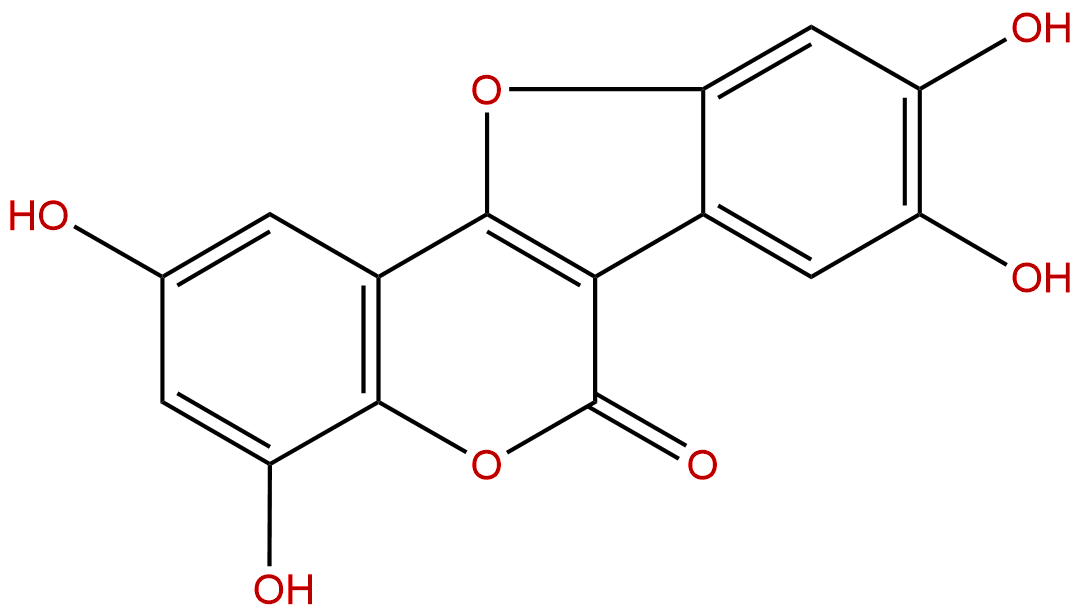


Product name: Isodemethylwedelolactone
Synonym name:
Catalogue No.: BP3117
Cas No.: 350681-33-3
Formula: C15H8O7
Mol Weight: 300.222
Botanical Source:
Physical Description: Yellow powder
Type of Compound: Coumarins
Purity: 95%~99%
Analysis Method: HPLC-DAD or/and HPLC-ELSD
Identification Method: Mass, NMR
Packing: Brown vial or HDPE plastic bottle
The product could be supplied from milligrams to grams. Inquire for bulk scale.
We provide solution to improve the water-solubility of compounds, thereby facilitating the variety of activity tests and clinic uses.
For Reference Standard and R&D, Not for Human Use Directly.
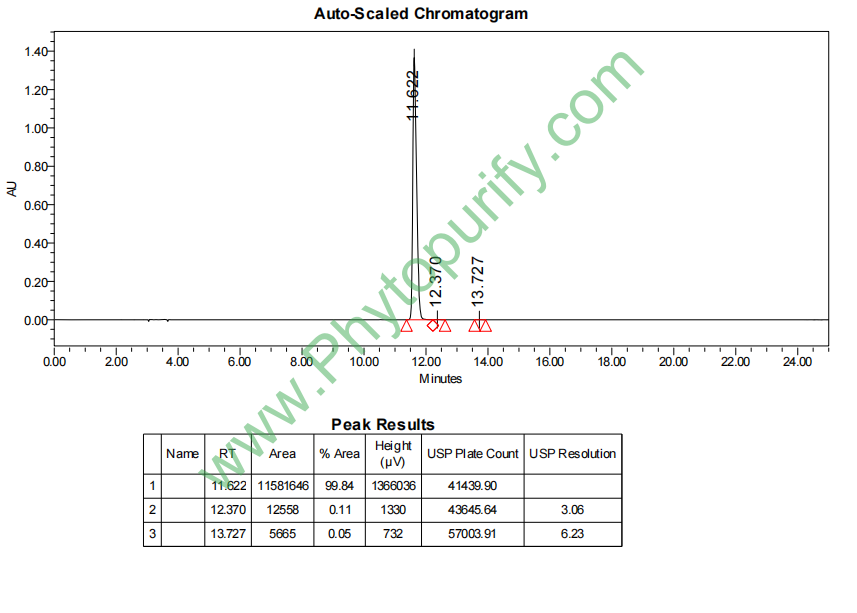
HPLC of Isodemethylwedelolactone
Storage conditions:Short-term storage at 2~8℃, long-term storage at -20 ~ -80℃
124.2700
2.1335
1.7418
.0198
1.5977
8.0277
Low
87.2924
2.8645
No
No
No
No
Yes
Yes
1.2
Yes
Yes
Yes
No
Natural products, as an important source of drug discovery, play an irreplaceable role in the history of human disease treatment. Among them, the Asteraceae plant, Alternanthera philoxeroides(Eclipta alba In the traditional medical system, especially in Ayurveda and traditional Chinese medicine, it is commonly used to treat liver diseases, inflammation, and hemostasis. Its complex secondary metabolite library is a treasure trove of various bioactive components. Isodemethylwedelolactone (CAS: 350681-33-3) is a coumarin compound with significant biological activity isolated from this plant. Early studies labeled it as a coagulant and hemolytic component, suggesting that it may act on the blood system. However, with the deepening of modern pharmacological research, especially the development of network pharmacology and molecular docking technology, its pharmacological activity spectrum has been greatly expanded. Recent research has focused on its potential association with inflammatory bowel diseases such as colitis, regulating inflammation, cell apoptosis, and barrier function through multi-target mechanisms, demonstrating remarkable therapeutic prospects. This article aims to provide a systematic review of the chemical properties, plant sources, pharmacological activities, mechanisms of action, medicinal properties, and clinical application potential of isodemethylated pyrethroid, in order to provide comprehensive scientific references for the in-depth research and development of this compound.
Isomethomyl is an organic compound belonging to the coumarin derivative class. Its core structure is benzo [a] - pyranone, and multiple hydroxyl, methoxy, and other substituents are attached to the parent nucleus. It is an isomer of its homologue Demethylwedelolactone. This subtle difference in structure determines its unique physicochemical properties and biological activity.
From the perspective of pharmacological parameters, the molecular weight of this compound is 300.220, belonging to the category of small molecule compounds and possessing good cell membrane permeability potential. Its lipid water partition coefficient (LogP) is 2.1335, indicating that the molecule has moderate lipophilicity, which facilitates its passage through biological membranes. However, excessively high LogP may also lead to solubility and metabolic issues. The calculated topological polar surface area (TPSA) is 124.2700 Å ², which is relatively high. This is mainly attributed to multiple hydrogen bond donors and acceptors (such as hydroxyl and carbonyl groups) in the molecular structure, suggesting that it may have moderate membrane permeability and may affect its oral bioavailability. The water solubility data (0.0198 mg/mL) confirms that it is a poorly soluble compound, which will be one of the key challenges to overcome in formulation development. In addition, preliminary drug risk assessment shows that its ability to cross the blood-brain barrier is low, indicating that the risk of central nervous system related side effects may be relatively low; The hERG channel inhibition experiment showed negative results, reducing the potential risk of inducing QT interval prolongation and apical torsion type ventricular tachycardia in the heart; The Ames test result is 1.2 (usually considered negative if the ratio is less than 2), indicating that there is no significant genetic toxicity. These physicochemical and early safety parameters laid the foundation for further pharmacological development and structural optimization.
Isodemethylated pyrethroid is mainly derived from its original plant, Alternanthera philoxeroides(Eclipta alba Obtained by separation from (L.) Hassk. Dryland is an annual herbaceous plant widely distributed in tropical and subtropical regions, growing in China, India, Southeast Asia, and South America. In traditional medicine, its whole herb is considered to have the effects of nourishing the liver and kidneys, cooling blood and stopping bleeding, clearing heat and detoxifying.
Extracting and purifying a single active ingredient from such a complex plant matrix is a delicate task. The conventional extraction process begins with the crushing of dried plant materials (usually whole grass or aboveground parts). Initial extraction is often carried out using solvent extraction methods, with commonly used solvents including methanol, ethanol, or ethanol water mixed solutions. Extraction efficiency is improved through immersion, reflux, or ultrasound assisted extraction. The crude extract obtained needs to be purified through a series of chromatographic separation techniques after vacuum concentration. The commonly used normal or reverse phase silica gel column chromatography is an effective means of preliminary separation, which can be grouped according to the different polarities of the compounds. Subsequently, more precise separation was performed using preparative high performance liquid chromatography (HPLC) or medium pressure liquid chromatography (MPLC) to obtain high-purity isodemethylated pyrethroid. Modern technologies such as high-speed countercurrent chromatography (HSCCC) have also been applied to the separation of such natural products due to their advantages of irreversible adsorption and high recovery rate. The optimization of extraction processes, such as solvent ratio, temperature, and time control, as well as the application of green extraction techniques (such as supercritical fluid extraction), are crucial for improving the yield of target compounds and maintaining their biological activity. In addition, chemical synthesis and biosynthetic pathways are also being explored, aiming to solve the problems of limited plant sources and low content, and provide alternative solutions for their large-scale supply.
The pharmacological activity research of isoleuclide has expanded from early blood system effects to a wider range of fields, especially in anti-inflammatory and immune regulation.
The effect on the blood system Early studies defined it as a coagulant and hemolytic component. Its procoagulant activity may be achieved by affecting coagulation factors or platelet function, but the specific mechanism remains to be elucidated. The hemolytic activity suggests that it may have a destructive effect on the red blood cell membrane at high concentrations, which is not only a potential toxicity aspect, but also may be related to certain specific pathological processes (such as clearing damaged red blood cells), and should be carefully balanced between therapeutic and toxic doses.
Anti inflammatory and immune regulatory activity This is the core focus of current research. In various chemically induced colitis models in rodents (such as DSS, TNBS), isodemethylated pyrethroid showed significant improvement effects. It can effectively alleviate pathological damage to colon tissue, including reducing mucosal ulcers, inflammatory cell infiltration, and crypt structure destruction. At the same time, it can reduce the levels of pro-inflammatory cytokines (such as TNF - α, IL-1 β, IL-6) in serum and colon tissue, and promote the expression of anti-inflammatory factors (such as IL-10). This extensive anti-inflammatory effect indicates its ability to regulate immune responses with multiple targets.
Antioxidant and anti apoptotic activity Oxidative stress is an important driving factor for inflammatory diseases such as colitis. Research has shown that isodemethylated pyrethroid can enhance the antioxidant defense ability of colon tissue, such as increasing the activity of superoxide dismutase (SOD) and glutathione peroxidase (GSH Px), and reducing the level of lipid peroxidation product malondialdehyde (MDA). In addition, it can also inhibit excessive apoptosis of colonic epithelial cells by regulating the expression of apoptosis related proteins (such as Bcl-2/Bax, Caspase family), maintaining the integrity of the intestinal epithelial barrier.
Other potential activities Based on the similarity between its core structure and homologs (such as Scutellaria baicalensis lactone), it is speculated that it may also have activities such as hepatoprotective, antiviral (such as anti hepatitis virus), and anti osteoporosis, but these still need further experimental verification.
Modern systems pharmacology analysis has revealed that the use of isodemethylated pyrethroid in the treatment of colitis may involve a complex multi-target and multi pathway network. Its function is not through a single target, but through the coordinated regulation of multiple key signaling nodes:
Regulating inflammatory signaling pathways:
Regulating lipid metabolism and signaling:
Affects cellular stress and death:
Drug metabolism and activity regulation:
In summary, isoleuclide forms a synergistic network by simultaneously acting on multiple targets such as CES1, TLR4, PRKCA, CASP1, LPAR2, RELA, FAAH, SPHK1, MAPK1, TNF, etc. It intervenes in the pathological process of colitis in multiple dimensions and levels, from inhibiting inflammation initiation (TLR4), blocking inflammation signaling (NF - κ B, MAPK), regulating lipid inflammatory mediators (S1P, LPA, endogenous cannabinoids) to inhibiting inflammatory cell death (CASP1).
Despite exhibiting good pharmacological activity, the drug affinity of isodemethylated pyrethroid remains to be comprehensively evaluated.
Prediction and Challenges of Absorption, Distribution, Metabolism, and Excretion (ADME):
Preliminary Safety Assessment:
Current status of pharmacokinetic research:
At present, there is still a significant lack of pharmacokinetic studies on the isodemethylated pyrethroid system, such as blood concentration time curves, absolute bioavailability, tissue distribution, plasma protein binding rate, etc. in rats or beagle dogs. Establishing sensitive and accurate analytical methods (such as LC-MS/MS) for quantitative analysis of the compound and its metabolites in biological samples is a prerequisite for conducting such research.
The multi-target anti-inflammatory properties of isoleuclide have brought broad application prospects in the treatment of inflammatory bowel disease (IBD), especially ulcerative colitis.
therapeutic potential:
Development Strategy and Challenges:
As a coumarin compound discovered from the traditional medicinal plant Alternanthera philoxeroides, the research process of isodemethylated pyrethroid reflects the deepening from traditional experience to modern molecular pharmacology. The early understanding of its procoagulant and hemolytic activities has gradually been expanded by its powerful multi-target anti-inflammatory, antioxidant, and anti apoptotic activities, especially its remarkable therapeutic effects in colitis models. Its mechanism of synergistic therapeutic effect by regulating multiple key signaling nodes such as TLR4/NF - κ B, MAPK, SPHK1/S1P, and endogenous cannabinoid system is in line with the concept of modern networked therapy for complex diseases. However, its poor solubility and unclear pharmacokinetic and safety characteristics are the main obstacles on its drug development path. Future research should focus on in-depth mechanism validation, systematic drug efficacy optimization, and the application of innovative formulation technologies. Through interdisciplinary collaboration, isodesmopyrolactone is expected to be successfully transformed from a promising natural active molecule into a novel candidate drug for the treatment of inflammatory bowel disease and other inflammatory diseases, continuing the glorious chapter of natural products in drug discovery.
