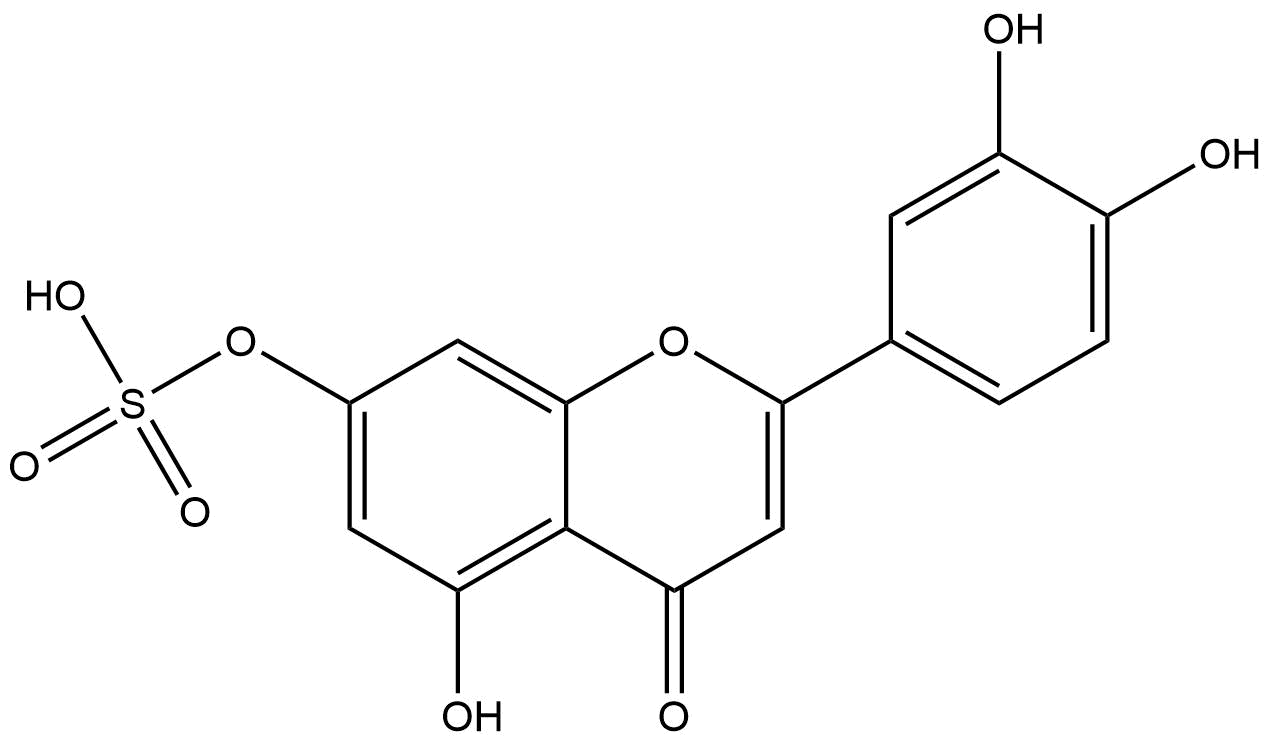


Product name: Luteolin 7-sulfate
Synonym name: Luteolin 7-bisulfa
Catalogue No.: BP2066
Cas No.: 56857-57-9
Formula: C15H10O9S
Mol Weight: 366.296
Botanical Source: EcliptaprostrataL.
Type of Compound: Flavonoids
Purity: 95%~99%
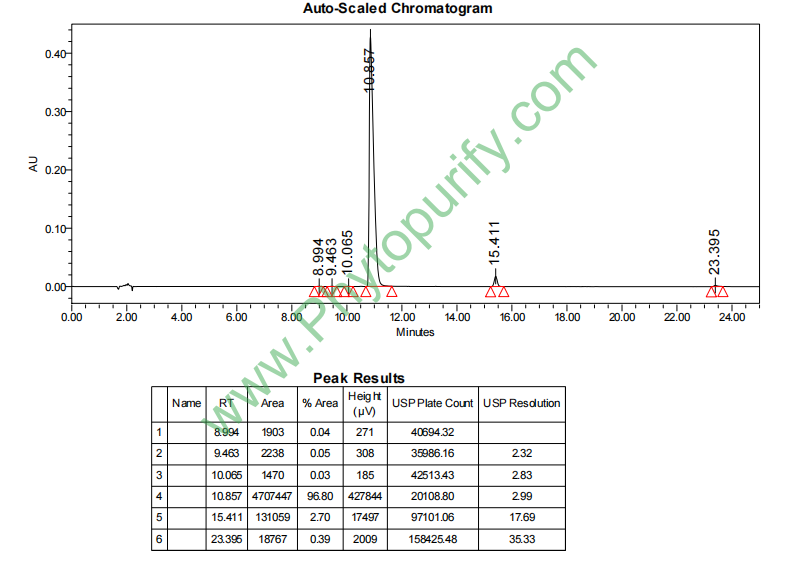
Analysis Method: HPLC-DAD or/and HPLC-ELSD
Identification Method: Mass, NMR
Packing: Brown vial or HDPE plastic bottle
Storage: Store in a well closed container, protected from air and light. Put into refrigerate or freeze for long term storage.
Whenever possible, you should prepare and use solutions on the same day. However, if you need to make up stock solutions in advance, we recommend that you store the solution as aliquots in tightly sealed vials at -20℃. Generally, these will be useable for up to two weeks.
The product could be supplied from milligrams to grams
Inquire for bulk scale.
Chengdu Biopurify Phytochemicals Ltd. is a leading company in the research, development, manufacture and marketing of High Quality Phytochemicals and Extracts(especially Active Ingredients from Traditional Chinese Medicine,TCM), Natural Active Pharmaceutical Ingredients worldwide.
The main services:
A. Supply active ingredients and reference standards of TCM, from mgs to kgs scale
B. Custom extraction and purification, target Herb Active Ingredients
C. Custom synthesis and semi-synthesis for Natural Active Ingredients
D. CR(contract research), CM(contract manufacture) and PD(process development) services from lab scale, pilot scale to commercial scale(GMP is also available)
E. TCM compounds library for drug screen,more than 3000 compounds available, many of them are rare and unique.
HPLC of Luteolin 7-sulfate
Storage conditions:Short-term storage at 2~8℃, long-term storage at -20 ~ -80℃
154.5000
1.0022
-.5908
.1929
1.4312
4.1959
Low
87.0125
2.6344
Yes
No
No
No
Yes
No
0.6
Yes
No
Yes
No
Luteolin 7-sulfate (CAS number: 56857-57-9) is a natural flavonoid compound isolated from the marine plant Phyllospadix iwatensis Makino. As a sulfate derivative of luteolin, this compound has high polarity and unique biological activity in its structure. In recent years, with the in-depth study of the pharmacological effects of natural products, luteolin-7-sulfate has gradually become a hot topic in pharmacological research due to its potential role in regulating melanin synthesis, anti-inflammatory, antioxidant and other aspects. Especially in the treatment of inflammatory diseases such as asthma, this compound exhibits multi-target regulatory ability and demonstrates good therapeutic potential.
This article aims to systematically review the chemical structure and physicochemical properties, plant sources and extraction methods, pharmacological activity and mechanism of action of luteolin-7-sulfate, analyze its pharmacokinetic characteristics based on drug parameters, and explore its prospects and challenges in clinical applications, providing theoretical basis and reference for subsequent drug development and clinical research.
Luteolin-7-sulfate belongs to the flavonoid class and is a sulfated derivative of Luteolin on the 7th hydroxyl group. Its chemical formula is C15H10O10S, with a molecular weight of 366.3030. The structural features of this compound include a typical flavonoid skeleton (2-phenyl-4H-1-benzopyran-4-one), with the 7th hydroxyl group replaced by a sulfate group, significantly increasing the polarity of the molecule.
In terms of physical and chemical properties, the LogP value of luteolin-7-sulfate is 1.0022, indicating that it has moderate lipophilicity and hydrophilicity, which is conducive to its distribution and transport in organisms. Its topological polar surface area (TPSA) is 154.5 Å ², and higher TPSA is usually associated with poorer cell membrane permeability, which may affect its oral bioavailability. The water solubility is 0.1929 mg/mL, indicating limited water solubility, and its solubility needs to be improved through appropriate formulation techniques. The low permeability of the blood-brain barrier suggests its limited role in the central nervous system. The hERG channel inhibition experiment result was negative, indicating that the compound has a low risk of cardiac toxicity. The Ames mutagenicity test score is 0.6, indicating a low risk of genotoxicity and a good safety foundation.
In summary, the physicochemical properties of luteolin-7-sulfate provide a good starting point for its potential as a drug molecule, but its high polarity and limited water solubility need to be given special consideration in drug design and formulation development.
Osmolin-7-sulfate was first isolated from the marine plant Phyllospadix iwatensis Makino. Phyllospadix plants are widely distributed in temperate and subarctic coastal zones, with abundant natural product resources, especially polyphenols and flavonoids. This plant adapts to marine saline alkali environments and accumulates various unique secondary metabolites in its body, becoming an important source for the development of natural medicines.
The common methods for extracting luteolin-7-sulfate include:
Solvent extraction
Using methanol or ethanol as the main solvent, ultrasound assisted extraction or reflux extraction can effectively dissolve flavonoids in plant tissues.
Liquid liquid distribution and column chromatography separation
After concentration, the extraction solution is divided into liquid and liquid phases using solvents of different polarities to remove lipophilic impurities. Subsequently, the target compound was purified by silica gel column chromatography, reverse phase C18 column chromatography, or ion exchange column chromatography.
Purification by High Performance Liquid Chromatography (HPLC)
The use of reverse phase HPLC technology, combined with ultraviolet detection or mass spectrometry detection, can achieve high-purity separation and quantitative analysis of luteolin-7-sulfate.
Structural Identification
The purified compound was structurally confirmed by various analytical methods such as nuclear magnetic resonance (NMR), mass spectrometry (MS), infrared spectroscopy (IR), and ultraviolet spectroscopy (UV).
In recent years, with the advancement of extraction technology, green extraction methods such as supercritical fluid extraction and membrane separation technology have also been applied to the separation of such compounds, improving extraction efficiency and purity, reducing the use of organic solvents, and in line with the sustainable development concept of modern natural product development.
The pharmacological research on luteolin-7-sulfate mainly focuses on its regulation of melanin synthesis and anti-inflammatory effects, especially its potential therapeutic effects in inflammatory diseases such as asthma.
Research has shown that luteolin-7-sulfate can significantly inhibit tyrosinase (TYR) gene expression and reduce melanin synthesis by regulating the signaling pathway mediated by cAMP response element binding protein (CREB) and microphthalmia related transcription factor (MITF). The regulation of melanin synthesis is of great significance in the fields of skin pigmentation, pigmentation, and beauty. This mechanism provides a theoretical basis for the development of new whitening agents and the treatment of pigmentary disorders.
The role of luteolin-7-sulfate in chronic inflammatory diseases such as asthma is gradually gaining attention. The pathogenesis of asthma is complex, involving multiple inflammatory mediators and signaling pathways. This compound exerts a multi-target synergistic regulatory effect by modulating multiple key targets, including lipoxygenase 5 (ALOX5), phospholipase A2 group 2A (PLA2G2A), adenosine receptor A2B (ADORA2B), mitogen activated protein kinase 1 (MAPK1), tumor necrosis factor (TNF), phosphodiesterase 4D (PDE4D), cyclooxygenase 2 (PTGS2), cholinergic receptor M3 type (CHRM3), nuclear factor kappa B1 (NFKB1), and β 2-adrenergic receptor (ADRB2), to inhibit inflammatory responses and alleviate airway hyperresponsiveness.
As a flavonoid derivative, luteolin-7-sulfate has significant antioxidant activity, can scavenge free radicals, and alleviate oxidative stress damage to cells. This characteristic helps to protect respiratory epithelial cells, slow down the inflammatory process, and promote tissue repair.
In summary, luteolin-7-sulfate exhibits a wide range of pharmacological activities in various pathological states, especially in regulating melanin synthesis and anti-inflammatory immune regulation, with significant potential.
The mechanism of action of luteolin-7-sulfate involves multiple signaling pathways and key molecular targets, reflecting its multi-target and multi pathway synergistic regulation characteristics.
The synthesis of melanin is mainly regulated by tyrosinase (TYR), and the expression of TYR gene is regulated by the transcription factor MITF. The activity of MITF is also influenced by the phosphorylation status of cAMP response element binding protein (CREB). Osmolin-7-sulfate inhibits the activation of CREB, reduces the expression level of MITF, and subsequently decreases the transcription of TYR, leading to a decrease in melanin production. This mechanism provides a molecular basis for its application in skin whitening and pigmentation treatment.
The pathological process of asthma involves airway inflammation, airway remodeling, and immune cell activation. Osmolin-7-sulfate exerts its effects by regulating the following key targets:
Through comprehensive regulation of the above targets, luteolin-7-sulfate can effectively alleviate airway inflammation, reduce airway hyperresponsiveness, and has potential anti asthma effects.
In addition, the antioxidant effect of luteolin-7-sulfate may protect cells from oxidative damage by clearing reactive oxygen species (ROS) and regulating the intracellular antioxidant enzyme system, further assisting its anti-inflammatory and cell protective effects.
The evaluation of drug properties is an important aspect of natural product drug development, involving the physicochemical properties, safety, and in vivo behavior of molecules.
At present, there is limited pharmacokinetic data on luteolin-7-sulfate in vivo, but based on its physicochemical properties and the general pattern of flavonoids, it can be inferred that:
In the future, in vivo pharmacokinetic and metabolic studies are needed to clarify the absorption, distribution, metabolism, and excretion (ADME) characteristics, providing a basis for clinical development.
Due to its unique chemical structure and multi-target pharmacological activity, luteolin-7-sulfate has shown broad application potential in various disease fields.
By inhibiting the CREB-MITF-TYR signaling pathway, luteolin-7-sulfate effectively reduces melanin synthesis and has potential application value in whitening and treating pigmentation diseases. In the future, it can be developed as an external preparation for the treatment of pigmentation disorders such as melasma and freckles.
Its regulatory effect on multiple targets related to asthma makes it a novel candidate drug for chronic airway inflammatory diseases such as asthma. By reducing airway inflammation and improving airway function, luteolin-7-sulfate is expected to supplement existing treatment methods, especially in reducing side effects and improving patients' quality of life.
Given its antioxidant and immunomodulatory effects, luteolin-7-sulfate may play an adjuvant therapeutic role in areas such as cardiovascular disease, neurodegenerative diseases, and metabolic syndrome. In the future, it is necessary to conduct systematic pharmacological and safety evaluations to expand its indications.
As a natural flavonoid derivative derived from the marine plant Phyllospadix iwatensis, luteolin-7-sulfate exhibits significant potential in regulating melanin synthesis and treating inflammatory diseases such as asthma due to its unique structure and multi-target pharmacological activity. It achieves effective intervention in pathological processes by regulating the CREB-MITF-TYR signaling pathway and various inflammation related targets.
Although there are still certain challenges in pharmacokinetics and clinical applications, its good safety and multiple biological activities have laid a solid foundation for subsequent drug development. In the future, research on its in vivo behavior, mechanism of action, and formulation technology should be strengthened to promote the clinical application of luteolin-7-sulfate, hoping to become an important member in the field of natural product drug development and bring new hope for the treatment of related diseases.
