| Catalog No | Package | Original Price | Price | Inventory | Quantity | Operating |
|---|---|---|---|---|---|---|
| BP5182-5mg | 5mg | $350.00 | Sign in |
|


Storage conditions:Short-term storage at 2~8℃, long-term storage at -20 ~ -80℃
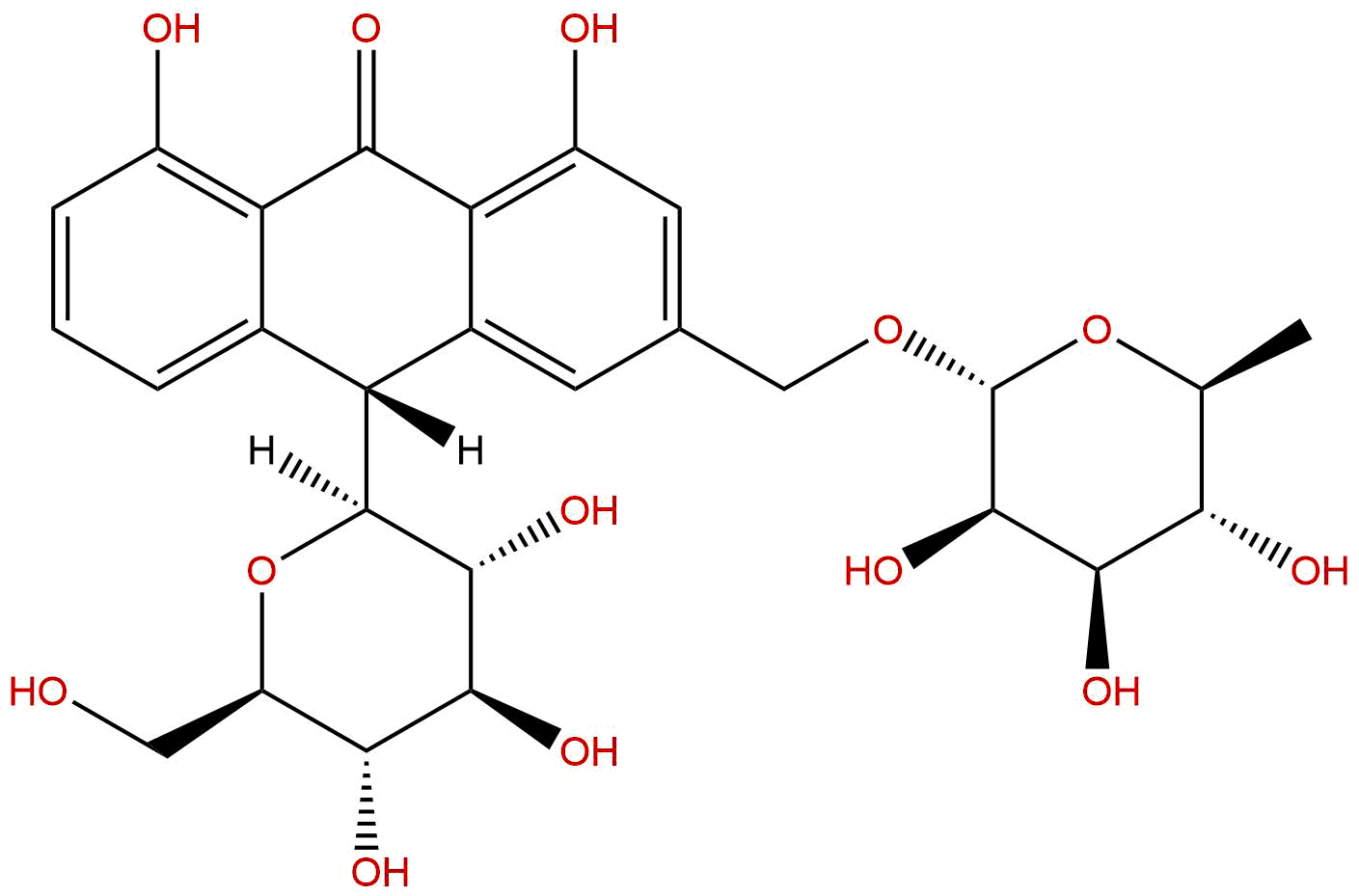
Aloinoside B (CAS number: 11006-91-0) is an important natural anthraquinone compound, mainly isolated from plants of the Aloe genus. As a hot topic in the pharmacological research of natural products, aloe glycoside B has received widespread attention due to its unique chemical structure and diverse biological activities, especially its potential applications in the field of skin repair. In recent years, with the in-depth study of aloe glycoside B, the biological functions of its metabolites such as aloin, isoaloin, and hydroxyl metabolites have gradually been revealed, further enriching the pharmacological understanding of this type of anthraquinone derivative.
This review aims to systematically summarize the chemical structure and physicochemical properties, plant sources and extraction methods, pharmacological activities, and mechanisms of action of aloe glycoside B. The focus is on exploring its molecular targets and pathways of action in skin repair. Combined with pharmacological evaluation and pharmacokinetic data, the clinical application potential and future research directions are discussed, providing theoretical basis and research ideas for natural product pharmacology and new drug development.
Aloe glycoside B belongs to the anthraquinone class of compounds, with a complex molecular formula and a molecular weight of 564.5400, indicating that it is a relatively large molecular weight glycoside anthraquinone derivative. Its structure contains a typical anthraquinone skeleton, connected by multiple hydroxyl and glycosidic groups, which endow it with high polarity and water solubility. Its LogP value is -0.2648, indicating that the compound has strong hydrophilicity and a water solubility index of 4.6764, supporting its good solubility in aqueous phase. The highly polar molecular structure also leads to a topological polar surface area (TPSA) of 226.83 Å ², indicating limited ability to penetrate cell membranes.
The physicochemical properties of aloe glycoside B determine its absorption, distribution, and metabolic characteristics in the body. Its lower blood-brain barrier permeability indicates that the compound is difficult to enter the central nervous system, reducing the risk of central neurotoxicity. In addition, the hERG channel inhibition experiment results were negative, indicating a low risk of cardiac toxicity. The Ames test score is 0.6, indicating a low risk of genotoxicity and meeting the preliminary requirements for safety evaluation.
Aloe glycoside B is mainly found in plants of the Aloe genus (Aloe spp.), especially in the juice and epidermal tissue of aloe leaves, where its content is relatively high. Aloe plants are widely distributed in tropical and subtropical regions and have been extensively studied for their rich bioactive components and traditional medicinal value.
The traditional methods for extracting aloe glycoside B mainly include solvent extraction and chromatographic separation. Generally, ethanol or methanol is used as the extraction solvent, and the extraction efficiency is improved by ultrasound assisted extraction or reflux extraction. Subsequently, the crude extract was separated and purified using liquid-liquid distribution, silica gel column chromatography, and high-performance liquid chromatography (HPLC) techniques, ultimately obtaining high-purity aloe glycoside B. In recent years, the application of supercritical CO ₂ extraction and membrane separation technology has further optimized the extraction process, improved yield and purity, and is more environmentally friendly and efficient.
In addition, studies have shown that the content of aloe glycoside B in plants is significantly affected by growth environment, harvesting time, and treatment methods, which poses challenges to the standardization and industrial production of extraction processes. In the future, it is necessary to further establish a standardized planting and harvesting system, combined with modern extraction technology, to ensure the stable supply of aloe glycoside B.
Aloe glycoside B has various biological activities, especially showing significant pharmacological effects in the field of skin repair. Its main pharmacological effects include promoting cell proliferation and migration, regulating extracellular matrix remodeling, anti-inflammatory, and promoting angiogenesis.
Aloe glycoside B promotes the repair of skin damage by regulating various key enzymes and growth factors. In vitro and in vivo experiments have shown that this compound can significantly downregulate the expression of matrix metalloproteinases (MMP1, MMP2, MMP9), inhibit excessive collagen degradation, and maintain the structural integrity of skin tissue. At the same time, aloe glycoside B activates epidermal growth factor receptor (EGFR) and fibroblast growth factor 2 (FGF2), promoting the proliferation and migration of keratinocytes and fibroblasts, and accelerating the wound healing process.
In addition, aloe glycoside B upregulates the expression of transforming growth factor beta 1 (TGFB1) and collagen type III (COL3A1) and type IV (COL4A1), promotes the synthesis and remodeling of extracellular matrix, and enhances the mechanical strength and elasticity of the skin. The induction of vascular endothelial growth factor A (VEGFA) expression promotes neovascularization, improves local blood supply, and further supports tissue repair.
Aloe glycoside B and its metabolites exhibit excellent anti-inflammatory activity, which can inhibit the release of inflammatory mediators, alleviate inflammatory reactions, and prevent damage to the skin caused by chronic inflammation. Its antioxidant capacity is achieved by clearing free radicals, reducing oxidative stress damage to cells, and protecting the integrity of cell membranes and DNA.
Rat gut bacteria can metabolize aloin B into aloin, isoaloin, and hydroxy metabolites, which may exert synergistic or different pharmacological effects in vivo. For example, aloin and isoaloin have been proven to have anti-inflammatory and cell regeneration promoting functions, suggesting that the in vivo activity of aloin B may be partially dependent on its metabolic transformation.
The mechanism of action of aloe glycoside B in skin repair involves the regulation of multiple signaling pathways and key molecular targets, mainly including the following aspects:
MMP1, MMP2, and MMP9 are key proteases involved in collagen degradation and extracellular matrix remodeling. Aloe glycoside B inhibits the overexpression of these MMPs, prevents excessive degradation of collagen, maintains skin structure stability, and promotes wound healing.
EGFR and FGF2 are important signaling molecules that regulate cell proliferation and migration. Aloe glycoside B can activate the EGFR signaling pathway, promote the proliferation and migration of keratinocytes, stimulate FGF2 expression, enhance fibroblast activity, and synergistically promote skin tissue repair and regeneration.
TGFB1, as a key regulatory factor in extracellular matrix synthesis, plays a central role in fibrosis and tissue repair. Aloe glycoside B upregulates TGFB1 expression, promotes collagen synthesis (COL3A1, COL4A1), enhances skin mechanical strength and elasticity, and contributes to tissue remodeling.
VEGFA is a key factor in angiogenesis, and aloe glycoside B promotes neovascularization, improves local blood circulation, enhances nutrient supply and metabolic waste clearance by inducing VEGFA expression, and supports the skin repair process.
ITGB1 serves as a connecting molecule between cells and matrix, regulating cell adhesion, migration, and signal transduction. Aloe glycoside B regulates the expression of ITGB1, promotes the interaction between cells and matrix, enhances cell migration ability, and is beneficial for wound closure.
The pharmacological evaluation of aloe glycoside B shows that it has good safety and pharmacological activity basis. Its high molecular weight (564.54 Da) and high TPSA value (226.83 Å ²) suggest that its oral bioavailability may be limited, and drug formulation optimization or administration route adjustment is needed to improve in vivo absorption.
The LogP value is -0.2648, indicating its strong hydrophilicity, which is beneficial for the development of water-soluble formulations, but may affect the cell membrane penetration ability. The low permeability of the blood-brain barrier reduces the risk of central nervous system toxicity. The hERG inhibition experiment was negative, reducing the risk of cardiac toxicity. The Ames test results show that its genotoxicity risk is low and meets safety requirements.
In terms of pharmacokinetics, aloin B is mainly metabolized and converted into aloin, isoaloin, and hydroxy metabolites in the gut microbiota, suggesting that its in vivo activity may be partially dependent on metabolites. Further systematic research is needed on the pharmacological activity and metabolic kinetic characteristics of metabolites to clarify their in vivo mode of action and safety.
Aloe glycoside B, as a natural anthraquinone compound, has shown broad application prospects in skin repair and related disease treatment. Its multi-target regulatory mechanism and good safety foundation make it an ideal candidate molecule for developing new skin repair agents, wound dressings, and anti-inflammatory drugs.
Future research should focus on the following directions:
Optimization of drug formulations Develop suitable administration routes for aloe glycoside B based on its physicochemical properties, such as topical formulations and nanocarrier systems, to improve its bioavailability and targeting.
Research on the activity of metabolites In depth analysis of the pharmacological effects of aloe glycoside B metabolites and their synergistic effects with parent compounds, clarifying their in vivo action network.
Mechanisms and signaling pathways Combining modern molecular biology techniques, further elucidate the molecular mechanism of aloe glycoside B regulating skin repair related signaling pathways and explore potential new targets.
Preclinical and clinical research Conduct systematic pharmacological and safety evaluations, as well as clinical trials, to verify the effectiveness and safety of its treatment for skin injuries, chronic wounds, and skin inflammatory diseases.
Standardized production and quality control Establish a standardized extraction, purification, and quality control system for aloe glycoside B to ensure the stability and consistency of its medicinal components.
Aloe glycoside B, as a natural anthraquinone compound with significant biological activity, exhibits unique pharmacological advantages in the field of skin repair. It regulates skin cell proliferation, migration, inflammatory response, and angiogenesis through multiple targets and pathways, promoting tissue repair and regeneration. Combining its good safety and medicinal characteristics, aloe glycoside B has broad clinical application potential.
In the future, by deepening research on its mechanism of action, optimizing drug formulations, and conducting clinical validation, it is expected to promote the development of aloe glycoside B and its derivatives as a new generation of naturally sourced skin repair drugs, providing innovative solutions for skin injury treatment and promoting the integration of natural product pharmacology and modern medicine.
