| Catalog No | Package | Original Price | Price | Inventory | Quantity | Operating |
|---|---|---|---|---|---|---|
| SBP01694-5mg | 5mg | $196.00 | Sign in |
|


Storage conditions:Short-term storage at 2~8℃, long-term storage at -20 ~ -80℃
Alpha Lapachone (CAS number: 4707-33-9) is a naturally occurring organic heterocyclic compound with significant biological activity, belonging to the naphthoquinone class of natural products. This compound was first isolated from Brazilian endemic plants of the genus Tabebuia, and has attracted widespread attention in recent years due to its unique chemical structure and diverse biological activities, especially its potential in the field of anti-tumor. Alpha rapaqone not only exhibits significant inhibitory effects on various tumor cells, but also regulates multiple signaling pathways and key molecular targets, demonstrating good pharmacokinetic properties and low risk of toxic side effects. It has become an important research object in natural product pharmacology and anti-cancer drug development.
This article will provide a systematic review of the chemical structure and physicochemical properties, plant sources and extraction methods, pharmacological activity and mechanism of action, pharmacological evaluation and pharmacokinetic characteristics of alpha rapaqone, and explore its clinical application prospects in depth. The aim is to provide theoretical basis and research direction for the drug development and clinical translation of this natural product.
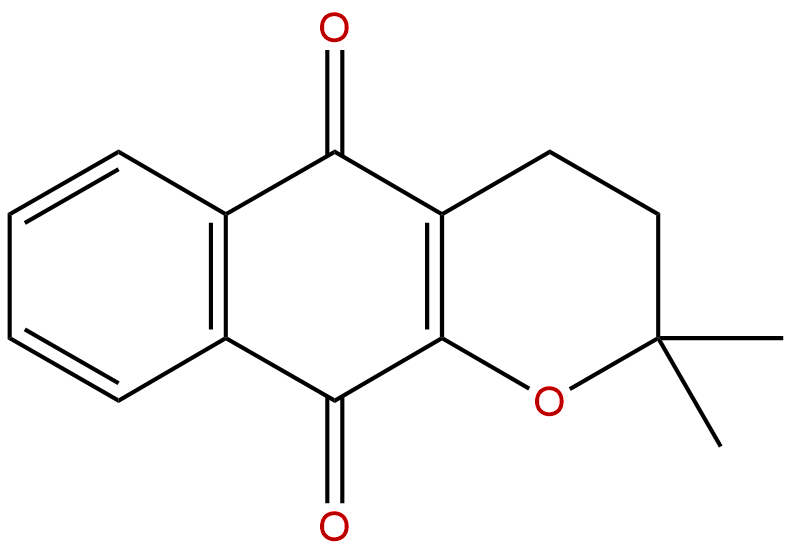
α - Rapaqinone is an organic heterocyclic compound with a molecular formula of C15H14O3 and a molecular weight of 242.2740. Its structural core is a naphthoquinone skeleton, containing two carbonyl groups (characteristic of quinone structure) and a naphthalene ring system, forming a stable conjugated system. The LogP value of this compound is 2.9568, indicating moderate lipid solubility, which is beneficial for membrane penetration and bioavailability. The polarization surface area (TPSA) is 43.37 Å ², indicating that its molecular polarity is moderate and conducive to binding with biomolecules.
The low water solubility of alpha rapaqone (0.0115 mg/mL) to some extent limits its direct aqueous bioavailability, but also suggests its good stability in lipid environments. The quinone groups in its molecular structure endow it with excellent redox activity, enabling it to participate in intracellular oxidative stress responses and thereby affect cellular signaling.
In addition, alpha rapaqone has a high blood-brain barrier penetration ability, indicating its potential application value in the treatment of central nervous system diseases. The hERG channel inhibition experiment showed a negative result, indicating a low risk of cardiac toxicity. The Ames mutagenicity test result was 0.9, indicating a low risk of genotoxicity and good safety.
The main source of α - lapajone comes from plants in the genus Zizania, especially from tropical South American plants such as Tabebuia avellanedae and Tabebuia impetiginosa. These plants are widely used in traditional medicine to treat diseases such as infections, inflammation, and tumors. As one of its main active ingredients, alpha rapaqone endows plants with significant pharmacological activity.
The extraction method usually uses organic solvent extraction combined with column chromatography separation technology. Common solvents include ethanol, methanol, ethyl acetate, etc. A mixture containing various naphthoquinone compounds is first obtained by crude extraction, and then purified using silica gel column chromatography or high-performance liquid chromatography (HPLC). Modern extraction techniques such as ultrasound assisted extraction and microwave-assisted extraction have also been applied to improve extraction efficiency and purity.
In addition, chemical synthesis and semi synthesis methods have been developed to obtain high-purity α - lapaqone to meet the needs of drug development and mechanism research.
The pharmacological activity of alpha rapaqone is mainly concentrated in the field of anti-tumor, but its multiple biological activities such as antibacterial, anti-inflammatory, and antioxidant are gradually being revealed.
A large number of in vivo and in vitro studies have shown that α - lapadione has significant cytotoxicity and proliferation inhibition on a variety of tumor cell lines, including but not limited to breast cancer, lung cancer, liver cancer, colorectal cancer and prostate cancer. Its anti-tumor effect is manifested by inducing cell apoptosis, blocking the cell cycle, inhibiting tumor cell migration and invasion.
Alpha rapaqone can regulate various tumor related signaling pathways, affecting the expression and activity of key proteins, such as downregulating anti apoptotic proteins MCL1 and BCL2, inhibiting the activation of transcription factor STAT3, and reducing the expression of matrix metalloproteinase MMP2, thereby inhibiting the survival and metastasis ability of tumor cells.
In addition to anti-tumor effects, alpha rapaqone also exhibits certain anti-inflammatory activity, which can alleviate inflammatory reactions by regulating inflammatory mediators and signaling pathways. Meanwhile, its antioxidant properties make it potentially valuable in mitigating oxidative stress-related diseases.
The anti-tumor mechanism of α - lapaqone is complex, involving the regulation of multiple molecular targets and signaling pathways.
Alpha rapaqone disrupts the anti apoptotic defense line of tumor cells and promotes mitochondrial mediated apoptosis by downregulating the expression of MCL1 and BCL2 proteins. MCL1 and BCL2 are important members of the Bcl-2 family, regulating the balance of apoptotic signals within cells. Their inhibition helps induce programmed cell death in tumor cells.
Alpha rapaqone significantly inhibits the phosphorylation and activation of STAT3 (signal transducer and activator of transcription 3), blocking the expression of downstream pro proliferative and anti apoptotic genes. STAT3 is a key transcription factor that is continuously activated in various tumor cells, regulating cell proliferation, survival, and immune escape.
In addition, alpha rapaqone also affects the MAPK1 (mitogen activated protein kinase 1) pathway, regulating cell proliferation and stress response.
By downregulating the expression of MMP2 (matrix metalloproteinase 2), α - rapaqone inhibits tumor cell matrix degradation, prevents cell migration and invasion processes. MMP2 promotes the remodeling of extracellular matrix in the tumor microenvironment and is an important mediator of tumor metastasis.
Alpha rapaqone can inhibit the activity of TOP1 (topoisomerase I) and TOP2A (topoisomerase II alpha), hinder DNA replication and transcription processes, leading to DNA damage and cell cycle arrest in tumor cells.
The regulation of α - lapadione on CYP19A1 (aromatase) and ESR1 (estrogen receptor α) suggests its potential value in the treatment of hormone dependent tumors (such as breast cancer). By inhibiting aromatase, reducing estrogen synthesis, and lowering hormone stimulation of tumor cells.
α - Rapaqinone inhibits the expression and activity of HIF1A (hypoxia inducible factor 1 α), blocks the adaptability of tumor cells to low oxygen environments, and inhibits tumor angiogenesis and metabolic reprogramming.
In summary, alpha rapaqone exerts its anti-tumor effect through multi-target and multi pathway synergistic effects, demonstrating its advantages as a multifunctional natural medicine.
The pharmacological parameters of α - Rapaqinone show that it has good potential for drug development. Its molecular weight is 242.2740, which conforms to Lipinski's rule, and its LogP value is moderate at 2.9568, which is conducive to cell membrane penetration and in vivo distribution. The TPSA is 43.37 Å ², indicating that its polarity is moderate and beneficial for oral absorption.
The low water solubility (0.0115 mg/mL) is a major challenge for its drug development, limiting its bioavailability and the choice of administration routes. Therefore, the development of drug delivery systems such as nanocarriers, liposomes, and solid dispersions has become a key strategy to improve their effective concentration in vivo.
The high penetration of the blood-brain barrier suggests its potential application in the treatment of central nervous system diseases, but attention should also be paid to the possible risk of central neurotoxicity. HERG channel inhibition is negative, reducing the risk of cardiac toxicity and ensuring good safety. The Ames mutagenicity test result is 0.9, indicating a low risk of genotoxicity.
Pharmacokinetic studies have shown that alpha rapaqone has a rapid distribution and metabolic characteristics in the body, mainly processed by the liver metabolic enzyme system. The activity and toxicity of metabolites need further research. Its half-life is moderate and it has a certain duration of action in the body.
Given the significant inhibitory effects and multi-target regulatory mechanisms of alpha rapaqone in various tumor cells, its development prospects as an anti-tumor drug are broad. Future research should focus on the following aspects:
Formulation optimization and innovative administration routes
By utilizing nanotechnology, liposome encapsulation, and other methods, the water solubility and bioavailability of α - rapaqone are improved, toxic side effects are reduced, and precise drug delivery is achieved.
Combination therapy strategy
Explore the combined application of alpha rapaqone with existing chemotherapy drugs, targeted drugs, and immunotherapy drugs to achieve synergistic effects and overcome tumor drug resistance.
In depth mechanism research
By utilizing multi omics techniques, a comprehensive analysis of the network of action of alpha rapaqone is conducted to discover new molecular targets and signaling pathways, providing a basis for personalized treatment.
Advance preclinical and clinical research
Strengthen animal model and clinical trial research, systematically evaluate its efficacy, safety, and pharmacokinetic characteristics, and promote its clinical translation.
Expand indications
Exploring its potential applications in brain tumors and neurodegenerative diseases by combining its blood-brain barrier penetrability.
As a natural plant derived naphthoquinone compound, α - rapaqone exhibits excellent pharmacological activity and potential as a drug due to its unique chemical structure and multi-target anti-tumor mechanism. Its research achievements in the field of anti-tumor are constantly enriched, its mechanism is becoming increasingly clear, and its safety evaluation is positive, laying a solid foundation for its development as a new type of anti-cancer drug.
In the future, by combining modern drug delivery technology and precision medicine concepts, alpha rapaqone is expected to break through the bottleneck of traditional natural product development, achieve clinical application transformation, and benefit a large number of patients. Continuous basic and clinical research will promote its widespread application in anti-tumor and other disease treatments, highlighting the important value of natural product pharmacology.
