Introduction/Overview
Myocardial ischemia/reperfusion injury (MIRI) is a serious pathological process in patients with acute myocardial infarction, where myocardial injury worsens after percutaneous coronary intervention or thrombolysis to restore blood flow. Its mechanism is complex, involving a cascade reaction of multiple pathways such as oxidative stress, calcium overload, inflammatory response, mitochondrial dysfunction, and cell apoptosis. At present, there is a lack of specific and effective drugs for the prevention and treatment of MIRI in clinical practice. Therefore, searching for lead compounds with cardioprotective activity from natural products has become an important direction for new drug development.
Jionoside B1, derived from traditional medicinal plants Eriophyton wallichii A phenylpropane compound isolated from a plant in the family Lamiaceae, which has a certain medicinal history in folk medicine. Since its discovery, it has received attention due to its potential biological activity. In recent years, with the deepening of research on the molecular mechanism of MIRI, the pharmacological effects of Jionoside B1 in cardiovascular protection, especially in combating MIRI, have gradually been revealed. Preliminary studies have shown that it may exert multi-target and multi link cardioprotective effects by regulating multiple signaling pathways closely related to cell survival, antioxidant, anti-inflammatory, and apoptosis, such as AMPK, SIRT1, NFE2L2 (Nrf2), PI3K/Akt, TLR4/NF - κ B. This article aims to systematically review the chemical properties, plant sources, pharmacological activities, mechanisms of action, medicinal properties, and application prospects of Jionoside B1 in cardiovascular diseases, in order to provide comprehensive scientific references for the in-depth research and potential drug development of this natural product.
Chemical structure and physicochemical properties
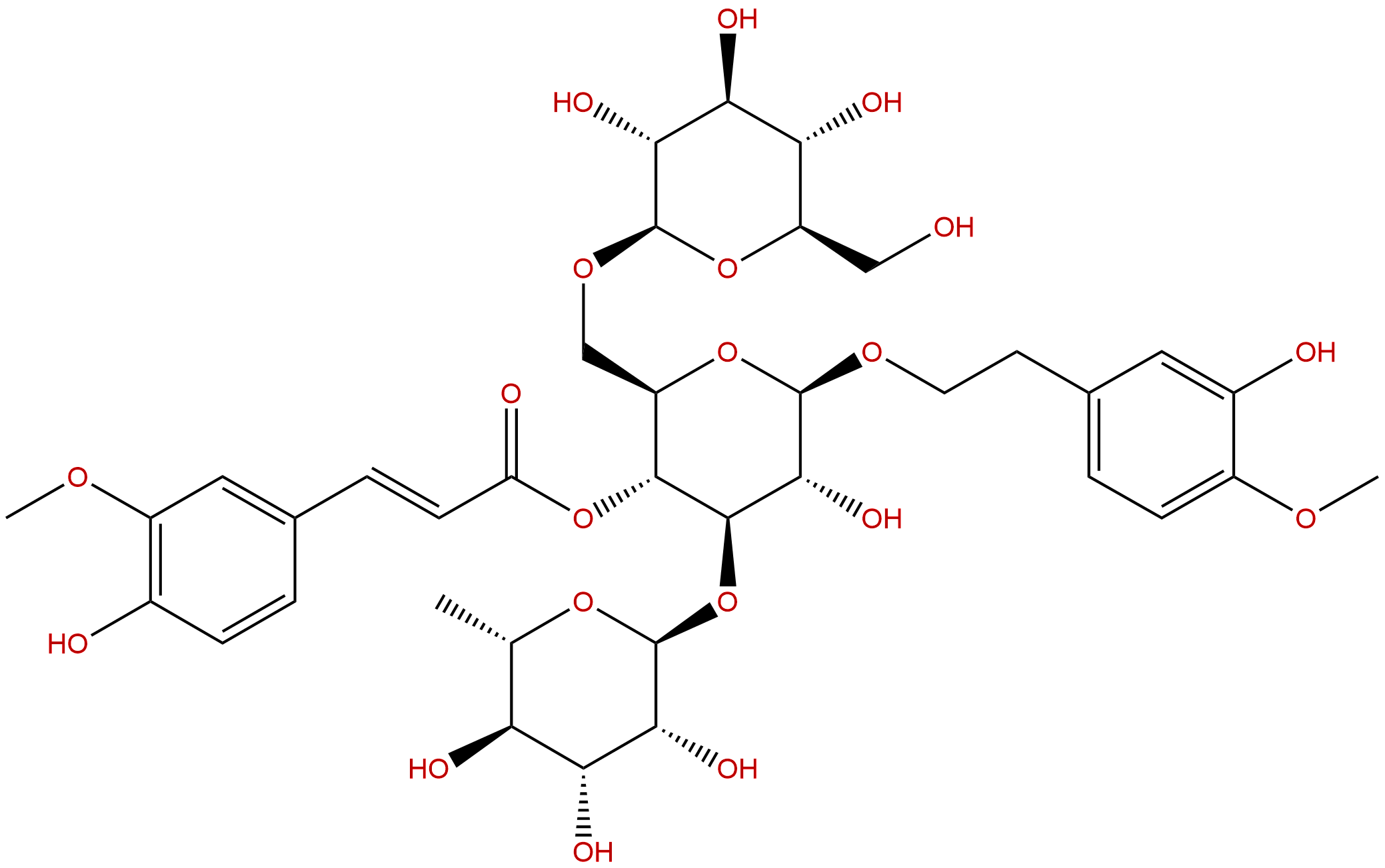
Jiaodihuang phenylethanoid glycoside B1 is a phenylethanoid glycoside compound. Its chemical structure is composed of a phenylethanoid aglycone linked to multiple glycosides through glycosidic bonds, making it a complex polyphenolic natural product.
- Chemical structural characteristics The glycoside part is a hydroxyphenylethanol structure. The sugar moiety usually contains glucose, rhamnose, etc., which form oligosaccharide chains through specific linking methods and are linked to the phenolic hydroxyl group of the aglycone. This structure gives it multiple free phenolic hydroxyl groups, which are the chemical basis for its antioxidant activity. Its precise chemical structure needs to be identified through techniques such as nuclear magnetic resonance (NMR), mass spectrometry (MS), and X-ray single crystal diffraction, with a CAS number of 120406-37-3.
- Physicochemical properties:
- molecular weight 814.7870, belonging to a medium to large polar molecule.
- Lipid water partition coefficient (LogP)-0.2489 indicates that the compound has strong hydrophilicity and weak lipophilicity. This is consistent with the structural characteristics of the molecule containing multiple hydrophilic sugar groups and phenolic hydroxyl groups.
- Topological Polarity Surface Area (TPSA)Up to 302.4400 Å ², further confirming its strong polarity and hydrophilicity. High TPSA typically indicates a strong ability of molecules to form hydrogen bonds.
- Water solubility The value is 6.0142 (usually expressed in logS or similar form, specific units need to refer to the context of the original data). Based on the comprehensive analysis of LogP and TPSA, Jionoside B1 should have good water solubility, which is beneficial for its dissolution and in vivo distribution in aqueous media, but may also affect its transmembrane absorption.
- Spectral characteristics In UV spectroscopy, due to its benzene ring structure, there should be a characteristic absorption peak around 270-280 nm. Infrared spectroscopy can display the characteristic absorption of hydroxyl (- OH), benzene ring skeleton, and glycosidic bond (C-O-C).
These physical and chemical properties directly affect their extraction and separation methods, in vivo pharmacokinetic behavior, and final drug properties.
Plant sources and extraction methods
- Plant-based Jionoside B1 mainly comes from Lamiaceae plants Eriophyton wallichii This plant is mainly distributed in Himalayas, Xizang and other places in China. It may be used in folk herbal medicine, but it is not as famous as Rehmannia glutinosa and Salvia miltiorrhiza. Other plants of the same family or genus may also contain structurally similar phenylethanoid glycosides, but Jionoside B1 is one of the characteristic active ingredients in this species. Ensuring the correct identification of plant substrates is a prerequisite for the reproducibility of subsequent research.
- extraction method Phenylethanoid glycosides have high polarity and are commonly extracted using the following methods:
- Solvent extraction method The most commonly used methods are reflux extraction or ultrasound assisted extraction using methanol or ethanol aqueous solutions of different concentrations. The water alcohol system can effectively dissolve polar glycosides. For example, using 70% -80% ethanol for drying Eriophyton wallichii Perform hot reflux extraction on the entire grass or aboveground parts.
- Purification and Separation After vacuum concentration, the crude extract was subjected to liquid-liquid extraction using organic solvents such as petroleum ether, ethyl acetate, and n-butanol. Jionoside B1 was mainly enriched in the n-butanol fraction. Further purification depends on column chromatography technology, which often uses macroporous adsorption resin (such as D101, AB-8), silica gel, reverse silica gel (such as ODS-C18) and dextran gel (such as Sephadex LH-20) for repeated chromatography. High performance liquid chromatography (HPLC), especially preparative HPLC, is the ultimate key step in obtaining high-purity monomers.
- appraisal The isolated monomeric compounds need to be determined by high-resolution mass spectrometry (HR-ESI-MS) to determine their molecular formula, combined with one-dimensional and two-dimensional nuclear magnetic resonance spectra (1H-NMR, 13C-NMR, HSQC, HMBC, COSY, NOESY, etc.) to analyze and determine their planar structure and relative configuration. The absolute configuration may need to be determined through methods such as chemical derivatization or calculation of ECD.
Pharmacological activity research
The pharmacological research of Jionoside B1 mainly focuses on its protective effect on the cardiovascular system, especially on MIRI, while also involving other biological activities.
-
Heart protective effect (core activity):
- Anti myocardial ischemia/reperfusion injury This is the pharmacological activity of Jionoside B1 that has received the most attention. In isolated cardiac perfusion (Langendorff model) or whole animal (rat, mouse) coronary artery ligation induced MIRI models, administration of Jionoside B1 prior to or during reperfusion can significantly reduce myocardial infarction area, improve cardiac function indicators (such as left ventricular development pressure, ± dp/dt max), and reduce the release of myocardial enzymes (lactate dehydrogenase LDH, creatine kinase CK-MB). These results directly demonstrate its role in reducing myocardial cell necrosis, protecting cardiac structure and function.
- Anti cardiomyocyte apoptosis Cell experiments (such as H9c2 myocardial cell hypoxia/reoxygenation model) have shown that Jionoside B1 can inhibit myocardial cell apoptosis, manifested by reducing apoptosis rate, decreasing the number of TUNEL positive cells, and regulating the expression of apoptosis related proteins (such as reducing Bax and increasing Bcl-2).
-
Antioxidant stress response The multiple phenolic hydroxyl groups in the Jionoside B1 structure endow it with direct free radical scavenging ability. In the MIRI model, it can significantly reduce the content of malondialdehyde (MDA) in myocardial tissue, enhance the activity of endogenous antioxidant enzymes such as superoxide dismutase (SOD) and glutathione peroxidase (GSH Px), and alleviate oxidative stress damage.
-
anti-inflammatory effect MIRI is accompanied by a strong inflammatory response. Research has shown that Jionoside B1 can inhibit the overexpression of pro-inflammatory cytokines (such as tumor necrosis factor - α, interleukin-1 β, interleukin-6) in myocardial tissue after MIRI, and its mechanism is related to the inhibition of the inflammatory core signaling pathway.
-
Other potential activities: Based on the commonness of phenylethanol glycosides, Jionoside B1 may also have neuroprotective, hepatoprotective, anti diabetes and other activities, but this needs more targeted research to confirm.
Mechanism of action and molecular targets
The protective effect of Jionoside B1 on MIRI is not achieved through a single target, but through a complex signaling network that works synergistically. Current research suggests that its mechanism of action involves the following key targets and pathways:
-
Activate AMPK/SIRT1 signaling pathway Adenosine activated protein kinase (AMPK) and deacetylase SIRT1 are core regulatory factors of cellular energy metabolism and stress response. Jionoside B1 has been confirmed to activate AMPK (PRKAA1) and SIRT1. Activated AMPK and SIRT1 can:
- Promote autophagic flow Clear damaged mitochondria and protein aggregates to maintain cellular homeostasis.
- Inhibition of mTOR pathway Indirectly inhibit cell apoptosis.
- Regulating downstream transcription factors Like PGC-1 α, it improves mitochondrial biosynthesis and function.
-
Activate Nrf2/ARE antioxidant pathway Nuclear factor E2 related factor 2 (NFE2L2/Nrf2) is a central regulator of antioxidant stress. Jionoside B1 may promote nuclear translocation of Nrf2 by dissociating it from its inhibitor Keap1, thereby initiating the transcription of downstream phase II detoxifying enzymes such as heme oxygenase-1 and quinone oxidoreductase 1, as well as antioxidant proteins, enhancing the overall antioxidant defense ability of cells.
-
Regulating PI3K/Akt/mTOR and HIF-1 α pathway Phosphatidylinositol 3-kinase (PI3K, one of its catalytic subunits is PIK3CG)/protein kinase B (Akt) is a classic pro survival signaling pathway. Jionoside B1 can activate this pathway, thereby inhibiting pro apoptotic proteins such as Bad and stabilizing hypoxia inducible factor-1 alpha (HIF1A). The stability of HIF-1 α helps cells adapt to hypoxic environments, promotes the expression of genes related to glycolysis and angiogenesis, and has a protective effect on ischemic tissues.
-
Inhibition of TLR4/NF - κ B inflammatory pathway Toll like receptor 4 (TLR4) and its downstream nuclear factor kappa B (NF - κ B, whose key subunit is RELA) are crucial for initiating innate immune and inflammatory responses. Jionoside B1 has been shown to inhibit the expression of TLR4 and the activation of NF - κ B, thereby reducing the production of pro-inflammatory cytokines and alleviating the inflammatory storm after reperfusion.
-
Regulating Bcl-2 family protein balance and inhibiting Caspase cascade reaction Jionoside B1 can upregulate the expression of anti apoptotic protein Bcl-2 and may downregulate the expression of pro apoptotic protein Bax, thereby stabilizing mitochondrial membrane potential and reducing the release of cytochrome C. This ultimately leads to the inhibition of the activation of apoptosis executor Caspase-9 and its downstream Caspase-3, blocking the mitochondrial pathway of cell apoptosis.
Mechanism Integration View In the complex environment of MIRI, Jionoside B1 may simultaneously act on multiple upstream targets such as AMPK, SIRT1, Nrf2, PI3K/Akt, TLR4, etc. These signaling pathways cross talk with each other, jointly promoting cell survival signals (such as Akt, Bcl-2), enhancing endogenous defense (such as Nrf2 mediated antioxidant), while inhibiting damage signals (such as NF - κ B mediated inflammation, Caspase mediated apoptosis), forming a synergistic protective network to counteract multiple strikes of MIRI.
Evaluation of drug properties and pharmacokinetics
Based on the provided pharmacological parameters and research on similar compounds, a preliminary analysis of the pharmacological properties of Jionoside B1 is conducted
-
Preliminary evaluation of the five principles of generic drugs:
- molecular weight 814.8>500, relatively large, may affect oral absorption and transmembrane transport.
- LogP-0.25, strong hydrophilicity, consistent with glycoside characteristics, but poor lipid solubility may lead to low oral bioavailability.
- Hydrogen bond donor/acceptor High TPSA (302.4) suggests that it contains a large number of hydrogen bond donors (phenolic hydroxyl, sugar hydroxyl) and acceptors, which is beneficial for water solubility but seriously hinders its passive transmembrane diffusion, especially through gastrointestinal epithelial cells and the blood-brain barrier.
- Conclusion Jionoside B1 performs poorly in the evaluation of the "Five Principles of Generic Drugs", especially with potentially low oral bioavailability. This suggests that it may need to improve absorption through pharmaceutical methods such as nanocarriers and prodrug modifications, or consider non oral administration routes such as intravenous injection.
-
Pharmacokinetic prediction and challenges:
- absorb The strong polarity and high molecular weight result in poor oral absorption, which may mainly be limited by passive diffusion in the lower intestine, or absorbed through hydrolysis (deglycosylation) by the gut microbiota.
- distribution Predicting its' low blood-brain barrier penetration ', which is consistent with high TPSA, means it may not easily enter the central nervous system, which is disadvantageous for treating central diseases, but may reduce central side effects. Mainly distributed in tissues rich in blood and extracellular fluid.
- Metabolism As a glycoside, it is likely to be hydrolyzed by β - glucosidase and other enzymes in the body to produce aglycones and sugars. Glycoside lipid solubility increases and may be further metabolized (such as II binding reactions). The first pass effect of the liver may be significant.
- excretion The prototype drug and its metabolites may be mainly excreted from urine through the kidneys.
- Key safety parameters:
- HERG inhibition No ", this is a positive signal indicating that it may not suppress the rapid delayed rectifier potassium current in the heart, and the risk of inducing acquired long QT syndrome and apical torsion ventricular tachycardia is low.
- Ames test The value "0.0" (usually indicating no mutagenicity under testing conditions) suggests that there is no genetic toxicity risk, but it needs to be confirmed by complete in vitro and in vivo toxicology studies.
-
Formulation development considerations Given its physical and chemical properties, developing a suitable drug delivery system is crucial. For example, making it into nano formulations such as liposomes, nanoemulsions, polymer micelles, or combining it with absorption enhancers may improve its oral bioavailability. Developing intravenous injection formulations may be a more direct and feasible approach for clinical scenarios of acute MIRI.
Clinical application prospects and prospects
Jionoside B1, as a natural compound with clear anti MIRI activity, has both clinical application prospects and challenges.
-
Potential application directions:
- Adjuvant therapy drugs for acute myocardial infarction As an intravenous injection, it is administered simultaneously or before and after reperfusion therapy (PCI or thrombolysis) to reduce reperfusion injury, shrink infarct size, and improve long-term prognosis of patients. This is the most direct and potential direction for conversion.
- Myocardial protectants in cardiac surgery Used to protect the myocardium and reduce the incidence of postoperative cardiac dysfunction during heart bypass surgery, heart transplantation, and other procedures that require cardiac arrest and recovery.
- Prevention and treatment of chronic heart failure Through its multiple mechanisms of anti-inflammatory, antioxidant, and anti apoptotic effects, it may delay the process of myocardial remodeling, but long-term administration is required, which places higher demands on its oral dosage form.
-
challenges faced:
- Drug bottleneck As mentioned earlier, its poor drug like properties (especially oral absorption) are the biggest obstacle to clinical application.
- Depth of mechanism of action Current mechanism research is mostly based on pharmacological tool drugs and gene knockout/overexpression techniques, lacking evidence of direct interactions with target proteins (such as binding constants and eutectic structures). Target confirmation work needs to be strengthened.
- Systematic efficacy and toxicological evaluation It is necessary to validate the effectiveness of MIRI models in larger animals (such as pigs) that are closer to clinical practice, and complete systematic preclinical toxicology studies (acute toxicity, chronic toxicity, reproductive toxicity, etc.).
- Raw material sources and synthesis:Eriophyton wallichii Plant resources are limited, and large-scale extraction is not feasible. Therefore, developing chemical total synthesis or biosynthetic processes (such as synthetic biology methods) is the only way to ensure future drug supply.
-
Future research prospects:
- Structural optimization and modification Based on the pharmacophore of Jionoside B1, carry out reasonable structural modifications. For example, modifying sugar groups or preparing prodrugs to balance their water solubility and lipid solubility, improve membrane permeability and metabolic stability.
- Innovative formulation research and development Actively developing biocompatible nano delivery systems to target ischemic myocardial areas, improve therapeutic efficacy, and reduce potential risks associated with systemic exposure.
- Explore combination therapy Consider combining with existing cardiovascular drugs (such as statins and antiplatelet drugs) to explore synergistic effects.
- Expand the field of diseases Based on its core mechanisms of antioxidant and anti-inflammatory, explore its potential applications in other ischemia-reperfusion injuries (such as stroke, renal ischemia) and chronic inflammatory diseases.
Conclusion
Jiaodihuang phenylethanolic glycoside B1 is derived from traditional medicinal plants Eriophyton wallichii A natural compound of phenylethanoid glycosides with significant anti myocardial ischemia/reperfusion injury activity was discovered. The pharmacological mechanism research has preliminarily outlined a network diagram of multi-target and multi pathway synergistic effects, involving the regulation of key signaling nodes such as AMPK/SIRT1, Nrf2, PI3K/Akt, TLR4/NF - κ B, etc., thus exerting cardioprotective effects at multiple levels such as antioxidant, anti-inflammatory, and apoptosis inhibition. These characteristics make it an attractive candidate lead compound for the prevention and treatment of MIRI.
However, the inherent physicochemical properties (high polarity, high molecular weight) leading to drug defects, especially the potentially extremely low oral bioavailability, are the core challenges that must be addressed and overcome in the process of transforming it from an active molecule into a clinical drug. Future research should follow a dual track approach: on the one hand, utilizing systems biology and chemical biology methods to further deepen the study of its mechanism of action and target confirmation; On the other hand, efforts are being made to break through the bottleneck of drug development through strategies such as medicinal chemistry (structural modification), pharmacology (novel delivery systems), and synthetic biology (sustainable production). Only in this way can the therapeutic potential of this natural product be fully unleashed, bringing new hope to patients with cardiovascular disease.