


Product name: Catalpol
Synonym name: Catalpinoside
Catalogue No.: BP0321
Cas No.: 2415-24-9
Formula: C15H22O10
Mol Weight: 362.331
Botanical Source: Plantago lanceolata, Buddleia globosa, Buddleia variabilis and Lagotis brevituba
Physical Description: Powder
Type of Compound: Iridoids
Purity: 95%~99%
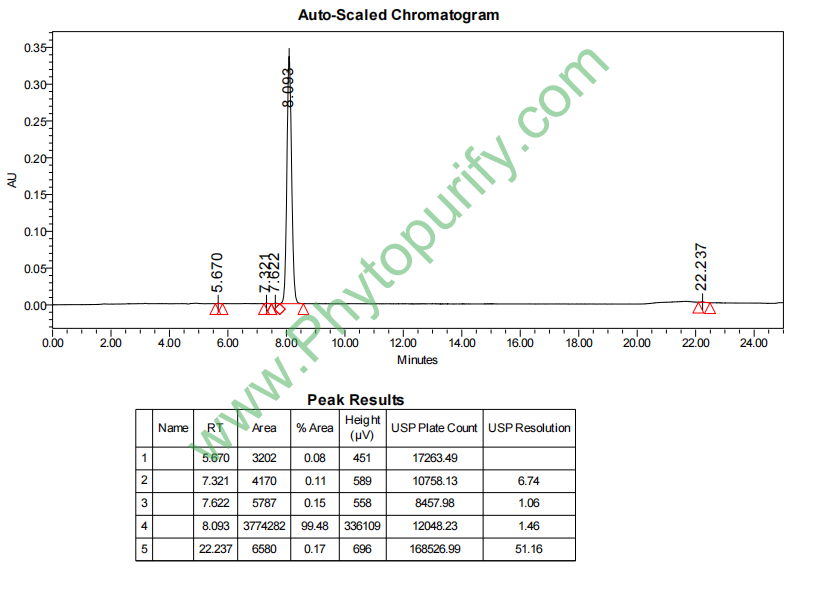
Analysis Method: HPLC-DAD or/and HPLC-ELSD
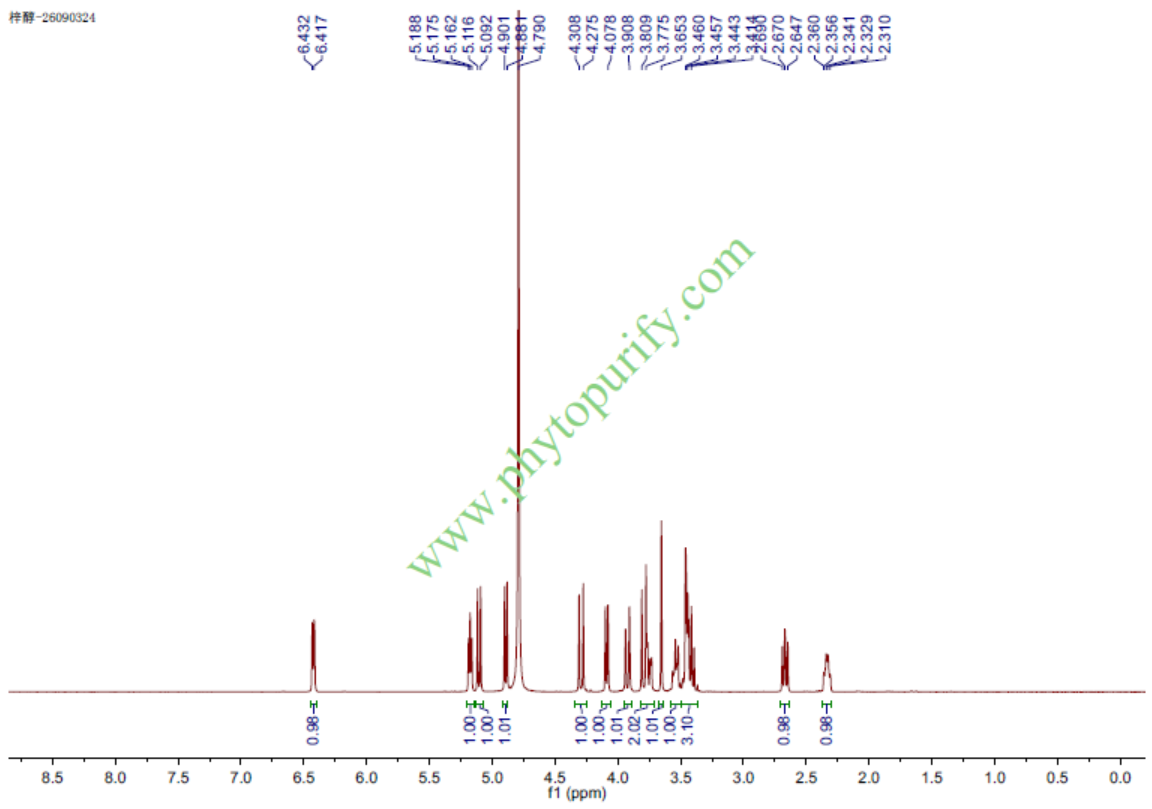
Identification Method: Mass, NMR
Packing: Brown vial or HDPE plastic bottle
Storage: Store in a well closed container, protected from air and light. Put into refrigerate or freeze for long term storage.
Whenever possible, you should prepare and use solutions on the same day. However, if you need to make up stock solutions in advance, we recommend that you store the solution as aliquots in tightly sealed vials at -20℃. Generally, these will be useable for up to two weeks.
The product could be supplied from milligrams to grams, up to kilograms
Inquire for bulk scale.
Descriptions:
Catalpol, an iridoid glucoside, has been reported to inhibit apoptosis of neuron and endothelial cells; the pretreatment of H9c2 cells with catalpol can be against H 2 O 2 -induced apoptosis, and the protective effect of catalpol involves the mitochondrial-dependent caspase pathway and is associated with increased Bcl-2 and decreased Bax expression.[1]
Catalpol has the neuroprotective effects of in lipopolysaccharide (LPS)-induced inflammatory models, it can prevent mesencephalic neuron death and ameliorate cognitive ability animals; catalpol can exert inhibitory effects on the inflammatory reaction in astrocytes and that inactivation of NF-κB could be the major determinant for its anti-inflammatory mechanism, therefore, it may potentially be a highly effective therapeutic agent in treating neurodegenerative diseases associated with inflammation.[2]
Catalpol exerts the most significant cytoprotective effect on astrocytes by suppressing the production of free radicals and elevating antioxidant capacity.[3]
Catalpol can increase presynaptic proteins and up-regulate relative signaling molecules in the hippocampus of the aged rats, it seems to indicate that catalpol might ameliorate age-related neuroplasticity loss by “normalizing” presynaptic proteins and their relative signaling pathways in the aged rats.[4]
References:
[1] Hu L A, Sun Y K, Zhang H S, et al. Bioscience Reports, 2016,36(3).
[2] Bi J, Jiang B, Zorn A, et al. Toxicol in Vitro, 2013, 27(2):543-50.
[3] Li Y, Bao Y, Bo J, et al. Int J Dev Neurosci, 2008, 26(3–4):309-17.
[4] Liu J, He Q J, Zou W, et al. Brain Res, 2006, 1123(1):68-79.
[5] Sun L L, Ren Y H, Chen H L, et al. China Pharmacy, 2013(04):374-5.
HPLC of Catalpol
HNMR of Catalpol
Storage conditions:Short-term storage at 2~8℃, long-term storage at -20 ~ -80℃
Catalpol, CAS number 2415-24-9, is an active ingredient mainly found in Rehmannia glutinosa, a plant of the Rehmannia genus. It belongs to the irisin class of compounds. As a typical monosaccharide, catalpol has attracted much attention in traditional Chinese medicine due to its significant pharmacological activity. In recent years, with the in-depth development of natural product pharmacology, catalpol has been widely studied because of its multi target and multi-channel biological activities, especially in neuroprotection, anti diabetes, anti-inflammatory, antioxidant, anti-cancer and anti hepatitis B virus (HBV), showing good application potential. This article provides a systematic review of the chemical structure and physicochemical properties, plant sources and extraction methods, pharmacological activity, mechanism of action, pharmacological evaluation, and clinical application prospects of catalpol, aiming to provide theoretical basis and research direction for the in-depth development and utilization of this natural product.
The chemical name of Zichun is Catalpinoside, with a molecular formula of C15H22O10 and a molecular weight of 362.33. Its structural feature is a cyclic monosaccharide moiety connected to a terpenoid skeleton, belonging to the typical iridoid glycosides. The LogP value of Zichun is about -2.5, indicating its strong hydrophilicity and good water solubility. Its topological polar surface area (TPSA) is as high as 189.9 Å ², and the number of hydrogen bond acceptors reaches 10, indicating that the molecule has strong polarity and more hydrogen bond donors/acceptors, which may affect its cell membrane permeability and bioavailability.
In terms of physical and chemical properties, catalpol has high polarity and good water solubility, but its blood-brain barrier penetration ability is low (BBB permeability is low), indicating that its direct action in the central nervous system is limited. In addition, Zichun has no significant hepatotoxicity, cardiotoxicity, or hERG channel inhibition effect, and the Ames mutagenicity test is negative, indicating its good safety and good pharmacological basis.
Zichun is mainly distributed in plants of the Rehmannia genus, especially in the roots of Rehmannia glutinosa. Shu Di Huang is a traditional Chinese medicinal herb widely used for nourishing yin and blood, regulating endocrine function, and anti-inflammatory effects. Zichun, as one of its main active ingredients, varies in content with plant growth stages and processing methods.
In terms of extraction methods, water extraction and alcohol precipitation are commonly used to extract from the dried roots of Rehmannia glutinosa. The specific steps include: crushing the dried Rehmannia glutinosa and extracting it with water or 70% ethanol reflux, concentrating the filtrate and adding ethanol to precipitate impurities, and then purifying it through multiple column chromatography (such as silica gel column, reverse phase C18 column) to obtain high-purity catalpol. In recent years, purification techniques combining ultrasound assisted extraction, microwave-assisted extraction, and high-performance liquid chromatography (HPLC) have been applied to improve extraction efficiency and purity.
Zichun has shown significant neuroprotective effects in various neurodegenerative disease models. In vitro and in vivo studies have shown that catalpol can alleviate oxidative stress in nerve cells, inhibit neuroinflammatory responses, and promote nerve regeneration. Its mechanism involves regulating apoptosis related signaling pathways, inhibiting the release of inflammatory factors, and enhancing antioxidant enzyme activity. For example, in the Parkinson's disease model, catalpol alleviates dopaminergic neuron damage by inhibiting reactive oxygen species (ROS) generation and regulating mitochondrial function.
Catalpol has been deeply studied in the field of anti diabetes. It activates the AMPK pathway, enhances insulin sensitivity, promotes glucose uptake and metabolism, and lowers blood glucose levels. In addition, catalpol can inhibit DPP4 activity, prolong the half-life of GLP-1, and promote insulin secretion. Its regulating effect on SGLT2 also helps to increase urinary glucose excretion and improve diabetes symptoms. Several animal experiments showed that catalpol significantly reduced fasting blood glucose and glycosylated hemoglobin levels in diabetes rats, and improved the function of pancreatic β cells.
Zichun can significantly inhibit the expression of inflammatory mediators such as TNF - α, IL-1 β, and IL-6, and alleviate the inflammatory response. Its antioxidant effect is mainly achieved by clearing free radicals, increasing the activity of antioxidant enzymes such as superoxide dismutase (SOD) and glutathione peroxidase (GSH Px). This type of effect makes Zichun show potential therapeutic value in various inflammatory disease models.
Zichun exhibits inhibitory effects on proliferation, induces apoptosis, and blocks cell cycle in various tumor cell lines. Its anti-cancer mechanism involves regulating signaling pathways such as PI3K/AKT, MAPK, and NF - κ B, inhibiting the migration and invasion ability of tumor cells. Some studies have also found that catalpol can enhance the sensitivity of chemotherapy drugs and has potential adjuvant therapeutic effects.
The anti spasmodic effect of Zichun in neurological diseases has also been reported, which may be related to its regulation of neurotransmitter release and neuronal excitability. Animal experiments have shown that Zichun can prolong the latency period of epileptic seizures and reduce the intensity of seizures.
Zichun has an inhibitory effect on HBV replication and can reduce the expression of HBV DNA and related antigens. Its antiviral mechanism may involve regulating host immune response and directly inhibiting viral replicase activity, providing new natural drug candidates for the treatment of hepatitis B.
The multiple pharmacological effects of catalpol are attributed to its regulation of multiple molecular targets, especially in the anti diabetes effect. The main targets include:
AMPK(PRKAA1)As a cellular energy sensor, the activation of AMPK promotes glucose uptake and lipid metabolism, and catalpol improves metabolic disorders by activating the AMPK pathway.
SGLT2 (Sodium Glucose Co Transporter 2)Zichun inhibits SGLT2, reduces renal glucose reabsorption, promotes urinary glucose excretion, and lowers blood sugar.
GCK (Glucokinase)Zichun promotes GCK activity and enhances the utilization of glucose by liver and pancreatic islet cells.
PPARG (Peroxisome proliferator activated receptor gamma)Regulating lipid metabolism and insulin sensitivity, Zichun improves insulin resistance by activating PPARG.
AKT1 Involved in insulin signaling, catalpol activates AKT1 to promote glucose transport and metabolism.
DPP4 (peptidyl dipeptidase 4)Zichun inhibits DPP4 activity, prolongs the action time of glucagon like peptide-1 (GLP-1), and enhances insulin secretion.
IRS1 (Insulin Receptor Substrate 1)Zichun promotes phosphorylation of IRS1 and enhances insulin signaling.
SLC2A4(GLUT4)Zichun promotes the transport of GLUT4 to the cell membrane and increases glucose uptake.
PIK3R1 (Phosphatidylinositol 3-kinase regulatory subunit)Participated in the insulin signaling pathway, catalpol regulates PI3K activity and promotes glucose metabolism.
In addition, Zichun exerts anti-inflammatory and antioxidant effects by regulating signaling pathways such as NF - κ B and MAPK. In terms of neuroprotection, Zichun regulates the expression of apoptosis related proteins (such as Bcl-2, Caspase-3) and reduces neuronal damage.
The pharmacological evaluation of Zichun shows that it has good safety and low risk of toxic side effects. Its molecular weight is moderate and its water solubility is good, but its LogP value is low, indicating insufficient lipid solubility, which may limit oral absorption and cell membrane penetration ability. The high number of TPSA and hydrogen bond receptors may further affect their bioavailability.
The low permeability of the blood-brain barrier limits its direct application in central nervous system diseases, but structural modification or nanocarrier technology is expected to improve its distribution in the brain. Pharmacokinetic studies in vivo have shown that Azichun is absorbed rapidly after oral administration, but its bioavailability is limited and it is mainly excreted through liver metabolism. No significant hepatotoxicity or cardiac toxicity has been observed.
Modern pharmaceutical technologies, such as liposomes, nanoparticles, and solid dispersions, are expected to improve the solubility and bioavailability of catalpol, promoting its clinical translation.
Zichun, as a multi-target natural active ingredient, has a wide range of pharmacological activities and good safety, and has the potential to become a new type of natural medicine. It is particularly prominent in the prevention and treatment of diabetes and its complications, and can be used as an auxiliary treatment drug or combined with existing drugs in the future. In addition, the potential application of Zichun in neurodegenerative diseases, tumors, and chronic inflammatory diseases is also worth further exploration.
Future research should focus on:
Zichun, as a natural product of irisin derived from Rehmannia plants, has shown broad research and application prospects due to its diverse pharmacological activities and good safety. Its potential in the fields of anti diabetes, neuroprotection, anti-inflammatory, antioxidant and anti-cancer has been confirmed by a large number of basic research. In the future, with the advancement of pharmaceutical technology and the deepening of clinical research, Zichun is expected to become an important candidate molecule for natural drug development, providing new strategies and choices for the treatment of related diseases. Continuous interdisciplinary collaboration and innovative research will drive Zichun from the laboratory to clinical practice, realizing its value in modern medicine.
