


Synonym name: Ajugol; Leonuride
Catalogue No.: BP0130
Cas No.: 52949-83-4
Formula: C15H24O9
Mol Weight: 348.348
Botanical Source: Ajuga reptans, Melittis melissophyllum, Rehmannia glutinosa and Leonurus cardiaca
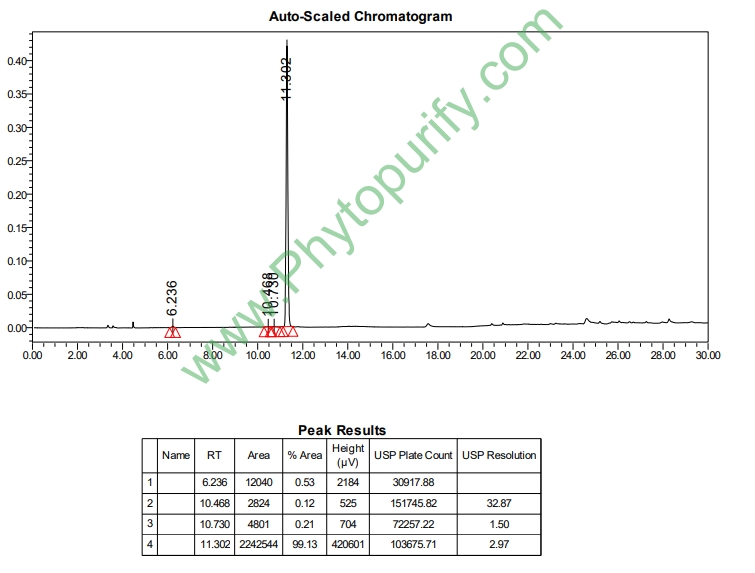
Purity: 95%~99%
Analysis Method: HPLC-DAD or/and HPLC-ELSD
Identification Method: Mass, NMR
Packing: Brown vial or HDPE plastic bottle
Can be supplied from milligrams to grams.
For Reference Standard and R&D, Not for Human Use Directly.
Inquire for bulk scale.
Description:
Ajugol shows some trypanocidal potential against Trypanosoma brucei rhodesiense (IC50 values 29.3–73.0 ug/ml).
References:
Phytochemistry, 2005, 66(3):355-62.Anti-protozoal and plasmodial FabI enzyme inhibiting metabolites of Scrophularia lepidota roots.
The ethanolic root extract of Scrophularia lepidota, an endemic plant of the Turkish flora, has been investigated for its anti-protozoal and inhibitory effect towards plasmodial enoyl-ACP reductase (FabI), a key enzyme of fatty acid biosynthesis in Plasmodium falciparum.
METHODS AND RESULTS:
Chromatographic separation of the extract yielded 10 iridoids (1-10), two of which are new, and a known phenylethanoid glycoside (11). The structures of the new compounds were determined as 3,4-dihydro-methylcatalpol (8) and 6-O-[4''-O-trans-(3,4-dimethoxycinnamoyl)-alpha-L-rhamnopyranosyl]aucubin (scrolepidoside, 9) by spectroscopic means. The remaining metabolites were characterized as catalpol (1), 6-O-methylcatalpol (2), aucubin (3), 6-O-alpha-L-rhamnopyranosyl-aucubin (sinuatol, 4), 6-O-beta-D-xylopyranosylaucubin (5), Ajugol (6), ajugoside (7), an iridoid-related aglycone (10) and angoroside C (11). Nine isolates were active against Leishmania donovani, with the new compound 9 being most potent (IC50 6.1 microg/ml). Except for 4, all pure compounds revealed some trypanocidal potential against Trypanosoma brucei rhodesiense (IC50 values 29.3-73.0 microg/ml). Only compound 10 showed moderate anti-plasmodial (IC50 40.6 microg/ml) and FabI enzyme inhibitory activity (IC50 100 microg/ml). 10 is the second natural product inhibiting the fatty acid biosynthesis of Plasmodium falciparum.
HPLC of Ajugol
Storage conditions:Short-term storage at 2~8℃, long-term storage at -20 ~ -80℃
165.7100
-2.5000
-2.5000
Low
No
No
No
No
No
No
Leonuride (CAS number: 52949-83-4) is an active ingredient derived from the traditional Chinese medicine Leonurus japonicus Houtt. It belongs to the complex structure of glycosides and cyclic terpenoids. Motherwort, as an important medicine for regulating menstruation, promoting blood circulation, diuresis and detumescence in traditional Chinese medicine, has been used clinically for hundreds of years. As one of its main active ingredients, motherwort glycoside has received widespread attention in the field of natural product pharmacology in recent years due to its significant cardiovascular protective effects and multi-target regulatory potential. This article aims to systematically review the chemical structure and physicochemical properties, plant sources and extraction methods, pharmacological activity and mechanism of action, pharmacological evaluation, and clinical application prospects of motherwort glycosides. It is expected to provide a theoretical basis and reference for further research and development of motherwort glycosides.
The molecular formula of motherwort glycoside is C17H24O9, with a molecular weight of 348.35 Da. Its structural feature is the binding of cyclohexene ether terpene monoterpene skeleton and glycoside part, with high polarity and a LogP value of about -2.5, indicating strong hydrophilicity. The TPSA (topological polar surface area) is as high as 165.71 Å ², indicating that its molecular surface has abundant polar groups, especially multiple hydroxyl and ether bonds. The number of hydrogen bond acceptors is 9, suggesting its strong ability to form hydrogen bonds in intermolecular interactions. The structure of motherwort glycoside contains multiple oxygen atoms, endowing it with good solubility and potential biological activity. Its low blood-brain barrier permeability (BBB Low) suggests that the compound is difficult to enter the central nervous system, which may limit its application in central nervous system diseases, but is beneficial for reducing central nervous system related side effects.
Leonurus glycosides are mainly present in the entire plant of Leonurus, especially in the leaves and inflorescence parts with high content. Leonurus is a perennial herbaceous plant in the family Lamiaceae, widely distributed in East Asia, especially in China, Japan, and South Korea. Traditionally, motherwort has been used in traditional Chinese medicine for regulating meridians, promoting blood circulation, and diuresis. The extraction and separation techniques of its active ingredients have been continuously improved.
The common methods for extracting motherwort glycosides include water extraction, alcohol extraction, and supercritical CO2 extraction. The water extraction method is simple and in line with traditional Chinese medicine processing techniques, but the purity is relatively low. Alcohol extraction (such as ethanol or methanol) can improve the extraction rate and purity of motherwort glycosides. In modern research, high-performance liquid chromatography (HPLC) combined with column chromatography technology is used to separate and purify extracts, ensuring the purity and activity of motherwort glycosides. In recent years, the application of microwave-assisted extraction and ultrasound assisted extraction technologies has significantly improved the extraction efficiency and stability of active ingredients.
Leonurus glycosides have various pharmacological activities, especially showing significant protective effects in the cardiovascular system. Numerous in vitro and in vivo studies have shown that motherwort glycosides can regulate myocardial cell function, improve myocardial ischemia-reperfusion injury, and have antioxidant, anti-inflammatory, anti fibrotic, and vascular function regulating effects.
Cardiovascular protective effect
Leonurus glycosides enhance myocardial cell energy metabolism and alleviate ischemic injury by activating the AMPK signaling pathway. In addition, its improving effect on vascular endothelial function helps maintain vascular tension and prevent atherosclerosis. Leonurus glycosides can also inhibit platelet aggregation, improve hemorheological properties, and reduce the risk of thrombosis.
Antioxidant and anti-inflammatory effects
Leonurus glycosides significantly enhance the activity of the NFE2L2 (Nrf2) signaling pathway, strengthen cellular antioxidant defense capabilities, and reduce cellular damage caused by oxidative stress. Meanwhile, motherwort glycosides inhibit the expression of various pro-inflammatory factors, alleviate inflammatory reactions, and protect cardiovascular tissues from chronic inflammatory damage.
Regulating metabolism and glucose and lipid metabolism
Motherwort glycoside has potential anti diabetes and lipid regulating effects by regulating the activity of PTPN1 (protein tyrosine phosphatase 1B) and improving insulin signal transduction, which is helpful to prevent and treat cardiovascular diseases related to metabolic syndrome.
Other functions
The regulation of targets such as BACE1 and PRKCA by motherwort glycosides suggests that they may play a role in neuroprotection and cell signaling, but related research is still in its preliminary stage.
The pharmacological effects of motherwort glycoside involve multiple signaling pathways and molecular targets, reflecting its multi-target and multi pathway characteristics.
AMPK(PRKAA1)
As a key regulatory factor of cellular energy metabolism, the activation of AMPK promotes lipid metabolism and glucose metabolism. Leonurus glycosides improve myocardial energy supply and alleviate ischemic injury by activating AMPK.
NFE2L2(Nrf2)
Nrf2 is a core transcription factor for antioxidant stress, and motherwort glycoside enhances Nrf2 nuclear translocation and downstream antioxidant enzyme expression, reduces ROS levels, and protects cardiovascular cells.
PTPN1
PTPN1, as a negative regulator of insulin signaling, is inhibited by motherwort glycoside, which helps improve insulin sensitivity and regulate metabolic balance.
BACE1
BACE1 is mainly involved in the cleavage of β - amyloid precursor proteins, and the regulation of it by motherwort glycosides suggests potential neuroprotective effects.
PRKCA
Protein kinase C α is involved in various cellular signal transduction pathways, and motherwort glycoside regulates its activity, affecting cell proliferation and apoptosis.
SELP (P-selectin)
Leonurus glycosides reduce the interaction between platelets and endothelial cells by inhibiting SELP expression, thereby lowering the risk of thrombosis.
ESR2 (estrogen receptor beta)
Leonurus glycosides may exert meridian regulation, blood circulation and cardiovascular protection effects by regulating ESR2.
APEX1、AKR1B1、SHBG
These targets involve DNA repair, aldose reductase activity, and sex hormone binding, and the regulation of motherwort glycosides may expand their pharmacological scope of action.
Leonurus glycosides have good safety and medicinal characteristics. Its molecular weight is moderate, and although its LogP is low, it shows strong hydrophilicity, which is beneficial for its distribution and solubility in the blood. The high number of TPSA and hydrogen bond receptors indicates certain limitations in membrane permeability, especially with lower blood-brain barrier permeability, reducing potential toxicity to the central nervous system.
Toxicological evaluation showed that motherwort glycoside had no significant hepatotoxicity, cardiotoxicity, or hERG channel inhibition, and the Ames mutagenicity test was negative, indicating a low risk of genetic toxicity. Pharmacokinetic studies have shown that motherwort glycoside is well absorbed orally, but its bioavailability is limited by its polarity and metabolic stability. Metabolism in the body is mainly carried out through the liver enzyme system, and the metabolites need further identification. The half-life of motherwort glycoside is moderate and suitable for daily administration.
Leonurus glycosides have great potential in the prevention and treatment of cardiovascular diseases, especially in the adjuvant therapy of coronary heart disease, myocardial ischemia, arrhythmia, and hypertension. Its multi-target regulatory mechanism helps to comprehensively improve cardiovascular function and reduce pathological damage. In addition, the antioxidant and anti-inflammatory effects of motherwort glycoside provide a theoretical basis for its application in chronic diseases.
In the future, the clinical development of motherwort glycosides needs to focus on the following directions:
Formulation optimization and administration route
Develop oral sustained-release formulations or targeted drug delivery systems to improve bioavailability and targeting.
Clinical trial validation
Conduct phase I-III clinical trials of the system to clarify its safety, efficacy, and indications.
Drug interaction research
Given the multi-target effects of motherwort glycoside, it is necessary to evaluate its interaction with commonly used cardiovascular drugs to ensure the safety of combination therapy.
Structural optimization and derivative development
Design and synthesize derivatives with higher activity and pharmacokinetic advantages based on the structure of motherwort glycoside.
Expansion of indications for multiple diseases
Explore the potential applications of motherwort glycosides in metabolic syndrome, neurodegenerative diseases, and other fields.
As an important active ingredient in motherwort, motherwort glycosides have shown broad application prospects in the field of cardiovascular disease prevention and treatment due to their unique chemical structure and multi-target pharmacological effects. Its good safety and pharmacological properties have laid a solid foundation for its clinical development. In the future, through in-depth mechanism research, pharmacokinetic optimization, and clinical validation, motherwort glycoside is expected to become an important candidate molecule in the development of natural product drugs, bringing new treatment options for cardiovascular disease patients.
