Storage conditions:Short-term storage at 2~8℃, long-term storage at -20 ~ -80℃
313.4400
-.4850
-.4908
7.7030
.4556
.0824
Low
73.0305
5.3525
No
No
No
No
No
No
0.0
Yes
No
Yes
Yes
Natural products, as an important source of drug discovery, play an irreplaceable role in the history of human health maintenance and disease treatment. Rehmannia glutinosa(Rehmannia glutinosa Libosch.), As a medicinal herb with a long history of application and high frequency of use in traditional Chinese medicine, its medicinal value has long been widely recognized. Rehmannia glutinosa has a cold nature and is skilled in clearing heat, cooling blood, nourishing yin, and generating fluids; After processing, Radix Rehmanniae Praeparata has a slightly warm nature and is good at nourishing yin and blood, nourishing essence and filling marrow. Modern pharmacological research has revealed that Rehmannia glutinosa and its processed products contain various active ingredients, including iridoid glycosides, phenylethanoid glycosides, sugars, and amino acids. Among them, phenylethanoid glycosides have increasingly become a research hotspot due to their significant biological activities, such as antioxidant, anti-inflammatory, neuroprotective, and immune regulatory effects.
Jionoside A1, as a representative phenylethanoid glycoside isolated and identified from Rehmannia glutinosa, has attracted widespread attention in the academic community due to its unique chemical structure and potential pharmacological activity. This compound was first isolated and named by Japanese scholars from Rehmannia glutinosa in the late 1980s to early 1990s. The term 'Jiaodihuang' in its name does not refer to another plant, but rather originates from the unique roasted aroma produced by the traditional technique of 'nine steaming and nine sun drying' during the processing of Rehmannia glutinosa, as well as the extremely low content of this compound in raw Rehmannia glutinosa, mainly existing in the processed Rehmannia glutinosa. The discovery of Jionoside A1 not only enriches the chemical composition library of Rehmannia glutinosa, but more importantly, it provides a key molecular basis for interpreting the modern scientific connotation of its traditional effects such as nourishing yin and blood, nourishing essence and filling marrow.
Existing research indicates that Jionoside A1 exhibits multifaceted pharmacological potential, particularly its dose-dependent immune enhancing activity and neuroprotective effect against oxidative stress damage, making it an attractive application prospect in the fields of immune regulation and prevention and treatment of neurodegenerative diseases. This article aims to systematically review the chemical structure, physicochemical properties, plant origin, extraction process, pharmacological activity, mechanism of action, medicinal properties, and clinical application prospects of Jionoside A1, in order to provide comprehensive and professional references for the in-depth research and development of this natural product.
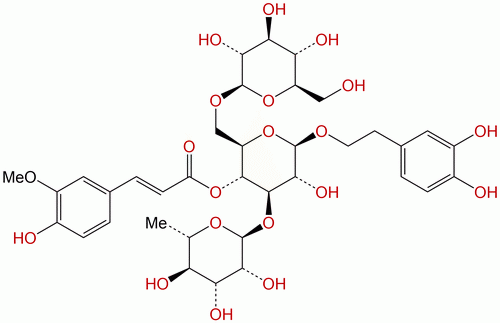
Jionoside A1 belongs to the phenylethanoid glycoside class of compounds, and its chemical structure exhibits typical characteristics of this class of compounds. This type of compound typically consists of three parts: a phenylethanol aglycone (i.e. hydroxyphenylethanol, such as tyrosol or hydroxytyrosol), a β - D-glucopyranosyl group connected by glycosidic bonds, and one or more aromatic acids (such as caffeic acid, ferulic acid, etc.) connected to the glucose group by ester bonds. The complete chemical name of Jionoside A1 is usually β - (3,4-dihydroxyphenyl) ethyl-O - α - L-rhamnopyranosyl - (1 → 3) - β - D-glucopyranosyl - (1 → 6) -4-O-caffeoyl - β - D-glucopyranoside. Its structural analysis shows that its sugar chain is composed of three sugar units: an inner layer of β - D-glucose, an outer layer of α - L-rhamnose, and a terminal β - D-glucose connected by (1 → 6) glycosidic bonds. The caffeoyl group is connected to the C-4 hydroxyl group of the inner glucose layer through ester bonds. The complex sugar chain structure and the presence of polyphenolic hydroxyl groups endow Jionoside A1 with unique physicochemical properties.
From the perspective of physical and chemical properties, the molecular weight of Jionoside A1 is 800.7600 Da, which belongs to a medium to large molecule. The LogP of its lipid water partition coefficient is -0.4850, indicating that the compound has strong hydrophilicity and high solubility in water (with a water solubility parameter of 7.7030 mg/mL). This characteristic is closely related to the presence of multiple hydroxyl and sugar moieties in its molecular structure. High water solubility is beneficial for its absorption and distribution in the body, but may also limit its ability to penetrate biofilms. Its polar surface area (TPSA) is as high as 313.4400 Å ², far exceeding the recommended upper limit of 140 Å ² for oral medications, further confirming its strong polarity and low membrane permeability. In addition, it is predicted that the compound has a "low" blood-brain barrier (BBB) penetration ability, which is consistent with its high polarity and large molecular weight, indicating that it is difficult to freely enter the central nervous system through the blood-brain barrier under physiological conditions. In terms of early safety assessment, computer simulation predictions show that Jionoside A1 has no inhibitory effect on hERG potassium ion channels (hERG inhibition: no), and the result in Ames test is negative (0.0), indicating that its cardiac toxicity and mutagenicity risk are low, and it has preliminary safety characteristics. These physicochemical parameters provide important reference for subsequent drug development strategies, such as dosage form design, route of administration selection, and structural modification direction.
The plant source of Jionoside A1 has high specificity, mainly derived from the Scrophulariaceae plant Rehmannia glutinosa(Rehmannia glutinosa The processed product of Libosch's root tubers - Radix Rehmaniae Praeparata. It is worth noting that the content of Jionoside A1 is extremely low and even difficult to detect in fresh or dried raw Rehmannia glutinosa. Its formation and accumulation mainly depend on the processing, especially the traditional "nine steaming and nine sun drying" or modern commonly used processing methods such as "steaming" and "stewing with wine". During the processing, high temperature, humidity, and enzyme action can promote structural transformation of the primary glycosides in Rehmannia glutinosa (such as acteoside, also known as leaf like gastrodin), such as sugar transfer, hydrolysis and rearrangement of ester bonds, ultimately resulting in the formation of secondary glycosides such as Jionoside A1. Therefore, differences in processing techniques, such as steaming time, temperature, and whether alcohol is added, can significantly affect the content of Jionoside A1 in Rehmannia glutinosa. This also explains why there are significant differences in the content of this component in Rehmannia glutinosa medicinal materials from different sources.
The extraction of Jionoside A1 usually follows the classic process of natural product chemistry and is optimized based on its high polarity. The typical extraction process includes: crushing the dried Radix Rehmanniae herb, using polar solvents (such as methanol, ethanol, or ethanol water mixtures in different ratios) for heating reflux extraction or ultrasound assisted extraction. Due to the high polarity of Jionoside A1, high concentrations of ethanol (such as 70% -80% ethanol) or methanol are often used as extraction solvents to improve the dissolution efficiency of target components. After filtration and vacuum concentration of the extract, crude extract is obtained. Subsequently, the crude extract was preliminarily separated using liquid-liquid extraction method (such as sequentially extracting with petroleum ether, ethyl acetate, and n-butanol), and Jionoside A1 was mainly enriched in the n-butanol extraction layer due to its strong polarity.
Further separation and purification are highly dependent on modern chromatographic techniques. Positive phase silica gel column chromatography (using chloroform methanol water system as the mobile phase) is a commonly used method for preliminary separation. Subsequently, reverse phase column chromatography (such as ODS C18 column, using methanol water or acetonitrile water system gradient elution) can effectively remove impurities with similar polarity. For the separation of highly structurally similar phenylethanoid glycosides (such as Jionoside A2, B1, etc.), preparative high-performance liquid chromatography (HPLC) is a key technique for obtaining high-purity Jionoside A1 monomers. In recent years, new liquid-liquid distribution chromatography techniques such as high-speed countercurrent chromatography (HSCCC) have also been successfully applied to the separation of glycosides in Rehmannia glutinosa, with advantages such as high sample recovery and avoidance of irreversible adsorption. Finally, the isolated compound was structurally identified using techniques such as nuclear magnetic resonance spectroscopy (NMR) and mass spectrometry (MS), confirming its identity as Jionoside A1. Establishing a stable, efficient, and scalable extraction and purification process is the foundation for ensuring the subsequent pharmacological research and drug development of Jionoside A1.
The pharmacological activity research of Jionoside A1 is currently in its early stages, but existing research results have revealed its significant potential in immune regulation and neuroprotection, and have preliminarily demonstrated other possible biological effects.
1. Immune enhancement activity
This is one of the earliest reported pharmacological activities of Jionoside A1. Research has found that Jionoside A1 can enhance the proliferation response of mouse splenic lymphocytes in a dose-dependent manner. In vitro experiments, Jionoside A1 can significantly promote lymphocyte transformation and proliferation when co cultured with T cell mitogens (such as ConA) or B cell mitogens (such as LPS). In addition, it can enhance the activity of natural killer cells (NK cells) and promote the production of cytokines such as interleukin-1 (IL-1) and tumor necrosis factor alpha (TNF - α) by macrophages. These results suggest that Jionoside A1 may exert a positive immune regulatory effect by activating multiple immune cells, providing a modern pharmacological explanation for the traditional belief that Rehmannia glutinosa can "nourish yin and blood" and "strengthen the body and consolidate the foundation". Its immune enhancing activity may be related to its antioxidant properties, which protect immune cells from oxidative damage by clearing free radicals and maintaining their normal function.
2. Neuroprotective activity
Neuroprotection is currently the most focused area of research in Jionoside A1. Multiple studies have confirmed that Jionoside A1 has a protective effect on various neurotoxic models. Especially, in the hydrogen peroxide (H ₂ O ₂) - induced oxidative stress damage model of human neuroblastoma SH-SY5Y cells, Jionoside A1 pretreatment can significantly improve cell survival rate, reduce lactate dehydrogenase (LDH) release rate, and decrease intracellular accumulation of reactive oxygen species (ROS). This protective effect exhibits a certain dose dependence, but at high concentrations, the protective effect may tend to stabilize or slightly decrease. In addition, Jionoside A1 has been reported to alleviate neurotoxicity induced by β - amyloid protein (A β) and improve learning and memory impairment induced by scopolamine in mice. These findings strongly suggest that Jionoside A1 has potential value in the prevention and treatment of neurodegenerative diseases such as Alzheimer's disease (AD) characterized by oxidative stress, A β deposition, and cognitive decline.
3. Other potential activities
In addition to the main activities mentioned above, preliminary studies also suggest that Jionoside A1 may have other biological effects. For example, based on the commonality of its phenylethanoid glycosides, it may exhibit certain anti-inflammatory activity by inhibiting the production of inflammatory mediators such as nitric oxide (NO) and prostaglandin E2 (PGE2). In addition, its antioxidant activity may also extend to the cardiovascular system, providing protection against myocardial ischemia-reperfusion injury and other conditions. However, research in these areas is not yet in-depth and requires further verification and exploration.
The molecular mechanisms by which Jionoside A1 exerts its pharmacological activity are multifaceted, mainly revolving around its ability to resist oxidation, apoptosis, and regulate key signaling pathways. Based on existing research and computer-aided prediction, its mechanism of action is closely related to multiple key protein targets.
1. Antioxidant stress and Nrf2/ARE pathway
The strong neuroprotective effect of Jionoside A1 is closely related to its direct antioxidant activity and activation of the cellular endogenous antioxidant defense system. The multiple phenolic hydroxyl groups in its molecular structure are effective free radical scavengers. More importantly, studies have shown that Jionoside A1 can activate the nuclear factor E2 related factor 2 (NFE2L2, also known as Nrf2) signaling pathway. Nrf2 is a key transcription factor that regulates cellular oxidative stress response. Under normal conditions, Nrf2 binds to Keap1 and is anchored in the cytoplasm. When subjected to oxidative stimulation or drug induction, Nrf2 dissociates from Keap1, translocates into the nucleus, binds to antioxidant response elements (ARE), and initiates the expression of downstream antioxidant enzyme genes, such as heme oxygenase-1 (HO-1), quinone oxidoreductase 1 (NQO1), superoxide dismutase (SOD), and glutathione peroxidase (GPx). Jionoside A1 significantly enhances the endogenous antioxidant capacity of cells by activating the Nrf2/ARE pathway, thereby effectively combating damage caused by oxidants such as H ₂ O ₂. This mechanism is the core of its neuroprotective effect.
2. Anti apoptosis and mitochondrial protection
Oxidative stress often leads to mitochondrial dysfunction, which in turn triggers cell apoptosis. Jionoside A1 can inhibit apoptosis by regulating Bcl-2 family proteins. B-cell lymphoma 2 (BCL2) protein is a key anti apoptotic protein, while Bax and others are pro apoptotic proteins. Research has found that treatment with Jionoside A1 can upregulate the expression of BCL2 and downregulate the expression of Bax, thereby maintaining the stability of mitochondrial membrane potential (Δ PSI m) and preventing the release of cytochrome c from mitochondria into the cytoplasm. The release of cytochrome c activates the Caspase cascade reaction, in which Caspase-9 (CASP9) is the starting Caspase of the mitochondrial apoptosis pathway. Jionoside A1 inhibits the activation of CASP9, thereby suppressing downstream Caspase-3 and ultimately blocking the execution of apoptosis. Therefore, regulating the BCL2/Bax ratio and inhibiting CASP9 activity are key molecular events for Jionoside A1 to exert anti apoptotic effects.
3. Regulating AD related pathological proteins
The mechanism of action of Jionoside A1 in Alzheimer's disease involves multiple AD marker pathological proteins. Firstly, it may affect the processing of amyloid precursor protein (APP). APP produces neurotoxic A β peptide after being cleaved by β - secretase 1 (BACE1). Research has shown that Jionoside A1 may reduce the production of A β and alleviate the neurotoxicity caused by A β deposition by downregulating the expression or activity of BACE1. Secondly, the excessive phosphorylation of microtubule associated protein Tau (MAPT) is another core pathological feature of AD. Jionoside A1 may affect the phosphorylation level of Tau protein by regulating the activity of glycogen synthase kinase-3 β (GSK3B). GSK3B is one of the main kinases that catalyze the phosphorylation of Tau protein. Jionoside A1 may stabilize microtubule structure and protect neuronal cytoskeleton by inhibiting the activity of GSK3B and reducing abnormal phosphorylation of Tau protein. In addition, Jionoside A1 can activate silencing information regulatory factor 1 (SIRT1), a deacetylase associated with longevity and neuroprotection. The activation of SIRT1 can enhance mitochondrial function, alleviate oxidative stress, and may regulate the activity of other target proteins (such as p53 and PGC-1 α) through deacetylation, exerting a comprehensive neuroprotective effect.
4. Integration of signaling pathways
The role of Jionoside A1 is not to act on a single target in isolation, but to achieve its biological effects by integrating multiple signaling pathways. For example, mitogen activated protein kinase 1 (MAPK1, ERK2) is a key member of the MAPK signaling pathway, involved in cell proliferation, differentiation, and survival. Jionoside A1 may promote cell survival signaling by activating the MAPK/ERK pathway. At the same time, its activation of Nrf2 and SIRT1, as well as inhibition of GSK3B and BACE1, work together to form a network that resists oxidative stress, A β toxicity, and Tau protein lesions. This multi-target and multi pathway mode of action is precisely the advantage of natural products in exerting overall regulatory effects, and also makes them have unique potential in treating complex diseases such as AD.
To move Jionoside A1 from laboratory research to clinical application, a systematic evaluation of its drug like and pharmacokinetic (ADME) properties is necessary. Based on its physicochemical properties and preliminary prediction results, the pharmacological properties of Jionoside A1 have both advantages and challenges.
1. Pharmaceutical advantages
- A good start to security As mentioned earlier, computer predictions show that Jionoside A1 has no hERG inhibitory activity (low risk of cardiac toxicity) and negative Ames test (no mutagenicity), which lays a good foundation for its safety evaluation. As a natural product, its long-term safety may be relatively high.
- Clear pharmacological activity It has demonstrated clear and reproducible activity in immune enhancement and neuroprotection, especially its multi-target mechanism of action, which is in line with current treatment strategies for complex diseases such as AD.
- Good water solubility High water solubility (7.7030 mg/mL) is beneficial for making it into injectable or oral liquid formulations, avoiding many problems encountered in the development of poorly soluble drugs.
2. Challenges in drug development
- Low oral bioavailability This is the main challenge faced by Jionoside A1. Its high molecular weight (800.76 Da) and extremely high polarity (LogP=-0.485, TPSA=313.44 Å ²) seriously violate Lipinski's "Five Rules" (molecular weight>500, LogP>5, hydrogen bond donor>5, hydrogen bond acceptor>10, Jionoside A1 violates at least three rules). High polarity makes it difficult for it to penetrate the lipid bilayer of intestinal epithelial cells, resulting in extremely low oral absorption rate. In addition, the glycosidic and ester bonds in its structure are easily hydrolyzed by enzymes or acids in the gastrointestinal tract, leading to their degradation before reaching the target, resulting in poor metabolic stability.
- Poor blood-brain barrier penetration Predicting its BBB penetration ability as' low 'is a huge obstacle for it to exert neuroprotective effects. Even if administered by injection, the drug is difficult to effectively enter the central nervous system (CNS) and reach an effective therapeutic concentration. How to improve its CNS delivery efficiency is the key bottleneck in developing it into a neuroprotective drug.
- Metabolic instability In addition to gastrointestinal metabolism, Jionoside A1 is also easily metabolized by esterases and glycosidases in the liver and blood. The caffeoyl and glycosyl parts are the main metabolic sites, and the metabolites may lose their original activity or produce unknown toxicity.
3. Pharmacokinetic characteristics (speculation and outlook)
At present, there is very limited experimental data on the pharmacokinetics of Jionoside A1 in vivo. Based on its physicochemical properties and research on similar compounds such as acteoside, it can be inferred that:
- absorb Poor oral absorption, absolute bioavailability may be less than 1%. Intravenous injection may be an effective way to achieve systemic exposure.
- distribution Due to its high polarity, it is mainly distributed in extracellular fluid and blood, with limited tissue distribution, especially in the CNS where distribution is extremely rare.
- Metabolism Experiencing extensive first pass metabolism in the intestine and liver. The main metabolic pathways include hydrolysis of glycosides (removal of xylose and glucose), hydrolysis of ester bonds of caffeoyl groups (generation of caffeic acid and glycosides), as well as phase II metabolic reactions such as methylation, sulfation, and glucuronidation.
- excretion Metabolites are mainly excreted through urine and bile.
4. Improvement strategy
Given the above challenges, the development of Jionoside A1 in the future must adopt innovative strategies:
- Structural modification Through prodrug design, such as esterification or etherification modification of phenolic hydroxyl or sugar groups, their lipid solubility and metabolic stability can be improved. For example, preparing acetylated derivatives or phosphate prodrugs, releasing the original drug after enzymatic hydrolysis in vivo.
- New drug delivery system Using nanotechnology such as liposomes, polymer nanoparticles, solid lipid nanoparticles, etc., Jionoside A1 is encapsulated to enhance its oral absorption and CNS targeted delivery. Especially, nanoparticles with surface modified transferrin receptor or glucose transporter ligands are expected to cross the BBB.
- Non oral administration route Develop transdermal drug delivery systems, nasal drug delivery systems (which can bypass the BBB and directly enter the CNS), or long-acting injectable formulations.
- Combination therapy Combined with absorption enhancers (such as P-glycoprotein inhibitors) or metabolic enzyme inhibitors to enhance their bioavailability.
Although Jionoside A1 faces many challenges in drug development, its unique pharmacological activity, especially in terms of neuroprotection and immune regulation, paints a broad prospect for its clinical application. Future research should focus on overcoming its pharmacokinetic bottlenecks and exploring its therapeutic value in specific disease areas.
1. Neurodegenerative diseases
This is the most promising application direction for Jionoside A1. It is an ideal candidate molecule for treating diseases such as Alzheimer's disease (AD) and Parkinson's disease (PD) through its multi-target effects of antioxidant, anti apoptotic, and regulation of APP/ACE1 and Tau/GSK3B pathways. In the future, if a delivery system that can effectively penetrate the BBB (such as nasal administration or targeted nanoparticles) can be successfully developed, Jionoside A1 is expected to become a novel Disease Modifying Therapy (DMT) that not only alleviates symptoms but also delays disease progression. In addition, its protective effect on cerebral ischemia-reperfusion injury also suggests its potential value in stroke treatment.
2. Immune regulation and adjuvant therapy for tumors
The dose-dependent immune enhancing activity of Jionoside A1 makes it valuable for the recovery of immunocompromised states (such as after radiotherapy and chemotherapy, old age and weakness, chronic infections). It can serve as an immune adjuvant to enhance the immune response of vaccines. In the field of tumor therapy, although Jionoside A1 itself may not have direct cytotoxicity, its powerful immune enhancing effect can be used for tumor immunotherapy, for example, as an adjuvant drug for immune checkpoint inhibitors (such as PD-1/PD-L1 inhibitors), by activating the body's own anti-tumor immune response and improving treatment efficacy. In addition, its antioxidant properties may also alleviate the damage of radiotherapy and chemotherapy to normal tissues.
3. Anti aging and health care
Oxidative stress is one of the core driving forces of aging. Jionoside A1 enhances the body's antioxidant defense ability by activating the Nrf2 pathway, theoretically having the potential to delay aging. Combined with its immunomodulatory effects, it may become a promising anti-aging health product or functional food ingredient. However, this requires long-term, large-scale clinical studies to confirm its safety and effectiveness.
4. Future research directions
- In depth mechanism research Using gene knockout/knock in animal models, CRISPR-Cas9 technology, etc., accurately verify the direct interaction between Jionoside A1 and key targets such as Nrf2, SIRT1, GSK3B, etc. Conduct research in systems biology and network pharmacology to comprehensively reveal their functional networks.
- Pharmacokinetic optimization This is currently the most urgent task. A systematic in vivo ADME study of Jionoside A1 and its metabolites is required. Focus on developing CNS targeted delivery systems based on nanotechnology or prodrug strategies, and conduct in vivo pharmacological validation.
- toxicological evaluation Although early prediction of safety is good, systematic acute, subchronic, and chronic toxicity studies, including reproductive toxicity, genetic toxicity, etc., are still needed to comprehensively evaluate its safety.
- Study on Structure Activity Relationship Systematically synthesize a series of derivatives of Jionoside A1, study the relationship between structural characteristics such as sugar group quantity, connection mode, and caffeoyl position and neuroprotective and immunomodulatory activities, and provide guidance for finding lead compounds with stronger activity and better drug properties.
- Clinical translational research After completing sufficient preclinical studies, rigorous clinical trials should be designed, starting with safety, tolerability, and pharmacokinetics (Phase I), gradually exploring their preliminary efficacy in AD patients or immunocompromised populations (Phase II).
Jionoside A1, a representative phenylethanoid glycoside isolated from traditional Chinese medicine Rehmannia glutinosa, has a unique chemical structure and distinct physicochemical properties. The existing pharmacological research has fully revealed its dose-dependent immune enhancing activity and protective effect on oxidative stress-induced neuronal damage, and preliminarily elucidated its multi-target mechanism of action by activating the Nrf2/ARE antioxidant pathway, regulating Bcl-2 family anti apoptotic proteins, intervening in AD related pathological proteins such as APP/ACE1 and Tau/GSK3B. These findings not only provide modern scientific explanations for the traditional efficacy of Rehmannia glutinosa, but also indicate that Jionoside A1 has important potential application value in the prevention and treatment of neurodegenerative diseases and immune regulation.
However, the pharmacological research of Jionoside A1 is still in its infancy. Its inherent defects such as high molecular weight, high polarity, low oral bioavailability, and poor blood-brain barrier penetration are the core challenges it faces in transitioning from laboratory to clinical practice. Future research must focus on improving pharmacokinetic properties, overcoming these bottlenecks through strategies such as structural modification and development of novel drug delivery systems. At the same time, deeper mechanism research, systematic toxicological evaluation, and rigorous structure-activity relationship analysis will lay a solid foundation for the final clinical translation of Jionoside A1.
In summary, Jionoside A1 is a natural product molecule that combines the essence of traditional Chinese medicine with the charm of modern pharmacology. Despite the numerous challenges ahead, its unique biological activity and mechanism of action make it a highly valuable and promising lead compound for research and development. With the deepening of interdisciplinary research, especially the collaborative innovation of medicinal chemistry, nanomedicine, and neuroscience, we have reason to believe that Jionoside A1 and its derivatives have the potential to contribute to human health in the future, especially in tackling complex and stubborn diseases such as neurodegenerative diseases, and contribute to the power of traditional wisdom.
Batch can search by a CAS number,one per line