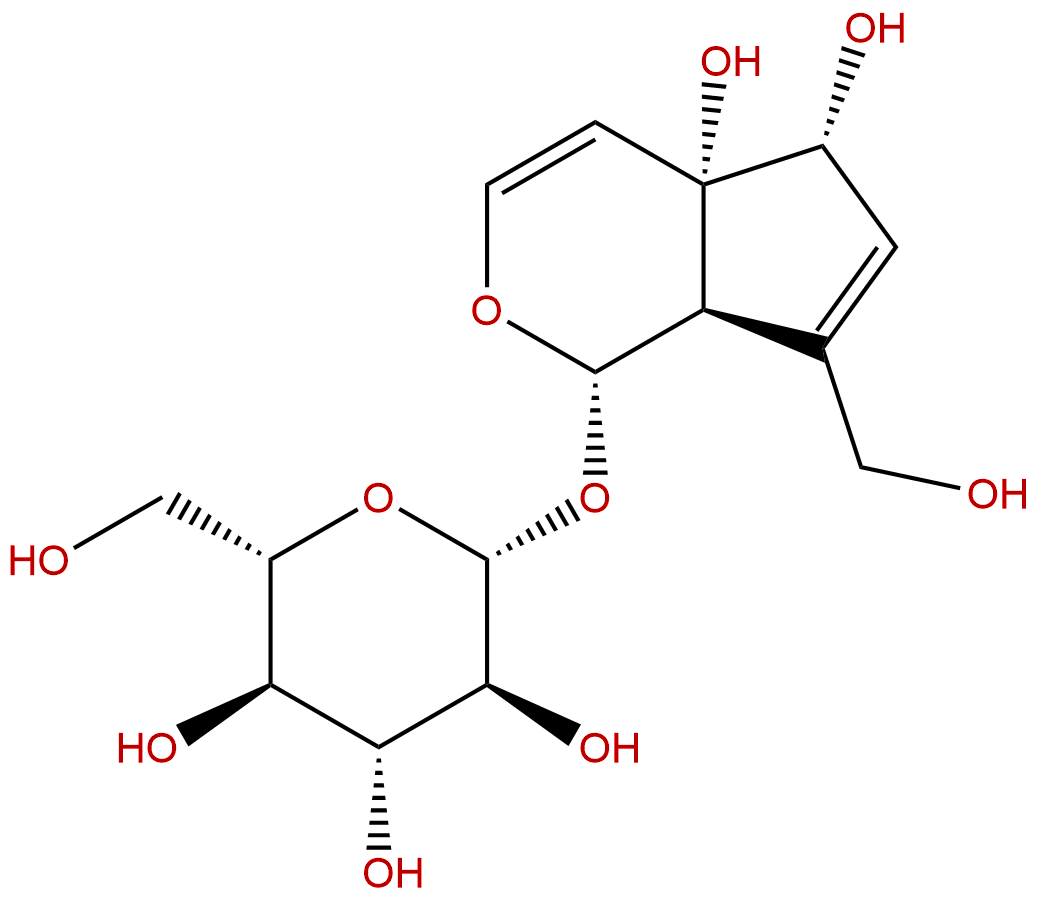


Product name: Monomelittoside
Synonym name: Danmelittoside
Catalogue No.: BP3106
Cas No.: 20633-72-1
Formula: C15H22O10
Mol Weight: 362.331
Botanical Source:
Physical Description:
Type of Compound:
Purity: 95%~99%
Analysis Method: HPLC-DAD or/and HPLC-ELSD
Identification Method: Mass, NMR
Packing: Brown vial or HDPE plastic bottle
The product could be supplied from milligrams to grams. Inquire for bulk scale.
We provide solution to improve the water-solubility of compounds, thereby facilitating the variety of activity tests and clinic uses.
For Reference Standard and R&D, Not for Human Use Directly.
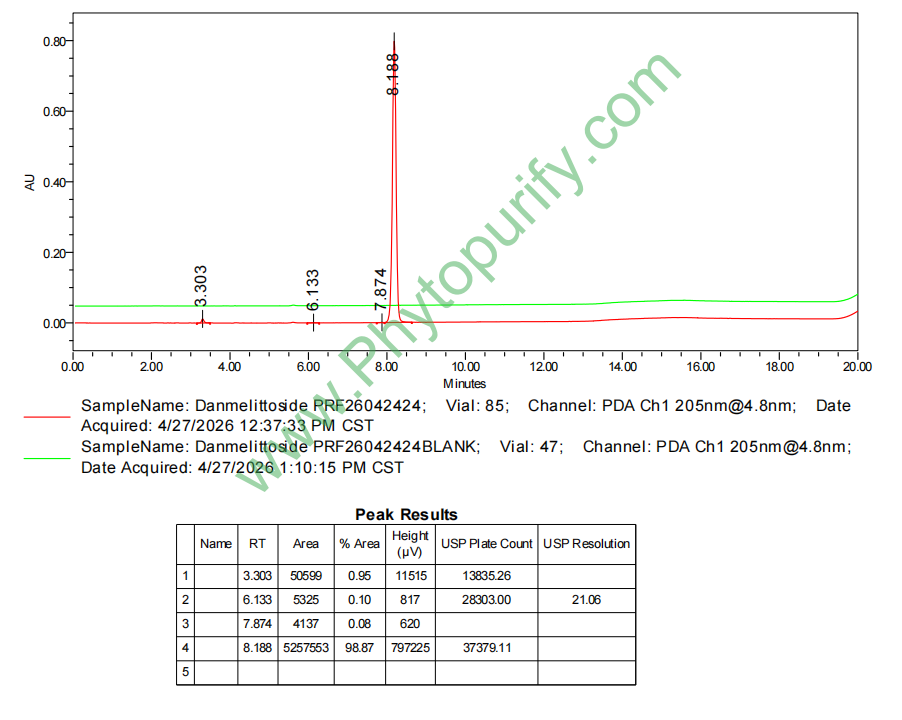
HPLC of Monomelittoside
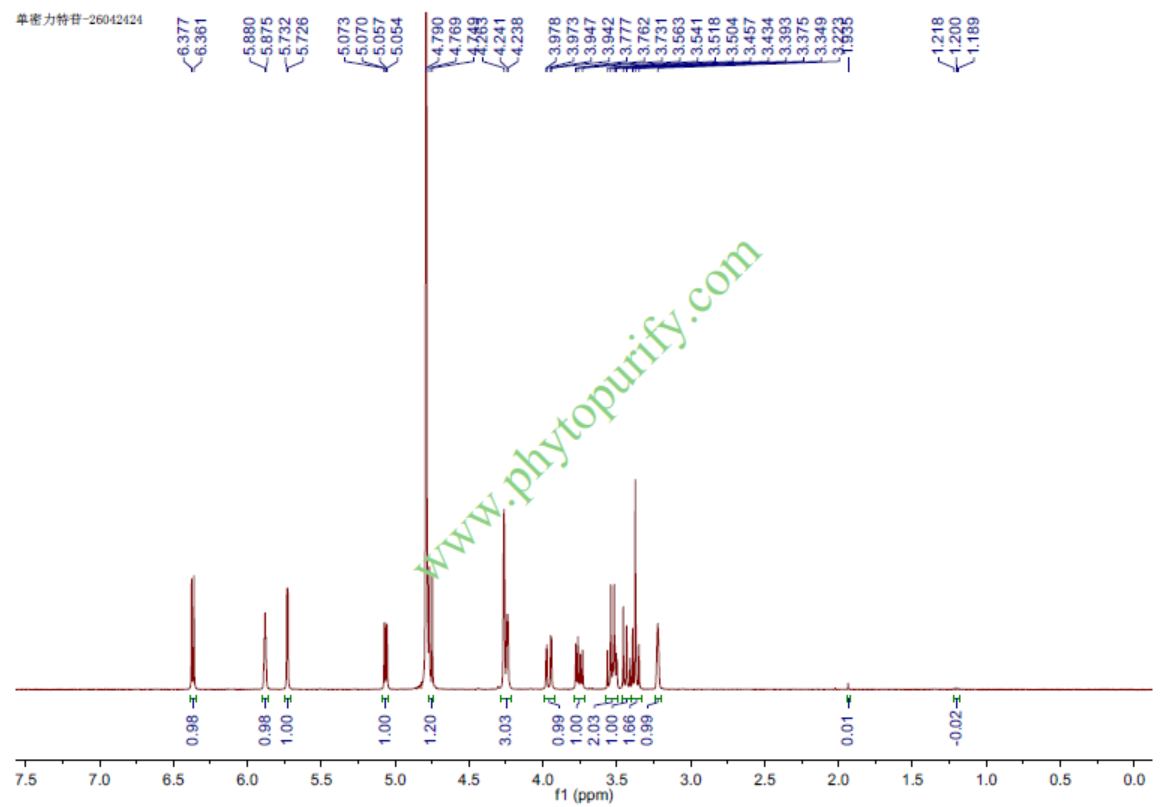
HNMR of Monomelittoside
Storage conditions:Short-term storage at 2~8℃, long-term storage at -20 ~ -80℃
169.3000
-1.7779
-1.7779
53.3318
.4362
.5275
Low
26.3661
5.0707
Yes
No
No
No
Yes
No
0.0
Yes
Yes
Yes
Yes
In the broad field of natural product chemistry and pharmacology research, glycoside compounds have attracted much attention due to their structural diversity and extensive biological activity. Danmelitoside (CAS number: 20633-72-1), as a natural glycoside with unique pharmacological potential, has gradually entered the field of researchers in recent years. Its research value mainly stems from its multi-target and multi-channel regulatory potential in cardiovascular system protection. Cardiovascular diseases (CVDs) are the leading cause of death and disability worldwide, and their pathological process involves multiple links such as endothelial dysfunction, inflammatory response, lipid metabolism disorders, oxidative stress, etc. Although current first-line clinical drugs are effective, there are still limitations such as side effects, drug resistance, and inability to fully intervene in complex pathological networks. Therefore, discovering lead compounds from natural products that can intervene in cardiovascular pathological processes with multiple targets has important scientific significance and application prospects. The preliminary study of monomeric acid glycoside revealed its potential association with multiple key cardiovascular protective targets (such as SELP, HMGCR, PPARG, ACE, NOS3, etc.), suggesting that it may exert comprehensive protective effects through multiple mechanisms such as anti-inflammatory, lipid-lowering, improving endothelial function, and regulating blood pressure. This article aims to provide a systematic review of the chemical structure, plant origin, pharmacological activity, mechanism of action, medicinal properties, and clinical application prospects of monomeric glycosides, in order to provide comprehensive academic references for the in-depth research and development of this compound.
The molecular formula of monomeric acid glycoside is C ₁₅ H ₂₂ O ₁₀, with a molecular weight of 362.3310. Structurally, it belongs to the class of iridoid glycosides or glycosides with similar structures. Its basic skeleton typically consists of a cyclic glycoside (possibly a monoterpene or sesquiterpene derivative) connected to one or more glycosides (most commonly glucose) through glycosidic bonds. This structural feature determines its unique physicochemical properties.
According to the provided pharmacological parameters, the logarithmic value (LogP) of the lipid water partition coefficient of monomeric acid glycoside is -1.7779, indicating that the compound has a high degree of hydrophilicity, which is consistent with the structural characteristics of the molecule containing multiple hydroxyl and sugar groups. Its topological polar surface area (TPSA) is as high as 169.3000 Å ², further confirming the presence of a large number of polar atoms (such as oxygen atoms) in the molecule, which are key sites for forming hydrogen bonds. High hydrophilicity and large polar surface area typically indicate weak passive diffusion ability of compounds in biological membranes, especially lipid bilayers.
Its water solubility data is 53.3318 (usually measured in mg/mL or μ M, indicating good solubility), which is consistent with its hydrophilic properties and facilitates its dissolution and distribution in aqueous media such as body fluids. However, high hydrophilicity and large TPSA also pose challenges to its bioavailability, especially after oral administration, which may limit its absorption across gastrointestinal epithelial cells. In addition, its blood-brain barrier (BBB) permeability is predicted to be "low", mainly due to its high polarity, relatively high molecular weight, and possible lack of active transport mechanisms, making it difficult for it to enter the central nervous system. This may actually reduce the potential risk of central nervous system side effects for drugs that mainly act on the peripheral cardiovascular system.
In terms of preliminary safety prediction, hERG inhibition is' no ', which is a positive signal that suggests that at conventional concentrations, monomyxin may not inhibit the rapid delayed rectifier potassium channel (encoded by the hERG gene) in the heart, thereby reducing the risk of severe cardiac toxicity such as induced acquired long QT syndrome and apical torsion ventricular tachycardia. The Ames test prediction value is 0.0, which is usually interpreted as no mutagenicity alert in the prediction model, but final confirmation is required through real in vitro and in vivo experiments.
Monomyricetin is mainly isolated from certain medicinal plants. Although its name "Danmelittoside" implies that it may be associated with certain specific plant genera (such as...)Dan or Melittis Related to plants, but there are relatively limited detailed reports on their specific plant sources in existing public literature. According to the distribution pattern of iridoid glycosides, they are likely to exist in plant families such as Lamiaceae, Plantaginaceae, Rubiaceae, or Caprifoliaceae. These plants are often used in traditional medicine to treat fever, inflammation, and related diseases, indirectly supporting the possibility that their components may have biological activity.
The extraction of monomeric glycosides from plant materials usually follows the general extraction and separation process for natural glycosides. Firstly, polar solvents are used for extraction. Due to its good water solubility, water, methanol, ethanol, or mixed solvents of methanol water and ethanol water in different proportions are commonly used extraction media. Heating reflux extraction, ultrasound assisted extraction, or microwave-assisted extraction can be used to improve extraction efficiency.
After filtration and concentration, the crude extract needs to be further separated and purified to obtain high-purity monomeric acid glycoside. Liquid liquid extraction (such as solvent fractionation extraction with ethyl acetate, n-butanol, etc.) is commonly used to preliminarily enrich the target components. Subsequently, column chromatography is the core purification method, including normal silica gel column chromatography, reverse silica gel (such as C18) column chromatography, gel (such as Sephadex LH-20) column chromatography, etc. High performance liquid chromatography (HPLC), especially preparative or semi preparative HPLC, is a key technology for obtaining chromatographically pure monomeric glycosides. It often uses a reverse phase C18 column and gradient elution with methanol water or acetonitrile water as the mobile phase.
During the extraction process, attention should be paid to controlling temperature, pH value, and light to avoid hydrolysis of glycosidic bonds or structural changes of glycosides. The structural identification of compounds comprehensively utilizes various spectroscopic methods such as nuclear magnetic resonance (NMR, including ¹ H, ¹ ³ C, 2D-NMR), mass spectrometry (MS, such as ESI-MS, HRMS), infrared spectroscopy (IR), and ultraviolet spectroscopy (UV).
The pharmacological activity research of monomeric acid glycoside is currently mostly in the in vitro and animal model stages, with the core focus on cardiovascular protection. Preliminary evidence shows that it has multiple beneficial effects.
1. Anti inflammatory and endothelial protective activity: Inflammatory reaction and endothelial cell activation are the initial and core links of cardiovascular diseases such as atherosclerosis. Monomyxin may inhibit the adhesion and migration of white blood cells to activated endothelial cells by downregulating the expression of intercellular adhesion molecule-1 (ICAM1) and vascular cell adhesion molecule-1 (VCAM1). Meanwhile, its potential regulatory effect on P-selectin (SELP) may further inhibit the initial rolling and aggregation of platelets and white blood cells at the site of inflammation. These effects help alleviate inflammation infiltration and damage to the vascular wall.
2. Lipid regulation and anti atherosclerosis potential: 3-hydroxy-3-methylglutaryl-CoA reductase (HMGCR) is the rate limiting enzyme in cholesterol biosynthesis and a classic target of statins. If monomeric glycosides have HMGCR inhibitory activity, they may reduce endogenous cholesterol synthesis, thereby lowering plasma total cholesterol and low-density lipoprotein cholesterol (LDL-C) levels. In addition, its potential regulation of peroxisome proliferator activated receptor gamma (PPARG) may affect adipocyte differentiation, lipid metabolism, and glucose homeostasis, providing cardiovascular protection from the perspective of metabolic syndrome.
3. Blood pressure regulation and improvement of vascular function: Angiotensin converting enzyme (ACE) is a key enzyme in the renin angiotensin aldosterone system (RAAS), catalyzing the conversion of angiotensin I to the potent vasoconstrictor angiotensin II. Inhibiting ACE activity is a commonly used antihypertensive strategy in clinical practice. If mononucleoside is an ACE inhibitor, it may reduce the production of angiotensin II, dilate blood vessels, and lower blood pressure. More importantly, its potential positive regulation of endothelial nitric oxide synthase (NOS3) may promote the production of nitric oxide (NO). NO is an important endothelial derived relaxing factor that can relax vascular smooth muscle, inhibit platelet aggregation and vascular smooth muscle cell proliferation, and is crucial for maintaining vascular homeostasis.
4. Myocardial protection and signal pathway regulation: Protein kinase B (AKT1) is a core signaling node for cell survival, proliferation, and metabolism. Activation of the AKT1 signaling pathway can inhibit cell apoptosis and promote cell survival in pathological processes such as myocardial ischemia/reperfusion injury. Monomyricetin may exert a direct protective effect on myocardial cells by activating the AKT1 pathway. In addition, its potential effects on the β 2-adrenergic receptor (ADRB2) and human ether - à - go related gene potassium channel (KCNH2, encoding hERG channel) suggest that it may affect the contractility and electrophysiological characteristics of the heart, but the specific effects (excitation or antagonism) need to be experimentally verified, and its predictive property of "no hERG inhibition" reduces the risk of arrhythmia.
The cardiovascular protective effect of monomeric glycosides is not achieved through a single target, but involves a complex multi-target network that synergistically acts on different pathological stages of the disease. Based on existing information, the possible mechanisms of action and molecular targets are summarized as follows:
1. Anti inflammatory and endothelial stabilization pathways:
- Target: SELP, ICAM1, VCAM1. Monomyxin may downregulate the gene expression of adhesion molecules by inhibiting the activation of inflammatory key transcription factors such as nuclear factor kappa B (NF - κ B). The first line of defense against atherosclerosis is to reduce the adhesion of leukocytes to endothelial cells and directly reduce the inflammatory reaction of vascular wall and endothelial dysfunction.
2. Cholesterol synthesis inhibition pathway:
- Target: HMGCR. It may inhibit the enzymatic activity of HMGCR through competition or other means, block the mevalonate pathway, and reduce the synthesis of cholesterol precursors. This is similar to the mechanism of action of statins and is a classic pathway for reducing plasma cholesterol levels.
3. Integrated regulation of metabolism and inflammation:
- Target: PPARG. PPAR γ is a ligand activated transcription factor. Monomyricetin may act as a partial agonist or modulator of PPAR γ, activating and forming heterodimers with retinol X receptor (RXR) to regulate gene expression related to lipid metabolism, glucose homeostasis, and inflammatory response, exerting comprehensive benefits such as anti-inflammatory and insulin sensitivity enhancement.
4. Blood pressure regulation and vasodilation pathway:
- Target: ACE, NOS3.
- ACE inhibition: Directly binding to the active site of ACE, inhibiting the production of angiotensin II, thereby weakening its induced vasoconstriction, aldosterone release, and pro fibrotic effects.
- NOS3 activation: Possible activation through phosphorylation (such as through upstream AKT1 signaling) or increased expression may promote the conversion of L-arginine to NO and L-citrulline. NO diffuses into smooth muscle cells, activates guanylate cyclase, increases cGMP levels, and leads to vasodilation.
5. Cell survival and protective pathways:
- Target: AKT1. In response to oxidative stress, ischemia, and other injuries, monomyxin may activate the phosphatidylinositol 3-kinase (PI3K)/AKT1 signaling pathway. Activated AKT1 phosphorylates and inhibits pro apoptotic proteins such as Bad and Caspase-9, while regulating glycogen synthase kinase-3 β (GSK-3 β), mammalian rapamycin target protein (mTOR), etc., promoting cell survival, protein synthesis, and energy metabolism, providing direct protection to cardiomyocytes and endothelial cells.
6. Cardiac function regulation targets:
- Target: ADRB2, KCNH2. The action (excitation or antagonism) of ADRB2 may affect the chronotropic and inotropic effects of the heart, and specific research is needed. The absence of significant inhibition of KCNH2 (hERG) is a favorable feature of its cardiac safety, avoiding the risk of drug-induced arrhythmia.
In summary, monomeric glycosides may regulate multiple key pathways such as inflammation, lipid metabolism, vascular tone, endothelial function, and cell survival through "network pharmacology", forming a synergistic network of action. This is more comprehensive in addressing the complex pathophysiological processes of cardiovascular disease than single target drugs.
Based on its physicochemical parameters and preliminary predictions, a preliminary evaluation of the pharmacological properties of monomeric acid glycoside is conducted
Advantage:
1. Good safety prediction: The absence of hERG inhibition and Ames mutagenicity alert reduces the common risks of cardiac toxicity and genetic toxicity in early development.
2. Good water solubility: Good water solubility is beneficial for making injections or ensuring dissolution in oral formulations.
3. Clear and diverse targets: Acting on multiple validated cardiovascular disease targets, it has the potential for multi effect therapy.
Challenges and research questions:
1. Oral absorption may be poor: The high hydrophilicity (low LogP) and large polar surface area (high TPSA) severely limit its ability to cross biofilms through passive diffusion. Oral bioavailability may be low. Strategies include developing prodrugs (such as esterification to increase lipid solubility), using absorption enhancers, or considering non oral routes of administration (such as injection, sublingual, etc.).
2. Metabolism and stability: As glycoside compounds, they may be hydrolyzed by β - glucosidase and other enzymes in the gastrointestinal tract and circulation, leading to the release of glycosides. The activity, toxicity, and pharmacokinetic behavior of aglycones may differ from those of the prototype glycoside and require comprehensive research. It is necessary to investigate its metabolic stability in liver microsomes and identify the main metabolites.
3. Distribution characteristics: The blood-brain barrier has low permeability, which can reduce side effects for drugs that are not essential for central action, but attention should be paid to their distribution in peripheral tissues.
4. Excretion: Highly hydrophilic compounds are usually rapidly excreted by the kidneys, which may result in a short half-life and require frequent administration. It is necessary to study its excretion pathways (kidney, bile) and dynamics.
Pharmacokinetic (PK) research requirements: Currently, there is a lack of systematic in vivo PK data. Future research needs to collect plasma and tissue samples at different time points after administration in animal models (rats, mice, etc.), and use LC-MS/MS and other methods to quantitatively analyze the concentration time curves of the prototype drug and its main metabolites. The key PK parameters include peak time (Tmax), peak concentration (Cmax), half-life (t1/2), area under the drug time curve (AUC), apparent volume of distribution (Vd), and clearance rate (CL). These data are the basis for evaluating its dosing regimen, dosage form design, and conducting pharmacological association analysis.
As a multi target natural lead compound for cardiovascular protection, monomiletide has broad clinical application prospects, but it also faces a series of challenges from laboratory to clinical transformation.
Potential application directions:
1. Primary/Secondary Prevention of Cardiovascular Diseases: Its comprehensive effects of anti inflammation, lipid regulation and improving endothelial function make it suitable for early intervention of atherosclerosis to prevent myocardial infarction and stroke.
2. Adjuvant treatment for hypertension: The potential ACE inhibition and NO promotion mechanisms may make it a monotherapy for mild hypertension patients or a combination with existing antihypertensive drugs to enhance efficacy and reduce side effects.
3. Metabolic syndrome management: Regulating glucose and lipid metabolism through targets such as PPARG may be beneficial for hypertensive or obese patients with insulin resistance and dyslipidemia.
4. Protection against myocardial ischemia-reperfusion injury: Based on its cardioprotective mechanisms such as AKT1 activation, it may be developed as a protective drug for use before and after cardiac surgery and percutaneous coronary intervention (PCI).
Development Strategy and Prospects:
1. In depth mechanism research: The current target associations are mostly predicted or preliminarily validated, requiring the use of molecular docking, surface plasmon resonance (SPR), enzyme activity inhibition experiments, gene knockout/knockdown techniques, etc., to confirm their direct interactions with various targets and downstream signaling pathway changes at the cellular and molecular levels.
2. Strengthen pharmacological evaluation: The efficacy and safety of long-term administration of the drug were systematically evaluated in the atherosclerosis model of ApoE ⁻/⁻ mice fed with high-fat diet more similar to human diseases, the spontaneously hypertensive rat (SHR) model, and the myocardial ischemia/reperfusion animal model.
3. Optimize drug properties:
- Structural modification: Under the premise of retaining the pharmacophore, chemical modification of glycosides or glycosides is carried out to improve their lipid solubility, metabolic stability, and oral bioavailability.
- Formulation innovation: Develop nano formulations (such as liposomes, polymer nanoparticles), self microemulsion delivery systems (SMEDS), or cyclodextrin inclusion complexes to enhance their solubility, promote absorption, delay release, or target delivery to vascular lesions.
4. Exploring combination therapy: Studying the synergistic effect of monotherapy with existing statins, ACEIs, or antiplatelet drugs may achieve equivalent efficacy at lower doses, thereby reducing the side effects of each monotherapy.
5. Conduct preclinical safety evaluation: After completing sufficient pharmacological and pharmacokinetic studies, a systematic safety evaluation of acute toxicity, long-term toxicity, reproductive toxicity, genetic toxicity, etc. must be conducted in accordance with the Good Laboratory Practice (GLP) requirements to support clinical trial applications (IND).
Monomyricetin is a glycoside compound with significant cardiovascular protection potential discovered from natural treasure trove. Its unique value lies in its ability to synergistically intervene in multiple key targets such as SELP, HMGCR, PPARG, ACE, NOS3, AKT1 from multiple dimensions, including anti-inflammatory, lipid-lowering, blood pressure lowering, improvement of endothelial function, and protection of myocardial cells, which perfectly meets the intervention needs of the complex pathological network of cardiovascular disease. Although its excellent theoretical activity and preliminary safety predictions are encouraging, current research is still in its early stages. The inherent high hydrophilicity of it leads to challenges in drug development, especially oral absorption barriers, which are the core bottlenecks that must be overcome in future translational research. Reasonable structural optimization through modern medicinal chemistry methods, combined with the application of novel drug delivery systems, is expected to significantly improve its pharmacokinetic properties. At the same time, in-depth elucidation of the mechanism of action and rigorous preclinical efficacy and safety evaluation are indispensable steps to promote its clinical application. In summary, as a promising multi-target lead compound, monomeric acid provides new candidate molecules and ideas for the development of novel, safe, and efficient cardiovascular disease prevention and treatment drugs. Its subsequent research deserves continuous attention and investment.
