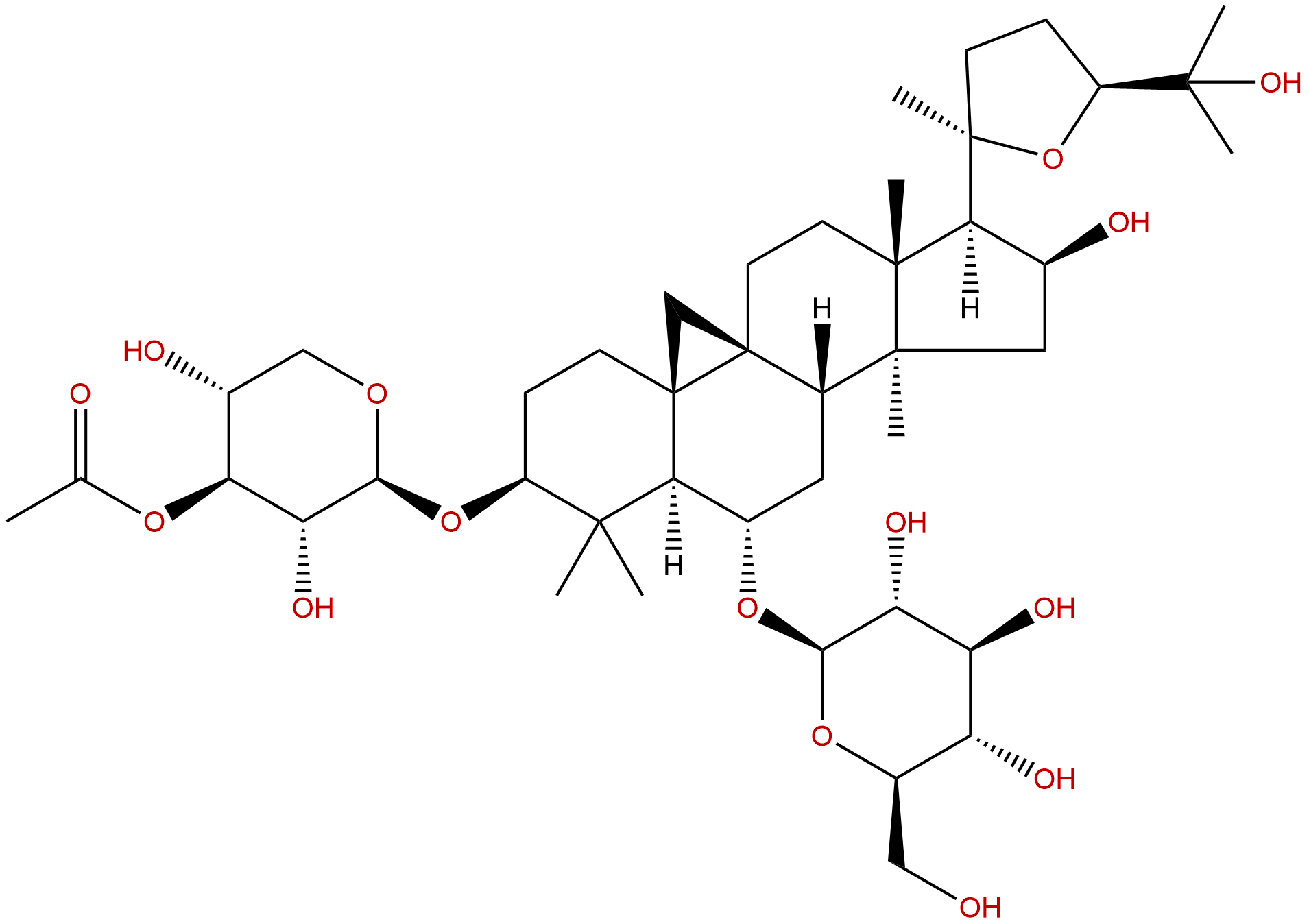


Product name: Isoastragaloside II
Synonym name: Astrasieversianin VII
Catalogue No.: BP1630
Cas No.: 86764-11-6
Formula: C43H70O15
Mol Weight: 827.018
Botanical Source: Astragalus membranaceus
Physical Description: Powder
Type of Compound: Triterpenoids
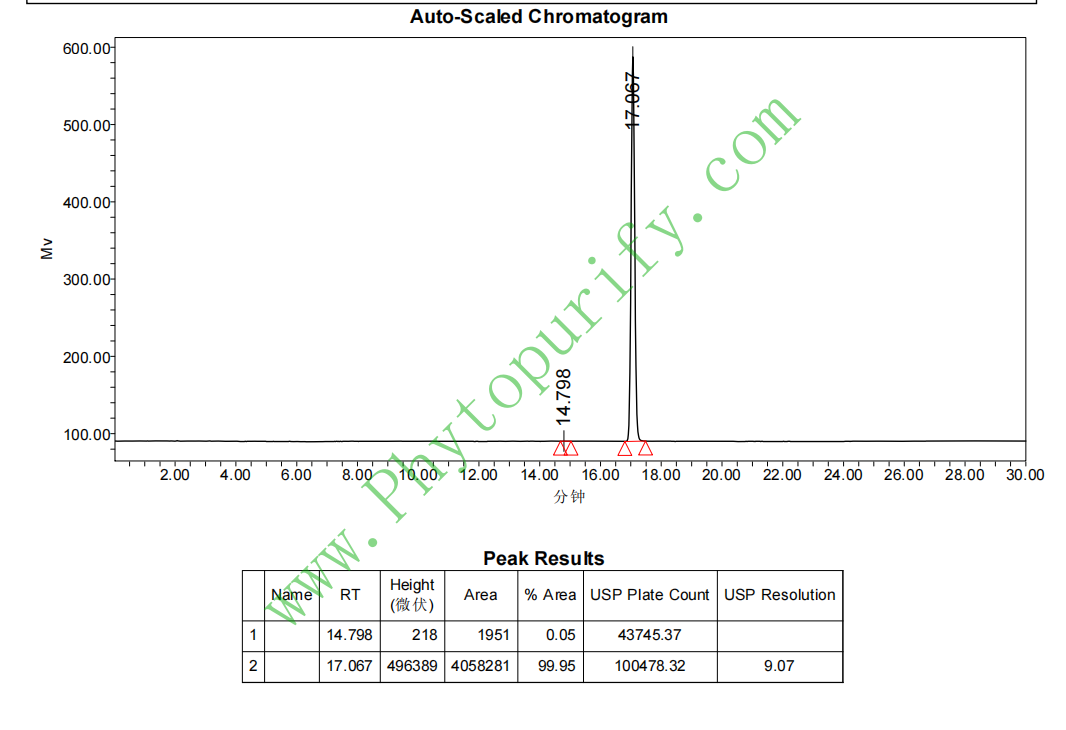
Purity: 95%~99%
Analysis Method: HPLC-DAD or/and HPLC-ELSD
Identification Method: Mass, NMR
Packing: Brown vial or HDPE plastic bottle
The product could be supplied from milligrams to grams. Inquire for bulk scale.
We provide solution to improve the water-solubility of compounds, thereby facilitating the variety of activity tests and clinic uses.
For Reference Standard and R&D, Not for Human Use Directly.
HPLC of Isoastragaloside II
Storage conditions:Short-term storage at 2~8℃, long-term storage at -20 ~ -80℃
234.2900
2.3899
2.3899
.0711
.6318
.4710
Low
71.3844
6.9010
No
No
No
No
No
No
0.0
Yes
No
No
No
Natural products, as an important source of drug discovery, have always played a crucial role in the long history of human fight against diseases. Among them, the medicinal plant Astragalus membranaceus(Astragalus membranaceus (Fisch.) Bge., as a traditional Chinese medicine essential for "tonifying qi", has increasingly highlighted its modern pharmacological value. Astragaloside IV compounds are one of the core active ingredients of Astragalus membranaceus, which exert a wide range of pharmacological effects such as immune regulation, anti-inflammatory, anti-tumor, and cardiovascular protection. Isoastragaloside II (CAS No.: 86764-11-6), as an important member of astragaloside A family, has attracted great attention from natural product pharmacology researchers in recent years due to its remarkable activity and multi-target mechanism in the field of anti-tumor, especially breast cancer. Compared with the classic Astragaloside IV (also known as Astragaloside IV), there are differences in the chemical structure of Astragaloside II, which may lead to its unique biological activity spectrum and pharmacological properties. The purpose of this paper is to systematically review the chemical structure, plant sources and extraction methods of Isoastragaloside II, focus on its pharmacological activity in anti breast cancer and other potential diseases, deeply analyze its mechanism of action and molecular target network, and comprehensively evaluate and prospect its pharmaceutical properties, pharmacokinetic characteristics and clinical application prospects, in order to provide a comprehensive scientific reference for the in-depth research and future drug development of this compound.
Astragaloside II is a triterpenoid saponin compound with a molecular formula of C41H68O14 and a molecular weight of 827.0180. Its core structure is cycloastragaloside, which belongs to the lanolane type tetracyclic triterpenoid. Compared with the common Astragaloside IV (Astragaloside IV), Isoastragaloside II exhibits isomerization at the sugar linkage position, manifested by different connection sites or configurations of its sugar chain (usually glucose, xylose, etc.). This subtle structural difference profoundly affects its physicochemical properties and biological activity.
From the analysis of physical and chemical properties, the lipid water partition coefficient (LogP) of Astragaloside II is 2.3899, indicating that the compound has a certain lipophilicity but is not highly lipophilic. Its topological polar surface area (TPSA) is as high as 234.2900 Å ², mainly attributed to the abundant hydroxyl and sugar structures in the molecule, which are key sites for hydrogen bonding. Higher TPSA values are usually associated with poorer cell membrane permeability. Its water solubility parameter is 0.0711, belonging to the category of slightly soluble or poorly soluble in water. This seems to contradict its typical surfactant properties as a saponin compound, suggesting that its dissolution behavior in water may be complex, possibly forming micelles or depending on solvent systems. Based on its LogP and TPSA values, it can be preliminarily predicted that its oral bioavailability may face challenges and needs to be improved through pharmaceutical methods. In addition, its blood-brain barrier permeability is predicted to be "low", indicating that it may have difficulty entering the central nervous system to exert its effects. In terms of early safety indicators, the data showed no risk of hERG potassium channel inhibition (hERG inhibition: No) and the Ames test result was 0.0, indicating a low potential risk of cardiac toxicity and genetic toxicity, providing a favorable safety starting point for its further development.
Isoastragaloside II is mainly derived from various plants of the Astragalus genus in the legume family, including Astragalus membranaceus(Astragalus membranaceus)Mongolian Astragalus membranaceus(Astragalus mongholicus)It is a traditional and primary source. In the natural roots of Astragalus membranaceus, the content of Astragaloside II is usually low and is significantly affected by factors such as origin, harvest season, and processing method, which poses difficulties for large-scale acquisition and standardized research.
In order to overcome natural resource limitations and achieve sustainable production, modern biotechnology provides efficient solutions. As described in the compound description, isoastragaloside II can be isolated from "hairy root culture of Astragalus membranaceus". The hairy root culture technique utilizes Agrobacterium tumefaciens to cultivate roots(Agrobacterium rhizogenes)Infecting plant tissues induces the production of hairy roots that are genetically stable, rapidly growing, and capable of synthesizing secondary metabolites. By optimizing the cultivation conditions (such as medium composition, inducer addition, cultivation temperature, pH value, etc.), the yield and yield of isoastragaloside II in Astragalus membranaceus hairy roots can be significantly increased, achieving controllable and large-scale production of the compound, avoiding the damage to the ecological environment and quality instability caused by field collection.
Solvent extraction method is commonly used to extract astragaloside II from plant materials or hairy root cultures. Common solvents include methanol, ethanol, or ethanol water systems in different proportions. After extraction, a series of separation and purification steps are required, such as enrichment with macroporous adsorption resin (such as D101, AB-8), silica gel column chromatography, reverse phase silica gel column chromatography (such as ODS), and high performance liquid chromatography (HPLC) or preparative liquid chromatography (pre HPLC) for final purification. In recent years, new technologies such as ultrasound assisted extraction and microwave-assisted extraction have also been applied to improve extraction efficiency and shorten extraction time. The optimization of extraction and purification processes is a prerequisite for obtaining high-purity Astragaloside II for further pharmacological and clinical research.
Isoastragaloside II shows a variety of pharmacological activities, among which the most prominent and in-depth is its anti-tumor effect, especially in the breast cancer model.
1. Anti breast cancer activity:
A large number of in vitro studies have shown that isoastragaloside II can effectively inhibit the proliferation of a variety of human breast cancer cell lines (such as MCF-7, MDA-MB-231, T47D, etc.) in a concentration and time-dependent manner. It can not only induce cancer cell cycle arrest (such as blocking cells in G0/G1 phase or G2/M phase), but also significantly induce cancer cell apoptosis by activating endogenous and exogenous apoptotic pathways. In addition, the study also found that isoastragaloside II can inhibit the migration, invasion and metastasis related ability of breast cancer cells, which suggests that it has anti metastasis potential. In animal models, the administration of isoastragaloside II can significantly inhibit the growth of transplanted tumor of breast cancer, reduce the volume and weight of tumor, and may show synergistic effect with some chemotherapy drugs.
2. Other potential pharmacological activities:
Although the research focus is on anti-cancer, based on the commonality of astragaloside IV compounds, isoastragaloside II may also have other activities worth exploring:
* Immune regulatory effect May enhance the immune response of the body by regulating the functions of macrophages, T lymphocytes, and other cells.
* anti-inflammatory effect It is possible to reduce the production of pro-inflammatory factors (such as TNF - α, IL-6) by inhibiting inflammatory signaling pathways such as NF - κ B and MAPK.
* Cardiovascular protective effect Potential to protect myocardial cells, alleviate myocardial ischemia-reperfusion injury, and improve cardiac function.
* Neuroprotective effect Although its BBB permeability is low, it may have beneficial effects on neurological diseases through peripheral indirect effects or specific dosage forms.
These potential activities are mostly based on speculation of similar compounds, and more direct experimental verification is needed for the saponin II of Astragalus membranaceus itself.
The anti breast cancer effect of isoastragaloside II is not achieved through a single target, but through a multi target, multi-channel collaborative network, which reflects the characteristics of the multi efficacy of natural products. Based on the provided target information, its mechanism of action can be summarized as follows:
1. Regulating energy metabolism and cell growth (AMPK/PRKAA1):
AMPK is the energy receptor of cells. Isoastragaloside II may activate AMPK, thereby inhibiting synthetic metabolic pathways such as mammalian rapamycin target protein (mTOR), leading to cell cycle arrest and growth inhibition, which is one of its core mechanisms for inhibiting cancer cell proliferation.
2. Inducing cell apoptosis (BCL2, STAT3):
* BCL2 Isoastragaloside II may downregulate the expression of anti apoptotic protein BCL-2, while upregulating the expression of pro apoptotic proteins such as Bax, disrupting mitochondrial membrane potential, leading to the release of cytochrome C, thereby activating the caspase cascade reaction and inducing cell apoptosis.
* STAT3 STAT3 is an important transcription factor, and its sustained activation is closely related to tumor occurrence and development. Isoastragaloside II may inhibit the phosphorylation (activation) and nuclear translocation of STAT3, thereby downregulating the expression of downstream target genes related to proliferation (such as Cyclin D1), survival (such as Survivin), and angiogenesis (such as VEGF), promoting apoptosis, and inhibiting tumor progression.
3. Regulating hormone receptor signaling (ESR2):
For estrogen receptor positive (ER+) breast cancer (such as MCF-7 cells), isoastragaloside II may interfere with estrogen dependent growth signals by regulating the activity or expression of estrogen receptor beta (ESR2), thus playing an inhibitory role.
4. Reversing multidrug resistance (ABCB1, ABCG2):
ABCB1 (P-gp) and ABCG2 (BCRP) are common drug efflux pumps on tumor cells, and their overexpression is the main cause of chemotherapy failure. Research shows that isoastragaloside II may reduce the pumping of chemotherapy drugs (such as doxorubicin and paclitaxel) from the cells by inhibiting the function of these efflux pumps, thus improving the sensitivity of drug-resistant breast cancer cells to chemotherapy drugs, that is, it has the effect of chemosensitivity enhancement or reversal of multidrug resistance.
5. Intervention in signal transduction and kinase activity (PRKCA, LCK):
* PRKCA (protein kinase C alpha)PKC α is involved in regulating cell proliferation, differentiation, and migration. Astragaloside II may inhibit cancer cell growth and metastasis by regulating the activity of PKC α, affecting downstream signaling pathways such as MAPK/ERK.
* LCK (lymphocyte specific protein tyrosine kinase)Although LCK is mainly expressed in lymphocytes, it is also found in some breast cancer cells. It may participate in the signal transduction of growth factor receptors, and the inhibition of it by Astragaloside II may interfere with the survival signals of cancer cells.
6. Inhibition of cell invasion and metastasis (MMP2, MAPT):
* MMP2 (matrix metalloproteinase-2)MMP2 can degrade extracellular matrix and is a key enzyme for tumor cell invasion and metastasis. Isoastragaloside II can significantly inhibit the expression and activity of MMP2, thereby weakening the invasive ability of breast cancer cells.
* MAPT (microtubule associated protein Tau)The abnormal expression of Tau protein is related to the stability and migration of the cytoskeleton. In some breast cancer, Tau expression is associated with paclitaxel sensitivity. Isoastragaloside II may inhibit cell migration and potentially affect mitosis by affecting Tau protein, interfering with microtubule dynamics.
In summary, Astragaloside II regulates energy metabolism, apoptosis, and survival signaling by simultaneously acting on key nodes such as AMPK, STAT3, and BCL2; At the same time, by inhibiting drug efflux pump, protein kinase and matrix metalloproteinase, we overcome drug resistance and inhibit invasion and metastasis, forming a multi-dimensional anti breast cancer action network.
Although isoastragaloside II has shown good pharmacological activity in vitro and animal models, its successful development as a drug largely depends on its pharmacological properties, namely "pseudo pharmacological" and pharmacokinetic characteristics.
Drug analysis:
As mentioned earlier, the molecular weight of Astragaloside II is relatively large (>500) and its TPSA is high (>140), which usually hinders its passive diffusion across biofilms. Its LogP value is moderate, but its water solubility is poor, which can affect its dissolution and absorption in the gastrointestinal tract. The prediction of low blood-brain barrier permeability is consistent with its limited application in the treatment of central nervous system diseases. It is worth noting that its early security warning indicators (hERG, Ames) have performed well, reducing core security risks during development. Overall, its oral bioavailability may be low, which is a bottleneck that needs to be addressed in the process of drug development.
Pharmacokinetic studies:
At present, there are relatively limited reports on the pharmacokinetic studies of the isoastragaloside II system, mainly focusing on total astragalosides or astragaloside IV. Referring to similar studies on astragaloside IV, it can be inferred that isoastragaloside II may face the following challenges:
1. absorb The absorption rate in the gastrointestinal tract may not be high and is susceptible to the influence of gut microbiota metabolism. Saponins may affect their own and other drug absorption due to surface activity.
2. distribution Due to its physicochemical properties, it may mainly be distributed in tissues with abundant blood flow, such as the liver and kidneys, while the distribution of tumor tissues may be limited.
3. Metabolism The liver may be its main metabolic site, metabolized through phase I (such as hydroxylation) and phase II (such as glucuronidation, sulfation) reactions. The gut microbiota may hydrolyze its glycosides and convert them into aglycone forms, which may alter their activity and be more easily absorbed.
4. excretion The prototype drug and its metabolites may be mainly excreted through bile and kidneys.
In order to improve its medicinal properties, future research may consider the following strategies:
* Structural modification Chemical modification of sugar or glycoside groups to improve their solubility, lipid solubility, and metabolic stability.
* New drug delivery system Develop nano formulations (such as liposomes, polymer nanoparticles, solid lipid nanoparticles), microemulsions, self microemulsifying drug delivery systems, etc., to improve their solubility, promote intestinal lymphatic absorption, enhance tumor targeting, and delay metabolism.
* Prodrug strategy Make it into a prodrug to improve oral absorption rate, and then convert it into an active form in the body.
As a natural compound with clear multi target activity against breast cancer, isoastragaloside II has broad clinical application prospects, but the road is long.
Potential application directions:
1. New drugs for adjuvant treatment of breast cancer: It is used as a single drug or in combination with existing chemotherapy drugs (such as paclitaxel and adriamycin) to treat breast cancer patients who are resistant to traditional chemotherapy. Its multi-target characteristics may help overcome the resistance problem of single target drugs.
2. Breast cancer chemoprophylaxis Given its role in regulating signaling pathways and inducing apoptosis, chemoprevention for high-risk populations may be explored, but long-term safety needs to be rigorously evaluated.
3. Other cancer treatments Its mechanism of action (such as targeting STAT3, AMPK, MMPs) has broad-spectrum anti-cancer potential and is worth exploring in other malignant tumors such as lung cancer, liver cancer, and colorectal cancer.
4. Precision component drugs based on traditional Chinese medicine formulas As one of the key material foundations for the anti-tumor effect of Astragalus membranaceus, it can be developed as a standardized active ingredient in traditional Chinese medicine formulas (such as Fu Zheng formulas) to achieve modern precision Chinese medicine preparations.
Challenges and Future Prospects:
1. In depth mechanism research The existing target network still needs to be more directly validated and deepened at the levels of gene knockout/knockdown, eutectic structure, etc., to clarify the hierarchical relationship between its primary target and network regulation.
2. Systematic pharmacokinetic and toxicological evaluation It is urgent to conduct comprehensive preclinical ADME (absorption, distribution, metabolism, excretion) research and long-term toxicity trials to clarify its in vivo fate and safety window.
3. Formulation technology research and development The development of innovative formulation technology is crucial for addressing its drug weakness, as it serves as a bridge to translate its activity into clinical efficacy.
4. Clinical translational research After completing sufficient preclinical research, it is necessary to gradually advance Phase I, II, and III clinical trials to verify their safety, pharmacokinetic characteristics, and ultimate efficacy in humans.
In the future, with the integration and development of multi omics technology, computational chemistry, artificial intelligence assisted drug design, and advanced formulation technology, research on Astragaloside II will deepen from phenomenon description to mechanism analysis and product development. Through interdisciplinary collaboration, it is expected to transform this ancient plant molecule into a new anti-cancer drug or therapeutic adjuvant with modern medical value, benefiting patients worldwide.
Isoastragaloside II is a natural triterpenoid saponin with significant research value discovered from the traditional Chinese medicine Astragalus membranaceus. Its unique chemical structure endows it with the synergistic anti breast cancer activity of regulating multiple signaling pathways such as AMPK/STAT3/BCL2, reversing ABC transporter mediated multidrug resistance, and inhibiting MMP2 mediated tumor invasion and metastasis. Although its high molecular polarity, poor water solubility, and potentially limited oral bioavailability pose major challenges on its pharmaceutical path, its good early safety and clear multi-target mechanism of action lay a solid foundation for its further development. Future research should focus on elucidating the details of its molecular action through chemical biology methods and breaking through its delivery bottleneck with the help of modern pharmaceutical technology. The study of Astragaloside II not only helps to reveal the modern scientific connotation of the anticancer effect of Astragalus membranaceus, but also provides new candidate molecules and ideas for the development of multi-target anti-tumor drugs derived from natural products, reflecting the translational medical charm from traditional medical wisdom to modern innovative drugs.
