


Product name: Astragaloside I
Synonym name: Astrasieversianin IV; Cyclosieversioside B; Cyclosiversioside B
Catalogue No.: BP0210
Cas No.: 84680-75-1
Formula: C45H72O16
Mol Weight: 869.055
Botanical Source: From Astragalus membranaceus, Astragalus sieversianus, Astragalus basineri, Astragalus spinosus and Astragalus siculus
Physical Description: Powder
Type of Compound: Triterpenoids
Purity: 95%~99%
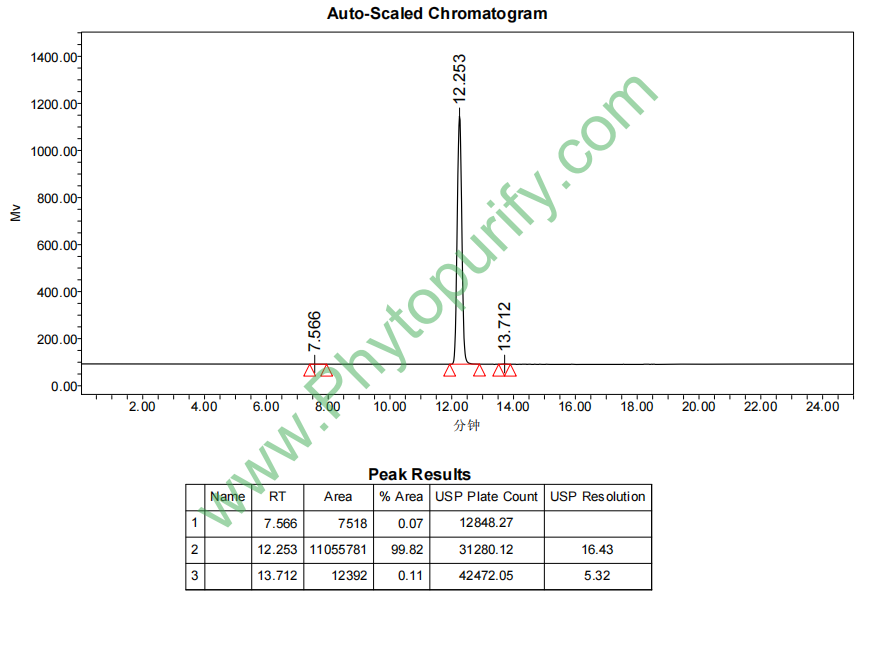
Analysis Method: HPLC-DAD or/and HPLC-ELSD
Identification Method: Mass, NMR
Packing: Brown vial or HDPE plastic bottle
Storage: Store in a well closed container, protected from air and light. Put into refrigerate or freeze for long term storage.
Whenever possible, you should prepare and use solutions on the same day. However, if you need to make up stock solutions in advance, we recommend that you store the solution as aliquots in tightly sealed vials at -20℃. Generally, these will be useable for up to two weeks.
The product could be supplied from milligrams to grams, up to kilograms
Inquire for bulk scale.
Descriptions:
AstragalosideΙ(As-Ι), one of the main active ingredients in Astragalus membranaceus, As-I stimulates osteoblast differentiation through the Wnt/β-catenin signaling pathway, which also activates the BMP pathway and RANK pathway, thus highlighting the As-Ιfor pharmaceutical and medicinal applications such as treating bone disease. [1]
AstragalosideΙmay protect the cerebral tissue against the free radical damage in ischemia. [2]
AstragalosideΙcan inhibit the activation of BV-2 cells induced by LPS through suppressing the activation of PI3K/Akt/NF-κB pathway, therefore, reduces the nuclear translocation of phosphorylated NF-κB, leading to the down-regulation of the gene expressions of TNF-α, i NOS and IL-1β and thus lessened the production of iNOS, TNF-α and COX-2 protein. [3]
References:
[1] Xun Cheng ?, Biaofang Wei ?, Sun L, et al. Phytother Res, 2016,7.
[2] Luo Y M. Chinese Journal of Clinical Neurosciences, 1998(03):146-8.
[3] Liu H S, Wen-Hui L I, Shen H, et al. China Journal of Traditional Chinese Medicine & Pharmacy, 2016(05).
[4] Qin J P, Yao Y, Yun L I, et al. Chinese Traditional Patent Medicine, 2008, 30(10):1468-71.
HPLC of Astragaloside I
Storage conditions:Short-term storage at 2~8℃, long-term storage at -20 ~ -80℃
240.3600
2.5072
2.5072
.0447
.6359
.3579
Low
69.8999
6.9681
No
No
No
No
No
No
0.0
Yes
No
No
No
Huangqi, as a traditional Chinese medicine known as the "Holy Medicine for Tonifying Qi", has a medicinal history of over two thousand years. Modern pharmacological research has revealed that the extensive pharmacological activities of Astragalus membranaceus, such as immune regulation, anti-inflammatory, antioxidant, anti fibrotic, and cardiovascular protection, are closely related to its rich chemical components. Among them, Astragalus membranaceus saponins are considered as one of its key pharmacological substances. Astragaloside I (AS-I) is another important cyclic triterpenoid saponin isolated and identified from plants of the Astragalus genus, following Astragaloside IV. Its CAS number is 84680-75-1, and early research has mainly focused on its anti-inflammatory, neuroprotective, and other activities. In recent years, with the in-depth study of metabolic diseases and bone metabolism abnormalities, the unique pharmacological effect of astragaloside I in regulating glucose metabolism and promoting bone formation has gradually attracted attention, especially its role in stimulating osteoblast differentiation by activating the classic Wnt/β - catenin signaling pathway, which provides a new scientific basis for its application in osteoporosis, diabetes induced bone disease and other fields. At the same time, its multi-target regulatory potential related to hyperglycemia also shows broad research and development prospects. This article aims to systematically review the chemical structure, plant origin, pharmacological activity, mechanism of action, medicinal properties, and clinical application prospects of Astragaloside I, in order to provide comprehensive references for the in-depth research and development of this natural product.
Huangqi Saponin I belongs to the cycloaltane type tetracyclic triterpenoid saponin, with a molecular formula of C45H72O16 and a molecular weight of 869.0550. Its basic skeleton is cycloaltane, with sugar chains connected at C-3 and C-6 positions, which is a key feature that distinguishes it from other astragalosides (such as astragaloside IV being substituted at C-3, C-6, and C-25 positions). Specifically, its C-3 position is usually connected to a disaccharide chain (such as xylose glucose), while its C-6 position is connected to a monosaccharide (such as glucose). This specific glycosylation pattern has a decisive impact on its biological activity and physicochemical properties.
From the analysis of parameters related to drug properties, the lipid water partition coefficient (LogP) of Astragaloside I is 2.5072, indicating that it has a certain degree of lipophilicity, but not high lipid solubility. Its topological polar surface area (TPSA) is as high as 240.3600 Å ², which is mainly attributed to the abundant hydroxyl groups and oxygen atoms on the sugar ring in the molecule, resulting in high molecular polarity. Correspondingly, its water solubility is relatively low, about 0.0447 mg/mL, making it a poorly soluble compound. The higher TPSA and lower solubility jointly affect its membrane permeability. The prediction shows that its blood-brain barrier permeability is low, which to some extent limits its direct effect on central nervous system diseases, but may also reduce the risk of central side effects. In terms of preliminary safety prediction, the lack of inhibition of hERG potassium channels by Astragaloside I suggests a low potential risk of cardiac toxicity. The Ames test result of 0.0 indicates that it is non mutagenic in this model, providing favorable preliminary safety data for its further development. Overall, Astragaloside I belongs to the Biopharmaceutical Classification System (BCS) Class II or IV compounds (low solubility), and its oral absorption and bioavailability may face challenges, requiring optimization through formulation techniques such as nanocrystals, solid dispersions, phospholipid complexes, etc.
Astragaloside I mainly comes from various plants of the Astragalus genus in the legume family, among which Astragalus membranaceus is one of them(Astragalus membranaceus var. mongholicus)Huangqi with membrane pods(Astragalus membranaceus)It is the most important and commonly used medicinal resource. In addition, in other plants of the same genus such as Astragalus membranaceus(Astragalus ernestii)It has also been detected. Its content in the plant body is usually lower than that of astragaloside IV, and is significantly affected by factors such as origin, harvest season, growth period, and medicinal parts (mainly found in the roots).
Extracting and isolating Astragaloside I from Astragalus membranaceus medicinal materials usually follows the conventional process of natural product chemistry and is optimized based on its physicochemical properties. Firstly, the crude extract is obtained by alcohol extraction (such as methanol, ethanol) or water extraction and alcohol precipitation, and the polarity and solubility of astragalus saponins are utilized to preliminarily enrich it. Subsequently, decolorization and preliminary separation were carried out using macroporous adsorption resin (such as D101, AB-8 type) column chromatography, and gradient elution was performed using ethanol water solutions of different concentrations to collect saponin rich fractions. Further purification heavily relies on various modern chromatographic techniques. Silica gel column chromatography and reverse phase silica gel column chromatography (such as ODS-C18) are commonly used, with gradient elution using chloroform methanol water or methanol water systems. High performance liquid chromatography, especially preparative high-performance liquid chromatography, is a key technology for obtaining high-purity Huangqi saponin I monomers. C18 chromatography columns are commonly used with acetonitrile water as the mobile phase. In recent years, liquid-liquid distribution chromatography techniques such as high-speed counter current chromatography have also been applied for the separation and purification of saponins in Astragalus membranaceus due to their high recovery rate and avoidance of irreversible adsorption by solid adsorbents. During the extraction process, attention should be paid to controlling the temperature and pH value to prevent hydrolysis or structural transformation of saponins. Structural identification is carried out using spectroscopic methods such as mass spectrometry (MS) and nuclear magnetic resonance (NMR, including 1H-NMR, 13C-NMR, 2D-NMR).
Huangqi saponin I exhibits various pharmacological activities, and its research has expanded from early anti-inflammatory and immune regulation to metabolic regulation and bone metabolism.
Promoting bone formation and anti osteoporosis activity This is one of the most noteworthy activities of Astragaloside I in recent years. Research has shown that Astragaloside I can effectively promote the differentiation of bone marrow mesenchymal stem cells and pre osteoblast cell lines (such as MC3T3-E1) into osteoblasts. In cell models, it can significantly enhance alkaline phosphatase activity, increase the formation of mineralized nodules, and upregulate the expression of key osteogenic differentiation markers such as Runx2, Osterix, osteocalcin, and type I collagen. In a postmenopausal osteoporosis rat model induced by ovariectomy, administration of Astragaloside I can improve bone microstructure, increase bone density and biomechanical strength, confirming its in vivo anti osteoporosis effect. Its bone formation promoting effect is believed to be closely related to its specific activation of the Wnt/β - catenin signaling pathway.
Regulating glucose metabolism and anti hyperglycemic potential Although there are still accumulating in vitro and in vivo research reports directly targeting the hypoglycemic effects of Astragaloside I, its predictive and preliminary validation associations with multiple targets related to hyperglycemia demonstrate enormous potential. Its function may involve multiple links: it may regulate insulin sensitive genes through epigenetic regulation of EHMT2 (histone methyltransferase); May affect the stability of insulin signaling pathway proteins by regulating UBP2 (deubiquitinase); May improve insulin resistance by inhibiting PAI-1 (plasminogen activator inhibitor-1); May activate the AMPK (AMP dependent protein kinase) energy sensing pathway, promoting glucose uptake and fatty acid oxidation; May indirectly affect classic hypoglycemic targets such as SGLT2 (sodium glucose cotransporter 2) or GCK (glucokinase). In addition, its potential regulation of APP (amyloid precursor protein) and BACE1 (β - secretase) also suggests that it may improve cognitive dysfunction related to diabetes.
Anti inflammatory and immune regulatory activity Huangqi saponin I can inhibit the excessive production of inflammatory mediators (such as TNF - α, IL-6, IL-1 β, NO) in macrophages stimulated by lipopolysaccharides, and its mechanism is related to the inhibition of the activation of inflammatory signaling pathways such as NF - κ B and MAPK. It can also regulate the balance of T lymphocyte subsets and enhance the immune function of the body, which reflects the traditional efficacy of Huangqi in "strengthening the body and consolidating the foundation".
Neuroprotective and Cardiovascular Protective Activities In the nervous system, Astragaloside I has a protective effect on β - amyloid protein induced neuronal injury, ischemia-reperfusion brain injury and other models, with mechanisms involving antioxidant stress, anti apoptosis and anti-inflammatory effects. In terms of cardiovascular function, studies have shown that it can improve myocardial ischemic injury, inhibit myocardial fibrosis, and protect endothelial function. These effects are related to its regulation of energy metabolism, inhibition of oxidative stress, and inflammatory response.
Other activities There are also studies reporting that Astragaloside I has anti fibrotic and anti-tumor activities (such as inhibiting liver cancer cell proliferation by inducing apoptosis), but related research is still in the preliminary stage.
The multiple pharmacological activities of Astragaloside I stem from its multi-target regulatory properties on complex biological networks. At present, the relatively clear mechanisms of research mainly focus on pathways related to bone metabolism and glucose metabolism.
Activate Wnt/β - catenin signaling pathway to promote bone formation This is the core mechanism of Huangqi saponin I promoting bone differentiation. Wnt/β - catenin is a key classical pathway that regulates osteoblast differentiation and bone formation. Huangqi saponin I can upregulate the expression of Wnt ligands (such as Wnt3a, Wnt10b), or inhibit the activity of glycogen synthase kinase-3 β, preventing the phosphorylation and degradation of β - catenin, leading to the stabilization and accumulation of β - catenin in the cytoplasm, and then translocating to the nucleus. In the nucleus, β - catenin binds to the TCF/LEF transcription factor family, initiating the transcription of downstream osteogenic target genes (such as Cyclin D1, c-Myc, Runx2, Osterix), thereby driving osteogenic lineage differentiation and functional maturation.
Regulating network targets related to hyperglycemia The improvement of hyperglycemia by Astragaloside I may be achieved through a multi-target synergistic network
Common pathway of anti-inflammatory and antioxidant Huangqi saponin I can effectively inhibit the activation of the NF - κ B pathway and reduce the release of pro-inflammatory cytokines. At the same time, it can enhance the activity of antioxidant enzymes such as SOD and GSH Px, reduce the level of reactive oxygen species, activate the Nrf2/ARE antioxidant defense pathway, thereby reducing oxidative stress damage, which has universal protective significance in metabolic diseases, cardiovascular diseases, and neurodegenerative diseases.
Although the pharmacological activity of Astragaloside I is clear, its pharmacological properties, especially pharmacokinetic properties, are the key challenges that it must face in the process of drug conversion.
absorb Due to its large molecular weight, high polarity surface area, and low water solubility, the oral bioavailability of Astragaloside I is expected to be low. The prototype drug has poor absorption in the gastrointestinal tract and may involve passive diffusion and limited active transport. Formulation improvement is a key strategy to enhance its oral absorption.
distribution Pharmacokinetic studies (mainly based on the analogy of total saponins of Astragalus membranaceus or Astragaloside IV) have shown that after oral absorption, Astragaloside I is widely distributed in the body, but its blood-brain barrier permeability is predicted to be low, mainly distributed in blood rich tissues such as the liver, kidneys, lungs, etc. Its binding rate to plasma proteins is not yet clear, but similar saponins usually have higher protein binding rates.
Metabolism Huangqi saponin I, as a triterpenoid saponin, mainly undergoes two metabolic pathways in the body: one is hydrolysis metabolism. The intestinal microbiota and esterases in the body may gradually hydrolyze its glycosides, generating secondary glycosides or aglycones. The activity and toxicity of these metabolites may be altered; The second is the metabolism of phase I and phase II, where the glycoside portion may undergo hydroxylation, dehydrogenation, and other reactions catalyzed by the liver cytochrome P450 enzyme system, and then combine with glucuronic acid or sulfuric acid to form more water-soluble complexes, which are easier to excrete.
excretion Metabolites and small amounts of prototype drugs are mainly excreted through the kidneys and urine, and some may also be excreted through bile and feces. Specific parameters such as elimination half-life and clearance rate need to be obtained through standardized pharmacokinetic studies.
Optimization direction of drug properties In response to the bottleneck of poor solubility and permeability, future research focuses should include: 1) developing new drug delivery systems, such as nano formulations (liposomes, nanoparticles, micelles), phospholipid complexes, cyclodextrin inclusion complexes, etc., to improve solubility and biofilm permeability; 2) Structural modification is carried out to optimize the lipid water partition coefficient while retaining the pharmacophore, and to synthesize prodrugs or derivatives; 3) Conduct in-depth pharmacokinetic studies to clarify the in vivo ADME process, absolute bioavailability, and tissue distribution characteristics, providing a basis for dosage form design and administration regimens.
The multi-target and multi pathway properties of Astragaloside I provide unique application prospects for its prevention and treatment of various diseases, especially in the field of chronic complex diseases.
Osteoporosis and related bone diseases Based on its clear mechanism of promoting bone formation, astragaloside I is expected to be developed into a new type of bone promoting synthetic drug for the treatment of primary osteoporosis (especially postmenopausal osteoporosis) and secondary bone loss (such as glucocorticoid induced osteoporosis and diabetes induced osteoporosis). Combined with mainstream anti bone resorption drugs such as bisphosphonates, there may be a synergistic effect of "opening up sources and reducing flow", which can more effectively increase bone mass. It also has potential value in the adjuvant treatment of fracture healing.
Type 2 diabetes and its complications Its potential to regulate glucose metabolism and insulin sensitivity through multiple targets such as AMPK and PTP1B makes it possible to become a new multi target anti diabetes candidate drug. What deserves special attention is its potential dual benefits for diabetes osteopathy (both with weakened bone formation and enhanced bone absorption), which can not only improve blood sugar, but also directly promote bone health. In addition, its regulation of PAI-1, EHMT2, etc. may also be beneficial to improving vascular complications and metabolic memory effects in diabetes.
Neurodegenerative diseases Its association with APP/ACE1 targets and neuroprotective effects against inflammation, oxidation, and apoptosis suggest that it may play a role in the prevention and adjuvant therapy of diseases such as Alzheimer's disease and vascular dementia, especially for cognitive impairment patients with metabolic syndrome.
cardiovascular disease Its anti-inflammatory, antioxidant, endothelial protection and anti fibrosis properties make it have potential application in the prevention and treatment of cardiovascular diseases such as atherosclerosis, myocardial ischemia-reperfusion injury, heart failure, etc.
Outlook and Challenges Future research needs to delve deeper into the following areas: Firstly, it is necessary to clarify its therapeutic window and potential toxicity through systematic preclinical pharmacological and safety evaluations. Secondly, it is urgent to conduct comprehensive and standardized pharmacokinetic studies, and use pharmaceutical methods to solve the bottleneck of low bioavailability. Thirdly, it is necessary to utilize techniques such as chemical biology, proteomics, and network pharmacology to more accurately elucidate its direct targets and upstream and downstream signaling networks. Fourthly, explore its combination therapy with other drugs (such as classic hypoglycemic drugs and anti osteoporosis drugs) and evaluate the synergistic effect. Finally, promote clinical trials in line with international norms to verify their effectiveness and safety in specific populations (such as osteoporosis patients with diabetes). By combining the active ingredients of traditional Chinese medicine with modern disease biology mechanisms, Astragaloside I is expected to transform from an ancient medicinal plant molecule into an innovative drug lead compound for treating modern metabolic and degenerative diseases.
Huangqi saponin I, as an important active triterpenoid saponin component in Huangqi, has demonstrated remarkable pharmacological activity and therapeutic potential in fields such as bone metabolism and glucose metabolism diseases due to its unique chemical structure and multi-target action characteristics. Its mechanism of promoting bone formation by activating the Wnt/β - catenin pathway is relatively clear, providing new ideas for the development of anti osteoporosis drugs; And its network like association with multiple hyperglycemia related targets such as EHMT2, AMPK, PTPN1, etc., reveals its broad prospects in regulating complex glucose metabolism disorders. Despite facing challenges such as poor solubility and low bioavailability in terms of drug properties, the development of modern medicinal chemistry and pharmaceutical technology provides powerful tools to overcome these obstacles. Exploring active molecules from the treasure trove of traditional Chinese medicine and applying modern scientific technology to elucidate their mechanisms and optimize their properties is one of the effective paths for the modernization and internationalization of Chinese medicine. The continuous in-depth research on Astragaloside I not only helps to deepen the scientific understanding of the traditional efficacy of Astragalus membranaceus in "tonifying qi and stabilizing the surface, strengthening the body and dispelling evil", but also may give birth to new therapeutic drugs with independent intellectual property rights, making contributions to human health.
