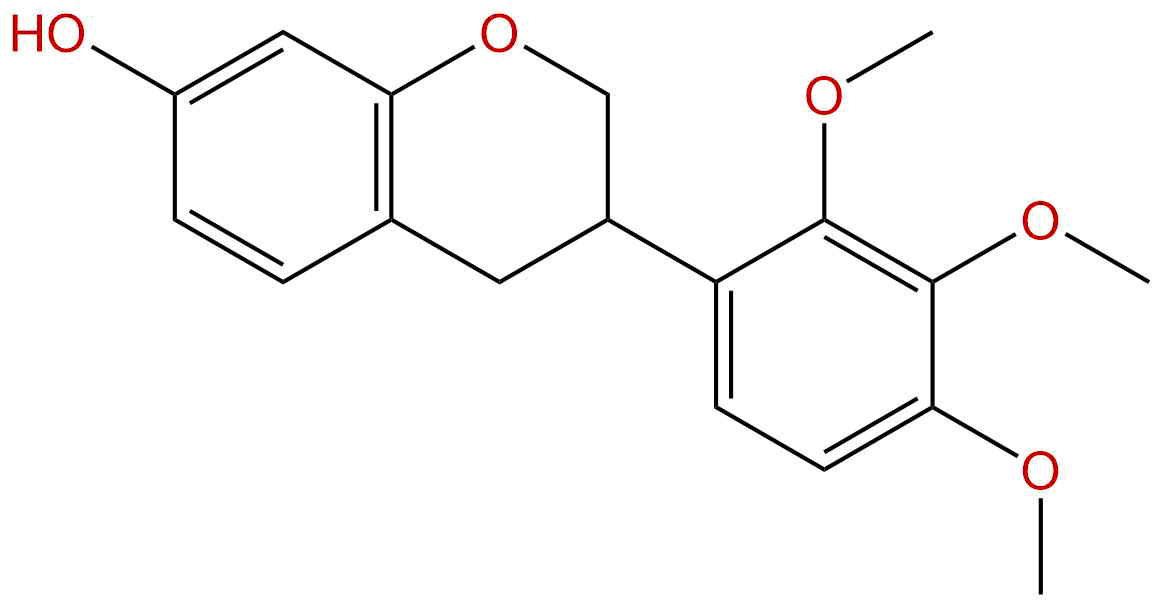


Product name: 2'-O-Methylisomucronulatol
Synonym name:
Catalogue No.: BP2360
Cas No.: 2243403-57-6
Formula: C18H20O5
Mol Weight: 316.353
Botanical Source: Astragali radix
Type of Compound: Miscellaneous
Purity: 95%~99%
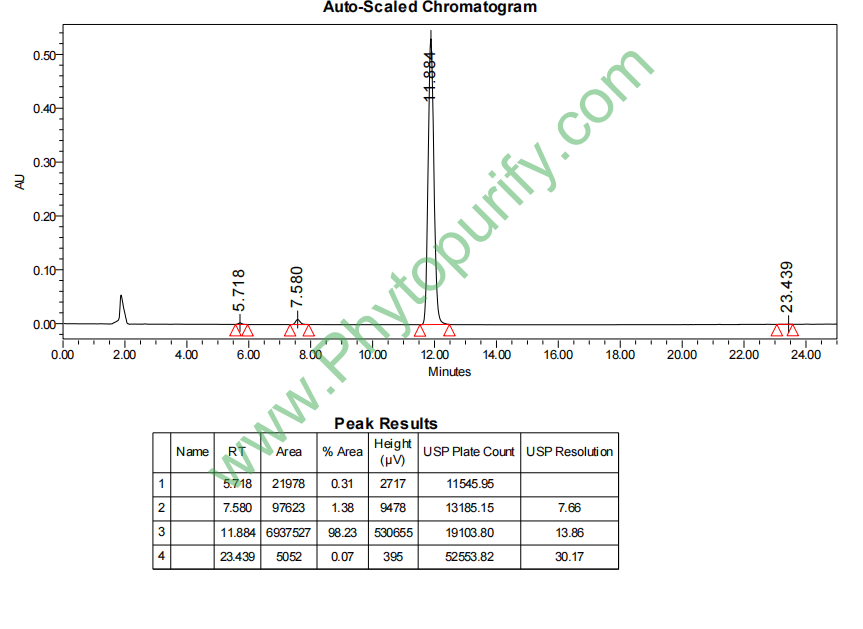
Analysis Method: HPLC-DAD or/and HPLC-ELSD
Identification Method: Mass, NMR
Packing: Brown vial or HDPE plastic bottle
Storage: Store in a well closed container, protected from air and light. Put into refrigerate or freeze for long term storage.
Whenever possible, you should prepare and use solutions on the same day. However, if you need to make up stock solutions in advance, we recommend that you store the solution as aliquots in tightly sealed vials at -20℃. Generally, these will be useable for up to two weeks.
The product could be supplied from milligrams to grams
Inquire for bulk scale.
For Reference Standard and R&D, Not for Human Use Directly.
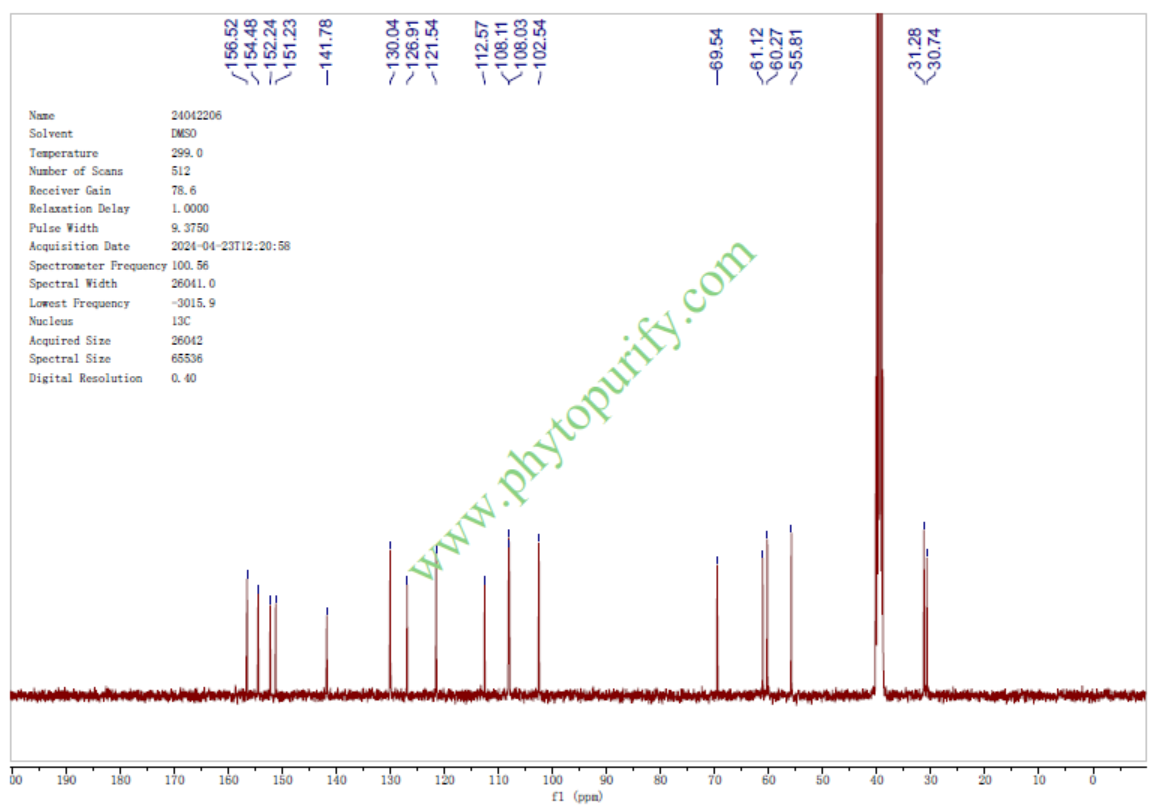
NMR of 2'-O-Methylisomucronulatol
HPLC of 2'-O-Methylisomucronulatol
Storage conditions:Short-term storage at 2~8℃, long-term storage at -20 ~ -80℃
57.1500
3.1990
3.1974
.0920
5.4554
12.9221
High
87.3590
2.8078
No
Yes
No
No
Yes
No
0.0
No
Yes
No
Yes
Natural products, as an important source of drug discovery, play an irreplaceable role in the long history of human fight against diseases. Flavonoids, as the most widely distributed class of secondary metabolites in nature, have attracted much attention for their structural diversity and extensive biological activity. Among the vast family of flavonoids, isoflavones are a subclass with relatively unique structures but exceptionally significant pharmacological activities. They are usually found in leguminous plants, especially in the genus Astragalus(Astragalus)The plant is the traditional Chinese medicine Huangqi(Astragalus membranaceus)One of the important active ingredients. In recent years, with the advancement of separation technology and activity screening methods, an increasing number of trace isoflavones have been identified and studied in depth. Among them, 2 '- O-Methylisohumulol has gradually entered the field of researchers.
2 '- O-Methyl Astragalus Isoflavanol, also known as 7-Hydroxy-2', 3 ', 4' - trimethoxyisoflavan, is a typical compound of isoflavones. Its CAS number is 2243403-57-6. This compound was first isolated from plants of the Astragalus genus and is one of the various isoflavones active ingredients in Astragalus. Unlike common isoflavones, isoflavones have a saturated C-ring, with a single bond at positions C2-C3, which makes their molecular conformation more flexible and may endow them with a unique biological activity spectrum. The structural feature of 2 '- O-methyl astragalus isoflavones is that there are three methoxy (- OCH ∝) substituents attached to the B ring, while a free phenolic hydroxyl group is retained at the C7 position of the A ring. This specific substitution pattern, namely the combination of "multi methoxy+monophenolhydroxyl", is considered to be the key structural basis for its various pharmacological effects.
From a chemical classification perspective, this compound belongs to the subclass of isoflavones in the flavonoid class, more specifically trimethoxy isoflavones. Its molecular formula is C ₁₈ H ₂₀ O ₅, and its molecular weight is 316.3530. Due to the presence of multiple methoxy groups in its structure, the compound exhibits a certain degree of lipophilicity (LogP of 3.1990), while the phenolic hydroxyl group at C7 gives it a certain polarity and the ability to form hydrogen bonds (TPSA of 57.15 Å ²). This amphiphilic characteristic may give it unique transmembrane transport ability and target binding properties in vivo.
Although the content of 2 '- O-methyl astragalus isoflavones in astragalus is usually not high, recent studies have revealed its remarkable potential in various fields such as anti-inflammatory, antioxidant, anti-tumor, neuroprotective, and cardiovascular protection. Especially its high blood-brain barrier penetration suggests that it may have unique value in the treatment of central nervous system diseases. The purpose of this article is to systematically review the chemical properties, plant sources, pharmacological activities, mechanisms of action, and pharmacological evaluation of 2 '- O-methyl astragalus isoflavones, in order to provide comprehensive scientific references for the in-depth research and future development of this natural product.
The core skeleton of 2 '- O-methyl astragalus isoflavones is isoflurane, which is 2-phenyl-3,4-dihydro-2H-1-benzopyran. Compared with isoflavones, the C2-C3 position of its C ring is a single bond (C2-C3 saturated), and the C4 position is a methylene group (- CH ₂ -), so there is no carbonyl group at the C4 position. This structural difference leads to a completely different molecular conformation from the highly planar isoflavones. The C-ring of isoflavones adopts a semi chair conformation, and the entire molecule has a certain three-dimensional structure.
The systematic nomenclature (IUPAC) of this compound is: 7-hydroxy-2 ', 3', 4 '- trimethoxyisohuangane. The substituent positions are as follows:
- A ring There is a hydroxyl group (- OH) connected to the C7 position.
- B ring C2 ', C3', and C4 'positions are each connected to a methoxy group (- OCH ∝).
- C ring The C2 position is connected to the B ring (2 ', 3', 4 '- trimethoxyphenyl), and the C3 and C4 positions are saturated carbon atoms.
Its structural formula can be expressed as: a trimethoxy substituted benzene ring (B ring) is connected to the C2 position of a benzopyran ring (A+C ring). This substitution pattern of "7-hydroxy-2 ', 3', 4 '- trimethoxy" is unique in natural isoflavones and is a key feature that distinguishes it from other analogues such as mucronulatol and isomucronulatol. It is worth noting that the compound is a 2 '- O-methylated derivative of isomucronulatol (7,2' - dihydroxy-3 ', 4' - dimethoxyisofloxane), where the hydroxyl group at the 2 'position of the B ring is replaced by a methoxy group. This methylation modification typically increases the lipophilicity and metabolic stability of the molecule.
Based on its chemical structure, 2 '- O-methyl astragalus isoflavones exhibit the following key physicochemical properties:
Molecular weight and formula The molecular weight is 316.3530 g/mol, and the molecular formula is C ₁₈ H ₂₀ O ₅. This molecular weight is within the ideal range for small molecule drugs (usually<500 Da), which is beneficial for oral absorption and transmembrane diffusion.
Lipid water partition coefficient (LogP)Calculate LogP as 3.1990. This value indicates that the compound has a moderate degree of lipophilicity. According to the Lipinski Five Rules, LogP less than 5 is a good indicator for oral medication. A LogP of 3.199 means that the compound has good solubility in the lipid bilayer, which facilitates passive diffusion through the cell membrane, but may also face the problem of poor water solubility.
Topological Polarity Surface Area (TPSA)TPSA is 57.15 Å ². TPSA is an important parameter for predicting drug oral absorption and blood-brain barrier penetration. Generally, molecules with TPSA less than 60 Å ² have higher blood-brain barrier penetration potential. The TPSA of 2 '- O-methyl astragalus isoflavones is 57.15 Å ², which is exactly below the threshold of 60 Å ², which is highly consistent with the predicted results of "blood-brain barrier: high" in its subsequent pharmacological evaluation. Its polarity mainly comes from the hydroxyl group at C7 and the oxygen atoms in the three methoxy groups.
Water solubility The predicted water solubility is 0.0920 mg/mL (approximately 0.29 mM). This value is relatively low and belongs to the category of slight solubility. Low water solubility is a common issue among many multi methoxy flavonoids, which may limit their oral bioavailability. Future drug development may need to consider the use of solubilization technologies, such as nano formulations, cyclodextrin inclusion, or prodrug design.
acid-base properties The molecule contains only one phenolic hydroxyl group (pKa of approximately 9-10) and mainly exists in the form of an undissociated neutral molecule under physiological pH (7.4) conditions. This is beneficial for its passive diffusion through the biofilm, but also means that its water solubility will not significantly increase due to ionization.
2 '- O-Methyl Astragalus Isoflavonol is mainly derived from Fabaceae, a genus of Astragalus in the legume family(Astragalus)Plants. The Astragalus genus is a vast genus containing over 2000 plant species, many of which are used in traditional medical systems. This compound was originally derived from Mongolian Astragalus membranaceus(Astragalus membranaceus Fisch. Bge. or its variant Astragalus membranaceus(Astragalus membranaceus var. mongholicus Separated and identified from (Bge.) Hsiao. These two plants are the main base plants of the traditional Chinese medicine Huangqi, with a long history of medicinal use. They are commonly used for tonifying qi and stabilizing the surface, diuresis and detoxification, pus discharge, and healing sores and muscles.
In addition to Astragalus membranaceus, this compound may also be present in other plants of the Astragalus genus, such as Astragalus complanatus(Shayuanzi)Astragalus sinicus(Purple Yunying) and others, but the content is usually low. In addition, due to the widespread distribution of isoflavones in leguminous plants, theoretically other leguminous plants (such as licorice)Glycyrrhiza The genus of chicken blood vine Spatholobus It may also contain this compound, but currently literature reports still mainly use Astragalus as the main source.
It is worth noting that the content of 2 '- O-methyl astragalus isoflavones in astragalus is usually much lower than its main active ingredients (such as astragaloside IV, mangiferin, flavonoids, etc.), and belongs to trace components. Its content is influenced by various factors, including plant variety, place of origin, harvest season, growth period, and processing methods. For example, Astragalus membranaceus with a longer growth period (such as 5 years or more) may have a higher total content of isoflavones.
Given the low content of 2 '- O-methyl astragalus isoflavones in plant materials and their complexity in coexisting with numerous structurally similar compounds, a systematic and efficient strategy is required for their extraction and purification.
1. Extraction stage:
- Solvent selection Based on the moderate lipophilicity of the compound, organic solvents with moderate polarity are usually used for extraction. Common solvents include methanol, ethanol (70% -95%), ethyl acetate, or their mixed solvents. Methanol and ethanol are widely used due to their good solubility and low toxicity towards flavonoids. Sometimes chloroform or dichloromethane is also used for degreasing or targeted extraction of low polarity components.
- extraction method Traditional methods include cold soaking, percolation, and reflux extraction. To improve efficiency and reduce the degradation of thermosensitive components, modern methods such as ultrasound assisted extraction (UAE) and microwave-assisted extraction (MAE) have also been applied. For example, using 70% ethanol ultrasonic extraction to extract astragalus powder can obtain crude extracts rich in flavonoids and isoflavones.
2. Separation and purification stage:
Due to the complex composition of the crude extract, multi-step chromatographic techniques are required for separation:
- Preliminary separation The crude extract is usually first subjected to liquid-liquid extraction, such as sequential extraction with petroleum ether, ethyl acetate, and n-butanol, to separate the components of different polarities. 2 '- O-Methyl Astragalus Isoflavonol is mainly enriched in the ethyl acetate extraction site.
- Column chromatography separation:
- Silica gel column chromatography This is a classic method for separating isoflavones. Gradient elution is often performed using solvent systems such as chloroform methanol or petroleum ether acetone. This compound typically exhibits moderate polarity on a silica gel column.
- Sephadex gel column chromatography (Sephadex LH-20)The separation effect of flavonoids is excellent by utilizing molecular sieves and adsorption. Methanol or methanol water systems are commonly used for elution, which can effectively remove pigments and separate components with different degrees of polymerization.
- Reverse phase column chromatography (ODS)Using C18 or C8 bonded silica gel, elute with methanol water or acetonitrile water system. Reverse phase chromatography has higher resolution for separating isomers of isoalkanes with highly similar structures.
- High performance liquid chromatography (HPLC)For the final purification, preparative HPLC is the key means to obtain high purity (>98%) 2 '- O-methyl astragalus isoflavones. Usually, a C18 reverse phase column is used, with acetonitrile water or methanol water (often with a small amount of formic acid or acetic acid added) as the mobile phase, and the target peak is collected by a UV detector (usually monitoring the absorption of isoflurane at 280-290 nm).
3. Identification and structural confirmation:
The isolated compounds need to be structurally identified through spectroscopic methods. The main means include:
- Ultraviolet spectroscopy (UV)The typical UV absorption of isoflavones is around 280-290 nm, with no characteristic double peaks of isoflavones at 250-270 nm and 300-330 nm.
- Mass spectrometry (MS)High resolution mass spectrometry (HR-ESI-MS) can provide precise molecular weight and determine the molecular formula. Secondary mass spectrometry (MS/MS) can provide fragment information, which helps determine the position of substituents.
- Nuclear Magnetic Resonance (NMR)H-NMR and C-NMR are the most important methods for determining structures. By analyzing chemical shifts, coupling constants, and integrals, the positions of the isooctane skeleton, methoxy group, and hydroxyl group can be determined. For example, the hydrogen signal of the C7 phenolic hydroxyl group is usually around δ 8-9 ppm (exchangeable proton), while the hydrogen signal of the three methoxy groups is around δ 3.7-3.9 ppm. Two dimensional NMR techniques such as HSQC, HMBC, and ¹ H - ¹ H COSY are crucial for distinguishing 2 ', 3', and 4 '- trimethoxy substitution modes.
In recent years, research on the pharmacological activity of 2 '- O-methyl astragalus isoflavones has gradually deepened, revealing its potential therapeutic value in multiple disease models.
Inflammation is a common pathological basis for many chronic diseases. Research has shown that 2 '- O-methyl astragalus isoflavones exhibit significant anti-inflammatory effects both in vitro and in vivo. In a macrophage model stimulated by lipopolysaccharide (LPS), this compound can significantly inhibit the production of pro-inflammatory cytokines such as tumor necrosis factor - α (TNF - α), interleukin-6 (IL-6), and interleukin-1 β (IL-1 β). Meanwhile, it can also downregulate the expression of inducible nitric oxide synthase (iNOS) and cyclooxygenase-2 (COX-2), thereby reducing the release of nitric oxide (NO) and prostaglandin E2 (PGE2). Its anti-inflammatory activity may be related to its inhibition of the activation of the nuclear factor kappa B (NF - κ B) signaling pathway.
Isoflavane compounds usually have good antioxidant capacity, which is closely related to the phenolic hydroxyl structure in their molecules. The C7 phenolic hydroxyl group of 2 '- O-methyl astragalus isoflavanol can serve as a hydrogen atom donor, directly scavenging free radicals such as DPPH radicals, ABTS cationic radicals, and hydroxyl radicals. In addition, it can also activate the endogenous antioxidant defense system (such as the Nrf2/ARE pathway), upregulate the activity of antioxidant enzymes such as superoxide dismutase (SOD), glutathione peroxidase (GSH Px), and catalase (CAT), thereby reducing oxidative stress damage at the cellular level. This dual mechanism of direct and indirect antioxidant makes it potentially effective in protecting cells from oxidative damage.
2 '- O-Methyl Astragalus Isoflavonol exhibits proliferation inhibitory activity against various tumor cell lines. It is reported that this compound can induce apoptosis of human liver cancer cells (such as HepG2), human breast cancer cells (such as MCF-7) and human colon cancer cells (such as HT-29). Its anti-tumor mechanism involves multiple aspects:
- Inducing cell cycle arrest Block tumor cells in the G0/G1 or G2/M phase to inhibit cell proliferation.
- Activate apoptotic pathway By upregulating the pro apoptotic protein Bax and downregulating the anti apoptotic protein Bcl-2, mitochondrial membrane potential decreases, cytochrome c is released, and Caspase-9 and Caspase-3 are activated, ultimately inducing cell apoptosis.
- Inhibit angiogenesis In an in vivo model, this compound may limit tumor growth and metastasis by inhibiting the expression of vascular endothelial growth factor (VEGF), reducing the formation of tumor neovascularization.
Due to its excellent blood-brain barrier penetration, the neuroprotective effect of 2 '- O-methyl astragalus isoflavones has attracted much attention. In cell models of neurodegenerative diseases such as Alzheimer's disease (AD) and Parkinson's disease (PD), this compound has been shown to protect neurons from β - amyloid (A β) aggregation toxicity or 6-hydroxydopamine (6-OHDA) - induced damage. Its neuroprotective mechanisms may include:
- Inhibit oxidative stress Reduce the production of reactive oxygen species (ROS) and protect mitochondrial function.
- Anti apoptotic effect Inhibit neuronal apoptosis.
- anti-inflammatory effect Inhibit the excessive activation of microglia and astrocytes, and reduce the release of neuroinflammatory factors.
- Promote the secretion of neurotrophic factors Possible upregulation of brain-derived neurotrophic factor (BDNF) expression.
Preliminary studies have shown that 2 '- O-methyl astragalus isoflavones also have a certain protective effect on the cardiovascular system. It can inhibit the abnormal proliferation and migration of vascular smooth muscle cells, which is of great significance for preventing atherosclerosis and vascular restenosis. In addition, it can improve endothelial function by promoting the production of nitric oxide (NO) to dilate blood vessels, which may have a hypotensive effect. In the myocardial ischemia/reperfusion injury model, this compound can alleviate oxidative stress and apoptosis of myocardial cells, and reduce the area of myocardial infarction.
The pharmacological activity of 2 '- O-methyl astragalus isoflavones is the result of multi-target and multi pathway synergistic effects. The main mechanisms of action and molecular targets revealed by current research include:
The specific substitution mode of 2 '- O-methyl astragalus isoflavones is crucial for its activity:
- C7-OH Free phenolic hydroxyl groups are key functional groups for antioxidant activity (hydrogen atom donors) and hydrogen bonding with targets. Methylation or glycosylation modification of C7-OH typically significantly reduces its antioxidant and partially anti-inflammatory activities.
- B-cyclic trimethoxy The 2 ', 3', 4 '- trimethoxy substitution mode increases the lipophilicity and metabolic stability of the molecule. The presence of methoxy groups may affect their hydrophobic interactions with target proteins. Compared to analogues containing hydroxyl groups on the B ring, such as isomucronulatol, 2 '- O-methylation may alter its selectivity towards specific targets, such as kinases or receptors. For example, the introduction of methoxy groups may enhance their ability to penetrate cell membranes and the blood-brain barrier.
- Isoflavane skeleton The saturation of the C-ring (C2-C3 single bond) endows the molecule with flexibility, enabling it to better adapt to the binding pockets of different targets, which may explain its multi-target nature. Compared to planar isoflavones, isoflavones may have different biological activity profiles.
The conversion of natural products into clinical drugs must undergo strict pharmacological evaluation. Based on existing data and computational predictions, a preliminary analysis was conducted on the pharmacological properties of 2 '- O-methyl astragalus isoflavones.
This compound fully complies with Lipinski's five rules, indicating its good oral drug potential.
Although 2 '- O-methyl astragalus isoflavones exhibit many desirable pharmacological characteristics, they still face some challenges:
- Low water solubility This is the most prominent issue. Improvement strategies include:
- Prodrug design Introducing phosphate ester, amino acid ester or semi amber ester groups on C7-OH to improve water solubility, and releasing the active ingredient through enzymatic interpretation in vivo.
- Formulation technology Using techniques such as liposomes, nanoparticles, solid dispersions, or cyclodextrin inclusion complexes to improve its solubility and dissolution rate.
- Metabolic stability Methoxy and phenolic hydroxyl groups are metabolic hotspots. By structural modification (such as introducing fluorine atoms or changing methoxy groups to more stable groups), its metabolic stability may be improved and its half-life may be extended.
- bioavailability Oral bioavailability may be lower due to low water solubility and first pass metabolism. In vivo pharmacokinetic studies are needed for precise evaluation.
Based on its unique pharmacological activity and good pharmacological basis, 2 '- O-methyl astragalus isoflavones have shown promising application prospects in multiple therapeutic fields.
This is the most promising application direction. Its multiple neuroprotective mechanisms of high blood-brain barrier penetration, antioxidant, anti-inflammatory, and anti apoptotic properties make it a candidate compound for the treatment of Alzheimer's disease (AD) and Parkinson's disease (PD). Future research should focus on:
-Validate its efficacy in improving cognitive and motor function in transgenic AD or PD animal models.
-Clarify whether it can inhibit the aggregation of A β or α - synuclein.
-Assess its long-term safety for use.
Its strong anti-inflammatory activity suggests that it can be used to treat chronic inflammatory diseases, such as rheumatoid arthritis, inflammatory bowel disease and atherosclerosis. By inhibiting the NF - κ B pathway and reducing inflammatory factors, it may alleviate disease symptoms and delay disease progression.
As an anti-tumor candidate, its low toxicity and multi-target properties make it particularly suitable as an adjuvant drug for chemotherapy or radiotherapy. It may exert a synergistic effect by enhancing the sensitivity of chemotherapy drugs, reducing the toxic side effects caused by chemotherapy (such as cardiotoxicity and neurotoxicity), and inhibiting tumor metastasis.
Its vasodilation, anti smooth muscle proliferation and myocardial protection have potential in the treatment of hypertension, atherosclerosis and myocardial ischemia.
2 '- O-Methyl Astragalus Isoflavonol, as a natural isoflavone derived from the traditional Chinese medicine Astragalus membranaceus, exhibits various pharmacological activities with its unique "7-hydroxy-2', 3 ', 4' - trimethoxy" structure, especially in the fields of anti-inflammatory, antioxidant, anti-tumor, and neuroprotective effects. It fully complies with Lipinski's five rules, has no risk of hERG inhibition, no genetic toxicity, and high blood-brain barrier penetration, making it a highly potential natural product lead compound for development.
However, the path from natural products to innovative drugs is not smooth. The challenges faced by this compound, such as poor water solubility, unknown metabolic stability, and oral bioavailability, need to be overcome through modern medicinal chemistry and pharmaceutical methods. Future research should focus on identifying its exact molecular targets, validating its in vivo efficacy, and conducting systematic toxicological evaluations. With the continuous deepening of research, we have reason to believe that 2 '- O-methyl astragalus isoflavones and their derivatives are expected to play an important role in the treatment of major diseases such as neurodegenerative diseases, chronic inflammation, and tumors, providing new ideas and candidate molecules for the development of innovative drugs. The in-depth study of such trace but highly active natural products is not only an important way to explore the scientific connotation of traditional Chinese medicine, but also an inexhaustible source of modern innovative drug discovery.
