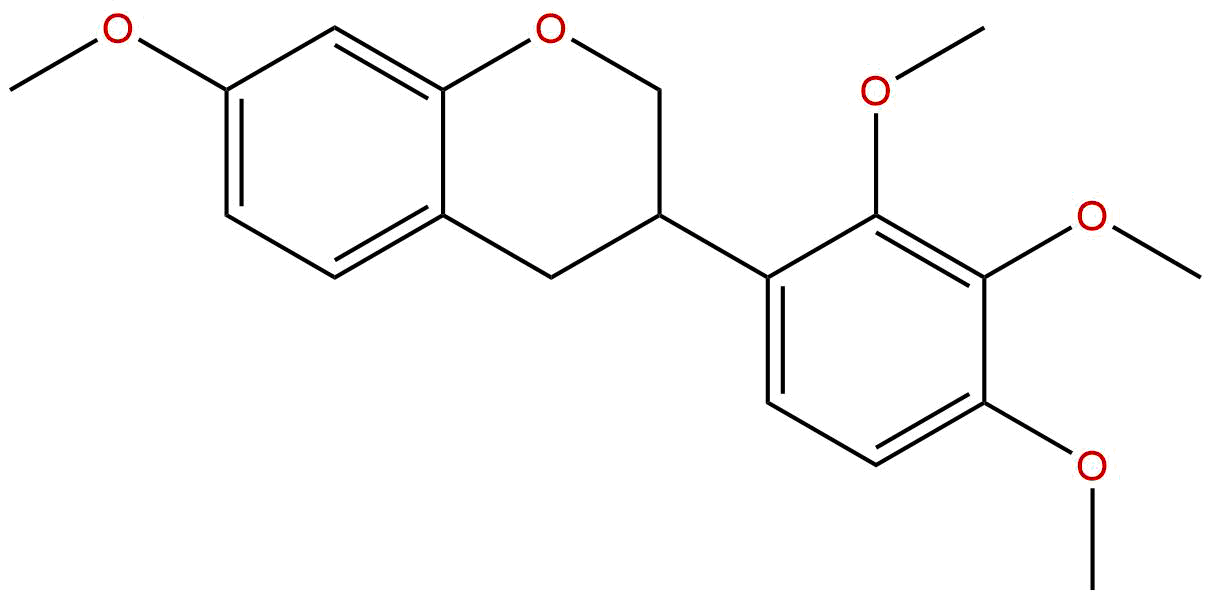


Product name: 7,2'-Dimethoxyisomucronulatol
Synonym name: Tri-O-methyldihydrosepiol;Mucfonulatol;7-methoxy-3-(2,3,4-trimethoxyphenyl)chromane
Catalogue No.: BP2361
Cas No.: 60478-76-4
Formula: C19H22O5
Mol Weight: 330.38
Botanical Source: Astragali radix
Type of Compound: Miscellaneous
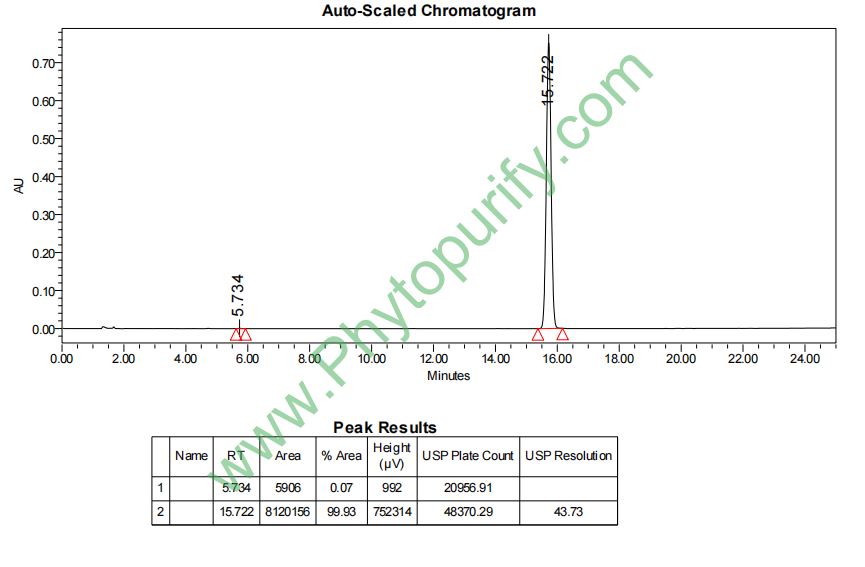
Purity: 95%~99%
Analysis Method: HPLC-DAD or/and HPLC-ELSD
Identification Method: Mass, NMR
Packing: Brown vial or HDPE plastic bottle
Storage: Store in a well closed container, protected from air and light. Put into refrigerate or freeze for long term storage.
Whenever possible, you should prepare and use solutions on the same day. However, if you need to make up stock solutions in advance, we recommend that you store the solution as aliquots in tightly sealed vials at -20℃. Generally, these will be useable for up to two weeks.
The product could be supplied from milligrams to grams
Inquire for bulk scale.
For Reference Standard and R&D, Not for Human Use Directly.
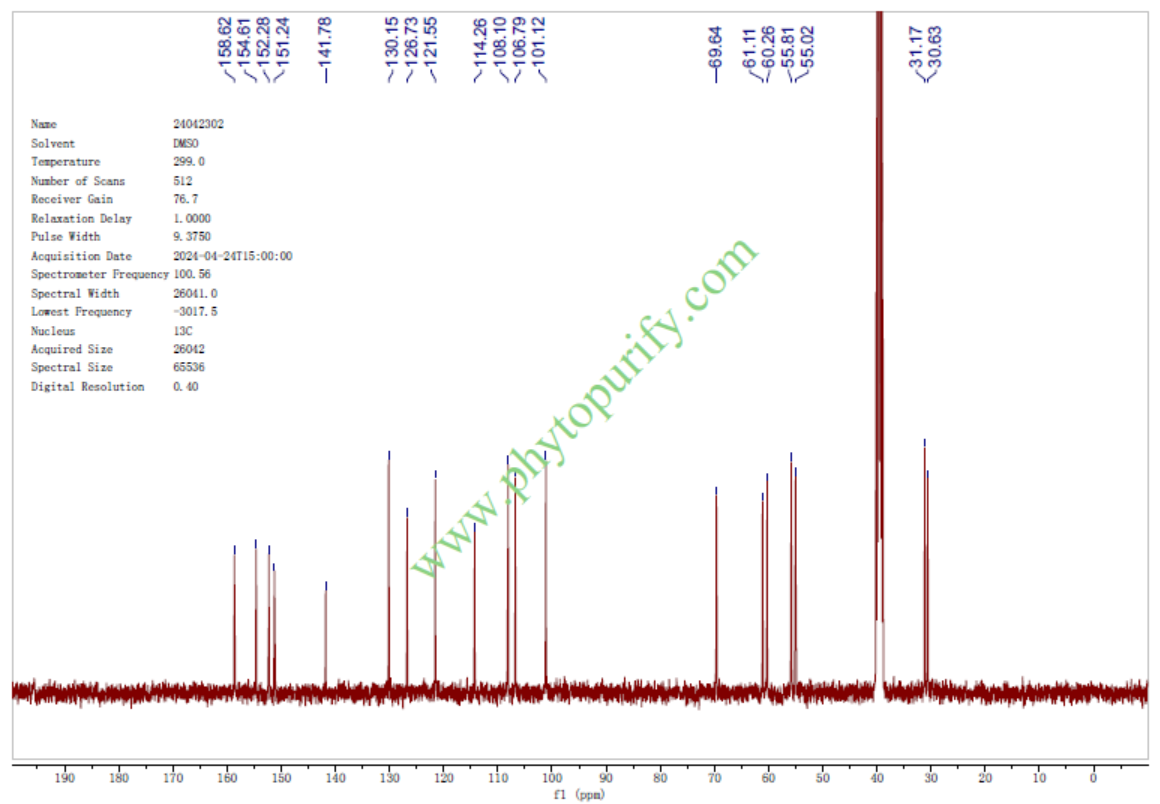
NMR of 7,2'-Dimethoxyisomucronulatol
HPLC of 7,2'-Dimethoxyisomucronulatol
Storage conditions:Short-term storage at 2~8℃, long-term storage at -20 ~ -80℃
46.1500
3.7447
3.7453
.0078
7.2465
21.7485
High
87.5590
2.7125
Yes
Yes
Yes
No
No
No
0.0
No
Yes
No
Yes
Natural products, as an important source of drug discovery, play an irreplaceable role in the long history of human fight against diseases. Flavonoids, especially isoflavones, have attracted much attention due to their structural diversity and wide range of biological activities. Isomucronulatol and its methylated derivatives from Astragalus membranaceus are leguminous plants belonging to the genus Astragalus(Astragalus The unique active ingredients in spp have significant anti-inflammatory, antioxidant, and anti-tumor activities. Among them, 7,2 '- Dimethoxyisomucronulatol (DMI), as an important member of this family, has gradually entered the field of researchers in recent years due to its potential value in the treatment of prostate cancer.
Prostate cancer is the world's second highest incidence of male cancer, especially in developed countries. Although androgen deprivation therapy (ADT) and novel endocrine therapy drugs such as abiraterone and enzalutamide have significantly improved patient prognosis, the emergence of castration resistant prostate cancer (CRPC) remains a major challenge in clinical treatment. Therefore, the search for natural compounds with new mechanisms of action, low toxicity, and high selectivity has become a hot direction in the development of anti prostate cancer drugs. DMI has shown remarkable potential in this field due to its unique chemical structure and multi-target interaction characteristics.
This article will provide a systematic review of the research status of DMI from multiple dimensions, including chemical structure, plant origin, pharmacological activity, molecular mechanism, pharmacological evaluation, and clinical application prospects. The aim is to provide comprehensive academic references for the in-depth development and transformation research of this compound.
The chemical name of DMI is 7,2 '- dimethoxyhuangqi isoflavones, which belong to isoflavones. The parent nucleus structure is isoflavan, which is connected to a benzene ring at the C-3 position of the flavan skeleton, forming a 2-phenylbenzodihydropyran structure. Unlike typical isoflavones, isoflavones have a saturated C-ring, a single bond between C-2 and C-3 positions, and typically a hydroxyl substitution at C-3 position.
The molecular formula of DMI is C ₁₇ H ₁₈ O ₆, with a molecular weight of 330.38 g/mol. Its structural feature is that the C-7 position of the A ring and the C-2 'position of the B ring are respectively connected to a methoxy group (- OCH ∝), the C-3 position is a hydroxyl group (- OH), and the C-4 position is a carbonyl group (C=O). This substitution mode endows DMI with unique electronic distribution and spatial configuration, which in turn affects its interaction with biological targets. It is worth noting that the methoxy group on the B ring is located adjacent to the 2 'position, rather than the more common 4' position, which may be closely related to its selective biological activity.
From the perspective of physicochemical properties, the lipid water partition coefficient (LogP) of DMI is 3.7447, indicating its strong lipophilicity, which is conducive to transmembrane transport and intracellular accumulation. The topological polar surface area (TPSA) is 46.15 Å ², which is lower than the recommended upper limit of 140 Å ² for oral drugs, indicating its good oral absorption potential. However, its water solubility is extremely low (0.0078 mg/mL), which to some extent limits its bioavailability and poses challenges for formulation development. The blood-brain barrier penetration ability of DMI is evaluated as "high", which may have special significance for the treatment of brain metastatic prostate cancer or central nervous system related complications. In addition, the hERG inhibition risk assessment was negative, and the Ames test result was 0.0, indicating a low risk of cardiac and genetic toxicity and ideal safety characteristics.
DMI mainly comes from Fabaceae, a genus of Astragalus in the legume family(Astragalus)Plants, especially Astragalus membranaceus membranaceus(Astragalus membranaceus)Mongolian Astragalus membranaceus(Astragalus membranaceus var. mongholicus). Huangqi, as one of the most important Qi tonifying herbs in traditional Chinese medicine, has been studied for decades in terms of its chemical composition. In addition to DMI, Huangqi also contains various active ingredients such as astragalosides, calycosin, and formononetin. The content of DMI in Huangqi root is usually low and belongs to trace active ingredients. Its content is affected by factors such as origin, harvest season, and processing method.
DMI has also been reported to exist in other leguminous plants, such as licorice, in addition to plants of the Astragalus genus(Glycyrrhiza)And the genus Prunus(Erythrina)Some species. This distribution pattern suggests that DMI may be a relatively conserved secondary metabolite in leguminous plants, which may play specific roles in plant defense or signal transduction.
In terms of extraction methods, the separation and purification of DMI usually adopt the following strategy: firstly, the dried Astragalus root is crushed and refluxed with ethanol or methanol for extraction. After concentration of the extraction solution, liquid-liquid extraction is carried out successively with petroleum ether, ethyl acetate, and n-butanol. DMI is mainly enriched in the ethyl acetate extraction site. Subsequently, silica gel column chromatography, Sephadex LH-20 gel column chromatography, reversed-phase C18 column chromatography and preparative high-performance liquid chromatography (prep HPLC) were used for systematic separation. Due to the similar polarity between DMI and structurally similar compounds (such as 7,2 '- dihydroxy-3', 4 '- dimethoxyisoflurane), multiple chromatographic techniques are often used in the separation process, supplemented by nuclear magnetic resonance (NMR) and mass spectrometry (MS) for structural confirmation.
In recent years, with the promotion of green chemistry concepts, new technologies such as supercritical fluid extraction (SFE), microwave-assisted extraction (MAE), and ultrasound assisted extraction (UAE) have also been attempted for the extraction of DMI. These methods have shown advantages in improving extraction efficiency and reducing the use of organic solvents. However, due to the low content of DMI in plants, large-scale production still faces cost and technological bottlenecks.
The most notable pharmacological activity of DMI is its anti prostate cancer effect. Multiple in vitro studies have shown that DMI can inhibit the proliferation of various prostate cancer cell lines, including LNCaP, PC-3, DU145, and 22Rv1, with a half maximal inhibitory concentration (IC ₅₀) typically ranging from 10-50 μ M. It is worth noting that DMI has low toxicity to normal prostate epithelial cells (such as RWPE-1), indicating its selective anti-tumor activity.
In terms of cell cycle regulation, DMI treatment can lead to G0/G1 phase arrest in prostate cancer cells, accompanied by downregulation of cyclin D1 and cyclin dependent kinase 4 (CDK4) expression, as well as upregulation of CDK inhibitors such as p21 and p27. In addition, DMI can induce cell apoptosis, manifested by an increase in the proportion of Annexin V positive cells, elevated caspase-3/7 activity, and an increase in poly ADP ribose polymerase (PARP) cleavage fragments.
In addition to its anti-tumor effect, DMI also exhibits significant anti-inflammatory activity. In a macrophage model stimulated by lipopolysaccharide (LPS), DMI can inhibit the production of nitric oxide (NO) and prostaglandin E ₂ (PGE ₂), downregulate the expression of inducible nitric oxide synthase (iNOS) and cyclooxygenase-2 (COX-2). These effects are closely related to the inhibition of the nuclear factor kappa B (NF - κ B) signaling pathway. Meanwhile, DMI enhances the expression of antioxidant enzymes such as heme oxygenase-1 (HO-1) and quinone oxidoreductase 1 (NQO1) by activating the nuclear factor E2 related factor 2 (NFE2L2, also known as NRF2) pathway, thereby alleviating oxidative stress damage.
Preliminary studies also suggest that DMI has anti angiogenic activity and can inhibit the formation and migration of tubular structures in human umbilical vein endothelial cells (HUVECs), which may be related to its downregulation of matrix metalloproteinase 2 (MMP2) expression. In addition, the regulatory effect of DMI on multidrug resistance protein ABCB1 (P-glycoprotein) is also worth paying attention to, which may affect the sensitivity of chemotherapy drugs.
The pharmacological activity of DMI stems from its interaction with multiple molecular targets, which conforms to the natural product's "multi-component multi-target" mode of action. Based on existing research, the mechanism of action of DMI in prostate cancer can be summarized as follows:
BCL2 (B-cell lymphoma 2) is a core member of the anti apoptotic protein family, often highly expressed in prostate cancer and closely associated with tumor chemotherapy resistance and disease progression. DMI can significantly downregulate BCL2 protein levels and upregulate the expression of pro apoptotic protein BAX, leading to loss of mitochondrial membrane potential and release of cytochrome c, thereby activating the mitochondrial apoptosis pathway. In addition, DMI can activate caspase-1 (CASP1), which not only participates in the classical apoptotic pathway but also mediates pyroptosis, a pro-inflammatory cell death pathway. This dual apoptosis induction mechanism may enhance the anti-tumor effect of DMI.
Signal transducer and activator of transcription factor 3 (STAT3) is often constitutively activated in prostate cancer, promoting cell proliferation, survival, and immune escape. DMI inhibits the phosphorylation of the JAK2/STAT3 signaling pathway, blocks the nuclear translocation and transcriptional activity of STAT3, and downregulates the expression of its target genes (such as cyclin D1, survivor, VEGF). Protein kinase C alpha (PRKCA) is an important member of the PKC family, involved in the regulation of cell proliferation, differentiation, and migration. DMI can inhibit the activity of PRKCA, thereby affecting the downstream MAPK/ERK signaling cascade reaction.
Protein tyrosine phosphatase non receptor type 1 (PTPN1, PTP1B) is a negative regulator of the insulin and leptin signaling pathways, and has been found to be associated with tumor metabolic reprogramming in recent years. The inhibitory effect of DMI on PTPN1 may affect the glucose and lipid metabolism of prostate cancer cells. ABCB1 (P-glycoprotein) is an important drug efflux pump, and its high expression is the main cause of multidrug resistance. DMI can inhibit the transport function of ABCB1, increase the accumulation of chemotherapy drugs (such as docetaxel) in drug-resistant cells, and thus reverse drug resistance.
Estrogen receptor beta (ESR2) plays a complex regulatory role in prostate cancer, and its activation can inhibit cell proliferation and induce differentiation. The binding affinity between DMI and ESR2 deserves further investigation, as it may affect the tumor microenvironment by regulating estrogen signaling. Matrix metalloproteinase-2 (MMP2) is a key enzyme that degrades the extracellular matrix and is closely related to tumor invasion and metastasis. DMI reduces the migration and invasion ability of prostate cancer cells by inhibiting the expression and activity of MMP2.
NFE2L2 (NRF2) is the main regulator of cellular antioxidant defense, and DMI can activate the NRF2/ARE pathway, enhance antioxidant enzyme expression, and protect normal cells from oxidative damage. However, it is worth noting that excessive activation of NRF2 in tumor cells may promote chemotherapy resistance, so the bidirectional regulatory effect of DMI on NRF2 needs to be carefully balanced. Microtubule associated protein Tau (MAPT) is a key protein in neurodegenerative diseases, but in prostate cancer, abnormal expression of MAPT is associated with microtubule stability and chemotherapy sensitivity. The regulatory effect of DMI on MAPT is still in the preliminary exploration stage.
Based on the Lipinski Five Rules (molecular weight<500, LogP<5, hydrogen bond donor<5, hydrogen bond acceptor<10), the molecular weight (330.38) and LogP (3.74) of DMI meet the requirements, and the number of hydrogen bond donors (1 hydroxyl group) and acceptors (6 oxygen atoms) is also within a reasonable range. Therefore, DMI has good drug like characteristics. The TPSA is 46.15 Å ², which is lower than the recommended 140 Å ² for oral medications, indicating good intestinal membrane permeability.
At present, there is insufficient systematic research on the pharmacokinetics of DMI in vivo, but based on its physicochemical properties and structural analogues, it can be inferred that DMI may passively diffuse and absorb in the small intestine after oral administration. However, due to its extremely low water solubility (0.0078 mg/mL), the degree of absorption may be limited. In the first pass effect of the liver, the methoxy group of DMI may undergo demethylation metabolism, generating corresponding hydroxyl metabolites (such as 7,2 '- dihydroxyisoflavonol), which may retain or enhance the biological activity of the parent compound.
The high blood-brain barrier penetration ability of DMI suggests that it may reach effective concentrations in the central nervous system, which has potential value for treating prostate cancer brain metastases or relieving pain caused by bone metastases. However, this may also bring about central nervous system related side effects that require further evaluation.
The preliminary safety evaluation results are encouraging: the hERG inhibition risk assessment is negative, indicating a low risk of QT interval prolongation caused by DMI; The Ames test result is 0.0, indicating that it does not have significant genetic toxicity. However, these data are mainly based on computer predictions or preliminary experiments, and systematic in vivo toxicology studies (including acute toxicity, subchronic toxicity, reproductive toxicity, etc.) are needed to comprehensively evaluate their safety.
Given the poor water solubility of DMI, developing appropriate formulation techniques is key to improving its bioavailability. Possible strategies include liposome or nanoparticle encapsulation, phospholipid complexes, cyclodextrin complexes, solid dispersions, and self microemulsifying drug delivery systems (SMEDS). In addition, prodrug design (such as phosphate ester prodrugs or amino acid ester prodrugs) is also an effective way to improve water solubility and oral absorption.
The multi-target action characteristics of DMI in the treatment of prostate cancer give it unique therapeutic advantages. Compared with single target drugs, DMI simultaneously acts on multiple processes such as apoptosis, proliferation, metastasis, and drug resistance, which may reduce the probability of tumor drug resistance. In addition, its low toxicity to normal cells also conforms to the concept of "high efficiency and low toxicity" in modern cancer treatment.
The combination application of DMI with existing chemotherapy drugs (such as docetaxel and cabataside) or targeted drugs (such as enzalutamide and abiraterone) is worth exploring. Preliminary studies have shown that DMI can reverse multidrug resistance and enhance the killing effect of docetaxel in drug-resistant prostate cancer cells by inhibiting ABCB1. In addition, the dual inhibition of STAT3 and NF - κ B by DMI may enhance the efficacy of immune checkpoint inhibitors (such as PD-1/PD-L1 antibodies), providing new ideas for immune combination therapy.
In addition to prostate cancer, the anti-inflammatory and antioxidant activities of DMI suggest its potential application in other diseases, such as chronic inflammatory diseases (rheumatoid arthritis, inflammatory bowel disease), metabolic diseases (diabetes, non-alcoholic fatty liver) and neurodegenerative diseases (Alzheimer's disease, Parkinson's disease). Especially its high blood-brain barrier penetration ability makes the development prospects of DMI in central nervous system diseases particularly noteworthy.
Although DMI has demonstrated various advantages, its development still faces many challenges: firstly, the content of natural sources is low, and chemical synthesis or biosynthetic pathways need to be established; Secondly, the issue of oral bioavailability caused by poor water solubility requires breakthroughs in formulation technology; Thirdly, although multi-target action brings advantages, it also increases the complexity of mechanism analysis and toxicological evaluation; Finally, the path from laboratory research to clinical translation is long and requires significant investment of funds and time.
In response to these challenges, future research directions should include: developing efficient and green fully synthetic or semi synthetic routes; Using structure-activity relationship (SAR) research to design derivatives with better pharmacokinetic characteristics; Conduct systematic in vivo pharmacological and toxicological studies; Explore the synergistic mechanism of DMI with other natural products or chemotherapy drugs.
7,2 '- dimethoxyhuangqi isoflavones, as a natural isoflavone compound derived from traditional Chinese medicine Huangqi, have shown remarkable potential in the field of prostate cancer treatment due to their unique chemical structure and multi-target action characteristics. It exerts anti proliferative, pro apoptotic, anti metastatic, and anti drug resistance effects by regulating multiple key targets such as BCL2, STAT3, ABCB1, and MMP2, demonstrating the therapeutic advantage of natural product "multi-target synergy". The preliminary evaluation of drug properties shows that it has good drug like and safety characteristics, but the problems of poor water solubility and low oral bioavailability still need to be solved through formulation technology or structural modification.
Exploring active ingredients from traditional Chinese medicine and conducting in-depth research using modern pharmacology and medicinal chemistry methods is an important approach to innovative drug discovery. The research on DMI not only provides new candidate molecules for the treatment of prostate cancer, but also injects new vitality into the modern development of Huangqi, a traditional Chinese medicine. With a deeper understanding of its mechanism of action and continuous advances in formulation technology, DMI is expected to become an important member of the anti prostate cancer drug family in the future, bringing new treatment options to patients. However, the road from laboratory to clinical translation is still long and requires collaborative efforts from multidisciplinary researchers such as chemistry, biology, pharmacology, and clinical medicine. We have reason to believe that in the near future, this active molecule from ancient Chinese medicine will shine even brighter on the modern medical stage.
