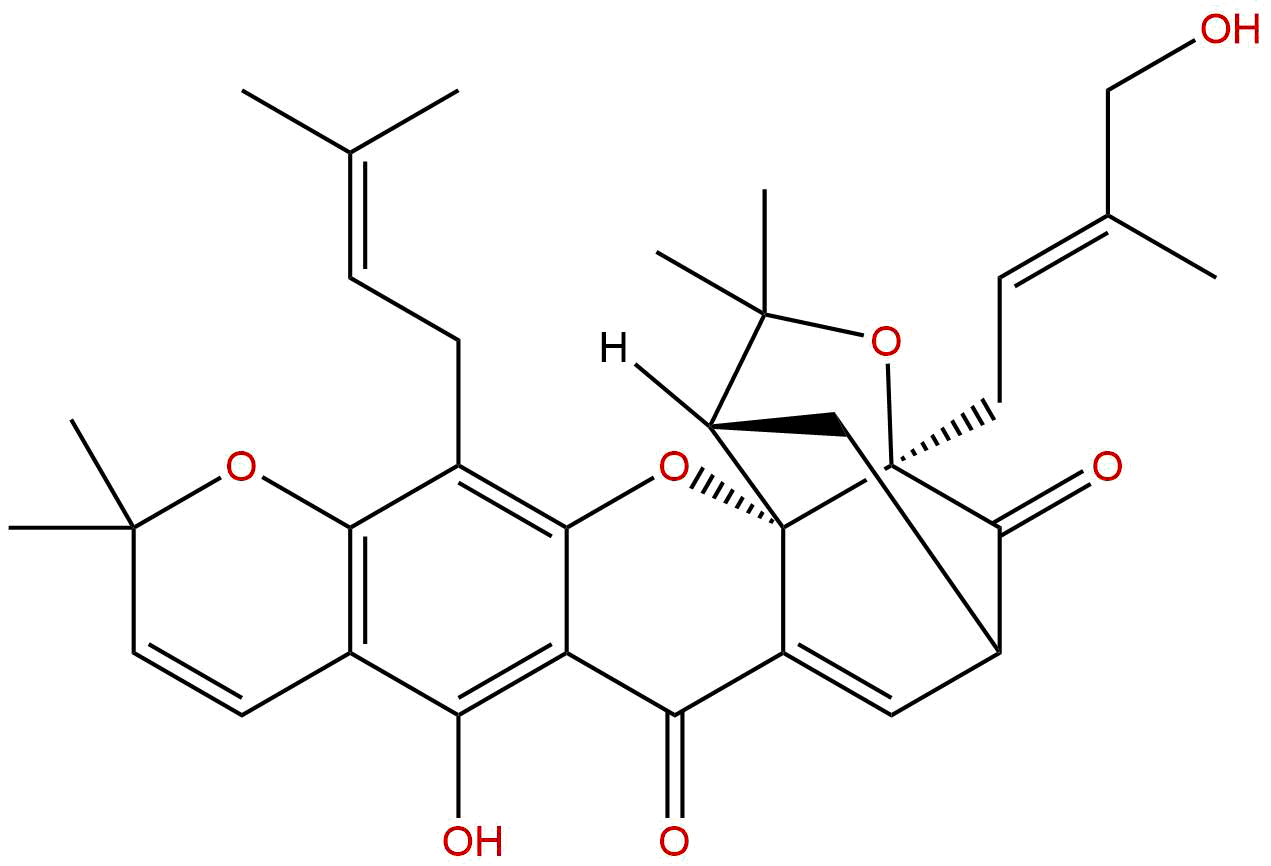
Isomorillol: A Systematic Review from Natural Flavonoids to Anti Tumor Candidate Molecules
Introduction/Overview
Natural products, as an important source of drug discovery, play an irreplaceable role in the long history of human fight against diseases. Flavonoids, as one of the most widely distributed secondary metabolites in nature, have attracted much attention due to their structural diversity and extensive biological activity. Among numerous flavonoids, Isomorillol, as a natural product with unique structural characteristics and significant pharmacological activity, has gradually entered the field of researchers in recent years.
Isomolinol (CAS number: 149655-53-8) was initially isolated from plants of the Garcinia genus and belongs to the family of Polycyclic Polyphenylated Acylphoroglucinols (PPAPs) compounds. This family of compounds is known for its complex bridged ring structure and diverse biological activities, with the most representative being molecules such as Gambogic acid that have entered preclinical research. The discovery of isoproterenol not only enriches the structural diversity of the PPAPs family, but more importantly, its anti-tumor activity, especially its induction of apoptosis in cholangiocarcinoma cells, provides a new candidate molecule for the treatment of this refractory tumor.
Cholangiocarcinoma is a malignant tumor originating from bile duct epithelial cells, and its incidence rate is on the rise worldwide. Due to the difficulty of early diagnosis and strong resistance to conventional chemotherapy drugs, the 5-year survival rate of cholangiocarcinoma patients has been consistently below 10%. Therefore, the search for new, efficient, and low toxicity anti cholangiocarcinoma drugs has become an important direction in current tumor drug development. The emergence of isoproterenol in this context undoubtedly brings new hope for the treatment of cholangiocarcinoma.
This article will provide a systematic review of the current research status of isomolinol from multiple dimensions, including chemical structure, plant origin, pharmacological activity, mechanism of action, pharmacological evaluation, and clinical application prospects, in order to provide reference for the in-depth research and development of this natural product.
Chemical structure and physicochemical properties
Chemical structural characteristics
Isomolinol belongs to the polycyclic polyisoprenyl triphenylene compounds, and its core skeleton is a highly oxidized bicyclic [3.3.1] nonane-2,4,9-trione system. This structural feature endows PPAPs family compounds with unique chemical properties and biological activity. The molecular formula of isomolinol is C ∝③ H ₄₂ O ₇, with a molecular weight of 546.6600 Da, making it a medium-sized natural product molecule.
From the perspective of structural analysis, the molecule of isomolilinol contains multiple chiral centers, forming a complex stereochemical configuration. The isopentenyl side chain in its structure not only increases the lipophilicity of the molecule, but also specifically binds to biological targets through π - π stacking, hydrophobic interactions, and other mechanisms. In addition, multiple hydroxyl and carbonyl functional groups in the molecule endow it with the ability to form hydrogen bonds, which are crucial for its interaction with protein targets.
It is worth noting that there are structural differences between isomolinol and Morellinol from the same family, mainly reflected in the substitution positions and stereoconfigurations of certain functional groups. This subtle structural difference may lead to significant differences in biological activity between the two, which also reflects the close relationship between natural product structural diversity and biological activity diversity.
Physical and chemical property parameters
According to the existing medicinal chemistry data, the physicochemical properties of isomolilinol are as follows:
- Lipid water partition coefficient (LogP): 5.2051. This value indicates that isomolinol has high lipid solubility, which is in line with the typical characteristics of PPAPs family compounds. A high LogP value means that the compound is easily able to penetrate biofilms, but it may also lead to poor water solubility issues.
- Polarized surface area (TPSA): 102.2900 Å ². TPSA is an important parameter for evaluating the oral absorption and blood-brain barrier penetration ability of drug molecules. It is generally believed that molecules with a TPSA of less than 140 Å ² have good oral bioavailability, and the TPSA value of isomolinol is within an acceptable range.
- Water solubility:0.0071 mg/mL。 The poor water solubility of isomolinol is a common problem among many natural products and an important factor restricting its drug development. Low water solubility not only affects the oral absorption of drugs, but also poses challenges for formulation development.
- Blood-brain barrier penetrability: High. Isomolinol has a high blood-brain barrier penetration ability, which suggests its potential application value in the treatment of central nervous system diseases, but at the same time, attention should be paid to possible central nervous system side effects.
- HERG inhibition: No. Inhibition of hERG potassium channels is an important predictor of drug cardiac toxicity, while isomoliletin does not inhibit hERG channels, indicating a lower risk of cardiac toxicity.
- Ames test: 0.0. The Ames test is used to evaluate the mutagenicity of compounds, and isomolinol is negative in this test, indicating a low risk of genetic toxicity.
Based on the above physical and chemical properties parameters, isomolinol has certain drug like properties, but poor water solubility is its main weakness, which needs to be improved through strategies such as prodrug design and nano formulations.
Plant sources and extraction methods
Plant-based
Yimorinol mainly comes from plants in the Garcinia genus, which belongs to the Clusiaceae family. There are about 400 species worldwide, mainly distributed in tropical and subtropical regions of Asia, Africa, and South America. Plants of the Tenghuang genus have a long history of application in traditional medicine, often used to treat various diseases such as inflammation, infections, and tumors.
The plant species currently reported to contain isomolinol include:
- Garcinia morella This is the earliest plant species to discover isomolinol and also the main source of this compound. G. Morella's bark and fruit are rich in various PPAPs compounds.
- Garcinia hanburyi Also known as Tenghuang, it is one of the most extensively studied species in the Tenghuang genus. Its resin is the source of traditional Chinese medicine "Tenghuang" and contains abundant active ingredients such as Tenghuang acid.
- Garcinia cowa The presence of isoprolinol was also detected in the fruits and leaves of this species.
It is worth noting that the content of isomolinol in plants is usually low and often coexists with other PPAPs compounds with similar structures, which poses certain difficulties for separation and purification.
Extraction and Separation Methods
The extraction and separation of isomolinol usually follow the following process:
1. Raw material pretreatment Crush dry plant materials (usually bark or fruit) to an appropriate particle size to improve extraction efficiency.
2. Solvent extraction According to the lipophilicity characteristics of isomolinol, organic solvents are often used for extraction. Common extraction solvents include:
-Ethanol or methanol: suitable for laboratory scale extraction with high extraction efficiency
-Ethyl acetate: with good selectivity, it can reduce the co extraction of polar impurities
-Dichloromethane or chloroform: has good solubility for PPAPs compounds
The extraction method can be cold soaking, hot reflux, or ultrasound assisted extraction. Ultrasonic assisted extraction has been widely used in recent years due to its high efficiency and gentle characteristics.
3. Preliminary separation After the extraction solution is concentrated under reduced pressure, liquid-liquid extraction is used for preliminary separation. Usually, the crude extract is suspended in water and extracted sequentially with solvents such as petroleum ether, ethyl acetate, and n-butanol. Isomolinol is mainly enriched in the ethyl acetate extraction site.
4. Column chromatography separation This is the key step to obtaining pure product. Common chromatographic methods include:
-Silica gel column chromatography: gradient elution is used, and the mobile phase is usually n-hexane ethyl acetate or chloroform methanol system
-Reverse phase column chromatography: using C18 or C8 packing with methanol water or acetonitrile water as the mobile phase
-Gel column chromatography: such as Sephadex LH-20, which can be used for further purification
5. High performance liquid chromatography (HPLC)For isomers that are difficult to separate, preparative HPLC is an effective means of obtaining high-purity isomolinol.
6. Structural identification Structural confirmation was performed using techniques such as nuclear magnetic resonance spectroscopy (¹ H-NMR, ¹ ³ C-NMR, 2D-NMR), high-resolution mass spectrometry (HR-ESI-MS), and circular dichroism (CD).
The overall yield of isomolinol from plant materials to pure products is usually low, ranging from 0.001% to 0.01%, which limits its large-scale acquisition and in-depth research. Therefore, the development of efficient synthesis methods or biotechnological production pathways is of great significance for promoting the research and application of isomolilinol.
Pharmacological activity research
Antitumor activity
The most notable pharmacological activity of isomolinol is its anti-tumor effect, especially its killing effect on cholangiocarcinoma cells. Multiple in vitro studies have confirmed that isomolinol can inhibit the proliferation of cholangiocarcinoma cells (such as HuCCT1, TFK-1, and other cell lines) in a dose-dependent and time-dependent manner.
Cytotoxicity study The results of MTT or CCK-8 experiments showed that the half maximal inhibitory concentration (IC ₅₀) of isomolinol on cholangiocarcinoma cells is usually in the micromolar range (1-10 μ M), demonstrating strong cytotoxicity. It is worth noting that isomolinol has relatively low toxicity to normal bile duct epithelial cells, indicating its certain selectivity.
Inducing apoptosis effect Flow cytometry analysis showed that cholangiocarcinoma cells treated with isoproterenol exhibited typical apoptotic features, including membrane phosphatidylserine eversion, decreased mitochondrial membrane potential, and DNA fragmentation. The Annexin V-FITC/PI double staining experiment further confirmed the significant increase in the proportion of apoptotic cells.
cell cycle arrest In addition to inducing apoptosis, isomolinol can also cause cell cycle arrest in cholangiocarcinoma cells. Research has found that treatment with isoproterenol can block cells in the G0/G1 or G2/M phase, and the specific blocking sites may vary depending on the cell type and treatment concentration.
anti-inflammatory activity
Inflammation is closely related to the occurrence and development of tumors, and many natural anti-tumor compounds also have anti-inflammatory activity. The anti-inflammatory effect of isoproterenol has been validated in multiple experimental models.
In vitro anti-inflammatory research In a macrophage model stimulated by lipopolysaccharides (LPS), isomolinol can significantly inhibit the production of pro-inflammatory factors, including tumor necrosis factor - α (TNF - α), interleukin-6 (IL-6), and nitric oxide (NO). In addition, isoproterenol can also inhibit the expression of cyclooxygenase-2 (COX-2) and the synthesis of prostaglandin E ₂ (PGE ₂).
Target association According to existing data, the anti-inflammatory activity of isomoliletin involves multiple molecular targets, including IL-6, STAT3, CASP1, TRPV1, RELA, PTGS1, TNF, TRPA1, IKBKB, and NOS2. These targets cover key nodes in the inflammatory signaling pathway, suggesting that isomolinol may exert anti-inflammatory effects through multi-target regulation.
Other pharmacological activities
In addition to anti-tumor and anti-inflammatory activities, isomoliletin may also have the following pharmacological effects:
antioxidant activity Flavonoids usually have antioxidant activity, and the phenolic hydroxyl groups in the molecules of isomolinol endow them with the ability to scavenge free radicals. DPPH and ABTS free radical scavenging experiments showed that isomolilinol has certain antioxidant activity, but its activity intensity is weaker than classical antioxidants such as vitamin C or quercetin.
Antibacterial activity Some PPAPs compounds have antibacterial activity, but there are few research reports on the antibacterial effect of isomolinol, which needs further exploration.
Mechanism of action and molecular targets
Molecular mechanism of inducing apoptosis
The core mechanism of the anti-tumor effect of isoproterenol is the induction of cell apoptosis, and its molecular mechanism involves the regulation of multiple signaling pathways.
Mitochondrial apoptosis pathway Isomolinol can significantly upregulate the expression of pro apoptotic protein Bax in cholangiocarcinoma cells, while downregulating the expression of anti apoptotic protein Bcl-2, leading to an increase in Bax/Bcl-2 ratio. This ratio change is a key event in the activation of the mitochondrial apoptosis pathway. The increase in Bax/Bcl-2 ratio promotes mitochondrial outer membrane permeabilization, leading to the release of cytochrome c into the cytoplasm, which in turn activates caspase-9 and downstream caspase-3, ultimately executing the cell apoptosis program.
Downregulation of the Survivor protein Survivor is an important member of the inhibitor of apoptosis protein (IAP) family, highly expressed in various tumor cells, and closely related to chemotherapy resistance and poor prognosis of tumors. Emololinol can significantly reduce the expression level of survivor protein in cholangiocarcinoma cells, thereby relieving the inhibition of caspase activity and promoting the execution of apoptosis.
STAT3 signaling pathway STAT3 is a key transcription factor that connects inflammation and tumors, and is often in a continuously activated state in cholangiocarcinoma. Emololin may downregulate the expression of its target genes (including Bcl-2, survivorin, etc.) by inhibiting the phosphorylation of STAT3, blocking its nuclear translocation and transcriptional activation functions. This mechanism links the anti-tumor activity of isoproterenol with its anti-inflammatory activity.
Anti inflammatory mechanism
The anti-inflammatory effect of isoproterenol involves multiple inflammation related targets:
NF - κ B pathway RELA (p65) is a key subunit of NF - κ B transcription factor. Emololin may inhibit the activity of I κ B kinase (IKBKB), prevent the phosphorylation and degradation of I κ B α, and thus suppress the nuclear translocation of NF - κ B and the transcription of pro-inflammatory genes.
COX-2/PGE ₂ pathway PTGS1 (COX-1) and PTGS2 (COX-2) are key enzymes involved in prostaglandin synthesis. The inhibitory effect of isoproterenol on COX-2 may be an important component of its anti-inflammatory activity.
Transient receptor potential channel TRPV1 and TRPA1 are ion channels involved in pain and inflammation perception. The regulatory effect of isoproterenol on these channels may be related to its analgesic and anti-inflammatory activities.
Caspase-1 and IL-6 CASP1 is involved in the maturation and secretion of IL-1 β, while IL-6 is the core cytokine of inflammatory response. The regulation of these targets by isoproterenol further supports its anti-inflammatory effect.
Multi target action characteristics
The mechanism of action of isoproterenol exhibits typical multi-target and multi pathway characteristics. The characteristic of this "multi-target drug" is not only an advantage of natural products, but also increases the complexity of studying its mechanism of action. From the perspective of systems pharmacology, isomolinol may exert synergistic effects by simultaneously regulating multiple signaling nodes, thereby achieving its anti-tumor and anti-inflammatory activities.
It is worth noting that there is overlap and overlap between the anti-tumor and anti-inflammatory mechanisms of isomoliletin. For example, the STAT3 and NF - κ B pathways are both key regulators of inflammatory responses and play important roles in the survival and proliferation of tumor cells. The correlation in this mechanism suggests that isomolinol may exert its therapeutic effect through a dual mechanism of "anti-inflammatory anti-tumor".
Evaluation of drug properties and pharmacokinetics
Drug analysis
Based on Lipinski's "Rule of Five" and Veber's rule, evaluate the pharmacological properties of isomolilinol:
Lipinski's Five Rules:
-Molecular weight: 546.66 Da (>500, violation of rule 1)
-LogP: 5.2051 (>5, violation of 1 rule)
-Hydrogen bond donors: approximately 4-5 (≤ 5, compliant)
-Hydrogen bond receptors: approximately 7 (≤ 10, compliant)
Isomolinol violates two Lipinski rules (molecular weight and LogP), suggesting that its oral bioavailability may be poor. However, many successful natural medicines such as paclitaxel, rapamycin, etc. also violate the five rules, so this evaluation result does not completely negate their potential for drug development.
Veber rules:
-TPSA: 102.29 Å ² (<140 Å ², compliant)
-Number of rotatable keys: approximately 8-10 (<10, basically consistent)
Isomolinol basically meets the Veber rule, indicating its good oral absorption potential.
Pharmacokinetic Challenge
Absorption problem The low water solubility (0.0071 mg/mL) of isomolinol is the main obstacle affecting its oral absorption. Low water solubility leads to slow dissolution rate of drugs in the gastrointestinal tract, limiting their bioavailability.
distribution characteristics High LogP values and high blood-brain barrier penetration suggest that isomolinol may have a large distribution volume in the body and is prone to accumulate in adipose tissue. High blood-brain barrier penetration is both an advantage (possibly used for the treatment of brain diseases) and a risk (possibly causing central nervous system side effects).
Metabolic issues PPAPs typically undergo extensive liver metabolism, mainly involving oxidative metabolism of cytochrome P450 enzymes (CYP450) and phase II metabolism of glucuronosyltransferase (UGT). Further research is needed on the metabolic stability and activity of the metabolites of isomolinol.
Excretory pathway Based on its lipid solubility characteristics, isomolinol may be mainly excreted through bile and partially excreted through the kidneys.
Improvement strategy
The following strategies can be adopted to address the issue of the pharmacological properties of isomoliletin:
1. Pre drug design By introducing water-soluble groups such as phosphate esters and amino acid esters, the water solubility of the compound can be improved. The prodrug releases the active parent drug after enzymatic or chemical hydrolysis in the body.
2. Nanoformulations Using carrier systems such as liposomes, polymer nanoparticles, and solid lipid nanoparticles to enhance the solubility and bioavailability of isomolilinol. Nanoformulations can also achieve targeted delivery and sustained release effects.
3. Structural optimization On the basis of maintaining the core pharmacophore, modify the molecular structure to reduce LogP value and improve water solubility. For example, introducing polar groups or reducing the number of isopentenyl side chains.
4. Optimization of administration route For the issue of low oral bioavailability, non oral administration routes such as injections, transdermal formulations, or inhaled formulations can be considered.
Clinical application prospects and prospects
Treatment of cholangiocarcinoma
Bile duct cancer is the most promising indication for isoproterenol. The current standard treatment options for cholangiocarcinoma include surgical resection, liver transplantation, chemotherapy (gemcitabine combined with cisplatin), and targeted therapy (such as FGFR2 inhibitors). However, most patients are diagnosed at an advanced stage, losing the opportunity for surgery, and resistance to chemotherapy drugs is widespread.
The specific killing effect of isoproterenol on cholangiocarcinoma cells, especially its mechanism of inducing apoptosis, provides new ideas for the treatment of cholangiocarcinoma. Compared with existing chemotherapy drugs, isomoliletin may have the following advantages:
-Unique mechanism of action that may overcome resistance to drugs such as gemcitabine
-Low toxicity to normal cells and better safety
-Simultaneously possessing anti-inflammatory activity, it may improve the tumor microenvironment
Combination therapy strategy
Based on the mechanism of action of isoprolinol, the following combination therapy regimens can be explored:
Combined use with chemotherapy drugs The combination of isoproterenol with gemcitabine or cisplatin may produce a synergistic effect, reducing the dosage of chemotherapy drugs and alleviating toxic side effects.
Combined with targeted drugs The combination of isoproterenol with targeted drugs such as FGFR inhibitors and IDH inhibitors may delay the development of drug resistance through multi-target inhibition.
Combined with immunotherapy The anti-inflammatory activity of isoproterenol may regulate the tumor immune microenvironment and enhance the efficacy of immune checkpoint inhibitors (such as PD-1/PD-L1 antibodies).
Other potential indications
Based on the anti-inflammatory activity and high blood-brain barrier penetration of isomolinol, it may have therapeutic potential in the following diseases:
Neuroinflammatory disease Diseases such as Alzheimer's disease and Parkinson's disease are closely related to neuroinflammation in their occurrence and development. The STAT3 and NF - κ B inhibitory activities of isoproterenol may play a neuroprotective role.
Chronic inflammatory diseases For conditions such as rheumatoid arthritis and inflammatory bowel disease, the multi-target anti-inflammatory effects of isomoliletin may provide new treatment options.
Other types of tumors In addition to cholangiocarcinoma, the activity of isomorilinol on other digestive system tumors (such as liver cancer, pancreatic cancer, colorectal cancer) deserves further exploration.
Research Prospects
Despite the promising application prospects of isomolinol, there are still many challenges from laboratory research to clinical application:
1. In depth study of pharmacodynamics More in vivo animal models need to be established to validate the anti-tumor and anti-inflammatory activities of isomolilinol. Especially the in situ model of cholangiocarcinoma and the patient derived xenograft (PDX) model can more accurately reflect the clinical efficacy of drugs.
2. Pharmacokinetic studies Conduct systematic pharmacokinetic studies to clarify the absorption, distribution, metabolism, and excretion characteristics of isomoliletin in vivo, providing a basis for drug administration design.
3. Toxicological evaluation Conduct comprehensive acute toxicity, long-term toxicity, and reproductive toxicity studies to evaluate the safety of isomolinol.
4. Formulation development To address the issue of poor water solubility, develop formulations suitable for clinical applications, such as liposomes, nanoemulsions, cyclodextrin inclusion complexes, etc.
5. Synthetic Biology Exploring the biosynthetic pathway of isomolinol, achieving efficient production through metabolic engineering or synthetic biology methods, and solving the problem of limited natural sources.
6. Study on Structure Activity Relationship By modifying the structure of the system, the pharmacophores of isomolinol were elucidated, and derivatives with stronger activity and better drug properties were discovered.
Conclusion
As a natural flavonoid compound with unique structural characteristics, isomolinol has shown great potential as an anti-tumor candidate drug due to its induction of apoptosis in cholangiocarcinoma cells and multi-target anti-inflammatory activity. It provides a new target and strategy for the treatment of cholangiocarcinoma by regulating the Bax/Bcl-2 ratio and downregulating the expression of caspase-3 to induce apoptosis.
However, the research on isomolinol is still in its early stages, and there is still a long way to go from natural products to clinical drugs. The pharmacokinetic challenges brought about by its low water solubility, supply issues caused by limited natural sources, and lack of systematic in vivo pharmacological and toxicological data are all key bottlenecks restricting its development.
Looking ahead to the future, with advances in structural optimization, formulation technology, synthetic biology, and other fields, isomolilinol is expected to overcome current limitations and develop into a new drug for the treatment of cholangiocarcinoma and other diseases. At the same time, in-depth research on isomolinol will enrich our understanding of the structure and activity of PPAPs compounds, providing valuable experience and inspiration for the discovery of natural product drugs.
In today's world where the development of natural product drugs is increasingly valued, the active molecule isomolinol from traditional medicinal plants is attracting more and more researchers with its unique chemical and biological charm. We have reason to believe that in the near future, isomolinol and its derivatives will play an important role in the field of cancer treatment and contribute to human health.