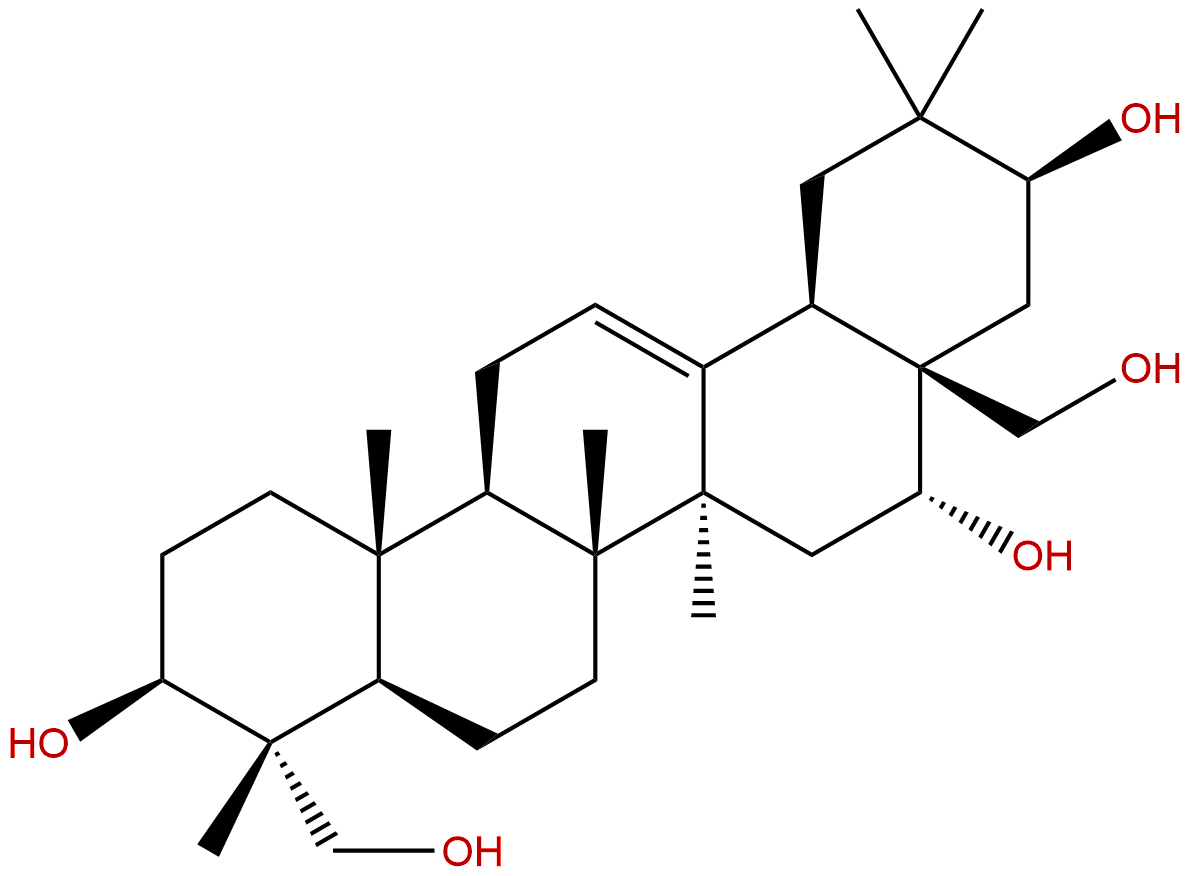


Product name: Gymnestrogenin
Synonym name:
Catalogue No.: BP3175
Cas No.: 19942-02-0
Formula: C30H50O5
Mol Weight: 490.725
Botanical Source:
Physical Description:
Type of Compound: Triterpenoids
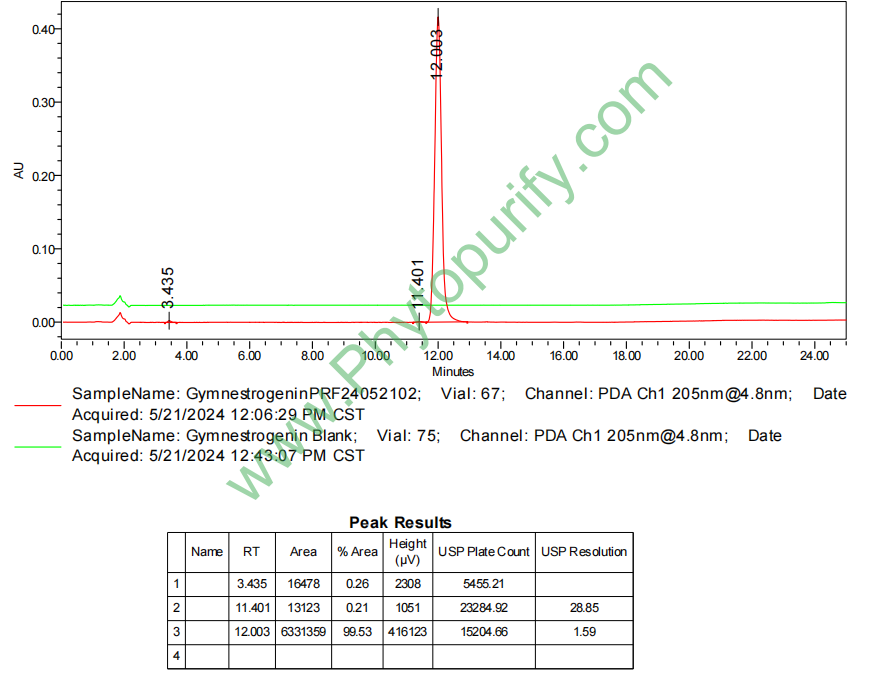
Purity: 95%~99%
Analysis Method: HPLC-DAD or/and HPLC-ELSD
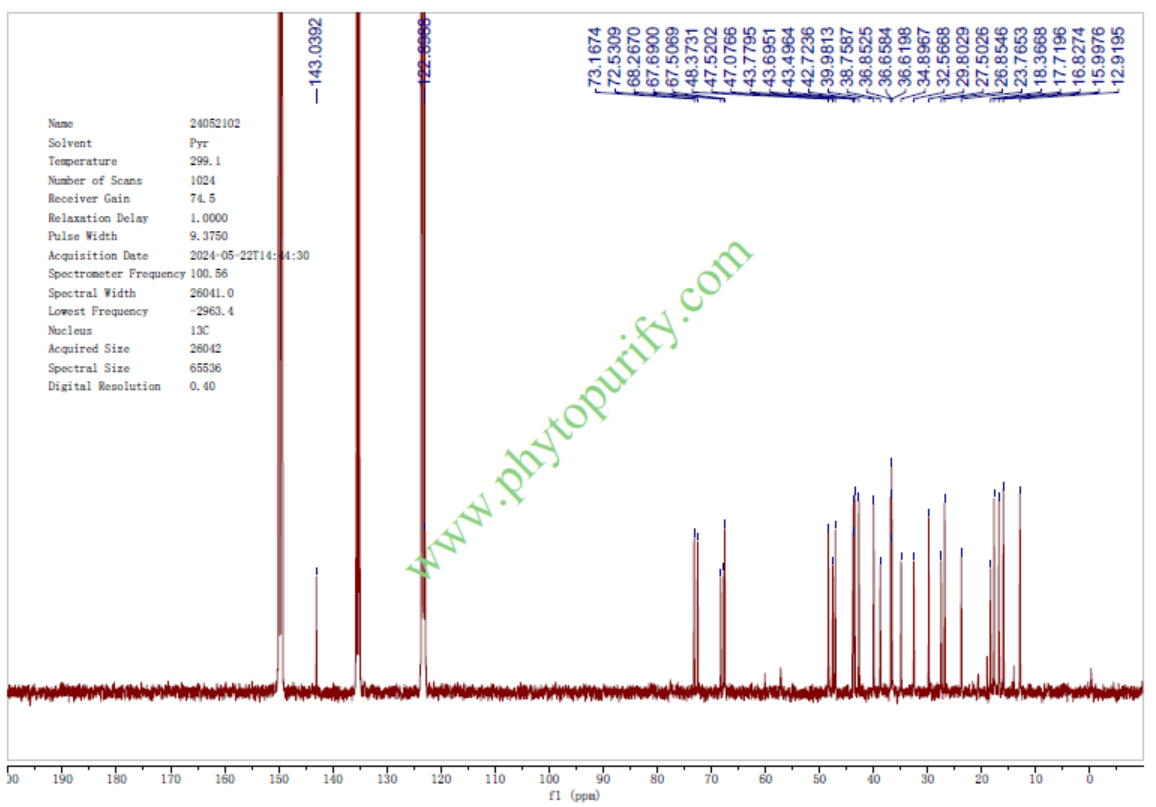
Identification Method: Mass, NMR
Packing: Brown vial or HDPE plastic bottle
The product could be supplied from milligrams to grams. Inquire for bulk scale.
We provide solution to improve the water-solubility of compounds, thereby facilitating the variety of activity tests and clinic uses.
For Reference Standard and R&D, Not for Human Use Directly.
HPLC of Gymnestrogenin
NMR of Gymnestrogenin
Storage conditions:Short-term storage at 2~8℃, long-term storage at -20 ~ -80℃
101.1500
3.7589
3.7589
.0028
3.1301
7.6017
Low
80.8612
5.2369
No
No
No
No
No
No
0.0
Yes
No
Yes
Yes
Obesity and its associated metabolic syndrome have become a major global public health challenge, with pathological processes involving multiple complex links such as energy metabolism imbalance, chronic inflammation, insulin resistance, and lipid metabolism disorders. Finding safe and effective intervention strategies is one of the core directions of current drug development. In the treasure trove of traditional medicines, natural products derived from plants provide abundant sources of lead compounds for the prevention and treatment of metabolic diseases due to their structural diversity and multi-target properties. Among them, derived from traditional medicinal plants Spoon Vine(Gymnema sylvestre R. The active ingredients of Br. have long been highly regarded for their significant potential in anti hyperglycemic and regulating lipid metabolism.
Gymnosterogen (CAS: 19942-02-0), as a pentahydroxytriterpenoid compound isolated from the leaves of Gymnostemma, has become an emerging focus in pharmacological research of this plant in recent years. Early research mainly focused on the hypoglycemic activity of its homologous compounds such as Gymnemic acid, while the glycosides of Gymnemic acid gradually emerged due to their unique nuclear receptor regulatory effects. Research has shown that it is an effective Liver X Receptor (LXR) antagonist It can regulate gene networks related to cholesterol metabolism, fatty acid synthesis, and inflammation. LXR, as a key transcription factor in lipid metabolism, is closely related to metabolic abnormalities such as liver lipid accumulation and hypertriglyceridemia due to its overactivation. Therefore, selective LXR antagonists are considered a potential strategy for treating diseases such as obesity and non-alcoholic fatty liver disease.
The purpose of this article is to provide a systematic review of the glycosides in Gymnostemma pentaphyllum, exploring their chemical structure, plant origin, pharmacological activity, molecular mechanism of action, pharmacological evaluation, and clinical application prospects. The aim is to provide comprehensive scientific references for the in-depth research and development of this natural product.
Spoon vine glycoside is a pentacyclic triterpenoid compound with the molecular formula C ∝₀ H ₅₀ O ₅ and a molecular weight of 490.7250 g/mol. Its core structure is an Oleanane type triterpenoid skeleton, characterized by five hydroxyl groups (- OH) attached to the parent nucleus, belonging to polyhydroxytriterpenes. The distribution and spatial conformation of these hydroxyl groups are the determining factors for their biological activity and physicochemical properties.
From the analysis of physical and chemical properties, the calculated lipid water partition coefficient (LogP) of stevia glycosides is 3.7589, indicating its moderate lipophilicity, which is consistent with the structure of its triterpenoid skeleton. Its topological polar surface area (TPSA) is 101.15 Å ², mainly attributed to the polar surface area contributed by five hydroxyl groups. The high TPSA and moderate LogP values jointly affect its solubility and permeability. According to the predicted data, its water solubility is relatively low (about 0.0028 mg/mL), indicating that it may need to be improved in formulation development through techniques such as salt formation, cyclodextrin inclusion, or nanoformulation.
In terms of early warning indicators for drug safety, existing computational prediction models show that the inhibitory risk of stevia glycosides on hERG potassium channels is "no", which means its potential risk of arrhythmia (QT interval prolongation) is low and is a favorable safety signal. Meanwhile, its Ames test predicted a value of 0.0, indicating that it may not have direct genetic toxicity, laying the foundation for subsequent safety evaluations. However, its blood-brain barrier (BBB) permeability is predicted to be "low", indicating that it may not easily enter the central nervous system. This may help reduce central nervous system side effects for anti obesity drugs that primarily target peripheral metabolic organs such as the liver and adipose tissue, which is a potential advantage.
The main source of saponins in Gymnostemma grandiflorum comes from traditional medicinal plants Spoon Vine(Gymnema sylvestre R.Br.), This plant belongs to the Apocynaceae family and is widely distributed in tropical and subtropical regions such as India, Southeast Asia, and southern China. In Ayurvedic medicine, Gymnema sylvestris is called "Gumar" (meaning "sugar breaker"), and its leaves have long been used to treat diabetes and obesity.
The glycosides of Gymnostemma grandiflorum usually exist in the form of glycosides (free state) or saponins formed by binding with sugar groups in plants. The extraction and separation process follows the conventional process of natural product chemistry, but it needs to be optimized for its triterpenoid and polar characteristics:
1. Raw material pretreatment and extraction Usually, dried leaves of Gymnotium are crushed and subjected to reflux extraction or ultrasound assisted extraction using medium polarity solvents such as methanol, ethanol, or methanol water mixed solvents to fully extract triterpenoid components.
2. Preliminary enrichment and separation After the extraction solution is concentrated under reduced pressure, the resulting extract is often subjected to liquid-liquid extraction (such as segmented extraction with ethyl acetate and n-butanol) for preliminary separation. The glycosides of Gymnostemma grandiflorum are mostly enriched in the ethyl acetate fraction. Subsequently, further purification was carried out using chromatographic techniques such as silica gel column chromatography, reverse phase silica gel (such as ODS) column chromatography, and high performance liquid chromatography (HPLC).
3. appraisal The isolated monomer compounds were structurally identified by nuclear magnetic resonance (NMR, including ¹ H-NMR and ¹ ³ C-NMR), mass spectrometry (MS), infrared spectroscopy (IR), and comparison with literature data.
It is worth noting that the chemical composition of Gymnostemma pentaphyllum is complex, containing various structurally similar saponins. Therefore, when separating Gymnostemma pentaphyllum glycosides, precise chromatographic conditions are required to achieve separation from other triterpenoid compounds. The application of modern technologies such as high-speed countercurrent chromatography (HSCCC) and preparative high-performance liquid chromatography (Prep HPLC) has greatly improved their separation efficiency and purity.
The pharmacological activity research of stevia glycosides mainly focuses on their metabolic regulatory effects, and evidence shows that they have significant potential in anti obesity and improving glucose and lipid metabolism disorders.
Regulating lipid metabolism and anti obesity effects As an LXR antagonist, the core pharmacological function of stevia glycosides is to regulate lipid homeostasis. LXR activation upregulates genes such as sterol regulatory element binding protein-1c (SREBP-1c) and fatty acid synthase (FAS), promoting liver fat production. In vitro studies have shown that the glycoside of Gymnostemma can effectively inhibit LXR mediated transcriptional activity, which may reduce the synthesis and accumulation of triglycerides and cholesterol in the liver. In diet induced obesity animal models, relevant studies suggest that it may alleviate liver steatosis, lower serum triglyceride and low-density lipoprotein cholesterol levels, and reduce the accumulation of white adipose tissue.
Improving glucose metabolism and insulin sensitization Obesity is often accompanied by insulin resistance. In addition to directly regulating lipid metabolism, the glycosides of Gymnostemma pentaphyllum may also improve glucose metabolism through indirect or direct mechanisms. It may be activated through AMPK(AMP-activated protein kinase) Pathways increase glucose uptake in skeletal muscles and liver, while inhibiting hepatic gluconeogenesis. In addition, it has an impact on Protein tyrosine phosphatase 1B (PTP1B, encoded by PTPN1 gene) The potential inhibitory effect is worth paying attention to. PTP1B is a key negative regulator of the insulin receptor signaling pathway, and inhibiting PTP1B can enhance insulin sensitivity. The glycosides of Gymnostemma grandiflorum may exert insulin sensitizing effects through this target.
anti-inflammatory effect Chronic low-grade inflammation is the core characteristic of obesity related metabolic disorders. LXR itself has anti-inflammatory properties, but its overactivated lipid synthesis side effects limit the use of agonists. It is interesting that certain LXR antagonists may exert anti-inflammatory effects through other pathways in specific contexts. Codonopsis glycosides may alleviate inflammation in adipose tissue and liver by regulating inflammation related molecules such as SIRT1, an NAD+- dependent deacetylase involved in energy metabolism and inflammation inhibition.
Other potential activities The study also suggests that the glycosides of Gymnostemma grandiflorum may interact with other targets, such as regulating Transient receptor potential vanillic acid subtype 1 (TRPV1) Channels (related to energy consumption and pain perception)11 β - hydroxysteroid dehydrogenase type 1 (HSD11B1)(Controlling local cortisol levels and affecting metabolism), but the details and physiological significance of these effects need further clarification.
The core of the pharmacological effects exerted by the glycoside of Gymnostemma pentaphyllum lies in its multi-target regulatory properties, among which the antagonistic effect on LXR is currently the focus of research.
Core mechanism: LXR antagonistic effect:
Key collaborative target network:
In summary, the glycosides of Gymnostemma grandiflorum are obtained through“Antagonistic LXR as the core, synergistically activating AMPK, inhibiting PTP1B, regulating SIRT1 and other multi-target networks”The mechanism comprehensively intervenes in the pathological process of obesity and its metabolic complications from multiple aspects, including inhibiting fat synthesis, promoting fat oxidation, enhancing insulin sensitivity, and reducing inflammation.
Based on its physical and chemical properties and preliminary computer predictions, the medicinal properties of stevia glycosides present both opportunities and challenges.
Pharmaceutical advantages:
Drug Challenge:
Prospects of Pharmacokinetic Research Future research needs to use in vitro models (such as Caco-2 cell model to evaluate permeability, liver microsome to evaluate metabolic stability) and in vivo animal experiments (rat and mouse pharmacokinetic studies) to systematically evaluate its ADME characteristics. Developing new drug delivery systems based on their solubility issues, such as self microemulsions, solid dispersions, phospholipid complexes, or nanocrystals, is a key strategy to enhance their drug properties.
As a natural active ingredient with a novel mechanism of action, stevia glycosides have shown broad application prospects in the prevention and treatment of metabolic diseases, but also face many bottlenecks that need to be overcome.
Potential clinical application directions:
Future research focus and challenges:
Codonopsis glycosides are important bioactive pentahydroxytriterpenoids isolated from the traditional medicinal plant Codonopsis pilosula. Its most significant feature is that it acts as an effective LXR antagonist with certain subtype selectivity, and downregulates LXR self expression through a negative feedback mechanism. Around this core role, it further forms a synergistic regulatory network with multiple key targets closely related to energy metabolism and insulin signaling, such as AMPK, PTP1B, SIRT1, etc., thus demonstrating multidimensional and multi link comprehensive intervention potential in anti obesity, improving lipid metabolism, and insulin resistance.
Although its promising preliminary safety predictions and unique mechanism of action are encouraging, its low water solubility and blank systematic pharmacokinetic studies are scientific challenges that must be faced and addressed in its drug conversion process. Future research needs to focus on overcoming the bottleneck of drug development through multidisciplinary approaches such as medicinal chemistry, pharmacology, and pharmacokinetics, based on a deeper understanding of the mechanisms involved. In summary, the glycosides of Gymnostemma not only provide a unique natural lead compound for the treatment of metabolic diseases, but also offer new chemical tools and research perspectives for a deeper understanding of the role of LXR antagonists in metabolic regulation. With the continuous deepening of research and the development of technology, it is expected to contribute important value in the research and development of innovative metabolic disease treatment drugs.
