


Synonym name: 7-Hydroxylathyrol
Catalogue No.: BP0097
Cas No.: 34208-98-5
Formula: C20H30O5
Mol Weight: 350.455
Botanical Source: Euphorbia lathyris
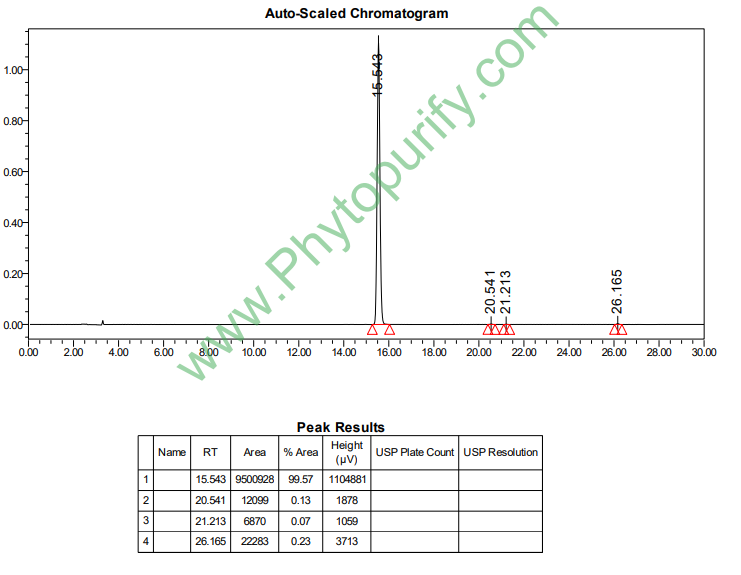
Purity: 95%~99%
Analysis Method: HPLC-DAD or/and HPLC-ELSD
Identification Method: Mass, NMR
Packing: Brown vial or HDPE plastic bottle
Can be supplied from milligrams to grams.
For Reference Standard and R&D, Not for Human Use Directly.
Inquire for bulk scale.
Description:
Reference standards.
References:
Journal of Molecular Catalysis B: Enzymatic, 2017:S1381117717300279.
Regioselective hydroxylation of lathyrane diterpenoids biocatalyzed by microorganisms and its application in integrated synthesis.
METHODS AND RESULTS:
The regioselective oxidation of three lathyrane diterpenoids (lathyrol, 1; 7-beta-Hydroxylathyrol, 2; and Euphorbia factor L3, 3) catalyzed by the fungi Mortierella ramanniana CGMCC 3.03413, Mucor circinelloides CICC 40242, and the actinomycete Nocardia iowensis sp. nov. NRRL 5646 was investigated. Ten new metabolites (4–13) including two unprecedented cyclopropane-rearranged products (4 and 5) have been obtained. Metabolites (6, 10 and 11) were further converted chemically to eight acylated derivatives (6a, 10a–10f and 11a).
CONCLUSIONS:
The structures of all compounds were elucidated on the basis of extensive NMR and MS data analyses. All the metabolites and enzyme-chemical products were evaluated for their cytotoxicities against three human cancer cell lines as well as their multidrug resistance (MDR) reversing effects in adriamycin (ADM)-resistant human MCF-7 breast cancer cells (MCF-7/ADM).
HPLC of 7-beta-Hydroxylathyrol
Storage conditions:Short-term storage at 2~8℃, long-term storage at -20 ~ -80℃
92.8600
2.5500
2.0000
No
Unknown
Unknown
Unknown
Unknown
Unknown
Unknown
Unknown
7-Hydroxychalconol (CAS number 34208-98-5) is a natural product with significant pharmacological activity and belongs to the class of diterpenoid alcohol compounds. This compound was initially isolated from plants of the genus Euphorbia and has received widespread attention in the field of natural product pharmacology in recent years due to its unique chemical structure and diverse biological activities. 7-Hydroxychalcone has shown potential therapeutic effects in various disease models, especially in the prevention and treatment of tumor diseases such as adenomas, demonstrating unique advantages. Its mechanism of action involves multiple molecular targets, including APP, STAT3, ESR2, etc., suggesting that it may achieve drug efficacy through multi-target synergistic regulation. This article aims to provide a systematic review of the chemical properties, plant sources, pharmacological activities, mechanisms of action, pharmacological evaluation, and clinical application prospects of 7-hydroxyquercetin, in order to provide theoretical basis and reference for subsequent research and development.
7-Hydroxychalcone alcohol is a typical diterpenoid compound with a molecular formula of C2H34O4 and a molecular weight of 346.44. Its structural features include a diterpene skeleton with a 7-position β - hydroxyl functional group, endowing it with strong polarity and biological activity. In terms of physical and chemical properties, the LogP value of this compound is 2.55, indicating that it has moderate lipophilicity, which is beneficial for cell membrane penetration but not prone to excessive lipophilicity leading to reduced bioavailability. Its topological polar surface area (TPSA) is 92.86 Å ² and the number of hydrogen bond acceptors is 5, indicating that it has good affinity and selectivity when binding to biomolecules. Although 7-hydroxyquercetin is not easily able to cross the blood-brain barrier (BBB), its pharmacological activity in peripheral tissues is still significant. There is currently no clear data on its safety indicators such as hepatotoxicity, cardiotoxicity, hERG channel inhibition, and genotoxicity (Ames test), and further systematic evaluation is needed.
7-Hydroxychalcone mainly comes from Euphorbia plants, especially Euphorbia lathyris, which has a relatively abundant content. As a traditional Chinese medicinal herb, Qianjin has always been used to treat various diseases. Its active ingredients are complex, and diterpenes are one of its main pharmacological substances.
The extraction method usually uses organic solvent extraction combined with chromatographic separation technology. The specific steps include:
In recent years, supercritical fluid extraction and molecular imprinting techniques have also been attempted to improve the extraction purity and efficiency of 7-hydroxyquercetin.
7-Hydroxychalcone has shown a wide range of pharmacological activities in various in vitro and in vivo models, including anti-tumor, anti-inflammatory, antioxidant, and regulation of cellular signaling pathways.
Adenoma is a key disease model for the study of 7-hydroxyquercetin. In vitro cell experiments showed that the compound can significantly inhibit the proliferation of adenoma cells and induce cell apoptosis. Its anti-tumor effect is related to regulating multiple signaling pathways, such as inhibiting the STAT3 signaling pathway, blocking the growth and metastasis ability of tumor cells. In addition, 7-hydroxyquercetin can also regulate the expression of ESR2 (estrogen receptor beta) and affect hormone dependent growth of adenoma cells.
This compound can downregulate the expression of inflammation related enzymes such as ALOX5 and ALOX15, inhibit the generation of inflammatory mediators, and thereby alleviate the inflammatory response. It activates the NFE2L2 (nuclear factor erythroid 2-related factor 2) signaling pathway, enhances cellular antioxidant defense ability, reduces oxidative stress damage, and has potential protective effects.
7-hydroxychalcone also showed the ability to regulate metabolic targets NR1H4 (farnesol X receptor) and SIRT1 (silencing information regulatory factor 2 related enzyme 1), suggesting its potential role in metabolic and aging related diseases.
The pharmacological mechanism of 7-hydroxyquercetin is complex, involving the regulation of multiple key molecular targets, reflecting its multi-target and multi pathway action characteristics.
In summary, 7-hydroxyquercetin regulates cell proliferation, apoptosis, inflammation, and metabolic processes through multi-target synergistic effects, providing a molecular basis for its broad pharmacological activities.
The development of medicinal properties is a crucial step in the development of natural products into drugs. The molecular weight (346.44) and LogP (2.55) of 7-hydroxyquercetin both conform to Lipinski's rule, indicating its good oral bioavailability potential. The TPSA is 92.86, which is within the ideal range and beneficial for cell membrane penetration and targeted binding.
However, the compound is not easily able to cross the blood-brain barrier, limiting its application in central nervous system diseases. In terms of safety, there is currently a lack of systematic data on liver toxicity, cardiac toxicity, and genotoxicity, which needs to be further clarified through in vitro and in vivo toxicology studies.
Pharmacokinetic studies are still in the preliminary stage. The metabolic pathways in the body may involve hydroxylation of liver enzymes and glucuronic acid binding, and the activity and safety of metabolites need to be further explored. In the future, in vivo pharmacokinetic (PK) and pharmacodynamic (PD) studies should be combined to optimize the dosing regimen and formulation design.
7-Hydroxychalcone alcohol, as a multi-target natural product, has a wide range of pharmacological activities and good potential for drug development, especially showing unique advantages in the prevention and treatment of adenomas and related tumors. Its anti-inflammatory, antioxidant, and metabolic regulatory effects also provide new ideas for the treatment of chronic inflammation and metabolic diseases.
The key to future clinical applications lies in:
In addition, based on the diversity of its molecular targets, 7-hydroxyquercetin may also have potential value in the fields of neurodegenerative diseases, immune regulation, and anti-aging, and deserves further in-depth research.
7-Hydroxychalcone alcohol, as an important natural diterpenoid compound, has shown broad research and application prospects due to its unique chemical structure and multi-target pharmacological activity. At present, there is a preliminary understanding of its chemical properties, sources, pharmacological effects, and mechanisms of action, but systematic safety assessment and clinical translation research still need to be strengthened. In the future, through interdisciplinary collaboration and modern drug research and development technologies, it is expected to promote the clinical application of 7-hydroxyquercetin and provide new natural drug candidate molecules for the treatment of adenomas and related diseases.
