Introduction/Overview
In the long river of natural product chemistry and pharmacology research, active ingredients derived from traditional medicinal plants have always been an important source for discovering new drug lead compounds. Spoon Vine Genus(Gymnema)Plants, especially spoon vines(Gymnema sylvestre)It has a long history in traditional medicine to treat diabetes, obesity and inflammatory diseases. The material basis of its pharmacological activity is mainly attributed to a series of structurally unique oleanane type triterpenoid saponins. In recent years, with the advancement of separation and identification techniques, more structurally novel and significantly active secondary metabolites have been discovered. Among them, 21-O-Tigloylgymnemagenin (CAS: 1581276-63-2), as a type of steviol saponin modified with various acyl groups, has gradually entered the field of researchers.
Preliminary studies have shown that the compound exhibits significant immune regulatory activity, involving the regulation of multiple key immune signaling pathways and cytokines, such as Toll like receptor 4 (TLR4), signal transduction and transcription activator 3 (STAT3), nuclear factor kappa B (NF - κ B), etc. The balance of the immune system is the core of maintaining body health, and its dysregulation is closely related to autoimmune diseases (such as rheumatoid arthritis, systemic lupus erythematosus), chronic inflammation, organ transplant rejection, and the occurrence and development of tumors. Therefore, finding efficient and low toxicity immunomodulators is an important direction for modern drug development. Natural products exhibit unique advantages in this field due to their diverse structures and multi-target interactions.
The purpose of this article is to provide a systematic review of the compound 21-O-Tijia acyl spodumene glycoside, and to explore its chemical structure, plant origin, pharmacological activity, mechanism of action, pharmacological evaluation, and clinical application prospects in depth. The aim is to provide comprehensive scientific references for the in-depth research and potential drug development of this compound.
Chemical structure and physicochemical properties
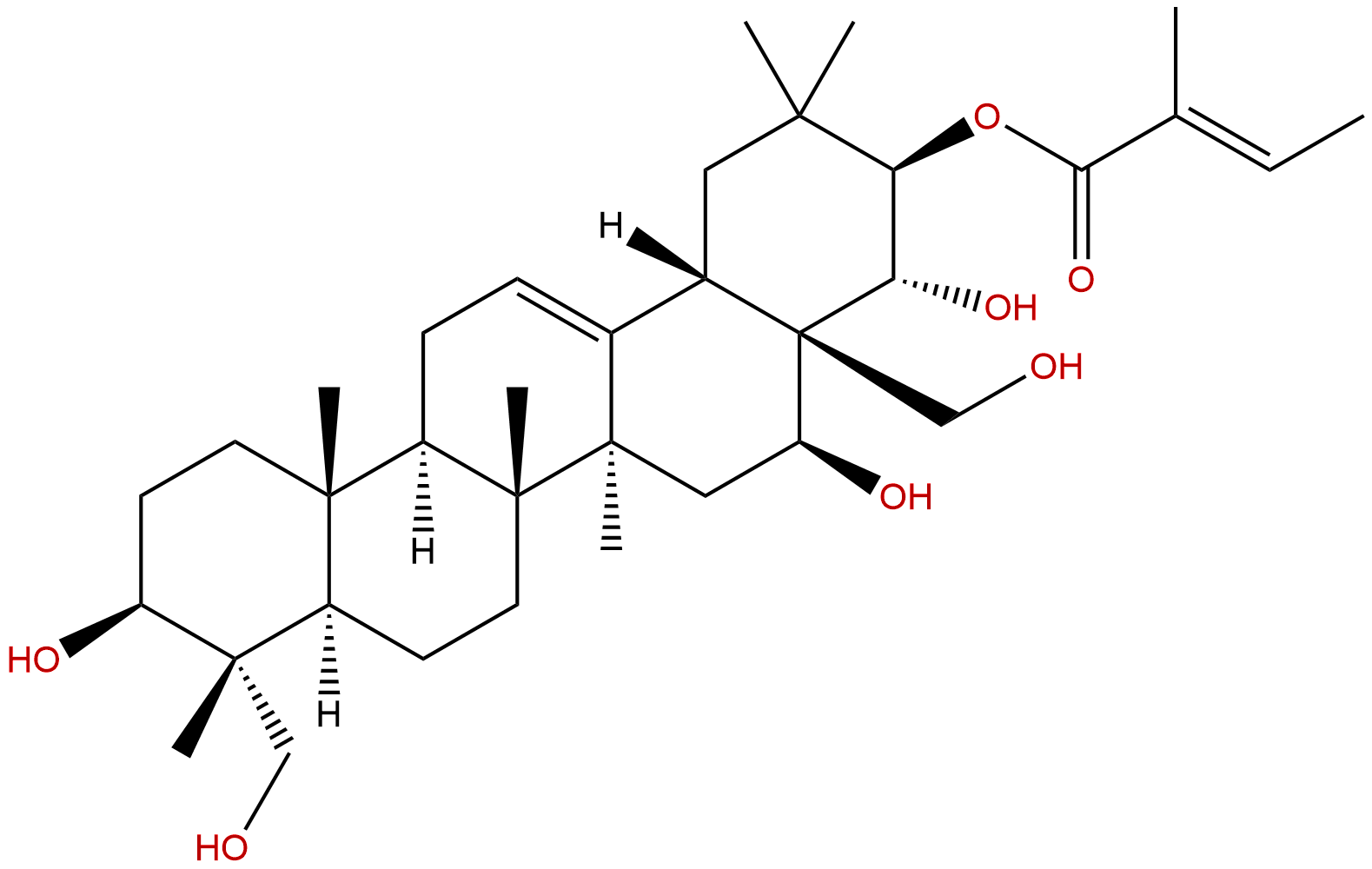
21-O-Tigeracyl Gymnemagenin is an oleane type pentacyclic triterpenoid compound with a parent nucleus structure of Gymnemagenin. Compared with the parent nucleus, the characteristic of this compound is that it has a Tigloyl group attached to its C-21 hydroxyl group. Tijic acid is an unsaturated branched fatty acid (2-methyl-2-butyric acid), and the introduction of its acyl group significantly alters the lipophilicity and spatial conformation of the molecule, which typically has a critical impact on its biological activity and target recognition ability.
The systematic naming reflects this structural feature: the 21-O-tigenoyl new glycoside of Gymnema tenuifolia. The molecular formula is C ∝₅ H ₅₆ O ₇, and the molecular weight is 588.8260. From the analysis of computational chemical parameters, the lipid water partition coefficient (LogP) of the compound is 4.0704, indicating that it has moderate lipophilicity and tends to be distributed in a lipid environment. The topological polar surface area (TPSA) is 127.4500 Å ², which is relatively high and mainly attributed to multiple hydroxyl and glycosidic bonds in the molecule (if there is a glycosyl moiety, it should be noted that it is described as a aglycone here, but the TPSA value suggests that the calculation model may include common glycosylation forms or that the aglycone itself contains multiple polar groups); In actual literature, it is necessary to confirm whether its exact structure is aglycone or saponin. Its predicted water solubility is low, about 0.0068 mg/mL, which is consistent with its high LogP value, suggesting that solubilization strategies may need to be considered in formulation development.
Preliminary pharmacological risk assessment shows that the compound has a low ability to cross the blood-brain barrier, which reduces its potential risk of central nervous system side effects, but also limits its direct effects on central immune related diseases. In terms of safety, the predictive model shows that it does not have significant hERG potassium channel inhibitory activity (hERG inhibition: no), which means that its risk of inducing QT interval prolongation in the heart is low. In addition, the Ames test predicted a value of 0.0, indicating that it may not have direct genetic toxicity, providing preliminary positive signals for subsequent safety evaluations.
Plant sources and extraction methods
21-O-Tijia acyl new glycosides are mainly isolated from plants of the Gymnotium genus, especially from Gymnotium(Gymnema sylvestre Leaves and stems of (Retz.) Schultz. The spoon vine is widely distributed in tropical and subtropical regions of Asia, such as India, southern China, Southeast Asia, etc. It is known as "Gurmar" (meaning "sugar destroyer") in Ayurvedic medicine.
The extraction and isolation of this compound from plant materials usually follow the conventional process of natural product chemistry, but optimization is needed for the properties of its triterpenoid saponins (or aglycones):
1. Extract Typically, extraction is carried out using solvents of moderate polarity. Common methods include cold impregnation, hot reflux, or ultrasound assisted extraction of dried and crushed plant materials using methanol, ethanol, or ethanol water mixed solvents. These solvents can effectively dissolve triterpenoid saponins.
2. Coarse separation The extract obtained by vacuum concentration of the extract is often subjected to preliminary separation using solvent partitioning, such as gradient extraction with petroleum ether, ethyl acetate, n-butanol, and water. Due to its isotropy and lipophilicity, the new glycosides of 21-O-Tijia acyl spoon vine may be mainly enriched in the ethyl acetate or n-butanol extraction sites.
3. Fine purification Further purification is highly dependent on modern chromatographic techniques. Silica gel column chromatography is commonly used for preliminary separation using gradient elution systems such as chloroform methanol or petroleum ether ethyl acetate. Then, the final purification is carried out in combination with reverse phase chromatography (such as C18 column, methanol water or acetonitrile water as mobile phase), gel chromatography (Sephadex LH-20), high-performance liquid chromatography (HPLC) or preparative thin layer chromatography (PTLC) to obtain high-purity monomer compounds. Structural identification involves the comprehensive use of spectroscopic methods such as nuclear magnetic resonance (NMR, including ¹ H, ¹ ³ C, DEPT, HSQC, HMBC, COSY, NOESY, etc.), mass spectrometry (MS, such as ESI-MS, HR-ESI-MS), infrared spectroscopy (IR), and optical rotation.
It is worth noting that the content of this compound in plants is usually low, and it may coexist with multiple structurally similar compounds, making the separation and purification process challenging. The separation or activity tracking separation strategy guided by biosynthesis is the key to improving discovery efficiency.
Pharmacological activity research
At present, pharmacological research on the new aglycone of 21-O-tigenoyl spoon vine mainly focuses on immunomodulation The field demonstrates multifaceted regulatory potential.
-
Anti inflammatory and immunosuppressive activity In vitro cell models, this compound exhibits significant anti-inflammatory effects. Research has shown that it can effectively inhibit the excessive production of pro-inflammatory mediators such as nitric oxide (NO), prostaglandin E2 (PGE2), and pro-inflammatory cytokines (such as TNF - α, IL-1 β, IL-6) induced by lipopolysaccharides (LPS) or other stimulants in macrophages (such as RAW264.7 cells). In T lymphocyte function experiments, it may inhibit ConA or anti-CD3/CD28 antibody induced T cell excessive proliferation and regulate the differentiation balance of Th1/Th2/Th17 cell subsets. These effects suggest that it has regulatory effects on both innate and adaptive immunity.
-
Protective role in autoimmune disease models In experimental autoimmune encephalomyelitis (EAE, multiple sclerosis model), collagen induced arthritis (CIA, rheumatoid arthritis model), or systemic lupus erythematosus (SLE) mouse models, preliminary in vivo pharmacological experiments have shown that intervention with 21-O-tigenoyl spoon glycosides can alleviate clinical symptoms of the disease, such as reducing arthritis scores, delaying neurological deficits, and reducing proteinuria. Its protective effect is related to the inhibition of abnormal activation of immune cells in the spleen and lymph nodes, reduced inflammatory infiltration in target organs, and decreased levels of autoantibodies.
-
Potential impact on regulatory T cells (Treg)Given that its predicted targets involve FOXP3 (a key transcription factor in Treg cells) and IL-10 (an important immunosuppressive cytokine), this compound may have the potential to promote Treg cell differentiation or enhance its immunosuppressive function, thereby restoring immune tolerance, which is of great significance in treating autoimmune diseases and suppressing transplant rejection.
-
Other potential activities Based on the traditional use of saponins from Gymnema sylvestris, this compound may also have auxiliary activities in regulating blood glucose and lipid metabolism, but its main research focus and advantages currently seem to lie in the direction of immune regulation.
Mechanism of action and molecular targets
The immunomodulatory effect of 21-O-Tijia acyl glycoside is not achieved through a single target, but acts on multiple key nodes of the immune signaling network, reflecting the synergistic effect of natural products with multiple targets and pathways. Its core mechanism of action involves the following targets and pathways:
-
TLR4/NF - κ B signaling pathway Toll like receptor 4 (TLR4) is a core receptor that recognizes pathogen associated molecular patterns (such as LPS) and initiates innate immune responses. This compound has been predicted or validated to interfere with the activation or downstream signal transduction of TLR4, thereby inhibiting the nuclear translocation of nuclear factor kappa B (NF - κ B, encoded by NFKB1). NF - κ B is the master switch that regulates the expression of numerous pro-inflammatory cytokines (IL-2, IL-6, TNF - α, etc.), chemokines, and inflammatory enzymes (such as COX-2, iNOS). Inhibiting this pathway is one of the core mechanisms by which it exerts anti-inflammatory effects.
-
JAK/STAT signaling pathway The signal transduction and transcription activator (STAT) family, particularly STAT3 and STAT4, plays a decisive role in immune cell differentiation, proliferation, and function. Continuous activation of STAT3 is associated with chronic inflammation and tumor immune escape, while STAT4 drives Th1 cell differentiation. This compound may downregulate the transcriptional activity of STAT3 and STAT4 by inhibiting upstream JAK kinases or directly interfering with the phosphorylation and dimerization of STAT proteins, thereby affecting the differentiation of Th17 (STAT3 dependent) and Th1 (STAT4 dependent) cells, and may also promote STAT5 dependent Treg cell function.
-
Regulation of key immune cytokines This compound can regulate the expression and balance of various cytokines. It inhibits the production of pro-inflammatory factors such as IL-2 (key factor for T cell growth) and IFN - γ (Th1 characteristic factor), and may upregulate the expression of immunosuppressive factors such as IL-10 and TGF - β 1 (encoded by TGFB1). This "rebalancing" effect on the cytokine network is a direct manifestation of its immune regulatory effect.
-
Immune checkpoint and transcription factors Cytotoxic T lymphocyte associated protein 4 (CTLA4) is an important immunosuppressive receptor (immune checkpoint). This compound may indirectly affect the expression of CTLA4, thereby regulating the activation threshold of T cells. Fork head box protein P3 (FOXP3) is a lineage determining transcription factor in Treg cells. Promoting the expression or stability of FOXP3 is an important strategy for inducing immune tolerance, and the potential of this compound in this regard deserves further exploration.
In summary, the new glycosides of 21-O-tigenoyl Gymnotium have constructed a multidimensional immune regulatory network by synergistically acting on upstream signaling molecules such as TLR4, STAT3, NF - κ B, as well as downstream effector molecules such as IL-2, IFN - γ, IL-10, TGF - β 1, CTLA4, FOXP3, etc., thereby restoring immune homeostasis in inflammatory and autoimmune environments.
Evaluation of drug properties and pharmacokinetics
Although the 21-O-tigenoyl glycoside of Gymnostemma pentaphyllum exhibits good in vitro immunomodulatory activity, its development into a drug depends on comprehensive pharmacological evaluation.
-
Preliminary analysis of drug properties According to empirical rules such as the "Five Rules", its molecular weight (588.8) is slightly higher than conventional small molecule drugs (usually<500), and LogP (4.07) is within an acceptable range (usually<5), but its higher molecular weight and lipophilicity may affect its solubility and membrane permeability. Low predicted water solubility and moderate TPSA are the main physical and chemical barriers that need to be overcome for oral absorption.
-
Pharmacokinetic prediction and challenges:
- absorb Low water solubility may limit its dissolution in the gastrointestinal tract and affect oral bioavailability. Formulation technologies such as nanocrystals, solid dispersions, liposomes, or cyclodextrin inclusion complexes may be effective strategies to improve their absorption.
- distribution Moderate lipophilicity facilitates its distribution in tissues and cells rich in membrane structures, but the predicted blood-brain barrier permeability is low, limiting its pivotal role. Its distribution may be concentrated in immune organs such as the liver, spleen, and lungs.
- Metabolism As a triterpenoid compound, it is likely to undergo phase I metabolism (such as oxidation, reduction, and hydrolysis of cytochrome P450 enzymes) and phase II metabolism (such as glucuronidation and sulfation) in the liver. The acyl ester bond may be a sensitive metabolic site that is easily hydrolyzed by esterases, generating deacetylated products with different activities (such as new glycosides from Gymnotium). This requires detailed metabolic stability studies and identification of metabolites.
- excretion Metabolites are mainly excreted through bile and kidneys.
-
Preliminary Safety Assessment The calculated prediction suggests that there is no risk of hERG inhibition and Ames mutagenicity, which is a positive starting point. However, a comprehensive safety evaluation must be completed through in vitro cytotoxicity experiments (such as toxicity to normal liver and kidney cells), as well as GLP compliance studies on acute toxicity, subchronic toxicity, reproductive toxicity, etc. in vivo. Its immunosuppressive activity may also bring potential side effects that increase the risk of infection, and a balance needs to be found between efficacy and safety.
At present, there is a lack of in vivo pharmacokinetic and toxicological research data on this compound system, which is a key gap that must be filled in its transition from an active compound to a candidate drug.
Clinical application prospects and prospects
As a natural product with multi-target immunomodulatory properties, 21-O-tigenoyl sycophane glycoside has shown potential application prospects in the treatment of various immune related diseases.
-
Potential indications:
- Autoimmune diseases Such as rheumatoid arthritis, multiple sclerosis, systemic lupus erythematosus, inflammatory bowel disease (Crohn's disease, ulcerative colitis), etc. It is expected to control disease activity and reduce tissue damage by inhibiting abnormally activated immune cells and pro-inflammatory pathways, while potentially enhancing regulatory immune mechanisms.
- Organ transplant rejection reaction As an immunosuppressant or in combination with traditional immunosuppressants such as tacrolimus and mycophenolate mofetil, it may reduce the incidence of rejection reactions and decrease the dosage and side effects of traditional drugs.
- Chronic inflammatory diseases For example, non-alcoholic steatohepatitis (NASH), atherosclerosis, chronic obstructive pulmonary disease (COPD), etc., its anti-inflammatory effect may help to alleviate the disease process.
- Adjuvant anti-tumor immunotherapy By regulating the immunosuppressive state in the tumor microenvironment (such as targeting the STAT3 pathway), there may be a synergistic effect with immune checkpoint inhibitors (such as anti-PD-1 antibodies), but this is currently only a theoretical speculation and requires experimental verification.
-
Research and Development Strategy and Prospects:
- In depth mechanism research It is necessary to use techniques such as gene knockout, RNA interference, reporter genes, surface plasmon resonance (SPR), and co crystallization to clarify the direct interaction sites and precise molecular mechanisms with targets such as TLR4 and STAT3.
- structural optimization Based on its pharmacophore and pharmacological shortcomings, carry out reasonable structural modifications. For example, by modifying various acyl groups or other sites on the nucleus, water solubility and metabolic stability can be improved, oral bioavailability can be enhanced, while retaining or enhancing immune regulatory activity.
- Formulation development Developing advanced drug delivery systems is crucial to address the issue of poor solubility.
- Preclinical and clinical research After completing the pharmacodynamic (validated in more and more human disease models), pharmacokinetic, and toxicological studies of the system, it can be considered to enter the clinical trial phase.
Challenges and opportunities coexist. The main challenges lie in poor solubility, potential complex metabolism, and the inherent multi-component and multi-target properties of natural products, which pose difficulties for drug standardization and mechanism elucidation. However, its multi-target mode of action may lead to better therapeutic efficacy and lower drug resistance, which is currently being pursued for the treatment of complex immune diseases. By using it as a lead compound and combining it with modern medicinal chemistry and biological technology for in-depth development, it is expected to give birth to a new type of immune modulator with independent intellectual property rights.
Conclusion
21-O-Tigeracyl Tripterygium wilfordii glycoside is a triterpenoid compound of oleanane type with Tigeracyl modification, isolated from the traditional medicinal plant Tigeracyl wilfordii. Based on existing research, this compound regulates the expression and balance of cytokines such as IL-2, IFN - γ, and IL-10 by acting on multiple immune related key targets such as TLR4, STAT3, NF - κ B, and FOXP3, demonstrating significant and multi-level immune regulatory activity. It has broad potential for development in the treatment of autoimmune diseases and chronic inflammation.
However, the journey from active compounds to clinical drugs is a long and rigorous one. The current research is still in its early stages, and its detailed molecular mechanism of action, systemic pharmacokinetic characteristics, long-term toxicological safety, and optimal formulation form all need to be further explored. Future research should focus on using chemical biology methods to elucidate its precise target interaction network, optimizing its drug properties through rational structural modifications, and conducting standardized preclinical development studies. I believe that with the continuous deepening of research, the new glycosides of 21-O-tigenoyl spoon vine have the potential to become a valuable new starting point in the field of immunotherapy research and development, contributing the wisdom and power derived from nature to the cause of human health.