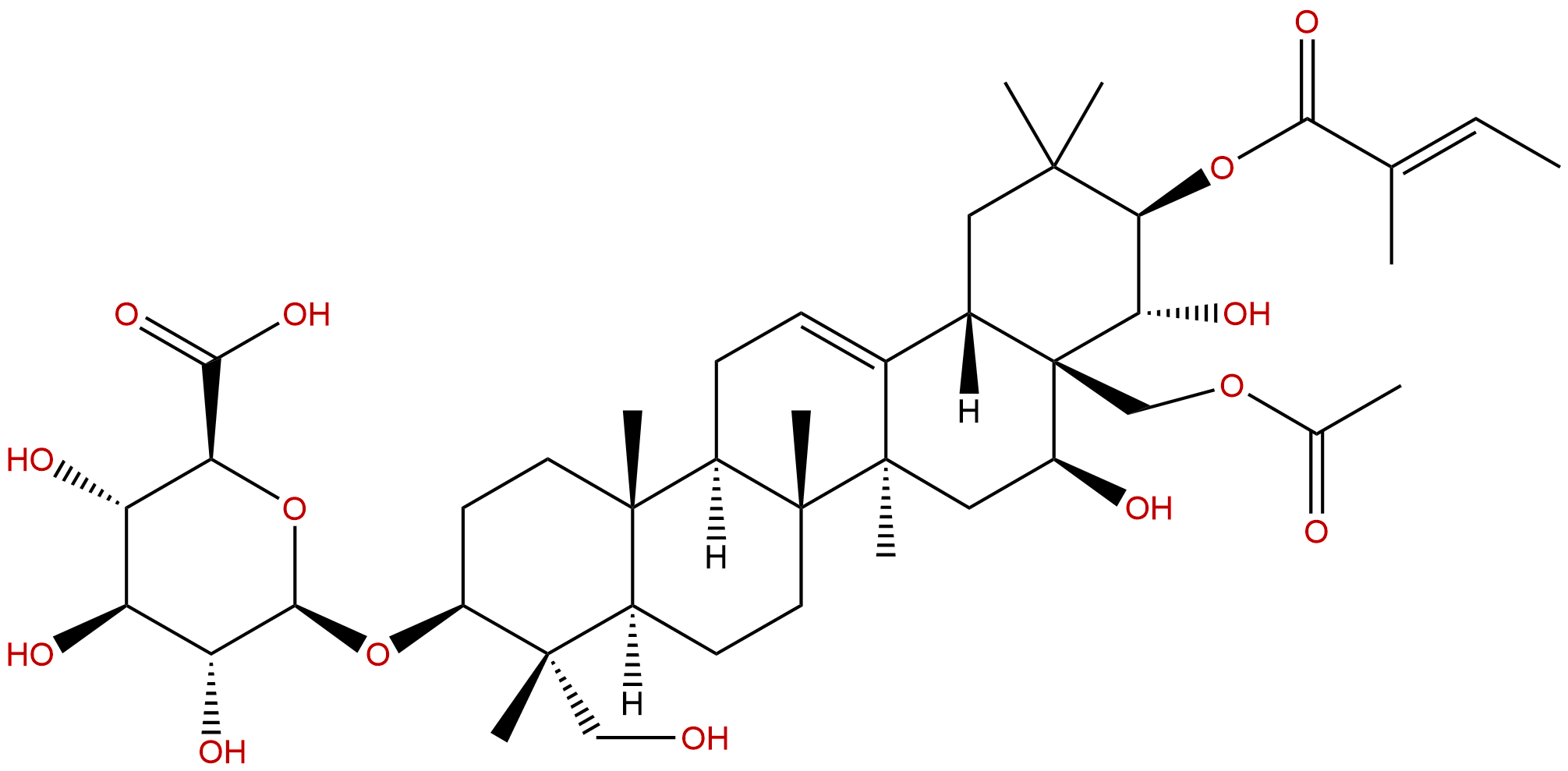


Product name: Gymnemic acid I
Synonym name: Gymnemic acid I
Catalogue No.: BP1601
Cas No.: 122168-40-5
Formula: C43H66O14
Mol Weight: 806.987
Botanical Source: Constit. of Gymnema sylvestre
Physical Description: Powder
Type of Compound: Triterpenoids
Purity: 95%~99%
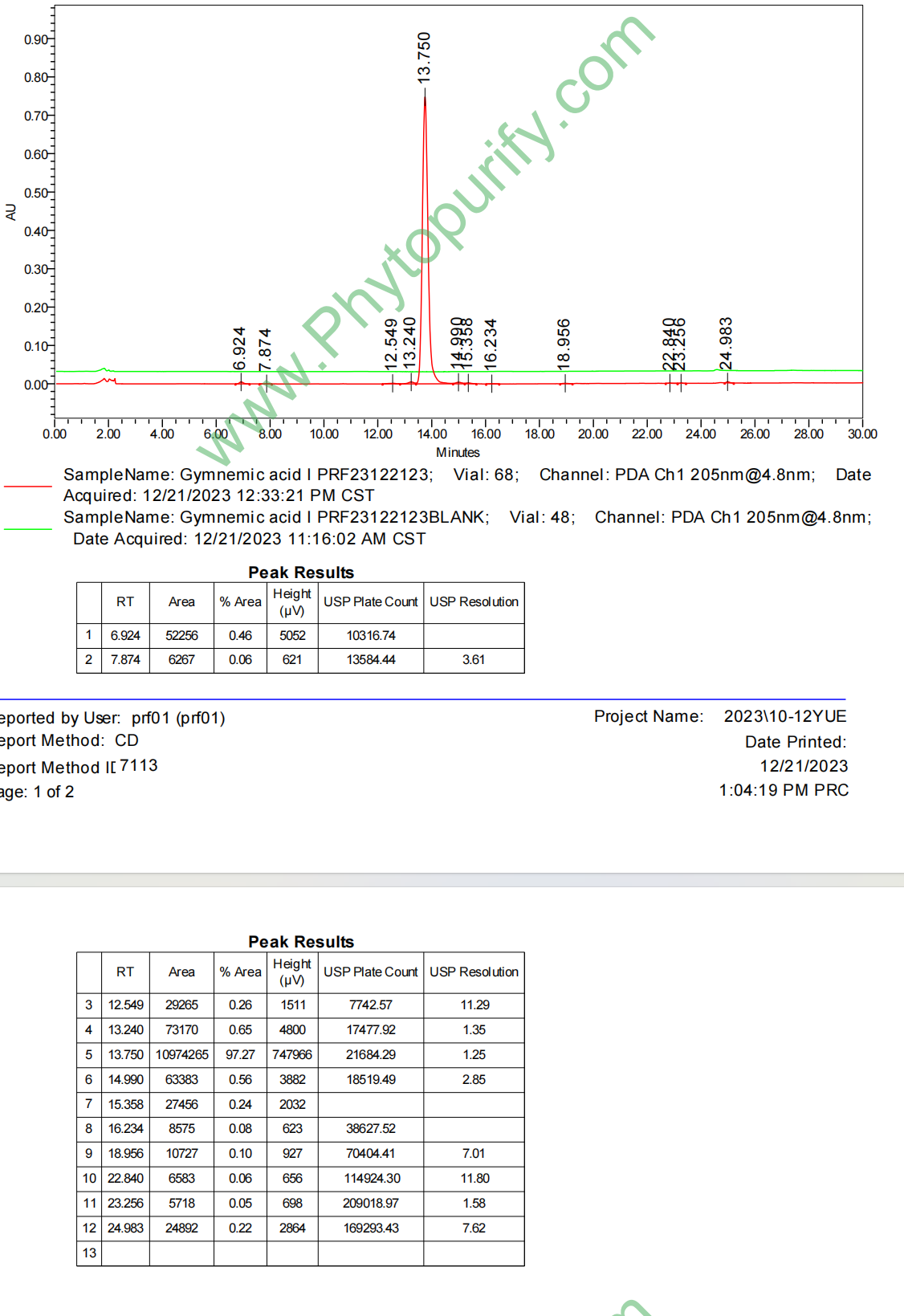
Analysis Method: HPLC-DAD or/and HPLC-ELSD
Identification Method: Mass, NMR
Packing: Brown vial or HDPE plastic bottle
The product could be supplied from milligrams to grams. Inquire for bulk scale.
We provide solution to improve the water-solubility of compounds, thereby facilitating the variety of activity tests and clinic uses.
For Reference Standard and R&D, Not for Human Use Directly.
HPLC of Gymnemic acid I
Storage conditions:Short-term storage at 2~8℃, long-term storage at -20 ~ -80℃
229.7400
2.8767
.2065
.0583
.5874
.3779
Low
82.4540
6.0015
No
No
Yes
No
No
No
0.0
Yes
No
Yes
No
Gymnemic acid I (CAS number: 122168-40-5) is derived from the traditional medicinal plant Gymnemium(Gymnema sylvestre)A representative monomer in a class of triterpenoid saponins with significant biological activity. In Ayurvedic medicine, Gymnema sylvestris is known as "sugar destroyer", and has been used to treat "diabetes" (diabetes) for more than 2000 years. Modern phytochemical research has isolated and identified dozens of similar structural gymnemonic acid homologues from this plant, among which gymnemonic acid I has attracted much attention due to its unique anti sweet activity and clear anti diabetes pharmacological action. It is not only a classic sweet taste receptor antagonist that can temporarily inhibit the perception of sweetness, but also exhibits multiple biological activities at the cellular and molecular levels, such as regulating glucose metabolism, protecting pancreatic beta cells, and inducing autophagy. In recent years, with the deepening of the research on the pathological mechanism of type 2 diabetes and its complications, gymnemonic acid I can induce protective autophagy by interfering with mammalian rapamycin target protein (mTOR) signaling pathway, which opens a new perspective for its application in the treatment of diabetes and its related metabolic diseases. This article aims to provide a systematic review of the chemical properties, plant sources, pharmacological activities, molecular mechanisms of action, pharmacological evaluation, and clinical translation potential of Gymnotic acid I, in order to provide comprehensive scientific references for the in-depth research and development of this natural product.
The molecular formula of Gymnotic acid I is C ₄∝ H ₆₆₆ O ₁₄, with a molecular weight of 806.9870. Its structure belongs to the oleanane type pentacyclic triterpenoid saponin, and it is one of the core members of the steviol acid family. Its basic skeleton consists of hydrophobic triterpenoid glycosides (ligands) and hydrophilic sugar chains. The glycoside moiety is a derivative of oleanolic acid, which is connected to multiple hydroxyl and carboxyl groups, giving the molecule a certain polarity. The sugar chain is usually composed of monosaccharides such as glucuronic acid, glucose, and xylose connected by specific glycosidic bonds, which are the key structural domains for their sweet taste inhibition activity. The complex glycosylation structure results in a large polar surface area (TPSA of 229.7400 Å ²) for spodumene acid I, which has a significant impact on its solubility and interaction with target proteins such as sweet taste receptors.
In terms of physicochemical properties, the calculated lipid water partition coefficient (LogP) is 2.8767, indicating that the compound has a certain degree of lipophilicity, but not high lipid solubility. Its water solubility value is relatively low (about 0.0583 mg/mL), indicating limited solubility in water, which may be a challenge for its oral bioavailability. The compound is difficult to penetrate the blood-brain barrier (predicted as low permeability), which limits its effects on the central nervous system, but may also reduce potential central side effects. In early safety screening, Gymnotic acid I did not show hERG potassium channel inhibitory activity (predicted as negative), indicating a low risk of causing QT interval prolongation in the heart; The Ames test predicted a negative result (0.0), indicating that it may not have direct genetic toxicity. These preliminary pharmacological parameters provide basic data for its further development.
Gymnotic acid I mainly comes from the Apocynaceae plant Gymnotium(Gymnema sylvestre The leaves of (Retz.) Schultz. This plant is widely distributed in tropical forests in India, Southeast Asia, southern China, and some parts of Africa. Leaves are the most enriched part of active ingredients, containing various types of saponins such as aspartic acid I, gymnosperms, and other triterpenoids.
Organic solvent extraction combined with modern chromatographic separation techniques is commonly used to extract aspartic acid I. The classic process is as follows:
1. Preprocessing and Extraction Grind the dried leaves of the spoon vine and first degrease them with petroleum ether or n-hexane to remove fat soluble impurities such as chlorophyll and wax. Subsequently, medium polarity solvents such as methanol, ethanol, or aqueous ethanol (such as 70-80% ethanol) are used for reflux extraction or ultrasound assisted extraction. Ethanol aqueous solution is often chosen due to its good selectivity and low toxicity.
2. Preliminary enrichment After concentrating the alcohol extract, the resulting paste is suspended in water and then subjected to liquid-liquid extraction using ethyl acetate, n-butanol, and other solvents in sequence. Due to its strong polarity, acid saponins from Gymnema sylvestris are mainly enriched in the n-butanol extraction site.
3. Separation and Purification The n-butanol fraction is subjected to macroporous adsorption resin (such as D101, AB-8) column chromatography, often eluted with different concentrations of ethanol aqueous solution gradients, to preliminarily separate saponin components of different polarities. Subsequently, repeated normal phase silica gel column chromatography (eluted with chloroform methanol water system), reverse phase silica gel column chromatography (such as C18 packing, eluted with methanol water or acetonitrile water system), and high performance liquid chromatography (HPLC) were used for fine separation, ultimately obtaining high-purity monomers of spodumene acid I. In recent years, preparative chromatography techniques such as high-speed counter current chromatography (HSCCC) have also been applied for efficient separation of such saponins.
The optimization goal of the extraction process is to improve the yield and purity of the target compound while maintaining its biological activity.
Gymnastic acid I shows various pharmacological activities, and its research focus is mainly on anti diabetes and related metabolic regulation fields.
Anti sweet taste activity This is the earliest discovered characteristic of Gymnotic acid I. Containing its solution in the mouth can temporarily and reversibly inhibit the tongue's perception of sweet substances (such as sucrose, saccharin, aspartame, etc.) within minutes to an hour, but has little effect on acidity, bitterness, saltiness, and umami taste. This specific "taste modification" effect makes it potentially valuable as a dietary aid and in controlling sugar intake.
Antidiabetic activity:
Regulating lipid metabolism: Spoongymnemonic acid I can also improve lipid metabolism, reduce the levels of triglycerides, total cholesterol and low-density lipoprotein cholesterol in the serum of diabetes animals, and increase high-density lipoprotein cholesterol, which is helpful to alleviate the disorder of lipid metabolism often associated with diabetes.
Other activities: The preliminary study also suggests that gymnemonic acid I may have anti-inflammatory, antioxidant and other auxiliary activities, which complement its anti diabetes effect and jointly fight against multiple pathophysiological changes of metabolic syndrome.
The multiple pharmacological effects of Gymnotic acid I stem from its regulation of multiple molecular targets, forming a networked mechanism of action.
Acting on sweet taste receptors (T1R2/T1R3)The perception of sweetness in humans is mainly mediated by the heterodimeric receptors T1R2/T1R3 on the surface of tongue taste buds. The sugar chain portion of spodumene acid I can specifically bind to a specific region of the receptor (especially the Venus flytrap domain of T1R3), but its binding does not activate the receptor to produce sweet signals. Instead, it blocks the binding of natural sweeteners (such as sugar) to the receptor, resulting in competitive antagonism and loss of sweet taste perception.
Inhibition of ribosomal protein biosynthesis Research has shown that aspartic acid I can inhibit protein synthesis of eukaryotic ribosomes. This effect may be achieved by interfering with ribosome function or related signaling pathways. Although the specific targets have not been fully elucidated, this activity may be related to its regulation of cell growth, proliferation, and stress response, especially in high metabolic stress states (such as high sugar). Moderate inhibition of protein synthesis may help cells redistribute energy and maintain homeostasis.
Regulating mTOR pathway induces protective autophagy This is the core molecular mechanism of the protective effect of aspartic acid I on pancreatic beta cells. Mammalian target protein of rapamycin (mTOR) is a key kinase that regulates cell growth, metabolism, and autophagy. Under high glucose stress, the mTOR signaling pathway in pancreatic beta cells is often overactivated, leading to inhibition of autophagy, decreased ability to clear damaged organelles and misfolded proteins, and increased susceptibility to apoptosis. Gymnotic acid I can effectively inhibit the phosphorylation activity of mTOR complex 1 (mTORC1) (i.e. inhibit its activation), relieving its braking effect on autophagy initiation. This promotes an increase in the expression of key autophagic proteins such as LC3-II, enhances autophagosome formation, and thus initiates protective autophagy flow. Through autophagy, cells can eliminate toxic metabolites and damaged mitochondria caused by high glucose, alleviate endoplasmic reticulum stress and oxidative stress, and ultimately protect MIN-6 pancreatic beta cells from apoptosis. This mechanism provides an important drug intervention target for the protection of β cell function in diabetes.
Affects other signaling pathways In addition to mTOR, gymnemonic acid I may also affect AMPK, PI3K/Akt, NF - κ B and other signaling pathways related to energy metabolism, cell survival and inflammation, which together constitute a network of its anti diabetes and cytoprotective effects.
Despite exhibiting good pharmacological activity in vitro and animal models, the development of medicinal properties of Gymnotic acid I still faces some challenges, and related pharmacokinetic studies are relatively limited.
absorb As a large molecule triterpenoid saponin, the oral absorption of syringol acid I may be limited by its larger molecular weight and lower membrane permeability. Enzymes in the gastrointestinal tract may cause hydrolysis of its sugar chain, affecting its structure and activity. Its LogP value suggests a certain degree of lipophilicity, but the complex glycosylation structure may limit its passive transmembrane diffusion. Formulation technologies such as nano formulations, phospholipid complexes, microemulsions, etc. may help improve their absorption.
distribution Predict low blood-brain barrier permeability, mainly distributed in peripheral tissues and organs. Its distribution concentration and retention time in target tissues such as pancreas, liver, and fat need to be determined through further in vivo studies.
Metabolism Saponins often undergo extensive metabolism in the body, including gut microbiota mediated deglycosylation reactions and liver phase I and II metabolism. The metabolites, activities, and toxicity of Gymnotic acid I require systematic research.
excretion The prototype drug and its metabolites may be mainly excreted through bile and kidneys.
Preliminary safety Based on computational predictions, there is no risk of hERG inhibition or Ames mutagenicity, indicating a good early safety signal. However, comprehensive preclinical safety evaluation (such as acute toxicity, chronic toxicity, reproductive toxicity, etc.) is crucial for its development. Saponins may have hemolytic potential, which is also one of the safety indicators that needs to be examined.
Overall, the optimization of the pharmacological properties of Gymnotic acid I requires a focus on improving its oral bioavailability, enhancing metabolic stability, and conducting systematic preclinical pharmacokinetic and safety evaluations.
As a natural active molecule with multiple targets and multiple functions, Gymnotic acid I has broad clinical application prospects in the following fields:
Prevention and treatment of type 2 diabetes and its complications Its core advantage lies not only in its ability to lower blood sugar, but also in its ability to directly protect damaged pancreatic beta cells by inducing autophagy, which many existing hypoglycemic drugs do not possess. It may be suitable for early intervention of diabetes to delay the decline of beta cell function; It can also be used as a combination therapy, synergizing with existing drugs such as metformin, DPP-4 inhibitors, etc., to achieve the dual goals of blood glucose control and organ protection. Its improving effect on lipid metabolism also helps prevent cardiovascular complications.
Assistive management of obesity and metabolic syndrome Its anti sweet properties can be used as a behavioral intervention tool to help reduce cravings and intake of sweet foods, and assist in weight management. At the same time, its role in improving insulin resistance and lipid metabolism is in line with the treatment needs of metabolic syndrome.
Functional foods and dietary supplements As an ingredient extracted from traditional medicinal and edible plants, steviol acid I can be used to develop health foods or special dietary foods with functions of regulating blood sugar and controlling weight.
However, achieving its clinical translation still requires overcoming several challenges and conducting in-depth research:
* Structural optimization and derivative development Based on its pharmacophore, structural modifications are carried out to enhance activity, improve solubility, increase metabolic stability and oral bioavailability, while reducing potential toxicity.
* Research on Delivery System Develop new drug delivery systems (such as targeted nanoparticles, liposomes, etc.) to improve their delivery efficiency to target tissues such as the pancreas.
* Deep exploration of the mechanism of action Further elucidate its specific targets for inhibiting protein synthesis, as well as its global network of interactions with autophagy, apoptosis, inflammation, and other pathways.
* Standardization and Quality Control Establish a standard method for determining the content of aspartic acid I from raw materials to finished products to ensure product consistency and effectiveness.
* Rigorous clinical trials Ultimately, it is necessary to confirm its safety, effectiveness, and optimal medication regimen through well-designed human clinical trials.
Gymnotic acid I is a star triterpenoid saponin molecule derived from the traditional medicinal plant Gymnotium, and its research spans multiple dimensions from unique anti sweet phenomena to profound cellular protective molecular mechanisms. It is not only known as a natural antagonist of sweet receptor, but also shows unique value in the field of anti diabetes drug research and development because it can protect pancreatic β cells from high glucose damage by inhibiting mTOR phosphorylation and activating protective autophagy. Although there are still challenges in drug development such as oral absorption and systemic pharmacokinetics, its multi-target and multi efficacy characteristics, as well as preliminary good safety predictions, have laid a solid foundation for its further development. In the future, through the cross fusion research of modern pharmaceutical chemistry, pharmaceutics and system biology, Gymnastic acid I and its optimized derivatives are expected to transform from a natural product with a long history of application into a new candidate drug or functional factor for the treatment of type 2 diabetes and related metabolic diseases, providing new choices for the growing number of patients with metabolic diseases worldwide. The continuous exploration of it is also a vivid example of the modernization, scientific interpretation, and utilization of this "treasure trove" of natural products.
