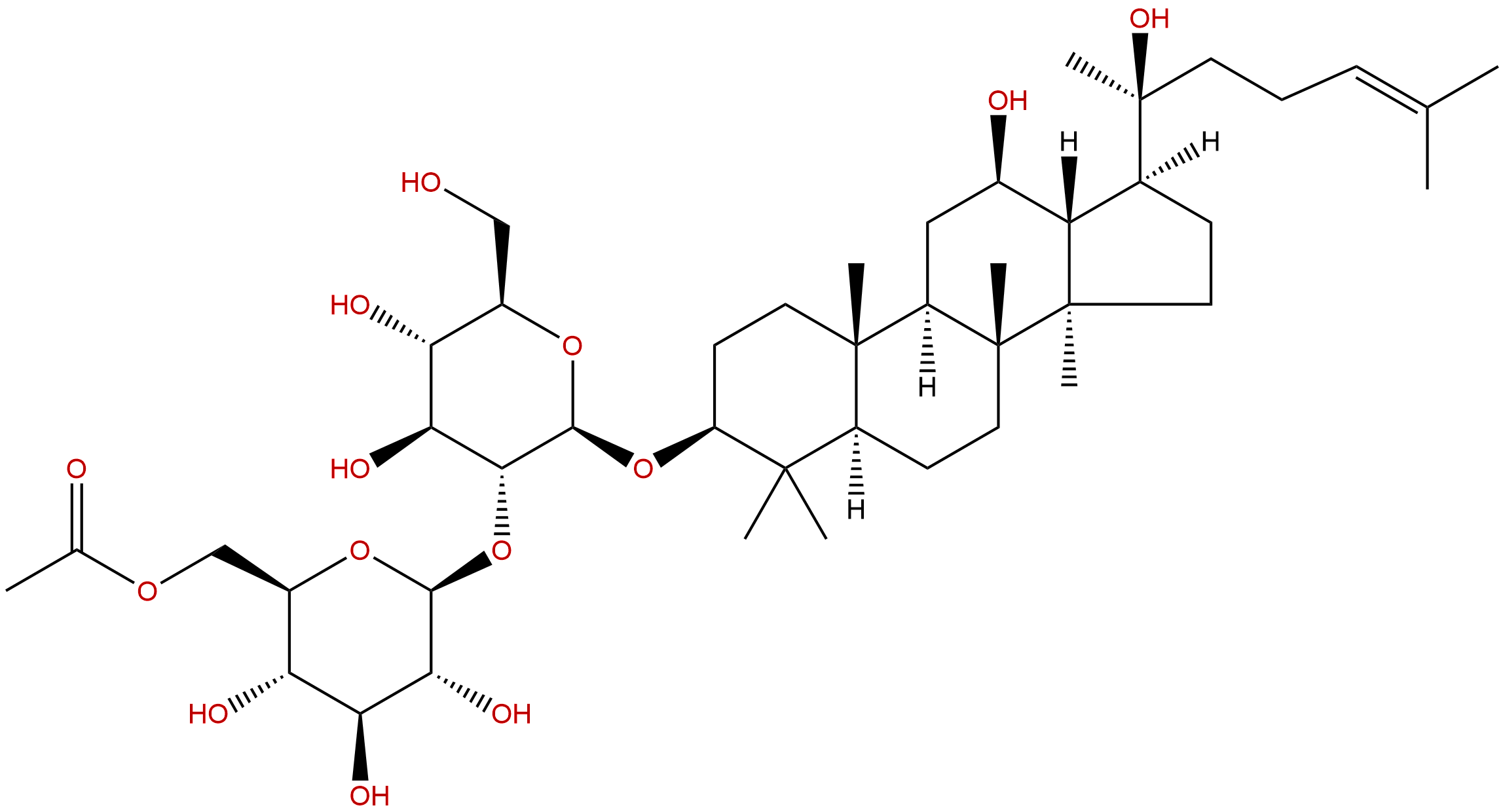


Product name: Ginsenoside Rs3
Synonym name: 20S-6''-O-Acetylginsenoside Rg3
Catalogue No.: BP4528
Cas No.: 194861-70-6
Formula: C44H74O14
Mol Weight: 827.062
Botanical Source: Ginseng Radix Et Rhizoma
Type of Compound: Triterpenoids
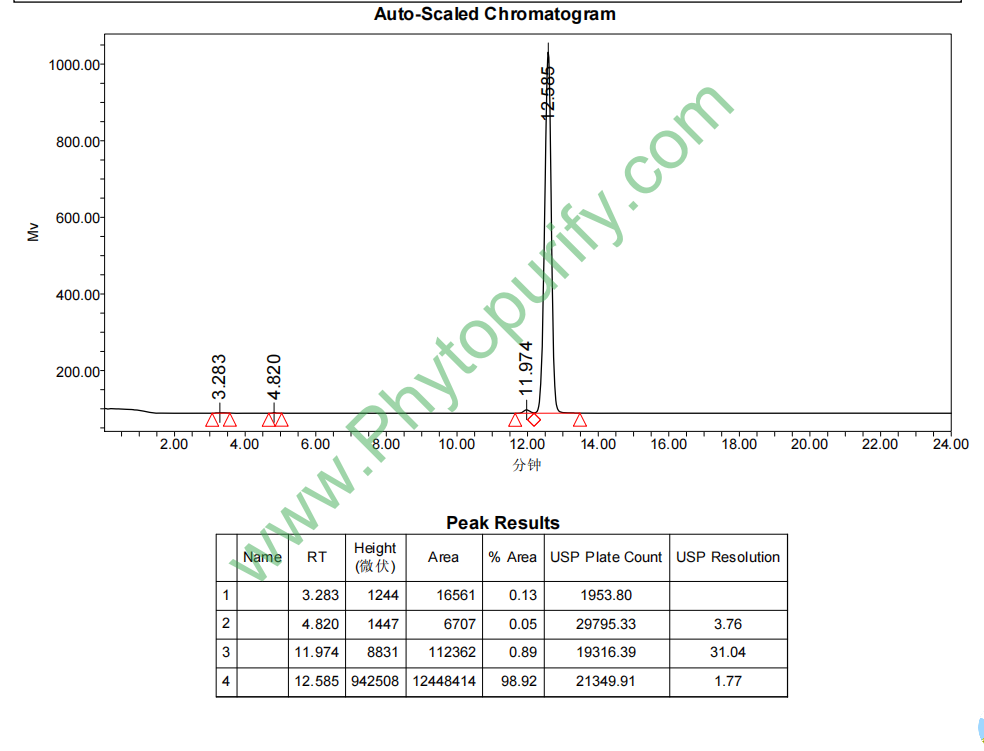
Purity: 95%~99%
Analysis Method: HPLC-DAD or/and HPLC-ELSD
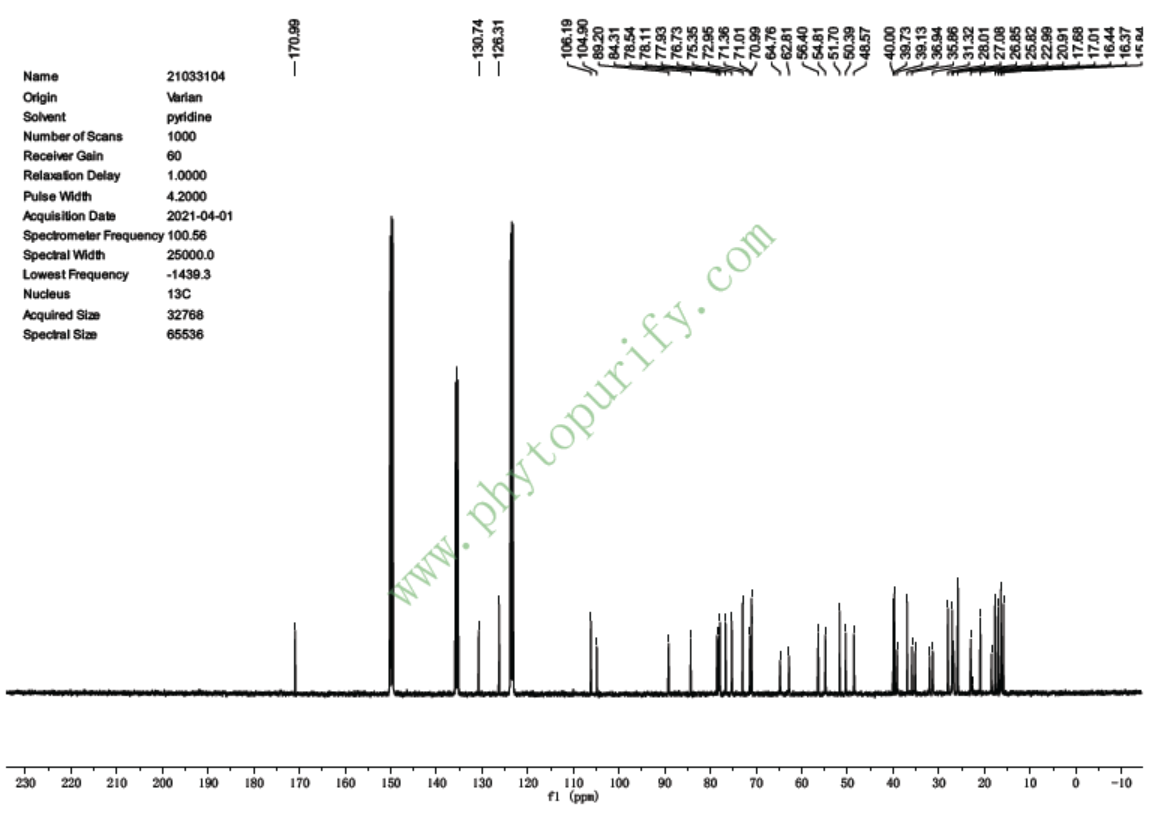
Identification Method: Mass, NMR
Packing: Brown vial or HDPE plastic bottle
Storage: Store in a well closed container, protected from air and light. Put into refrigerate or freeze for long term storage.
Whenever possible, you should prepare and use solutions on the same day. However, if you need to make up stock solutions in advance, we recommend that you store the solution as aliquots in tightly sealed vials at -20℃. Generally, these will be useable for up to two weeks.
The product could be supplied from milligrams to grams
Inquire for bulk scale.
For Reference Standard and R&D, Not for Human Use Directly.
HPLC of Ginsenoside Rs3
NMR of Ginsenoside Rs3
Storage conditions:Short-term storage at 2~8℃, long-term storage at -20 ~ -80℃
225.0600
3.2986
3.2988
.0465
.6480
.1278
Low
73.8935
5.9209
No
No
No
No
No
No
0.0
Yes
No
No
No
Ginseng(Panax ginseng C. As a treasure of traditional Chinese medicine, Meyer's medicinal value has been verified for thousands of years. The pharmacological activity of ginseng is mainly attributed to its unique active ingredient, ginsenosides. According to the different glycoside structures, ginsenosides are mainly divided into Dammarane type tetracyclic triterpenoid saponins, which are further subdivided into Protopanaxadiol (PPD) and Protopanaxatriol (PPT). Ginsenoside Rs3 is a special member of the diol type ginsenoside family, characterized by the presence of acetyl groups on its sugar chain. This subtle structural difference endows it with unique biological activity distinct from common ginsenosides such as Rb1 and Rg1.
In recent years, with the in-depth study of the anticancer activity of natural products, ginsenoside Rs3 has gradually entered the field of researchers. Existing studies have shown that ginsenoside Rs3 exhibits significant anti-cancer potential, particularly in inducing tumor cell apoptosis. Its mechanism of action is unique, selectively upregulating the expression of tumor suppressor protein p53 and its downstream effector factor p21WAF1, thereby triggering programmed cell death in various cancer cell lines. In addition, besides its anticancer activity, ginsenoside Rs3 has also shown potential application value in the field of anti-inflammatory. Its targets involve key signaling pathways in the inflammatory response, such as IL-6/STAT3, NF - κ B (RELA), and inflammasome 1 (CASP1). These findings indicate that ginsenoside Rs3 is a natural lead compound with multi-target and multi pathway regulatory potential.
However, compared with abundant ginsenosides such as Rb1 and Rg1, the content of ginsenoside Rs3 in ginseng is extremely low, and its physicochemical properties, such as poor water solubility and high molecular weight, pose challenges to its bioavailability and medicinal properties. However, its unique anti-cancer mechanism and clear target selectivity make it an attractive candidate molecule for developing novel anti-tumor and anti-inflammatory drugs. This article aims to systematically review the chemical structure, plant origin, pharmacological activity, mechanism of action, pharmacological evaluation, and clinical application prospects of ginsenoside Rs3, in order to provide comprehensive scientific basis for the in-depth research and development of this natural product.
The chemical structure of ginsenoside Rs3 belongs to the damaane type tetracyclic triterpenoid saponin, and its aglycone is protopanaxadiol. Its complete chemical name is: 20 (S) - protopanaxadiol-3-O - β - D-glucopyranosyl (1 → 2) - β - D-glucopyranosyl-20-O - β - D-xylopyranosyl (1 → 6) - β - D-glucopyranoside, and there is an acetyl group (- COOH3) modification at a specific position on the sugar chain (usually considered to be on the 3rd or 20th glucose group of the sugar chain). This acetylation modification is a key feature that distinguishes Rs3 from its structural analogues, such as ginsenosides Rd and Rb2. The introduction of acetyl groups changes the polarity, spatial conformation, and interaction mode with biological targets of the molecule.
From the perspective of physical and chemical properties, the molecular formula of ginsenoside Rs3 is C ₄₄ H ₇₄ O ₁₉, with a molecular weight of up to 827.0620 g/mol, belonging to the category of large molecule natural products. Its lipophilic water partition coefficient (LogP) is 3.2986, indicating that the compound has a certain degree of lipophilicity, but overall it still leans towards hydrophilicity. The topological polar surface area (TPSA) is 225.0600 Å ², which is much higher than the recommended upper limit of 140 Å ² for oral drugs, indicating that their membrane permeability may be limited. The water solubility data (0.0465 mg/mL) further confirms its extremely low water solubility, mainly due to its large sugar skeleton and rigid cyclic structure. In the Biopharmaceutical Classification System (BCS), ginsenoside Rs3 may belong to Class IV drugs with low solubility and low permeability.
In addition, pharmacological evaluation showed that the compound has a low risk of inhibiting hERG potassium ion channels (No), indicating that its potential toxicity in causing QT interval prolongation in the heart is relatively small. The Ames test result is 0.0, indicating that it did not show significant mutagenicity in the bacterial recovery mutation test, and the preliminary genetic toxicity risk is low. The blood-brain barrier (BBB) penetration ability is evaluated as "low", which limits its application in the treatment of central nervous system diseases, but may also mean that its peripheral effects are more selective. These physicochemical properties and pharmacological parameters together form the basic profile of ginsenoside Rs3 as a candidate molecule for drug development, revealing its potential therapeutic window and pointing out the challenges it needs to overcome in formulation development and administration route design.
Ginsenoside Rs3 is mainly found in plants of the Araliaceae family, including ginseng, in nature(Panax ginseng)Western ginseng(Panax quinquefolius)And Sanqi(Panax notoginseng). However, compared with major ginsenosides such as Rb1 and Rg1, the natural content of Rs3 in fresh or dried ginseng rhizomes is usually extremely low and belongs to trace components. Its content is influenced by various factors, including plant variety, growth period, harvest season, place of origin, and processing method. It is worth noting that ginsenoside Rs3 is considered a secondary metabolite derived from the acetylation reaction of other diol type ginsenosides (such as Rb1, Rd) during the processing or storage of ginseng. Especially in red ginseng (steamed and dried ginseng) or certain fermented ginseng products, its content may be relatively high.
Due to its low natural content, directly extracting and purifying large amounts of ginsenoside Rs3 from plants is inefficient and costly. Therefore, the current extraction methods mainly revolve around two strategies: direct extraction and enrichment, and preparation of precursor substances through chemical or biological transformation.
Direct extraction and enrichment methods Usually, ethanol water mixed solvents (such as 70% methanol or ethanol) are used for reflux extraction or ultrasound assisted extraction of ginseng raw materials. After concentration of the extract, total saponins were enriched by n-butanol extraction. Subsequently, various chromatographic techniques were used for separation and purification, including silica gel column chromatography, ODS reverse phase column chromatography, high performance liquid chromatography (HPLC), and high-speed countercurrent chromatography (HSCCC). Due to the close polarity between Rs3 and structurally similar compounds (such as Rb1, Rd, Rs1, Rs2), separation is extremely difficult and usually requires a combination of multiple chromatographic methods, such as gradient elution using chloroform methanol water system or fine separation using preparative HPLC. The yield of this method is extremely low, usually only obtaining pure products at the milligram level, mainly used for laboratory research.
Chemical and Biological Conversion Method This is currently a more promising pathway for obtaining ginsenoside Rs3. The chemical conversion method mainly utilizes acetylation reagents (such as acetic anhydride) to selectively acetylate diol ginsenosides (such as Rb1 or Rd) under specific conditions. The reaction conditions of this method are controllable, but there are problems such as poor selectivity, multiple by-products, and the need for strict protection strategies. The biotransformation method utilizes microorganisms (such as Aspergillus, Rhizopus, etc.) or enzymes (such as acetyltransferases) to catalyze the acetylation of precursor saponins under mild conditions. This method has the advantages of high selectivity, environmental friendliness, and minimal by-products, and is a research hotspot for large-scale preparation of Rs3 in the future. For example, by screening strains with high acetyltransferase activity, inexpensive and readily available ginsenoside Rb1 can be efficiently converted into Rs3.
The pharmacological activity research of ginsenoside Rs3 is currently mainly focused on two fields: anti-cancer and anti-inflammatory, among which the anti-cancer effect research is the most in-depth.
1. Anti cancer activity
The most notable pharmacological activity of ginsenoside Rs3 is its ability to induce apoptosis in tumor cells. Multiple in vitro cell experiments have confirmed that Rs3 has significant inhibitory and pro apoptotic effects on various human cancer cell lines.
2. Anti inflammatory activity
Inflammation is a common pathological basis for various diseases, including cancer, cardiovascular disease, and neurodegenerative diseases. Ginsenoside Rs3 has also shown potential in anti-inflammatory properties. Its target range is extensive, covering multiple key links in the inflammatory response:
The pharmacological activity of ginsenoside Rs3 is not derived from a single target, but is achieved through network regulation of multiple targets and signaling pathways. The core mechanism can be summarized as follows:
1. Selective activation of p53/p21 signaling axis
This is the core mechanism of Rs3's anti-cancer effect. Unlike many broad-spectrum chemotherapy drugs, Rs3 appears to selectively enhance the stability or transcriptional activity of p53 protein, rather than simply activating p53 through DNA damage. The specific mechanism may include:
- Inhibition of ubiquitination degradation of p53 The half-life of p53 protein is regulated by the MDM2 mediated ubiquitin proteasome pathway. Rs3 may reduce the degradation of p53 and accumulate it in cells by interfering with the binding of MDM2 to p53 or inhibiting the E3 ubiquitin ligase activity of MDM2.
- Enhance the transcriptional activity of p53 Rs3 may promote the nuclear localization of p53 or enhance its binding ability to the p53 response element (p53RE) on DNA, thereby more effectively transcribing and activating downstream target genes such as p21WAF1, Bax, PUMA, etc.
- The dual function of p21WAF1 P21WAF1 is not only a key executor of cell cycle arrest, but also directly binds to Procaspase-3, inhibiting its activation and thus playing a protective role in early apoptosis. However, under sustained apoptotic signaling, p21WAF1 can be cleaved by Caspase-3, releasing its inhibition and accelerating the apoptotic process. The upregulation of p21WAF1 induced by Rs3 may be involved in the precise regulation of both cell cycle arrest and apoptosis.
2. Regulating STAT3 and NF - κ B signaling pathway
STAT3 (Signal Transduction and Transcription Activation Factor 3) and NF - κ B are key transcription factors that link inflammation and cancer. The anti-inflammatory and anticancer activities of Rs3 are closely related to its regulation of these two pathways.
- Inhibition of STAT3 phosphorylation Rs3 can inhibit the phosphorylation of STAT3 at the Tyr705 site induced by cytokines such as IL-6, thereby preventing STAT3 dimerization, nuclear translocation, and transcription of downstream target genes (such as Cyclin D1, Survivor, Bcl xL). This helps to inhibit tumor cell proliferation, induce apoptosis, and reverse immune suppression.
- Inhibition of NF - κ B activation As mentioned earlier, Rs3 blocks the classical activation pathway of NF - κ B by inhibiting IKBKB activity. This leads to downregulation of pro-inflammatory and pro survival genes (such as TNF - α, IL-6, COX-2, Bcl-2), thereby exerting anti-inflammatory and sensitizing chemotherapy effects.
3. Regulating the mitochondrial pathway of cell apoptosis
Rs3 can directly or indirectly act on mitochondria, triggering endogenous apoptotic pathways.
- Changing the balance of Bcl-2 family proteins Rs3 can upregulate the expression of pro apoptotic proteins such as Bax and Bak, while downregulating the expression of anti apoptotic proteins such as Bcl-2 and Bcl xL. This imbalance in proportion leads to an increase in mitochondrial outer membrane permeability (MOMP).
- Release apoptotic factors MOMP causes mitochondrial release of apoptotic factors such as cytochrome c and Smac/DIABLO. Cytochrome c binds with Apaf-1 and Procaspase-9 to form apoptotic bodies, activating Caspase-9 and subsequently activating downstream Caspase-3/7, ultimately leading to cell apoptosis.
4. Targeting TRP channels and inflammatory mediators
The regulatory effect of Rs3 on TRPV1 and TRPA1 is its unique mechanism that distinguishes it from other ginsenosides. TRPV1 and TRPA1 are non selective cation channels on sensory neurons, activated by various inflammatory mediators, heat, acid, and chemical stimuli. Rs3 may regulate these channels through direct binding or conformational modulation, inhibiting their excessive activation and thereby reducing neurogenic inflammation and pain. Meanwhile, inhibition of NOS2 and PTGS1 reduces the production of NO and prostaglandins, further amplifying their anti-inflammatory effects.
Although ginsenoside Rs3 exhibits strong pharmacological activity in vitro, its pharmacological development faces severe challenges, mainly due to its unfavorable physicochemical properties and pharmacokinetic characteristics.
1. Solubility and permeability As mentioned earlier, the water solubility of Rs3 is extremely poor (0.0465 mg/mL), and its high molecular weight and TPSA result in poor transmembrane permeability. According to Lipinski's "Five Rules", an orally active drug should typically meet the following criteria: molecular weight<500, LogP<5, Hydrogen bond donor<5, hydrogen bond acceptor<10. The molecular weight (827) and number of hydrogen bond receptors (19) of Rs3 far exceed the standard, indicating that its oral bioavailability may be extremely low. In fact, the oral bioavailability of most natural saponins is less than 5%.
2. Metabolic stability Ginsenosides undergo extensive metabolism in the gastrointestinal tract. After oral administration, the sugar chain of Rs3 will be gradually hydrolyzed by the intestinal microbiota, producing secondary glycosides or aglycones (such as PPD). This metabolic process is both a challenge and an opportunity. The challenge lies in the fact that metabolites (such as PPD) may have pharmacological activities different from those of the parent, which complicates pharmacological evaluation; The opportunity lies in the fact that certain metabolites may have better absorption and activity. Research has shown that the activity of PPD may even be higher than its parent saponin.
3. Pharmacokinetic characteristics Based on its physicochemical properties, the pharmacokinetic characteristics of Rs3 can be inferred as follows:
- absorb Oral absorption is poor, and the main absorption site may be in the colon, depending on the metabolism of intestinal microbiota. Intravenous injection may be a more effective route of administration.
- distribution Due to its large molecular weight and high polarity, the distribution volume of Rs3 may be relatively small, mainly distributed in blood and extracellular fluid. Its low BBB penetration indicates that it is not easily able to enter the central nervous system.
- Metabolism The main metabolic pathways are gut microbiota mediated deglycosylation, as well as oxidation and binding reactions in the liver (such as glucuronidation and sulfation).
- excretion Mainly excreted in the form of metabolites through bile and feces, with less excretion by the kidneys.
4. Formulation strategy In order to improve the pharmacological properties of Rs3, advanced formulation technology is needed. For example:
- Nano delivery system Liposomes, polymer nanoparticles, solid lipid nanoparticles, etc. can significantly improve the solubility and bioavailability of Rs3, and achieve targeted delivery.
- Phospholipid complex Forming complexes with phospholipids can improve their lipid solubility and promote transmembrane absorption.
- Prodrug design Introducing hydrolyzable groups (such as amino acid esters and phosphate esters) on the hydroxyl group of Rs3 can improve its water solubility and permeability, and release the active parent drug after enzymatic hydrolysis in vivo.
Despite facing challenges in drug development, the unique pharmacological mechanism and clear target selectivity of ginsenoside Rs3 make it have broad clinical application prospects in the following fields.
1. Tumor treatment As a specific activator of p53/p21 pathway, Rs3 has great potential in the treatment of p53 wild-type tumors (such as partial liver cancer, breast cancer, colorectal cancer). Its advantages lie in:
- Selective toxicity Low toxicity to normal cells, expected to reduce the side effects of traditional chemotherapy.
- combination therapy Can be used in combination with chemotherapy drugs (such as cisplatin, 5-FU) or targeted drugs (such as sorafenib) to enhance efficacy through synergistic effects and potentially reverse drug resistance.
- adjuvant therapy As a postoperative adjuvant therapy to prevent tumor recurrence and metastasis.
2. Chronic inflammatory diseases Given its multi-target anti-inflammatory activity, Rs3 can be used to treat rheumatoid arthritis, inflammatory bowel disease, chronic obstructive pulmonary disease, and other conditions. It may have better efficacy and lower resistance risk than single target drugs by simultaneously inhibiting the IL-6/STAT3 and NF - κ B pathways.
3. Pain management By regulating TRPV1 and TRPA1 channels, Rs3 may be developed as a novel non opioid analgesic for the treatment of chronic pain, neuropathic pain, and inflammatory pain.
4. Future research directions:
- In depth mechanism research Using CRISPR-Cas9 gene editing, proteomics, and metabolomics technologies, comprehensively analyze the molecular target network of Rs3, especially its mechanism of "selective" activation of p53.
- Structural optimization and structure-activity relationship By using semi synthetic or total synthetic methods, modify the sugar chain, acetyl position, and aglycone of Rs3, explore the structure-activity relationship, and search for derivatives with stronger activity and better drug properties.
- In vivo pharmacological and toxicological evaluation Establish multiple animal models (such as xenograft tumor models and inflammation models) to systematically evaluate the in vivo efficacy, pharmacokinetic characteristics, and long-term toxicity of Rs3.
- Develop an efficient delivery system Focus on developing oral or injectable formulations based on nanotechnology to overcome solubility and permeability barriers and improve bioavailability.
Ginsenoside Rs3, as a trace but highly distinctive active ingredient in ginseng, has shown significant development potential in the fields of anti-cancer and anti-inflammatory due to its unique acetylation structure and multi-target regulatory ability. Its mechanism of inducing tumor cell apoptosis by selectively activating the p53/p21 signaling axis, as well as its anti-inflammatory properties by simultaneously inhibiting the IL-6/STAT3 and NF - κ B pathways, make it a highly valuable natural lead compound for research. However, its unfavorable drug properties such as high molecular weight, low water solubility, and low oral bioavailability are the main bottlenecks that restrict its transition from laboratory to clinical use.
In the future, research on ginsenoside Rs3 should focus on three aspects: firstly, to further elucidate its molecular mechanism for selectively activating p53, providing new ideas for targeted drug design; The second is to optimize its pharmacokinetic properties through structural modification or prodrug strategies; The third is to develop advanced nano delivery systems to achieve efficient targeted delivery. With the advancement of synthetic biology, medicinal chemistry, and nanomedicine, ginsenoside Rs3 and its derivatives are expected to overcome existing obstacles and ultimately transform into new drugs for treating major human diseases, continuing the modern legend of ginseng, an ancient Chinese medicine.
