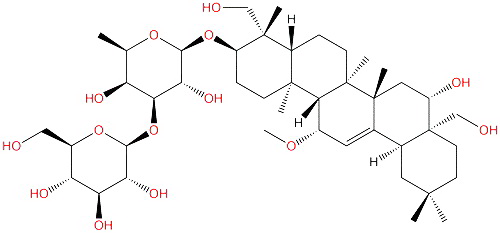


Product name: Saikosaponin B4
Synonym name:
Catalogue No.: BP3913
Cas No.: 58558-09-1
Formula: C43H72O14
Mol Weight: 813.035
Botanical Source: Bupleurum falcatum
Physical Description:
Type of Compound:
Purity: 95%~99%
Analysis Method: HPLC-DAD or/and HPLC-ELSD
Identification Method: Mass, NMR
Packing: Brown vial or HDPE plastic bottle
Storage: Store in a well closed container, protected from air and light. Put into refrigerate or freeze for long term storage.
Whenever possible, you should prepare and use solutions on the same day. However, if you need to make up stock solutions in advance, we recommend that you store the solution as aliquots in tightly sealed vials at -20℃. Generally, these will be useable for up to two weeks.
The product could be supplied from milligrams to grams
Inquire for bulk scale.
For Reference Standard and R&D, Not for Human Use Directly.
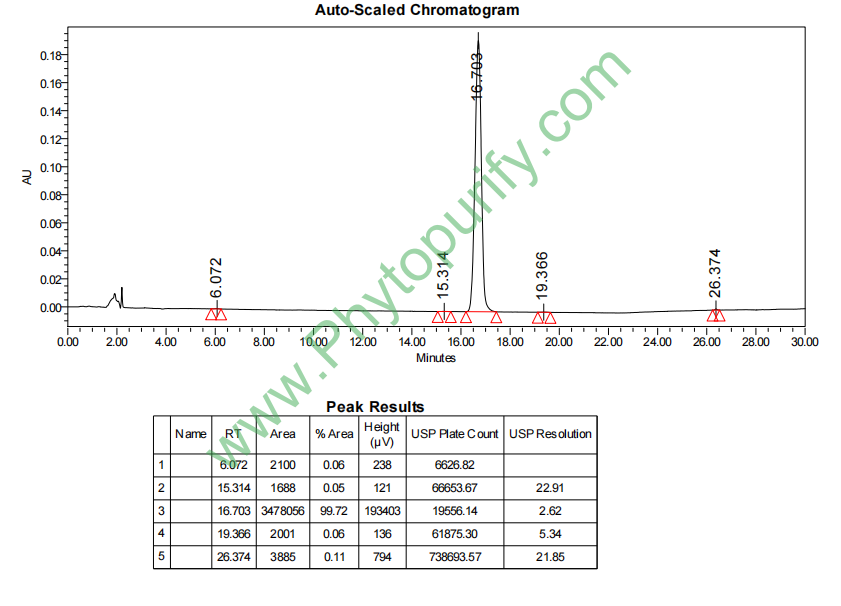
HPLC of Saikosaponin B4
Storage conditions:Short-term storage at 2~8℃, long-term storage at -20 ~ -80℃
228.2200
2.5123
2.5121
.0375
.5712
.5724
Low
70.4322
6.1990
No
No
No
No
No
No
0.0
Yes
No
No
No
Natural products have always been an important source of drug discovery and development, especially in the fields of antiviral, anti-inflammatory, and metabolic disease treatment, demonstrating irreplaceable value. Chaihu(Bupleurum chinense DC., as one of the most widely used herbs in traditional Chinese medicine, has a medicinal history dating back more than two thousand years to the Shennong Bencao Jing. Bupleurum plants contain abundant active ingredients, among which saikosaponins are considered the main pharmacological substance basis. So far, more than 100 triterpenoid saponins have been isolated and identified from plants of the Bupleurum genus. These compounds are structurally based on pentacyclic triterpenoids of the oleanane type, forming diverse structural analogues through differences in sugar chains.
Saikosaponin B4 (SSB4) is an important member of the saikosaponin family, with a CAS number of 58558-09-1. This compound was first isolated from the roots of Bupleurum chinense and has attracted the attention of researchers due to its unique biological activity. Compared with other members of the same family, saikosaponin B4 exhibits a more specific pharmacological spectrum, especially its ability to selectively inhibit lipolysis induced by adrenocorticotropic hormone (ACTH). This discovery provides new ideas for the treatment of metabolic diseases. In recent years, with the deepening of research, the potential of saikosaponin B4 in the field of antiviral therapy has gradually been revealed. Its targets include key proteins in the lifecycle of various viruses, including myeloperoxidase (MPO), herpes simplex virus UL42 and UL54, infectious cell protein 27 (ICP27), thymidine kinase (TK), glycoprotein D (gD), as well as HIV-1 related chemokine receptors CCR5, CXCR4, HIV-1 protease (HIV1-PR), and integrase (INT). This multi-target action characteristic makes saikosaponin B4 an attractive lead compound in the development of antiviral drugs.
This article will provide a systematic review of the research status of saikosaponin B4 from multiple dimensions, including chemical structure and physicochemical properties, plant sources and extraction methods, pharmacological activity research, mechanism of action and molecular targets, pharmacological evaluation and pharmacokinetics, clinical application prospects and prospects, in order to provide reference for the in-depth development and utilization of this natural product.
Chaihu saponin B4 belongs to the oleanane type pentacyclic triterpenoid saponin, and its aglycone is a derivative of epoxyoleanolic acid. From a structural classification perspective, saikosaponin can be divided into two categories: epoxy type (such as saikosaponin a, d) and heterocyclic type (such as saikosaponin b1, b2, b3, b4). Chaihu saponin B4 belongs to the isocyclic Chaihu saponin, characterized by an ether bond between the C-13 and C-28 positions, forming a unique 13,28-epoxide structural unit. This structural feature is significantly different from epoxy saponins such as saikosaponin a and d, and also determines its unique physicochemical properties and biological activity.
Specifically, the glycoside of saikosaponin B4 is 13,28-epoxyoleanolic acid, and its C-3 hydroxyl group is connected to a three sugar chain composed of glucose, xylose, and fucose (or xylose) in a specific order. The composition and connection mode of sugar chains not only affect the water solubility of compounds, but also have a significant impact on their interactions with biological targets. The molecular formula is C ₄₂ H ₆₈ O ₁₅, and the molecular weight is 8130350 Da, which belongs to a moderate to high level among natural saponin compounds.
The physicochemical properties of saikosaponin B4 provide important basis for its pharmacological evaluation. According to the results of computational chemical analysis, the lipid water partition coefficient (LogP) of the compound is 2.5123, indicating that it has moderate lipophilicity, neither completely hydrophobic nor completely hydrophilic, which is beneficial for its transmembrane transport and distribution in organisms. The polar surface area (TPSA) is 228.2200 Å ², which is a relatively high value and reflects the presence of a large number of polar groups such as hydroxyl and ether bonds in the molecule. These groups not only participate in hydrogen bonding formation, but also serve as the structural basis for their interaction with target proteins.
Water solubility is one of the key parameters for evaluating the pharmacological properties of compounds. The water solubility of saikosaponin B4 is 0.0375 mg/mL, which belongs to low water solubility compounds. This characteristic is consistent with the commonality of its saponin compounds, which is due to the balance between the hydrophobicity of the nucleoside moiety and the hydrophilicity of the sugar chain moiety, resulting in limited solubility in water. Low water solubility may affect its oral bioavailability, which is also one of the main challenges faced by saponin compounds in drug development.
In terms of drug safety parameters, the blood-brain barrier permeability of saikosaponin B4 is evaluated as "low", indicating that it is not easily able to enter the central nervous system. This characteristic has advantages in the development of peripheral targeted drugs and can reduce central nervous system related side effects. The hERG inhibition evaluation result is' no ', indicating that the compound has a low risk of inhibiting cardiac potassium ion channels and reduces the possibility of causing cardiac toxicity such as QT interval prolongation. The Ames test result is 0.0, indicating that no mutagenicity was observed in the standard bacterial recovery mutation test, and the preliminary genetic toxicity evaluation result is good.
Chaihu saponin B4 mainly comes from the Apiaceae family and the genus Chaihu(Bupleurum L. The roots and rhizomes of plants. There are over 150 species of this genus of plants worldwide, mainly distributed in Eurasia and North Africa. In China, the pharmacopoeia includes authentic Bupleurum chinense, including Bupleurum chinense(Bupleurum chinense DC. and South Chaihu(Bupleurum scorzonerifolium Willd.) There are two types. In addition, various plants belonging to the same genus, such as Chaihu with narrow leaves(B. falcatum L.)、 San Dao Chai Hu(B. falcatum var. scorzonerifolium)It is also used as a substitute for Bupleurum chinense or as a local practice in different regions.
Research has shown that the content of saikosaponin B4 in Chaihu plants is relatively low, usually accounting for 0.01% to 0.1% of dried medicinal materials, far lower than the main saponin components such as saikosaponin a and d. Its content is influenced by various factors, including plant species, place of origin, harvest season, growth period, and processing methods. Generally speaking, the content of saikosaponin B4 in North Bupleurum chinense is higher than that in South Bupleurum chinense, while wild varieties are usually higher than cultivated ones. In terms of harvesting season, the saponin content in roots harvested in autumn is generally higher than that harvested in spring.
It is worth noting that saikosaponin B4 is not a native saponin in Chaihu plants, but a secondary product formed by chemical transformation of native saponins (such as saikosaponin a, d) during processing, storage, or extraction. Specifically, under acidic conditions or heating, the epoxy bonds at positions C-13,28 of saikosaponin a and d undergo ring opening rearrangement, forming heterocyclic saponins with 13,28-epoxy structures, namely saikosaponin b1, b2, b3, b4, etc. Therefore, the content of saikosaponin B4 depends not only on the plant material itself, but also closely related to the subsequent processing methods.
Researchers have developed various methods for the extraction of saikosaponin B4, including traditional solvent extraction, ultrasound assisted extraction, microwave-assisted extraction, and supercritical fluid extraction.
Traditional solvent extraction method It is the most commonly used method, usually using methanol or ethanol as the extraction solvent. The specific operation process is as follows: Grind the dried Chaihu root to an appropriate particle size, add 5-10 times the amount of methanol or 70% -80% ethanol, and reflux extract 2-3 times at 60-80 ℃ for 1-2 hours each time. Combine the extraction solutions, concentrate under reduced pressure until there is no alcohol flavor, extract with n-butanol, collect the n-butanol layer, and steam dry under reduced pressure to obtain the crude extract of total saponins. Further separation and purification can be achieved by using macroporous adsorption resin column chromatography (such as D101, AB-8 resin), with different concentrations of ethanol water solution gradient elution, to enrich the B4 enriched component of Chaihu saponin. Subsequently, by combining techniques such as silica gel column chromatography, ODS reverse phase column chromatography, and preparative high-performance liquid chromatography (Prep HPLC), a purity of over 98% of Chaihu saponin B4 monomer can be obtained.
Ultrasonic assisted extraction method By utilizing the cavitation and mechanical effects of ultrasound, extraction efficiency can be significantly improved and extraction time can be shortened. Research has shown that under 50 ℃ conditions, using 70% ethanol as the solvent and ultrasonic extraction for 30 minutes, the extraction rate of saikosaponin B4 can reach the level of traditional reflux extraction for 2 hours. This method is easy to operate, short in time, and requires less solvent, making it suitable for laboratory scale preparation.
Microwave assisted extraction method By utilizing the penetrability and selective heating properties of microwaves, plant cell walls can be rapidly destroyed, promoting the dissolution of active ingredients. Under optimized microwave power (400~600W) and extraction time (5~10 minutes) conditions, the extraction rate of saikosaponin B4 increased by 20%~30% compared to traditional methods. However, this method requires high equipment requirements, and microwave heating may lead to the degradation of some thermosensitive components, requiring strict control of process parameters.
Supercritical fluid extraction method By using CO ₂ as the extraction medium and adjusting the pressure and temperature to change its solubility, selective extraction of the target component can be achieved. This method has the advantages of no solvent residue, environmental friendliness, and low extraction temperature, making it particularly suitable for the extraction of thermosensitive components. However, due to the high polarity of saikosaponin B4, the extraction efficiency using only CO ₂ is low, and methanol or ethanol is usually added as an entrainer to improve the extraction rate.
In terms of separation and purification, in addition to the above-mentioned chromatographic techniques, new separation methods such as high-speed countercurrent chromatography (HSCCC) and molecular imprinting technology are gradually being applied to the purification of saikosaponin B4. These methods have the advantages of high separation efficiency, small sample loss, and easy scalability, providing new technological means for the efficient preparation of saikosaponin B4.
The earliest discovered pharmacological activity of saikosaponin B4 was its selective inhibition of ACTH induced lipolysis. ACTH is a polypeptide hormone secreted by the anterior pituitary gland, which increases secretion under stress and promotes lipolysis in adipose tissue, releasing free fatty acids into the bloodstream. Excessive or sustained lipolysis is closely related to insulin resistance, type 2 diabetes and metabolic syndrome.
Research has found that saikosaponin B4 can dose dependently inhibit ACTH induced lipolysis in rat adipocytes, with an IC ₅₀ value at the micromolar level. It is worth noting that this compound has little effect on basal lipolysis (i.e. lipolysis without ACTH stimulation) and exhibits good selectivity. This characteristic distinguishes it from traditional lipolysis inhibitors, which often non specifically inhibit all forms of lipolysis and may lead to severe metabolic disorders. Further research suggests that the inhibitory effect of saikosaponin B4 may be related to its interference with the binding of ACTH to its receptor (MC2R) or its impact on downstream cAMP PKA signaling pathways. In addition, the compound can also inhibit the lipolysis induced by catecholamine hormones (such as isoproterenol), suggesting that its target may be located in a common link of the lipolysis signaling pathway.
In recent years, the antiviral activity of saikosaponin B4 has become a research hotspot. Multiple in vitro experiments have confirmed that the compound has inhibitory effects on various viruses, including herpes simplex virus (HSV), human immunodeficiency virus (HIV), and influenza virus.
Anti herpes simplex virus effect Chaihu saponin B4 can inhibit the replication of HSV-1 and HSV-2, with a half maximal inhibitory concentration (IC ₅₀) in the range of 10-50 μ M. Mechanism studies have shown that this compound can target multiple key proteins involved in HSV replication. Among them, UL42 is an auxiliary subunit of HSV DNA polymerase, responsible for enhancing the processing ability of polymerase; UL54 is the catalytic subunit of viral DNA polymerase; ICP27 is an essential early protein for virus replication, involved in the regulation of viral gene transcription; TK (thymidine kinase) is a key enzyme in viral nucleotide metabolism and an activation target for anti HSV drugs such as acyclovir. Chaihu saponin B4 can bind to these proteins, interfere with their normal function, and thus block virus replication in multiple ways. In addition, the compound can also inhibit the expression of viral glycoprotein gD, which is an essential envelope glycoprotein for HSV invasion of host cells and is responsible for binding to receptors on the surface of host cells. By inhibiting the function of gD, saikosaponin B4 can effectively prevent the adsorption and entry of viruses.
Anti HIV effect Chaihu saponin B4 also exhibits inhibitory effects on HIV-1. Its targets include HIV-1 protease (HIV1-PR) and integrase (INT), both of which play critical roles in the HIV replication cycle. HIV1-PR is responsible for cleaving viral precursor proteins into mature functional proteins and is an important target for the development of anti HIV drugs; INT is responsible for integrating viral DNA into the host cell genome, which is a key step in establishing persistent infection of the virus. Molecular docking studies have shown that saikosaponin B4 can bind to the active sites of these two enzymes, forming stable complexes that inhibit their enzymatic activity. In addition, the compound can interact with chemokine receptors CCR5 and CXCR4, which are the main co receptors for HIV-1 entering host cells. By blocking the binding between the virus and the receptor, saikosaponin B4 can effectively inhibit the entry process of HIV-1. This multi-target action characteristic gives it potential advantages in addressing HIV drug resistance.
Other antiviral activities Preliminary studies have also shown that saikosaponin B4 has a certain inhibitory effect on influenza virus, respiratory syncytial virus (RSV), and hepatitis B virus (HBV), but its specific mechanism remains to be further elucidated.
As one of the main active ingredients of Chaihu, Chaihu saponin B4 also inherits the anti-inflammatory properties of Chaihu. In vitro experiments have shown that the compound can inhibit lipopolysaccharide (LPS) - induced macrophage inflammatory response, reduce the release of pro-inflammatory factors such as tumor necrosis factor - α (TNF - α), interleukin-6 (IL-6), and interleukin-1 β (IL-1 β). Its anti-inflammatory mechanism may be related to the inhibition of the activation of the nuclear factor kappa B (NF - κ B) signaling pathway. In addition, saikosaponin B4 can inhibit the expression of cyclooxygenase-2 (COX-2) and inducible nitric oxide synthase (iNOS), reduce the production of prostaglandin E ₂ (PGE ₂) and nitric oxide (NO).
In terms of immune regulation, saikosaponin B4 can regulate the proportion of T lymphocyte subsets, enhance the activity of natural killer (NK) cells, and promote the secretion of interferon - γ (IFN - γ). These immune regulatory effects may be closely related to their antiviral activity, as effective antiviral immune responses require the synergistic involvement of innate and adaptive immunity.
In addition to the aforementioned activities, saikosaponin B4 also exhibits certain hepatoprotective, anti-tumor, and neuroprotective effects. In liver injury models, this compound can reduce serum transaminase levels, alleviate liver cell necrosis and inflammatory infiltration, and its hepatoprotective mechanism may be related to antioxidant and anti apoptotic effects. In anti-tumor research, saikosaponin B4 has shown a proliferation inhibitory effect on a variety of tumor cell lines (such as HepG2, A549 lung cancer, MCF-7 breast cancer, etc.), and can induce cell cycle arrest and apoptosis. In terms of neuroprotection, this compound can alleviate glutamate induced neuronal damage, inhibit oxidative stress and calcium overload, providing a new candidate molecule for the treatment of neurodegenerative diseases.
The pharmacological effects of saikosaponin B4 exhibit significant multi-target characteristics, which not only reflect the unique advantages of natural products in drug discovery, but also provide broad prospects for its clinical application. At the molecular level, this compound is capable of interacting with various protein targets, which are involved in multiple biological processes such as lipid metabolism regulation, viral replication, inflammatory response, and cell signaling transduction.
In terms of antiviral effects, the target spectrum of saikosaponin B4 is particularly broad. For HSV, its targets include proteins such as UL42, UL54, ICP27, TK, and gD. These proteins perform different functions during the viral replication cycle: UL42 and UL54 collaborate to complete viral DNA replication, ICP27 regulates viral gene expression, TK participates in nucleotide metabolism, and gD is responsible for virus adsorption and entry. Chaihu saponin B4 can simultaneously act on these targets, forming a multi link and multi-level antiviral network. This mode of action not only improves the antiviral effect, but also reduces the possibility of virus resistance.
The targets of Chaihu saponin B4 targeting HIV-1 include HIV1-PR, INT, CCR5, and CXCR4. Among them, HIV1-PR and INT are essential enzymes for virus replication, while CCR5 and CXCR4 are key co receptors for virus entry into host cells. It is worth noting that CCR5 and CXCR4 belong to the G protein coupled receptor (GPCR) family, while saikosaponin B4, as a triterpenoid saponin, can interact with these membrane protein receptors, suggesting that it may have a unique molecular recognition mechanism.
In regulating host physiological functions, the targets of saikosaponin B4 include ACTH receptor (MC2R) and downstream signaling molecules. MC2R belongs to the GPCR family and is mainly expressed on the surface of the adrenal cortex and adipocytes. After binding to MC2R, ACTH activates adenylate cyclase, causing an increase in intracellular cAMP levels, which in turn activates protein kinase A (PKA), ultimately leading to phosphorylation and activation of hormone sensitive lipase (HSL), promoting lipolysis. Chaihu saponin B4 may selectively inhibit ACTH induced lipolysis by interfering with the binding of ACTH to MC2R or inhibiting a certain link in the cAMP PKA signaling pathway.
In addition, saikosaponin B4 can also interact with MPO (myeloperoxidase). MPO is a heme peroxidase secreted by neutrophils and monocytes, which plays an important role in inflammatory responses. This enzyme catalyzes the generation of hypochlorous acid (HOCl) and participates in the killing of pathogens, but excessive activation can also lead to tissue damage. The regulatory effect of saikosaponin B4 on MPO may be related to its anti-inflammatory activity.
Molecular docking studies provide a structural basis for understanding the interaction between saikosaponin B4 and target proteins. Research has shown that the triterpenoid core of this compound can be embedded in the hydrophobic pocket of the target protein, while the sugar chain portion forms a hydrogen bond network with polar amino acid residues on the protein surface. The binding mode of "hydrophobic anchoring polarity recognition" is the structural basis of its multi-target effect. Structure activity relationship analysis shows that the 13,28-epoxide structure is a key functional group for maintaining its biological activity, while the length and composition of the sugar chain affect its binding affinity and selectivity with different targets.
Based on computational chemistry methods, the pharmacological parameters of Chaihu saponin B4 were evaluated, and the results showed that the compound met some of the criteria in Lipinski's Rule of Five, but there were also some challenges. Its molecular weight is 8130350 Da, exceeding the threshold of 500 Da, which is a common characteristic of saponin compounds. The LogP value is 2.5123, which meets the requirement of ≤ 5. The number of hydrogen bond donors and acceptors is relatively high, which is consistent with the large TPSA value (228.2200 Å ²). Overall, the physicochemical properties of saikosaponin B4 are in the critical region between drug like and non drug like, and require appropriate formulation techniques or structural modifications to improve its pharmacological properties.
At present, there is insufficient systematic research on the pharmacokinetics of saikosaponin B4 in vivo, but its basic characteristics can be inferred based on studies of similar compounds. After oral administration, the bioavailability of saikosaponin B4 may be low, mainly due to the acidic environment in the gastrointestinal tract that may lead to its degradation; High molecular weight and polarity make it difficult to penetrate the intestinal epithelial cell membrane; The role of efflux transporters such as P-glycoprotein (P-gp) may limit its absorption. After intravenous administration, the compound may be widely distributed in tissues with abundant blood flow such as the liver, kidneys, and lungs, but due to its low blood-brain barrier permeability, its distribution in the central nervous system is limited.
In terms of metabolism, saikosaponin B4 may undergo metabolic transformation under the influence of liver and intestinal microbiota. The main metabolic pathways may include: hydrolysis of sugar chains to generate secondary glycosides or aglycones; Hydroxylation, oxidation, or reduction reactions of the glycoside moiety; Binding reaction with glucuronic acid or sulfuric acid. These metabolites may retain or alter the biological activity of the parent compound.
In terms of excretion, saikosaponin B4 and its metabolites may be mainly excreted through bile and urine. Due to its high molecular weight, bile excretion may be its main clearance pathway, and some metabolites may re-enter the systemic circulation through the enterohepatic circulation, prolonging their duration of action in the body.
Researchers have proposed various improvement strategies to address the shortcomings in the pharmacological properties of saikosaponin B4. In terms of formulations, new drug delivery systems such as liposomes, nanoparticles, and cyclodextrin inclusion complexes can improve their water solubility and bioavailability. For example, encapsulating saikosaponin B4 in polylactic acid hydroxyacetic acid copolymer (PLGA) nanoparticles can significantly improve its oral absorption rate and bioavailability. In addition, phospholipid complex technology can also improve its lipid solubility and promote transmembrane transport.
In terms of structural modification, the pharmacokinetic properties and biological activity can be optimized by modifying the sugar chain or modifying the glycoside structure. For example, introducing phosphate groups or amino acid residues can improve water solubility; Acetylation or methylation of specific hydroxyl groups can improve metabolic stability; Through prodrug design, the active groups are masked and released at specific sites in the body, enabling targeted drug delivery.
Based on the multi-target antiviral activity characteristics of saikosaponin B4, this compound has broad prospects in the field of antiviral drug development. Especially for HSV and HIV, two viral diseases that are difficult to cure, the unique mechanism of action of saikosaponin B4 may provide new ideas for solving the problem of drug resistance. Compared with existing antiviral drugs, the multi-target mode of action of saikosaponin B4 makes it difficult for the virus to develop complete resistance through a single mutation, which adds important value as a candidate antiviral drug.
In the treatment of HSV, the current first-line clinical drugs acyclovir and its analogues mainly exert their effects by inhibiting viral DNA polymerase, and long-term use has led to the emergence of drug-resistant virus strains. Chaihu saponin B4 is expected to overcome the resistance problem of existing drugs by simultaneously acting on multiple targets such as UL42, UL54, ICP27, TK, and gD. In addition, the compound can also inhibit the establishment and maintenance of latent viral infections, providing the possibility of completely eliminating viruses from the body.
In terms of HIV treatment, although highly effective antiretroviral therapy (HAART) can effectively control virus replication, it has problems such as high drug toxicity, poor compliance, and drug resistance. Chaihu saponin B4 targets both HIV-1 entry (CCR5/CXCR4) and replication (HIV1-PR/INT) at the same time, and this "entry replication" dual blockade strategy may achieve better therapeutic effects. Especially for virus strains resistant to CCR5 antagonists and protease inhibitors, saikosaponin B4 may still maintain activity.
The selective inhibition of ACTH induced lipolysis by saikosaponin B4 gives it a unique advantage in the treatment of metabolic diseases. Obesity, type 2 diabetes and metabolic syndrome patients are often accompanied by adipose tissue dysfunction and abnormal lipolysis, which lead to the increase of free fatty acid levels, and then lead to insulin resistance and β cell function damage. At present, there is a lack of drugs in clinical practice that can specifically inhibit pathological lipolysis without affecting basal lipolysis. The discovery of saikosaponin B4 fills this gap.
In addition, elevated ACTH levels are closely related to stress-related metabolic disorders. Under chronic stress, the hypothalamic pituitary adrenal axis is overactivated, leading to increased secretion of ACTH and cortisol, which in turn causes metabolic abnormalities such as central obesity, insulin resistance, and hypertension. Chaihu saponin B4 may provide a new drug intervention for the treatment of stress-related metabolic diseases by selectively inhibiting the action of ACTH.
Given the multi-target nature of saikosaponin B4, a combination therapy strategy may be the key to maximizing its clinical value. In antiviral therapy, saikosaponin B4 can be used in combination with existing antiviral drugs to enhance therapeutic efficacy, reduce drug dosage and toxicity through synergistic effects of different mechanisms of action. For example, combination therapy with acyclovir for HSV infection or combination therapy with zidovudine, lamivudine, etc. for HIV infection may produce synergistic effects.
In the treatment of metabolic diseases, saikosaponin B4 can be used in combination with insulin sensitizers (such as metformin and thiazolidinediones) or lipid-lowering drugs (such as statins and betas) to regulate glucose and lipid metabolism through multiple pathways, achieving better therapeutic effects.
Although saikosaponin B4 exhibits various pharmacological activities and promising application prospects, its clinical translation still faces many challenges. Firstly, the natural source of saikosaponin B4 has a low content and high extraction cost, making it difficult to meet the needs of large-scale production and clinical applications. In the future, efficient chemical or biological synthesis methods need to be developed to achieve large-scale preparation of this compound. Secondly, the water solubility and oral bioavailability of the compound are low and need to be improved through formulation techniques or structural modifications. Again, the current in vivo pharmacokinetics, toxicology, and pharmacodynamics research on saikosaponin B4 is still insufficient, and systematic preclinical studies are needed to lay the foundation for its entry into clinical trials.
Future research directions should include: in-depth elucidation of the molecular mechanisms underlying the interactions between saikosaponin B4 and various targets, providing guidance for structural optimization; Develop efficient and low-cost preparation processes; Design a reasonable formulation plan to improve its bioavailability; Conduct systematic pharmacokinetic and toxicological evaluations; Explore its clinical application value in the treatment of antiviral and metabolic diseases. In addition, based on its multi-target action characteristics, the application of saikosaponin B4 in anti-inflammatory, hepatoprotective, neuroprotective and other fields is also worth further exploration.
As an important member of the saikosaponin family, saikosaponin B4 has demonstrated significant research value in the field of natural product drug development due to its unique chemical structure and multi-target pharmacological properties. From the initial discovery of selective inhibition of ACTH induced lipolysis to the broad-spectrum antiviral activity revealed in recent years, the pharmacological spectrum of Chaihu saponin B4 has been continuously expanded, and its mechanism of action has gradually been elucidated. This compound can simultaneously act on multiple key proteins in the viral replication cycle and the metabolic regulatory pathways of host cells. This multi-target mode of action not only reflects the unique advantages of natural products, but also provides new strategies for the treatment of complex diseases.
However, from laboratory discovery to clinical application, saikosaponin B4 still faces many challenges. The problems of low natural content, poor water solubility, and low oral bioavailability need to be solved through modern medicinal chemistry and formulation methods. With the advancement of chemical synthesis technology, the development of new drug delivery systems, and a deeper understanding of their mechanisms of action, it is believed that saikosaponin B4 and its derivatives have the potential to become new candidate drugs for the treatment of viral and metabolic diseases in the future. Modern research on the active ingredients of traditional Chinese medicine not only helps to reveal the pharmacological substance basis of Chinese medicine, but also provides valuable lead compound resources for innovative drug discovery. The research process of saikosaponin B4 is a vivid example of the combination of traditional Chinese medicine wisdom and modern pharmaceutical science.
