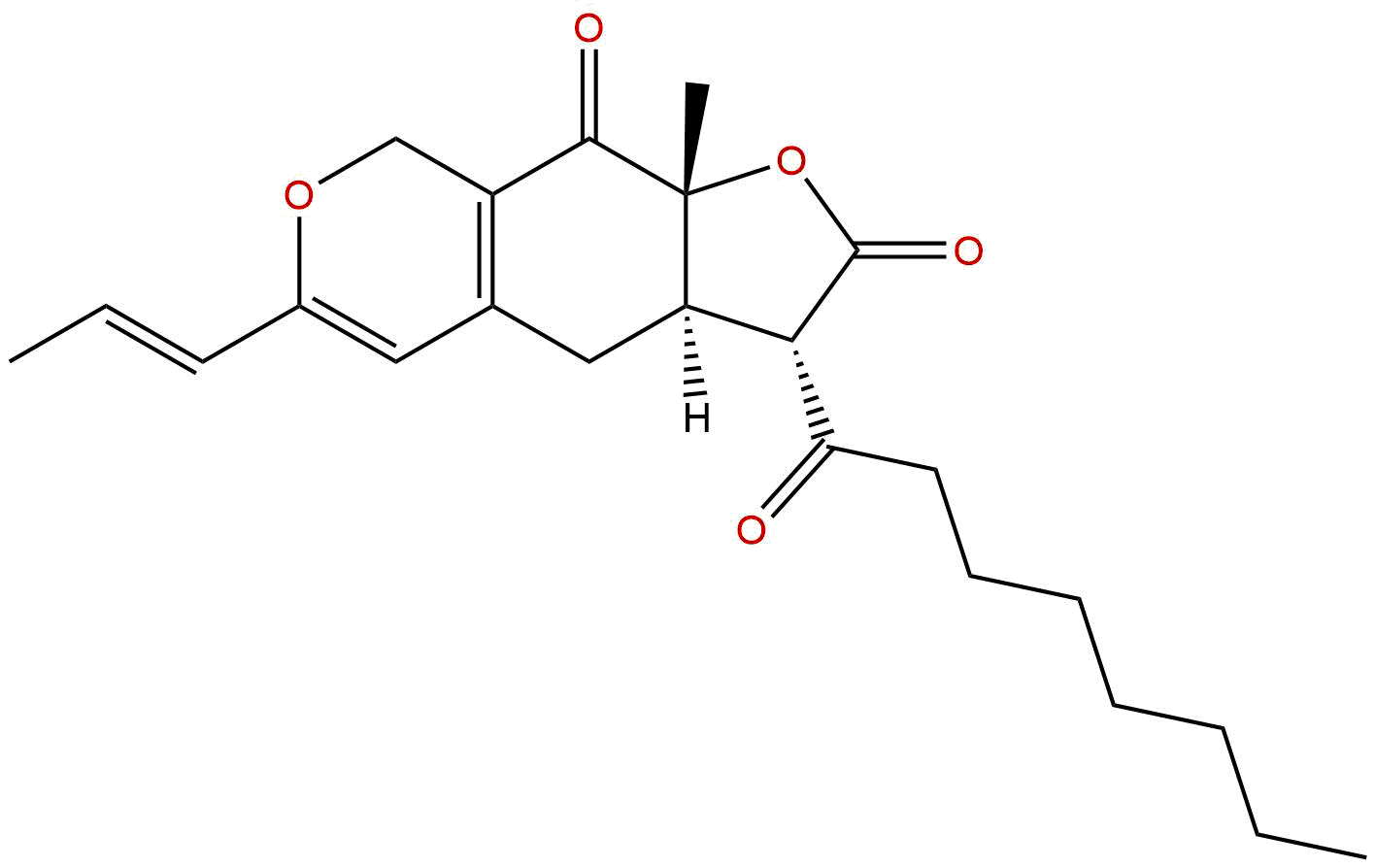


Product name: Ankaflavin
Synonym name: Ankaflavine
Catalogue No.: BP4056
Cas No.: 50980-32-0
Formula: C23H30O5
Mol Weight: 386.48
Botanical Source: Monascus
Physical Description:
Type of Compound: Miscellaneous
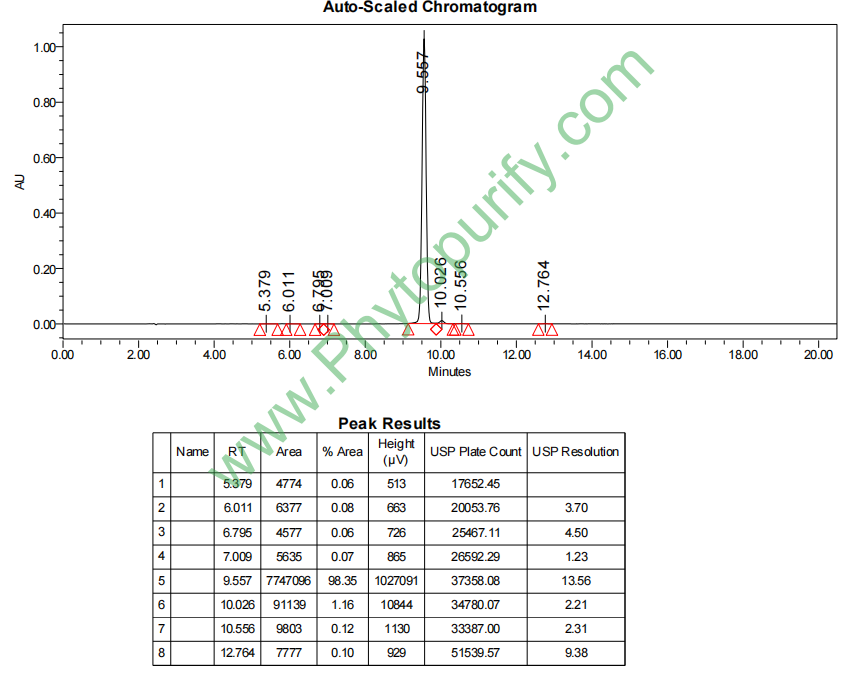
Purity: 95%~99%
Analysis Method: HPLC-DAD or/and HPLC-ELSD
Identification Method: Mass, NMR
Packing: Brown vial or HDPE plastic bottle
Storage: Store in a well closed container, protected from air and light. Put into refrigerate or freeze for long term storage.
Whenever possible, you should prepare and use solutions on the same day. However, if you need to make up stock solutions in advance, we recommend that you store the solution as aliquots in tightly sealed vials at -20℃. Generally, these will be useable for up to two weeks.
The product could be supplied from milligrams to grams
Inquire for bulk scale.
For Reference Standard and R&D, Not for Human Use Directly.
HPLC of Ankaflavin
Storage conditions:Short-term storage at 2~8℃, long-term storage at -20 ~ -80℃
Ankaflvin (CAS number: 50980-32-0) is a natural product extracted from red rice fermented by Monascus spp., and is an important member of the Monascus pigment family. In recent years, with the deepening of research on the pharmacological activity of natural products, Monascus flavins have received widespread attention due to their unique biological activity, especially their potential applications in metabolic diseases and tumor treatment. As a peroxisome proliferator activated receptor γ (PPAR γ) agonist with oral activity, monascus flavin exhibits multi target and multi mechanism pharmacological properties, including anti-inflammatory, anti-cancer, anti atherosclerosis and lipid-lowering effects. This article aims to provide a systematic review of the chemical structure, sources, extraction methods, pharmacological activities, and mechanisms of action of Monascus flavins. By combining the evaluation of drug properties and pharmacokinetic characteristics, it explores the prospects and challenges of their clinical applications, and provides theoretical basis for subsequent research and development.
The molecular formula of Monascus flavins is C24H-34O4, with a molecular weight of 386.4880, and belongs to the class of polyhydroxy polyene compounds structurally. Its chemical structural features include a polyene chain and multiple hydroxyl substituents, giving it a certain degree of polarity and lipophilicity. The LogP value of Monascus flavins is 3.9669, indicating its good lipid solubility, which facilitates cell membrane penetration and in vivo distribution. Its topological polar surface area (TPSA) is 69.67 Å ^ 2, indicating that the molecule has moderate polarity, which is conducive to oral absorption. Low water solubility (0.0094 mg/mL) suggests limited solubility in aqueous phase, but this poses certain challenges for oral formulation design. Monascus flavins can effectively penetrate the blood-brain barrier (BBB), which provides the possibility for their potential application in central nervous system diseases. The negative result of hERG channel inhibition experiment indicates a low risk of cardiac toxicity. The Ames mutagenicity test result is 0.0, indicating a low risk of genetic toxicity and good safety.
Monascus spp. is mainly derived from red rice fermented by Monascus spp. Monascus is a traditional fermentation microorganism widely used in the food industry, especially in the production of fermented foods in East Asia. Monascus flavins are secondary metabolites produced during the metabolism of Monascus purpureus, with significant physiological activity.
The process of extracting Monascus flavins usually includes the following steps: first, solid-state fermentation or liquid state fermentation technology is used to cultivate Monascus, and after fermentation is completed, organic solvents (such as ethanol, methanol, or ethyl acetate) are used to extract the fermented product. Subsequently, high-purity quercetin was obtained through separation and purification techniques such as liquid-liquid distribution, silica gel column chromatography, and reverse phase high performance liquid chromatography (RP-HPLC). In recent years, green extraction techniques such as ultrasound assisted extraction and supercritical fluid extraction have also been applied to the efficient extraction of Monascus flavins, improving yield and purity while reducing the use of organic solvents.
Red yeast extract, as a PPAR γ agonist, can regulate the expression of lipid metabolism related genes, promote β - oxidation of fatty acids, and reduce the levels of triglycerides and low-density lipoprotein cholesterol (LDL-C) in plasma. Its target proteins include cholesterol ester transfer protein (CETP), 3-hydroxy-3-methylglutaryl-CoA reductase (HMGCR), low-density lipoprotein receptor (LDLR), apolipoprotein B (APOB), proprotein converting enzyme subtilisin 9 (PCSK9), apolipoprotein E (APOE), and peroxisome proliferator activated receptor alpha (PPARA), among other key proteins. By regulating these targets, monascus flavin not only reduces blood lipids, but also improves the disorder of lipid metabolism, which has a potential anti atherosclerosis effect.
Monascus flavins can significantly inhibit the release of inflammatory mediators, reduce the expression of pro-inflammatory cytokines such as TNF - α, IL-6, and IL-1 β, and alleviate inflammatory responses. Its anti-inflammatory mechanism mainly involves regulating the NF - κ B signaling pathway and MAPK pathway, inhibiting the transcriptional activity of inflammation related genes, thereby exerting a protective effect on tissues and alleviating chronic inflammation.
Monascus flavins exhibit selective cytotoxicity and can induce apoptosis in various cancer cell lines. The mechanism of inducing apoptosis includes activating the mitochondrial pathway, regulating the expression of Bcl-2 family proteins, promoting cytochrome c release, and activating the caspase cascade reaction. In addition, quercetin can also block the cancer cell cycle, inhibit tumor cell proliferation, suppress tumor angiogenesis, inhibit tumor metastasis related signaling pathways, demonstrating broad anti-tumor potential.
Monascus flavin can reduce the damage of vascular endothelial cells, inhibit the formation of macrophage foam cells, reduce the inflammatory reaction of vascular wall and delay the process of atherosclerosis by regulating lipid metabolism and anti-inflammatory effects. Its mechanism of action involves the activation of PPAR γ and the regulation of downstream signaling pathways, improving vascular function and reducing lipid deposition in the vascular wall.
The pharmacological effects of quercetin mainly depend on its regulation of multiple molecular targets, especially the activation of nuclear receptor PPAR γ. PPAR γ, as a key regulatory factor in lipid metabolism and inflammatory response, is activated by Monascus to promote fatty acid metabolism and energy homeostasis, inhibit the expression of inflammatory factors, and improve the pathological status related to metabolic syndrome.
In addition, quercetin also affects various proteins related to lipid metabolism, including:
Red yeast extract also inhibits the NF - κ B and MAPK signaling pathways, reduces inflammatory responses, promotes cancer cell apoptosis, and demonstrates its comprehensive regulatory ability of multi-target and multi pathway.
The pharmacological evaluation of Monascus flavins shows that they have good potential for drug development. Its molecular weight (386.4880) and LogP (3.97) comply with Lipinski's rules, indicating good oral bioavailability. The TPSA value is moderate, which is conducive to transmembrane absorption. Low water solubility suggests the need to optimize the formulation to improve dissolution and bioavailability.
Pharmacokinetic studies have shown that quercetin is rapidly absorbed after oral administration, with high blood-brain barrier permeability and potential central nervous system activity. Its metabolic pathway is mainly through the liver enzyme system, and the safety of its metabolites is good. The hERG channel inhibition experiment was negative, indicating high cardiac safety. The Ames test result is negative, indicating a low risk of genetic toxicity.
Red quercetin has a moderate half-life and is widely distributed in the body, mainly metabolized by the liver and excreted through bile. Further systematic pharmacokinetic and toxicological studies are needed in the future to clarify its in vivo metabolic pathways and potential drug interactions.
Monascus flavins, as a multifunctional natural product, have broad clinical application prospects. Its potential in the fields of lowering blood lipid, anti-inflammatory, anti-cancer and anti atherosclerosis is particularly suitable for the auxiliary treatment of metabolic syndrome, cardiovascular disease and tumor.
At present, clinical research on Monascus flavins is still in its early stages, and more clinical trials are needed in the future to verify its safety, efficacy, and dosage range. Based on its excellent oral activity and multi-target mechanism of action, quercetin is expected to be developed as a novel lipid-lowering drug, anti-inflammatory drug, and anti-tumor drug.
In addition, the blood-brain barrier permeability of quercetin provides the possibility for its application in neurodegenerative diseases such as Alzheimer's disease, which are related to lipid metabolism abnormalities. By optimizing its structure and improving its formulation, enhancing its bioavailability and targeting will further promote its clinical translation.
As an important active ingredient in red rice fermented by Monascus, Monascus flavins exhibit multiple pharmacological activities, especially in the fields of lipid metabolism regulation, anti-inflammatory and anticancer effects. Its mechanism of action involves PPAR γ and various lipid metabolism related targets, and it has good drug efficacy and safety. In the future, through in-depth pharmacological mechanism research, systematic pharmacokinetic analysis, and clinical trial verification, quercetin is expected to become a new natural drug for the treatment of metabolic diseases and tumors. With the development of modern drug research and development technology, the clinical application prospects of quercetin are worth looking forward to.
