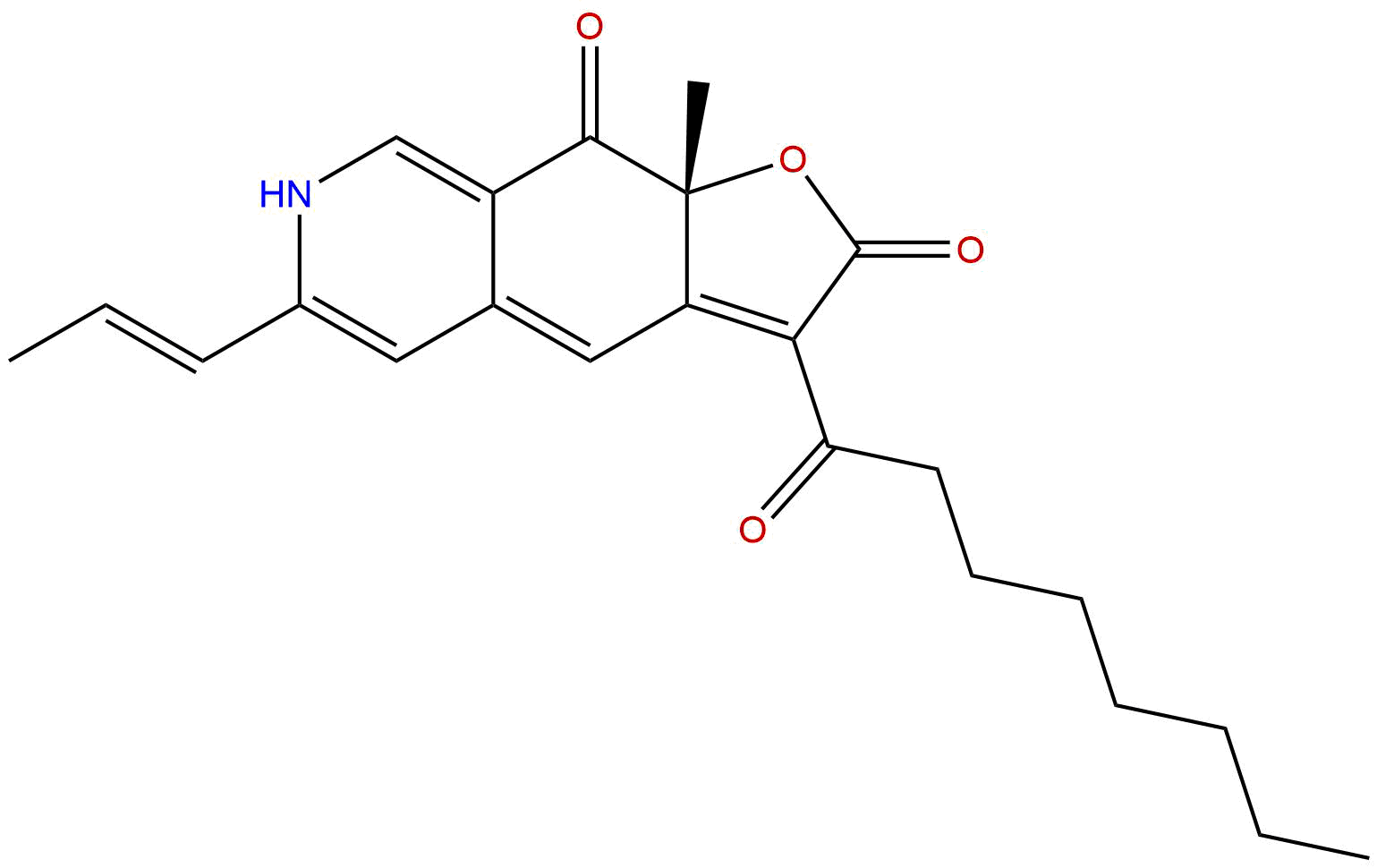


Product name: Monascorubramin
Synonym name: Monascorubramine; Monascamin
Catalogue No.: BP5416
Cas No.: 3627-51-8
Formula: C23H27NO4
Mol Weight: 381.472
Botanical Source:
Type of Compound: Alkaloids
Purity: 95%~99%
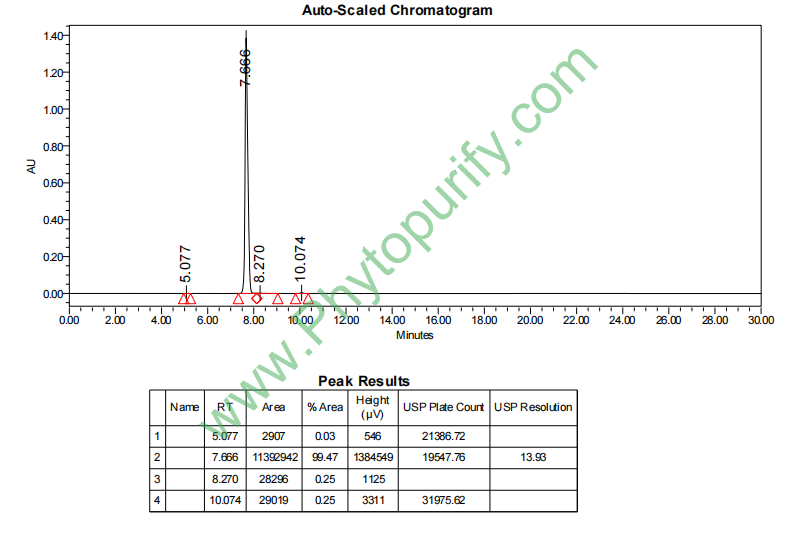
Analysis Method: HPLC-DAD or/and HPLC-ELSD
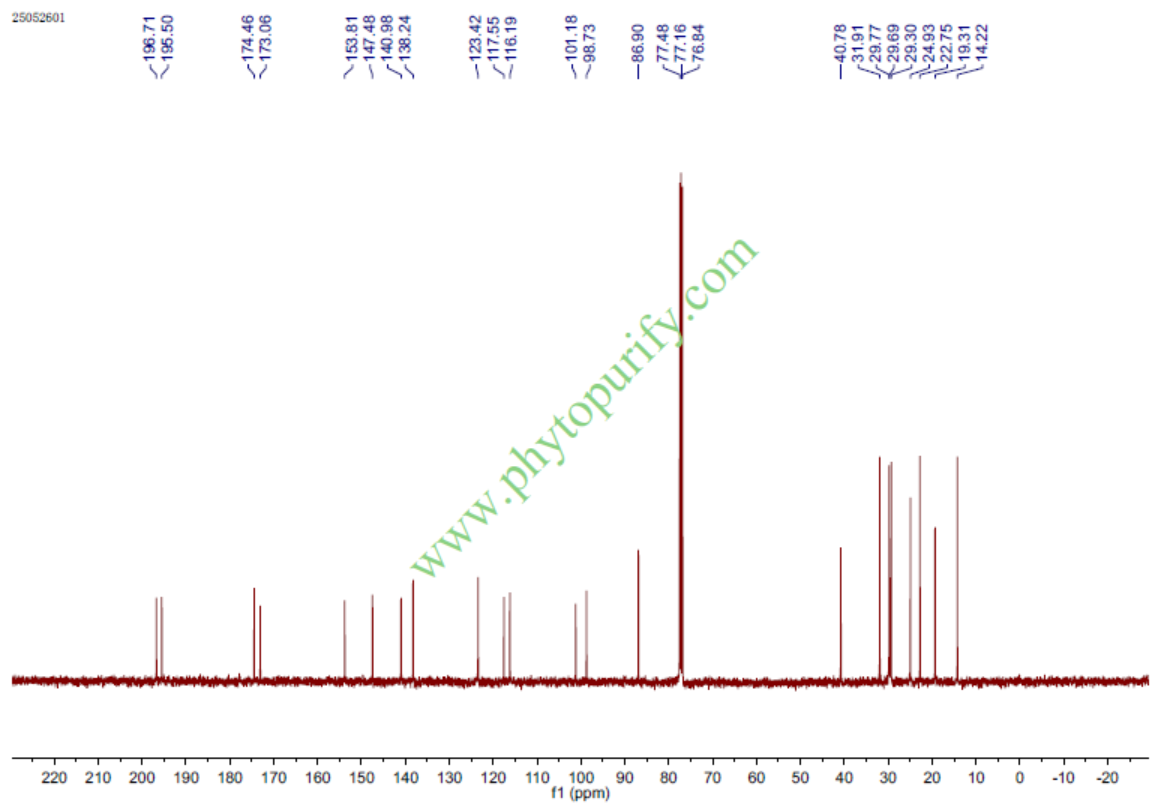
Identification Method: Mass, NMR
Packing: Brown vial or HDPE plastic bottle
Storage: Store in a well closed container, protected from air and light. Put into refrigerate or freeze for long term storage.
Whenever possible, you should prepare and use solutions on the same day. However, if you need to make up stock solutions in advance, we recommend that you store the solution as aliquots in tightly sealed vials at -20℃. Generally, these will be useable for up to two weeks.
The product could be supplied from milligrams to grams
Inquire for bulk scale.
For Reference Standard and R&D, Not for Human Use Directly.
HPLC of Monascorubramin
HNMR of Monascorubramin
Storage conditions:Short-term storage at 2~8℃, long-term storage at -20 ~ -80℃
Unknown
Unknown
Unknown
Unknown
Unknown
Unknown
Unknown
Unknown
Unknown
Natural products, as an important source of drug discovery, have long played an indispensable role in maintaining human health and treating diseases. Among the secondary metabolites from various microbial sources, Monascus genus(Monascus The polyketide compounds produced by spp have attracted much attention due to their unique chemical structure and diverse biological activities. Monascrubramin (CAS number: 3627-51-8) is a major pigment component produced during the fermentation process of Monascus purpureus. It belongs to the nitrogen heterocyclic polyketide compound and, together with Monascin and Monascrurin, forms the core members of the Monascus pigment family.
The discovery of red yeast amine can be traced back to the mid-20th century. With the modern scientific exploration of the traditional application value of red yeast rice, researchers gradually isolated and identified the active ingredients in it. Unlike the well-known lipid-lowering component Monacolin K in red yeast rice, red yeast rice red amine exhibits a unique nitrogen heterocyclic system in its structure, which endows it with a biological activity spectrum distinct from other red yeast rice pigments. In recent years, with the deepening of research on natural product chemistry and pharmacology, the potential application value of red yeast red amine in anti-inflammatory, antioxidant, anti-tumor, and neuroprotective aspects has gradually been revealed, attracting widespread attention from the international academic community.
From a traditional application perspective, red yeast rice has a history of over a thousand years of consumption and medicinal use in East Asian countries such as China and Japan. It is mainly used to promote blood circulation, invigorate the spleen and digest food, and as a natural food coloring agent. Modern research has confirmed that red yeast amine is not only an important coloring substance of red yeast pigment, but also a natural lead compound with multiple pharmacological activities. However, compared to the in-depth study of other components in red yeast such as Monacolin K, the systematic pharmacological evaluation of red yeast amine is still in its infancy, and its mechanism of action, molecular targets, and pharmacological characteristics still need further clarification.
The purpose of this article is to systematically review the chemical structure characteristics, source extraction methods, pharmacological activity research progress, mechanism of action exploration, and pharmacological evaluation of Hongqu Hongamine, in order to provide comprehensive academic references for the in-depth research and development application of this natural product.
The chemical structure of Hongqu Hongamine belongs to the nitrogen heterocyclic polyketide compound, with a molecular formula of C ₂∝ H ₂₇ NO ₄ and a molecular weight of 369.4600. From the perspective of structural analysis, the core skeleton of red yeast amine is composed of a highly conjugated isochromanone parent nucleus and a nitrogen-containing pyridine ring system. This unique heterocyclic structure is the structural basis for its characteristic red color. Specifically, the molecular structure of Red Yeast Red Amine contains a decahydronaphthalene ring system with multiple methyl and carbonyl functional groups attached to it. The nitrogen atom is embedded in the ring system in the form of an imine, forming a stable conjugated system.
The key difference between Monascrurin, which has a similar structure, and Monascrurin is the introduction of nitrogen atoms. Red yeast extract itself does not contain nitrogen, while red yeast extract amine is the product of the reaction between red yeast extract and ammonia or nitrogen-containing compounds. This structural transformation significantly changes the electronic distribution and spatial configuration of the molecule, thereby affecting its biological activity. From the perspective of biogenic synthesis pathway, red yeast amine belongs to the product of polyketide synthase (PKS) pathway, and its biosynthesis involves condensation, cyclization, and subsequent nitrogen hybridization modification of acetyl CoA and malonyl CoA.
In terms of physical and chemical properties, red yeast amine presents as a crystalline powder ranging from red to reddish purple, with typical conjugated polyene chromophore characteristics. This compound has strong absorption in the visible light region, with a maximum absorption wavelength in the range of 470-500 nm, which is also the optical basis for its application as a natural food pigment. Red yeast amine has good solubility in organic solvents such as methanol, ethanol, acetone, and chloroform, but low solubility in water. This property has important implications for its extraction, separation, and formulation development.
In terms of stability, red yeast amine is more sensitive to pH value, appearing bright red under acidic conditions (pH 3-5), while under alkaline conditions (pH>8), structural rearrangement or degradation may occur, and the color gradually turns purple brown. In addition, the compound exhibits certain instability to light and high temperature, and long-term exposure to ultraviolet light or environments exceeding 60 ° C may lead to fading and reduced activity. These physical and chemical properties suggest that strict control of pH, temperature, and light conditions is necessary in the extraction, purification, storage, and formulation development of red yeast amine.
It is worth noting that there are multiple chiral centers in the molecular structure of red yeast amine, and theoretically there are multiple stereoisomers. The current literature reports that red yeast amine usually refers to the main isomer of natural origin, and its absolute configuration has been confirmed through methods such as X-ray crystallography and circular dichroism (CD). The precise analysis of stereochemistry is crucial for understanding its interaction mechanism with biological targets and is also the basis for subsequent structure-activity relationship research.
The main source of red yeast amine is fungi of the genus Monascus, including Monascus purpureus(Monascus purpureus)Red Aspergillus oryzae(Monascus ruber)And Anka Monascus(Monascus anka)Waiting for bacterial strains. When these filamentous fungi grow on traditional fermentation substrates such as rice and glutinous rice, they synthesize and secrete pigment components such as red yeast amine through secondary metabolic pathways. It is worth noting that Monascus purpurea is not a common product of all Monascus strains, and its yield is significantly influenced by the genetic background of the strain, cultivation conditions, and fermentation process.
From a biosynthetic perspective, the generation of red yeast amine is closely related to the nitrogen hybridization of red yeast extract. During the fermentation process, nitrogen-containing compounds (such as amino acids, ammonium salts, etc.) in the culture medium are utilized as nitrogen sources by the bacterial cells. Through enzymatic reactions, nitrogen atoms are introduced into the Monascus skeleton to form Monascus Red Amine. Therefore, the nitrogen source composition and concentration of the fermentation medium are key factors in regulating the production of red yeast amine. Research has shown that adding an appropriate amount of monosodium glutamate or peptone can significantly increase the yield of red yeast amine.
In terms of extraction methods, traditional red yeast rice extract is mainly based on solvent extraction technology. Due to its good solubility in polar organic solvents, commonly used extraction solvents include ethanol, methanol, acetone, and their aqueous solutions. The typical extraction process is to dry and crush the fermented red yeast rice or red yeast mold, soak and extract it in 70% -95% ethanol at room temperature or heating conditions, and concentrate the extract under reduced pressure to obtain the crude extract. However, traditional methods have limitations such as poor selectivity, high solvent consumption, and low extraction efficiency.
In recent years, with the development of green extraction technology, new technologies such as ultrasound assisted extraction (UAE), microwave-assisted extraction (MAE), and supercritical fluid extraction (SFE) have been applied to the extraction of red yeast amine. Ultrasound assisted extraction utilizes cavitation effect to destroy cell wall structure, which can significantly shorten extraction time and improve extraction rate. Typically, the extraction effect of traditional methods can be achieved in several hours within 30-60 minutes. Microwave assisted extraction generates internal thermal effects through the rapid vibration of polar molecules in a high-frequency electric field, accelerating the diffusion of target components into the solvent. Supercritical carbon dioxide extraction, as an environmentally friendly technology, achieves selective extraction by adjusting pressure and temperature, avoiding the problem of residual organic solvents. However, its high equipment cost limits its large-scale application.
Purification after extraction is a key step in obtaining high-purity red yeast amine. Common purification methods include silica gel column chromatography, preparative high-performance liquid chromatography (Prep HPLC), and high-speed countercurrent chromatography (HSCCC). Silica gel column chromatography utilizes the distribution differences of different components between the stationary phase and the mobile phase to achieve separation, usually using gradient elution systems such as chloroform methanol or n-hexane ethyl acetate. Preparation HPLC has higher separation efficiency and resolution, and is suitable for purifying samples from milligrams to grams. High speed counter current chromatography is based on the liquid-liquid distribution principle, avoiding the irreversible adsorption problem that may arise from solid stationary phases, and is particularly suitable for the separation of thermosensitive natural products.
It is worth noting that there are similarities in chromatographic behavior between red yeast amine and structurally similar compounds such as red yeast extract and red yeast flavin, which poses certain challenges for purification. The use of high-performance liquid chromatography-mass spectrometry (HPLC-MS) technology for online monitoring can effectively guide the optimization of separation conditions. In addition, the molecular imprinting technology (MIT) developed in recent years has provided a new approach for the selective enrichment of red yeast amine. By designing polymer materials with specific recognition sites, efficient capture of target components in complex matrices can be achieved.
The anti-inflammatory effect of Hongqu Hongamine has been one of the most active research areas in recent years. In vitro experiments have shown that red yeast extract can significantly inhibit the production of nitric oxide (NO) and prostaglandin E ₂ (PGE ₂) in macrophages stimulated by lipopolysaccharide (LPS), with a half maximal inhibitory concentration (IC ₅₀) at the micromolar level. Further research has found that Hongqu Hongamine reduces the synthesis of inflammatory mediators by downregulating the protein expression levels of inducible nitric oxide synthase (iNOS) and cyclooxygenase-2 (COX-2). At the cytokine level, red yeast extract can effectively reduce the secretion of pro-inflammatory factors such as tumor necrosis factor - α (TNF - α), interleukin-1 β (IL-1 β), and interleukin-6 (IL-6).
Animal model studies further validated the in vivo anti-inflammatory effect of Hongqu Hongamine. In the carrageenan induced rat paw swelling model, intraperitoneal injection of red yeast red amine (10-50 mg/kg) can dose dependently inhibit inflammatory response, and its effect is comparable to the positive control drug indomethacin. In chronic inflammation models such as adjuvant arthritis, the degree of joint swelling, histopathological scores, and serum inflammatory factor levels in the treatment group of rats with red yeast red amine were significantly lower than those in the model control group. These results suggest that Hongqu Hongamine has the potential to be developed as an anti-inflammatory drug.
The conjugated double bond system and phenolic hydroxyl functional group in the molecular structure of red yeast rice red amine endow it with strong free radical scavenging ability. Using various methods such as 1,1-diphenyl-2-trinitrophenylhydrazine (DPPH) radical scavenging experiment, 2,2 '- diazobis (3-ethylbenzothiazoline-6-sulfonic acid (ABTS) radical scavenging experiment, and iron ion reduction ability (FRAP) measurement, red yeast amine exhibited concentration dependent antioxidant activity. The IC50 value for DPPH radical scavenging is approximately 15-25 μ M, which is comparable to the classic antioxidants vitamin C and quercetin.
In the cellular oxidative stress model, pre-treatment with red yeast rice can significantly reduce the increase in reactive oxygen species (ROS) levels induced by hydrogen peroxide (H ₂ O ₂) or tert butyl hydroperoxide (t-BHP), and alleviate cell apoptosis caused by oxidative damage. Mechanism studies have shown that red yeast rice red amine activates the nuclear factor E2 related factor 2 (Nrf2) signaling pathway, upregulates the expression of downstream antioxidant enzymes such as heme oxygenase-1 (HO-1), quinone oxidoreductase-1 (NQO1), and superoxide dismutase (SOD), thereby enhancing the antioxidant defense ability of cells.
Red yeast red amine exhibits proliferation inhibitory activity against various tumor cell lines. The in vitro cytotoxicity test showed that monascus erythroid had inhibitory effects on human hepatoma cell HepG2, human breast cancer cell MCF-7, human colon cancer cell HT-29 and human lung cancer cell A549, and the IC ₀ value was within the range of 5-30 μ M. It is worth noting that the toxicity of red yeast amine to normal cells such as human liver cell L-02 is relatively low, indicating its selective anti-tumor activity.
Further research has found that the mechanism by which Hongqu Hongamine induces apoptosis in tumor cells involves multiple pathways. Firstly, red yeast rice can activate the caspase cascade reaction, including the activation of caspase-3, caspase-8, and caspase-9, accompanied by the cleavage of poly ADP ribose polymerase (PARP). Secondly, Hongqu Hongamine regulates the expression ratio of Bcl-2 family proteins, upregulating the pro apoptotic protein Bax and downregulating the anti apoptotic protein Bcl-2, promoting mitochondrial membrane potential loss and cytochrome c release, thereby initiating the endogenous apoptotic pathway. In addition, red yeast amine can also cause cell cycle arrest, mainly blocking cells in the G ₂/M phase, which may be related to changes in the expression levels of cyclin B1 and cyclin dependent kinase 1 (CDK1).
In recent years, there has been an increasing amount of research on the neuroprotective effects of red yeast extract. In the neuronal toxicity model induced by β - amyloid protein (A β), treatment with red yeast red amine can significantly improve neuronal survival rate, reduce oxidative stress and inflammatory response caused by A β aggregation. In the glutamate induced excitotoxicity model, red yeast red amine reduces calcium influx and subsequent nerve damage by inhibiting the overactivation of N-methyl-D-aspartate (NMDA) receptors.
In Parkinson's disease cell models, red yeast rice red amine has a protective effect on dopaminergic neuron damage induced by 6-hydroxydopamine (6-OHDA) or 1-methyl-4-phenylpyridine ion (MPP ⁺). Mechanism studies have shown that red yeast amine can activate the PI3K/Akt signaling pathway, inhibit the activity of glycogen synthase kinase-3 β (GSK-3 β), thereby reducing the excessive phosphorylation of tau protein and the formation of neurofibrillary tangles. These findings provide preliminary scientific evidence for the application of red yeast amine in the treatment of neurodegenerative diseases.
In addition to the main activities mentioned above, Hongqu Hongamine also exhibits antibacterial, antiviral, and regulatory effects on glucose and lipid metabolism. In terms of antibacterial properties, red yeast red amine has inhibitory effects on Gram positive bacteria such as Staphylococcus aureus and Bacillus subtilis, but its effect on Gram negative bacteria is relatively weak. In terms of metabolic regulation, red yeast extract can inhibit the differentiation of 3T3-L1 preadipocytes, reduce lipid accumulation, and improve the glucose uptake ability of insulin resistant cell models. In addition, preliminary studies suggest that red yeast amine may have anti angiogenic activity and can inhibit the formation of tubular structures in human umbilical vein endothelial cells (HUVECs).
The pharmacological activity of Hongqu Hongamine is closely related to its regulation of multiple cellular signaling pathways. In the anti-inflammatory mechanism, Hongqu Hongamine mainly exerts its effect by inhibiting the nuclear factor kappa B (NF - κ B) signaling pathway. Specifically, red yeast extract can block the activation of I κ B kinase (IKK), prevent the phosphorylation and degradation of I κ B α, thereby inhibiting the nuclear translocation of NF - κ B p65 subunit and its binding activity with DNA. In addition, red yeast extract can also inhibit the mitogen activated protein kinase (MAPK) pathway, including the phosphorylation levels of p38 MAPK, c-Jun N-terminal kinase (JNK), and extracellular signal regulated kinase (ERK).
In the antioxidant mechanism, red yeast amine acts as an activator of Nrf2, promoting the dissociation of Nrf2 from Kelch like ECH associated protein 1 (Keap1), causing it to translocate to the nucleus and bind to antioxidant response elements (ARE), initiating the transcription of downstream antioxidant enzyme genes. This mechanism is similar to the mode of action of many natural antioxidants such as resveratrol and curcumin.
In the anti-tumor mechanism, red yeast amine can simultaneously affect multiple signaling pathways that promote survival and apoptosis. In addition to the mitochondrial apoptosis pathway mentioned above, red yeast rice can also inhibit the phosphatidylinositol 3-kinase/protein kinase B (PI3K/Akt) signaling pathway, reduce the phosphorylation level of Akt, and thus weaken the proliferation and survival signals of tumor cells. At the same time, red yeast extract can activate p53 tumor suppressor protein, upregulate p21 expression, and lead to cell cycle arrest.
Based on techniques such as molecular docking, surface plasmon resonance (SPR), and drug affinity reaction target stability (DARTS), researchers have preliminarily identified several potential molecular targets of red yeast amine. In terms of anti-inflammatory targets, red yeast extract can directly bind to the active site of COX-2, competing with arachidonic acid to inhibit the catalytic activity of the enzyme. In addition, red yeast rice red amine has affinity for the extracellular domain of Toll like receptor 4 (TLR4), which may inhibit downstream inflammatory signaling by blocking the binding of LPS to TLR4.
In terms of anti-tumor targets, it has been confirmed that red yeast amine can bind to topoisomerase II alpha, inhibit its catalytic activity, and lead to DNA double strand breaks and cell death. In addition, red yeast rice red amine also showed inhibitory effects on histone deacetylase (HDAC) family members such as HDAC1 and HDAC3, suggesting that it may exert anti-tumor effects through epigenetic regulation mechanisms.
It is worth noting that the multi-target action characteristics of Hongqu Hongamine are both its advantages and challenges. The multi-target effect enables it to simultaneously intervene in multiple pathological processes related to the disease, which may result in synergistic therapeutic effects; But at the same time, it also increases the complexity of analyzing the mechanism of action and may bring non-specific toxicity. Therefore, systematically identifying the target spectrum of Hongqu Hongamine and clarifying its causal relationship with pharmacological activity is an important direction for future research.
Based on existing research data, a preliminary analysis of the structure-activity relationship of red yeast amine can be conducted. The nitrogen heterocyclic structure in the red yeast amine molecule is a key feature that distinguishes it from other red yeast pigments. This structure may enhance binding affinity by forming hydrogen bonds or π - π stacking interactions with target proteins. The conjugated double bond system in the molecule not only endows it with antioxidant activity, but may also participate in electron transfer processes, affecting its interaction with redox sensitive targets.
Preliminary chemical modification studies have shown that the hydroxyl and carbonyl functional groups in the red yeast amine molecule are crucial for its activity. Methylation or acetylation modification of hydroxyl groups can significantly reduce their antioxidant and anti-inflammatory activities, indicating that free hydroxyl groups are essential functional groups. The reduction or oximation modification of carbonyl groups has little effect on activity, but can alter the solubility and metabolic stability of molecules. These structure-activity relationship information provide important references for subsequent structural optimization and lead compound design.
From the perspective of medicinal chemistry, the molecular weight of Hongqu Hongamine is 369.46, which meets the requirement of Lipinski's "Five Rules" that the molecular weight should be less than 500. The number of hydrogen bond donors (usually 1-2 hydroxyl groups) and hydrogen bond acceptors (4-5 oxygen and nitrogen atoms) in its molecule also basically meet the requirements for drug formation. However, the lipid water partition coefficient (logP) of Hongqu Hongamine is about 3.5-4.0, indicating its strong lipophilicity and poor water solubility, which may affect its oral bioavailability and formulation development.
According to existing data, the blood-brain barrier permeability, hepatotoxicity, cardiotoxicity, hERG inhibitory activity, and Ames test results of Hongqu Hongamine are all labeled as "Unknown", reflecting a data gap in the drug efficacy evaluation of this compound. The absence of these parameters is the main obstacle in the conversion of red yeast red amine from a natural product to a candidate drug. Especially the hERG inhibitory activity and the risk of cardiac toxicity are safety issues that need to be focused on in drug development, while the results of genetic toxicity (Ames test) are directly related to the clinical safety evaluation of compounds.
At present, there are relatively few systematic studies on the pharmacokinetics of Hongqu Hongamine in vivo. Preliminary animal experiments have shown that after oral administration, the absorption of Hongqu Hongamine is poor, and its absolute bioavailability may be less than 10%, which is related to its poor water solubility and first pass metabolic effects. After intravenous administration, the half-life of red yeast red amine in plasma is about 2-4 hours, with a large distribution volume, indicating its widespread distribution in tissues.
Metabolic studies have shown that red yeast amine mainly undergoes phase I metabolism (oxidation, reduction) and phase II metabolism (glucuronic acid binding, sulfuric acid binding) in the liver. The cytochrome P450 enzyme system (especially CYP3A4 and CYP2C9) may be involved in its oxidative metabolism, generating hydroxylated or demethylated metabolites. Whether these metabolites have pharmacological activity or toxicity remains to be elucidated.
In terms of excretion pathways, red yeast amine and its metabolites are mainly excreted into the intestine through bile, and some are excreted from the body through feces, while the original drug content detected in urine is relatively low. This excretion characteristic suggests that red yeast red amine may have enterohepatic circulation, which helps to prolong its action time in the body.
Various formulation strategies have been explored to address the issues of poor water solubility and low oral bioavailability of red yeast amine. The cyclodextrin inclusion technology can significantly improve the apparent solubility and dissolution rate of red yeast amine, among which the inclusion effect of hydroxypropyl - β - cyclodextrin (HP - β - CD) is better than that of natural β - cyclodextrin. Solid dispersion technology improves the dissolution behavior and enhances oral absorption of red yeast amine by dispersing it in water-soluble polymer carriers such as polyvinylpyrrolidone and polyethylene glycol.
Liposomal formulations are another promising drug delivery system. Encapsulating Red Yeast Red Amine in a liposome bilayer membrane can not only improve its water dispersibility and stability, but also increase the distribution of the drug in inflammatory or tumor tissues through passive targeting. Preliminary studies have shown that the anti-inflammatory effect of Hongqu Hongamine liposome formulation in animal models is significantly better than that of free drugs.
Nanocrystal technology can increase the specific surface area and saturation solubility of red yeast amine by preparing it into nanoscale crystal particles, thereby improving dissolution rate and oral absorption. In addition, new formulation technologies such as phospholipid complexes and self microemulsifying drug delivery systems (SMEDS) have also shown potential in the delivery research of red yeast red amine.
Based on existing pharmacological activity research, Hongqu Hongamine has potential application value in multiple disease fields. In terms of inflammatory diseases, the anti-inflammatory activity of red yeast rice red amine suggests that it may be suitable for the treatment of diseases such as rheumatoid arthritis, inflammatory bowel disease, and skin inflammation. Its multi-target anti-inflammatory mechanism may provide safety features superior to traditional nonsteroidal anti-inflammatory drugs (NSAIDs), especially in terms of gastrointestinal side effects.
In the field of tumor treatment, the selective killing effect of red yeast red amine on various tumor cells and its potential synergistic effect with chemotherapy drugs deserve attention. As an adjuvant therapy drug, red yeast red amine may exert therapeutic effects by enhancing chemotherapy sensitivity, reducing chemotherapy resistance, and improving the tumor microenvironment. However, its anti-tumor effect and safety in vivo still need to be rigorously validated through preclinical and clinical studies.
Neurodegenerative diseases are another potential application area of red yeast amine. With the increasing aging of the population, the demand for treatment of Alzheimer's disease and Parkinson's disease is becoming increasingly urgent. The neuroprotective, anti-inflammatory, and antioxidant activities of red yeast amine make it a candidate compound for treating these diseases. However, the uncertainty of its blood-brain barrier permeability is a key factor limiting its application in central nervous system diseases.
The transition of red yeast amine from laboratory research to clinical application faces multiple challenges. Firstly, poor pharmacokinetic properties are the main obstacles, including poor water solubility, low oral bioavailability, and insufficient metabolic stability. The solution strategy includes prodrug design, development of new formulations, and structural modification. The prodrug strategy can improve water solubility and absorption by introducing cleavable hydrophilic groups (such as phosphate esters and amino acid esters), and activate the original form of the drug through enzymatic interpretation in vivo.
Secondly, the ambiguity of the mechanism of action and molecular targets limits its rational design and optimization. Systematic target identification research, combined with chemical proteomics, bioinformatics analysis, and gene editing techniques, can help comprehensively reveal the network of action of red yeast amine. In addition, structure based drug design (SBDD) and computer-aided drug design (CADD) methods can be used to guide the rational design of red yeast amine derivatives.
The lack of safety evaluation data is another key issue. Systematic toxicology research, including acute toxicity, chronic toxicity, reproductive toxicity, and genetic toxicity evaluation, is a necessary condition for the clinical study of red yeast red amine. Especially for the evaluation of hERG inhibition and cardiac toxicity, systematic evaluation should be conducted using methods such as extracorporeal membrane clamp technique and in vivo electrocardiogram monitoring.
Looking ahead to the future, research on Hongqu Hongamine should focus on the following aspects: firstly, conducting in-depth studies on the structure-activity relationship, discovering derivatives with stronger activity, higher selectivity, and better pharmacokinetic properties through systematic structural modification and activity evaluation. Secondly, utilizing multi omics technologies (genomics, proteomics, metabolomics) to comprehensively analyze the mechanism of action and target network of Hongqu Hongamine, providing a theoretical basis for precision therapy. Thirdly, develop efficient and environmentally friendly synthetic biology methods to achieve large-scale production of Monascus rubra through engineered Monascus strains or heterologous expression systems, reducing production costs and increasing yield. Fourth, promote preclinical safety evaluation and pharmacokinetic research, and accumulate necessary data for clinical trial application. Fifth, explore the combined application of Hongqu Hongamine with other natural products or clinical drugs to achieve synergistic effects.
Red yeast amine, as a natural nitrogen heterocyclic polyketide derived from Monascus purpureus, occupies an important position in the field of natural product pharmacology due to its unique chemical structure and diverse biological activities. This article provides a systematic review of the chemical structure, extraction methods, pharmacological activity, mechanism of action, and pharmacological characteristics of Hongqu Hongamine, revealing its potential application value in anti-inflammatory, antioxidant, anti-tumor, and neuroprotective fields. However, the research on red yeast amine is still in its early stages, and there is still a significant gap between laboratory discovery and clinical application.
In the future, with the advancement of chemical synthesis technology, biotechnology, and drug evaluation methods, red yeast red amine and its derivatives are expected to become new candidate drugs for the treatment of inflammatory diseases, tumors, and neurodegenerative diseases. At the same time, the research on Hongqu Hongamine also provides useful references for the development of other natural polyketide compounds. We have reason to believe that under the promotion of interdisciplinary cooperation, the modern pharmacological value of the ancient natural product Hongqu Hongamine will be more fully explored and utilized, contributing to the cause of human health.
