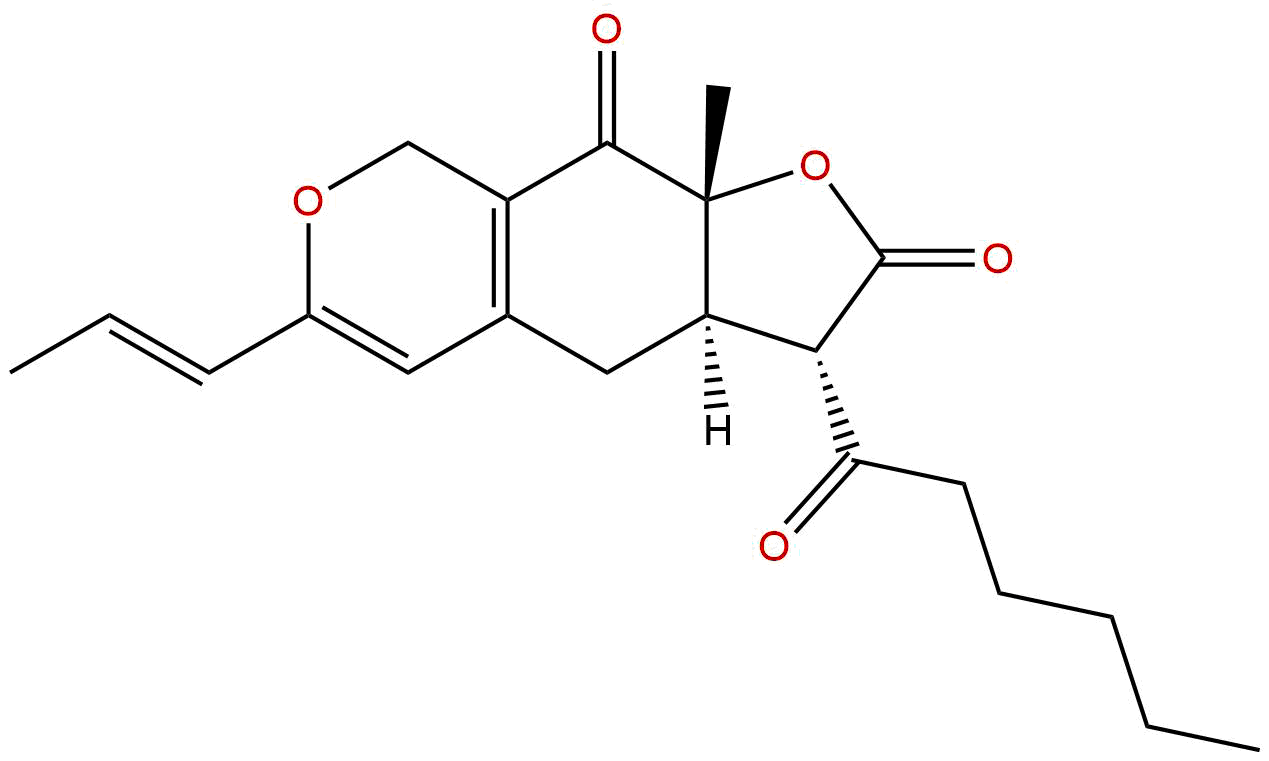


Product name: Monascin
Synonym name: Monascoflavin
Catalogue No.: BP4055
Cas No.: 21516-68-7
Formula: C21H26O5
Mol Weight: 358.434
Botanical Source: Monascus
Physical Description:
Type of Compound: Miscellaneous
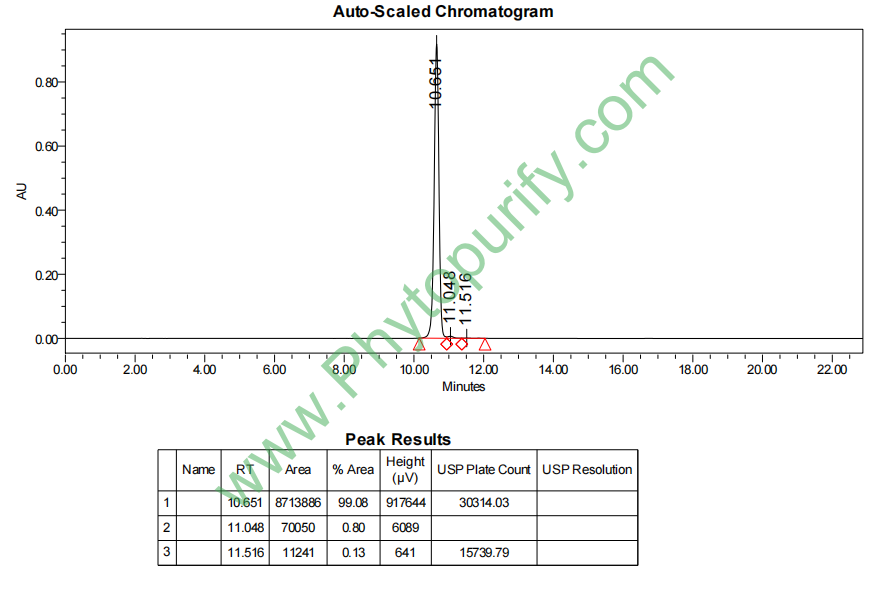
Purity: 95%~99%
Analysis Method: HPLC-DAD or/and HPLC-ELSD
Identification Method: Mass, NMR
Packing: Brown vial or HDPE plastic bottle
Storage: Store in a well closed container, protected from air and light. Put into refrigerate or freeze for long term storage.
Whenever possible, you should prepare and use solutions on the same day. However, if you need to make up stock solutions in advance, we recommend that you store the solution as aliquots in tightly sealed vials at -20℃. Generally, these will be useable for up to two weeks.
The product could be supplied from milligrams to grams
Inquire for bulk scale.
For Reference Standard and R&D, Not for Human Use Directly.
HPLC of Monascin
Storage conditions:Short-term storage at 2~8℃, long-term storage at -20 ~ -80℃
Monascin is a nitrogen-containing pigment isolated from the traditional fermented food Monascus spp. Due to its unique biological activity and potential medicinal value, it has received widespread attention in the field of natural product pharmacology in recent years. Red yeast rice, as a fermented food with a long history, has been widely studied due to its various bioactive ingredients. Among them, red yeast extract, as one of its main secondary metabolites, exhibits significant anti-tumor, anti-inflammatory, and lipid-lowering effects. Monascus not only has oral activity, but also regulates various cellular signaling pathways, especially as a dual role of Nrf2 activator and PPAR γ agonist, demonstrating unique advantages in the prevention and treatment of metabolic and inflammatory related diseases.
This article will systematically review the chemical structure and physicochemical properties, plant sources and extraction methods, pharmacological activity research, mechanism of action and molecular targets, pharmacological evaluation and pharmacokinetic characteristics of Monascus. Finally, it will explore its clinical application prospects and future research directions, aiming to provide theoretical basis and research references for the drug development of Monascus.
The chemical structure of Monascus is a nitrogen-containing heterocyclic polyphenolic pigment with the molecular formula C21H26O5N and a molecular weight of 358.4340. Its structure contains a pyran ring with a conjugated system and a nitrogen heterocyclic ring, endowing it with unique spectral properties and biological activity. The LogP value of Monascus is 3.0551, indicating its moderate lipid solubility, which is beneficial for membrane penetration and in vivo distribution. The polar surface area (TPSA) is 69.6700, indicating that its molecular polarity is moderate and conducive to oral absorption.
Monascus has low water solubility (0.0207 mg/mL), which to some extent limits its solubility and bioavailability in aqueous phase. However, its high lipid solubility and good blood-brain barrier permeability (BBB high) provide potential applications in central nervous system diseases. It is worth noting that Monascus does not exhibit hERG channel inhibitory activity, indicating a low risk of cardiac toxicity, and the Ames test result is 0.0, indicating no significant mutagenicity.
Monascus purpureus is mainly derived from Monascus rice, which is a traditional food made by fermenting rice with Monascus purpureus and related Monascus strains. Monascus synthesizes various pigment compounds through its secondary metabolic pathway during fermentation, among which Monascus is one of the main nitrogen-containing pigments.
The traditional methods for extracting Monascus include solvent extraction and chromatographic separation. Ethanol or methanol are generally used as extraction solvents, combined with ultrasound assisted extraction or reflux extraction techniques to improve extraction efficiency. The extraction solution is concentrated, separated and purified, and commonly used separation methods include silica gel column chromatography, reverse phase high performance liquid chromatography (RP-HPLC), etc. In recent years, supercritical CO2 extraction and membrane separation technologies have also been introduced to improve purity and yield.
The optimization of extraction process mainly focuses on improving the yield and purity of Monascus, while reducing the coexistence of other impurities such as Monascus toxin, ensuring the safety and biological activity of the extract.
Monascus showed significant inhibitory effect in many tumor cell lines, including liver cancer, breast cancer and colorectal cancer. Its anti-tumor mechanism involves inducing tumor cell apoptosis, cell cycle arrest, and inhibiting tumor cell migration and invasion. In vivo experiments have shown that Monascus can significantly inhibit tumor growth and reduce tumor burden.
Monascus exerts anti-inflammatory effects by inhibiting the production and release of inflammatory mediators. It can downregulate the expression of pro-inflammatory cytokines such as TNF - α, IL-6, and IL-1 β, inhibit the activation of the NF - κ B signaling pathway, and thereby alleviate the inflammatory response. Among various inflammatory models, Monascus has shown good anti-inflammatory effects.
Monascus has shown potential in regulating blood lipid metabolism. It can regulate plasma lipid level, reduce serum total cholesterol and low-density lipoprotein cholesterol (LDL-C), and increase high-density lipoprotein cholesterol (HDL-C) by regulating lipid metabolism related targets, such as cholesterol ester transfer protein (CETP), 3-hydroxy-3-methylglutaryl coenzyme A reductase (HMGCR), low-density lipoprotein receptor (LDLR), apolipoprotein B (APOB), preprotein converting enzyme subtilisin Kexin 9 (PCSK9), apolipoprotein E (APOE), and peroxisome proliferator activated receptor alpha (PPARA), which is helpful for the prevention and treatment of arterial atherosclerosis. Sclerosis and related cardiovascular diseases.
Monascus can inhibit the activation of NOR (Nitric Oxide Radical), alleviate oxidative stress damage, protect cells from oxidative damage, and further support its anti-inflammatory and anti-tumor effects.
The biological activity of Monascus is closely related to its regulation of multiple signaling pathways, mainly including:
Monascus, as an activator of Nrf2 (nuclear factor erythroid 2-related factor 2), can promote the transfer of Nrf2 from the cytoplasm to the nucleus, induce the expression of antioxidant and detoxifying enzymes such as glutathione peroxidase (GPx), superoxide dismutase (SOD), and heme oxygenase-1 (HO-1). This enhances the antioxidant capacity of cells and reduces oxidative stress-related cell damage, which is one of the important mechanisms of its anti-inflammatory and anti-tumor effects.
Monascus, as an agonist of peroxisome proliferator activated receptor gamma (PPAR gamma), regulates lipid metabolism, glucose metabolism, and inflammatory response. The activation of PPAR γ promotes the oxidation and storage of fatty acids, improves insulin sensitivity, inhibits the expression of pro-inflammatory cytokines, synergistically regulates metabolic homeostasis and immune response, and plays a key role in lipid-lowering and anti-inflammatory effects.
Monascus also regulates key lipid metabolism related targets such as CETP, HMGCR, LDLR, APOB, PCSK9, APOE, and PPARA, comprehensively regulating cholesterol synthesis, transport, and clearance processes, reducing blood lipid levels, and preventing cardiovascular disease.
In addition, the inhibitory effect of Monascus on the NF - κ B signaling pathway reduces the expression of pro-inflammatory factors and alleviates inflammatory responses; Regulating apoptosis related proteins such as Bax, Bcl-2, and Caspase family to promote tumor cell apoptosis.
The molecular weight of Monascus is 358.4340, which conforms to Lipinski's "drug similarity rule". The LogP is 3.0551, indicating moderate lipid solubility and facilitating oral absorption. Its TPSA is 69.6700, indicating good membrane permeability. Low water solubility (0.0207 mg/mL) may limit its bioavailability, but it can be improved through formulation optimization.
Monascus has good blood-brain barrier penetration ability, providing the possibility for its application in central nervous system diseases. The hERG channel inhibition test was negative, indicating a low risk of cardiac toxicity. The Ames test is non mutagenic and has good safety.
Pharmacokinetic studies have shown that red yeast extract is rapidly absorbed and widely distributed after oral administration, with the main metabolic pathways including phase I and phase II metabolism in the liver. Its half-life is moderate, the clearance rate in the body is reasonable, and it is suitable for development as an oral drug. Further research is needed in the future to investigate the activity and toxicological characteristics of its metabolites.
As a natural product, Monascus has shown broad application prospects in the treatment of anti-tumor, anti-inflammatory, and metabolic diseases due to its advantages of multi-target and multi pathway regulation. Especially in the field of reducing blood lipid, monascus may become an ideal candidate drug for treating hyperlipidemia and atherosclerosis by regulating key targets such as CETP, HMGCR, PCSK9, etc. In addition, its dual functions of Nrf2 activator and PPAR γ agonist provide new ideas for the treatment of metabolic syndrome, diabetes and related chronic inflammatory diseases.
At present, clinical research on Monascus is still in its infancy, and in the future, it is necessary to strengthen the systematic evaluation of its pharmacokinetics, toxicology, and clinical safety, optimize the formulation process, and improve its bioavailability. At the same time, by combining modern drug design techniques, the development of Monascus derivatives or combination therapy strategies is expected to enhance their therapeutic efficacy and application scope.
In addition, the potential of Monascus in central nervous system diseases deserves further exploration, especially its good blood-brain barrier permeability, which may provide new drug candidates for the intervention of neurodegenerative diseases.
Red yeast extract, as an important active ingredient in red yeast rice, has demonstrated extensive medicinal value due to its unique chemical structure and diverse pharmacological activities. Its multiple mechanisms of action, including anti-tumor, anti-inflammatory, and lipid-lowering effects, provide valuable examples for the pharmacological research of natural products. The pharmacological evaluation shows that Monascus has good potential for drug development, but its water solubility and bioavailability still need to be addressed.
In the future, combining modern drug research and development technology, in-depth exploration of the mechanism of action of Monascus and optimization of its pharmacokinetic properties will help promote its clinical translation, develop safe and effective new natural medicines, and contribute new strength to human health.
