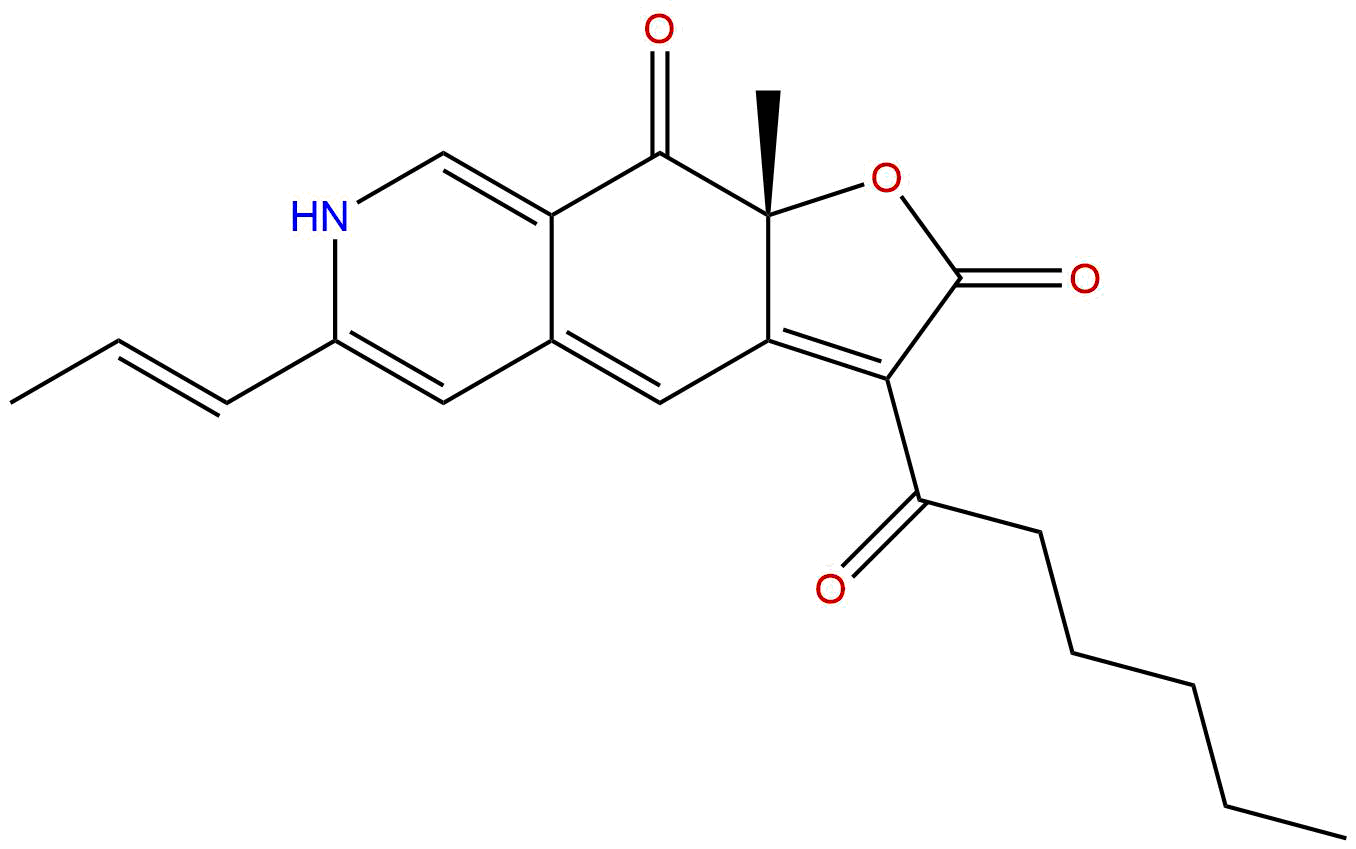


Product name: Rubropunctamine
Synonym name: Rubropunctatin;
Catalogue No.: BP5144
Cas No.: 514-66-9
Formula: C21H23NO4
Mol Weight: 353.418
Botanical Source:
Type of Compound: Alkaloids
Purity: 95%~99%
Analysis Method: HPLC-DAD or/and HPLC-ELSD
Identification Method: Mass, NMR
Packing: Brown vial or HDPE plastic bottle
Storage: Store in a well closed container, protected from air and light. Put into refrigerate or freeze for long term storage.
Whenever possible, you should prepare and use solutions on the same day. However, if you need to make up stock solutions in advance, we recommend that you store the solution as aliquots in tightly sealed vials at -20℃. Generally, these will be useable for up to two weeks.
The product could be supplied from milligrams to grams
Inquire for bulk scale.
For Reference Standard and R&D, Not for Human Use Directly.
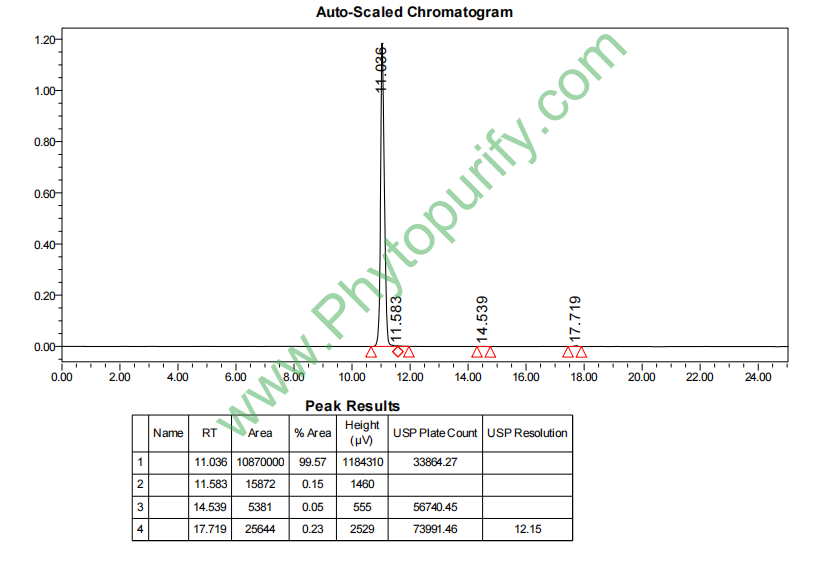
HPLC of Rubropunctamine
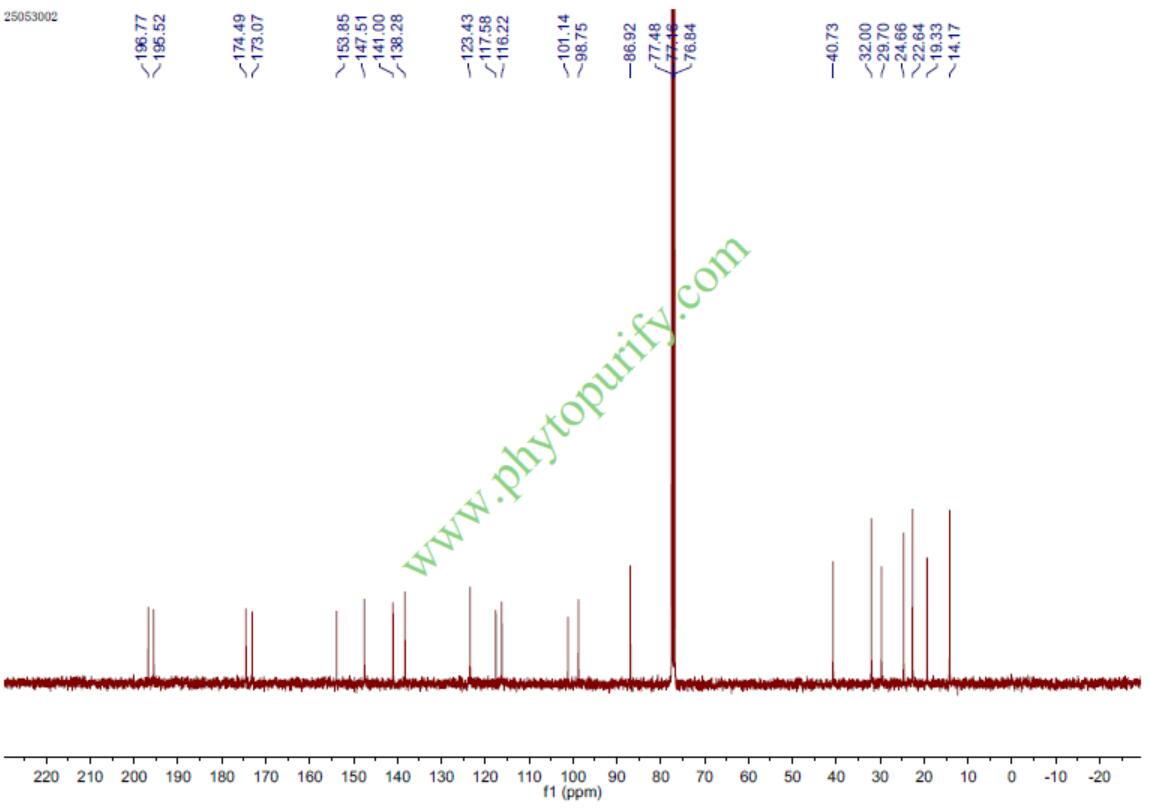
NMR of Rubropunctamine
Storage conditions:Short-term storage at 2~8℃, long-term storage at -20 ~ -80℃
Rubropunctamine (CAS number: 514-66-9), as a typical Monascus pigment, has attracted widespread attention in the field of natural product pharmacology in recent years due to its unique chemical structure and diverse biological activities. The main source of red yeast pigment is the fermentation product of Monascus spp., among which Pan Hong amine is one of the representative red pigments. It not only exhibits significant antibacterial activity, especially against various bacterial, yeast, and filamentous fungal strains, but also shows potential embryotoxicity and teratogenicity under certain conditions, indicating that its medicinal safety needs to be carefully evaluated. This article aims to provide a systematic review of the chemical structure and physicochemical properties, plant sources and extraction methods, pharmacological activity and mechanism of action, pharmacological evaluation and pharmacokinetic characteristics of Panhongamine, and explore its clinical application prospects and research prospects, providing theoretical basis and reference for subsequent related research.
The molecular formula of Panhongamine is C21H23NO4, with a molecular weight of 353.4180. Its chemical structure belongs to the red yeast pigment class, with typical polycyclic aromatic structures and amino substituents, giving it significant color and biological activity. The LogP value of Pan Hong amine is 3.4782, indicating its good lipid solubility, which is beneficial for penetrating cell membranes and the blood-brain barrier (BBB). The latter's penetration ability is evaluated as high, which has positive implications for its potential application in central nervous system related diseases. Its topological polar surface area (TPSA) is 72.4700, indicating that the molecule has certain polar groups that facilitate binding with biological targets.
Low water solubility (0.0094 mg/mL) suggests limited solubility in aqueous phase, which may affect its in vivo absorption and bioavailability. In addition, Pan Hong amine did not exhibit hERG channel inhibition, indicating a low risk of cardiac toxicity. The Ames test score is 0.9, indicating a low risk of genotoxicity, but further in vitro and in vivo safety verification is still needed.
Pan Hong amine mainly comes from the fermentation products of Monascus spp. Monascus is a traditional fermentation microorganism widely used in the food industry and natural pigment production. Pan Hong amine, as one of the secondary metabolites of Monascus, usually coexists with other Monascus pigments such as Monascrurin and Monascrubine.
The process of extracting panhong amine mainly includes solid-state fermentation or liquid fermentation, followed by purification through organic solvent extraction, chromatographic separation, and other methods. Common extraction solvents include ethanol, methanol, and ethyl acetate, as they can effectively dissolve fat soluble pigments. During the extraction process, pH, temperature, and fermentation time need to be controlled to optimize product yield and purity. In recent years, new technologies such as ultrasound assisted extraction and microwave-assisted extraction have shown potential in improving the efficiency of pan erythroid extraction and reducing energy consumption.
Pan Hong amine exhibits broad-spectrum antibacterial activity and has inhibitory effects on both Gram positive and Gram negative bacteria. Research has shown that Pan Hong amine exhibits low minimum inhibitory concentrations (MIC) against common pathogenic bacteria such as Staphylococcus aureus and Escherichia coli, demonstrating good antibacterial potential. In addition, Pan Hong amine also has inhibitory effects on certain yeast (such as Candida albicans) and filamentous fungal strains, indicating its application value in the field of antifungal therapy.
In addition to its antibacterial effect, Panhongamine has also been reported to have certain embryonic toxicity and teratogenicity, which suggests that safety assessment should be a key focus in the drug development process. Partial in vitro cell experiments have shown that Pan Hong amine may induce cell apoptosis and DNA damage at high concentrations, indicating its potential cytotoxicity.
The antibacterial activity of panhongamine involves multiple key molecular targets, including bacterial DNA replication, cell wall synthesis, metabolic enzyme activity, and fungal membrane proteins.
In addition, Pan Hong amine may synergistically exert antibacterial effects by affecting cell membrane permeability and energy metabolism. Its multi-target mechanism of action provides a theoretical basis for the development of novel broad-spectrum antibiotics.
The pharmacological parameters of Panhong amine indicate that it has certain potential for drug development. Moderate molecular weight and lipid solubility support its excellent cell membrane penetration ability. The high blood-brain barrier permeability provides the possibility for its application in central nervous system infections or related diseases. Low hERG inhibition risk reduces concerns about cardiac toxicity.
However, the water solubility of Pan Hong amine is poor, which may limit its oral absorption and bioavailability. Pharmaceutical improvements such as nanocarriers and liposome encapsulation strategies are needed to enhance its solubility and stability. The Ames test results showed a low risk of genotoxicity, but embryotoxicity and teratogenicity suggest the need for systematic toxicological evaluation.
At present, there is limited research on the pharmacokinetics of Pan Hong amine. Preliminary in vivo experiments suggest that it may be involved in the cytochrome P450 enzyme system in liver metabolism, and the metabolites and their activities still need to be further studied. The key pharmacokinetic parameters such as half-life, distribution volume, and clearance rate of Pan Hong amine urgently require supplementary data support.
Pan Hong amine, as a natural Monascus pigment, has shown broad clinical application prospects due to its significant antibacterial and antifungal activities. Its multi-target mechanism of action is expected to overcome the problem of traditional antibiotic resistance and is an important candidate molecule for developing new anti infective drugs. Especially in the context of the increasing number of drug-resistant strains, the research and development of panoxamine is of great significance.
In addition, the high blood-brain barrier permeability of Pan Hong amine suggests its potential application value in areas such as brain infections and neuroinflammation. In the future, drug delivery systems can be combined to optimize their pharmacokinetic properties and enhance therapeutic efficacy.
However, the embryotoxicity and teratogenic risks of panhongamine cannot be ignored, and a systematic safety evaluation and dose optimization study must be conducted before clinical application. Combining modern drug design techniques to modify the structure of panoxamine to reduce toxicity and enhance selectivity will be a future research focus.
Meanwhile, the application of Pan Hong amine in the food industry is also worth paying attention to. As a natural pigment, its safety and functionality need to be further clarified to expand its application in food additives and functional foods.
Pan Hong amine, as an important member of Monascus pigments, has demonstrated significant research value and application potential in the field of natural product pharmacology due to its unique chemical structure and multi-target antibacterial mechanism. Despite its outstanding antibacterial activity, the risks of embryonic toxicity and teratogenicity suggest that clinical translation should be cautiously promoted. In the future, it is necessary to strengthen its pharmacokinetic and toxicological research, combine modern medicinal chemistry and formulation technology, optimize its drug properties, and promote the development of Panhong amine towards a safe and efficient antibacterial drug direction. Through interdisciplinary collaboration, Pan Hong amine is expected to become an important natural product drug candidate to address the challenge of antimicrobial resistance.
