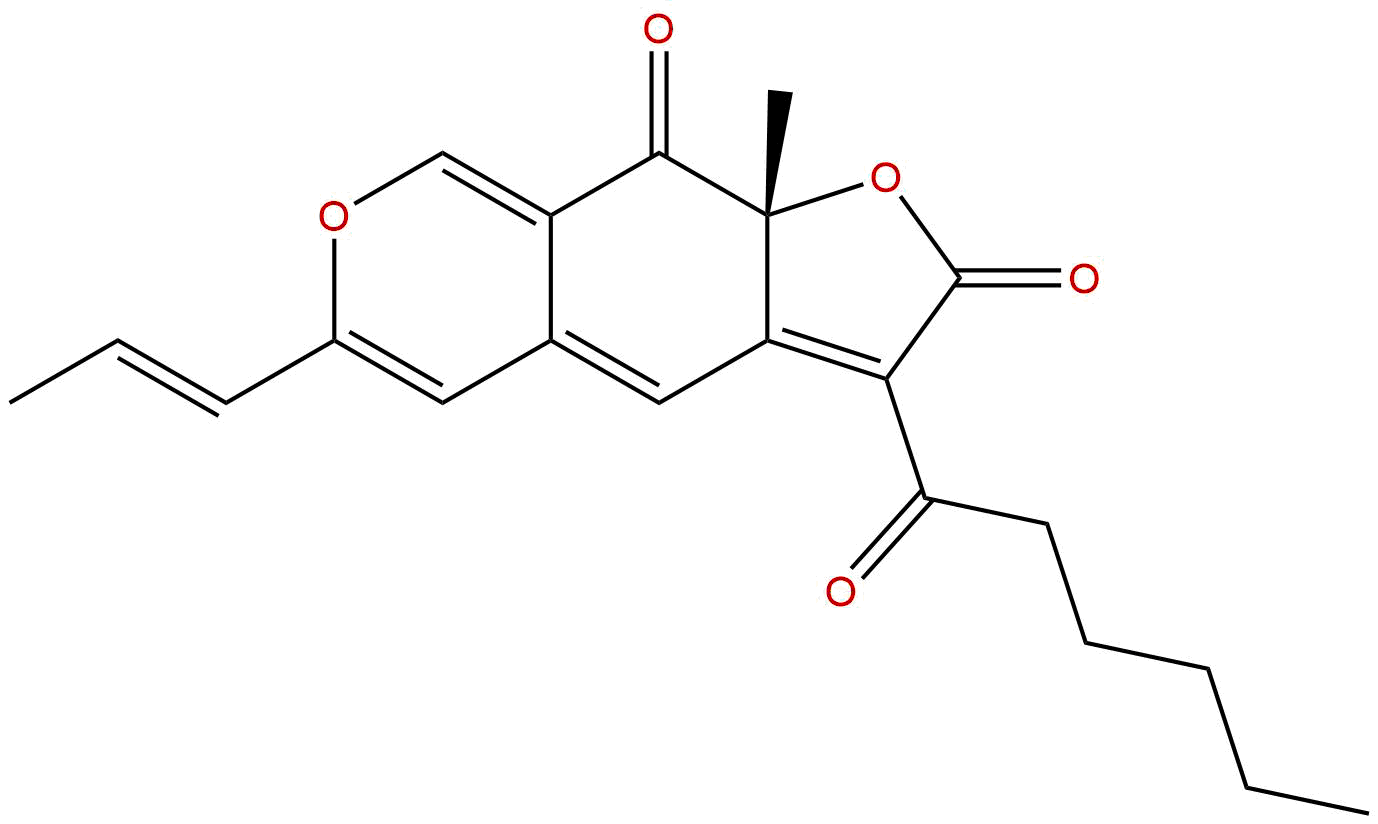


Product name: Rubropunctatin
Synonym name:
Catalogue No.: BP5202
Cas No.: 514-67-0
Formula: C21H22O5
Mol Weight: 354.402
Botanical Source:
Type of Compound: Miscellaneous
Purity: 95%~99%
Analysis Method: HPLC-DAD or/and HPLC-ELSD
Identification Method: Mass, NMR
Packing: Brown vial or HDPE plastic bottle
Storage: Store in a well closed container, protected from air and light. Put into refrigerate or freeze for long term storage.
Whenever possible, you should prepare and use solutions on the same day. However, if you need to make up stock solutions in advance, we recommend that you store the solution as aliquots in tightly sealed vials at -20℃. Generally, these will be useable for up to two weeks.
The product could be supplied from milligrams to grams
Inquire for bulk scale.
For Reference Standard and R&D, Not for Human Use Directly.
Storage conditions:Short-term storage at 2~8℃, long-term storage at -20 ~ -80℃
69.6700
3.5699
3.5702
.0082
3.0541
24.5871
High
89.9448
4.1230
No
Yes
No
No
Yes
Yes
0.9
No
Yes
Yes
Yes
Rubropuntatin (CAS number: 514-67-0) is a natural orange nitrogen-containing ketone pigment derived from Monascus spp. fermented rice, also known as red mold rice. As an important component in the metabolic products of Monascus purpureus, erythrorubicin not only endows Monascus purpureus rice with a unique color, but also receives widespread attention due to its diverse biological activities. In recent years, with the deepening development of natural product pharmacology, erythrorubicin has gradually become an important candidate molecule for natural drug research and development due to its significant anti-inflammatory, immunosuppressive, antioxidant, and anti-tumor activities.
The anti-tumor effect of erythropoietin is particularly prominent, involving multiple signaling pathways and key molecular targets such as MCL1, BCL2, STAT3, MMP2, TOP1, HIF1A, TOP2A, MAPK1, ESR1, and CYP19A1, demonstrating its potential regulatory role in tumor cell proliferation, apoptosis, invasion, and metastasis. In addition, the good pharmacological parameters of erythrorubicin, such as moderate lipid solubility (LogP=3.5699), low polar surface area (TPSA=69.67), and high blood-brain barrier penetration, provide favorable conditions for its use as a drug molecule.
This article will provide a systematic review of the chemical structure and physicochemical properties, plant sources, and extraction methods of erythrorubicin, with a focus on its pharmacological activity and mechanism of action. Combined with drug evaluation and pharmacokinetic characteristics, it will explore its clinical application prospects and development potential, aiming to provide theoretical basis and research direction for natural product pharmacology research and related drug development.
Erythrosin belongs to the class of nitrogen-containing ketone pigments, with a molecular formula of C21H18O5N and a molecular weight of 354.4020. Structurally, erythrorubicin contains a polycyclic nitrogen-containing ketone core, complemented by multiple hydroxyl and methoxy substituents, endowing it with unique chemical properties and biological activity. Its orange color comes from the conjugated double bond system within the molecule, which has strong light absorption ability.
In terms of physical and chemical properties, the LogP value of erythrorubicin is 3.5699, indicating its moderate lipophilicity, which facilitates cell membrane penetration and in vivo distribution. The polar surface area (TPSA) is 69.67, indicating that its molecular polarity is moderate and conducive to binding with biomolecule targets. Low water solubility (0.0082 mg/mL) suggests limited solubility in aqueous phase, which may affect its bioavailability and formulation design. The high penetration of the blood-brain barrier suggests its potential application in the treatment of central nervous system diseases. The hERG channel inhibition experiment showed a negative result, indicating a low risk of cardiac toxicity from erythrorubicin. The Ames test score is 0.9, indicating a low risk of genotoxicity and good safety.
The chemical stability of erythrorubicin is greatly affected by pH and light exposure, and is prone to oxidation and photodegradation reactions. Therefore, it is necessary to pay attention to condition control during preparation and storage. The diversity of its chemical structure and the richness of its functional groups provide possibilities for subsequent structural modifications and pharmacological optimization.
Erythromycin mainly comes from the fermentation products of Monascus spp. fungi, especially Monascus rice (red yeast rice). Red mold rice is a traditional food made from rice as the substrate and fermented by Monascus. It is widely used in Asia and has a long history and rich cultural value. Monascus produces various pigments during the fermentation process, including red pigment, orange pigment, and yellow pigment, among which red pigment is an important orange pigment component.
The methods for extracting erythropoietin mainly include solvent extraction, ultrasound assisted extraction, and liquid-liquid separation. The commonly used extraction solvents are organic solvents such as ethanol, methanol, and ethyl acetate, which have good solubility for erythrorubicin. The typical extraction process is as follows: after the red mold rice is crushed, an appropriate concentration of organic solvent is used for extraction, combined with ultrasonic assisted to improve the extraction efficiency; Subsequently, high-purity erythrorubicin was obtained through filtration, concentration, and silica gel column chromatography separation and purification.
In recent years, green extraction techniques such as supercritical carbon dioxide extraction and microwave-assisted extraction have also been attempted to be applied to the extraction of erythema red pigment, in order to improve yield, reduce solvent usage and environmental burden. Meanwhile, the optimization of fermentation conditions (such as temperature, pH, fermentation time, and strain screening) has a significant impact on the yield and quality of erythrorubicin, becoming a key link in improving industrial production.
The pharmacological activities of erythrorubicin cover multiple aspects such as anti-inflammatory, immunosuppressive, antioxidant, and anti-tumor effects, demonstrating its multiple potential as a natural drug candidate molecule.
Multiple in vitro and in vivo experiments have shown that erythropoietin can significantly inhibit the release of inflammatory mediators, such as tumor necrosis factor - α (TNF - α), interleukin-6 (IL-6), and nitric oxide (NO). The mechanism may involve inhibiting the activation of the nuclear factor kappa B (NF - κ B) signaling pathway, reducing the expression of pro-inflammatory cytokines, and thereby alleviating the inflammatory response. Erythrorubicin has shown good anti-inflammatory effects in inflammatory disease models, indicating its potential application in the treatment of inflammation related diseases.
Erythrorubicin has a regulatory effect on immune cell function, which can inhibit the activation of T cells and macrophages, reduce the secretion of immune mediators, and exhibit certain immunosuppressive activity. This characteristic makes it potentially applicable in fields such as autoimmune diseases and transplant rejection reactions.
Erythrosin has significant free radical scavenging ability and can inhibit lipid peroxidation and cellular oxidative damage. Its antioxidant effect not only protects cells from oxidative stress damage, but may also exert a protective effect by regulating the intracellular antioxidant enzyme system (such as superoxide dismutase and glutathione peroxidase), promoting the maintenance of cellular homeostasis.
The anti-tumor activity of erythropoietin is the focus of its pharmacological research. Multiple experiments on tumor cell lines have shown that erythropoietin can inhibit tumor cell proliferation, induce cell apoptosis, and suppress cell migration and invasion. Its function involves regulating multiple signaling pathways and key molecular targets, specifically manifested as:
These multi-target and multi mechanism anti-tumor effects provide a theoretical basis for the application of erythropoietin in tumor therapy.
The biological effects of erythropoietin are attributed to its interactions with various molecular targets, regulating the cellular signaling network and subsequently affecting cell fate and function.
MCL1 and BCL2 These two proteins belong to the anti apoptotic family and maintain the survival of tumor cells. Erythrosin reduces its expression, relieves the inhibition of cell apoptosis, and promotes programmed cell death in tumor cells.
STAT3 As a key transcription factor, STAT3 is abnormally activated in various tumors, promoting cell proliferation and immune escape. Erythrorubicin inhibits STAT3 phosphorylation, blocks its nuclear translocation and transcriptional activity, and suppresses tumor growth.
MMP2 Matrix metalloproteinases participate in extracellular matrix degradation and promote tumor cell invasion. Erythrosin reduces the expression and activity of MMP2, limiting tumor metastasis.
TOP1 and TOP2A DNA topoisomerase regulates the supercoiled structure of DNA, which is crucial for DNA replication and transcription. Erythrorubicin interferes with tumor cell DNA metabolism and induces cell death by inhibiting the activity of these two enzymes.
HIF1A Hypoxia inducible factor regulates tumor adaptation to low oxygen environment. Erythrosin inhibits the expression of HIF1A, affecting tumor metabolism and angiogenesis.
MAPK1 Participate in signal transduction for cell proliferation, differentiation, and apoptosis. Erythrosin regulates MAPK1 activity and affects cell cycle progression.
ESR1 and CYP19A1 They are estrogen receptors and aromatase, which regulate the growth of hormone dependent tumors. Erythrorubicin exerts anti hormone dependent tumor effects by regulating these two targets.
The anti-inflammatory and antioxidant effects of erythropoietin are mainly achieved by inhibiting the NF - κ B signaling pathway and activating the intracellular antioxidant enzyme system. In addition, its immunosuppressive effect may involve regulating T cell activation and cytokine secretion, and the specific mechanism is still under further investigation.
Molecular docking and structural biology studies have shown that the nitrogen-containing ketone core structure of erythrorubicin has a high binding affinity with the active site of the target protein, providing a molecular basis for its multi-target action.
The pharmacological evaluation of erythrorubicin includes physicochemical properties, safety, and pharmacokinetic characteristics, reflecting its potential advantages and challenges as a drug molecule.
Moderate lipophilicity (LogP=3.5699) and moderate polar surface area (TPSA=69.67) endow erythrorubicin with good cell membrane permeability and targeted binding ability. Low water solubility (0.0082 mg/mL) may limit its oral bioavailability, and solubility needs to be improved through formulation technology.
The hERG channel inhibition experiment was negative, indicating a low risk of erythropoietin induced cardiac toxicity. The Ames test score is 0.9, indicating low genotoxicity and good safety. This provides a good safety foundation for its clinical development.
Pharmacokinetic studies in vivo have shown that erythropoietin has high blood-brain barrier penetration, suggesting its potential advantages in the treatment of central nervous system diseases. Its metabolic pathway mainly involves the liver enzyme system, and the activity and toxicity of metabolites need to be further clarified. Moderate half-life, conducive to maintaining effective blood drug concentration.
The low water solubility and potential first pass effect of erythrorubicin are the main challenges in formulation development, and the application of new drug delivery systems such as nanocarriers, liposomes, and solid dispersions is expected to improve its pharmacokinetic performance.
Erythrorubicin, as a multifunctional natural product, has broad clinical application potential. Its anti-tumor activity is particularly remarkable, suitable for adjuvant therapy of various solid tumors and hematological tumors. By targeting multiple tumor related signaling pathways, erythropoietin is expected to overcome the resistance and side effects of single target drugs.
In addition, the anti-inflammatory and immunomodulatory effects of erythropoietin make it potentially valuable for application in inflammatory diseases, autoimmune diseases, and immune related diseases. Its antioxidant properties also provide possibilities for the prevention and treatment of chronic degenerative diseases.
At present, clinical research on erythrorubicin is still in its early stages, and there is an urgent need for systematic pharmacological and toxicological evaluation, formulation optimization, and clinical trials. Future research should focus on:
Through interdisciplinary collaborative innovation, erythrorubicin is expected to become an important member in the field of natural product anti-tumor drugs.
Red spot pigment, as an important nitrogen-containing ketone pigment in fermented rice by Monascus, has become a hot topic in natural product pharmacology research due to its unique chemical structure and diverse biological activities. Its multiple pharmacological effects, including anti-inflammatory, immunosuppressive, antioxidant, and anti-tumor effects, combined with good pharmacokinetic parameters, demonstrate broad prospects for drug development.
In the future, in-depth analysis of the structure optimization, mechanism of action, and clinical translation research of erythrorubicin will lay a solid foundation for its development as a new natural medicine. With the continuous advancement of natural product pharmacology and modern drug development technology, erythrorubicin is expected to play an important role in the field of anti-tumor and related disease treatment, promoting the innovation and application of natural product drugs.
Batch can search by a CAS number,one per line
