


Product name: Ginsenoside CK
Synonym name: Ginsenoside C-K; Ginsenoside Compound k
Catalogue No.: BP0651
Cas No.: 39262-14-1
Formula: C36H62O8
Mol Weight: 622.884
Botanical Source: Prod. from saponins of Gynostemma pentaphyllum by endogenous glycosidases
Physical Description: White powder
Type of Compound: Triterpenoids
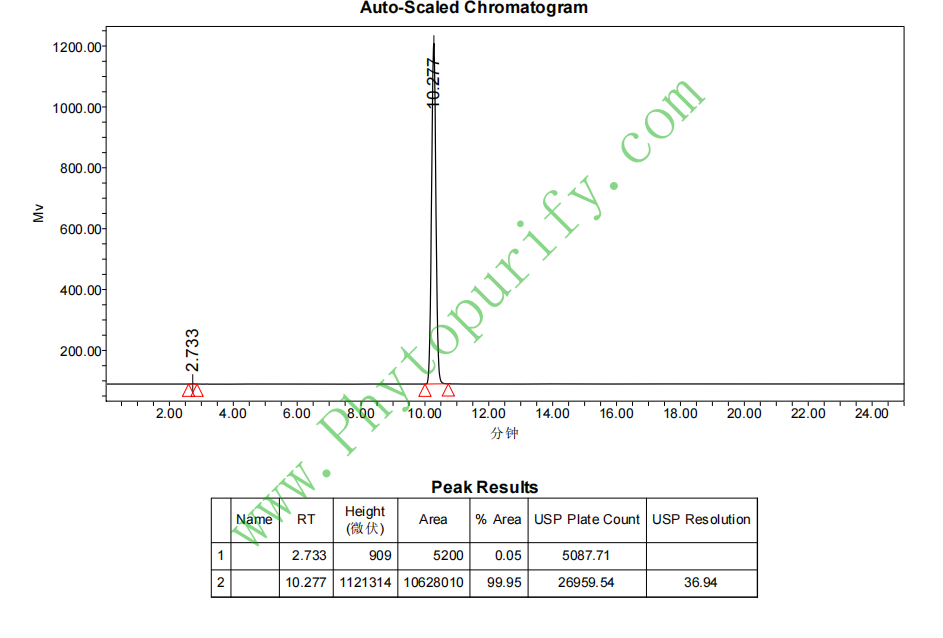
Purity: 50%, 90%, 95%, 99%
Analysis Method: HPLC-DAD or/and HPLC-ELSD
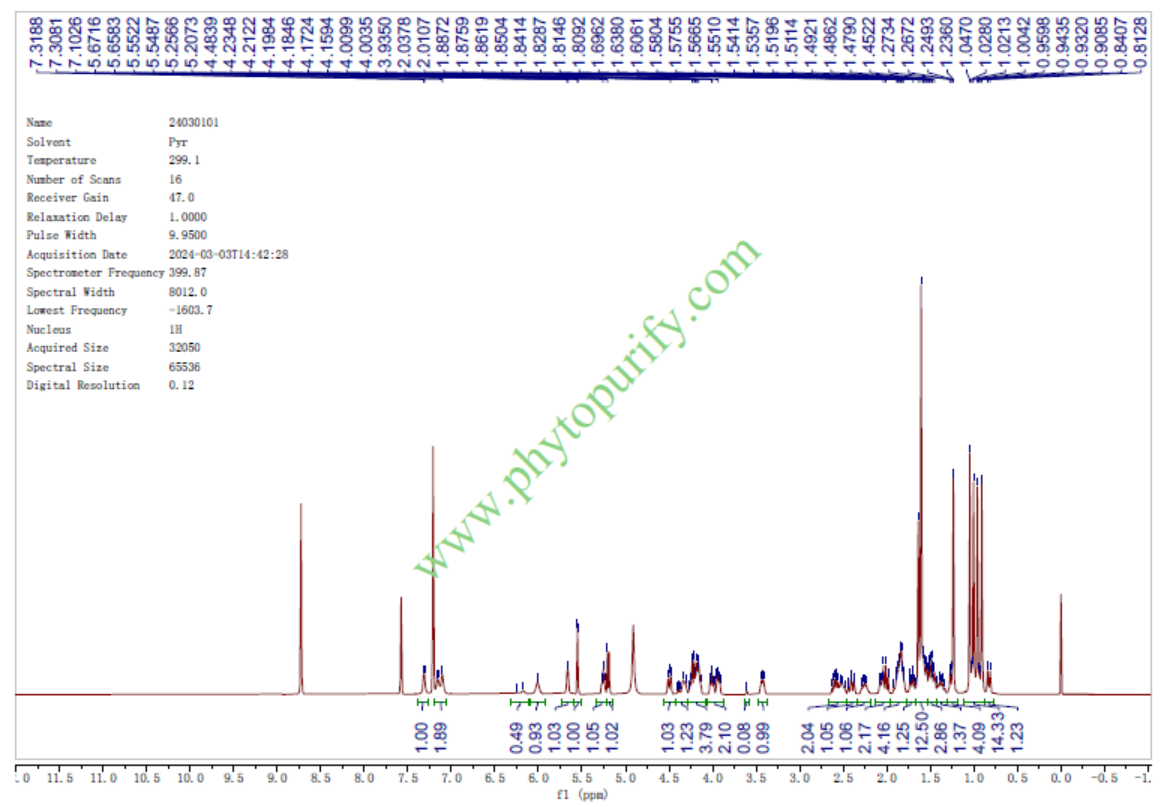
Identification Method: Mass, NMR
Packing: Brown vial or HDPE plastic bottle
The product could be supplied from milligrams to grams, up to kilograms
Inquire for bulk scale.
Descriptions:
Ginsenoside compound K (C-K) is a metabolite of the protopanaxadiol-type saponins of Panax ginseng C.A. Meyer (Araliaceae), has long been used to treat against the development of cancer, inflammation, allergies, and diabetes; C-K acts as a unique HUVEC migration inhibitor by regulating MMP expression, as well as the activity of SPHK1 and its related sphingolipid metabolites.[1]
Ginsenoside compound K, the intestinal metabolite of ginseng saponin, has various chemopreventive and chemotherapeutic activities, including anti-tumor activity; C-K suppresses the activation of the NF-κB pathway, may become a potential cytotoxic drug in the prevention and treatment of hepatocellular carcinoma( HCC).[2]
Ginsenoside compound K shows significant anti-proliferative effects and pro
-apoptotic effects in HCT-116 and SW-480 cells at concentrations of 30-50 uM, suggests that C-K could be potentially effective anti-colorectal cancer agent.[3]
Ginsenoside CK has anti-cancer effect on NPC cells, C-K-induced apoptosis of HK-1 cells was mediated by the mitochondrial pathway and could significantly inhibit tumor growth in vivo.[4]
Ginsenoside Compound K is one of the main bioactive components of ginseng that is obtained from bio-conversion of ginseng saponin using microorganism fermentation. Researches have indicated that Compound K delivers powerful, anti-aging benefits, including: fighting active oxygen and free radicals, promoting collagen synthesis and elastase inhibition, reducing the appearance of wrinkles, and improving skin elasticity and firmness. Its extremely low solubility and hydrophobic properties have prevented this potent ingredient from being effectively used in skincare formulas. With our solubilization technology, we are able to water-solubilize Compound K and effectively use it as one of our key ingredients in our hero product, Age-Reversing All-In-One Concentrate.
References:
[1] Shin K O, Seo C H, Cho H H, et al. Arch Pharm Res, 2014, 37(9):1183-92.
[2] Ming Y, Chen Z, Chen L, et al.Planta Med, 2011, 77(5):428-33.
[3] Wang C Z, Du G J, Zhang Z, et al.Int J Oncol , 2012, 40(6):1970-6.
[4] Law K M, Kwok H H, Poon P Y, et al. Chinese Medicine, 2014, 9(1):1-9.
[5] Zhou W, Luo Z S, Zhou P, et al. Chromatogram, 2005, 23(3):270-2.
HNMR of Ginsenoside CK
HPLC of Ginsenoside CK
Storage conditions:Short-term storage at 2~8℃, long-term storage at -20 ~ -80℃
139.8400
4.3623
4.3631
.0047
.6941
.3512
Low
83.8602
5.4037
No
No
No
No
No
No
0.0
Yes
No
No
No
Ginseng(Panax ginseng C. As a treasure of traditional medicine, the study of ginsenosides, the pharmacological active substance basis of A. Mey., has always been a hot topic in the field of natural product pharmacology. There are various types of ginsenosides, which are mainly classified into damanane type and oleanane type according to their glycoside structures. Among them, dammarane type ginsenosides, such as Rb1, Rg1, etc., have been extensively studied due to their wide range of biological activities. However, these original saponins are mostly precursor compounds that need to be metabolized by gut microbiota into secondary saponins after oral administration in order to better exert pharmacological effects. Ginsenoside CK, also known as Compound K, is the main active metabolite generated by the hydrolysis of ginsenosides Rb1, Rb2, Rc and other glycosides by gut microbiota. Compared to the original saponins, CK has higher bioavailability and more significant biological activity, and has become a star molecule in the study of ginsenosides in recent years. Its CAS number is 39262-14-1, and it has been proven to have multiple pharmacological effects such as anti-tumor, anti-inflammatory, hepatoprotective, neuroprotective, and immunomodulatory effects. This article aims to systematically review the chemical properties, pharmacological activities, molecular mechanisms of action, pharmacological evaluation, and clinical application prospects of ginsenoside CK, in order to provide comprehensive scientific references for the in-depth research and development of this active ingredient.
Ginsenoside CK belongs to the dammarane type tetracyclic triterpenoid saponin. Its chemical structure is characterized by the substitution of hydroxyl groups on the 3 β, 12 β, and 20 (S) positions of the Damane skeleton, with the 20 (S) - hydroxyl group forming a glycoside with one molecule of β - D-glucopyranose. In addition, a key feature of its structure is the introduction of a double bond (Δ 24 (25)) between positions C-24 and C-25, which has a significant impact on its biological activity. Its molecular formula is C36H62O8 and its molecular weight is 622.8840.
From the analysis of physicochemical parameters related to drug properties, the lipid water partition coefficient (LogP) of CK is 4.36, indicating its strong lipophilicity. Its topological polar surface area (TPSA) is 139.84 Å ², reflecting the presence of multiple polar groups (such as hydroxyl and sugar groups) in its molecule. The water solubility data (0.0047 mg/mL) confirms that it is a poorly soluble compound, which to some extent limits its oral absorption and formulation development. According to the "Five Principles of Similar Drugs", it is preliminarily judged that its molecular weight is slightly over 500 and its LogP value is high, indicating that attention may need to be paid to its solubility and permeability in drug chemistry optimization. The predicted blood-brain barrier permeability is' low ', indicating that it may be difficult to directly act on the central nervous system. However, it showed negative results in both hERG inhibition and Ames mutagenicity assays (hERG inhibition: no; Ames test: 0.0) provides a favorable basis for its preliminary safety evaluation, indicating that its risk of cardiac toxicity and genetic toxicity is low.
The content of ginsenoside CK in natural ginseng roots is extremely low, and it is mainly the biotransformation product of the original ginsenoside in the body. Therefore, its acquisition mainly relies on the following two strategies:
Biotransformation method This is currently the most important and effective method for preparing CK. Using ginseng root, stem and leaf extracts or single saponins rich in ginsenosides Rb1, Rb2, Rc, etc. as substrates, utilizing microorganisms with specific glycosidase activity (such as bacteria)Bifidobacterium、Lactobacillus、Prevotella Other genera, as well as fungi Aspergillus、Penicillium Enzymes purified from these microorganisms can undergo directed hydrolysis to selectively remove glycosides and efficiently and specifically generate CK. This method has mild conditions and high yields, and has achieved large-scale preparation.
Chemical synthesis and semi synthesis Constructing a damaane skeleton through a fully chemical synthesis route and introducing specific functional groups and sugar groups is cumbersome and costly, currently mainly used for the preparation of a small number of standard samples. The semi synthetic method uses abundant ginsenosides (such as Rb1) as the starting material and selectively removes sugar groups through chemical methods. However, it faces challenges such as regioselectivity and stereoselectivity control, and its efficiency is not as good as the biotransformation method.
Plant Extraction and Separation Directly extracting and isolating CK from ginseng plants (such as ginseng and American ginseng) is not suitable for large-scale production due to its extremely low natural content, difficult separation and purification, low cost-effectiveness.
At present, microbial or enzyme catalyzed biotransformation technology is the mainstream direction for the production of ginsenoside CK for research and potential commercialization, and related process optimization (such as strain selection, fermentation condition control, enzyme engineering modification) is the key to improving yield.
Numerous preclinical studies have confirmed that ginsenoside CK has diverse and significant pharmacological activities.
Antitumor activity CK has strong effects on inhibiting proliferation, inducing apoptosis and differentiation of many tumor cells, including liver cancer, lung cancer, colon cancer, breast cancer, stomach cancer, leukemia, etc. Its function is not limited to directly killing tumor cells, but can also inhibit tumor cell invasion, migration, and angiogenesis.
Immune regulatory activity CK has a unique "immune balance" regulatory function. It can activate macrophages, natural killer cells (NK cells), promote the production of pro-inflammatory cytokines (such as IL-2, IFN - γ), and enhance the body's anti infection and anti-tumor immune response; It can also exert anti-inflammatory and immune tolerance effects by regulating the function of regulatory T cells, inhibiting excessive inflammatory reactions, and has potential therapeutic value for autoimmune and inflammatory diseases.
Anti inflammatory and hepatoprotective activity CK exhibits excellent anti-inflammatory effects in various acute and chronic inflammation models, such as colitis, arthritis, and dermatitis. In chemical (such as acetaminophen, carbon tetrachloride) or immunological liver injury models, CK can significantly reduce serum transaminase levels, alleviate liver tissue pathological damage, and its mechanism is closely related to inhibiting oxidative stress and inflammatory response.
Neuroprotective activity Although the blood-brain barrier has low permeability, some studies have shown that CK has a protective effect in neurodegenerative disease models such as Alzheimer's disease and Parkinson's disease, as well as in models of cerebral ischemia-reperfusion injury. It may exert its effects through indirect pathways such as reducing neuroinflammation, inhibiting cell apoptosis, and oxidative damage.
Other activities The study also reported the potential benefits of CK in improving insulin resistance, protecting myocardial cells, resisting skin photoaging, and anti fibrosis.
The multiple pharmacological activities of ginsenoside CK stem from its precise regulation of multiple signaling pathways within cells. Its mechanism of action is complex, involving multiple molecular targets, especially in the network interweaving of immune regulation.
Regulation of core signaling pathways:
Key molecular targets and immune regulatory networks:
Based on the provided target information, the immune regulatory effect of CK can be achieved through a collaborative network:
Other mechanisms CK can also regulate the Nrf2/HO-1 antioxidant pathway and upregulate endogenous antioxidant defense; Inducing cell apoptosis through mitochondrial and death receptor pathways; And inhibit the expression of inflammation related enzymes such as cyclooxygenase-2 and inducible nitric oxide synthase.
Despite its significant pharmacological activity, the development of the pharmacological properties of ginsenoside CK faces challenges, and its pharmacokinetic characteristics are a key consideration for its conversion into drugs.
Absorption, distribution, metabolism, and excretion:
Formulation and delivery strategy To improve the water solubility and bioavailability of CK, researchers have developed various novel drug delivery systems, including:
safety Current preclinical toxicology studies have shown that ginsenoside CK has low toxicity within the effective dose range. Its lack of hERG inhibition and mutagenicity suggests good cardiac safety and genetic toxicity background. However, a comprehensive evaluation of long-term toxicity, reproductive toxicity, and other factors still needs to be conducted systematically.
The clinical application development of ginsenoside CK is in an important stage of transitioning from preclinical research to clinical practice.
Potential indications:
challenges faced:
Future research directions:
Ginsenoside CK, as a key intestinal metabolite of ginseng active ingredients, has become a highly promising candidate molecule in the field of natural product drug development due to its excellent multi-target pharmacological activity, especially its dual effects of anti-tumor and immune regulation. Despite challenges in terms of physicochemical properties (such as low solubility) and pharmacokinetics, these obstacles are gradually being overcome through modern pharmaceutical technologies (such as nanomedicine) and in-depth mechanistic studies. In the future, with the continuous advancement of clinical translational research, ginsenoside CK is expected to move from the laboratory to clinical practice, providing a new and multi-functional natural drug selection for the prevention and treatment of various complex diseases such as tumors, inflammation, and metabolic diseases, truly achieving a leap from traditional medicinal plants to modern precision drugs. Its research paradigm also provides important references for the deep development and utilization of other natural products.
