


Synonym name: Anhydroicaritin
Catalogue No.: BP0759
Cas No.: 118525-40-9
Formula: C21H20O6
Mol Weight: 368.385
Botanical Source: Epimedium spp.
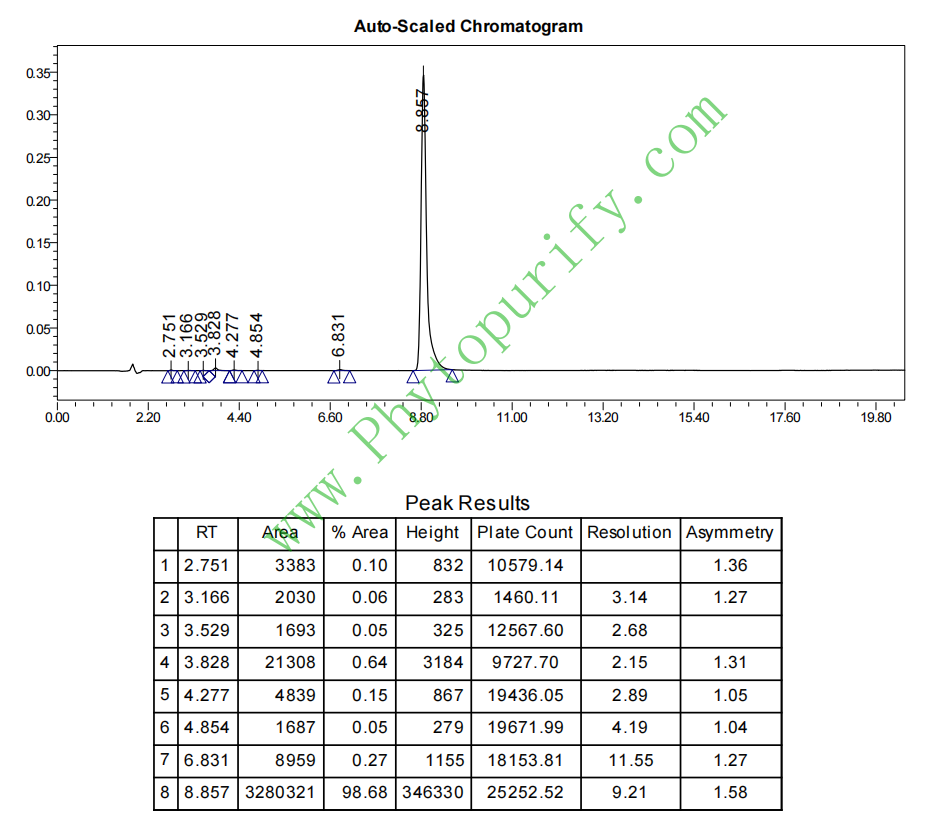
Purity: 95%~99%
Analysis Method: HPLC-DAD or/and HPLC-ELSD
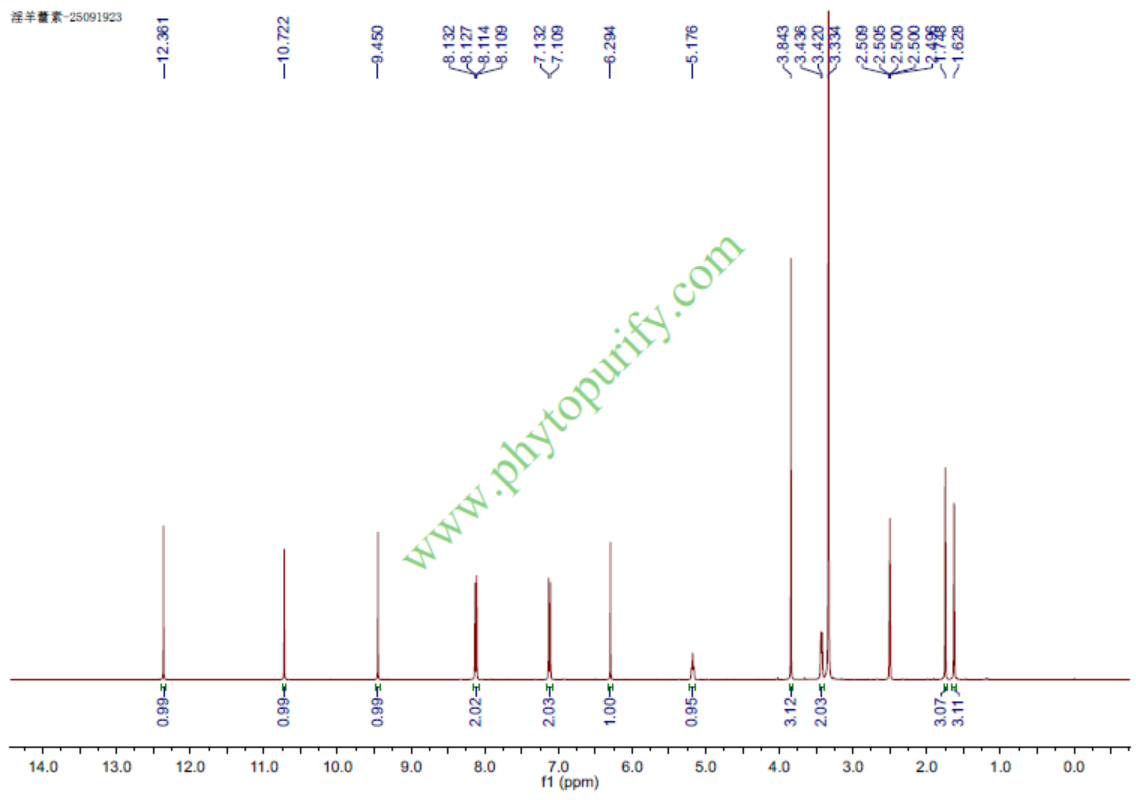
Identification Method: Mass, NMR
Packing: Brown vial or HDPE plastic bottle
Can be supplied from milligrams to grams.
For Reference Standard and R&D, Not for Human Use Directly.
Inquire for bulk scale.
Description:
Icaritin, a potent inhibitor of transcription factor SREBPs, which exhibits a variety of biological activities, such as activation of cancer cell apoptosis and inhibition of growth, hormone regulation, protection against beta amyloid-induced neurotoxicity, and promotion of neuronal and cardiac cellular differentiation. Icaritin shows potent anti-leukemia activity on chronic myeloid leukemia in vitro and in vivo by regulating MAPK/ERK/JNK and JAK2/STAT3 /AKT signalings.
References:
Oncotarget. 2015 Apr 30;6(12):10460-72.
Icaritin suppresses multiple myeloma, by inhibiting IL-6/JAK2/STAT3.
Icaritin is an active prenylflavonoid derived from Epimedium genus, a traditional Chinese medicine. Icaritin has a wide range of pharmacological and biological activities, including cardiovascular function improvement, hormone regulation and antitumor activity.
METHODS AND RESULTS:
Here, we investigated the effect of Icaritin on multiple myeloma (MM) in vitro and in vivo. Icaritin inhibited cell growth of MM cell line and primary MM cells. In contrast, Icaritin had low or no cytotoxic effect on normal hematopoiesis. We also demonstrated that in MM xenograft mouse models, Icaritin suppressed tumor growth and decreased serum IL-6 and IgE levels, but did not show adverse reactions such as body weight loss. The anti-MM activity of Icaritin was mainly mediated by inhibiting IL-6/JAK2/STAT3 signaling.
CONCLUSIONS:
We suggest that Icaritin can be further tested in clinical trials in MM.
Eur J Pharmacol. 2004 Nov 19;504(3):147-53.
Proliferation-stimulating effects of icaritin and desmethylicaritin in MCF-7 cells.
Icariin, Icaritin and desmethylIcaritin are constituents of Epimedium with a similar structure to genistein and daidzein.
CONCLUSIONS:
Using the modified MCF-7 cell proliferation assay (E-SCREEN assessment system), these compounds were tested for their estrogen-like activities. Icaritin and desmethylIcaritin, but not icariin, strongly stimulated the proliferation of MCF-7/BUS cells. Cell cycle analysis revealed that the proliferation stimulatory effect was associated with a marked increase in the number of MCF-7/BUS cells in S phase and a significant increase in the G2/M population, with effects similar to those of estradiol. These actions were dose dependent (range from 1 nM to 10 microM) and could be significantly inhibited by the specific estrogen receptor antagonist ICI 182,780 [7 alpha-[9(4,4,5,5,5-pentafluoropentyl)sulfinyl]nonyl)-estra-1,3,5(10)-triene-3,17beta-diol)]. The estrogen receptor-regulated progesterone receptor and PS2 mRNA levels were increased by treatment with Icaritin or desmethylIcaritin within 24 h and the effects were also reversed by ICI 182,780.
CONCLUSIONS:
It was concluded that Icaritin and desmethylIcaritin are novel phytoestrogens and that the estrogenic effects of Icaritin and desmethylIcaritin are mediated by the estrogen receptor.
Phytomedicine. 2014 Oct 15;21(12):1633-7.
Synergistic inhibitory effect of Icariside II with Icaritin from Herba Epimedii on pre-osteoclastic RAW264.7 cell growth.
Increasing evidence shows the therapeutic superiority of herbal extracts in comparison to isolated single constituents. One of the reasons may be attributed to the synergy effect of compound combinations. Flavonoids from Herba Epimedii have been shown to have therapeutic effect against bone loss. Our previous study showed that Icariside II inhibited pre-osteoclast RAW264.7 growth. The aim of this study was to investigate whether the activity of Icariside II is synergized by other components of Herba Epimedii.
METHODS AND RESULTS:
The inhibitory activity of Icariside II was significantly enhanced in the presence of the extract of Herba Epimedii (EHE) at the ratio of 1:1, 1:5 and 1:10. Icaritin, another flavonoid constituent, was shown here to inhibit RAW264.7 growth in a dose-dependent manner. Further, we found that Icariside II, together with Icaritin, synergistically inhibited RAW264.7 growth. The synergistic effect is significant when the ratio of Icariside II and Icaritin was 10:1, 5:1, 1:1, 1:2, and 1:5, respectively.
CONCLUSIONS:
In conclusion, Icaritin were an active component. The inhibitory activity of Icariside II on pre-osteoclast RAW264.7 growth was synergized by Icaritin, which maybe contribute to the efficiency of Herba Epimedii extract on curing bone-related diseases, such as osteoporosis.
HPLC of Icaritin
HNMR of Icaritin
Storage conditions:Short-term storage at 2~8℃, long-term storage at -20 ~ -80℃
Icaritin, as the main isoprene flavonoid derivative in Epimedium spp., has attracted much attention in recent years due to its diverse biological activities and potential medicinal value. Epimedium is not only widely used in traditional Chinese medicine for tonifying the kidneys, strengthening yang, strengthening tendons and bones, but also has become a research hotspot in the fields of natural product pharmacology and drug development due to its significant pharmacological activities in anti-tumor, anti osteoporosis, and immune regulation. This article aims to systematically review the chemical structure and physicochemical properties, plant sources and extraction methods, pharmacological activity and mechanism of action, pharmacological evaluation and pharmacokinetic characteristics of icariin, and explore its clinical application prospects and future development directions, in order to provide theoretical basis and reference for related research and drug development.
Epimedium extract (CAS number: 118525-40-9) is a typical isoprene flavonoid derivative with a molecular formula of C21H20O6 and a molecular weight of 368.3850. Its structural core is a flavonoid skeleton, connected by isoprene side chains, endowing it with unique biological activity. The LogP value of icariin is 3.8041, indicating moderate lipid solubility that facilitates membrane penetration and in vivo distribution. Its topological polar surface area (TPSA) is 100.1300, indicating that it has a certain polarity that may affect its solubility and bioavailability. Low water solubility (0.0543 mg/mL) suggests limited solubility in aqueous phase and requires appropriate formulation techniques to improve its bioavailability. The low permeability of the blood-brain barrier indicates limited distribution in the central nervous system. The hERG channel inhibition test was negative, indicating a low risk of cardiac toxicity. The Ames test result is 0.6, indicating a low risk of genotoxicity and a good safety foundation.
Epimedium mainly comes from plants of the Epimedium genus, especially Epimedium brevicornum Maxim., Epimedium sagittatum, and Epimedium pubescens. Epimedium, as a traditional Chinese medicinal herb, is widely distributed in China and East Asia, and has always been used to treat diseases such as kidney deficiency, osteoporosis, and sexual dysfunction.
There are various methods for extracting icariin, usually using organic solvent extraction combined with column chromatography separation technology. Traditional extraction often uses ethanol or methanol as solvents, and improves extraction efficiency through reflux or ultrasound assisted extraction. After concentration, separation, and purification, the extract was subjected to component analysis and purity detection using high-performance liquid chromatography (HPLC). In recent years, supercritical CO2 extraction and membrane separation technologies have also been introduced to improve extraction purity and yield, while reducing the use of organic solvents, in line with the concept of green chemistry.
The pharmacological activities of icariin include anti-tumor, anti osteoporosis, immune regulation, and anti-inflammatory effects.
Epimedium has shown significant inhibitory effects on various tumor cells. Especially in the chronic myeloid leukemia (CML) model, icariin has an IC50 of 8 μ M for inhibiting the proliferation of K562 cells, and IC50 of 13.4 μ M and 18 μ M for chronic phase (CML-CP) and acute phase (CML-BC) in primary CML cells, respectively, demonstrating strong anti leukemia activity. Its anti-tumor mechanism involves cell cycle arrest, induction of cell apoptosis, and inhibition of tumor cell migration and invasion.
Epimedium has shown significant effects in regulating bone metabolism, promoting osteoblast differentiation and bone matrix formation, inhibiting osteoclast activity, and thus exerting anti osteoporosis effects. The relevant targets include key transcription factors RUNX2 and SP7 (Osterix) for bone formation, bone resorption related enzyme CTSK (Cathepsin K), as well as signaling molecules that regulate bone metabolism such as TNFRSF11B (OPG), SOST (osteocalcin), and COL1A1 (type I collagen). In addition, icariin further promotes bone health by regulating the signaling pathways of vitamin D receptor (VDR) and estrogen receptor 1 (ESR1).
Epimedium can regulate the expression of various inflammatory mediators, inhibit the release of pro-inflammatory cytokines, and alleviate inflammatory reactions. Its mechanism of action involves the regulation of signaling pathways such as MAPK/ERK/JNK and JAK2/STAT3/AKT, promoting the maintenance of immune homeostasis.
The biological effects of icariin are mainly achieved by regulating multiple cellular signaling pathways:
MAPK/ERK/JNK signaling pathway Epimedium can activate or inhibit members of the MAPK family, regulate cell proliferation, differentiation, and apoptosis processes. In bone cells, activation of ERK signaling promotes osteoblast differentiation, while regulation of JNK signaling helps to suppress inflammatory responses.
JAK2/STAT3/AKT signaling pathway This pathway plays a crucial role in cell survival, proliferation, and immune regulation. Epimedium inhibits tumor cell proliferation and inflammatory response by suppressing JAK2 kinase activity, blocking STAT3 phosphorylation. Meanwhile, regulating the AKT signaling pathway is involved in bone metabolism regulation.
Nuclear receptor regulation Epimedium binds to vitamin D receptor (VDR) and estrogen receptor 1 (ESR1) to regulate gene expression related to bone metabolism, promote bone formation, and inhibit bone resorption.
Bone metabolism related targets Epimedium regulates the expression of key transcription factors RUNX2 and SP7 in bone formation, promoting osteoblast differentiation. By inhibiting osteoclast enzyme CTSK and regulating bone metabolism regulatory factors TNFRSF11B (OPG) and SOST, the dynamic balance of bone remodeling is maintained.
Epimedium has a good medicinal basis. Its molecular weight is moderate, and the LogP value shows suitable pharmacokinetic characteristics for lipophilic drugs. Although the water solubility is low, oral absorption can be improved through formulation optimization. Low blood-brain barrier permeability reduces the risk of central nervous system side effects. HERG channel inhibition is negative, indicating high cardiac safety. The Ames test results show that its genotoxicity risk is low and its safety is good.
Pharmacokinetic studies have shown that icariin is absorbed rapidly after oral administration, but its bioavailability is limited by its low water solubility and first pass effect. It is mainly metabolized by the liver in the body, and the metabolites are mostly water-soluble complexes, which are easy to excrete. Moderate half-life, suitable for daily administration. In the future, further optimization of formulations and dosing regimens is needed to enhance their clinical application potential.
Epimedium, as a natural flavonoid compound, has shown broad application prospects in the fields of anti osteoporosis, anti-tumor, and immune regulation due to its multi-target and multi mechanism pharmacological properties. Especially in the prevention and treatment of osteoporosis, icariin has the potential to become a safe and effective bone protectant by promoting osteogenesis and inhibiting osteoclastogenesis. In addition, its inhibitory effect on chronic myeloid leukemia cells suggests its potential in tumor adjuvant therapy.
However, clinical research on icariin is still in its early stages and lacks systematic clinical trial data. Future research should focus on pharmacokinetic optimization, formulation development, and safety evaluation, and conduct multicenter, randomized controlled clinical trials to validate its efficacy and safety. At the same time, by combining modern molecular biology techniques, we can deeply analyze its mechanism of action, explore more potential targets, and provide theoretical support for the development of new drugs.
Epimedium extract, as an important active ingredient in Epimedium, has become a hot topic in natural product pharmacology research due to its unique chemical structure and diverse biological activities. Its potential in anti osteoporosis, anti-tumor, and immune regulation provides new ideas and possibilities for the treatment of related diseases. In the future, through in-depth mechanism research and clinical verification, icariin is expected to develop into a safe and effective natural medicine or new drug lead compound, promoting the development of natural product drugs to a new level.
