


Product name: Stevioside
Synonym name: Eupatorin; Rebaudin; Stevin; Steviosin
Catalogue No.: BP1342
Cas No.: 57817-89-7
Formula: C38H60O18
Mol Weight: 804.88
Botanical Source: Stevia rebaudiana (Bertoni) Hemsl.
Physical Description:
Type of Compound: Diterpenoids
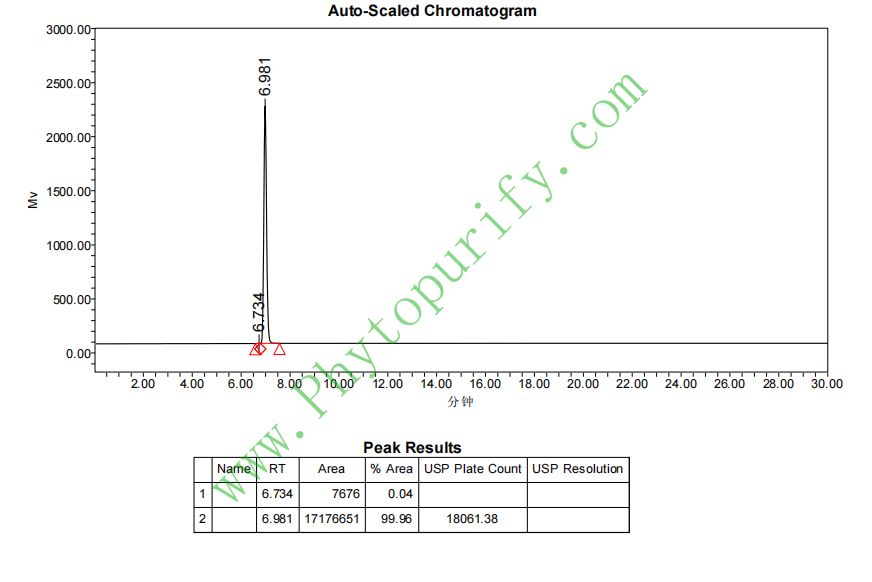
Purity: 95%~99%
Analysis Method: HPLC-DAD or/and HPLC-ELSD
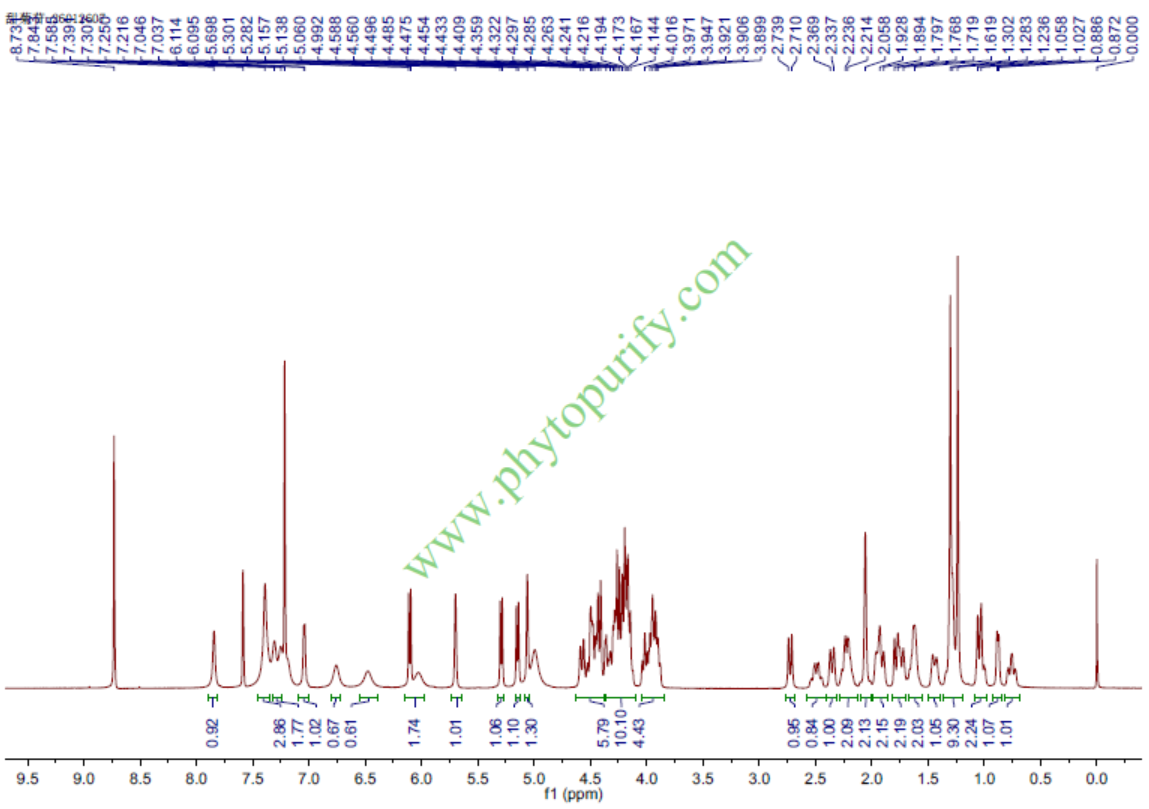
Identification Method: Mass, NMR
Packing: Brown vial or HDPE plastic bottle
Storage: Store in a well closed container, protected from air and light. Put into refrigerate or freeze for long term storage.
Whenever possible, you should prepare and use solutions on the same day. However, if you need to make up stock solutions in advance, we recommend that you store the solution as aliquots in tightly sealed vials at -20℃. Generally, these will be useable for up to two weeks.
The product could be supplied from milligrams to grams
Inquire for bulk scale.
Description:
Stevioside is a safe natural sweetener, has no allergic reactions, suited for both diabetics, and PKU patients, as well as for obese persons intending to lose weight by avoiding sugar supplements in the diet. Stevioside enjoys a dual positive effect by acting as an antihyperglycemic and a blood pressure-lowering substance, it may have therapeutic potential in the treatment of type 2 diabetes and the metabolic syndrome.Stevioside exerts anti-inflammatory and anti-apoptotic properties by inhibiting the release of cytokines and the activation of TLR2 and proteins of the NF-κB and MAPK signaling pathways, as well as caspase-3 and Bax.
References:
Int Immunopharmacol. 2014 Sep;22(1):192-9.
Stevioside inhibits inflammation and apoptosis by regulating TLR2 and TLR2-related proteins in S. aureus-infected mouse mammary epithelial cells.
METHODS AND RESULTS:
The object of this study was to investigate the anti-inflammatory and anti-apoptosis function of Stevioside and the possible molecular mechanisms for such activity in Staphylococcus aureus (S. aureus)-infected mouse mammary epithelial cells (MMECs). The cells were treated with varying doses of Stevioside before infection with S. aureus. The live/dead cells were detected by immunofluorescence microscopy. The pro-inflammatory cytokines were determined by ELISA. The mRNA of TLR2 and proteins related to NF-κB, MAPK and apoptosis were analyzed by q-PCR. The relative protein expression levels were determined by Western blot. The results indicated that Stevioside inhibited the mRNA and protein expression of TNF-α, IL-6 and IL-1β dose-dependently in S. aureus-stimulated MMECs. Stevioside suppressed the S. aureus-induced expression of TLR2 and proteins of the NF-κB and MAPK pathways as well as apoptosis. The mRNA levels of IκBα, p38, ERK, JNK, p65, caspase-3 and Bax were not influenced by the Stevioside treatment.
CONCLUSIONS:
Stevioside exerts anti-inflammatory and anti-apoptotic properties by inhibiting the release of cytokines and the activation of TLR2 and proteins of the NF-κB and MAPK signaling pathways, as well as caspase-3 and Bax.
Braz Oral Res. 2014 Jan-Feb;28(1).
Effects of lactose-containing stevioside sweeteners on dental biofilm acidogenicity.
The aim of this study was to evaluate the effect of a commercial lactose-containing Stevioside sweetener on biofilm acidogenicity in vivo.
METHODS AND RESULTS:
Nine volunteers refrained from brushing their teeth for 3 days in five phases. On the 4th day of each phase, the pH of the biofilm was measured by the "Strip method". Interproximal plaque pH was measured before and up to 60 minutes after a 10 mL mouthrinse for 1 minute with the test solutions: I - sweetener with 93% lactose and 7% Stevioside; II - sweetener with 6.8% saccharin, 13.6% cyclamate, and 0.82% Stevioside; III - 18% sucrose solution (positive control); IV - mineral water (negative control); and V- 93% lactose solution. The results revealed that the most pronounced pH fall was found with sucrose (positive control), followed by the 93% lactose solution, the sweetener with lactose + Stevioside, the sweetener with saccharin + cyclamate + Stevioside, and finally water (negative control). According to the area under the curve, the two sweeteners containing Stevioside were significantly different, and the sweetener with lactose + Stevioside was significantly different from water but not from sucrose. The critical pH for dentin demineralization (pH ≤ 6.5) was reached by all volunteers after rinsing with sucrose solution, lactose solution, and the Stevioside+ lactose sweetener.
CONCLUSIONS:
Analysis of the data suggests that lactose-containing Stevioside sweeteners may be cariogenic, especially to dentin.
Metabolism. 2003 Mar;52(3):372-8.
Antihyperglycemic and blood pressure-reducing effects of stevioside in the diabetic Goto-Kakizaki rat.
Stevioside, a glycoside present in the leaves of the plant, Stevia rebaudiana Bertoni (SrB), has acute insulinotropic effects in vitro. Its potential antihyperglycemic and blood pressure-lowering effects were examined in a long-term study in the type 2 diabetic Goto-Kakizaki (GK) rat.
METHODS AND RESULTS:
Rats were fed 0.025 g x kg(-1) x d(-1) of Stevioside (purity > 99.6%) for 6 weeks. An intra-arterial catheter was inserted into the rats after 5 weeks, and conscious rats were subjected to arterial glucose tolerance test (2.0 g x kg(-1)) during week 6. Stevioside had an antihyperglycemic effect (incremental area under the glucose response curve [IAUC]): 985 +/- 20 (Stevioside) versus 1,575 +/- 21 (control) mmol/L x 180 minutes, (P <.05), it enhanced the first-phase insulin response (IAUC: 343 +/- 33 [Stevioside] v 136 +/- 24 [control] microU/mL insulin x 30 minutes, P <.05) and concomitantly suppressed the glucagon levels (total AUC: 2,026 +/- 234 [Stevioside] v 3,535 +/- 282 [control] pg/mL x 180 minutes, P <.05). In addition, Stevioside caused a pronounced suppression of both the systolic (135 +/- 2 v 153 +/- 5 mm Hg; P <.001) and the diastolic blood pressure (74 +/- 1 v 83 +/- 1 mm Hg; P <.001). Bolus injections of Stevioside (0.025 g x kg(-1)) did not induce hypoglycemia. Stevioside augmented the insulin content in the beta-cell line, INS-1. Stevioside may increase the insulin secretion, in part, by induction of genes involved in glycolysis. It may also improve the nutrient-sensing mechanisms, increase cytosolic long-chain fatty acyl-coenzyme A (CoA), and downregulate phosphodiesterase 1 (PDE1) estimated by the microarray gene chip technology.
CONCLUSIONS:
In conclusion, Stevioside enjoys a dual positive effect by acting as an antihyperglycemic and a blood pressure-lowering substance; effects that may have therapeutic potential in the treatment of type 2 diabetes and the metabolic syndrome.
HPLC of Stevioside
HNMR of Stevioside
Storage conditions:Short-term storage at 2~8℃, long-term storage at -20 ~ -80℃
Stevioside is a plant endemic to South America, Stevioside(Stevia rebaudiana)Natural sweeteners obtained through separation have received widespread attention in the fields of food, medicine, and health products in recent years due to their high sweetness and low calorie characteristics. As an orally active compound, steviol glycosides not only have significant sweet taste effects, but also exhibit various potential pharmacological activities, including lowering blood pressure, blood sugar, antioxidant, anti-inflammatory, and anti-tumor effects, demonstrating their therapeutic potential in chronic metabolic diseases and related pathological states. This article will provide a systematic review of the chemical structure and physicochemical properties of steviol glycosides, their plant sources and extraction methods, pharmacological activities and mechanisms of action, drug evaluation and pharmacokinetic characteristics, and explore their clinical application prospects in depth.
The chemical name of steviol glycoside is (structural formula omitted), with a molecular formula of C ∝₈ H ₆₀ O ₁₈ and a molecular weight of 804.8800. Its structure belongs to diterpenoid saponins, with the core being the steviol skeleton, which connects multiple glucose residues to form a complex glycoside structure. This polysaccharide structure endows steviol glycosides with high hydrophilicity, exhibiting a low LogP value (-0.2684), water solubility of 1.5121, and a polar surface area (TPSA) of 294.98 Å ², indicating strong polarity and good water solubility.
The molecular structure of steviol glycosides contains multiple hydroxyl and ether bonds, forming a stable molecular conformation. Its low blood-brain barrier permeability and lack of hERG channel inhibition suggest its high safety. The Ames test result is 0.0, indicating that steviol glycosides have no significant genetic toxicity risk, which lays a good safety foundation for their use as food additives and drug development.
Stevioside mainly exists in the leaves of stevia, and its content varies depending on the variety, planting environment, and harvesting time. Stevia is a plant in the Asteraceae family, native to South American countries such as Paraguay and Brazil, and is now widely cultivated in multiple regions around the world. The extraction of steviol glycosides is usually carried out by soaking dried leaves with water or alcohol solvents, combined with modern techniques such as ultrasound assisted extraction, hot reflux, or microwave-assisted extraction to improve extraction efficiency.
The extract was filtered, concentrated, and purified by column chromatography to obtain high-purity steviol glycosides. In recent years, the application of supercritical CO ₂ extraction and membrane separation technology has further improved the extraction purity and process economy of steviol glycosides. In addition, research on chemical modifications and biosynthetic pathways based on the structure of steviol glycosides has provided new ideas and methods for their production.
The pharmacological activity research of steviol glycosides covers multiple aspects, mainly focusing on its metabolic regulation and antioxidant and anti-inflammatory effects.
Stevioside showed significant hypoglycemic effect in diabetes model. It promotes glucose uptake and metabolism, and improves insulin sensitivity by activating the AMPK (5 'AMP activated protein kinase) signaling pathway. Meanwhile, steviol glycosides can inhibit the activity of SGLT2 (sodium glucose cotransporter 2), reduce renal glucose reabsorption, and lower blood glucose levels. In addition, steviol glycosides also regulate the expression of glucokinase (GCK), promote liver glucose metabolism, and have a comprehensive effect on improving glucose metabolism disorders.
Stevioside has the effect of dilating blood vessels and lowering blood pressure, which involves enhancing the synthesis of nitric oxide (NO) and inhibiting the activity of angiotensin-converting enzyme (ACE), thereby improving vascular function. In addition, steviol glycosides also exert antihypertensive effects by regulating the sympathetic nervous system and sodium ion channels.
Stevioside can significantly eliminate free radicals, enhance antioxidant enzyme activity in the body, and alleviate oxidative stress damage. Its anti-inflammatory effect is manifested by inhibiting pro-inflammatory cytokines (such as TNF - α, IL-6) and nuclear factor kappa B (NF - κ B) signaling pathways, reducing tissue inflammatory responses, and protecting cells from inflammation mediated damage.
Preliminary studies have shown that steviol glycosides exert certain anti-tumor activity by inducing tumor cell apoptosis, inhibiting cell proliferation and migration. Its mechanism of action involves regulating cell cycle proteins, promoting mitochondrial pathway apoptosis, and inhibiting tumor related signaling pathways (such as PI3K/Akt).
The multi-target mechanism of action of steviol glycosides is the basis for its various pharmacological effects. Through molecular biology and pharmacology research, multiple key targets have been identified:
The synergistic regulation of these targets constitutes a multidimensional pharmacological network of steviol glycosides, promoting their therapeutic potential in metabolic diseases and inflammation related disorders.
The molecular weight of steviol glycoside is relatively large (804.88 Da) and its polarity is high (TPSA 294.98 Å ²), which limits its oral bioavailability and cell membrane permeability. Its LogP value is -0.2684, indicating strong hydrophilicity, but low blood-brain barrier permeability, which limits the efficacy of the central nervous system.
In terms of safety, steviol glycosides have no hERG channel inhibition and negative Ames test results, indicating low genetic toxicity risk and a good safety foundation. Moderate water solubility is beneficial for formulation design and in vivo distribution.
Pharmacokinetic studies have shown that after oral administration, steviol glycosides are partially hydrolyzed into steviol alcohol in the gastrointestinal tract, which can be absorbed and exert biological activity. Stevioside itself has poor absorption, but its metabolites have certain biological activity. The liver is the main metabolic organ, mainly transformed through the action of glucosidase. The main excretion pathways are bile and urine.
Overall, the pharmacological properties of steviol glycosides are limited by their molecular structure and pharmacokinetic properties. However, through strategies such as structural modification, nanocarrier encapsulation, and combination therapy, it is expected to improve their in vivo pharmacokinetic performance and enhance their clinical application potential.
Stevioside, as a natural sweetener, has been widely used in the food industry to replace traditional sugars and has the advantages of low calorie and low glycemic load. Its pharmacological activity shows a good prospect in the adjuvant treatment of diabetes, hypertension and metabolic syndrome.
Future clinical research should focus on the following directions:
With the development of molecular biology and medicinal chemistry, the structural modification and target optimization of steviol glycosides will further promote their potential as a new type of natural medicine.
Stevioside, as a natural diterpenoid glycoside derived from stevia, has shown broad application prospects due to its unique sweet taste characteristics and diverse pharmacological activities. Its multi-target mechanism of action in diabetes, hypertension and inflammation related diseases provides rich examples for natural product pharmacology research. Despite the challenges of high molecular weight and low absorption rate, the development of modern drug design and formulation technology provides strong support for the clinical translation of steviol glycosides. In the future, through in-depth mechanism research and clinical validation, steviol glycosides are expected to become a safe and effective natural medicine, contributing new strategies and choices for the prevention and treatment of metabolic diseases and related chronic diseases.
