Introduction/Overview
Natural products, as an important source of drug discovery, play an irreplaceable role in the long history of human struggle against diseases. Tenghuang genus(Garcinia)Plants, especially rattan(Garcinia hanburyi Hook. f.), The resin it secretes, gamboge, has a long history of application in traditional medicine, mainly used for diarrhea, deworming, and treating abscesses and sores. Modern pharmacological research has revealed that rattan gum and its various oxanthones compounds have significant anti-tumor activity, among which gambogic acid (GA), as a representative component, has entered multiple preclinical and clinical studies. However, the rapid metabolism, poor water solubility, and certain toxicity of ferulic acid in the body limit its further application.
In this context, the study of the structural modification and structure-activity relationship of ferulic acid has given rise to a series of derivatives. S-Isogambogic acid (S-IGA), with CAS number 942623-57-6, has attracted widespread attention from researchers in recent years as an important structural analogue of gambogic acid. Compared with ferulic acid, S-isoferulic acid has subtle but crucial differences in chemical structure, which endow it with a unique spectrum of biological activity and potential therapeutic advantages. Preliminary studies have shown that S-isoferulic acid not only retains the broad-spectrum anti-tumor activity of the ferulic acid family compounds, but also exhibits promising potential in targeting specificity, overcoming drug resistance, and reducing toxic side effects. Its mechanism of action involves regulating multiple key signaling pathways and targets, including directly acting on anti apoptotic proteins MCL1 and BCL2, inhibiting STAT3 signaling, downregulating matrix metalloproteinase MMP2, interfering with topoisomerase TOP1/TOP2A function, inhibiting hypoxia inducible factor HIF1A activity, regulating MAPK signaling pathway, and affecting the activity of estrogen receptor ESR1 and aromatase CYP19A1. This multi-target characteristic of action may result in superior efficacy and lower incidence of drug resistance compared to single target drugs when dealing with complex diseases such as cancer.
This article aims to provide a systematic professional review of S-isoquercetin, a natural product derivative. Starting from its chemical structure, physicochemical properties, plant sources, and extraction methods, it explores its pharmacological activity, mechanism of action, and molecular targets in depth. Combined with pharmacological evaluation and pharmacokinetic characteristics, it evaluates its clinical application prospects and challenges, in order to provide a comprehensive theoretical basis and scientific basis for the further development and translational research of this compound.
Chemical structure and physicochemical properties
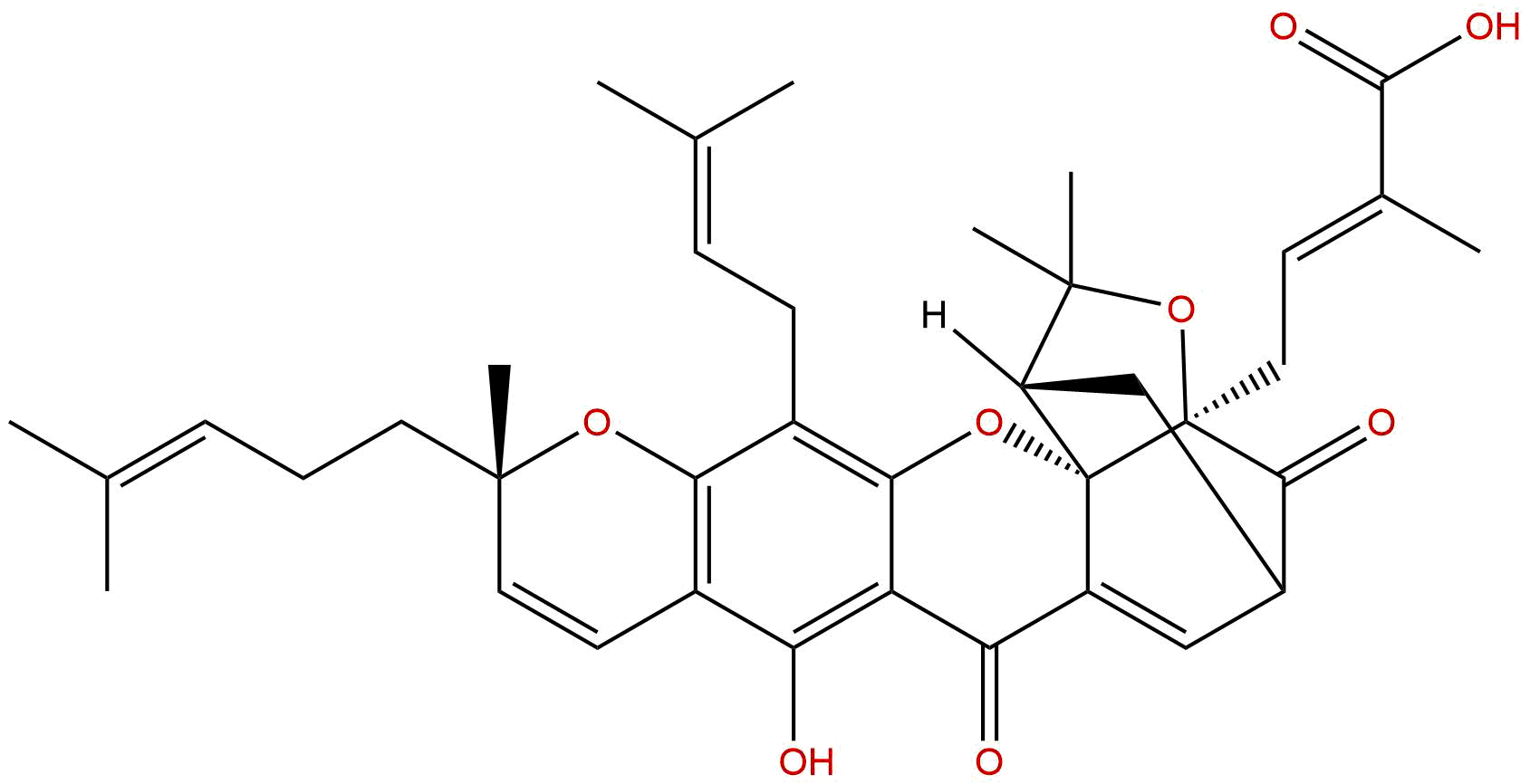
S-isoquercetin belongs to the cage like anthraquinone family, and its core skeleton is a highly oxidized 4-oxatricyclic [4.3.1.0] dec-2-one system. This cage like structure is a key pharmacophore for its interaction with various protein targets. Compared with GA, the main structural differences of S-isoquercetin are the different configurations of the C-30 chiral center (S configuration vs R configuration), as well as possible double bond positions or side chain modifications. This change in configuration directly affects the three-dimensional spatial arrangement of the molecule as a whole, thereby affecting its binding affinity and selectivity with biomolecules such as proteins.
The molecular formula of S-isoquercetin is C ∝₈ H ₄₄ O ₈, with a molecular weight of 628.7620 Da. Its physicochemical properties exhibit typical natural product characteristics, especially strong lipophilicity. The calculated LogP value is 6.5194, indicating that the compound has extremely high lipid solubility, which is beneficial for its penetration of cell membranes, but also poses a huge challenge to its water solubility. Its topological polar surface area (TPSA) is 119.3600 Å ², which is within the ideal range for oral medication (usually<140 Å ²), indicating its potential for oral absorption. However, a high LogP value may offset this advantage. The water solubility parameter is only 0.0148 mg/mL, which is a compound that is extremely difficult to dissolve in water, and this is the primary challenge facing its formulation development. In terms of pharmacokinetic prediction, the blood-brain barrier (BBB) penetration ability of S-isoquercetin has been evaluated as "low", which to some extent limits its application in brain tumors or central nervous system diseases, but may also reduce central neurotoxicity. The key toxicological predictive indicators show that the compound has no inhibitory activity on hERG potassium ion channels (hERG inhibition: No), which greatly reduces its risk of causing QT interval prolongation and fatal arrhythmias in the heart. In addition, the Ames test result was 0.0, indicating that it did not show significant mutagenicity in the standard bacterial recovery mutation test, and the preliminary safety was good. These physicochemical properties and early toxicity prediction data provide important reference for the further development of S-isoquercetin as a candidate drug, and also indicate the key issues that need to be addressed, namely how to significantly improve its water solubility through formulation technology (such as liposomes, nanoparticles, cyclodextrin inclusion complexes, etc.) or prodrug design to meet clinical drug delivery needs.
Plant sources and extraction methods
S-isoferulic acid is not a natural major component directly isolated from plants, but is usually obtained through chemical structural modification of ferulic acid or as a trace isomer isolated from ferulic acid gum. Its original plant source is consistent with that of ferulic acid, mainly derived from plants of the Tenghuang genus, especially Tenghuang(Garcinia hanburyi Hook. f.'s dry resin - rattan gum.
The collection of rattan gum is usually done by cutting the bark of plant trunks, collecting the yellow resin that seeps out, and drying it to obtain commercial rattan. This resin is rich in various cage like anthraquinone compounds, among which the content of GA is the highest, reaching 20% -40%, followed by Isogambogic acid (IGA, usually in the R configuration) and other similar compounds. S-isoquercetin (S-IGA), as an optical isomer of isoquercetin, has extremely low content in natural resins, and may even not exist. Its acquisition mainly depends on chemical synthesis or semi synthetic routes.
The traditional extraction and separation process usually starts with rattan gum as the raw material, and first uses organic solvents (such as ethanol, methanol, or ethyl acetate) for leaching or reflux extraction to obtain the total extract. Subsequently, modern chromatographic separation techniques such as silica gel column chromatography, ODS reverse phase column chromatography, and preparative high performance liquid chromatography (Prep HPLC) were used to systematically separate and purify the total extract, obtaining the main components such as ferulic acid and isoferulic acid (R configuration). In order to obtain S-isoquercetin, researchers usually adopt the following strategies: 1)chiral resolution Chiral separation of racemic isoquercetin obtained through chemical synthesis, using chiral chromatography columns or chiral reagents to separate the S configuration; 2)asymmetric synthesis Design and implement stereoselective total or semi synthetic routes to directly construct chiral centers with S configuration; 3)Chemical conversion Using the abundant natural source of ferulic acid as a precursor, it is converted into S-isoferulic acid through specific chemical reactions such as isomerization and functional group conversion. These methods require high requirements for reaction condition control, catalyst selection, and purification process, and are key to obtaining high-purity S-isoquercetin. With the promotion of green chemistry concepts, exploring more efficient, environmentally friendly, and low-cost extraction and synthesis methods in the future will be an important direction for promoting the research and application of S-isoquercetin.
Pharmacological activity research
The pharmacological activity research of S-isoquercetin mainly focuses on its anti-tumor effect, while there are also a few studies involving its anti-inflammatory, antibacterial and other potential activities. Existing evidence suggests that S-isoquercetin exhibits broad-spectrum proliferation inhibition and cytotoxic effects on various human tumor cell lines.
In the in vitro cell experiment, S-isogambogic acid showed a half inhibitory concentration of nanomolar to micromolar (IC ≮₀) on many solid tumor and blood tumor cell lines, such as liver cancer (such as HepG2, Huh7), lung cancer (such as A549, H460), breast cancer (such as MCF-7, MDA MB-231), colon cancer (such as HCT116, SW480), prostate cancer (such as PC3, DU145), gastric cancer (such as BGC-823), leukemia (such as HL-60, K562). It is worth noting that S-isoquercetin also exhibits effective killing activity against certain cell lines resistant to traditional chemotherapy drugs, such as multidrug-resistant leukemia cell line K562/ADM, suggesting its potential to overcome multidrug resistance (MDR) mediated by P-glycoprotein (P-gp) and other factors. Its mechanism of action involves inducing cell apoptosis, cycle arrest, inhibiting cell migration and invasion, as well as inhibiting angiogenesis and other aspects.
In in vivo animal models, S-isoquercetin also showed good anti-tumor effects. In nude mice xenograft tumor models (such as liver cancer, breast cancer, lung cancer models), intraperitoneal injection or intravenous administration of S-isogambogic acid can significantly inhibit tumor growth, and even lead to partial tumor shrinkage. Compared with the parent compound ferulic acid, S-isoferulic acid sometimes exhibits stronger antitumor effects or lower toxicity (such as hepatotoxicity and nephrotoxicity) at the same dose. For example, in liver cancer models, S-isoquercetin may exert stronger anti-tumor activity by more effectively inhibiting the STAT3 signaling pathway. In addition, studies on combination therapy have shown that S-isoquercetin can produce synergistic effects when used in combination with low-dose chemotherapy drugs (such as cisplatin, doxorubicin, paclitaxel) or targeted drugs (such as sorafenib), reducing the dosage of chemotherapy drugs and thus alleviating toxic side effects. These in vitro and in vivo research results collectively indicate that S-isoquercetin is a highly promising anti-tumor candidate compound.
Mechanism of action and molecular targets
The molecular mechanism of the anti-tumor activity of S-isoquercetin is extremely complex, involving direct or indirect regulation of multiple key signaling pathways and protein targets, which is closely related to the unique chemical properties of its cage like anthraquinone core skeleton. Its main mechanism of action can be summarized as follows:
-
Directly targeting the anti apoptotic protein BCL-2 family S-isoquercetin can directly bind to anti apoptotic proteins MCL1 and BCL2. Research has shown that it may competitively replace pro apoptotic proteins (such as BIM and BAD) by inserting into BH3 binding grooves on the surfaces of MCL1 and BCL2 proteins, thereby relieving the inhibition of anti apoptotic proteins on BAX/BAK, promoting mitochondrial outer membrane permeabilization (MOMP), releasing cytochrome c, activating Caspase cascade reaction, and ultimately inducing cell apoptosis. This mode of action that directly targets members of the BCL-2 family gives it a specific killing effect on tumor cells that rely on MCL1 or BCL2 for survival.
-
Inhibition of STAT3 signaling pathway STAT3 is a key transcription factor that is continuously activated in various tumors, promoting cell proliferation, survival, angiogenesis, and immune escape. S-isoquercetin can effectively inhibit the phosphorylation of STAT3 (Tyr705 site), thereby blocking its dimerization, nuclear translocation, and downstream target genes (such as...)MCL1, BCL2, CCND1, VEGFA, MMP2)The transcription. This inhibitory effect may be achieved through direct binding to the SH2 domain of STAT3 or through inhibition of upstream kinases such as JAK2 and SRC.
-
Interference with Topoisomerase Activity Topoisomerases (TOP1 and TOP2A) are essential enzymes for DNA replication and transcription, as well as targets for various chemotherapy drugs such as camptothecin and etoposide. S-isoquercetin has been shown to inhibit the activity of TOP1 and TOP2A. It may trigger S or G2/M phase cell cycle arrest and cell death by stabilizing TOP-DNA cleavable complexes, leading to the accumulation of DNA strand breaks. This mechanism of action is independent of BCL-2 family targeting, providing an additional anti-tumor pathway for S-isoquercetin.
-
Inhibition of hypoxia inducible factor HIF1A and angiogenesis HIF1A is a key regulatory factor for tumor adaptation to the hypoxic microenvironment, driving the expression of genes related to angiogenesis, glycolysis, and metastasis. S-isoquercetin can downregulate the level of HIF1A protein by promoting its degradation or inhibiting its transcriptional activity. This in turn leads to downstream target genes VEGFA Reduced expression of vascular endothelial growth factor A inhibits the formation of tumor neovascularization, cutting off the tumor's nutrition and oxygen supply.
-
Regulating the MAPK signaling pathway and matrix metalloproteinases The MAPK pathway (including ERK, JNK, p38) plays a central role in cell proliferation, differentiation, and migration. S-isoquercetin can regulate the activity of the MAPK pathway, such as inhibiting the phosphorylation of ERK1/2, while activating p38 and JNK signaling, thereby inducing cell apoptosis. In addition, it can significantly downregulate the expression and activity of matrix metalloproteinase MMP2. MMP2 is a key enzyme that degrades the extracellular matrix, and its downregulation directly inhibits the invasion and metastasis ability of tumor cells.
-
Affects the estrogen signaling pathway: For hormone dependent tumors such as breast cancer, S-isogambogic acid shows the regulatory effect on estrogen receptor ESR1 and aromatase CYP19A1. It may act as an antagonist of ESR1, blocking the binding of estrogen to receptors and downstream signaling. At the same time, by inhibiting the activity of CYP19A1 (aromatase), the conversion of androgens to estrogens is reduced, thereby lowering the level of estrogen in the body. This dual mechanism of action has potential advantages in the treatment of estrogen receptor positive breast cancer.
In summary, S-isoquercetin exerts its powerful anti-tumor activity through multi-target and multi pathway synergistic effects, from inducing apoptosis, inhibiting proliferation, blocking the cell cycle, anti metastasis, anti angiogenesis and other aspects. This "multi-target" feature is the core advantage that distinguishes it from many single target chemotherapy drugs, and it is also an important reason why it can overcome tumor drug resistance.
Evaluation of drug properties and pharmacokinetics
Although S-isoquercetin exhibits excellent pharmacological activity, its druglikelihood evaluation reveals significant challenges in its development as an oral drug. According to the aforementioned physical and chemical properties parameters, the main problem lies in extremely poor water solubility (0.0148 mg/mL) and extremely high lipid solubility (LogP 6.5194). According to the Lipinski Five Rules, LogP greater than 5 typically indicates poor absorption and metabolic characteristics. Therefore, the oral bioavailability of S-isoquercetin is expected to be very low, which severely limits its feasibility for oral administration. At present, the research on this compound mainly adopts injection administration route (such as intraperitoneal injection, intravenous injection).
Regarding the pharmacokinetic (PK) study of S-isoquercetin, currently available literature data is relatively limited, but it can be inferred from the PK characteristics of its parent compound, quercetin. Vinegar is widely distributed in the body, but it is rapidly metabolized with a short half-life, and is mainly metabolized through the liver and excreted through bile. S-isoquercetin may have similar metabolic characteristics, and its high lipid solubility makes it easy to bind highly to plasma proteins (such as albumin), resulting in low free drug concentrations and affecting the efficacy of the drug. Its metabolic pathways may involve oxidative reactions mediated by cytochrome P450 enzyme systems (such as CYP3A4) and phase II metabolism mediated by glucuronosyltransferase (UGT). In addition, high LogP values also suggest that it may be prone to accumulate in adipose tissue, posing potential long-term toxicity risks.
In terms of safety evaluation, in addition to the negative hERG and Ames test results mentioned earlier, preliminary animal toxicity experiments have shown that the acute toxicity of S-isoquercetin may be lower than that of quercetin. For example, its maximum tolerated dose (MTD) may be higher and cause less damage to the liver and kidneys. However, comprehensive toxicological evaluation data such as long-term toxicity, reproductive toxicity, and immunotoxicity are still lacking. In order to improve its medicinal properties, future research should focus on: 1) Formulation technology Develop novel drug delivery systems such as liposomes, albumin nanoparticles, polymer micelles, phospholipid complexes, etc. to significantly improve their water solubility and bioavailability, and achieve tumor targeted delivery. 2) Prodrug design Introducing water-soluble groups such as phosphate and amino acid ester groups into molecules to make prodrugs, which are then released in vivo through enzymatic hydrolysis or hydrolysis. 3) structural optimization On the basis of retaining the core pharmacophore, modify the side chains to reduce LogP value, improve water solubility, and maintain or enhance activity.
Clinical application prospects and prospects
S-isoquercetin, with its unique chemical structure, broad-spectrum and efficient anti-tumor activity, and multi-target mechanism of action, has shown broad clinical application prospects, especially in the field of tumor treatment.
First of all, its direct targeting of MCL1 and BCL2 makes it irreplaceable in the treatment of tumors resistant to traditional BCL2 inhibitors (such as Venetoclax) (especially tumors that rely on MCL1 to survive, such as some types of acute myeloid leukemia, multiple myeloma, triple negative breast cancer, etc.). Developing S-isoquercetin as a dual target inhibitor for MCL1/BCL2 is expected to fill the gap in existing drugs.
Secondly, its potential to overcome multidrug resistance (MDR) makes it an ideal candidate drug for treating recurrent or refractory tumors. When used in combination with chemotherapy drugs, S-isoquercetin may serve as a chemotherapy sensitizer, reversing tumor cell resistance to drugs such as paclitaxel and doxorubicin, and improving chemotherapy efficacy.
Thirdly, its regulatory effects on multiple targets related to tumor microenvironment, metastasis, and angiogenesis, such as STAT3, HIF1A, and MMP2, suggest that it can not only directly kill tumor cells, but also exert comprehensive anti-tumor effects by reshaping the tumor microenvironment, inhibiting metastasis and angiogenesis. This gives it an advantage in the treatment of advanced metastatic tumors.
Fourth, its dual inhibitory effect on estrogen signaling pathway provides a new therapeutic strategy for the treatment of estrogen receptor positive breast cancer, especially breast cancer resistant to tamoxifen or aromatase inhibitors.
However, the transition of S-isoquercetin from laboratory to clinical application still faces many challenges. The core obstacles are its extremely poor water solubility and potential pharmacokinetic defects. How to solve this problem through advanced formulation technology or prodrug strategies is the key to determining its successful development. In addition, more in-depth and systematic toxicology research is needed, especially on long-term toxicity, cardiac toxicity, liver toxicity, etc., to comprehensively evaluate its safety. At the same time, it is necessary to establish more reliable biomarkers related to clinical efficacy to guide precision medication and patient screening.
Looking ahead to the future, with the continuous development of nanomedicine, medicinal chemistry, and molecular pharmacology, S-isoquercetin is expected to achieve clinical translation through the following pathways: 1) development into injectable liposomes or nanoparticle formulations, first used for hematological tumors or solid tumors resistant to existing treatments. 2) Design second-generation derivatives with better oral bioavailability through structural modification. 3) Utilizing its multi-target properties, develop a combination therapy based on S-isoquercetin, particularly in combination with immune checkpoint inhibitors such as PD-1/PD-L1 antibodies, to explore its potential in tumor immunotherapy. In addition, its potential applications in other fields such as anti-inflammatory and antibacterial are also worth further exploration.
Conclusion
S-isoferulic acid, as a rising star in the ferulic acid family, exhibits multiple advantages beyond its parent compound with its unique S-shaped cage like anthraquinone structure. It not only inherits the broad-spectrum and efficient anti-tumor activity of ferulic acid, but also makes significant progress in targeting specificity (such as directly acting on MCL1/BCL2), overcoming drug resistance, and potential safety improvement. The complexity of its mechanism of action, which simultaneously regulates multiple key links such as apoptosis, signal transduction, transcription, DNA damage repair, angiogenesis, and metastasis, constitutes the molecular basis for its strong anti-tumor efficacy.
However, the development of S-isoquercetin is not a smooth road. Its extremely poor water solubility, high lipid solubility, and incomplete pharmacokinetic characteristics constitute the main bottlenecks for its drug development. This is both a challenge and a driving force for innovation. Future research must focus on addressing these core issues through interdisciplinary collaboration, integrating the latest advances in medicinal chemistry, pharmacy, pharmacology, and toxicology to design efficient delivery systems or superior derivatives.
In summary, S-isoquercetin is a natural product lead compound with great research value and development potential. Although there is still a long way to go before clinical application, its unique chemical space and biological characteristics have opened up new possibilities for precision tumor treatment, especially in the field of refractory and drug-resistant tumors. The continuous in-depth basic research and innovative formulation development will ultimately determine whether this natural product can be successfully transformed into a good medicine for the benefit of humanity.