| Catalog No | Package | Original Price | Price | Inventory | Quantity | Operating |
|---|---|---|---|---|---|---|
| BP2185-5mg | 5mg | $690.00 | Sign in |
|


Storage conditions:Short-term storage at 2~8℃, long-term storage at -20 ~ -80℃
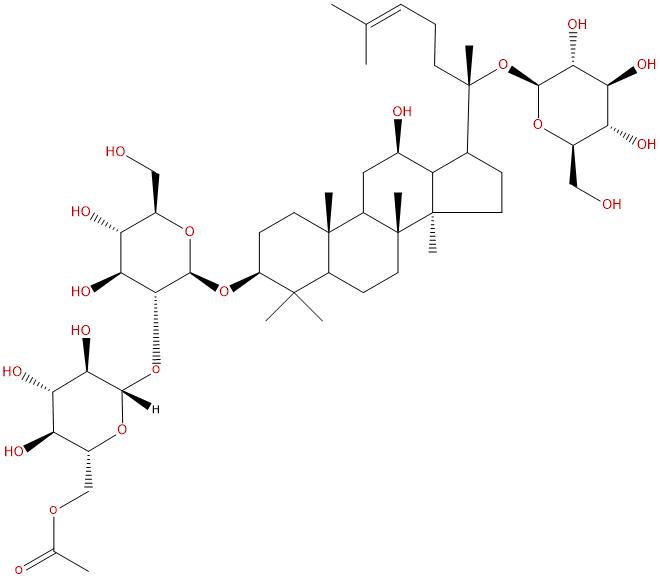
Pseudoginsenoside RC1 (CAS number: 102805-32-3), as an important member of ginsenosides, has attracted widespread attention in the field of natural product pharmacology in recent years. This compound is mainly derived from plants of the Panax genus and has a complex triterpenoid saponin structure, exhibiting various biological activities, especially outstanding in anti-tumor, anti-inflammatory, and immune regulation. Ovarian cancer is a malignant tumor with high incidence rate and poor prognosis in the female reproductive system. It is urgent to develop new effective and low toxicity drugs. Anthropomorphic ginsenoside RC1 has become a hot compound for studying the therapeutic potential of ovarian cancer due to its regulatory effects on various tumor related targets.
This article aims to systematically review the chemical structure and physicochemical properties, plant sources and extraction methods, pharmacological activity and mechanism of action of ginsenoside RC1, with a focus on analyzing its molecular targets and signaling pathway regulation in the treatment of ovarian cancer, and exploring its clinical application prospects in combination with pharmacological parameters. It is expected to provide a theoretical basis and research direction for the drug development of this natural product.
Anthropomorphic ginsenoside RC1 belongs to the triterpenoid saponin class of ginsenosides, with a molecular weight of 989.2030 and a complex molecular formula containing multiple glycosylated steroid skeletons. Its structural characteristics include the connection of polysaccharide chains and the specific conformation of steroid rings, which endow it with high polarity and biological activity. The LogP value is 2.5943, indicating that it has moderate lipid solubility, which is beneficial for cell membrane permeability, but its water solubility is low (0.1271), suggesting that its solubility in vivo is limited and may affect bioavailability.
The topological polar surface area (TPSA) is 304.2100, and higher TPSA values are usually associated with poorer cell membrane penetration ability, especially low blood-brain barrier (BBB) penetration, which is consistent with its pharmacological effects mainly limited to peripheral tissues. The hERG channel inhibition experiment result was negative, indicating that the risk of cardiac toxicity of ginsenoside RC1 is low and the safety is good. The Ames mutagenicity test result was 0.0, indicating that it has no significant genetic toxicity, further supporting the safety of its drug development.
Anthropomorphic ginsenoside RC1 is mainly present in Panax ginseng and its related species, especially in the rhizomes where its content is relatively high. Ginseng, as a traditional Chinese medicinal herb, has a long history and is widely used in enhancing immunity and anti fatigue. The extraction of anthropomorphic ginsenoside RC1 is usually carried out using a water alcohol mixed solvent (such as 70% ethanol) for reflux extraction, combined with ultrasound assisted extraction technology to improve extraction efficiency.
The extraction solution undergoes multi-stage separation and purification steps, including liquid-liquid extraction, silica gel column chromatography, reverse phase high performance liquid chromatography (RP-HPLC), etc., to ultimately obtain high-purity ginsenoside RC1. In recent years, the application of supercritical fluid extraction and membrane separation technology has provided new technical support for the industrial production of this compound. In addition, quality control of plant sources relies on analytical methods such as high-performance liquid chromatography-mass spectrometry (HPLC-MS/MS) to ensure that the content and purity of ginsenoside RC1 in the extract meet pharmaceutical standards.
The anthropomorphic ginsenoside RC1 exhibits various pharmacological activities, particularly outstanding in the field of anti-tumor. In vitro cell experiments have shown that the anthropomorphic ginsenoside RC1 has a significant inhibitory effect on the proliferation of various tumor cell lines, especially ovarian cancer cells. Its mechanism of action involves inducing cell apoptosis, blocking the cell cycle, inhibiting tumor cell migration and invasion, etc.
In the inflammatory model, anthropomorphic ginsenoside RC1 can regulate the expression of various inflammatory factors, alleviate inflammatory reactions, indicating its good anti-inflammatory activity. In addition, anthropomorphic ginsenoside RC1 has a regulatory effect on the immune system, which can enhance the body's immune function and improve anti-tumor immune surveillance ability.
Animal experiments further confirmed the anti-tumor effect of ginsenoside RC1. In mouse transplant tumor models, oral or injection of ginsenoside RC1 can significantly inhibit tumor growth, prolong animal survival, and show no significant toxic side effects. These results have laid a solid foundation for its clinical application.
The mechanism of action of anthropomorphic ginsenoside RC1 in the treatment of ovarian cancer is mainly achieved by regulating multiple key molecular targets. Related targets include BCL2, STAT3, ABCB1, NFE2L2, TOP1, TOP2A, ESR1, NOS2, PIK3CA, and MMP9, which play important roles in the proliferation, apoptosis, drug resistance, invasion, and metastasis of tumor cells.
In summary, the anthropomorphic ginsenoside RC1 exerts its pharmacological effects against ovarian cancer through multi-target and multi pathway synergistic effects, demonstrating strong therapeutic potential.
The pharmacological parameters of anthropomorphic ginsenoside RC1 show that it has certain advantages in drug development. Moderate LogP value (2.5943) is beneficial for cell membrane penetration, but high TPSA (304.2100) and low water solubility (0.1271) suggest that oral absorption may be limited and its bioavailability needs to be improved through pharmaceutical improvements. Low blood-brain barrier permeability reduces the risk of central nervous system side effects.
In terms of safety, hERG channel inhibition was negative and Ames test showed no mutagenicity, indicating that the risk of cardiac and genetic toxicity of ginsenoside RC1 is low and suitable for long-term use. Pharmacokinetic studies have shown that this compound is widely distributed in the body, mainly metabolized through the liver, and excreted mainly through bile.
To overcome the disadvantages of poor water solubility and low oral bioavailability, the development of new drug delivery systems such as nanocarriers, liposome encapsulation, and solid dispersions has become a research hotspot, which is expected to enhance their clinical application value.
The multi-target mechanism and good safety of anthropomorphic ginsenoside RC1 in the treatment of ovarian cancer provide a solid foundation for its clinical development. Future research should focus on the following aspects:
In addition, the potential application of anthropomorphic ginsenoside RC1 in other types of tumors and chronic inflammatory diseases is also worth exploring and expanding its drug indications.
As a natural triterpenoid saponin with significant anti-tumor activity, anthropomorphic ginsenoside RC1 has shown great potential as a new drug candidate for ovarian cancer treatment due to its multi-target regulatory mechanism and good safety. Although there are certain limitations in its water solubility and bioavailability, optimization through modern pharmaceutical methods is expected to overcome these obstacles. In the future, combining systematic preclinical research and clinical trials, the anthropomorphic ginsenoside RC1 is expected to become an important breakthrough in the field of natural product drug development, bringing new treatment hope to ovarian cancer patients.
