


Product name: Astragaloside II
Synonym name: Astrasieversianin VIII; Cyclosieversioside D; Cyclosiversioside D
Catalogue No.: BP0211
Cas No.: 84676-89-1
Formula: C43H70O15
Mol Weight: 827.018
Botanical Source: From Astragalus membranaceus, Astragalus sieversianus, Astragalus basineri, Astragalus spinosus and Astragalus trigonus
Physical Description: Powder
Type of Compound: Triterpenoids
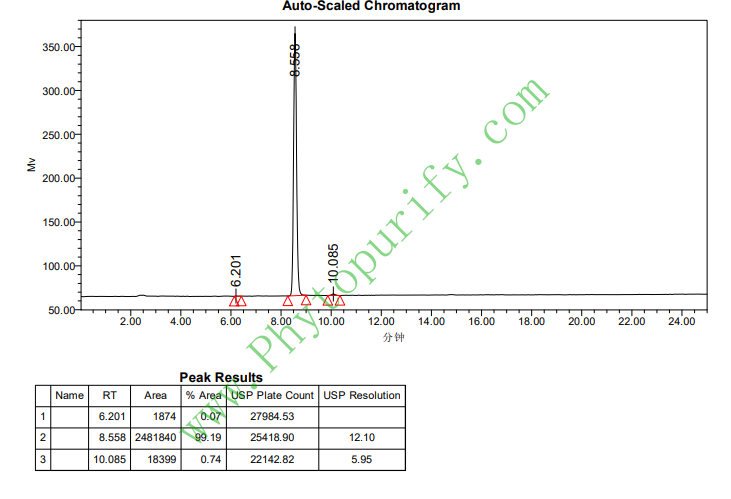
Purity: 95%~99%
Analysis Method: HPLC-DAD or/and HPLC-ELSD
Identification Method: Mass, NMR
Packing: Brown vial or HDPE plastic bottle
Storage: Store in a well closed container, protected from air and light. Put into refrigerate or freeze for long term storage.
Whenever possible, you should prepare and use solutions on the same day. However, if you need to make up stock solutions in advance, we recommend that you store the solution as aliquots in tightly sealed vials at -20℃. Generally, these will be useable for up to two weeks.
The product could be supplied from milligrams to grams, up to kilograms
Inquire for bulk scale.
Descriptions:
Astragaloside II can downregulate the expression of the P-gp and mdr1 gene, suppress phosphorylation of extracellular signal regulated kinase 1/2, p38 and c-Jun N-terminal kinase, suggests that Astragaloside II is a potent multidrug resistance (MDR) reversal agent and may be a potential adjunctive agent for hepatic cancer chemotherapy.[1]
Astragaloside II induces osteogenic activities of osteoblasts through the bone morphogenetic protein-2/MAPK and Smad1/5/8 pathways, it may become a novel candidate that is beneficial for stimulating the osteoblastic activity resulting in bone formation.[2]
Astragaloside II has immunomodulating activity, can trigger T cell activation through regulation of CD45 protein tyrosine phosphatase activity.[3]
Astragaloside II in conjunction with cisplatin can significant reduce cell viability, and arrest in S phase and increased apoptosis, suggests that astragaloside II can be served as autophagy inhibitor which restores chemosensitivity of anticancer agent cisplatin and enhances tumor cell death.[4]
References:
[1] Huang C, Xu D, Xia Q, et al. J Pharm Pharmacol, 2012, 64(12):1741-50.
[2] Kong X H, Niu Y B, Song X M, et al. Int J Mol Med 2012, 29(6):1090-8.
[3] Chun-ping, Li-xin, Li-fei, et al. Acta Pharm Sin, 2013, 34(4):522-30.
[4] Yang C, Wu C, Xu D, et al. Biomed Pharmacother, 2016, 81:166-75.
[5] Zhao J, Yan W, Dai G. Chromatographia, 2005, 62(9-10):543-6.
HPLC of Astragaloside II
Storage conditions:Short-term storage at 2~8℃, long-term storage at -20 ~ -80℃
234.2900
2.2976
2.2976
.0693
.6448
.3482
Low
68.1954
6.8935
No
No
No
No
No
No
0.0
Yes
No
No
No
Natural products, as an important source of drug discovery, play an irreplaceable role in the history of human disease prevention and treatment. Among them, traditional Chinese medicine Huangqi(Astragalus membranaceus (Fisch.) Bge., as an essential drug for replenishing qi and strengthening the surface, has been revealed to have a multi-target and multi pathway pharmacological substance basis through modern pharmacological research. Astragalus saponins are a class of important active ingredients in Astragalus, belonging to cyclo jackfruit alkyl triterpene saponins. Astragaloside II (AS-II) is one of the representative monomeric components, with a CAS number of 84676-89-1. In recent years, with the deepening of separation and purification technology and molecular biology research, the pharmacological activity of Astragaloside II has gradually been revealed. Research has shown that Astragaloside II not only has oral activity, but also exhibits significant potential in regulating immunity, anti-inflammatory, antioxidant, anti-tumor, and protecting organ function. Its function involves regulating autophagy, inhibiting key inflammatory signaling pathways such as nuclear factor kappa B (NF - κ B), and antagonizing oxidative stress responses. At present, Huangqi saponin II has been proven to have therapeutic effects in various disease models such as liver cancer, osteoporosis, immunosuppressive diseases, and ulcerative colitis. This article aims to systematically review the chemical structure, sources, pharmacological activity, mechanism of action, pharmacological properties, and clinical application prospects of Astragaloside II, in order to provide comprehensive scientific references for the in-depth research and development of this compound.
Astragaloside II is a cyclic jackfruit alkyl triterpene saponin. Its parent nucleus is a cyclo jackfruit alkane with a characteristic 9,19-cyclopropane structure, belonging to the tetracyclic triterpenoids. The molecular formula is C ₄₁ H ₆₈ O ₁₄, and the molecular weight is 827.0180. Its structural feature is that sugar chains are connected at positions C-3 and C-6, respectively. Specifically, the C-3 position is usually connected to a disaccharide chain (such as xylose and glucose), while the C-6 position is connected to a single glucose unit, which is a key structural feature that distinguishes it from other astragalus saponins (such as astragalus saponins I, III, IV).
Based on its chemical structure, Astragaloside II exhibits specific physicochemical properties. The calculated lipid water partition coefficient (LogP) is 2.2976, indicating that the compound has a certain degree of lipophilicity but is not highly hydrophobic, which is balanced by the hydrophilic portion brought by its glycosidic structure. Its topological polar surface area (TPSA) is as high as 234.2900 Å ², mainly attributed to multiple hydroxyl groups and oxygen atoms on the sugar ring in the molecule, indicating its high molecular polarity, which may affect its transmembrane permeability. The water solubility parameter is 0.0693, belonging to the category of slightly soluble to poorly soluble, which is a key factor to consider in actual formulation development. These basic physicochemical parameters provide preliminary basis for its subsequent pharmacokinetic behavior and drug efficacy evaluation.
Astragaloside II is mainly derived from the leguminous plant Astragalus membranaceus(Astragalus membranaceus var. mongholicus (Bge.) Hsiao or Astragalus membranaceus(Astragalus membranaceus Dry roots of (Fisch.) Bge. As a major traditional Chinese medicine, the content of saponins in Huangqi is closely related to its place of origin, harvest season, growth period, and medicinal parts. Usually, the accumulation of saponins in the roots of Astragalus membranaceus with longer growth years is more abundant.
Extracting and isolating Astragaloside II from Astragalus membranaceus medicinal materials is a complex multi-step process. The conventional extraction methods include:
1. Solvent extraction method The most commonly used methods are ethanol or methanol reflux extraction with different concentrations or ultrasound assisted extraction. Ethanol is widely used due to its high safety, low cost, and good efficiency in extracting saponins.
2. Purification and Separation After vacuum concentration, the crude extract was subjected to gradient extraction using solvents such as petroleum ether, ethyl acetate, and n-butanol. Astragaloside II was mainly enriched in the n-butanol fraction. Further purification relies on column chromatography techniques, such as macroporous adsorption resin columns (such as D101, AB-8), silica gel column chromatography, reverse phase silica gel column chromatography (such as ODS), and high-performance liquid chromatography preparative chromatography. In recent years, modern separation techniques such as high-speed countercurrent chromatography have also been applied to the efficient preparation of astragaloside monomers.
3. appraisal The isolated monomer compounds need to be structurally confirmed by spectroscopic methods such as nuclear magnetic resonance hydrogen spectroscopy, carbon spectroscopy, and mass spectrometry, and compared with standard samples or literature data.
Optimizing the extraction process and improving the yield and purity of Astragaloside II are the basis for ensuring its pharmacological research and subsequent development.
Numerous preclinical studies have confirmed that Astragaloside II has a wide and diverse pharmacological activity, mainly manifested in the following aspects:
1. Immune regulatory effect
One of the core pharmacological effects of Astragaloside II is its bidirectional regulation of immune function. In an immunosuppressive state, it can promote lymphocyte proliferation, enhance macrophage phagocytic ability, and increase serum immunoglobulin levels, thereby restoring the body's immune response. For example, in a cyclophosphamide induced immunosuppression mouse model, Astragaloside II can significantly increase spleen index, thymus index, and peripheral blood leukocyte count. On the other hand, in models of excessive immune activation or autoimmune diseases, it exhibits immunosuppressive effects, such as inhibiting abnormal activation and proliferation of T lymphocytes, regulating the balance of Th1/Th2 cytokines, which is closely related to its anti-inflammatory effects.
2. Anti inflammatory effect
Anti inflammation is one of the most prominent activities of Astragaloside II. In lipopolysaccharide induced macrophage inflammation models and various animal inflammatory disease models (such as ulcerative colitis, arthritis, acute lung injury), Astragaloside II can significantly reduce the production and release of key pro-inflammatory cytokines, such as interleukin-6 (IL-6), interleukin-1 β (IL-1 β), and tumor necrosis factor alpha (TNF - α). This effect is an important basis for its treatment of ulcerative colitis and alleviation of inflammation related tissue damage.
3. Antitumor effect
Research has shown that Astragaloside II has inhibitory effects on proliferation, induction of apoptosis, and inhibition of metastasis in various tumor cells, especially liver cancer cells. Its anti-tumor mechanism is complex, involving inducing cell cycle arrest, activating apoptotic signaling pathways, inhibiting epithelial mesenchymal transition, and so on. It is worth noting that Astragaloside II can also inhibit autophagy in tumor cells. Autophagy plays a dual role in tumors, and the autophagy inhibitory effect exhibited by Astragaloside II in specific tumor models may be related to its enhanced sensitivity to chemotherapy drugs or direct inhibition of tumor cell survival.
4. Antioxidant and organ protective effects
Huangqi saponin II can significantly enhance the activity of endogenous antioxidant enzymes such as superoxide dismutase (SOD) and glutathione peroxidase, and reduce the level of malondialdehyde, thereby effectively clearing free radicals and alleviating oxidative stress damage. Based on this, it has a protective effect on heart, kidney, liver and other organs in myocardial ischemia/reperfusion injury, diabetes nephropathy, drug-induced liver injury and other models.
5. Effects on metabolic diseases
In addition to the research on hyperlipidemia related targets mentioned in the information provided, astragaloside II also shows potential in the prevention and treatment of diabetes and its complications. It can improve insulin resistance, reduce blood sugar, and improve vascular endothelial dysfunction and kidney disease caused by diabetes. Its potential activity in regulating blood lipids is related to its potential action on targets closely related to lipid metabolism, such as PTPN1, SIRT1, NR1H4, etc.
6. Prevention and treatment of osteoporosis
In a rat model of osteoporosis induced by ovariectomy, astragaloside II can increase bone density and improve bone microstructure by inhibiting osteoclast differentiation and bone resorption activity, while promoting osteoblast proliferation and differentiation, indicating its potential application in the prevention and treatment of postmenopausal osteoporosis.
The multiple pharmacological activities of Astragaloside II stem from its precise regulation of multiple intracellular signaling pathways. Existing research has revealed some of its key mechanisms of action and molecular targets:
1. Inhibit the NF - κ B inflammatory pathway
This is the core mechanism of its anti-inflammatory effect. NF - κ B is a pivotal transcription factor that regulates the expression of inflammatory factors. Huangqi saponin II can inhibit the activation of I κ B kinase, reduce the phosphorylation (p-I κ B) and degradation of I κ B protein, thereby preventing the nuclear translocation and phosphorylation activation (p-p65) of NF - κ B p65 subunit. Ultimately, it leads to a decrease in transcription of downstream genes such as IL-6, IL-1 β, TNF - α, etc.
2. Regulating autophagy process
Autophagy is the process by which cells degrade their own components through lysosomes. Huangqi saponin II has been confirmed as an autophagy inhibitor. It can reduce the level of autophagy related protein LC3-II, increase the accumulation of p62, and affect autophagy flow. In diseases such as liver cancer, this autophagy inhibition may synergistically promote apoptosis and exert anti-tumor effects.
3. Regulating HIF-1 α signaling
Hypoxia inducible factor-1 alpha is highly expressed in inflammation and tumors. Huangqi saponin II can reduce the stability or expression of HIF-1 α protein, thereby inhibiting the expression of downstream genes related to angiogenesis, glycolysis, and inflammation, which is associated with its anti-tumor and anti-inflammatory effects.
4. Activate the Nrf2 antioxidant pathway
Nuclear factor E2 related factor 2 is the main regulator of cellular antioxidant response. Research has shown that Astragaloside II can promote Nrf2 nuclear translocation, upregulate the expression of II phase detoxifying enzymes and antioxidant enzymes such as heme oxygenase-1, which is an important molecular basis for enhancing SOD activity and resisting oxidative stress.
5. Intervene in multiple metabolic and cellular homeostasis related targets
For metabolic diseases such as hyperlipidemia, the action of Astragaloside II may involve a series of targets:
* PTPN1 (protein tyrosine phosphatase 1B)Inhibition of the activity of negative regulatory factors in the insulin signaling pathway can improve insulin sensitivity.
* SIRT1 (Silent Information Regulatory Factor 1)A NAD+- dependent deacetylase that participates in the regulation of energy metabolism, inflammation, and aging, and its activation is beneficial for metabolic health.
* NR1H4 (farnesol X receptor)Key receptors for bile acid metabolism, regulating lipid and glucose homeostasis.
* STAT3 Signal transduction and transcription activator 3, involved in inflammation, tumorigenesis, and metabolic regulation.
* HSD11B1 (11 β - hydroxysteroid dehydrogenase type 1)Catalytic conversion of inactive corticosterone to active cortisol, associated with obesity and insulin resistance.
In addition, it has an impact on ABCB1 (P-glycoprotein)The potential effects may affect drug efflux and be associated with multidrug resistance; Correct TOP1 (Topoisomerase I)Inhibition may be involved in its anti-tumor mechanism. These multi-target characteristics together form the basis of network pharmacology of Astragaloside II.
Despite the significant pharmacological activity of Astragaloside II, its pharmacological development still faces challenges, mainly related to its physicochemical properties and pharmacokinetic behavior.
Analysis of drug properties parameters:
According to the provided parameters, the molecular weight of Astragaloside II is relatively high (>500) and the TPSA is high (>140), which are usually not conducive to its passive transmembrane diffusion and oral absorption, resulting in a possible low bioavailability. Its poor water solubility is the primary obstacle to formulation development. However, its LogP value is moderate, and it has no hERG inhibitory activity or genetic toxicity (Ames test negative), showing preliminary good characteristics in terms of cardiac safety and genetic toxicity. The low permeability of the blood-brain barrier suggests that it may not easily enter the central nervous system, which can reduce the risk of central side effects in the treatment of peripheral diseases, but also limits its use in brain diseases.
Pharmacokinetic study:
Existing animal pharmacokinetic studies have shown that the oral absorption of Astragaloside II is slow and incomplete, with low absolute bioavailability. This is related to its low solubility in the gastrointestinal tract, potential metabolism by gut microbiota, and first pass effects. It is widely distributed in the body, but mainly concentrated in organs with abundant blood flow, such as the liver and kidneys. The main metabolic pathways are hydrolysis (deglycosylation) and oxidation, and the prototype compounds and their metabolites are mainly excreted through bile and kidneys. There have been studies attempting to use novel drug delivery systems such as nanoliposomes, solid dispersions, and phospholipid complexes to improve their solubility and oral bioavailability, and some progress has been made.
Huangqi saponin II, as an active monomer discovered from traditional Chinese medicine, has broad clinical application prospects, but the path of transformation still needs to be further explored.
Potential clinical application directions:
1. Inflammatory bowel disease Based on its strong anti-inflammatory and intestinal mucosal protective effects, Astragaloside II is expected to be developed as a novel drug for the treatment of ulcerative colitis, especially as an alternative to maintenance therapy during remission or for patients who do not respond to traditional drugs.
2. Diseases related to metabolic syndrome As an insulin sensitizer and a potential lipid regulating drug, it can be used as an adjunctive treatment for type 2 diabetes, non-alcoholic fatty liver and hyperlipidemia, giving play to the advantage of multi-target regulation.
3. neoadjuvant therapy Combined with chemotherapy drugs, it may improve the comprehensive treatment effect of tumors, especially in the prevention and treatment of liver cancer, by enhancing sensitivity, reducing toxicity (such as reducing immune suppression and inflammatory damage), and inhibiting metastasis.
4. osteoporosis Develop plant-based drug formulations with dual effects of promoting bone formation and inhibiting bone resorption for postmenopausal and elderly osteoporosis.
5. Protection against organ ischemia/reperfusion injury In the fields of cardiovascular and cerebrovascular surgery, organ transplantation, etc., it is used as a preventive medication to reduce tissue damage caused by oxidative stress and inflammation.
Challenges and Future Prospects:
1. Improved bioavailability This is the biggest bottleneck for its clinical development. Future research needs to focus on the in-depth development and optimization of novel drug delivery systems, such as nanotechnology and prodrug strategies.
2. Deep exploration of mechanisms At present, its mechanism of action network has not been fully elucidated, especially the synergistic relationship between multiple targets and the dominant mechanism in different disease contexts. Systematic research is needed using proteomics, metabolomics, and gene editing technologies.
3. Preclinical and clinical research It is necessary to conduct GLP toxicology evaluations that comply with international standards and systematic preclinical pharmacological evaluations, and ultimately advance them to human clinical trials to confirm their safety and efficacy.
4. Structural modification and optimization Reasonable chemical structure modification using it as the parent nucleus to improve its solubility, metabolic stability, and targeting while retaining its activity is an important direction in the field of medicinal chemistry.
5. The role in traditional Chinese medicine formulas In depth study of the contribution of Astragaloside II in Astragalus membranaceus compound (such as Bu Zhong Yi Qi Tang) and its interaction with other components, elucidating the modern scientific connotation of holistic treatment with traditional Chinese medicine.
Astragaloside II, as an important cyclo jackfruit alkyl triterpene saponin in Astragalus, has become a hot spot in natural product pharmacology research due to its multiple pharmacological activities such as immune regulation, anti-inflammatory, antioxidant, anti-tumor and metabolic regulation. Its mechanism of action involves the regulation of multiple signaling pathways such as NF - κ B, HIF-1 α, Nrf2, autophagy, and may interact with multiple molecular targets such as PTPN1, SIRT1, STAT3, reflecting the multi-target and multi pathway characteristics of natural products. Despite facing challenges in drug formulation, especially in terms of oral bioavailability, these challenges are expected to be gradually overcome with the continuous development of modern pharmaceutical, medicinal chemistry, and molecular biology technologies. In the future, through the continuous deepening of basic research and effective integration with translational medicine, Huangqi Saponin II is expected to develop from a promising lead compound into an innovative drug for treating inflammation, metabolic diseases, tumors, and related complications. It not only provides new treatment options for patients with related diseases, but also provides modern scientific basis for interpreting the traditional efficacy of traditional Chinese medicine Huangqi, promoting the modernization and internationalization of traditional Chinese medicine.
