| Catalog No | Package | Original Price | Price | Inventory | Quantity | Operating |
|---|---|---|---|---|---|---|
| BP4197-5mg | 5mg | $260.00 | Sign in |
|


Storage conditions:Short-term storage at 2~8℃, long-term storage at -20 ~ -80℃
90.9000
2.4633
2.4632
.0175
3.4688
6.3928
High
87.1191
4.5875
No
No
No
No
Yes
No
0.0
Yes
No
No
Yes
19 Hydroxybufalin is a natural product of the bufadienolactone class with significant biological activity, initially isolated from the skin secretions of toads. As an important member of the bufalin family, 19 hydroxybufalin has attracted widespread attention in the field of tumor biology in recent years due to its unique chemical structure and multi-target regulatory ability. Numerous studies have shown that this compound not only effectively inhibits the proliferation of tumor cells, but also significantly reduces the migration and invasion ability of tumor cells by blocking the epithelial mesenchymal transition (EMT) process, especially exhibiting good anti-tumor activity in the prostate cancer PC3 cell line.
This article aims to systematically review the chemical structure, physicochemical properties, plant sources, and extraction methods of 19 hydroxybufalin, explore its pharmacological activity and mechanism of action, evaluate its pharmacological properties and pharmacokinetic characteristics, and prospect its potential in clinical applications. By integrating the latest research progress, provide theoretical basis and practical guidance for the further development and clinical translation of this natural product.
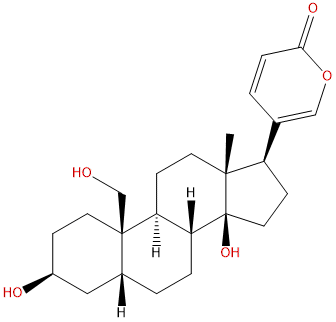
The molecular formula of 19 hydroxybufalin is C24H-34O5, with a molecular weight of 402.5310, belonging to the class of bufadienolactones. Its chemical structure is based on a typical steroid skeleton, containing multiple hydroxyl groups and lactone rings. The introduction of the 19th hydroxyl group in the structure endows it with unique chemical and biological activity characteristics. The LogP value of this compound is 2.4633, indicating that it has moderate lipid solubility, which is beneficial for cell membrane penetration and in vivo distribution. The topological polar surface area (TPSA) is 90.9 Å ², indicating moderate solubility in polar environments.
Low water solubility (0.0175 mg/mL) may limit its solubility and bioavailability in aqueous media, but moderate lipid solubility helps it cross biofilms. The high permeability of the blood-brain barrier suggests its potential impact on central nervous system diseases. The hERG (cardiac potassium channel) inhibition experiment result was negative, indicating that the compound has a low risk of cardiac toxicity. The Ames mutagenicity test showed 0.0, indicating no significant genetic toxicity and meeting safety requirements.
Overall, the physicochemical properties of 19 hydroxybufalin are suitable for its development as a potential drug molecule, but its water solubility and stability still need to be optimized to enhance its clinical application value.
19 hydroxybufalin mainly exists in the skin secretions and venom glands of toads (Bufo genus), especially from Chinese toads (Bufo gargarizans) and Brazilian toads (Bufo marinus). As defensive secretions of toads, bufalin compounds have complex biosynthetic pathways and diverse structural types.
Traditional extraction methods usually use organic solvent extraction combined with column chromatography separation technology. The specific steps include:
In recent years, with the advancement of separation technology, supercritical fluid extraction (SFE) and high-efficiency membrane separation technology have also been introduced, improving extraction efficiency and purity. In addition, the exploration of biosynthetic and semi synthetic methods has provided the possibility for large-scale preparation.
The pharmacological activity research of 19 hydroxybufalin mainly focuses on the field of anti-tumor. It exhibits significant cytotoxicity and inhibitory effects on various tumor cell lines, especially in prostate cancer PC3 cells, effectively inhibiting cell proliferation, migration, and invasion.
In addition to its anti-tumor effects, 19 hydroxybufalin also exhibits certain anti-inflammatory and immune regulatory activities, which may be mediated by regulating the STAT3 signaling pathway to improve the immune microenvironment. However, related research is still in its preliminary stage.
The anti-tumor mechanism of 19 hydroxybufalin involves multiple signaling pathways and key molecular targets, reflecting its pharmacological characteristics of multi-target and multi mechanism.
19 hydroxybufotoxin synergizes multiple targets to regulate the proliferation, apoptosis, migration, and invasion of tumor cells, blocks the EMT process, and inhibits angiogenesis and immune escape in the tumor microenvironment. Its mechanism of action involves intracellular signal transduction, gene expression regulation, and protease activity regulation, reflecting the complex pharmacological network of natural products.
The physicochemical properties of 19 hydroxybufalin show that it has moderate lipid solubility and high blood-brain barrier permeability, making it suitable for oral or injection administration. It has no significant hERG inhibition or genotoxicity, and is relatively safe. The TPSA value suggests its potential in cell membrane penetration and targeted tissue distribution.
However, low water solubility may limit its bioavailability, and drug formulation techniques such as nanocarriers and liposome encapsulation are needed to improve solubility and stability. In addition, the batch differences and complex structures of natural products pose challenges to quality control, requiring the establishment of strict standardized production processes.
At present, there is limited research on the pharmacokinetics of 19 hydroxybufalin. Preliminary in vivo experiments have shown that the compound has a long half-life in the blood and can effectively distribute to tumor tissues and the central nervous system. Its high blood-brain barrier permeability provides the possibility for treating brain tumors.
The metabolic pathway may involve the liver cytochrome P450 enzyme system, particularly CYP19A1 related metabolism, suggesting potential interactions with hormone metabolism. Excretion is mainly through the renal and biliary pathways, and further research is needed on the activity and toxicity of its metabolites.
19 hydroxybufalin, as a multi-target anti-tumor natural product, has the potential to become a new type of anti-cancer drug. Its unique advantages in inhibiting tumor cell migration, invasion and EMT process are particularly suitable for tumor types with strong invasion and high metastasis risk, such as prostate cancer, breast cancer, etc.
The key to future clinical applications lies in:
In addition, with the development of synthetic biology and medicinal chemistry, optimizing the pharmacological and pharmacokinetic properties of 19 hydroxybufalin through structural modification and semi synthetic methods will greatly promote its clinical translation.
19 hydroxybufalin, as an important member of the bufalin class of natural products, has shown broad prospects for drug development due to its unique chemical structure and multi-target anti-tumor mechanism. The current research has preliminarily revealed its key role in tumor suppression, migration inhibition, and apoptosis induction, but further exploration of its pharmacokinetic characteristics and clinical safety is still needed.
In the future, through interdisciplinary collaboration and modern drug development technology, 19 hydroxybufalin is expected to become an innovative drug in the field of anti-tumor therapy, bringing new treatment options and hope to cancer patients.
