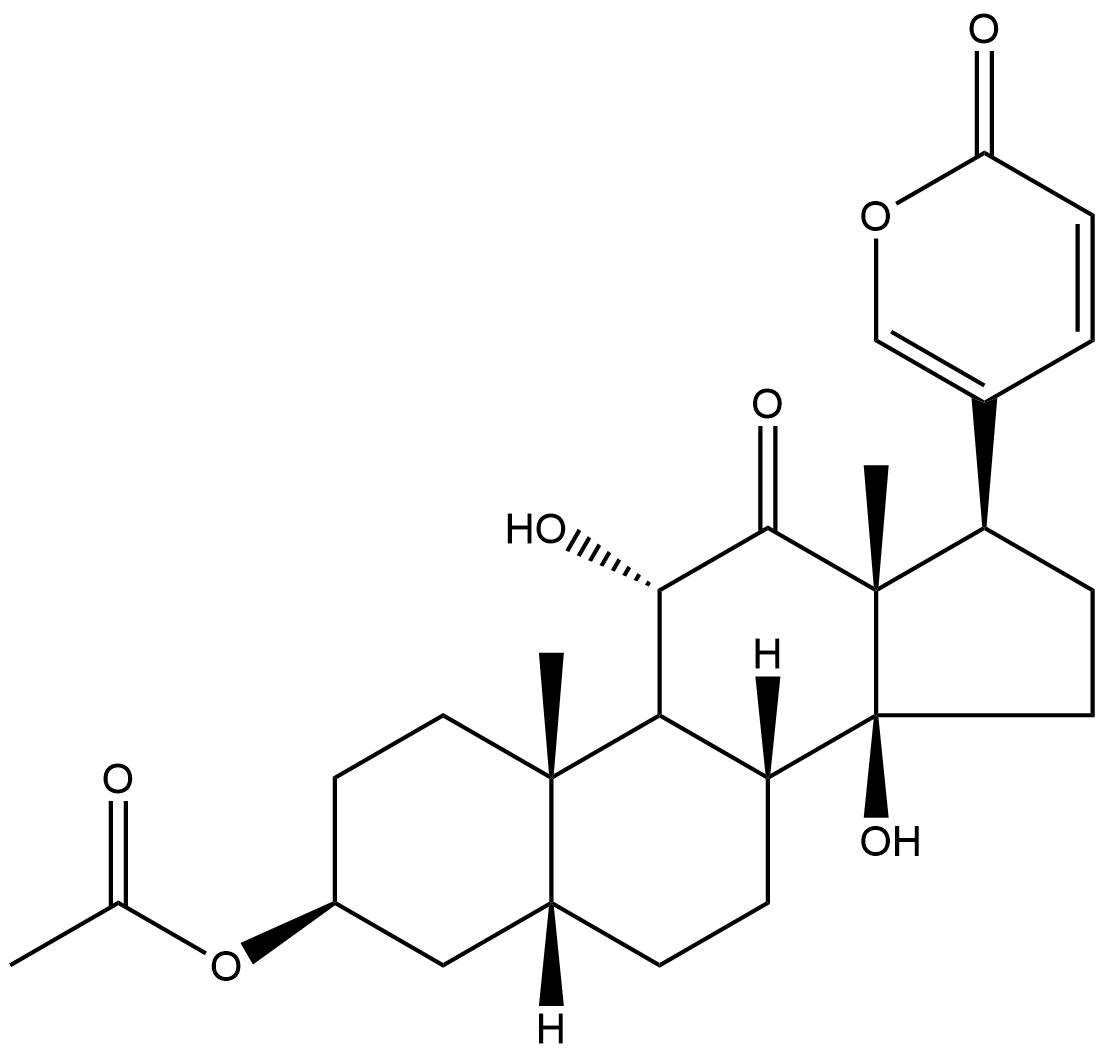


Product name: Acetylarenobufagin
Synonym name: 3-O-Acetylarenobufagin
Catalogue No.: BP2060
Cas No.: 184673-79-8
Formula: C26H34O7
Mol Weight: 458.551
Botanical Source: Bufonis Venenum
Type of Compound: Steroids
Purity: 95%~99%
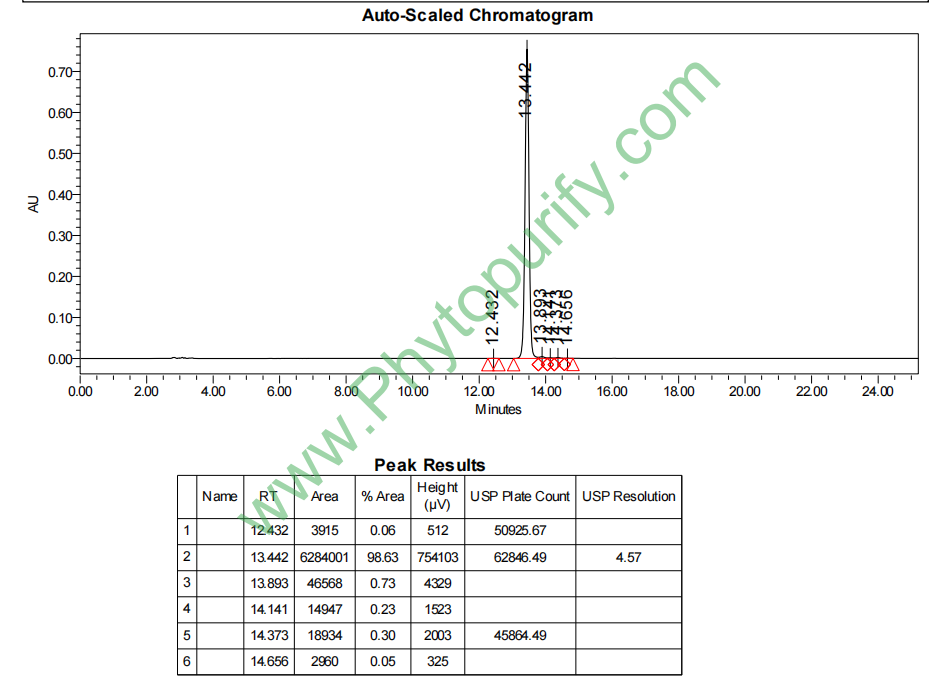
Analysis Method: HPLC-DAD or/and HPLC-ELSD
Identification Method: Mass, NMR
Packing: Brown vial or HDPE plastic bottle
Storage: Store in a well closed container, protected from air and light. Put into refrigerate or freeze for long term storage.
Whenever possible, you should prepare and use solutions on the same day. However, if you need to make up stock solutions in advance, we recommend that you store the solution as aliquots in tightly sealed vials at -20℃. Generally, these will be useable for up to two weeks.
The product could be supplied from milligrams to grams
Inquire for bulk scale.
Chengdu Biopurify Phytochemicals Ltd. is a leading company in the research, development, manufacture and marketing of High Quality Phytochemicals and Extracts(especially Active Ingredients from Traditional Chinese Medicine,TCM), Natural Active Pharmaceutical Ingredients worldwide.
The main services:
A. Supply active ingredients and reference standards of TCM, from mgs to kgs scale
B. Custom extraction and purification, target Herb Active Ingredients
C. Custom synthesis and semi-synthesis for Natural Active Ingredients
D. CR(contract research), CM(contract manufacture) and PD(process development) services from lab scale, pilot scale to commercial scale(GMP is also available)
E. TCM compounds library for drug screen,more than 3000 compounds available, many of them are rare and unique.
HPLC of Acetylarenobufagin
Storage conditions:Short-term storage at 2~8℃, long-term storage at -20 ~ -80℃
114.0400
2.2851
2.2850
.0216
2.6969
7.0981
High
81.7809
4.8788
No
No
No
No
Yes
No
0.0
No
No
No
Yes
Acetyllarenobufagin is a steroidal cardiac steroid derived from toad secretions, which has received widespread attention in recent years for its potential role in regulating the activity of hypoxia inducible factor-1 (HIF-1). HIF-1, as a key regulatory factor of cells in response to low oxygen environment, plays an important role in the pathological process of various cardiovascular diseases, especially heart failure. Acetyl sand toad venom has shown multiple pharmacological effects such as regulating myocardial cell metabolism, antioxidant and anti-inflammatory effects by regulating the HIF-1 signaling pathway, making it a research hotspot in the field of natural product pharmacology.
This article aims to systematically review the chemical structure and physicochemical properties, sources and extraction methods, pharmacological activity and mechanism of action, pharmacological evaluation, pharmacokinetic characteristics, as well as its clinical application potential and future development direction in related diseases such as heart failure of Acetyl Sand Toad Venom. It is expected to provide theoretical basis and research guidance for the drug development of this natural product.
The molecular formula of Acetyl Sand Toad Venom is C28H38O6, with a molecular weight of 458.5510, and it belongs to the typical class of cardiac steroids. Its structural core is a four ring steroid skeleton, accompanied by multiple hydroxyl and acetylation modifications, endowing it with unique biological activity. The introduction of acetyl groups into the molecule not only affects its lipid solubility and membrane permeability, but may also regulate its binding affinity with target proteins.
In terms of physical and chemical properties, the LogP value of Acetyl Sand Toad Venom is 2.2851, indicating moderate lipid solubility, which is beneficial for cell membrane penetration and in vivo distribution. The topological polar surface area (TPSA) is 114.0400, indicating that its polarity is moderate and it has both water-soluble and lipophilic characteristics. The low water solubility (0.0216 mg/mL) suggests that it may require appropriate formulation modifications in vivo to enhance its bioavailability. The high permeability of the blood-brain barrier suggests that it may affect the function of the central nervous system. It is important to note that acetylshabufogenin does not inhibit hERG channels, and the Ames mutagenicity test results are negative, demonstrating good safety and low genetic toxicity risk.
Acetyl sand toad venom mainly comes from the skin secretions of toads (Bufo spp.), especially the venom gland secretions on the surface of sand toads (Bufo gargarizans), which are abundant in content. Toad venom, as the main component of traditional Chinese medicine "toad venom", has always been used as an adjuvant therapy for cardiovascular diseases.
The extraction process usually includes the following steps: first, organic solvents (such as ethanol or methanol) are used to extract toad skin secretions, and then separation and purification are carried out through liquid-liquid distribution, column chromatography (silica gel column, C18 reverse phase column) and other methods. High performance liquid chromatography (HPLC) and mass spectrometry (MS) techniques are widely used for the qualitative and quantitative analysis of acetylshabufogenin. In recent years, the introduction of supercritical CO2 extraction and membrane separation technology has improved extraction efficiency and purity, reduced the use of organic solvents, and is in line with the concept of green chemistry.
The pharmacological activity of acetylshabufogenin is mainly reflected in its multiple regulatory effects on the cardiovascular system, especially its protective effect in heart failure models. Research has shown that acetylshabufogenin can improve myocardial function and delay the progression of heart failure by regulating energy metabolism in myocardial cells, inhibiting inflammatory reactions and oxidative stress.
Cardioprotective effect
In vitro experiments have shown that acetylshabufogenin can promote the activation of AMPK (5 'AMP activated protein kinase) in myocardial cells, enhance cellular energy metabolism and mitochondrial function, and reduce ischemia-reperfusion injury. In addition, it has a significant inhibitory effect on myocardial cell apoptosis, reducing myocardial cell necrosis and fibrosis.
Anti inflammatory and antioxidant effects
Acetyl sand toad venom significantly reduces the expression of pro-inflammatory factors such as TNF - α and IL-6, while inhibiting the activity of lipoxygenase 15 (ALOX15), reducing lipid peroxidation and cell membrane damage. Its antioxidant effect is achieved by regulating the Nrf2 signaling pathway, enhancing cellular antioxidant defense capabilities.
Regulating neuroendocrine function
By affecting targets such as monoamine oxidase A (MAOA) and estrogen receptor beta (ESR2), acetylshabufogenin regulates sympathetic nervous system activity and myocardial cell stress response, improving myocardial remodeling and cardiac function.
Multi target synergistic effect
Acetyl sand toad venom essence has regulatory effects on various protein targets (such as PTPN1, APP, ABCB1, ABCG2, FEN1, etc.), involving multiple biological processes such as signal transduction, drug transport, and DNA repair, reflecting its multi-target and multi pathway pharmacological characteristics.
As a HIF-1 modulator, the core mechanism of action of Acetyl Sand Toad Venom involves the regulation of the hypoxia response pathway. HIF-1 is a transcription factor composed of HIF-1 α and HIF-1 β subunits, which regulates the adaptive response of cells to low oxygen environments. Acetyl sand toad venom works through the following mechanisms:
Activate AMPK signaling pathway
AMPK acts as a cellular energy sensor, regulating metabolic homeostasis. Acetyl sand toad venom activates AMPK (PRKAA1), promotes glucose metabolism and fatty acid oxidation, improves myocardial energy supply, inhibits excessive activation of HIF-1 α, and alleviates hypoxia injury.
Regulating epigenetic modifications
Acetyl sand toad venom affects the activity of EHMT2 (a histone methyltransferase), regulates the expression of related genes, affects myocardial cell proliferation and apoptosis, and promotes myocardial repair.
Affects neuroendocrine regulation
By inhibiting PTPN1 (protein tyrosine phosphatase 1) and MAOA, acetylshabufogenin regulates neurotransmitter metabolism, alleviates sympathetic overactivation, and reduces cardiac burden.
Regulating drug transporters
Acetyl sand toad venom regulates ATP binding cassette transporters such as ABCB1 and ABCG2, affecting drug metabolism and excretion, and may improve the efficacy of self and combination therapy.
Participate in cell repair and antioxidant activity
By regulating FEN1 (DNA structure specific endonuclease) and ALOX15, acetylshabufogenin promotes DNA repair and reduces lipid peroxidation, protecting cells from oxidative damage.
In summary, Acetyl Sand Toad Venom is proficient in multi target and multi pathway synergistic effects, regulating myocardial cell metabolism, inflammation, and oxidative stress, and exerting cardioprotective effects.
The pharmacological evaluation of Acetyl Sand Toad Venom Essence shows that it has good potential for drug development:
Molecular weight and lipid solubility
The molecular weight of 458.5510 conforms to Lipinski's rule, with a moderate LogP of 2.2851, which is beneficial for oral absorption and cell membrane penetration.
Polarity and solubility
The TPSA is 114.04, slightly higher than the ideal range (<90), indicating strong polarity and low water solubility (0.0216 mg/mL), which may limit oral bioavailability and need to be improved through formulation optimization.
Blood-brain barrier permeability
High blood-brain barrier permeability suggests its potential application in central nervous system diseases, but attention should also be paid to the risk of central side effects.
safety
Not inhibiting hERG channels, reducing the risk of arrhythmia; Ames test negative, low genetic toxicity, high safety.
In terms of pharmacokinetics, existing studies have shown that acetylshabufogenin is widely distributed in the body, with a moderate half-life, mainly metabolized through the liver, and has not shown significant drug interaction risks. Its high blood-brain barrier permeability and lipid solubility support its therapeutic potential in cardiovascular and cerebrovascular diseases, but its low water solubility limits its oral bioavailability. In the future, further research is needed on its metabolic pathways and optimization of administration methods.
Acetylshabufotaxime, as a natural steroid with multi-target regulatory effects, has broad prospects for application in cardiovascular diseases such as heart failure. It has potential myocardial protection and functional recovery effects by regulating HIF-1 and related signaling pathways, improving myocardial energy metabolism, reducing oxidative stress and inflammatory reactions.
The key directions for future clinical applications include:
Heart Failure Treatment
Combined with its multi-target effects of regulating AMPK, PTPN1, MAOA, etc., Acesulfamethoxazole has the potential to become an adjuvant therapy for heart failure, improving cardiac function and patients' quality of life.
Combination therapy strategy
Combined with existing heart failure drugs such as ACEIs and beta blockers, it may have a synergistic effect, reducing drug dosage and side effects.
Central nervous system diseases
Its high blood-brain barrier permeability suggests potential application value in ischemic stroke and neurodegenerative diseases, and is worthy of further research.
Formulation development and optimization of administration routes
We need to break through the limitations of low water solubility and develop new nanocarriers, liposomes, or solid dispersions to improve oral bioavailability and targeting.
Safety and Toxicological Assessment
Although the initial safety is good, long-term toxicology and clinical safety research still needs to be strengthened to ensure the feasibility of clinical application.
Deepening mechanism research
Further elucidate the molecular mechanism of its action on HIF-1 and related targets, and promote precision drug design and personalized therapy.
As a natural steroid cardiac steroid with significant biological activity, acetylshachan toxin has shown broad application prospects in cardiovascular diseases such as heart failure due to its regulation of hypoxia inducible factor-1 and multi-target effects. Its good pharmacological parameters and safety have laid the foundation for subsequent drug development. However, low water solubility and complex pharmacokinetic characteristics remain challenges for clinical translation. In the future, it is necessary to combine modern medicinal chemistry, molecular biology, and formulation technology to deeply explore its mechanism of action, optimize the mode of administration, and promote its clinical application. The research on acetylshachan toxin not only enriches the treatment strategies for cardiovascular diseases, but also provides valuable examples for the development of natural product pharmacology.
