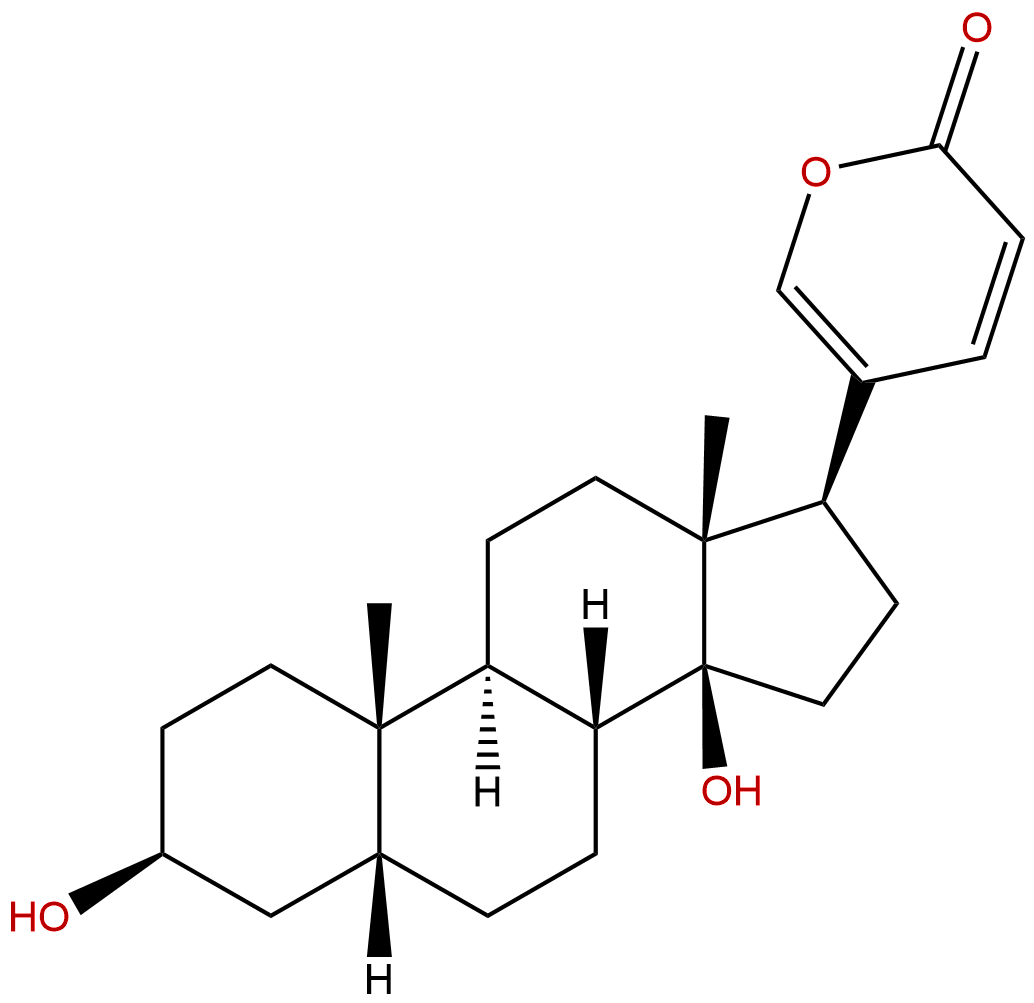


Product name: Bufalin
Synonym name:
Catalogue No.: BP0288
Cas No.: 465-21-4
Formula: C24H34O4
Mol Weight: 386.532
Botanical Source: Bufonis Venenum
Physical Description:
Type of Compound: Steroids
Purity: 95%~99%
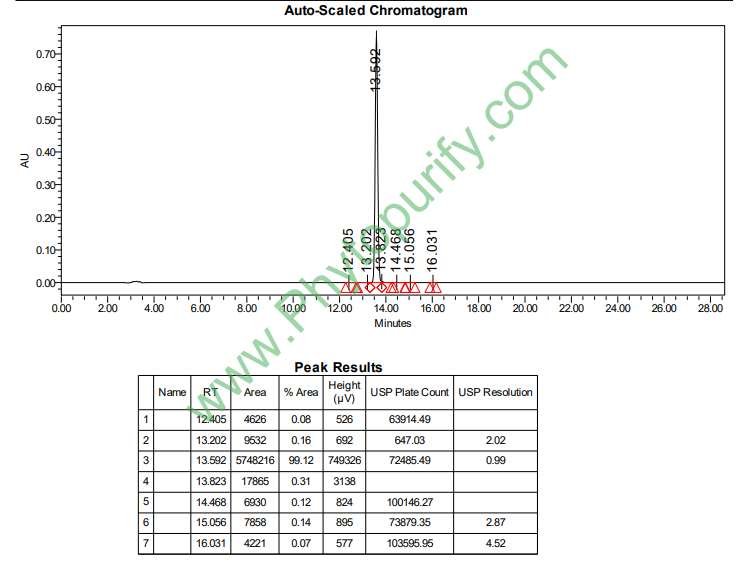
Analysis Method: HPLC-DAD or/and HPLC-ELSD
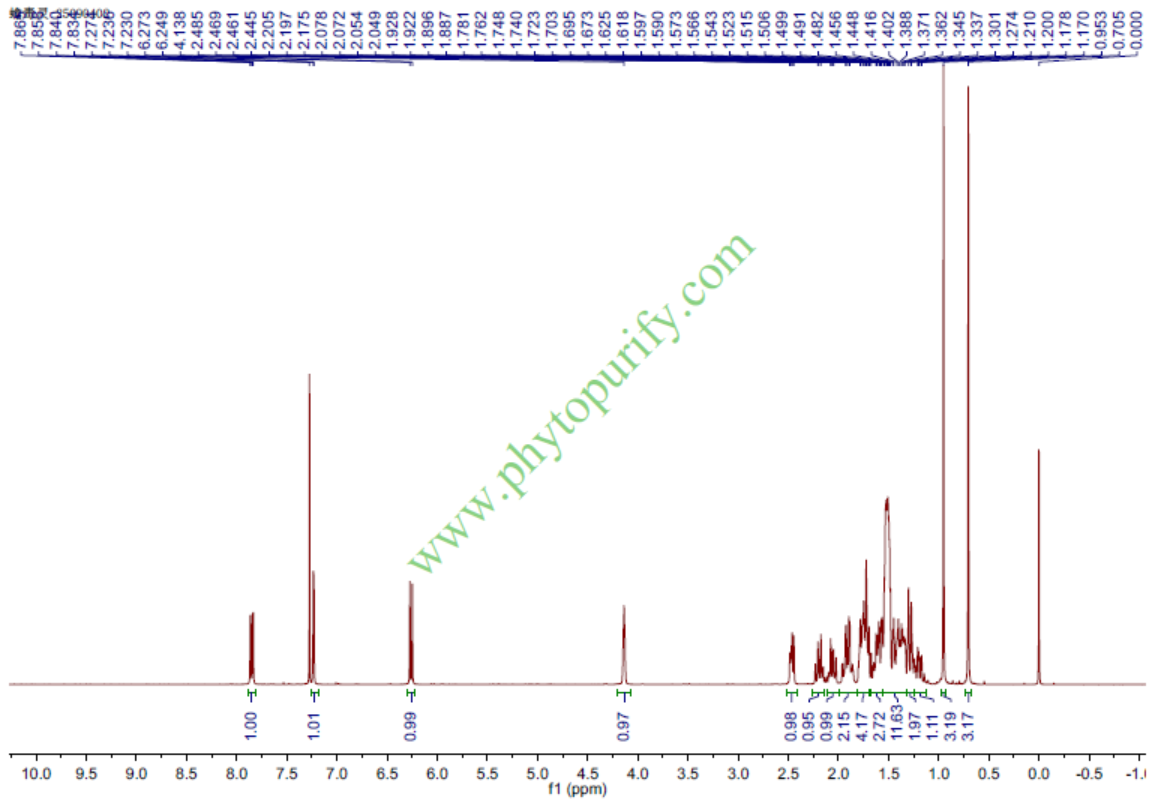
Identification Method: Mass, NMR
Packing: Brown vial or HDPE plastic bottle
Storage: Store in a well closed container, protected from air and light. Put into refrigerate or freeze for long term storage.
Whenever possible, you should prepare and use solutions on the same day. However, if you need to make up stock solutions in advance, we recommend that you store the solution as aliquots in tightly sealed vials at -20℃. Generally, these will be useable for up to two weeks.
The product could be supplied from milligrams to grams
Inquire for bulk scale.
Description:
Bufalin a major digoxin-like immunoreactive component of the Chinese medicine Chan Su; has been shown to exert a potential for anticancer activity against various human cancer cell lines in vitro. Bufalin is a potent small-molecule inhibitor of the steroid receptor coactivators steroid receptor coactivator (SRC)-3 and SRC-1, it also as a potentially broad-spectrum small-molecule inhibitor for cancer. Bufalin can partly reverse the MDR of K562/VCR cells, with a possible mechanism of down-regulating MRP1 expression and activating apoptosis pathway by altering Bcl-xL/Bax ratio.
References:
J Tradit Chin Med. 2014 Dec;34(6):678-83.
Reversal effect of bufalin on multidrug resistance in K562/VCR vincristine-resistant leukemia cell line.
To probe insights into the reversal effect of Bufalin on vincristine-acquired multidrug resistance (MDR) in human leukemia cell line K562/VCR.
METHODS AND RESULTS:
Proliferative inhibition rate and the reversal index (RI) of Bufalin were determined by Methyl thiazolyl tetrazolium assay. The uptake of Adriamycin (ADM) in K562/VCR cells, cell cycle and apoptosis rate were determined by flow cytometry (FCM). Cell morphologic changes were observed with Wright-Giemsa staining. The expression of P-glycoprotein (P-gp), multidrug-associated protein-1 (MRP1), Bcl-xL and Bax protein were measured by immunocytochemistry. The human leukemia multidrug resistant K562/VCR cells showed no cross-resistance to Bufalin. The RIs of Bufalin at concentrations of 0.0002, 0.001 and 0.005 μmol/L were 4.85, 6.94 and 14.77, respectively. Preincubation of 0.001 μmol/L Bufalin for 2 h could increase intracellular ADM fluorescence intensity to 28.07% (P < 0.05) and down-regulate MRP1 expression simultaneously, but no remarkable effect was found on P-gp protein. Cell cycle analysis indicated increased apoptosis rate and apparent decreased G2/M phase proportion after treatment with Bufalin. When exposed to 0.01 μmol/L Bufalin, typical morphological changes of apoptosis could be observed. Down-regulation of Bcl-xL and up-regulation of Bax expression in K562/VCR cells could be detected by immunocytochemistry.
CONCLUSIONS:
Bufalin could partly reverse the MDR of K562/VCR cells, with a possible mechanism of down-regulating MRP1 expression and activating apoptosis pathway by altering Bcl-xL/Bax ratio.
J Biol Chem. 1996 Jun 14;271(24):14067-72.
The cooperative interaction of two different signaling pathways in response to bufalin induces apoptosis in human leukemia U937 cells.
Bufalin, an active principle of Chinese medicine, chan'su, induced typical apoptosis in human leukemia U937 cells.
METHODS AND RESULTS:
When U937 cells were treated with 10(-8) M Bufalin in the absence of serum, mitogen-activated protein (MAP) kinase activity was markedly increased 6 h after the start of treatment and elevated so for 12 h. Prior to the activation of MAP kinase, increased activities of Ras, Raf-1, and MAP kinase kinase were found, but these enzymes were transiently activated by the treatment with Bufalin. These results suggest that the signal was transmitted sequentially from Ras, Raf-1, and MAP kinase kinase to MAP kinase. In association with this signal transduction, the concentration of cAMP in the cells decreased markedly, suggesting that Raf-1 was also activated by a decrease in the extent of phosphorylation by protein kinase A. In fact, pretreatment of U937 cells with forskolin and 3-isobutyl-1-methylxanthine, which are known to increase the concentration of cAMP in the cells, and subsequent treatment with Bufalin resulted in a decrease in both Raf-1 activity and DNA fragmentation. To confirm the participation of MAP kinase in the apoptotic process, antisense cDNA for MAP kinase kinase 1 was expressed in U937 cells. The transformants were significantly resistant to both DNA fragmentation and cell death in response to Bufalin.
CONCLUSIONS:
Our findings suggest that a pathway with the persistent activation of MAP kinase in U937 cells in response to Bufalin is at least one of the signal transduction pathways involved in the induction of apoptosis.
HPLC of Bufalin
HNMR of Bufalin
Storage conditions:Short-term storage at 2~8℃, long-term storage at -20 ~ -80℃
70.6700
3.4670
3.4673
.0069
4.5179
7.2466
High
89.8382
4.3659
No
No
No
No
No
No
0.0
No
No
No
Yes
Heart failure and malignant tumors are the two main factors leading to death and disease burden worldwide today, and the development of therapeutic drugs for them has always been a core challenge in medical research. In the treasure trove of traditional medicine, toad venom, as an animal medicinal herb with a long history of application, has long been recognized for its cardiotonic, anti-inflammatory, analgesic, and anti-tumor effects. Modern pharmacological research has revealed that the complex pharmacological activity of toad venom is mainly attributed to a unique class of steroid compounds - bufadinolides. Bufalin (CAS number: 465-21-4) is one of the most representative active monomers in this class of compounds. Since its structure was elucidated, bufalin has attracted much attention due to its potent and specific Na+/K+- ATPase inhibitory activity, making it an important tool molecule for studying cardiac physiology and pathology. In recent years, with the deepening of research, the outstanding activity of bufalin in the field of anti-tumor has been continuously discovered. Its mechanism of action goes far beyond single ion pump inhibition, involving precise regulation of multiple links and targets such as cell cycle, apoptosis, autophagy, differentiation, invasion and metastasis, and tumor microenvironment. This article aims to systematically review the chemical characteristics, sources, pharmacological activities, molecular mechanisms of action, pharmacological evaluation, and clinical application prospects of Chandu Ling, in order to provide comprehensive academic references for the in-depth development and transformation research of this natural product.
Chandu Ling is a typical toad dihydroxy acid lactone steroid compound. Its molecular formula is C24H34O4 and its molecular weight is 386.5320. Its core structure is composed of a steroid parent nucleus (cyclopentane dihydrophenanthrene), characterized by an α - pyranone ring (hexagonal unsaturated lactone ring) connected to the C-17 position, which is a key structural marker that distinguishes it from cardiac glycosides such as digoxin, where the C-17 position is a β - pentagonal unsaturated lactone ring. Its steroid nucleus also contains multiple oxygen-containing substituents, including C-3 β - hydroxyl, C-14 β - hydroxyl, etc., which are crucial for its biological activity.
From the analysis of physical and chemical properties, the lipid water partition coefficient (LogP) of Chandu Ling is 3.4670, indicating its good lipophilicity. Its topological polar surface area (TPSA) is 70.6700 Å ². Its water solubility is extremely low, about 0.0069 mg/mL, mainly influenced by its rigid steroid nucleus and hydrophobic lactone ring. These properties determine the distribution characteristics of bufalin in organisms: it is easy to penetrate cell membranes, and its blood-brain barrier permeability is predicted to be "high", suggesting its potential role in central nervous system related diseases or brain tumors. In the preliminary safety screening, its hERG inhibitory activity was "no", indicating a low risk of causing QT interval prolongation in the heart; The Ames test result was 0.0, indicating that no mutagenicity was observed in this testing system, providing preliminary safety evidence for its further development.
The toad poison spirit is not derived from plants, but mainly from animals in the toad family (such as the Chinese toad) Bufo gargarizans Black eyed toad Bufo melanostictus It was isolated from the secretion of skin glands such as toad venom. Chansu is one of the key components of traditional Chinese medicine compound preparations such as "Liu Shen Wan" and "Mei Hua Dian Zhi Dan". In toad venom, bufalin often coexists with various components such as bufalin, bufalin, indole alkaloids, sterols, etc., forming complex mixtures.
The extraction and purification process usually follows the classic process of natural product chemistry. Firstly, the dried toad venom powder is subjected to cold soaking or reflux extraction using organic solvents such as methanol, ethanol, or chloroform to obtain the total extract. Subsequently, various chromatographic techniques are used for separation and purification: crude separation is usually performed by silica gel column chromatography, and different polar segments are initially separated using solvent systems of different polarities (such as chloroform methanol gradient elution); The components rich in bufalin are further finely separated by repeated silica gel column chromatography, reverse phase silica gel (such as ODS) column chromatography, high performance liquid chromatography (HPLC), or preparative thin layer chromatography (PTLC). Modern technologies such as high-speed countercurrent chromatography (HSCCC) are widely used for the efficient preparation of bufalin due to their advantages of irreversible adsorption and high recovery rate. The isolated monomers need to be structurally confirmed by nuclear magnetic resonance (NMR, including 1H-NMR, 13C-NMR, 2D-NMR), mass spectrometry (MS), infrared spectroscopy (IR), and chromatographic behavior compared to standard samples. With the development of synthetic biology, the use of microbial or plant cell factories to biosynthesize bufadienolactones has become a promising research direction, but efficient heterologous production of bufalin has not yet been achieved.
The pharmacological activity research of Chandu Ling mainly focuses on the cardiovascular system and anti-tumor fields, and extends to other potential therapeutic directions.
1. Cardiovascular system activity:
As a classic Na+/K+- ATPase inhibitor, bufalin inhibits the activity of this enzyme on the myocardial cell membrane, leading to an increase in intracellular Na+concentration. This, in turn, increases Ca2+influx and cytoplasmic Ca2+concentration through Na+/Ca2+exchangers (NCX), thereby enhancing myocardial contractility and producing positive inotropic effects. This characteristic makes it theoretically have the potential to treat congestive heart failure. However, similar to cardiac glycosides, their therapeutic window is narrow, and excessive use can lead to toxicity such as arrhythmia, which limits their direct application as cardiac stimulants. But as a tool drug, it has made significant contributions in revealing the function of Na+/K+- ATPase and its role as a "receptor" in signal transduction.
2. Antitumor activity:
This is currently the most active field of research on Chandu Ling. A large number of in vivo and in vitro studies have shown that Bufalin has broad-spectrum and powerful anti proliferation and pro apoptosis effects on a variety of human malignant tumor cells, including but not limited to liver cancer, lung cancer, stomach cancer, colorectal cancer, breast cancer, prostate cancer, leukemia and multiple myeloma. Its anti-tumor effect is multifaceted:
- Inducing cell apoptosis: Activation of Caspase cascade through mitochondrial pathway (reducing Bcl-2/Bax ratio, inducing mitochondrial membrane potential collapse, releasing cytochrome C), death receptor pathway (upregulating Fas/FasL), and endoplasmic reticulum stress pathway.
- Inhibition of cell proliferation and induction of cell cycle arrest: Cells can be blocked in the G2/M phase or G0/G1 phase by regulating the expression of cyclins, cyclin dependent kinases (CDKs), and their inhibitors (such as p21, p27).
- Inhibiting tumor cell invasion and metastasis: This is achieved by downregulating matrix metalloproteinases (MMPs, such as MMP-2, MMP-9), upregulating tissue metalloproteinase inhibitors (TIMPs), and inhibiting epithelial mesenchymal transition (EMT) processes (such as upregulating E-cadherin, downregulating N-cadherin, vimentin, etc.).
- Inducing cell differentiation and autophagy: Inducing differentiation and maturation in certain leukemia cells; Protective or lethal autophagy can also be induced in specific environments.
- Reverse multidrug resistance (MDR): Research has shown that Chandu Ling can downregulate the expression or function of drug efflux pumps such as P-glycoprotein (P-gp, encoded by ABCB1 gene), and enhance the sensitivity of drug-resistant tumor cells to chemotherapy drugs such as doxorubicin and vincristine.
- Regulating the tumor microenvironment: It can inhibit tumor associated angiogenesis and affect the function of immune cells such as tumor associated macrophages.
3. Other activities:
The research also suggests that Bufalin may have anti-inflammatory, analgesic, antiviral (such as anti hepatitis B virus) and other effects, but the related research is still in the preliminary stage.
The mechanism of action of Chandu Ling is complex, presenting a network feature of multiple targets and pathways interwoven. Its core and derived molecular targets include:
1. Core target: Na+/K+- ATPase (ion pump function and signal transduction scaffold)
Chandu Ling binds with high affinity (Kd value in the nanomolar range) to the alpha subunits of Na+/K+- ATPase (especially alpha 1, alpha 2, alpha 3 subtypes), which is not only the molecular basis of its cardiotonic effect, but also the starting point of its anti-tumor and other "non pump" functions. After binding, in addition to inhibiting ion transport, it is more crucial to trigger a series of signal transduction events: activating Src kinase, which in turn trans activates epidermal growth factor receptor (EGFR), initiating downstream pro survival or pro apoptotic signaling pathways such as MAPK/ERK, PI3K/Akt (depending on cell type and microenvironment); At the same time, it can also activate the PLC - γ/IP3 pathway and affect intracellular calcium signaling.
2. Key signal pathway nodes:
- AMPK pathway: Chandu Ling can activate AMPK (encoded by PRKAA1, etc.), a cellular energy sensor. The activation of AMPK inhibits mTORC1 signaling, thereby suppressing protein synthesis, cell growth, and inducing autophagy, playing an important role in metabolic reprogramming and inhibiting tumor growth.
- Epigenetic regulatory targets: Research has found that Chandu Ling can inhibit histone methyltransferase EHMT2 (G9a), leading to a decrease in H3K9me2 modification levels in the promoter region of tumor suppressor genes and reactivation of their expression. This provides a new perspective for epigenetic therapy.
- Other related targets: The literature suggests that the effects of Chandu Ling may also be related to the following targets: affecting the metabolism of amyloid precursor protein (APP), inhibiting protein tyrosine phosphatase PTPN1, inhibiting monoamine oxidase MAOA, regulating estrogen receptor ESR2 signaling, affecting the activity of arachidonic acid lipoxygenase ALOX15, and regulating drug transport protein ABCG2. These targets together form the network basis for the pleiotropic pharmacological effects of Chandu Ling.
3. Nuclear action:
Chandu Ling can directly or indirectly affect the activity of various transcription factors, such as inhibiting the transcriptional activity of NF - κ B (thereby downregulating its targeted pro survival and pro-inflammatory genes), inhibiting the STAT3 signaling pathway (abnormally activated in various cancers), and regulating developmental related pathways such as Hippo and Wnt/β - catenin.
Although bufalin has significant in vitro activity, its commercialization faces many challenges, mainly due to its poor drug like properties and complex pharmacokinetic (PK) characteristics.
Absorption, distribution, metabolism, excretion (ADME):
- Absorption: The low oral bioavailability is mainly limited by its extremely low water solubility and first pass effect.
- Distribution: Due to its high lipophilicity and blood-brain barrier permeability, bufalin is widely distributed in the body, easily enriched in adipose tissue, and can enter the central nervous system.
- Metabolism: The liver is its main metabolic site, mainly undergoing phase I metabolism such as hydroxylation and dehydroxylation through cytochrome P450 enzyme systems (such as CYP3A4), as well as phase II binding reactions with glucuronic acid and sulfuric acid. The rapid metabolic process is the main way for it to be eliminated in the body.
- Excretion: Metabolites are mainly excreted through bile and urine.
Challenges and strategies for drug development:
1. Narrow treatment window: The effective dose is close to the toxic dose, and cardiac toxicity is a risk that needs to be closely monitored.
2. Poor water solubility: Affects formulation development and in vivo absorption.
3. Unsatisfactory pharmacokinetic properties: The half-life may be short and the exposure level in the body may be unstable.
4. Potential off target effects and long-term toxicity: A comprehensive and in-depth preclinical safety evaluation is required.
To overcome these obstacles, researchers have adopted various strategies:
- Structural modification: By chemical synthesis or semi synthesis methods, the hydroxyl and lactone ring sites of bufalin are modified with the aim of improving water solubility, reducing toxicity, enhancing targeting, or improving PK properties. For example, preparing water-soluble prodrugs (such as phosphate esters and amino acid esters), synthesizing conjugates with tumor targeting properties (such as linking with folate and peptides).
- New drug delivery system: The utilization of nanotechnology is currently a research hotspot. Loading bufalin into liposomes, polymer micelles, nanoparticles, microemulsions or solid dispersions can significantly improve its solubility and stability, achieve sustained release and targeted delivery (such as passive targeting of tumors through EPR effect or active targeting through surface modified antibodies and ligands), thereby enhancing therapeutic efficacy and reducing systemic toxicity.
- Combination therapy: When used in combination with conventional chemotherapy drugs, targeted drugs, or immune checkpoint inhibitors, it can synergistically enhance efficacy, reverse drug resistance, and potentially reduce their respective dosages to alleviate toxic side effects.
The clinical application prospects of Chandu Ling are broad, but the road is tortuous, and its transformation research is being carried out from multiple dimensions.
1. Anti tumor therapy:
This is the most promising direction. Based on its multi-target and multi-channel anti-tumor properties, bufalin or its derivatives/preparations are expected to be used for:
- Treatment of refractory/drug-resistant tumors: Especially for solid tumors and hematological tumors that are resistant to conventional chemotherapy or have relapsed and metastasized.
- Adjuvant therapy and sensitizers: Combined with existing standard treatment regimens to improve efficacy and overcome drug resistance.
- Precision therapy based on biomarkers: Future research needs to clarify which tumor types or molecular subtypes (such as high expression of specific Na+/K+- ATPase subtypes, specific signaling pathway dependence) are most sensitive to bufalin treatment in patients.
At present, some bufalin related preparations (such as liposomes) have entered the late stage of preclinical research, but no products have been officially approved for market. The key to promoting its clinical translation lies in: ① developing safe, effective, and quality controllable nano preparations or prodrugs; ② Complete systematic pharmacological, pharmacokinetic, and toxicological evaluations in appropriate animal models; ③ Design rigorous clinical trials to explore optimal dosing regimens, treatment windows, and safety management strategies.
2. Heart failure and other diseases:
Due to the toxicity risks associated with its cardiotonic effects, the prospects for direct development as a cardiotonic drug are limited. However, in-depth research on its Na+/K+- ATPase signaling function may provide new insights into the pathological mechanisms of cardiovascular diseases such as heart failure and hypertension, and inspire the design of novel signal regulating drugs. In addition, its research in neurodegenerative diseases (such as Alzheimer's disease, involving APP metabolism), pain management, and other fields is also worth paying attention to.
3. Future research directions:
- In depth exploration of the mechanism of action network: Using systems biology methods such as proteomics, metabolomics, and CRISPR screening, comprehensively map the targets and pathway networks of bufalin in specific disease contexts.
- Development of Intelligent Delivery System: Design an intelligent nano delivery system that responds to the tumor microenvironment (such as pH, enzymes, redox) to achieve precise controlled drug release.
- Structure based rational drug design: Combining computer-aided drug design and structural biology (such as the eutectic structure of bufalin and target proteins) to guide the rational design and synthesis of highly efficient and low toxicity derivatives.
- Research on the integration of traditional Chinese and Western medicine: In depth exploration of the compatibility rules, synergistic effects, and detoxification mechanisms of Chandu Ling in traditional Chinese medicine formulas (such as Liu Shen Wan), providing scientific basis for the modernization of traditional Chinese medicine.
Chandu Ling, a natural active molecule derived from the traditional Chinese medicine Chansu, has evolved from a classic cardiotonic tool compound to a star molecule with multi-target and multi-channel anti-tumor activity after decades of research. Its unique chemical structure endows it with the special ability to inhibit Na+/K+- ATPase and trigger complex downstream signaling networks, thereby triggering a series of lethal biological effects in tumor cells. Although its inherent pharmaceutical defects, such as poor water solubility and narrow therapeutic window, pose obstacles to direct clinical application, modern medicinal chemistry and pharmaceutical technologies, such as structural modification and nano delivery, are providing powerful tools to overcome these obstacles. At present, the research on Chandu Ling has entered a critical period of transformation from basic to applied. In the future, through interdisciplinary collaboration, in-depth analysis of its precise mechanism of action, optimization of its drug form, and rigorous clinical evaluation, Chandu Ling is highly likely to transform from an ancient medicinal ingredient into an innovative drug lead compound or treatment method in the era of modern precision medicine, providing new hope for overcoming major diseases such as malignant tumors.
