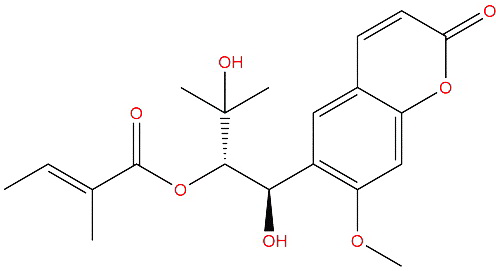


Product name: Angelol B
Synonym name:
Catalogue No.: BP3751
Cas No.: 83156-04-1
Formula: C20H24O7
Mol Weight: 376.405
Botanical Source: Angelica pubescens
Physical Description:
Type of Compound:
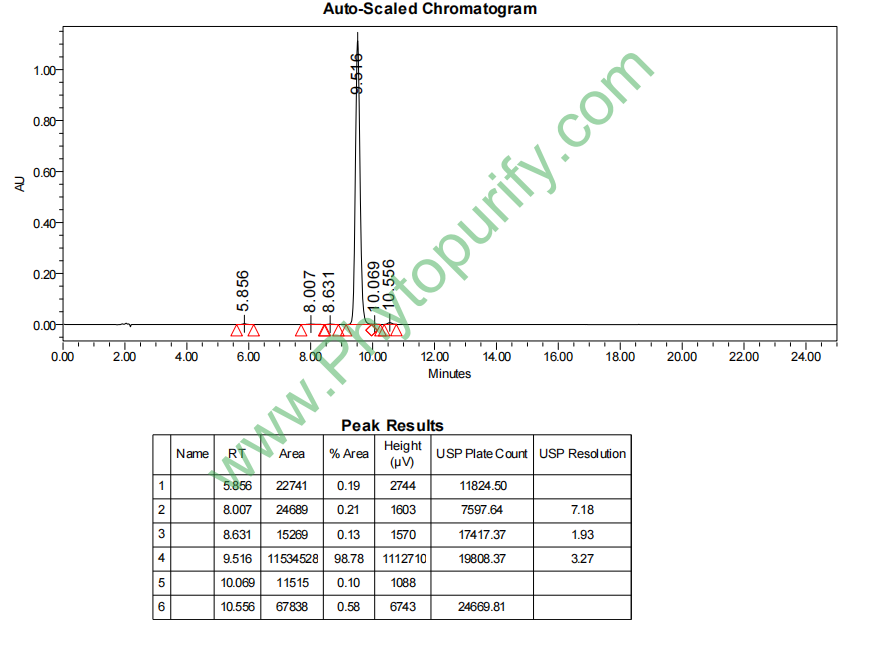
Purity: 95%~99%
Analysis Method: HPLC-DAD or/and HPLC-ELSD
Identification Method: Mass, NMR
Packing: Brown vial or HDPE plastic bottle
Storage: Store in a well closed container, protected from air and light. Put into refrigerate or freeze for long term storage.
Whenever possible, you should prepare and use solutions on the same day. However, if you need to make up stock solutions in advance, we recommend that you store the solution as aliquots in tightly sealed vials at -20℃. Generally, these will be useable for up to two weeks.
The product could be supplied from milligrams to grams
Inquire for bulk scale.
For Reference Standard and R&D, Not for Human Use Directly.
HPLC of Angelol B
Storage conditions:Short-term storage at 2~8℃, long-term storage at -20 ~ -80℃
106.2000
2.2862
2.2863
.1888
1.0133
11.6114
Low
81.3011
3.7061
Yes
No
No
No
No
Yes
0.0
Yes
Yes
Yes
Yes
Natural products, as an important source of drug discovery, play an irreplaceable role in the long history of human struggle against diseases. Chinese traditional medicine Angelica sinensis(Angelica sinensis (Oliv.) Diels), Known as the "holy medicine in blood", its medicinal history can be traced back to the "Shennong Bencao Jing" more than two thousand years ago. Angelica sinensis is warm in nature, sweet and pungent in taste, and belongs to the liver, heart, and spleen meridians. It has the effects of nourishing blood and promoting blood circulation, regulating meridians and relieving pain, moistening intestines and promoting bowel movements. It is widely used in the treatment of gynecological diseases, cardiovascular and cerebrovascular diseases, and inflammatory diseases. Modern pharmacological research has confirmed that Angelica sinensis contains various active ingredients such as volatile oils, organic acids, polysaccharides, and coumarins. Among them, coumarin compounds have attracted much attention due to their significant biological activity.
Angelol B (CAS number: 83156-04-1) is a coumarin compound with a unique structure isolated from the root of Angelica sinensis. As one of the important active ingredients in Angelica sinensis, Angelica sinensis alcohol B exhibits various pharmacological activities, especially outstanding in the field of anti-inflammatory. Research has shown that Angelica B can regulate multiple inflammatory signaling pathways, affecting key targets including interleukin-6 (IL-6), signal transduction and transcription activator 3 (STAT3), cysteine aspartate protease 1 (CASP1), transient receptor potential vanillic acid subtype 1 (TRPV1), nuclear factor kappa B subunit p65 (RELA), prostaglandin endoperoxide synthase 1 (PTGS1, COX-1), tumor necrosis factor (TNF), transient receptor potential anchor protein 1 (TRPA1), I kappa B kinase beta (IKBKB), and inducible nitric oxide synthase (NOS2), thereby exerting its anti-inflammatory effect.
It is worth noting that the absorption mechanism of Angelica sinensis B in the Caco-2 monolayer cell model is mainly passive diffusion, which provides a favorable biological basis for its oral administration. Combined with its excellent pharmacokinetic parameters - moderate molecular weight (376.4050 Da), reasonable lipid water partition coefficient (LogP 2.2862), high polar surface area (TPSA 106.2000 Å ²), and low blood-brain barrier permeability - Angelica sinensis B demonstrates great potential for development as a precursor compound for oral anti-inflammatory drugs. This article will systematically review the research progress of Angelica sinensis alcohol B from the aspects of chemical structure, plant origin, pharmacological activity, mechanism of action, medicinal evaluation, and clinical application prospects, in order to provide scientific basis for the in-depth development and utilization of this natural product.
Danggui alcohol B belongs to the class of furan coumarin compounds, and its chemical structure has the characteristic of coumarin parent nucleus (benzo α - pyranone) fused with furan ring. Specifically, the molecular formula of Angelica sinensis alcohol B is C ₂₀ H ₂₄ O ₇, with a molecular weight of 376.4050 Da. The key functional groups in its structure include a coumarin skeleton, a furan ring, and multiple hydroxyl and methoxy substituents. The presence of these functional groups not only endows Angelica B with specific chemical properties, but also provides a structural basis for its interaction with biological targets.
From the perspective of physicochemical properties, the lipid water partition coefficient (LogP) of Angelica sinensis alcohol B is 2.2862, indicating its moderate lipophilicity. This value is within the LogP range recommended by Lipinski's "Five Rules" (-0.4 to 5.6), indicating that the compound has good membrane permeability. The topological polar surface area (TPSA) is 106.2000 Å ², slightly higher than the recommended upper limit of 140 Å ² for oral medications, but still within an acceptable range. The higher TPSA values mainly come from multiple hydroxyl and carbonyl oxygen atoms in the molecule, which contribute to the formation of hydrogen bonds and affect the water solubility and binding ability of the compound to the target protein.
The water solubility of Danggui alcohol B is 0.1888 mg/mL, which belongs to the category of slight solubility. This water-soluble characteristic is consistent with its LogP value, ensuring a certain solubility in the gastrointestinal tract and facilitating transmembrane transport. It is worth noting that the absorption mechanism of Angelica sinensis alcohol B in the Caco-2 monolayer cell model is mainly passive diffusion, which means that its transmembrane transport mainly depends on concentration gradients and does not require specific transport proteins to participate. This feature is of great significance for the development of oral medications, as it reduces individual differences caused by transporter polymorphism or drug interactions.
In terms of drug safety, Angelica sinensis alcohol B exhibits good characteristics. The blood-brain barrier permeability assessment is' low ', indicating that the compound is not easily able to enter the central nervous system, thereby reducing the risk of central nervous system related side effects. The hERG (human ether - à - go related gene) potassium channel inhibition test result was negative, indicating a low risk of Angelica B induced QT interval prolongation and apical torsion type ventricular tachycardia. The Ames test result was 0.0, indicating that the compound did not exhibit mutagenicity in the bacterial recovery mutation test, providing preliminary evidence for its safety.
Overall, the chemical structure and physicochemical properties of Angelica sinensis alcohol B meet the basic requirements for oral medication. Its moderate molecular weight, reasonable lipid water partition coefficient, good membrane permeability, and low toxicity risk make it a promising natural product lead compound for development.
Danggui alcohol B mainly comes from the genus Danggui in the Umbelliferae family(Angelica sinensis)Dry roots. Angelica sinensis is native to China and mainly produced in Gansu, Yunnan, Sichuan and other places. Among them, the "Min Gui" produced in Min County, Gansu has the best quality. Except for Angelica sinensis, other plants that belong to it include Japanese Angelica sinensis(Angelica acutiloba)Korean Angelica sinensis(Angelica gigas)It may also contain Angelica sinensis alcohol B, but the content varies depending on the species, place of origin, harvest season, and processing method.
The content of Danggui alcohol B in Danggui roots is relatively low and usually requires systematic extraction and purification processes to obtain. The traditional extraction methods mainly include solvent extraction, ultrasound assisted extraction, and microwave-assisted extraction. The solvent extraction method is the most commonly used method, usually using ethanol or methanol as the extraction solvent, and obtaining crude extracts through cold soaking, percolation, or reflux extraction. Research has shown that using 70% ethanol reflux extraction, a solid-liquid ratio of 1:10, extraction time of 2 hours, and repeated extraction 3 times can achieve a high extraction rate of Angelica sinensis alcohol B.
With the development of separation technology, modern chromatographic techniques have been widely used for the purification of Angelica sinensis alcohol B. Common separation methods include silica gel column chromatography, ODS (octadecylsilane bonded silica gel) reversed phase column chromatography, Sephadex LH-20 gel column chromatography and preparative high-performance liquid chromatography (Prep HPLC). The typical separation process is to extract the crude powder of Angelica sinensis roots with ethanol, concentrate it to obtain a paste, and then extract it with petroleum ether, ethyl acetate, and n-butanol in sequence. The ethyl acetate extract is rich in coumarin components, which can be further analyzed by silica gel column chromatography using petroleum ether ethyl acetate or chloroform methanol gradient elution, combined with thin-layer chromatography (TLC) detection, to collect the fraction containing Angelica sinensis B. Subsequently, it was refined by ODS reverse phase column chromatography and Sephadex LH-20 gel column chromatography. Finally, it was purified by preparative HPLC, and the purity of angelica B monomer was more than 98%.
In recent years, new extraction and separation techniques such as high-speed countercurrent chromatography (HSCCC) and supercritical fluid extraction (SFE) have also been attempted for the preparation of Angelica sinensis alcohol B. HSCCC utilizes the difference in distribution coefficients of solutes in two-phase solvent systems to achieve separation, which has the advantages of high sample recovery and good separation efficiency. SFE uses CO ₂ as the extractant and selectively extracts target components by adjusting pressure and temperature, which has advantages such as green environmental protection and no solvent residue. The application of these new technologies provides new options for the efficient preparation of Angelica sinensis alcohol B.
It is worth noting that during the extraction and separation process of Angelica sinensis alcohol B, attention should be paid to protecting the stability of its chemical structure. Coumarin compounds are sensitive to light, heat, and oxygen, so extraction and separation operations should be avoided from light and carried out at low temperatures as much as possible. An appropriate amount of antioxidant (such as vitamin C or BHT) can be added to the solvent to prevent oxidative degradation.
The pharmacological activity research of Danggui alcohol B mainly focuses on the anti-inflammatory field, with a small amount of research involving its antioxidant, neuroprotective, and anti-tumor effects. Among them, anti-inflammatory activity is the most prominent and extensively studied direction of Danggui alcohol B.
Inflammation is a complex defense response of the body against infection, tissue damage, or harmful stimuli, involving the synergistic effects of multiple immune cells, inflammatory mediators, and signaling pathways. Chronic inflammation is closely related to the occurrence and development of many diseases, including rheumatoid arthritis, inflammatory bowel disease, atherosclerosis, diabetes and neurodegenerative diseases. Therefore, finding safe and effective anti-inflammatory drugs has important clinical significance.
Danggui alcohol B exhibits significant anti-inflammatory activity in various inflammatory models. In a macrophage model stimulated by lipopolysaccharide (LPS), Angelica B can dose dependently inhibit the production of pro-inflammatory cytokines such as tumor necrosis factor (TNF), interleukin-6 (IL-6), and interleukin-1 β (IL-1 β). Meanwhile, Angelica B can also reduce the expression of inducible nitric oxide synthase (NOS2), decrease the production of nitric oxide (NO), and inhibit the activity of cyclooxygenase-2 (COX-2, PTGS2), thereby reducing the synthesis of prostaglandin E ₂ (PGE ₂). These effects collectively form the cytological basis for the anti-inflammatory activity of Angelica sinensis alcohol B.
In animal models, Angelica B also showed good anti-inflammatory effects. In the carrageenan induced rat model of plantar swelling, oral administration of Danggui alcohol B significantly reduced the degree of plantar swelling, and its effect was comparable to the positive control drug indomethacin. In the acetic acid-induced model of increased peritoneal capillary permeability in mice, Angelica B can effectively inhibit dye exudation, indicating its anti-inflammatory exudation effect. In addition, in a rat model of arthritis induced by complete Freund's adjuvant (CFA), Angelica B can alleviate joint swelling, reduce serum levels of inflammatory factors, and improve pathological changes in joint tissue.
In addition to anti-inflammatory effects, Angelica sinensis alcohol B also exhibits certain antioxidant activity. In vitro experiments have shown that Angelica B can scavenge DPPH free radicals, ABTS cationic free radicals, and superoxide anion free radicals, and inhibit lipid peroxidation. These antioxidant activities may be related to the phenolic hydroxyl groups in their molecular structure, which can provide hydrogen atoms or electrons to neutralize free radicals.
In terms of neuroprotection, Angelica B has a protective effect on glutamate induced damage in PC12 cells, reducing cell apoptosis rate, decreasing lactate dehydrogenase (LDH) release, and restoring mitochondrial membrane potential. This effect may be related to inhibiting oxidative stress and regulating the expression of apoptosis related proteins.
In addition, it has been reported that angelica B has a weak inhibitory effect on the proliferation of some tumor cell lines (such as HepG2 cells and MCF-7 cells of breast cancer), but its anti-tumor activity is far weaker than that of classical chemotherapy drugs, which may be more of an auxiliary or synergistic effect.
The anti-inflammatory mechanism of Danggui alcohol B involves the synergistic regulation of multiple signaling pathways and molecular targets. Based on existing research, its mechanism of action can be summarized as follows:
Nuclear factor kappa B (NF - κ B) is the core transcription factor in inflammatory response, regulating the expression of various inflammation related genes including TNF, IL-6, IL-1 β, COX-2, and NOS2. In the resting state, NF - κ B binds to the inhibitory protein I κ B α and exists in an inactive form in the cytoplasm. When cells are stimulated by LPS, TNF, etc., I κ B kinase (IKK, encoded by IKBKB) is activated, phosphorylating I κ B α, leading to its ubiquitination degradation, releasing NF - κ B (mainly p50/RELA heterodimers) into the nucleus, and initiating target gene transcription.
Research has shown that Angelica B can inhibit the activity of IKK β (IKBKB), reduce the phosphorylation degradation of I κ B α, and thus prevent nuclear translocation and transcriptional activation of NF - κ B. Specifically, Angelica B can reduce the phosphorylation level of RELA (p65) subunit, inhibit its ability to bind to DNA, and thereby downregulate the expression of downstream inflammatory genes. This mechanism explains why Angelica B can simultaneously inhibit the production of multiple inflammatory factors.
The Janus kinase/signal transducer and activator of transcription (JAK/STAT) signaling pathway plays an important role in inflammation and immune regulation. Among them, STAT3 is a key downstream signaling molecule for various pro-inflammatory cytokines, such as IL-6. After binding to the receptor, IL-6 activates JAK kinase, which then phosphorylates STAT3 to form a dimer and translocates it to the nucleus, regulating target gene transcription.
Danggui alcohol B can inhibit IL-6-induced STAT3 phosphorylation, block STAT3 nuclear translocation and transcriptional activity. This effect not only reduces the expression of STAT3 dependent inflammatory genes, but may also be related to inhibiting Th17 cell differentiation and regulating immune balance. It is worth noting that excessive activation of STAT3 is associated with various inflammatory diseases and tumors, therefore, the regulation of STAT3 by Angelica B has important pathophysiological significance.
The NLRP3 inflammasome is a multi protein complex composed of NLRP3, ASC, and CASP1 (cysteine aspartic protease 1), which plays a crucial role in innate immune response. When cells are stimulated by pathogen associated molecular patterns (PAMPs) or hazard associated molecular patterns (DAMPs), NLRP3 inflammasomes are activated, promoting self cleavage activation of CASP1. Activated CASP1 then cleaves pro-IL-1 β and pro-IL-18, producing mature IL-1 β and IL-18, and inducing cell apoptosis.
Research has found that Angelica B can inhibit the assembly and activation of NLRP3 inflammasomes, reduce the activation of CASP1, and decrease the maturation and secretion of IL-1 β. This effect may be achieved by inhibiting the production of reactive oxygen species (ROS) or regulating upstream signals such as potassium ion efflux. In view of the key role of NLRP3 inflammasome in gout, type 2 diabetes, Alzheimer's disease and other diseases, the regulation of this target by angelica B provides new possibilities for its treatment of related diseases.
Transient receptor potential (TRP) channels are a type of non selective cation channel that play important roles in sensory conduction, inflammation, and pain. Among them, TRPV1 and TRPA1 are the most extensively studied TRP channel members. TRPV1 can be activated by capsaicin, heat (>43 ° C), and acidic environments, while TRPA1 is sensitive to mustard oil, low temperatures, and various inflammatory mediators. The activated TRP channel causes calcium influx, leading to neuronal excitation and neuropeptide release, causing pain and neurogenic inflammation.
Danggui alcohol B has a regulatory effect on TRPV1 and TRPA1. Research has shown that Angelica B can inhibit capsaicin induced TRPV1 activation and mustard oil induced TRPA1 activation, reduce calcium influx and release of calcitonin gene-related peptide (CGRP). This effect may be related to its anti-inflammatory and analgesic effects, especially with potential value in the treatment of inflammatory pain and neuropathic pain.
In summary, the anti-inflammatory effect of Angelica sinensis B is not achieved through a single target, but through the simultaneous regulation of multiple signaling pathways such as NF - κ B, JAK/STAT3, NLRP3 inflammasome, and TRP channel, affecting multiple molecular targets including IL-6, STAT3, CASP1, TRPV1, RELA, PTGS1, TNF, TRPA1, IKBKB, and NOS2, thereby exerting a synergistic anti-inflammatory effect. This multi-target mode of action is a typical feature of natural products and its advantage over single target chemical drugs - it can enhance efficacy while reducing side effects caused by excessive inhibition of a single target.
The evaluation of drug properties is a crucial step in the transition of natural products from laboratory research to clinical applications. Danggui alcohol B exhibits many favorable characteristics in terms of medicinal properties, but there are also some aspects that need to be optimized.
As mentioned earlier, the molecular weight of Angelica sinensis alcohol B is 376.4050 Da (<500), with a LogP of 2.2862 (<5). The number of hydrogen bond donors (from hydroxyl groups) and hydrogen bond acceptors (from hydroxyl and carbonyl groups) are both within a reasonable range, meeting the oral drug requirements of Lipinski's "Five Rules". The TPSA is 106.2000 Å ², which is slightly higher than the ideal range of some oral drugs (60-100 Å ²), but still below the upper limit of 140 Å ², indicating its good oral bioavailability potential.
In the Caco-2 monolayer cell model, the absorption mechanism of Angelica B is mainly passive diffusion. This characteristic has important pharmacokinetic significance: firstly, passive diffusion does not rely on transport proteins, so the absorption process is less susceptible to interference from factors such as food, other drugs, or genetic polymorphisms; Secondly, passive diffusion usually follows first-order kinetics, and the absorption rate is proportional to the drug concentration, which is beneficial for predicting in vivo exposure. However, passive diffusion also means that the intestinal absorption of Angelica sinensis alcohol B may be limited by its water solubility and membrane permeability, and needs to be improved through formulation techniques such as solid dispersions, lipid nanoparticles, etc.
The blood-brain barrier permeability assessment of Danggui alcohol B is "low", indicating that the compound is not easily able to enter the central nervous system. This characteristic is beneficial for treating peripheral inflammatory diseases and can reduce central nervous system related side effects such as dizziness and drowsiness. However, if it is developed for neuroinflammation or neurodegenerative diseases in the future, it will require structural modifications or special delivery systems to enhance its brain distribution.
The metabolic research on Angelica sinensis alcohol B is not yet sufficient. Preliminary speculation suggests that the hydroxyl and methoxy groups in its molecule may undergo phase II metabolism (such as glucuronidation and sulfation), while the coumarin nucleus may undergo phase I metabolism (such as oxidation and reduction). The activity and toxicity of metabolites need further research.
Danggui alcohol B exhibits good safety characteristics. The hERG inhibition test result was negative, reducing the risk of cardiac toxicity. The Ames test result is 0.0, indicating no mutagenicity. However, these data only come from preliminary in vitro safety evaluations, and systematic in vivo toxicology studies (including acute toxicity, chronic toxicity, reproductive toxicity, etc.) still need to be conducted.
At present, there are few reports on the in vivo pharmacokinetic studies of Angelica sinensis alcohol B. Based on its physicochemical properties and absorption characteristics, it can be inferred that after oral administration, Angelica B is absorbed in the gastrointestinal tract through passive diffusion, and the degree of absorption may be influenced by food; Widely distributed in various tissues after absorption, but difficult to enter the central nervous system; Mainly metabolized by the liver, metabolites may be excreted through bile or urine. The specific pharmacokinetic parameters (such as half-life, bioavailability, clearance rate, etc.) need to be determined through animal experiments and clinical studies.
Danggui alcohol B, as a natural coumarin compound with multi-target anti-inflammatory activity, has shown broad application prospects in the treatment of inflammatory diseases. However, from laboratory research to clinical application, there are still many challenges and opportunities.
Based on its anti-inflammatory mechanism and target spectrum, Angelica sinensis alcohol B may have therapeutic potential for the following diseases:
Inflammatory bowel disease (IBD)Including Crohn's disease and ulcerative colitis. The inhibitory effect of Danggui alcohol B on NF - κ B, STAT3, and NLRP3 inflammasomes, as well as its good absorption characteristics in intestinal epithelial cells, make it a potential candidate drug for the treatment of IBD.
Rheumatoid arthritis (RA)The anti-inflammatory and anti joint destruction effects of Danggui alcohol B in CFA induced arthritis model suggest its potential for the treatment of RA. Its regulatory effect on TRPV1 and TRPA1 may also alleviate RA related pain symptoms.
Acute lung injury (ALI)In the LPS induced ALI model, Angelica B can alleviate lung tissue damage by inhibiting inflammatory cell infiltration and pro-inflammatory cytokine release.
Neuropathic Pain By regulating TRPV1 and TRPA1 channels, Angelica B may have therapeutic effects on chronic pain, and due to its low blood-brain barrier permeability, the risk of central side effects is relatively low.
Metabolic inflammation For chronic low-grade inflammation related to obesity, non-alcoholic fatty liver disease (NAFLD), etc., the inhibitory effect of Angelica B on NLRP3 inflammasome may have a therapeutic effect.
Despite the broad prospects, the development of Angelica sinensis alcohol B still faces the following challenges:
Water solubility optimization The water solubility of Danggui alcohol B (0.1888 mg/mL) is relatively low, which may limit its oral absorption and bioavailability. The solubility and dissolution rate can be improved through preparation techniques such as prodrugs, cyclodextrin inclusion complexes, solid dispersions, or lipid nanoparticles.
Metabolic stability Coumarin compounds often undergo extensive hepatic first pass metabolism, which may lead to reduced oral bioavailability. Structural modifications (such as introducing fluorine atoms, methylation, etc.) or the development of non oral delivery routes (such as transdermal delivery, inhalation delivery) may be solutions.
Target selectivity and safety Multi targeted action is both an advantage and a challenge. It is necessary to clarify the relative affinity and functional effects of Angelica sinensis alcohol B on various targets, evaluate its therapeutic window and potential off target effects. Systematic toxicology research is necessary.
Pharmacokinetic study Comprehensive in vivo pharmacokinetic studies are required, including absorption, distribution, metabolism, excretion (ADME) characteristics, as well as food effects, drug interactions, etc.
clinical translation The conversion from animal models to humans carries inherent risks. It is necessary to design a reasonable clinical trial plan, select appropriate indications and doses, and establish reliable biomarkers to evaluate efficacy and safety.
In the future, research on Angelica sinensis alcohol B can be further explored in the following directions:
Structure Activity Relationship (SAR) Study By synthesizing a series of derivatives or analogues of Angelica B, systematically studying the contributions of various functional groups to anti-inflammatory activity, and searching for candidate compounds with stronger activity, higher selectivity, and better pharmacokinetic properties.
Combination drug research Exploring the synergistic effect of Angelica sinensis B with existing anti-inflammatory drugs (such as nonsteroidal anti-inflammatory drugs and biologics) in order to reduce dosage, minimize side effects, and improve efficacy.
Nano drug delivery system Develop nano formulations based on Angelica sinensis alcohol B, such as liposomes, polymer nanoparticles, mesoporous silica nanoparticles, etc., to improve their bioavailability and achieve targeted delivery and controlled release.
Metabolomics and Systems Pharmacology Research Using metabolomics and systems pharmacology methods, comprehensively analyze the effects of Angelica sinensis alcohol B on the body's metabolic network and reveal its molecular mechanism of multi-target action.
Preclinical safety evaluation Conduct systematic toxicology studies in accordance with Good Laboratory Practice (GLP) requirements, including acute toxicity, long-term toxicity, reproductive toxicity, genetic toxicity, etc.
Danggui alcohol B, as an important coumarin active ingredient in Danggui, has attracted widespread attention from researchers due to its unique chemical structure and multi-target anti-inflammatory activity. This article provides a systematic review of the research progress of Angelica sinensis alcohol B from the aspects of chemical structure and physicochemical properties, plant sources and extraction methods, pharmacological activity research, mechanism of action and molecular targets, drug evaluation and pharmacokinetics, as well as clinical application prospects and prospects.
Existing studies have shown that Angelica B exerts significant anti-inflammatory effects by regulating multiple signaling pathways, including NF - κ B, JAK/STAT3, NLRP3 inflammasome, and TRP channel, affecting multiple molecular targets such as IL-6, STAT3, CASP1, TRPV1, RELA, PTGS1, TNF, TRPA1, IKBKB, and NOS2. Its excellent pharmacokinetic parameters - moderate molecular weight and lipid water partition coefficient, passive diffusion based absorption mechanism, low blood-brain barrier permeability, no hERG inhibition and Ames mutagenicity - have laid a solid foundation for its oral drug development.
However, the research on Danggui alcohol B is still in its early stages, and there are still many gaps that need to be filled between laboratory discovery and clinical application. Future research should focus on comprehensive analysis of pharmacokinetic characteristics, systematic exploration of structure-activity relationships, optimization of formulation technology, and improvement of preclinical safety evaluation. We have reason to believe that with the continuous deepening of research, Angelica B is expected to become a new candidate drug for treating inflammatory diseases and contribute to human health.
Natural products are an inexhaustible source of drug discovery, and the study of Angelica B once again confirms this viewpoint. In the pursuit of precision medicine and targeted therapy today, we should not ignore these "multi-target drugs" from nature, which may provide new ideas and solutions for the treatment of complex diseases.
