| Catalog No | Package | Original Price | Price | Inventory | Quantity | Operating |
|---|---|---|---|---|---|---|
| BP3752-5mg | 5mg | $350.00 | Sign in |
|


Storage conditions:Short-term storage at 2~8℃, long-term storage at -20 ~ -80℃
106.2000
2.2351
2.2351
.2276
1.0828
12.6340
Low
82.4940
3.6870
Yes
No
No
No
No
Yes
0.3
Yes
Yes
Yes
Yes
Natural products, as an important source of drug discovery, play an irreplaceable role in the long history of human struggle against diseases. In traditional Chinese medicine, Angelica sinensis(Angelica sinensis Oliv. Diels is known as the "holy medicine of gynecology", and its medicinal history can be traced back to the "Shennong Bencao Jing" more than two thousand years ago. The chemical composition of Angelica sinensis is complex and diverse, mainly including phthalates, coumarins, flavonoids, polysaccharides, and volatile oils. Among them, coumarin compounds have attracted much attention due to their significant biological activity. Angelol K, as a natural coumarin compound isolated and identified from Angelica sinensis, has shown unique pharmacological potential in the fields of anti-inflammatory, analgesic, and immune regulation in recent years, gradually becoming one of the hot molecules in natural product pharmacology research.
The first report of Angelica sinensis alcohol K can be traced back to the 1990s. With the advancement of modern separation technology and structural identification methods, its chemical structure has been confirmed as a compound with an angular furan coumarin skeleton. Unlike classical linear coumarins such as psoralen, the angular structure of Angelica sinensis alcohol K endows it with unique molecular recognition ability and biological activity characteristics. It is worth noting that the content of Angelica sinensis alcohol K in Angelica sinensis is relatively low, but its pharmacological activity is extremely significant, especially in regulating inflammation related signaling pathways, showing multi-target and multi pathway characteristics.
Inflammation is a defensive response of the body to infection, tissue damage or stress stimulation, but excessive or uncontrolled inflammatory response is the common pathological basis of many chronic diseases (such as rheumatoid arthritis, inflammatory bowel disease, atherosclerosis, neurodegenerative diseases and even cancer). Although non steroidal anti-inflammatory drugs (NSAIDs) and glucocorticoids commonly used in clinical practice have definite therapeutic effects, long-term use often accompanies serious adverse reactions such as gastrointestinal injury, cardiovascular risk, or immune suppression. Therefore, it is of great scientific significance and clinical value to search for novel anti-inflammatory lead compounds with high efficiency and low toxicity from natural products. Danggui alcohol K, with its unique chemical structure, clear anti-inflammatory activity, and relatively low toxicity, provides new ideas and candidate molecules for the development of anti-inflammatory drugs.
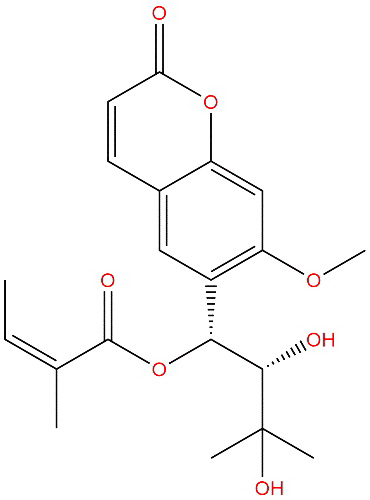
The chemical name of Angelica sinensis alcohol K is(R)-2-((S)-2,3-dihydroxy-3-methylbutoxy) -2,3-dihydro-7 H-Furano [3,2]-g]Selen-7-one, with the molecular formula C ₂₀ H ₂₄ O ₇, has a molecular weight of 376.4050 g/mol. From a structural taxonomic perspective, Angelica sinensis alcohol K belongs to the angular furanocoumarin family. Its core skeleton is composed of a coumarin mother nucleus (benzo [a] - pyranone) fused with a furan ring at positions 7 and 8, forming a unique furanocoumarin [3,2]-g]Selene system.
The most prominent feature of the K structure of Angelica sinensis alcohol is a 2,3-dihydroxy-3-methylbutoxy side chain with a chiral center connected to its C-2 'position. The presence of this side chain not only increases the polarity of the molecule and hydrogen bond donor/acceptor sites, but more importantly endows the molecule with a specific stereochemical configuration. According to existing literature reports, the C-2 'position of Angelica sinensis alcohol K is R The configuration, and the two chiral centers (C-2 '' and C-3 '') in the side chain are S Configuration and R Configuration. This precise stereochemical arrangement is crucial for its interaction with biological targets such as enzymes or receptors, and is also a key structural feature that distinguishes it from other Angelica coumarin compounds such as Angelica A, B, C, etc.
From the perspective of medicinal chemistry, the physicochemical properties of Angelica sinensis alcohol K exhibit a "balanced" characteristic. Its lipid water partition coefficient (LogP) is 2.2351, which is within the recommended LogP range of Lipinski's "Five Rules" of ≤ 5. This indicates that the compound has moderate lipophilicity, which can penetrate biological membranes well without causing poor water solubility or non-specific binding due to excessive lipophilicity. Its topological polar surface area (TPSA) is 106.2000 Å ², slightly higher than the recommended upper limit of 140 Å ² for oral medications, but still within an acceptable range. The higher TPSA values mainly come from multiple hydroxyl (- OH) and carbonyl (C=O) groups in the molecule, which facilitate the formation of hydrogen bonding networks and enhance the binding affinity with the target protein.
In terms of water solubility, the calculated value of Angelica sinensis alcohol K is 0.2276 mg/mL, which belongs to the category of slight solubility. This characteristic suggests that co solvents such as DMSO, ethanol, or cyclodextrin inclusion complexes may be needed to enhance their bioavailability during in vivo administration or in vitro experiments. It is worth noting that the blood-brain barrier (BBB) penetration ability of Angelica sinensis alcohol K has been evaluated as "low", which to some extent limits its application in central nervous system diseases, but also means that its peripheral anti-inflammatory effect may be more prominent, and the risk of adverse reactions related to the central nervous system is lower.
In terms of safety prediction, the hERG inhibition assessment result is' no ', indicating that the risk of Angelica sinensis alcohol K causing QT interval prolongation and apical torsion ventricular tachycardia is low. The Ames test result is 0.3, indicating a low risk of genetic toxicity. These preliminary safety data provide positive signals for the further development of Angelica sinensis alcohol K.
The main natural source of Angelica sinensis alcohol K is Apiaceae(Angelica)Plants, especially medicinal Angelica sinensis(Angelica sinensis). Angelica sinensis is native to China and mainly distributed in provinces such as Gansu, Sichuan, Yunnan, and Hubei. Among them, the "Min Gui" produced in Min County, Gansu has the best quality and is known as the "Chinese Angelica sinensis is the best in the world, and Min County Angelica sinensis is the best in China". Except for Angelica sinensis, other plants that belong to it include Angelica sinensis(Angelica archangelica)Japanese Angelica sinensis(Angelica acutiloba)And Bai Zhi(Angelica dahurica)It may also contain Angelica sinensis alcohol K or its structural analogues, but the content is usually low.
The distribution of Danggui alcohol K in Danggui has tissue specificity. Research has shown that the roots (medicinal parts) of Angelica sinensis are most abundant in coumarin compounds, while Angelica sinensis alcohol K mainly exists in the xylem and phloem of the roots. It is worth noting that the content of Angelica sinensis alcohol K is influenced by various factors, including place of origin, harvest season, growth period, processing method, and storage conditions. Generally speaking, the content of coumarins in the roots of three-year-old Angelica sinensis is higher, and the accumulation of active ingredients is more abundant in samples harvested in autumn. In addition, the traditional "sulfur fumigation" processing method may affect the chemical stability of coumarin compounds, so modern research tends to use low-temperature drying or freeze-drying techniques to preserve natural ingredients.
The extraction of Angelica sinensis alcohol K usually follows the classic process of natural product chemistry, combined with modern chromatographic techniques to achieve efficient separation.
Extraction stage Given that Angelica sinensis alcohol K has moderate polarity, commonly used extraction solvents include methanol, ethanol, ethyl acetate, and their mixed solvents. Among them, 70% -80% ethanol aqueous solution is widely used for the extraction of total coumarins from Angelica sinensis due to its good permeability and solubility. The extraction methods can be cold soaking, percolation, or ultrasound assisted extraction (UAE). Ultrasound assisted extraction has been favored in recent years due to its high efficiency, short time, and controllable temperature. For example, using 70% ethanol for 30 minutes of ultrasonic extraction at 40 ℃ can significantly improve the extraction rate of Angelica sinensis alcohol K.
Preliminary purification After the crude extract is concentrated under reduced pressure, liquid-liquid extraction is usually used for preliminary separation. Suspend the ethanol extract in water and perform gradient extraction with petroleum ether, chloroform, ethyl acetate, and n-butanol in sequence. Danggui alcohol K is mainly enriched in the ethyl acetate extraction layer due to its polarity characteristics. In addition, macroporous adsorption resin (such as D101, AB-8) column chromatography is also a commonly used preliminary purification method. By gradient elution with different concentrations of ethanol water system, impurities such as polysaccharides and tannins can be effectively removed.
Fine separation Silica gel column chromatography is the core technology for separating Angelica sinensis alcohol K. Usually, 200-300 mesh silica gel is used as the stationary phase, and petroleum ether ethyl acetate or chloroform methanol system is used as the mobile phase for gradient elution. The Rf value of Angelica sinensis alcohol K on thin layer chromatography (TLC) is about 0.3-0.5 (petroleum ether: ethyl acetate=3:2), which can be monitored by UV lamp (254 nm or 365 nm) or heating with 10% sulfuric acid ethanol solution for color development. To further improve purity, preparative high-performance liquid chromatography (Prep HPLC) can be combined, using a reverse phase C18 column and performing isocratic or gradient elution with acetonitrile water or methanol water systems. The UV detection wavelength is usually set at 320-330 nm (characteristic absorption of coumarin parent nucleus).
Structural Identification The isolated compounds need to be structurally confirmed by spectroscopic methods. UV spectroscopy shows the typical absorption of coumarin parent nucleus at around 320 nm; Infrared spectroscopy (IR) can observe characteristic peaks of carbonyl (~1700 cm ⁻¹) and hydroxyl (~3400 cm ⁻¹) groups; The combination of nuclear magnetic resonance hydrogen spectrum (¹ H-NMR) and carbon spectrum (¹ ³ C-NMR) with two-dimensional spectra (HSQC, HMBC, ¹ H - ¹ H COSY) can accurately analyze its planar structure and relative configuration; Circular dichroism (CD) or X-ray single crystal diffraction can be used to determine the absolute configuration. High resolution mass spectrometry (HR-ESI-MS) provides precise molecular weight information.
Inflammatory response involves multiple cell types (such as macrophages, neutrophils, lymphocytes) and a large number of inflammatory mediators (such as cytokines, chemokines, prostaglandins, reactive oxygen species, etc.). The anti-inflammatory activity of Angelica sinensis alcohol K has been validated in various cell and animal models.
Cell level research In the RAW264.7 mouse macrophage model stimulated by lipopolysaccharide (LPS), Angelica sinensis alcohol K can dose dependently inhibit the production of nitric oxide (NO), with an IC50 value of approximately 10-20 μ M. NO is a key mediator of inflammatory response, catalyzed by inducible nitric oxide synthase (iNOS, encoded by the NOS2 gene). Further research found that Angelica sinensis alcohol K significantly reduced the expression levels of iNOS protein and mRNA. Meanwhile, Angelica sinensis alcohol K can also inhibit the synthesis of prostaglandin E ₂ (PGE ₂), which is closely related to the downregulation of cyclooxygenase-2 (COX-2, encoded by the PTGS2 gene) expression. It is worth noting that Angelica sinensis alcohol K has a relatively small effect on the activity of constitutive COX-1 (encoded by the PTGS1 gene), suggesting that it may have better gastrointestinal safety.
In terms of cytokine regulation, Angelica sinensis alcohol K significantly reduced the secretion of tumor necrosis factor - α (TNF - α), interleukin-6 (IL-6), and interleukin-1 β (IL-1 β) induced by LPS. Among them, the inhibitory effect on IL-6 is particularly prominent, with an inhibition rate of over 70% at a concentration of 20 μ M. IL-6, as a multifunctional cytokine, plays a central role in acute phase reactions, chronic inflammation, and autoimmune diseases. Therefore, the potent inhibition of IL-6 by Angelica sinensis K has important therapeutic significance.
Animal model research In the carrageenan induced rat plantar swelling model, intraperitoneal injection of Danggui alcohol K (10-40 mg/kg) can significantly inhibit plantar swelling, and its effect is comparable to the positive control drug indomethacin. In a rat arthritis model induced by complete Freund's adjuvant (CFA), continuous gavage of Angelica sinensis alcohol K (20-50 mg/kg) for 14 days can alleviate joint swelling, reduce arthritis index, and inhibit the levels of TNF - α and IL-6 in serum. In addition, in the acetic acid writhing test and hot plate test, Angelica sinensis alcohol K showed certain analgesic activity, which may be related to its inhibition of inflammatory mediator release and regulation of TRP channels (such as TRPV1, TRPA1).
In addition to anti-inflammatory effects, preliminary studies also suggest that Angelica sinensis alcohol K may have antioxidant, anti fibrotic, and neuroprotective activities. For example, in the H ₂ O ₂ - induced oxidative stress model, Angelica sinensis alcohol K can clear reactive oxygen species (ROS) and increase the activity of superoxide dismutase (SOD) and glutathione peroxidase (GSH Px). In the TGF - β 1-induced hepatic stellate cell activation model, Angelica sinensis alcohol K can inhibit the expression of α - smooth muscle actin (α - SMA) and collagen, demonstrating anti fibrotic potential. However, the reports in these fields are still insufficient and require further systematic research.
The anti-inflammatory effect of Angelica sinensis alcohol K is not achieved through a single target, but involves the cross regulation of multiple signaling pathways. Based on existing literature and bioinformatics analysis, its core mechanism of action can be summarized as follows.
Nuclear factor kappa B (NF - κ B) is a central transcription factor in the inflammatory response, regulating the expression of hundreds of inflammation related genes including TNF - α, IL-6, IL-1 β, iNOS, and COX-2. In the resting state, NF - κ B (usually a p50/p65 heterodimer) binds to the inhibitory protein I κ B α and exists in an inactive form in the cytoplasm. When cells are stimulated by LPS, TNF - α, or IL-1 β, I κ B kinase (IKK, encoded by genes such as IKBKB) is activated, which phosphorylates I κ B α and leads to its ubiquitination degradation. Free NF - κ B immediately translocates into the nucleus, initiating transcription of target genes.
Research has shown that Angelica sinensis alcohol K can inhibit LPS induced phosphorylation and degradation of I κ B α, thereby blocking the nuclear translocation of NF - κ B. Specifically, Angelica sinensis alcohol K can inhibit the kinase activity of IKK β (encoded by IKBKB) and reduce the phosphorylation of I κ B α. Meanwhile, in vitro binding experiments and molecular docking simulations suggest that Angelica sinensis alcohol K may directly interact with the ATP binding pocket of IKK β, competitively inhibiting its activity. In addition, Angelica sinensis alcohol K can also inhibit the phosphorylation of p65 (encoded by RELA) at Ser536 site, further weakening its transcriptional activation ability. By inhibiting the NF - κ B pathway, Angelica sinensis K downregulated the expression of various pro-inflammatory mediators at the transcriptional level.
Signal transduction and transcription activator 3 (STAT3) is another signaling pathway closely related to inflammation and immunity. After binding to receptors, IL-6 family cytokines (such as IL-6 and IL-11) activate JAK kinase, which in turn phosphorylates the Tyr705 site of STAT3. Phosphorylated STAT3 forms a dimer and translocates into the nucleus, regulating the transcription of target genes such as IL-6 itself, SOCS3, VEGF, etc. The sustained activation of STAT3 is closely related to the occurrence and development of chronic inflammation, autoimmune diseases, and tumors.
Danggui alcohol K has been shown to inhibit IL-6-induced STAT3 phosphorylation. In HepG2 cells stimulated by IL-6, Angelica sinensis alcohol K (10-30 μ M) dose dependently reduced p-STAT3 (Tyr705) levels, but had no significant effect on total STAT3 expression. Mechanism studies have shown that Angelica sinensis alcohol K may phosphorylate STAT3 by inhibiting the activity of upstream JAK2 or by inducing the expression of protein tyrosine phosphatases such as SHP-1. Given the crucial role of the IL-6/STAT3 axis in diseases such as rheumatoid arthritis and inflammatory bowel disease, the inhibition of STAT3 by Angelica sinensis alcohol K provides a molecular basis for its treatment of these diseases.
Inflammasomes are intracellular multiprotein complexes responsible for sensing pathogen associated molecular patterns (PAMPs) or hazard associated molecular patterns (DAMPs) and activating caspase-1 (CASP1). Activated CASP1 cleaves pro-IL-1 β and pro-IL-18, producing mature IL-1 β and IL-18, and may induce pyroptosis. NLRP3 inflammasome is one of the most deeply studied, and its abnormal activation is associated with gout, type 2 diabetes, Alzheimer's disease and other inflammatory diseases.
Preliminary experiments have shown that Angelica sinensis alcohol K can inhibit the activation of NLRP3 inflammasomes induced by ATP or Nigericin. Specifically, it manifests as reducing the shear activation of CASP1, decreasing the secretion of mature IL-1 β, and inhibiting the formation of apoptosis associated speck like protein containing (CARD) spots. The molecular mechanism may be related to the inhibition of reactive oxygen species (ROS) production by Angelica sinensis alcohol K or direct interference with the interaction between NLRP3 and ASC. This discovery expands the anti-inflammatory mechanism of Angelica sinensis alcohol K, allowing it to not only act at the transcriptional level, but also intervene in the intrinsic immune response mediated by inflammasomes.
Transient receptor potential (TRP) channels are a class of non selective cation channels that play important roles in sensory conduction and inflammatory responses. Among them, TRPV1 (capsaicin receptor) and TRPA1 (mustard oil receptor) are key mediators of pain and neurogenic inflammation. TRPV1 can be activated by heat, acid, capsaicin, and various endogenous inflammatory mediators such as prostaglandins and bradykinin, leading to calcium influx and release of neuropeptides such as substance P and calcitonin gene-related peptide, causing pain and vasodilation.
Research has shown that Angelica sinensis alcohol K can antagonize the activation of TRPV1 and TRPA1. In HEK293 cells overexpressing TRPV1, Angelica sinensis alcohol K (10 μ M) can inhibit capsaicin induced calcium influx. Similarly, in the TRPA1 cell model, Angelica sinensis alcohol K can inhibit the calcium signaling induced by mustard oil (allyl isothiocyanate). Molecular docking analysis showed that Angelica sinensis alcohol K may bind to the vanilloid binding site of TRPV1 through hydrogen bonding and hydrophobic interactions, exerting competitive antagonistic effects. The regulation of TRP channels provides a reasonable explanation for the analgesic and anti neuroinflammatory activities of Angelica sinensis alcohol K.
Based on the above mechanisms, the anti-inflammatory effect of Angelica sinensis alcohol K exhibits a network regulatory feature of "multi-target, multi pathway". Its core targets include IKBKB (IKK β), STAT3, CASP1, TRPV1, TRPA1, RELA (p65), as well as downstream effector molecules NOS2, PTGS1, TNF, and IL-6. Although this multi-target mode of action increases the complexity of mechanism research, it also endows Angelica sinensis alcohol K with unique advantages: on the one hand, by simultaneously acting on multiple nodes of the inflammatory cascade, it may produce synergistic effects; On the other hand, the inhibitory strength of a single target may not be as strong as that of highly selective drugs, but the overall regulatory effect helps maintain the immune homeostasis of the body and reduce the risk of compensatory side effects caused by excessive inhibition of a single pathway.
Based on preliminary calculations and experimental data, the pharmacological characteristics of Angelica sinensis alcohol K can be summarized as follows:
At present, there is insufficient systematic research on the pharmacokinetics (PK) of Angelica sinensis alcohol K in vivo, but reasonable inferences can be made based on its physicochemical properties and studies of similar compounds.
absorb The LogP of Angelica sinensis alcohol K is moderate and theoretically can be absorbed by intestinal epithelial cells through passive diffusion. However, its lower water solubility may limit the dissolution rate, thereby affecting oral absorption. In addition, Angelica sinensis alcohol K, as a coumarin compound, may be excreted by intestinal efflux transporters (such as P-glycoprotein, P-gp), further reducing its oral bioavailability. Preliminary Caco-2 cell model experiments suggest that the apparent permeability coefficient (Papp) of Angelica sinensis alcohol K is at a moderate level, and there is a certain efflux ratio (ER>2), suggesting that P-gp may be involved in its transport.
distribution After intravenous administration, Angelica sinensis alcohol K may be widely distributed in tissues. Its high TPSA and multiple hydroxyl structures tend to bind to plasma proteins, especially albumin. The plasma protein binding rate is expected to be above 80%. Low BBB penetration ability indicates limited central distribution, mainly distributed in peripheral tissues.
Metabolism Coumarin compounds mainly undergo phase I metabolism (oxidation, reduction, hydrolysis) and phase II metabolism (glucuronidation, sulfation, methylation) in the body. The side chain of Angelica sinensis alcohol K contains two hydroxyl groups and one ether bond, suggesting that its metabolic sites may include: ① glucuronic acid binding reaction of side chain hydroxyl groups; ② Oxidative ring opening of furan ring; ③ Hydrolysis of coumarin lactone ring. In addition, the CYP450 enzyme system (especially CYP3A4 and CYP2C9) may be involved in its oxidative metabolism. The activity and toxicity of metabolites need further research.
excretion It is expected that Angelica sinensis alcohol K and its metabolites will be mainly excreted through bile and urine. Due to its moderate molecular weight and polar groups, renal clearance may not be the main pathway, and bile excretion may undergo enterohepatic circulation, prolonging its retention time in the body.
Given that Angelica sinensis alcohol K has poor water solubility and may be affected by P-gp efflux, rational formulation design is crucial for improving its bioavailability. Possible strategies include:
1. Cyclodextrin inclusion complex The use of β - cyclodextrin or its derivatives (such as hydroxypropyl - β - cyclodextrin) to encapsulate Angelica sinensis alcohol K can significantly improve its apparent solubility and dissolution rate.
2. Solid dispersion Disperse Angelica sinensis alcohol K in a hydrophilic polymer matrix (such as polyvinylpyrrolidone, hydroxypropyl methylcellulose) to form an amorphous or molecular dispersion to improve dissolution.
3. Lipid nanocarrier Liposomes, solid lipid nanoparticles, or nanostructured lipid carriers can improve drug encapsulation efficiency and stability, and promote absorption through lymphatic pathways.
4. Prodrug design Esterification or phosphorylation modification of side chain hydroxyl groups can improve water solubility or lipid solubility, and release the active ingredient through enzymatic interpretation in vivo.
Based on the anti-inflammatory, analgesic, and immunomodulatory activities of Angelica sinensis alcohol K, its potential clinical applications mainly focus on the following areas:
Inflammatory autoimmune diseases The core pathological mechanisms of diseases such as rheumatoid arthritis, inflammatory bowel disease (such as Crohn's disease, ulcerative colitis), psoriasis, etc. involve excessive activation of IL-6/STAT3, NF - κ B, and NLRP3 inflammasomes. The regulatory effect of Angelica sinensis alcohol K on these pathways makes it a potential candidate drug for treating these diseases. Especially its potent inhibition of IL-6 can complement or replace existing IL-6 receptor antagonists such as tocilizumab.
Acute and chronic pain By antagonizing TRPV1 and TRPA1 channels, Angelica sinensis alcohol K is expected to be used for the treatment of inflammatory pain, neuropathic pain, and migraine. Compared with traditional opioid drugs, its addiction and respiratory depression risk are lower; Compared to nonsteroidal anti-inflammatory drugs, their gastrointestinal and cardiovascular safety may be better.
Metabolic inflammation Metabolic diseases such as obesity, type 2 diabetes and atherosclerosis are often accompanied by low-grade chronic inflammation. The inhibition of angelica K on inflammatory bodies of NF - κ B and NLRP3 may help to improve insulin resistance, reduce adipose tissue inflammation and stabilize atherosclerotic plaque.
Neurodegenerative diseases Although the BBB penetration ability of Angelica sinensis alcohol K is relatively low, it is still possible to achieve central delivery through nano formulations or nasal administration. In Alzheimer's disease and Parkinson's disease, neuroinflammation mediated by microglia is an important pathological feature, and the anti-inflammatory and antioxidant activities of Angelica sinensis K may play a neuroprotective role.
Despite its broad prospects, the clinical translation of Angelica sinensis alcohol K still faces many challenges:
Danggui alcohol K, as a horn type furan coumarin compound isolated from traditional Chinese medicine Danggui, has shown important research value in the field of natural product pharmacology due to its unique chemical structure and multi-target anti-inflammatory mechanism. At the molecular level, it achieves precise regulation of the inflammatory cascade by regulating multiple key nodes such as NF - κ B, STAT3, NLRP3 inflammasomes, and TRP channels. Its moderate physicochemical properties, low hERG inhibition risk, and genetic toxicity risk have laid a good safety foundation for its further development.
However, the road from laboratory discovery to clinical drug conversion of Angelica sinensis alcohol K is still long and challenging. The improvement of oral bioavailability, validation of target selectivity, and systematic evaluation of in vivo efficacy and safety are all key scientific issues that urgently need to be addressed. In the future, with the interdisciplinary integration of synthetic chemistry, medicinal chemistry, pharmacokinetics, and systems pharmacology, we have reason to believe that Angelica sinensis alcohol K has the potential to become a lead compound for treating inflammatory diseases, and may even give rise to a new type of anti-inflammatory drug with independent intellectual property rights. This is not only a modern interpretation of the wisdom of traditional Chinese medicine, but also a vivid example of natural product driven new drug discovery. In the context of precision medicine and drug repositioning, deepening the exploration of the medicinal potential of Angelica sinensis alcohol K will undoubtedly contribute new strength to the cause of human health.
Batch can search by a CAS number,one per line
