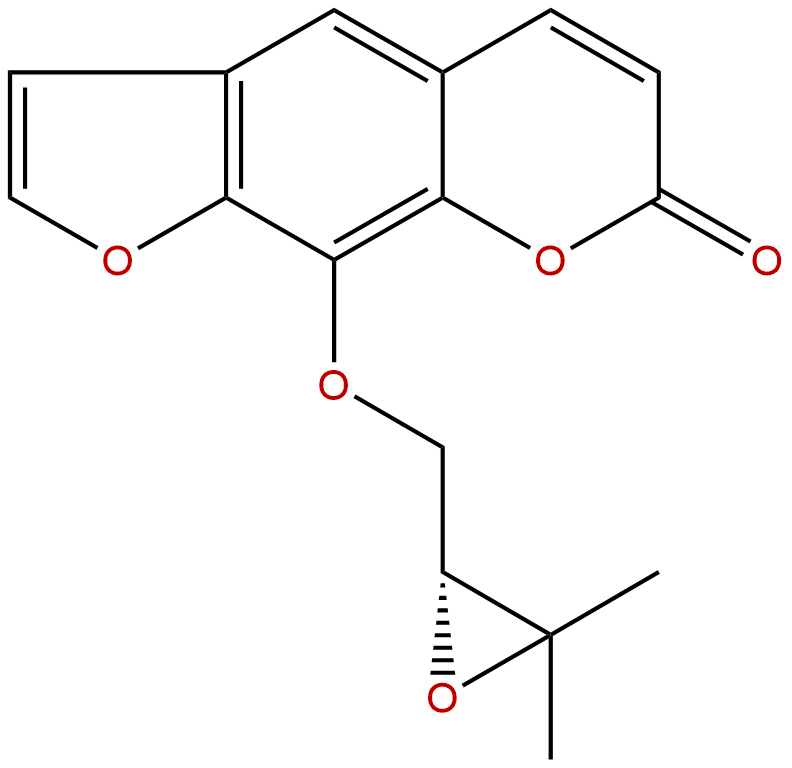


Product name: Heraclenin
Synonym name:
Catalogue No.: BP3181
Cas No.: 2880-49-1
Formula: C16H14O5
Mol Weight: 286.283
Botanical Source:
Physical Description: Powder
Type of Compound: Coumarins
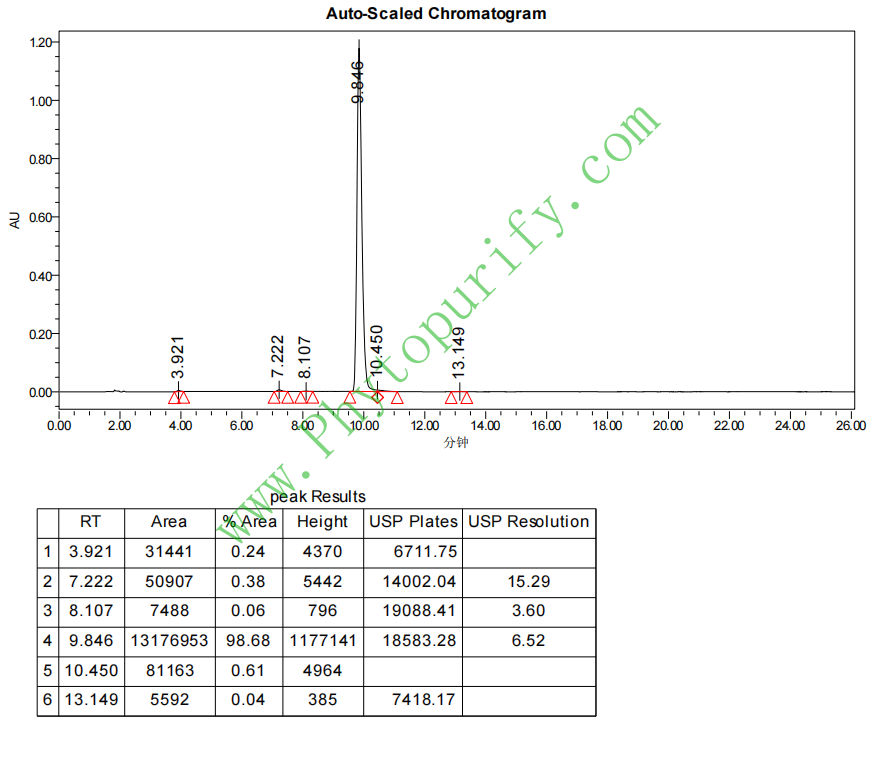
Purity: 95%~99%
Analysis Method: HPLC-DAD or/and HPLC-ELSD
Identification Method: Mass, NMR
Packing: Brown vial or HDPE plastic bottle
The product could be supplied from milligrams to grams. Inquire for bulk scale.
We provide solution to improve the water-solubility of compounds, thereby facilitating the variety of activity tests and clinic uses.
For Reference Standard and R&D, Not for Human Use Directly.
Description:
Heraclenin has anticoagulant, and anti-inflammatory activities, it also has mutagenicity in Chlamydomonas reinhardii. Heraclenin can induce apoptosis in Jurkat leukemia cells, it has a strong clastogenic effect . (+)-Heraclenin displays significant levels of antiplasmodial and moderate levels of antimicrobial activities.
References:
Mutat Res. 1986 Jan-Feb;169(1-2):51-4.
Chromosome-damaging effects of heraclenin in human lymphocytes in vitro.
METHODS AND RESULTS:
Heraclenin, a furocoumarin with an epoxide group in its side chain, was analyzed to see if it induced structural chromosome aberrations and sister-chromatid exchanges (SCEs) in human lymphocytes in vitro. The results were compared directly with those of imperatorin, which differs from Heraclenin only in lacking an epoxide group. An equally strong clastogenic effect was found for both Heraclenin and imperatorin: the number of metaphases with breaks was increased in both cases by approximately a factor of 6. Heraclenin produced a considerable dose-dependent increase in the SCE rate, i.e., by about 60 induced SCEs/metaphase, whereas imperatorin induced only about 4 SCEs/metaphase.
CONCLUSIONS:
The results are discussed with respect to the occurrence of structural aberrations, which are primarily due to the basic furocoumarin structure itself, whereas the large increase in the SCE rate produced by Heraclenin is most probably significantly influenced by its epoxide group.
Mutat Res. 1986 Jan-Feb;169(1-2):47-50.
Mutagenicity of a furocoumarin epoxide, heraclenin, in Chlamydomonas reinhardii.
Treatment of arg- or strd mutant cells of Chlamydomonas reinhardii with a furocoumarin epoxide, Heraclenin, plus UV-A resulted in a decrease in survival and a UV-A dose-dependent increase in induced Arg+ or Strs revertants.
METHODS AND RESULTS:
Imperatorin, a furocoumarin with a very similar structure but lacking an epoxide group showed a very similar phototoxic and photomutagenic activity in these mutant strains. Treating the mutant cells with Heraclenin or imperatorin in the dark neither influenced survival nor mutation induction. The results are discussed with respect to the involvement of the epoxide moiety of Heraclenin in mutagenicity.
Curr. Sci., 2011, 100(11):1706-11.
Microbial transformation of (+)-heraclenin by Aspergillus niger and evaluation of its antiplasmodial and antimicrobial activities
METHODS AND RESULTS:
Microbial transformation of (+)-Heraclenin (1) by Aspergillus niger was studied in growth media to assess its antiplasmodial and antimicrobial activities. It was transformed to (-)-heraclenol (2) as the sole product in a stereospecific manner. The in vitro antiplasmodial activity of compounds 1 and 2 was tested with chloroquine-sensitive and chloroquine-resistant strains of Plasmodium falciparum. Further, the in vitro antibacterial activity of 1 and 2 against three Grampositive bacteria, Bacillus subtilis, Bacillus sphaericus and Staphylococcus aureus, and three Gram-negative bacteria, Pseudomonas aeruginosa, Escherichia coli and Chromobacterium violaceum was analysed using agar-plate diffusion assay. The same method was employed for the evaluation of antifungal activity against five pathogenic strains of fungi, A. niger, Rhizopus oryzae, Aspergillus flavus, Candida albicans and Saccharomyces cerevisiae.
CONCLUSIONS:
Both furanocoumarins 1 and 2 displayed significant levels of antiplasmodial and moderate levels of antimicrobial activities against the tested pathogenic strains. Compound 2 exhibited two-fold less potent antiplasmodial activity (IC50 = 6.0 μg/ml) than the parent compound 1 (IC50 = 2.5 μg/ml), whereas no difference was observed in the antimicrobial activity of both furanocoumarins. The oxirane ring was found to be beneficial in terms of antiplasmodial activity.
Planta Med. 2000 Apr;66(3):279-81.
Anti-inflammatory activity of coumarins from Decatropis bicolor on TPA ear mice model.
METHODS AND RESULTS:
From the aerial parts of Decatropis bicolor, Heraclenin (1), seselin (2), psoralen (3), imperatorin (4), skimmianine (5), and heraclenol (6), were isolated. This is the first time that coumarin-like compounds are isolated from Decatropis genus. The anti-inflammatory properties of compounds 1-6 were examined against the ear edema in mice produced by TPA.
CONCLUSIONS:
The results suggest that the anti-inflammatory activity of each compound depends of its individual substitution on the aromatic ring rather than the coumarin skeleton itself.
Indian J Physiol Pharmacol. 1969 Jul;13(3):153-5.
Anticoagulant activity of Heraclenin.
METHODS AND RESULTS:
Anticoagulant activity of Heraclenin.
HPLC of Heraclenin
Storage conditions:Short-term storage at 2~8℃, long-term storage at -20 ~ -80℃
65.1100
2.8758
2.8760
.0093
3.9618
19.2779
High
82.0275
3.3690
Yes
No
Yes
No
Yes
Yes
1.5
Yes
No
Yes
Yes
Neuroinflammation is the immune response of the central nervous system to various injuries, infections, or neurodegenerative diseases. Its excessive or sustained activation is a common pathological feature of various neurological diseases such as Alzheimer's disease, Parkinson's disease, multiple sclerosis, and neuropathic pain. Traditional anti-inflammatory drugs are often limited in the treatment of neuroinflammation due to poor blood-brain barrier penetration or significant side effects. Therefore, finding highly efficient, low toxicity, and targeted lead compounds that can regulate neuroinflammatory pathways from natural products has become an important direction for current drug development. Heraclinin, a natural furan coumarin, is gradually entering the research field due to its unique chemical structure and preliminary revealed immune regulatory activity. Early studies have shown that Duhuosu can selectively activate the T cell nuclear factor (NFAT) pathway and concentration dependently inhibit T cell receptor-mediated proliferation in human primary T cells, suggesting its potential immunosuppressive and anti-inflammatory properties. In recent years, with the in-depth exploration of its pharmacological effects, the potential of Duhuosu in regulating key targets related to neuroinflammation such as AMPK, TLR4, NLRP3 inflammasome, etc. has been continuously explored. This article aims to systematically review the chemical properties, plant sources, pharmacological activities, mechanisms of action, medicinal properties, and application prospects of Duhuosu in neuroinflammatory related diseases, in order to provide comprehensive scientific references for the in-depth research and drug development of this natural product.
Heraclenin, chemical name 9- [(2,3-dihydro-2-hydroxy-2-methyl-7H-furano [3,2-g] [1] benzopyran-7-yl) oxy] -7H-furano [3,2-g] benzopyran-7-one, CAS number 2880-49-1, molecular formula C ₁ H ₁ O ₅, molecular weight 286.2830. Its core structure is linear furan coumarin, which is formed by the fusion of coumarin parent nucleus and a furan ring. This structure is an important basis for its biological activity.
In terms of physicochemical properties, the lipid water partition coefficient (LogP) of Duhuosu is 2.8758, indicating its moderate lipophilicity, which facilitates its penetration of cell membranes and biological barriers. Its topological polar surface area (TPSA) is 65.1100 Å ², which is relatively low and further supports its excellent membrane permeation potential. However, its water solubility is poor, at around 0.0093 mg/mL, which may pose challenges in formulation development. It is particularly noteworthy that, based on its physicochemical parameters, Duhuosu has a high blood-brain barrier penetration ability, which provides a key advantage for its direct action on the central nervous system and intervention in neuroinflammation. In addition, preliminary drug screening showed that its Ames test results were negative at 1.5 times the standard concentration (usually a value>2 is considered a potential mutagenic positive, and 1.5 indicates no significant mutagenicity under the experimental conditions), and there was no significant inhibition of the human ether - à - go related gene (hERG) potassium channel, suggesting a low risk of cardiac toxicity and providing preliminary positive signals for its safety evaluation.
Duhuosu mainly comes from various plants in the Apiaceae family, Angelica and Heraclium genera. Among them, the traditional Chinese medicine Duhuo (usually referring to heavy toothed hairy Angelica sinensis) Angelica pubescens Maxim. f. biserrata Shan et Yuan's dried roots and Bai Zhi(Angelica dahurica)Waiting is its important natural source. These plants are commonly used in traditional medicine for dispelling wind, dampness, promoting rheumatism, and relieving pain. Their anti-inflammatory and analgesic effects are closely related to active ingredients such as Angelica sinensis.
Organic solvent extraction is commonly used to extract Angelica sinensis from plant materials. The typical process is as follows: after crushing the dried plant roots and stems, reflux extraction or ultrasound assisted extraction is performed using solvents such as methanol, ethanol, or ethyl acetate. The crude extract was obtained by vacuum concentration of the extraction solution. Subsequently, separation and purification techniques such as silica gel column chromatography and preparative high-performance liquid chromatography (HPLC) were used to separate and refine Duhuosu based on its polarity differences with other coumarin compounds. Modern analytical techniques such as liquid chromatography-mass spectrometry (LC-MS) and nuclear magnetic resonance (NMR) can be used for qualitative and quantitative analysis of compounds during the extraction process, ensuring the purity and yield of the target product. With the development of green extraction technology, methods such as supercritical CO ₂ extraction have also been explored for efficient and low solvent residue extraction of such coumarin components.
The pharmacological activity research of Duhuosu has surpassed its initially discovered immunosuppressive effect, demonstrating multiple biological activities, especially in the fields of anti-inflammatory, neuroprotective, and analgesic potential.
Immune regulation and anti-inflammatory activity The most classic feature of Duhuosu is its concentration dependent inhibition of the proliferation response of human primary T cells triggered by T cell receptor (TCR) activation. This inhibitory effect is not widespread cytotoxicity, but rather achieved by interfering with key signaling pathways for T cell activation, laying the foundation for its application in autoimmune and inflammatory diseases. In various cellular and animal inflammatory models, Duhuo Su has shown extensive anti-inflammatory effects, significantly inhibiting the excessive production of pro-inflammatory cytokines (such as TNF - α, IL-1 β, IL-6) and inflammatory mediators (such as nitric oxide and prostaglandin E2) induced by stimuli such as lipopolysaccharides (LPS).
Neuroprotection and anti neuroinflammatory activity This is the current focus of research on Duhuosu. In the LPS induced activation model of microglia (the main immune cells in the central nervous system), Doxorubicin can effectively inhibit the transformation of microglia into pro-inflammatory phenotype and reduce their neurotoxicity. In the Alzheimer's disease cell model, Doxorubicin showed the ability to alleviate neuronal damage and inflammatory response induced by β - amyloid (A β) protein. Its excellent blood-brain barrier penetration enables it to directly exert its effects in the central nervous system, combating neuroinflammation, a common driving force of various neurodegenerative diseases.
Analgesic activity Unlike traditional nonsteroidal anti-inflammatory drugs, the analgesic effect of Duhuosu may be related to its regulation of neuroinflammation and ion channels. Research has shown that it may intervene in the transmission of pain signals by affecting the activity of pain related channels such as transient receptor potential vanillic acid subtype 1 (TRPV1), demonstrating relief effects in neuropathic pain models.
Other activities There are also studies reporting that Duhuosu has certain anti-tumor, antibacterial, and antioxidant activities, but the research in these areas is relatively preliminary, and its specific mechanism and in vivo effectiveness need further confirmation.
Duhuosu exerts pharmacological effects, especially anti neuroinflammatory effects, involving multidimensional regulation of multiple key signaling pathways and molecular targets, forming a networked mechanism of action.
Core mechanism: Inhibition of NFAT signaling pathway Duhuosu was initially identified as an inhibitor of NFAT (activated T cell nuclear factor). NFAT is a core transcription factor for T cell activation, proliferation, and cytokine production. Duhuosu inhibits the transcriptional activity of NFAT by interfering with the dephosphorylation and nuclear translocation of NFAT by calcineurin, ultimately suppressing the excessive activation of T cells and the release of inflammatory factors. This is the molecular basis of its immunosuppressive effect.
Regulating key pathways and targets of neuroinflammation:
In summary, Duhuosu forms a synergistic network through a "multi-target, multi pathway" approach, from inhibiting excessive activation of peripheral immune cells, to regulating central microglial inflammatory response, and then affecting pain signal transduction, to jointly combat neuroinflammation and its related pathological processes.
Based on its physicochemical properties and preliminary biological data, a preliminary evaluation of the pharmacological properties of Duhuosu was conducted.
Absorption, distribution, metabolism, excretion (ADME):
Challenges and optimization directions in drug development:
Preliminary safety The negative results of Ames test and lack of hERG inhibitory activity provide preliminary safety support for its genetic toxicity and cardiac toxicity. However, a comprehensive preclinical safety evaluation, including acute toxicity, chronic toxicity, reproductive toxicity, etc., still needs to be systematically carried out.
As a multi-target natural product for anti neuroinflammation, the clinical application prospects of Duhuosu mainly focus on neurological diseases, but may also be expanded to other fields related to immune inflammation.
Main application directions:
Future research prospects and challenges:
Duhuosu, as a natural furan coumarin isolated from traditional medicinal plants, has shown remarkable potential in the field of anti neuroinflammation and related disease treatment due to its unique chemical structure and multi-target pharmacological mechanism. From the initial discovery of its specific inhibition of the T cell NFAT pathway to the current revelation of its regulatory role in multiple neuroinflammatory key nodes such as AMPK, TLR4/NF - κ B, NLRP3 inflammasome, the breadth and depth of its research continue to expand. Its excellent blood-brain barrier penetration ability and preliminary positive pharmacological parameters provide favorable conditions for its intervention in central nervous system diseases. However, its poor water solubility, potential phototoxicity, and incomplete pharmacokinetic and toxicological data are challenges that must be overcome to move towards clinical translation. Future research needs to continue efforts in deepening the mechanism of action, systematically evaluating drug properties, conducting rational structural optimization, and exploring clinical combination therapy strategies. The research example of Duhuosu fully demonstrates the feasibility and value of exploring modern drug lead compounds from the treasure trove of traditional Chinese medicine, and is expected to provide new candidate molecules and strategies for the treatment of neuroinflammatory diseases.
